Tag: GDP growth

  • Rural, tier 2 & 3 cities to drive the next leg of growth: Ashish Bhasin, DAN

    Rural, tier 2 & 3 cities to drive the next leg of growth: Ashish Bhasin, DAN

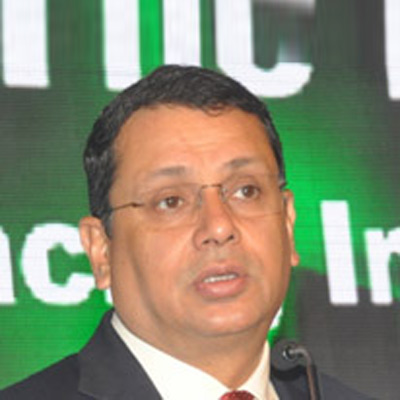
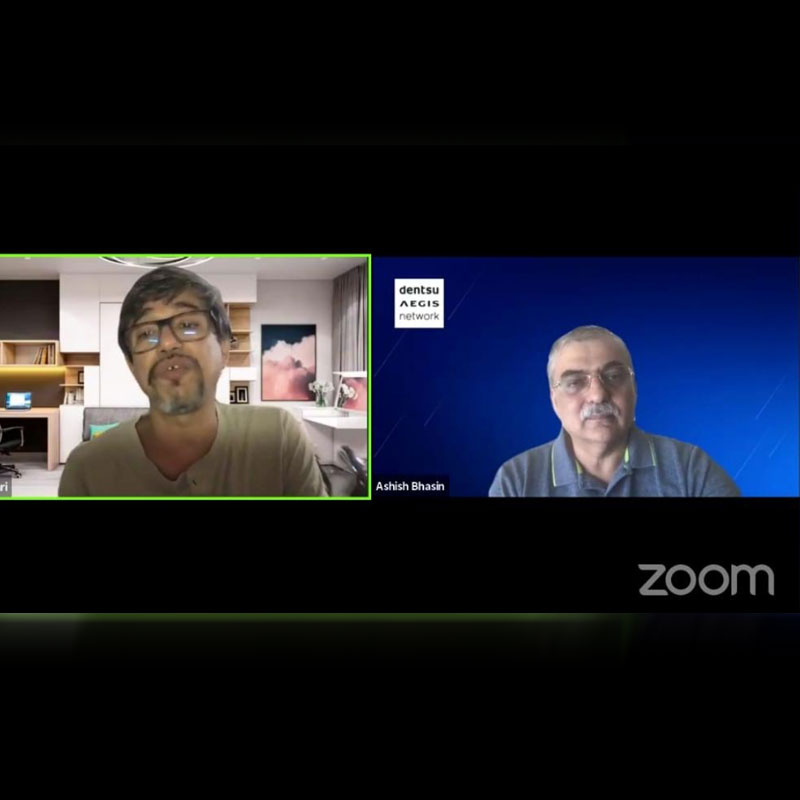
    NEW DELHI: After the sluggish growth in the previous few quarters, which is now further worsened by the Covid2019 pandemic, DAN CEO APAC and chairman India Ashish Bhasin is now bullish about the economic possibilities of the country. He feels that the worst has already happened and from here on it is going to be a month-on-month recovery path for the industry, he shared with Indiantelevision.com during a virtual fireside chat with founder CEO and editor-in-chief Anil Wanvari. 

    Bhasin noted that he doesn’t see a V-shape recovery happening but there are certain markets, which have already started signs of growth and will continue to do so, including automobile and FMCG.

    “FMCG was doing well during the lockdown too as it came under the essential services category and then also a function of sales-and-demand, managed pretty well. Another sector that has started showing signs of recovery is the automobile industry. I feel that post-pandemic more people will be preferring own transport and I see a rise in sales of motorbikes happening. Tractor sales did pretty well too, over the past few months and that will continue to do so,” he insisted. 

    He is also pinning his hopes for growth in rural and tier 2, tier 3 areas. “The harvest has been good this time and also the sowing season was pretty positive. Though the agriculture sector just contributes to the 15-16 per cent of the GDP, it will play a significant role in pulling the numbers up in the coming quarters. Also, more dispensible income in the hands of people will create a good supply-demand cycle. I see rural areas and tier 2, tier 3 cities driving the next leg of our growth.”

    Bhasin pointed out that in the rest of the industries, demand might not be a big problem but the struggles will be on the part of restoring the supply side logistics that have been badly hurt because of the pandemic. He sees sectors like cinema, real estate, and non-digital education entities taking quite some time to revive from here. 

    “It’s not like a switch that goes off during the lockdown and is suddenly up as the restrictions are lifted. One, it will take its own time for the labourers to come back, the production to start, and then supplies picking up. Even then, it is not going to be a straight way, there will be hiccups with cases spiking up or maybe demand going down,” he elaborated. 

    He stated that the pandemic has pushed the country behind by 2-2.5 years and it will take time till 2022 for the economy, as a function of various markets cumulatively, to reach 2019 level. 

  • GroupM india’s 2019 ad forecast: strong 14% growth, over Rs 10,000 crore in new investment

    GroupM india’s 2019 ad forecast: strong 14% growth, over Rs 10,000 crore in new investment

    MUMBAI: GroupM, the media investment group of WPP, today announced their advertising expenditure (adex) forecasts for 2019.  As per the GroupM futures report ‘This Year, Next Year’ (TYNY) 2019, India tops the list as the fastest growing major ad market in the world. TYNY forecasts India’s advertising investment to reach an estimated Rs. 80,678 crores this year. This represents strong estimated growth of 14%, for the calendar year 2019 (approx. 2x of the GDP growth).

    India will be the third highest contributor to the incremental ad spends, only behind China and USA and the tenth fastest growing country with respect to ad spends across the globe. 

    The Cricket World Cup and Elections in 2019 are expected to boost ad spends. FMCG, Auto, Retail, e-commerce, Tech/Telecom are expected to contribute to 2/3rd of adex.

    Speaking on the TYNY 2019 report, Sam Singh, CEO – GroupM South Asia said, “While we are estimating the global advertising expenditure to grow at 3.6%, India would be witnessing the fastest growth at 14% and reach an estimated Rs.80,578 crores. This would be approximately 2x of the estimated GDP growth in India. This also makes India the 3rd largest adex growth to the worldwide ad spends. We expect sustained and stable media investment growth across categories in India”

    This year 37% of incremental ad spends will go towards digital advertising including mobile. The scale at which we are witnessing this digital transformation, GroupM estimates the Digital Adex to continue to grow by 30% in 2019 to Rs. 16,038 crores. 

    Prasanth Kumar, Chief Operating Officer – GroupM South Asia said, “Indian ad spends CAGR between 2014-2018 is at 13% and 2019 expected to witness a higher growth. India is unique among key markets and will witness growth in all media segments and not just digital. Offline media is poised to continue to grow and will contribute to being around 80% of ad spends in 2019.”

    Television will continue to grow at a steady pace. This year, the growth rate for TV is estimated to be 15%.

    Print is estimated to grow by 2.2% and the share of print to all media is expected to be at 23%. While it is expected for both English and regional languages to grow, regional will see slightly higher growth. Vernacular will continue to thrive on both TV and print.

    This year Radio is expected to grow at 15% which is higher than the last couple of years. Cinema will grow at 25% in 2019, as 2018 saw more titles winning audience at the box office. In 2019 GroupM expects cinema to shift from title-based advertising to continued advertising through the year. Lower tax on cinema tickets is expected to drive more footfalls to theatres.

    GroupM also presented some of the biggest trends that will shape the media Industry in India in 2019. The trends presented were around emerging technology, data, content creation and distribution put the consumer at the center and underline the theme of digital driving the change across all formats of media. The trends touched upon the TRAI tariff order implementation as well its potential impact of increasing original programming and investments on content across broadcaster networks.

    Tushar Vyas, President Growth and Transformation – GroupM South Asia said, “With the surge of technology, better insights and relevant engagement across different platforms, we are expecting marketers to build superior consumer connections for brands. 2019 will witness a faster growth in digital and we are expecting digital to be at 20% media mix. As we are witnessing one in every three Indians digitally connected, we can expect the convergence of data, digital and content to deliver seamless and powerful solutions to brands as well as constantly adding inventive practices into the market.”

    This Year, Next Year, is part of GroupM's media and marketing forecasting series drawn from data supplied by holding company WPP's worldwide resources in advertising, public relations, market research, and specialist communications. The TYNY report is the most comprehensive understanding of the estimated media spends by advertisers in the current year. It also highlights some of the industry sectors that will have a major effect on advertising spends across media.

  • Absence of regulation is as bad as over regulation :Uday Shankar CEO Star India

    Absence of regulation is as bad as over regulation :Uday Shankar CEO Star India

    All of us took stewardship of our companies in the last two decades, when robust economic growth created an air of optimism and confidence in the country, and about India in the world. We gather today in the midst of an extremely turbulent time for the Indian economy. Beyond shrinking GDP growth and falling currency, what is truly remarkable is that the spirit of optimism seems to have been replaced by one of apprehension and despondency.

    It is therefore appropriate that this industry forum has as its theme, renewal and innovation. In my mind, the forces that unleashed our exciting growth story are the very same as those that can inspire innovation and renewal in our industry. And at its heart is our willingness to be resolutely open to the world, to new capital and to new talent. But no renewal can happen, either in our economy or in our industry, if we are not brazenly open to new ideas.

    It is in this context that I had made the point a few months ago that there is no media industry without free expression. If anything, the last few months have proven to us that there is no Indian growth story without free enterprise. Because free expression and free enterprise go together. Our ability to improve the lives of millions of Indians is firmly tied to our ability to unshackle businesses; in allowing them the space and the imagination to create new products and services.

    Every time we have made it a bit easier for entrepreneurs to conduct business, we have generated enormous dividends through growth and new jobs. Every time we have made it easier for investors to bring in capital, we have created new markets and services.
    _____****_____

    In many ways, the dramatic economic reforms of 1991 were accidental. It did not emerge from a strong national consensus that we needed to change the direction of our post-independence path. It came from a shocked polity that opened the country for business only when there was no other conceivable option left on the table. And, yet, that accidental moment created the space for a new generation of Indian entrepreneurs whose enterprise and initiative not only created wealth but resulted in millions of new jobs. It also helped India achieve a near double digit annual growth triggering a social transformation the pace of which, if sustained, was capable of lifting India out of poverty in a generation. Today, there is a vociferous debate in play on whether India can afford a $22 billion food program. 

    What is truly remarkable is it is evidence of how much distance we have moved. Two decades ago, the topic would not even have come up!

    Of course, business cycles can ebb and flow. But, what stalled India’s growth and employment creation was our remarkable ability as a country to create a web of processes, regulations and norms that make it extremely difficult for entrepreneurs to conduct business. And in a hyper competitive global economy, where countries actively nurture promising sectors and constantly renew themselves to attract new investments, we really run the risk of being left behind.

    While skepticism about reforms could have been justified 20 years ago, what is surprising is that we are still debating the value of reforms and unshackling businesses when our own recent history is the most compelling testimonial to the power of entrepreneurship. Every time we have made it a bit easier for entrepreneurs to conduct business, we have generated enormous dividends through growth and new jobs. Every time we have made it easier for investors to bring in capital, we have created new markets and services.

    Nowhere is this dichotomy more prevalent than in the media and entertainment industry. Twenty years ago, the real face of liberalisation for most Indians was the appearance of dish antennas on roofs. It was a compelling signal to the world outside that India was open for business. We were ready to embrace new ideas, wherever they originated. And we were confident enough in our own identity to be open to new worlds.

    (L-R) Walt Disney India MD Ronnie Screwvala, Star India CEO Uday Shankar, I&B Minister Manish Tewari, CII Director General Chandrajit Banerjee

    And in that period, the industry saw a remarkable transformation in its size and in its scale. From one state run broadcaster with limited reach and less than five hours of daily content, we now have over 800 channels telecasting more than half a million hours of original content to 700 million viewers. From around 3,000 newspapers in 1991, we have grown to more than 80,000 newspapers today, with most of the growth coming in the vernacular languages. Our movie industry has grown 20 times. The industry has evolved from a disorganised community dominated by a few players to a highly competitive sector that is increasingly better organised and better run. From 750 million in 1991, it is now an industry worth 15 billion dollars. It supports six million jobs directly and probably twice more indirectly. It has both facilitated and absorbed new technologies. And, it has created a compelling platform to showcase India to the world. So much so that last year we set ourselves an ambitious target of $100 billion for the sector.  And, yet, this spectacular success in serving the Indian consumer and in creating employment has not been met with more reforms and more openness. Surprisingly and frighteningly, we seem to have regressed in many ways. Successive governments have created a web of policies and regulations which while they may have had the honorable intent of protecting the consumer has had exactly the opposite effect.

    Today, I would like to call out two big challenges the combination of which have had stifling impacts on innovation in the industry.

    Our television viewers today have easy access to global content, whether through online portals, through network broadcasters who are airing shows closer and closer to global launch dates, or simply through piracy. This has brought about a burning need for innovative, original content. However, for an industry that boasts of over half a million hours of original programming every year, how much of it is innovative content that we are proud of having brought on to the screen?

    The reason is simple. Our ability to charge for content has nothing to do with the scale of our investments in it. If a bold producer does decide to risk capital on cutting-edge, new idea, today he has no liberty to price his creative work. Why then should he take a risk when he stands no chance of getting a decent return on his investment even if his production becomes a blockbuster success? The result is tired, stagnated, insipid content for the consumer. No policy has done more damage to this industry than that of price controls on television content.

    What is amazing is that we have compelling evidence in the same industry that shows that abolishing price controls can dramatically improve consumer choice. Freeing up ticket pricing in cinemas created the foundation for a dramatic improvement in the quality and diversity of movies that came to the market. Without raising costs substantially for the price conscious consumer, it has financed a generation of content that has appealed to both niche and mass audiences.

    It is difficult today to avoid the persistent debate about the quality and health of news channels. But, there is no question at all that it is the restrictive tariff regime that has prevented news broadcasters from producing high quality content for an audience that is much smaller than that available for general entertainment or sports. Ironically, a regime that was brought to protect the consumer has ended up doing the most damage to consumer choice and quality.

    Even more frightening than price control is the creeping controls on free speech. For a country that prides itself on its deep democratic ethos, the last decade has been characterised by a creeping inclination to impose controls on speech and expression. It may have started with opposition to a book but controls on expression seem to mark new grounds every year. Small film makers who decide to invest in off-beat movies are plagued by having to defend their movies in litigation because a minority is offended by it. Films cleared by the censor board are banned by state governments, and often blocked by non-state actors under the threat of violence. TV shows attempting to break through the clutter find their characters’ voices beeped out. Even the titling of a movie as the Dirty Picture seems to be an open invitation to trouble. The result is work that is so mundane that it sparks no questions, elicits no debate and pushes no creative boundaries.

    This month, Star will launch Mahabharat on television. It is a show that we have made with a lot of passion and on a scale and grandeur that has never been seen on television to date. And, yet, a few days before the launch, what worries me the most is not the quality of the series. What keeps me awake is that some lunatic fringe somewhere in the country would raise some absurd objection to the show.

    It is no surprise then that this tyranny of the minority has now reached the central halls of Parliament. Today, a small but vocal group can claim both the moral high ground and have the political legitimacy to hold to random India’s legislature for a session, a day and sometimes more. This should not come as a shock at all. For, behind this practice, is the very same culture that we have nurtured and indulged for too long. The culture that grants legitimacy, cover and sometimes state protection to the very few who are offended or bothered by the expression of another group, and who can take to the streets and can vandalise private and public property with impudence. It should not be surprising that when we start putting limits on new ideas and free expression in our cultural space, they will find their way into our political and economic spaces too.

    It is difficult today to avoid the persistent debate about the quality and health of news channels. But, there is no question at all that it is the restrictive tariff regime that has prevented news broadcasters from producing high quality content for an audience that is much smaller than that available for general entertainment or sports.
    _____****_____

    The collective impact of regulation and the creeping tyranny of the minority have stifled innovation in our industry and, dare I say, in the economy as whole. At 15 per cent, we may grow at thrice the rate of the GDP but that is more a reflection of our topline economic growth than the health of our industry. At this rate, it will take us another 15 years to hit $100 billion in value and by then, we will be just three per cent of the world media market. This is just unacceptable.

    Make no mistake. I am definitely not arguing for a world without regulation. History has taught us that free enterprise is well served by clear rules and policies. Absence of regulation is as bad as over regulation.

    But what is desperately needed is a consensus on what to regulate and how much. It is this lack of consistency in regulation that is impacting multiple industries. At exactly the moment when our economy is poised for the next big leap, we have found a way to make it harder and harder for our companies to innovate, to create new products and services, and to find new markets.

    Ladies and gentlemen, I do hope that over the next two days, as we explore new ways to grow our sector, the resounding message from this Summit is that, as a sector and as a country, we will remain stubbornly open to new ideas and committed to expanding the spaces for free expression.

  • Magna Global says Indian ad market should grow 11.9% in 2014

    Magna Global says Indian ad market should grow 11.9% in 2014

    MUMBAI: Folks in advertising, there’s reason to cheer. The Indian advertising market is going to grow at a healthy 7.8 per cent in 2012-2013, outpacing its GDP growth, is the prediction of Intepublic group’s strategic global media unit Magna Global. Television and print are expected to contribute two thirds to this growth with television advertising growing at 6.6 per cent, Digital media at 31 per cent (faster than any other category with mobile and video outgrowing traditional display), newspapers (expanding in language and regional pockets) should grow at six per cent, while magazine advertising growth is expected to be flat. Radio and out-of-home advertising will grow +8.0%.

    India Advertising Market (Media Owner Revenues)

    Magna says this is relatively good highlights that this will happen at a time when India suffered it worst near decade slowdown in 2012, with real GDP growing by +4.0% compared to +7.7% in the previous year (source IMF). It adds that India’s economic outlook was downgraded by ratings agencies, which dampened investment sentiment. The impact of the corrective measures that the government took like reducing subsidies, opening up FDI in retail, and a plan to introduce targeted subsidies through direct transfers to reduce expenditure, remains uncertain in the short to medium term, says Magna And it cautions that in its April report, the IMF has forecast 5.7 per cent of real GDP growth this year and 6.2 per cent in 2014.

    India advertising revenue by media category 2012-2013

    Magna believes the Indian advertising market is going to show further buoyancy in 2014 by growing 11.9 per cent. The reason: the investment climate is expected to warm up and demand from external economies backed by solid domestic consumption will boost the Indian economy.