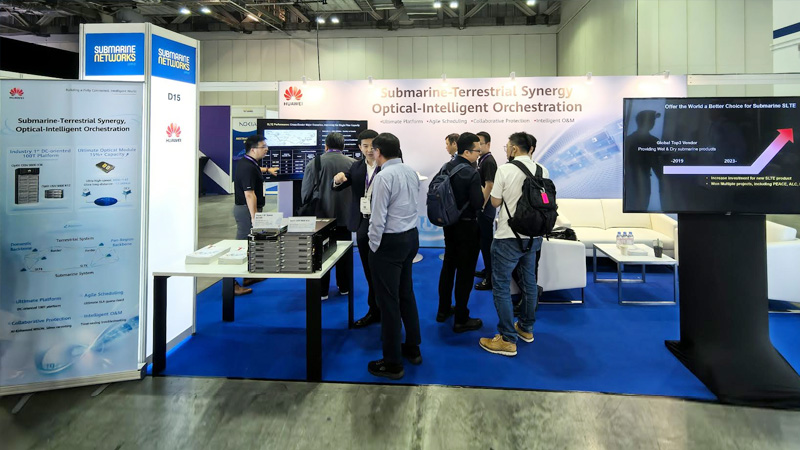
MUMBAI: When it comes to the internet’s undersea highways, Huawei wants to make sure the data doesn’t hit traffic when it surfaces on land. At Submarine Networks World 2025 in Singapore, the company pulled back the curtain on its vision for Submarine-Terrestrial Synergy, Optical-Intelligent Orchestration, a bold reimagining of how submarine cables and terrestrial networks can work as one.
For decades, the two domains have operated in silos, with limited interoperability and cumbersome management. Huawei’s new strategy looks to smash those barriers, promising cross-domain visualised management, coordinated scheduling, intelligent O&M, and end-to-end ultra-broadband services. The pitch: a network that’s not only faster, but smarter and greener too.
Huawei unveiled the industry’s first DC-oriented 100T submarine-terrestrial integrated platform, the OptiX OSN 9800 K series. The specs are ambitious:
. Integrated architecture: One unified platform bridging submarine and terrestrial networks.
. Ultra-large capacity: 4T service processing per slot, 100T plus per chassis, and up to 96T per fibre.
. Ultra-high energy efficiency: Power consumption slashed to 0.1 W/Gbit, 65 plus lower than the industry average.
. Ultra-strong intelligence: Digital twin-powered O&M, boosting operational efficiency by 40 plus.
Also showcased was Huawei’s latest 1.6T board for submarine SLTE systems. With adjustable rates from 300G to 1.6T and transmission distances stretching 11,000 km, the board promises to push submarine cables’ performance to new depths while ensuring flexibility for operators.
Huawei president of optical transmission domai Gavin Gu summed up the ambition: “Huawei plans to build an integrated submarine-terrestrial network architecture featuring ultra-broadband, high reliability, agility and intelligence, enabling seamless transmission while significantly enhancing network O&M efficiency and service quality through intelligence.”
With global digitalisation and AI adoption surging, submarine cables already carrying more than 95 plus of the world’s international data traffic are facing unprecedented demand. Huawei, with 30 years of optical transmission expertise, is positioning itself as a key architect of the next-generation internet backbone.
By linking the deep sea to the data centre with a seamless, intelligent bridge, Huawei is betting that the future of connectivity lies not just in laying more cable, but in making every bit smarter, faster, and greener.