Tag: Gavin Buxton

  • Magnite expands global presence with opening of First India Office

    Magnite expands global presence with opening of First India Office

    Mumbai: Magnite (Nasdaq: MGNI), the largest independent sell-side advertising company, has announced the opening of a new office in Mumbai, which will serve as the company’s base across India. The move indicates the company’s commitment to providing support for publishers and buyers in one of the fastest-growing digital advertising markets in the world.

    “Programmatic adoption in India is forecasted to increase at a CAGR of 32 per cent until 2027, according to Magna Global,” said Magnite Asia managing director Gavin Buxton. ”Establishing a Magnite hub in Mumbai allows us to provide more hands-on support and help our clients navigate the changing market landscape. As advertisers continue to seek out the most comprehensive omnichannel ecosystem to reach their audiences, we’ll be able to more seamlessly connect them with the premium publishers we work with.”

    This year, Magnite introduced new advanced tools for streaming TV media owners in India, including Magnite Streaming and the SpringServe ad server, to help them better manage high-quality ad experiences across the video landscape. These developments have been met with strong marketplace demand and fuelled 185% year over year growth in CTV ad spend in India.

    Magnite continues to build out its team in India and most recently appointed Chandrahas Shetty as Demand Facilitation Lead. Other team members include Karnika Maroo, Senior Account Manager, Supply, Jerit Kunjumon, Account Manager, Supply, and Rohit Prasad Yeggina, Senior Account Manager. Together, they are focused on delivering great results for clients by ensuring they can leverage Magnite’s unique omnichannel capabilities.

  • Magnite onboards Chandrahas Shetty as demand facilitation lead in India

    Magnite onboards Chandrahas Shetty as demand facilitation lead in India

    Mumbai: Magnite has roped in Chandrahas Shetty as the demand facilitation lead in India. Shetty will lead the Magnite Demand Facilitation team in India, with a primary focus on building key strategic demand-side relationships with leading media agencies, DSPs and buyers in the country.

    Magnite managing director Asia Gavin Buxton said, “Shetty joins us with vast experience across the ad tech industry and brings a track record of exceptional growth and effective results in India and APAC. We are excited to strengthen the team with his unique perspective, particularly as we look to accelerate our growth throughout India.”

    Shetty joins Magnite from MediaMath where he was director of partnerships and successfully built out many of the company’s strategic DSP relationships. He brings a total of 13 years of experience to the role at Magnite, having previously held various senior positions at Oracle Advertising, Times Internet and Disney+ Hotstar.

    Shetty commented, “I’m excited to be joining Magnite and leading the demand team in India. I look forward to working closely with the team to help deliver great results for buyers by ensuring they can leverage Magnite’s unique omnichannel capabilities to tap into quality content.”

    Shetty joins the growing Magnite India team which includes senior account manager – supply Karnika Maroo, account manager – supply Jerit Kunjumon and senior account manager – Rohit Prasad Yeggina.

  • 64% Indian streamers are more receptive to ads on streaming platforms than social media: Magnite report

    64% Indian streamers are more receptive to ads on streaming platforms than social media: Magnite report

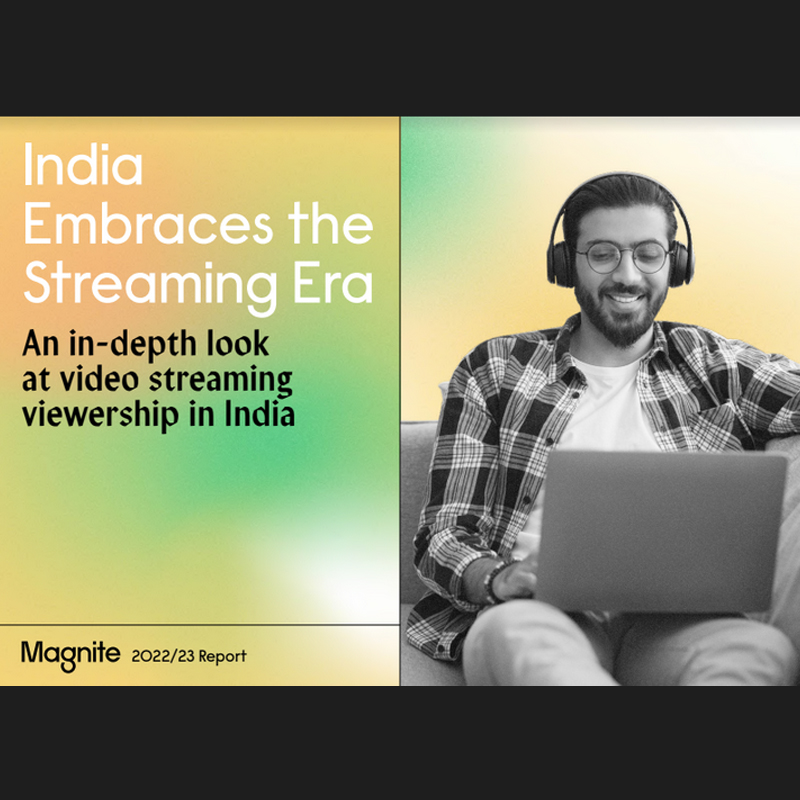
    Mumbai: Magnite, the independent omnichannel sell-side advertising platform, on Tuesday released a study entitled “India Embraces the Streaming Era” that found ads on streaming platforms capture more attention than ads on social media. Nearly two-thirds of India’s streamers (64 per cent) are more responsive to advertising on streaming platforms, with many stating they often search for the product (48 per cent) and make a purchase (33 per cent) after the fact.

    The study also found that free or ad-supported content is preferred to paying for an ad-free experience. 80 per cent of streamers prefer to watch ad-supported content versus subscribing to an ad-free platform for a monthly fee.

    “OTT is unmatched in its ability to engage viewers, and we commissioned this study to better understand consumption patterns across the rapidly growing Indian streaming audience,” said Magnite managing director, Asia Gavin Buxton. “One of the study’s key findings shows that OTT advertising outperforms other mediums like social media when it comes to attention and purchasing power. With three-quarters of video viewers streaming more now than a year ago, advertisers should be actively exploring this channel to reach the right audiences.”

    According to the study, two thirds of streamers prefer to watch streaming services over traditional TV, and streamers rank the quality of content, platform usability, and content discovery as the top factors driving their decision to stream. The majority (75 per cent) of streamers are streaming more video content than a year ago, and 66 per cent expect to stream more next year.

    “We are witnessing the next stage in streaming’s evolution—one where the lines between SVoD, AVoD, and FAST are being blurred as we see audiences continue to fragment,” said Samsung Ads, India senior director Prabhvir Sahmey. Whilst globally we’re seeing the major streaming giants introduce ad-funded and hybrid models, locally we’ve seen the adoption of these freemium models in India gain considerable viewership. It is exciting to see such a promising future for ad-supported streaming confirmed both recently in our TV ad engagement study and validated in this new report from Magnite.”

    “The migration of audiences from linear TV to streaming signals an opportunity for our clients who are looking to invest in CTV and incorporate TV buys into their overall advertising strategies with screen-agnostic planning,” said Omnicom Media Group chief digital officer, APAC Bharat Khatri. “With the breadth of available inventory increasing and the preference for streaming across India according to Magnite’s research findings, advertisers should take note of where viewership is moving and invest in OTT to reach highly engaged viewers watching their favourite shows. At the same time, we are seeing a big shift happening on the measurement front, with viewability amounting to three seconds or half of an ad flashed on rapidly scrolling screens. It’s easy to see a growing gap between the opportunity to be seen and actually being seen, thus the need of the hour is to start optimising based on attention to generate incremental value across creative, media planning, and buying, and in turn improve brand health and performance.”

    Additional key findings from Magnite’s study include:

     ●  Mobile commands the majority of streamers’ time, and 88 per cent of viewers reported a positive viewing experience on smartphones, comparable to the number that reported a positive viewing experience on TV screens.

    ●  Mobile is the top streaming device, but time spent streaming on CTV is growing as smart TVs are introduced into Indian homes. 59 per cent of streamers are now watching CTV and spending an average of eight hours per week streaming content on a big screen.

    ●  Live streaming is becoming mainstream. Nearly all streamers (86 per cent) said they watch live content through streaming platforms, with streaming being particularly prevalent across news, sports, and reality content. Streamers are more likely to watch live programming on streaming platforms than on traditional TV.

    Check the full report here. ( https://www.magnite.com/research/india-streaming-era/).

  • OTT streaming services are most popular entertainment than traditional TV: Magnite Asia MD Gavin Buxton

    OTT streaming services are most popular entertainment than traditional TV: Magnite Asia MD Gavin Buxton

    Mumbai: Creating a great ad experience and monetising all ad formats is the biggest challenge for media owners and brands today. Major global streaming platforms like Netflix and Disney+ are planning to roll out exclusive advertising solutions in 2023. With this, in-the-right-place-at-the-right-time, Magnite Asia MD Gavin Buxton stepped in to provide his input on strengthening such ad solutions for media owners and brands.

    By joining Magnite Asia in August 2021, Gavin and his firm are working with over 60 OTT clients looking to activate AVOD (advertising-based video-on-demand).

    Named as ‘one of the top people to look out for’ by the Digerati Asia Pacific in 2018, Gavin currently leads the growth of Magnite in the APAC region. His working knowledge stretches across television, digital, search, programmatic, mobile, content marketing, and social media.

    Gavin brings with him over 20 years of global experience in digital advertising. Previously, he held leadership positions at tech and publishing companies such as Microsoft, Turner Broadcasting System, and LinkedIn, spending the last ten years in Asia building businesses.

    He is an active participant within the advertising industry with multiple thought leadership publications, speaker slots, and contributions to industry bodies, including past board member of The Interactive Advertising Bureau of Southeast Asia and India (IAB SG), and participation in several committees.

    Magnite, an independent omnichannel sell-side advertising platform is helping publishers use their technology to monetise their content across all screens and formats—including desktop, mobile, audio, and connected TV (CTV).

    This is a one-of-its-kind platform that is built specifically to handle the complexities of over-the-top (OTT) video supply with real-time reporting and performance insights, automated ad pod functionality to manage frequency capping, competitive separation, and audio level detection to enhance the viewer experience.

    In an interaction with Indiantelevision.com, Gavin shared all things from monetisation, the CTV platform, the APAC market, and programmatic advertising to programmatic guaranteed deals. 

    Edited Excerpts:

    On his journey with SpotX- Magnite 

    Gavin: I have had work experience in the APAC region for 11 years now, five of which have been focused on the OTT digital advertising sector, originally with SpotX and onwards into Magnite.

    It has been a challenging, exciting, and rewarding experience to collaborate with some of the first OTT AVOD publishers in the region and assist them in being best positioned and embracing programmatic activations and collectively grow the ecosystem together.

    Today, Magnite is the leading OTT supply-side platform (SSP) in APAC. Brands are now embracing such AVOD activations due to their ability to reach and engage with scaled audiences in premium viewing environments.

    On collaboration with Samsung Ads

    Gavin: Our relationship with Samsung Ads is not exclusive. However, we work with them across major markets, including the US, EMEA, LATAM, South Korea, Australia, and India. Our technology helped them to monetise their inventory on their ad-supported streaming service, Samsung TV Plus, and deliver a better advertising experience for the end user.

    As Samsung scales up its Samsung TV Plus inventory, working with us has accelerated its expansion plans by making it programmatically available to brands and agencies in India.

    In India specifically, we have been excited to see how Samsung’s team, audience, and offers have grown. It is also exciting to watch their continued growth in advertising activation.

    On emerging CTV markets in APAC and the level of adoption 

    Gavin: Apart from India, APAC’s major CTV markets include Australia and New Zealand, Indonesia, the Philippines, Singapore, Thailand, and Vietnam.

    The OTT market in India is the fourth largest globally and one of the most competitively growing markets. Advertisers have unprecedented opportunities to reach audiences increasingly shifting to OTT streaming.

    According to Magnite research in Southeast Asia, OTT is now watched more regularly than traditional TV among audiences aged 16–34 who prefer ad-supported over ad-free content. While mobiles continue to be the dominant device for accessing streaming content, CTV is on the rise, especially among affluent OTT audiences, 20 per cent of whom watch CTV.

    In addition, GroupM’s “This Year Next Year” research found that OTT investment in APAC will grow from $4.3 billion in 2020 to $7.2 billion in 2026, increasing by around 67 per cent in six years.

    On adoption of programmatic

    Gavin: For several reasons, the adoption of programmatic has been slower in some markets in APAC. Magnite provides education and information about the opportunities and benefits that are on offer for buyers and sellers. There has been a marked increase in activation.

    While programmatic trading simplifies the supply chain, continued education and case study examples will assist in educating clients on the benefits and value it can bring to publishers and brands.

    On the OTT/CTV front, unless there’s transparency and an understanding of the different roles linear TV and OTT play, clients won’t just buy based on the availability of existing tech, but on their understanding of the benefits of such technology.

    For programmatic to develop further, it needs to be pushed forward from both the buy and sell side. For publishers, programmatic enables them to maximise revenue through technology and provides greater efficiencies.

    On major players’ rollout of advertising solutions 

    Gavin: The upcoming ad solutions provided by major streaming players are clear evidence that the publishers are now ready to embrace the AVOD model.

    This shift will increase available CTV inventory in the market and its demand by pushing more supply out of walled gardens and into the open programmatic ecosystem.

    Magnite, thus, expects the continued expansion of biddable inventory as a progressive step toward true utilisation of premium streaming services. Since publishers are now realising the actual potential of programmatic demand activations competing with direct deals, they’ll continue leaning into this real-time biddable inventory to take advantage of the increased yield opportunities it generates as the value of premium addressable video from brands grows.

    On duplication of audiences in an omnichannel environment 

    Gavin: Identity fragmentation across the ecosystem is limiting the brand’s ability to effectively communicate parameters, such as ad frequency. The sell-side is uniquely positioned to help brands curb ad quality issues such as repetition and improvisation in delivery. In today’s identity space, the publisher increasingly controls the interaction with content viewers and has access to personal information about them.

    By leveraging frequency capping in the SSP, buyers can lower ad frequency even across publishers’ wishes to protect their user data from being used outside their chosen sell-side platforms.

    The SSP’s close relationship with the publishers has resulted in the most accurate user identifiers in every bid request. Because they are only one or two “hops” away from the publisher, SSPs can reach audiences more effectively than traditional publishers. To gain insight into user IDs and campaign reach, sell-side technology evaluates all bid requests, including those that demand-side platforms (DSPs) reject due to queries per second (QPS) limits and other restrictions.

    With more users ingesting media across platforms, addressing fragmentation to improve ad experiences has never been more critical. To help improve the performance of campaigns, buyers can be proactive by talking to their SSP about frequency capping and other identity-related ad delivery criteria. By reaching audiences across touchpoints in a controlled, planned way, brands can drive efficient impact and ROI.

    On the major areas of investment

    Gavin: CTV is the fastest-growing digital medium, and advertising in this space is poised to be largely traded programmatically in the future. 42 per cent of Magnite’s business is now CTV. However, the company is now focused on continuing its investment in a diverse omnichannel strategy to build upon and scale CTV capabilities to better serve new and existing clients.

    The acquisitions of SpotX and SpringServe by Magnite in 2021 created the largest independent CTV and video advertising platforms, and thus advanced Magnite’s programmatic OTT and CTV innovations. In early 2022, the company acquired Carbon and Nth Party to strengthen its audience and identity capabilities. This collaboration helped Magnite accelerate the integration of audience and identity solutions across its omni-channel offerings. Magnite strived to give retailers all the tools necessary to maximise their audiences across all channels.

    On the programmatic guaranteed (PG) deals preference

    Gavin: With programmatic guaranteed, the publisher commits to their video inventory in exchange for a “guarantee” of a certain rate and impression goal. While a buyer bids 90-100 per cent of the time on PG, they bid as the market demands and the audience layers they apply on a private marketplace (PMP). PG is essentially a high-fill PMP.

    Depending on campaign goals, PG may effectively suit a marketer’s KPIs. However, by solely “checking the box” of PG instead of bidding on inventory across PMPs, brands may be missing opportunities for cross-publisher and omnichannel flexibility.

    If publishers restrict their inventory to just PG activations (even for a guaranteed fill rate), they risk making less money than they might in a higher bid-density auction. For sellers, the upside of PG is that it enables them to forecast their inventory fill with a set volume and price, as committed upfront to the buyer. However, this doesn’t necessarily guarantee a greater yield.

    An area that created concern for publishers in activating PMP is the lower fill rates achieved per campaign, which could result in ad server timeouts and slow decisioning where the publisher is using a suboptimal waterfall ad server. However, with a modern ad server built with programmatic in mind or header bidding tools, activating PMP results in higher fills and less timeout, leading to potentially higher yields and better viewing experiences. This is a growing area of interest and education in India and across the APAC region.

    On key trends in the programmatic advertising space in APAC

    Gavin: Firstly, OTT/CTV will continue to be one of the largest growth areas in programmatic activation in the region and secondly, advertisers will further see the value of an omnichannel open internet approach to deliver scale, addressability, performance, and return on investment (ROI).

    Furthermore, header bidding/holistic ad decisioning adoption across all digital formats will prove to be the best direction for the supply and demand side in enabling scaled audience activation, programmatic and direct campaign synergy, improved yield management, more opportunities for inventory monetization, and collective ROI.