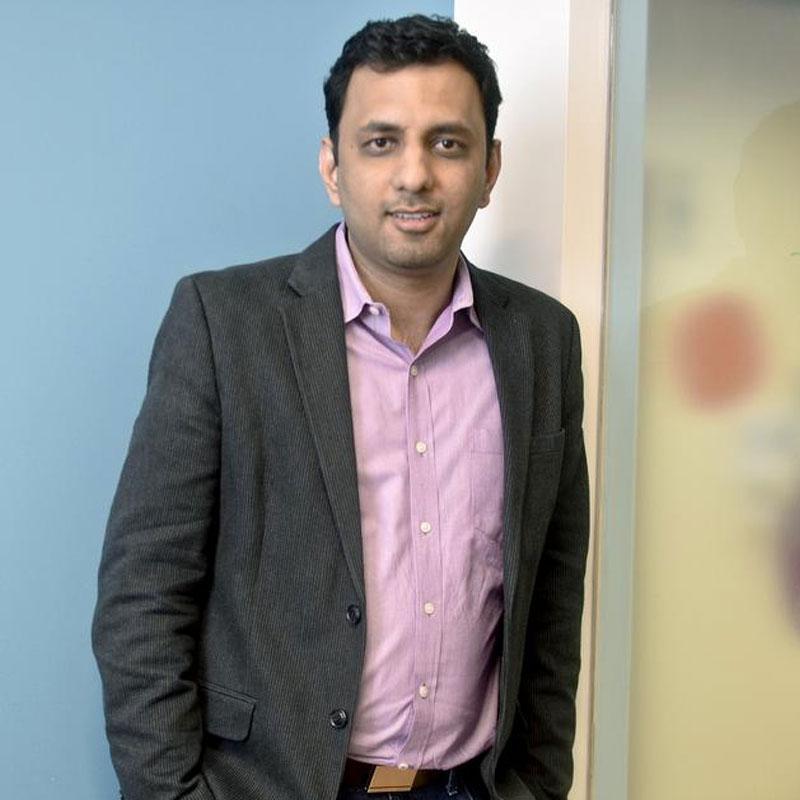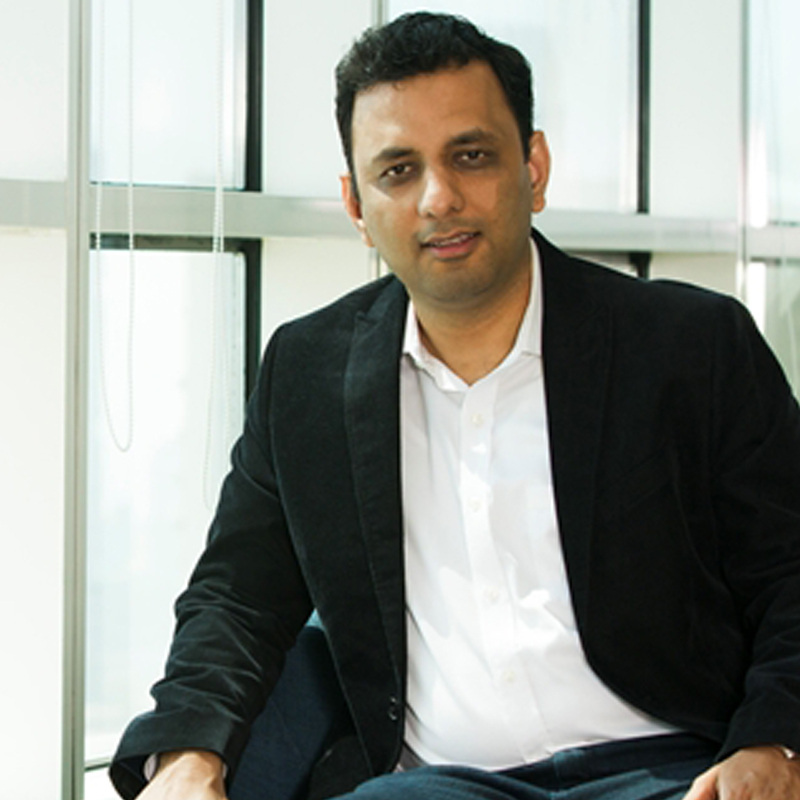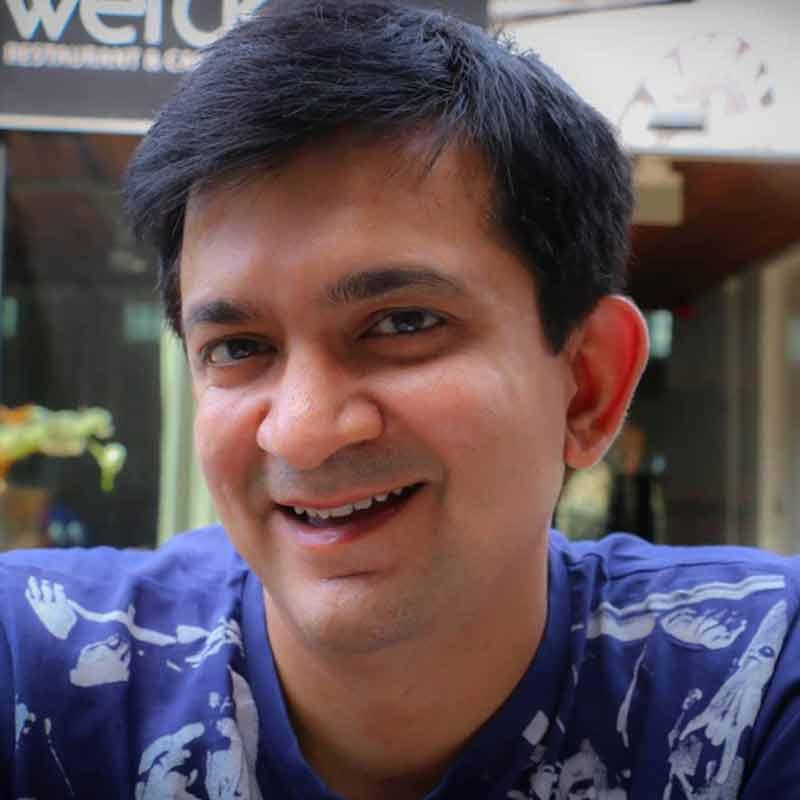
NEW DELHI: Rajiv Mathrani has decided to move on from Star Sports. He was serving as EVP & head, Star Sports marketing.
Sources close to the development have confirmed the news.
The news comes right after the high profile exit of Star Sports CEO Gautam Thakar.
Mathrani joined Star Network in 2018, prior to which he was serving as chief brand and online officer at Airtel between 2015 and 2018. He has also worked at Pepsico between 2010 and 2015. During this stint, Mathrani worked on snacks category, beverages and innovation. He also worked on the Asia, middle east and Africa region.
Mathrani has over two decades of experience and has also worked at Marico, Citibank and GSK.
Along with Mathrani, two other top executives have also called it quits. Ashok Namboodiri who was working as executive vice president, business head – regional sports network and Rupali Fernandes executive vice president – emerging sports have put down their papers. While Namboodiri joined the network in 2016, Fernandes was associated with it for nearly two decades.
KOLKATA: Within a few days of Uday Shankar stepping down, another top-rung professional has called it quits at Walt Disney owned Star India. According to sources, Gautam Thakar has stepped down as Star Sports CEO to start his own venture.
Those close to the development say that Thakar’s departure was not a question of if, but when. However, his last date at India’s largest sports broadcaster has not been decided yet. In the interim, Star TV Network executive vice president Sanjog Gupta has stepped in to handle the sports division.
Thakar was appointed Star Sports CEO back in 2018. During his career, which spans over two decades, he has worked with renowned brands like LivingSocial, eBay, P&G. He has an MBA from IIM Lucknow and a Bachelor’s in commerce from Sydenham College, Mumbai.
Mumbai: The excitement has been building up amongst sports fans with the clock counting down to 19 September when the first ball of the Dream11 IPL 2020 will be bowled at the Dubai International Sports Stadium in the UAE. On the field will be fierce rivals – the men in blue (Rohit Sharma’s Mumbai Indians) and the men in yellow (Mahendra Singh ‘Dhoni’s Chennai Super Kings). Millions will be watching it on the big screen on the Disney Star India channels in seven languages or on Hotstar on their handsets.
To further whip up the emotional frenzy and inform fans that the IPL is back in its full glory to entertain them, Star Sports has launched a promo – ‘Ek Saath Waali Baat. The promo encapsulates the mood of the nation, which continues to be puzzled and troubled by the ravages the Covid2019 pandemic is leaving in its wake, but it spotlight on the stories of hope and instances of people helping each other, neighbors sharing prospective job opportunities with those who have been laid off and a community welcoming a doctor with flowers as he returns from work. Additionally, it features a chef Youtube influencer who cooks and feeds those who are less privileged.
“The new campaign captures this feeling of togetherness while driving the message of hope and support, which has been critical in these trying times,” explained the Star Sports releae.
“As a country, we have always come together during testing times and we have seen the same over the last few months. There has been a greater sense of community and empathy that has demonstrated the resilience of the human spirit. The Ek Saath Waali Baa’ campaign has been created with this same ethos. Dream11 IPL is the most-watched sporting event in the country and this year, it is even more special. The campaign builds on the sense of community and signals towards the much-needed emotion of hope,” added Star Sports CEO Gautam Thakar in the release.
Keeping in mind the nationwide fandom for the tournament, the TVC will be released in multiple languages including Hindi, Tamil, Kannada, Malayalam, Telugu, Bengali, Marathi. Dream11 IPL has always evoked intense emotions amongst its vociferous fans and this time too, Star Sports promises to bring back the same thrill.
The TVC also highlights the fact that the second matche of each day is being played half an hour earlier at 7:30 pm, unlike last year when they began at 8 pm, which means audiences will stay glued to each clash till it ends.
Every year the sports broadcaster launches a high-decibel campaign to promote the tournament.
In 2019, Star Sports and BCCI launched an interesting campaign GameBanayegaName. The film was conceptualized by Taproot Dentsu. It opened with a split-screen battle between young players in a maidan on one side and established VIVO IPL stars on the other, vying to grab screen space.
In the same year, team India captain Virat Kohli took it upon himself to bring happiness to the children of the nation. In collaboration with Star Sports, he launched the ‘Let Kids Play’ campaign which urged parents to allow kids to go out and play. The campaign focused on how outdoor activities build character, personality and leadership qualities in kids.
The 2018 TVC for the IPL asked “Kaun Jitega?” or “Who Will Win?” It was released in six languages, depicting the IPL as a Battle of Tigers – Sher vs Sher. The campaign portrayed a young child posing the question to all around him – as to who would win when two tigers take on each other? As his question goes unanswered by everyone, his father takes him to watch an IPL match, concluding that, when one the feline animal takes on another, the tiger is always the winner. The multi-lingual campaign actually helped promote the Star Sports efforts to invite viewers to watch the game in their native language and not just in Hindi or English.
It was conceived and conceptualized by the Star Sports creative team and directed by Shlok Sharma in Bundelkhand and Prakash Varma of Nirvana Films in Hindi, along with Vijay Prabakaran in Tamil.
MUMBAI: Aptly setting the tone for a sensational ‘Summer of Cricket’ ahead, Star Sports, India has rolled out a TVC for the upcoming Paytm India v Australia ODI and T20 series. The highly anticipated five-match ODI and two T20 international matches starting February 24 will bring together two of crickets’ fiercest rivals pitted against each other. The film has been conceptualised by Taproot Dentsu.
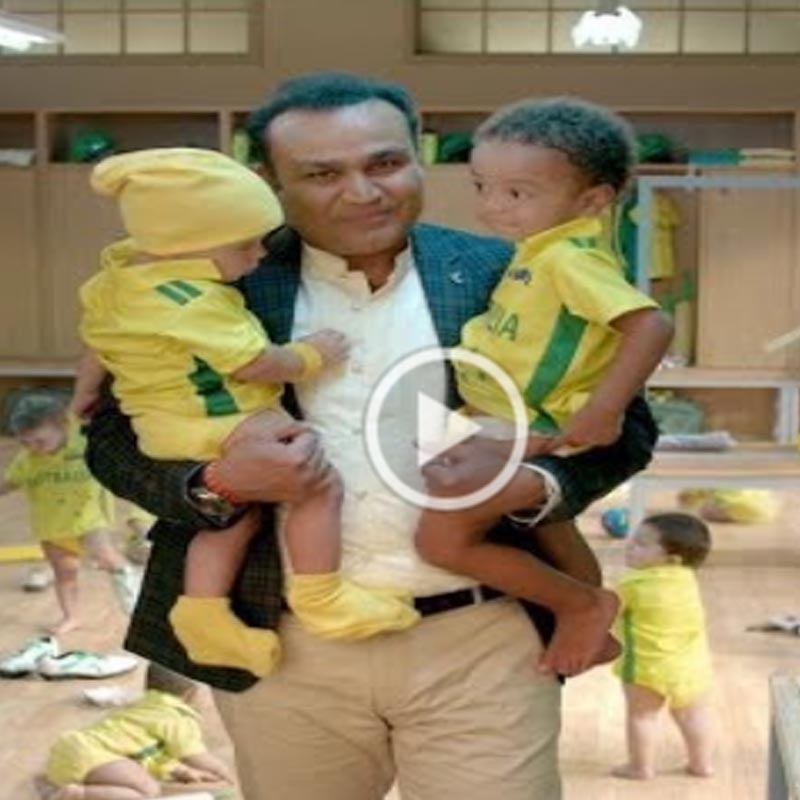
The on-ground banter in the recently concluded series between the two nations was lively and research conducted by Star Sports showed that it was spontaneously associated with the series. Riding on this banter, Taproot Dentsu has created two entertaining, topical films for the series with Virender Sehwag being the lead character talking about the campaign #BabySitting- Issbaar Kohli and team Australians ki babysitting karne ke liye hain taiyyar. A cheeky take on Tim Paine’s remark to Pant, these films play up the babysitting theme to pitch one team against the other.
Star Sports CEO Gautam Thakar said, “The campaign amplifies the fun banter that all fans look forward to in every India vs Australia series. This series kicks off a “summer of cricket” on Star Sports including the VIVO IPL and the ICC World Cup. We are even more excited this year as we will now telecast this on our dedicated sports channels in Tamil, Telugu, and Kannada for our regional viewers apart from our existing English and Hindi feeds.”
Speaking about the campaign, Taproot Dentsu CCO Santosh Padhi said, “Cricket banter gets a lot of attention in popular media and Paine’s remark has provided grist to our creative mill. The Aussies are good sports and we’ve used their dig against them, to set up a face-off between the two teams. A cheeky personality like Sehwag was an easy choice as the celebrity face for this campaign.”
Kohli led Team India will clash against the Aussies in the first ODI on February 24 in Visakhapatnam. With both teams working to finalise their core playing group in the run-up to the ICC Cricket World Cup 2019, this series plays an important role for both teams to identify their favourable playing XI.
Star Sports will telecast the series LIVE in 5 languages – English, Hindi, Kannada, Tamil and Telugu and on Star Sports 1/HD, Star Sports 1 Hindi/HD, Star Sports 1 Kannada, Star Sports 1 Tamil and Star Sports 1 Telugu.
Cricket fans can enjoy the action in their preferred language with detailed analytical commentary including the usage of graphics and augmented reality (AR) on the Select Dugout which will be available on Star Sports Select 1/HD for all the T20Is.
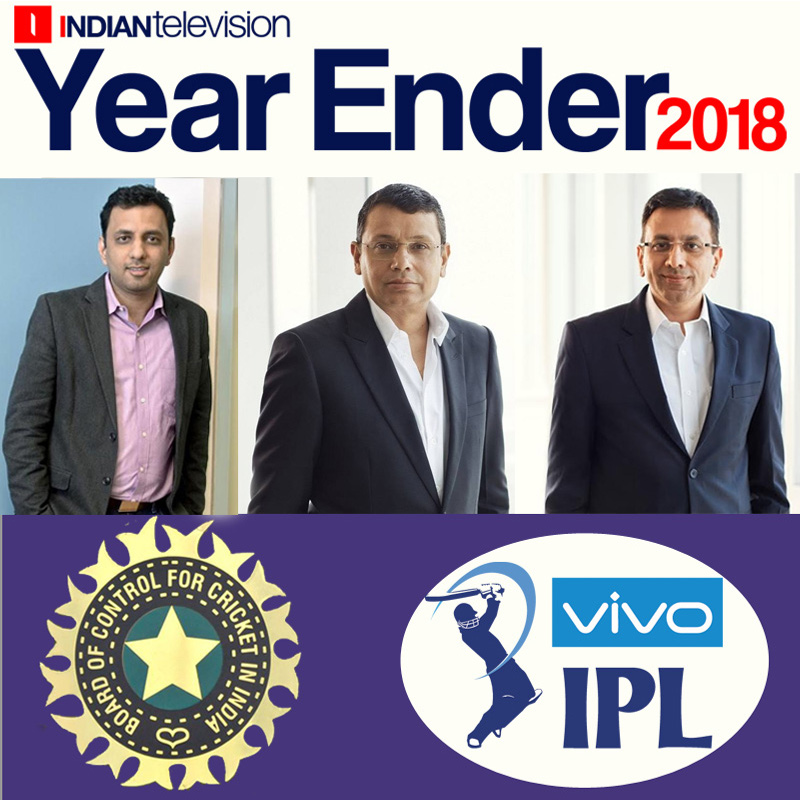
MUMBAI: Uday Shankar, who was recently promoted to president of The Walt Disney Company Asia Pacific and chairman of Star and Disney India after the Fox-Disney units combined, has disrupted the Indian sports broadcasting business in the last couple of years. From scooping the media rights of the cash-rich Indian Premier League (IPL) to bolstering his sports networks’ regional offerings with the launch of Telugu and Kannada language, Shankar has thrown caution to the wind on more than one occasion in his bid to change the rules of the high-stakes game. Shankar’s grand vision and appetite for big bets has now placed Star India in a rather enviable position with a stranglehold over cricket properties this World Cup year.
Tightened grip on Indian cricket
Star wasted no time in setting the tone for the year as it appointed Gautam Thakaras the new Star Sports CEO on 15 January 2018. Thakar was roped in to fill up the void left by the exit of Nitin Kukreja, Shankar’s blue-eyed boy, who left the organisation in March 2017.
The broadcaster tried to alter the IPL timings (8 pm game to 7 pm and the 4 pm match to 5.30 pm), a controversial development which was confirmed to Indiantelevision.com by then IPL chairman Rajeev Shukla. Despite the IPL governing council on board with the idea, opposition from team owners stalled Star’s plans.
In February, Star won the rights for IPL’saudio-visual productionas well as the BCCI domestic circuit for 2018-19, further tightening its grip on Indian cricket.
In April, Star kept its foot on the pedal as it retained the BCCI rights, conducted via an e-auction for the first time, until 2023 for mind-boggling Rs 6,138.1 crore. Star came out on top after a fierce bidding war, which lasted three days, against Sony Pictures Network India (SPNI).
The broadcaster paid Rs 60.1 crore per match for the 2018-23 home rights across five years which, a 50 per cent increase from the Rs 40.1 crore it shelled out for the 2012-18 cycle with a bid of Rs 3,851 crore for 96 matches.
Kicked off IPL with a bang
Star couldn’t have asked for a better start to its IPL reign, firing on all cylinders. The IPL final, aired live on 17 channels across eight different languages, powered the network’s growth by 34 per cent with 52.9 million average impressions. The title decider was produced with 11 live feeds across the TV network and Hotstar.
Super streamer Hotstar, then led by Ajit Mohan, hit a world record for concurrent online viewing with 10.7 million viewers for the final. The final witnessed a sudden hike from eight million to 9.1 million and then to 9.7 million before hitting the 10.7 million mark.
The television viewership for the tournament was 1.4 billion impressions with a growth of 15 per cent. With a total of six regional languages contributed to 22 per cent of the overall viewership.
According to industry sources, the network clocked close to Rs 2000 crore in advertising revenue for the first season.
For the first time, IPL was also aired on public broadcaster Doordarshan. According to the agreement, Doordarshan could telecast a select number of matches with a 60-minute delay along with some highlights.
Another potential Star-Prasar Bharti face-off
It wasn’t all smooth sailing for the broadcaster. In October, MIB proposed to amend the Sports Act 2007, which will provide ‘sports events of national importance’ on Prasar Bharati-owned, free-to-air Doordarshan Network an extended reach via private direct to home and cable TV Networks.
The MIB has now proposed to amend the act to make such events available on DD through all mediums of distribution. This may result in preference changes of the consumer and would not subscribe to costly private sports network channels. This will also give the distribution platforms an opportunity to negotiate harder with the sports broadcasters.
The move to amend the Sports Act 2007 has been necessitated due to a Supreme Court verdict which held that the public broadcaster Doordarshan cannot air events of national importance on private distribution platforms.
In the same month, MIB issued a notice for receiving feedback/comments from general public/stakeholders on the draft bill, 2018. In a recent update, the ministry has extended the deadline to give feedback on the draft sports broadcasting signals (Mandatory sharing with Prasar Bharti) (Amendment) Bill 2018 till 15 January 2019. The earlier deadline was 31 December 2018.
A move of this nature could adversely impact the revenues of sports broadcasters, particularly Star given its big bets on Indian cricket.
Bolstered regional play
Star India launched three channels in 2018, in line with its commitment of fostering a multi-sports culture in the country. Star Sports 3, a multi-lingual channel, was launched on 15 September and the first big event to air on it was Indian Super League (ISL) Season 5 in Hindi.
Star Sports launched its third regional channel Star Sports 1 Telugu after Star Sports 1 Hindi and Star Sports 1 Tamil. The channel went on-air on 7 December.
The broadcaster added a fourth regional channel, Star Sports 1 Kannada, on 29 December. Star India’s attempt at securing an exclusive sports channel for its Kannada viewers didn’t see the light of day for the 11th season of IPL. Regulatory hurdles made the broadcaster switch the Kannada feed to Suvarna Plus.
According to FICCI- Re-imagining India’s M&E sector 2018, the sale of broadcasting and media rights is the biggest source of revenue for most sports organisations, and can account for 55 per cent to 70 per cent of total revenues. The global sports media rights is expected to breach the US$50 billion barrier in 2019 and could reach US$54.3 billion by 2021.
2019 cricket bonanza
2019 is loaded with marquee cricket events with Star India owning rights to most of them. The summer has four key series or tournaments – New Zealand versus India, India versus Australia followed by the 2019 IPL and the all-important ICC World Cup 2019. Barring two series, Star is bound to be the home for Indian cricket lovers this year. That’s not all. The broadcaster intends to further dominate the regional language market play with the launch of three additional sports channels in Bengali, Marathi and Malayalam.
MUMBAI: After announcing the launch of Star Sports 1 Telugu, Star India is all set to unveil its fourth regional channel after Star Sports 1 Hindi, Star Sports 1 Tamil and Star Sports 1 Telugu (launching on 7 December). The next language market of focus for the company is Kannada and the channel is likely to go on air on 30 December 2018, a source close to the development informed Indiantelevision.com.
Star Sports 1 Kannada testing is in process on AsiaSat 7 at 105 degree east. Star Sports 1 Telugu is also being tested on the same satellite.
Star India's attempt at securing an exclusive sports channel for its Kannada viewers didn’t see the light of day for the 11th season of IPL. Regulatory hurdles made the broadcaster switch the Kannada feed to Star Suvarna Plus.
In an interview with Indiantelevision.com, Star Sports CEO Gautam Thakar had said that Kannada and Telugu were going to be priority language markets.
Under the new tariff order, Star Sports 1 Kannada (30 December) and Star Sports 1 Telugu (7 December) have been priced at Rs 19 for TV consumers.
In September this year, Star Sports also launched Star Sports 3, a multi-lingual channel in place of Channel V.
Towards the end of last year Star India contemplated taking Channel V off air, with Star Sports 1 Kannada as its substitute, with 16 November 2017 having been fixed as the launch date.
However, the broadcaster was unable to get the necessary approval from Ministry of Information and Broadcasting (MIB).
Star Sports currently boasts of 14 channels, including Star Sports 1 Telugu, in its bouquet, with nine Standard Definition (SD) and five High Definition (HD) channels. Star Sports 1 Kannada will increase the count to 15.
MUMBAI: Star Sports is all set to unveil its third regional channel after launching Star Sports 1 Hindi and Star Sports 1 Tamil. The next language market of focus for the company is Telugu and the channel will go on air on 7 December 2018 i.e. Friday, a source close to development informed Indiantelevision.com. As the Vizag leg of Pro Kabaddi League (PKL) starts on 7 December at Rajiv Gandhi Indoor stadium.
Star Sports 1 Telugu testing is in process on AsiaSat 7 at 105 degree east.
The formal launch of the channel will be done at a press conference at Taj Krishna, Banjara Hills in Hyderabad on 5 December.
In an interview with Indiantelevision.com, Star Sports CEO Gautam Thakar in September had said that Telugu and Kannada were going to be priority language markets for him.
Telugu feed of the sports event like IPL was aired on Star Maa Movies this season.
Under the new tariff order, Star Sports 1 Telugu and Star Sports 1 Kannada (yet to be launched) have been priced at Rs 19 for the TV consumers.
In September this year, Star Sports also launched Star Sports 3, a multi-lingual channel in place of Channel V.
Towards the end of last year Star India contemplated taking Channel V off air, with Star Sports 1 Kannada as its substitute, with 16 November 2017 having been fixed as the launch date.
However, the broadcaster was unable to get the necessary approvals from Ministry of Information and Broadcasting (MIB).
Star Sports currently boasts of 14 channels, including Star Sports 1 Telugu, in its bouquet, with nine Standard Definition (SD) and five High Definition (HD) channels.
MUMBAI: When it comes to sporting events, Star India and its sports bouquet Star Sports, has been at the forefront for the last couple of years. Event after event has been bagged by the network, beating not just broadcasters but even the likes of Facebook.
Shifting away from cricket, focus on other sports has grown in recent times. But yet, cricket remains important. This Asia Cup, Star Sports is very bullish about regional languages and plans to increase its reach by launching a couple of channels more in Kannada, Telugu and Marathi languages.
The sports bouquet of Star India has increased to 13 channels with the recent announcement of Star Sports 3 launching on 15 September 2018. With the growth of football, it sees merit in dedicating much of the new channel for it.
Indiantelevision.com caught up with Star Sports CEO Gautam Thakar to talk about its plans for Asia Cup and the upcoming tournaments. Though he is all smiles with the response from advertisers, the aim is still to drive up regional areas as well as overall consumption.
Excerpts:
With Asia Cup just around the corner, do you have any specific technological innovation?
I don’t know whether you can call it specific for Asia Cup but a couple of things we learnt from IPL, we want to expand on. Some are possible some are not. Certainly, we feel really good about the regional agenda, getting into languages because it did two-three things to us and I’m using IPL as a reference because it was most recent, partly because it was the most extensive coverage anybody has done and I also joined just before the IPL.
What it does for us is it increases engagement because it’s just more familiar in the language but it has also broadened audiences. So a lot of people, particularly in the south, have written to us saying ‘My mom can also watch the IPL now and I don’t have to bother explaining to her everything because it’s easy’. That is something that we want to continue in Asia Cup and beyond.
Our ambition is to have as many languages as possible over the next two-three years. Certainly, we think Kannada and Telugu will be our first forays, depending on licences from the ministry. But there is no doubt that we want to continue our regional investment.
Asia Cup is a very short duration tournament, so we would prefer to have our own channels to show it extensively as opposed to IPL for where we showed a bit on some GEC and movies channels. In a short two-week window it is less obvious that we can build up habit very quickly. Unfortunately, we won’t do it for the Asia Cup. The tournament will be in Tamil, Hindi and English for which we have three channels.
As the language agenda evolves, every sport that we have, we will put in as many languages. The Select Dugout that we did during the IPL, we will have that for the first time for the ODI format. Now one of the things that our core viewers appreciated was that experts were demonstrating what worked or didn’t work.
By design, we have limited advertising on that particular format and with one-day international, it gives us more time to explain from a cricketing sense both strategy and predictive nature of what will happen. So we think that is something we want to continue to do.
From a Hotstar perspective, ‘WatchN’Play’ was a strong engagement driver. People who played the game online instead of just watch were 2X the number of people who didn’t play the game. We feel that gamification is something that we want to continue to invest in as we go. At this point in time, I think there is so much in the cricket calendar that in fact, this is our biggest year. Asia Cup is followed by India West-Indies tour and after that we have Women’s T20 World Cup, India tour of New Zealand and there are other things but from Star India’s perspective, it is Australia coming to India then IPL followed by World Cup. So we have a continuous nine-month cricket calendar which means that from the marketing perspective and the category building, sports consumption, relative to more developed markets, is still low. It is massive in absolute minute terms but percentage wise it is still growing. Now any given week of the year there is some cricket activity.
After Asia Cup finals we have ISL starting from 29 August 2018. There is a nice build up that we can move the audiences there. PKL will start from 5 October 2018.
I was speaking to somebody last week and he said, from the advertising perspective it is good, because of Diwali season, which is great. But we think the world is changing and seasonality is going away a little bit. IPL which happens in March, April and May period, traditionally it is not the advertising period but it is the biggest sporting advertising property in a year.
Asia Cup will kick it off for us but kabaddi and football added will be three big pillars. There are a bunch of sports we have invested in but these three are the big drivers of growth.
If we talk about advertising, especially because you were in America before this, for a marquee sports property like a Superbowl they make the Superbowl ads. We don’t have that sort of facility. Can a broadcaster play a role in facilitating that?
In the US, as you know Superbowl has been on for a long time and this has built-up. It is like high points of the year and there is a lot of social viewing and from the advertising perspective, people actually take pride in what they have created and are very expensive. Some of the ads only air at the time of Superbowl and they spend millions of dollars doing that, but it breaks through the clutter and gets them virality.
The broadcasters can play some role but ultimately marketing professionals need to drive that agenda. We had Re-imagine awards for IPL, it was the first time we were doing it but the idea behind that was to spur the marketing community to think of the IPL in a different way and create advertising for the IPL. We will do the awards every year now to showcase what is the best advertising. In our own little way we are trying to enable it but ultimately the marketers need to embrace it.
What are the challenges in building momentum for a short format tournament like Asia Cup?
There is not much of a challenge to build momentum for Asia Cup. The challenge I was speaking about was about a channel which is not a sports channel because if it airs on a movie channel it takes time before people watch.
Asia Cup this time has a likelihood of having three India versus Pakistan games. We are not seeing Asia Cup as a challenge at all. In fact, advertiser interest is very strong and a lot of it is driven by India versus Pakistan. The challenge comes when the tournament is short and it is a new sport.
Kabaddi is no longer a new sport. In fact, it is the second biggest sport that we have. Imagine if kabbadi was only a two-week event, by the time you get into it, it’s over. Even football is the world’s number one game and is growing nicely in India but there are still a few years before it scales up. ISL being extended over a period of time allows people enough opportunity to get into the game. Because the real challenge in leagues, if they are very short, is that a lot of interest is driven by team affinity and you need some time to build the rivalry, the team support and things like that.
Now the way we consume cricket is changing because of T20 cricket, shorter attention spans of fans. So in a 50-overs format, what is your vision for interactivity and how do you try and keep the viewers glued to the screens as long as possible?
At the end of the day, we as broadcasters can do a few things in terms of quality of our coverage, ultimately the quality of the game is what drives the biggest interest. The way we think about it is two or three things. One is the Hotstar team is doing a lot of things to figure out how to have gamification.
The other thing is audience profiling over time. If you think about what we tried as an experiment in the IPL, the dugout worked well.
During this IPL season, we used something called Piero technology which dimensionalises action on the field in terms of data.
Ultimately, the quality of cricket and the rivalry between different nations is the biggest factor driving engagement. While the first campaign “Knock Knock” was based on the creative insight that one’s neighbour’s success will always be a consistent reminder of their own failure, the second TVC “Pange Wala Padosi” on the fact that the strongest of rivalries occur between neighbours, or in this case India and Pakistan. The commercial showcases Bollywood actor Omi Vaidya who plays the role of the ever challenging or ‘Pange Wala’ Neighbour – highlighting the tongue-in-cheek rivalry that stems between neighbours.
Another idea we are thinking about is, how we get fans to engage with this #knockthemout theme. Fans could give their advice to the Indian team to knock the neighbours out and we will relay it on the TV. Some of it could be in jest and some could be serious advice. We haven’t yet figured out the way to show it on the TV.
Will you be using Star Sports 3 to telecast Asia Cup because the channel is launching on the same date?
We are not yet sure, but the big part of the launch will be with ISL. We think that football is starting to grow in the country and it might merit a channel that large proportion of it should be football. It is not dedicated as a football channel but it is largely football.
We had our plans ready for Star Sports 1 Kannada, unfortunately, we couldn’t get it through the process. We are working on the formalities which need to be done. Kannada and Telugu will be top of the list. Bengali and Marathi are other interesting markets. After all these, the only remaining is Malayalam which is a very football heavy market and so the question would be, do we require a full channel for it?
How do you innovate coverage for your regional audience?
One is at a very basic level which is commentary. It is easier to hear Telugu if you are Telugu speaking native. Another thing that we have for most of the tournaments is unilateral cameras, which means we have a camera dedicated to that channel. Even in the IPL, when we were showing RCB and MI match, we focussed one camera on Bangalore players or fans and their reactions and cut to more coverage of that in the actual feed. The world feed will be what it is but 20 per cent of the coverage will be dedicated to the local feed. The third thing is every state has a flavour and we haven’t got it fully right yet.
How many advertisers do you have on board for Asia Cup?
Some brands which we have on board are Coca-Cola, Dream11, Hero Motors, Byju’s, Google, Nerolac, Britannia, Kajaria, Domino’s, Apollo, Cars24, Unimoni etc. One advantage of a short format tournament with a few big games is that there is a lot more demand and we have to actually manage some demands, particularly for the big games. Actually, advertising is the easiest thing for the tournament like the Asia Cup with big marquee games like this.
We think India is on the cusp of growth from a sporting perspective, still small relative to the world but growing fast now. We think Hotstar is adding a lot of value and incremental consumption, so how do we better coordinate TV and digital and make the experience more seamless. It is a hard place for advertisers not to be.
Do you have scope of more brands coming in?
There are different properties – one is advertising spots then there is some various sponsorship opportunity. So there are enough to do but we try to keep some amount of category exclusivity. There are some categories coming up which are very sports relevant but historically have not been as big as food and drinks. This category is a massive sporting property from an advertiser perspective for all sports and it’s only now starting to take off in India.
How would you manage the Select Dugout feed for 50 overs in Asia Cup?
That’s actually the interesting concept and problem we are talking about right now. The way we are thinking about it is that even in the three hours game the experts’ reactions were that they didn’t get enough time to show some of the nuances. It will be a little bit of an experiment because it is the first time for an ODI format. I think between now to IPL and the World Cup we want to perfect both of these offerings for ODIs and T20Is so by that time we have a higher consumption programming.
MUMBAI: Uday Shankar, the man on Urmi Estate’s 37th floor, has made his next move. Star India is set to launch a multi-lingual channel Star Sports 3 in place of Channel V on 15 September 2018, the broadcaster has confirmed.
“India’s appetite for sports beyond cricket is growing and viewers are expecting good quality broadcast of a wide range of sports. To cater to this need, we are launching a new channel Star Sports 3, and to begin with we will broadcast the Hero ISL Season 5 in Hindi,” Star Sports CEO Gautam Thakar told Indiantelevision.com, highlighting the rationale behind the network’s decision to add a channel to it sports bouquet.
Thakar, who took over as Star Sports CEO on 15 January, also added that Star India is likely to pump in more cash into its sports business.
“In line with our commitment of fostering a multi-sports culture in the country, we have grown our sports portfolio and its offerings and we will continue to actively invest in,” he said.
Star Sports 3 along with three other channels that went off air on 29 May 2017 were replaced by Star Sports Tamil, Star Sports Hindi 1, Star Sports Select 1 SD and Star Sports Select 2 SD.
Towards the end of last year, Star India contemplated taking Channel V off air, with Star Sports 1Kannada as its substitute. 16 November 2017 had been fixed as the launch date.
Star India even launched a promo campaign to support Star Sports 1 Kannada. However, their plans to secure an exclusive sports channel for its Kannada viewers didn’t see the light of day during the Indian Premier League 2018. The Kannada feed was aired on Star Suvarna Plus and the channel launch was put on hold due to regulatory hurdles.
In a public notice dated 26 October 2017, Star India informed viewers that Channel V would continue to remain available in its current form across all addressable platforms (DAS, DTH, IPTV, HITS).
At an event in Delhi in January this year, Star India MD Sanjay Gupta declined to comment on the status of Star Sports 1 Kannada, adding that the launch was still in its planning stage.
Star India’s sports bouquet will now boast of 13 channels – Star Sports 1, 2 and their HD versions, Star Sports 1 Hindi, Star Sports 1 Hindi HD, Star Sports 1 Tamil, Star Sports Select 1, 2 and their HD versions, Star Sports First, the only FTA channel and soon to be re-launched Star Sports 3.
MUMBAI: The Unimoni Asia Cup 2018 is all set to commence from 15 September and will see Asian neighbours – India, Pakistan, Bangladesh, Sri Lanka and Afghanistan – fight for the trophy. Star Sports, the official broadcaster, has released its first film for the tournament which speaks of the unique aspect of ‘The Tournament of Neighbours’ and this very aspect is at the heart of the campaign.
Star Sports’ “Knock Knock” campaign is based on the creative insight that one’s neighbour’s success will always be a consistent reminder of their own failure. Star Sports creative communications team is the mind behind this campaign. Nirvana Films has produced the campaign.
The tournament’s title sponsor Unimoni is a global provider of money transfer, foreign exchange, payments and credit solutions with the global head quarters in UAE.
The film subtly takes on the age old “Neighbour vs Neighbour” rivalry, and brings alive the neighbourhood rivalry in a way which is bound to leave viewers with a smile on their faces.
Talking to Indiantelevision.com Star Sports CEO Gautam Thakar said, “For the Asia Cup, the channel will have the game in English, Hindi, Tamil and a different Dugout commentary. We have applied for licenses for regional languages. Our plans are ready and as soon as we get the approval we will launch the channels.”
Star India has already sent the request to Ministry of Information and Broadcasting for permission of regional language channel, Star Sports Kannada. If the channel gets the approval the Kannada audience might also get to see the matches in their local language.
“Asia Cup kicks off the cricket calendar for us, we have learnt many things in the past six months, particularly regional languages, which proved really successful in the recently concluded IPL and we are planning to do more throughout this year as the tournaments evolve. On the other hand, the Select Dugout was a novel innovation which I think a lot of the serious cricketing enthusiasts enjoyed. We are going to have that in Asia Cup for the first time. We will be using the same technology as used in the IPL,” he added.
The tournament is scheduled to be held in Dubai from September 15 to 28. Nine Star Sports screens will telecast the tournament as well as Hotstar. This year, the Unimoni Asia Cup will have a few nail-biting matches between India and Pakistan, as they compete with each other in a bid to reinstate their country’s cricketing prowess.