|
Five years and counting big. CNBC Awaaz dominates the Hindi business news segment, leaving counterpart Zee Business behind, and even marching ahead of elder sibling CNBC TV18 in terms of audience reach.
CNBC Awaaz has become more interactive along the way and has shaped up as a well-defined channel with a clear focus on utility news. It treats news with the aim of helping viewers take informed positions on investments.
The fundamental challenge that CNBC Awaaz faces is in scaling up revenues. The cost restructuring will, however, help the channel in improving its profitability.
In an interview with Indiantelevision.com‘s Gaurav Laghate, CNBC Awaaz editor-in-chief Sanajay Pugalia talks about the channel‘s growth in the last five years and the path ahead in terms of content that would guide viewers in the verticals of stock, tax planning, commodity and SMEs.
Excerpts:
If you take the total viewership of the business news channels, it was close to 10 million five years back. Within two years of our launch, the pie grew to 30 million. Today, the combined viewership base for English and Hindi business news stands at almost 55 million.
On a mass basis, our appeal is larger then even CNBC TV18. Our viewers include small investors, consumers and businessmen. So in a way we have helped in the democratisation of the business news market space.
On the revenue front, even some English business news channels can‘t command the kind of advertising rates we do. But yes, it is also true that the dynamics of the market is that English business channels get higher rates.
It is pertinent to note that the initial five years were a build-up stage. We will see much faster growth from now on.
We will be covering other news as well, but our main emphasis will be user-centric. We focus on helping our viewer make the right investments to increase their wealth. Take real estate as an example. Our focus stories will be on the ground realities the sector faces rather than talking about how to improve the policies on real estate. Our object will be how to help viewers decide on which property to buy and we will suggest the rates and other things there.
Our estimate is that out of every 100 new consumers, two-thirds will come from the Hindi speaking belt, so you can imagine the future that the Hindi business news genre has.
I would say there is scope for new channels, but the success will depend on the strength of the network and how much credibility they can build. It won‘t be easy for new players.
‘The focus of our channel is in outlining the utility of news. There might be 10 important stories in a day, but how many are affecting our viewers? We decode such news in a manner that helps them understand the implications‘
So do you mean to say there was flab?
So we have reduced the number of shows but consolidated the information in them. We have also increased the coverage on commodity, personal finance, stocks and property.
How has the channel evolved over time?
We are catering to the specific needs of our viewers. I get more then 6000 SMSes and emails daily. And we try to reply to most of the queries. We are not just a business news channel; we run more like a campaign or a movement.
So what will the future focus be?
We will also continue to reach to our consumers on-ground with our activations and award properties.
The way India is progressing, there will be lot more new and young entrepreneurs. Our one-year focus is to organize more of financial literacy campaigns, help SMEs to grow, and cover miraculous entrepreneurial stories from different places.
I do not think there is any need to sensationalise. I am not against presenting news in an interesting and stylish way, but there is no need or room to sensationalise.
So how will you define your channel? To sum it up in one sentence, we help viewers in spotting opportunities to prosper. |
Tag: Gaurav Laghate
-

‘We have helped in the democratisation of the business news market space’ : CNBC Awaaz editor-in-chief Sanjay pugalia
-
![‘We are completely format and genre agnostic’ : Channel [V] GM Prem Kamat](https://wordpress.indiantelevision.com/wp-content/uploads/2025/12/Prem-Kamath-2.jpg)
‘We are completely format and genre agnostic’ : Channel [V] GM Prem Kamat
Badly bruised by MTV. Not really. Not really. Channel [V] has turned around to the same formula – cut down on music content while adding reality format shows.
The overhaul to fit into the garb of a youth channel is beginning to pay rich dividends. Channel [V] has shored up its ratings and, more importantly, the brand is being polished to cater to an expanded audience base.
Channel [V]‘s focus is on the seven metros. That is where its grip on audiences is strengthening as it tries to catch up on market leader MTV.
In an interview with Indiantelevision.com‘s Gaurav Laghate, Channel [V] GM Prem Kamat talks about the drive to expand the brand across TV, internet, mobile and on-ground platforms.
Excerpts:
It‘s been more than three months since the relaunch of the channel. How has the response been so far?It‘s been fantastic. Actually, it has surpassed all our expectations…both from a market share point of view as well as the revenue standpoint. The kind of upswing that we are seeing is absolutely phenomenal. When we started out- even before the revamp when we began changing things around the channel and getting some basic things in place, transforming the kind of music we play, all of it – we were having a 0.2 – 0.3 per cent share. And as per the latest data, our share now has increased to 0.81.
That‘s actually a fourfold increase. We were expecting to be at this stage probably in the next five to six months down the line, but we have reached that point already.
Also, shows like Dare 2 Date have become hugely popular. There are websites dedicated to it. There are fan pages on Facebook and popularity is huge.
But how do you see competition with MTV and Bindass who are much ahead in viewership and targeting the same youth audience?The case is pertinent to the time when we started out. However today, MTV‘s share is 1-1.2 per cent while we stand at 0.8. Thus, our gap with MTV has significantly narrowed.
Talking about focused markets, we have been always ahead of Bindass. So for the slice that we take amongst the youth, we have been consistently ahead of Bindass. Specially, post the relaunch.
But the Tam data does not show the kind of growth that you are boasting of. You talked about your focused markets…
As you know, slicing the audiences is a game that people play to suit themselves. We always maintain that we are a youth channel; we focus on the seven metros. So we are an upscale urban youth portal, channel, medium… whatever you call it. And 15-24 is really the age group that we define.So that‘s really the set of people we talk to.
But just the seven metros. Don‘t you think youth is scattered across?It is. But I think it is very important for us to define what our focus areas are and which are the places we wish to operate. When you say seven metros, it still counts to about 55 per cent of the Tam markets. So it is a significantly large percentage of the population.
In terms of consumption, for most brands these seven markets will contribute to over 60-70 per cent of their volumes. In terms of television viewership, these again contribute about 60 per cent of the total viewership. So it‘s really about saying that, of course Channel [V] is consumed outside these seven metros, but every time we create something when we use audiences as a guiding force for the kind of stuff that we should be doing, these are the markets that we talk about. And hence, everything that we measure revolves around these markets. These are the set of people we are catering to.
Coming to shows, music channels are shrinking their music content while upping their format shows. Is this the inevitable model?No, not necessarily. I really believe it depends on how you define your own programming philosophy. I think there are two ways to approach this. One is by staying faithful to the genre, second is by staying faithful to your audience.
At Channel [V] we always say that we are going be faithful to our audience and not the genre. So, if a 15-24-year-old wants to consume a certain kind of content, that‘s the kind of content Channel [V] will put up.
We do not believe that we are a channel which stays faithful to the genre. This particular audience has a wide variety of interests. It is our endeavour to try and reflect every aspect of that in the edgiest, the most interesting and most entertaining form possible. That is what you will see happening on our channel as well.
It‘s not that Channel [V] has stopped playing or showcasing music. A large part of our content is still music, but we have taken a conscious call to move beyond music and get into a whole series of different things.
‘We are seeing Channel [V] as not just a television channel but as a brand with legs like TV, internet and mobile. In short, an all round engagement platform‘
MTV had started the transition in 2007 when it shed its music content from 80 to 60 per cent. Now it is just 20 per cent of their programming. Is Channel [V] taking the same route?Like I said, it‘s not a decision that is driven by the genre at all. While I cannot comment on MTV‘s stand on this and how they are approaching it, our take is very simple. We pride ourselves on having a very strong pulse on what the consumer needs and what our target group enjoys. Our endeavour is constantly to be on the ball as far as this consumer pulse is concerned. Our content mix will always be a reflection of this.
If the genre shifts in a completely new direction tomorrow, and the trends indicate that the youth choices are changing, that will be the direction we will take.
Currently, your music content share is 60 per cent. Are you planning to cut it further?Currently, the kind of yield that we are getting from our shows is very good. But that doesn‘t mean that we are going to abandon music and populate the whole channel with shows. There are a variety of other constraints and considerations to take into account.
This is the content mix that we decided on at the beginning of the year in July (as per News Corp‘s financial calendar) and we intend to continue this till at least June-end. Then, we will take a call on our content again.
So with your revamped programming, you mean that youth is more interested in reality?Absolutely. I think it is fairly clear for everybody to see that. And it is not just reality. Reality is just a format, a form of programming. We are not constrained by that at all; we are completely format-agnostic and genre-agnostic. So it does not matter to us if the show is reality or fiction or documentary. What matters is whether it interests our target audience. And we have ample evidence all around us to say that their interests go far beyond just mere music.
For example, our show Campus Buzz can‘t be put under any genre. Here students make video blogs and submit it to us. It is user-generated-content on television, but the engagement is also online.
These are things that are representative of how we can push beyond the boundaries of genre and reality and fiction or non-fiction content.
Also the cost of content for these kind of shows is very small?Absolutely, because a large part of it is user generated. We do guide them to some extent. But you are right in saying that the cost of producing something like this is very very small.
But isn‘t the cost higher for other reality shows like Exhausted, Kidnap, or [V] The Player?
Different shows have different cost structures, depending on what you are doing with it, where the shoot is, who you are getting and length of the shoot. But yes, on a ‘per half hour‘ basis, creating your own custom programming is more expensive than playing music. But it also offers you the advantages of creating something that is unique, something that is differentiated and something that is much more of a fit with your brand personality. And most importantly, creating something that the audience will find engaging and interesting.
But is the revenue also looking up?Yes, because what these shows also do is provide you with customised solutions for clients. When someone (client) comes to Channel [V], it‘s not merely for the reach or for the conventional matrix of reach and frequency. They select a channel like us for the kind of engagement that we provide with the audiences. I think it is fair to say that a consumer of Channel [V] is far more involved with the brand than let‘s say the consumer of a regular conventional GEC (general entertainment channel) or a movie channel for that matter. That is really the advantage we can offer to the advertisers.
What we bring to the table is a far higher degree of engagement with the viewers and far greater avenues of engaging with these people than just playing a 30-second commercial.
Coming to promo properties, Channel [V] has created characters like Quick Gun Murugan, Lola Kutty and Sampoo Singh. Has the focus shifted now?Not really. Probably there has been a lull in the last two years for various reasons. But it is not that we have stopped. For example the ‘Bai‘ on Channel [V] that says Itne Paise me itna hi milega. It‘s something that the Bai said on Channel [V] and has become a very popular lingo.
We are also creating more characters. Bai has been joined in by Bhai, her brother who is on-air right now. Things like these catch on with the audiences on their own…we can never promote these. Our best bet is to create these characters and put them out to see what happens. It will be very arrogant to believe or to say that we can create these characters at will.
Do you see the no-appointment viewing pattern as a problem for youth channels like yours?For certain shows yes, for certain shows – no. Channels like ours don‘t have the kind of appointment viewing that a GEC has. Therefore, all of us follow an alternative model of airing a high number of repeats. If on a GEC a show repeats once or twice, on a channel like ours it will repeat 11-12 times. It gives us an opportunity to far more sample that show.
The business model for us is a combination of attempting the scheduling in a different manner and finding new avenues for more consumption, whether it‘s online or mobile.
So that is why you are more bullish on internet?Exactly. If you see our revamped website, only 10 per cent is about the content that we put on TV. It is our firm and unshakable believe that people don‘t go online just to see what is on TV. Hence, even if the website caters to the same kind of audiences and the same areas of interest, it does so in a manner that is suitable much more for the internet.
You will find a lot more articles and advises on youth-centric issues, love and relationships. It is created exclusively for the internet, though it is for the same set of audiences.
How does the strength of a network like Star help Channel [V]?
It gives us a very strong platform to promote our shows. It is also a very strong source for driving in efficiencies, weathering cost efficiencies, and learning. Because of the network, we have far more channels from where we can learn or cross pollinate ideas. Also, we can source content on a much larger scale, which gives us a cost advantage.
What is the way going forward?You will find that we will continue to do shows. Internet as well as mobile and digital will become important for us. On-ground is also another important proposition. We are planning to take our brand on-ground on a grand scale.
We are seeing Channel [V] as not just a television channel but as a brand with legs like TV, internet, mobile and on-ground. In short, an all round engagement platform.
-

”We have created a basket of Marathi channels to dominate our position in this market’ : Nikhil Sane – Zee Marathi and Zee Talkies business head
Subhash Chandra realised as early as 1999 that the next wave of Zee network’s growth would be in the regional broadcasting space. Up came a clutch of channels including Zee Marathi, Zee Bangla, Zee Punjabi and Zee Gujarati.
Chandra has cemented his leadership position in the Marathi market with the launch of a news channel, Zee 24 Taas, and a movie channel, Zee Talkies.
Following the vertical integration model, Zee has also got into the Marathi film production business.
Starting as the first private Marathi channel on 15 August 1999, the initial years were slow. With the launch of ETV Marathi in 2001, Zee Marathi, in fact, even lost its leadership position. But it was in 2005 that things paced up as Zee Marathi scaled up its distribution and programming. Reality content through shows like Saregamapa, Eka Peksha Ek and Hasya Samrat gave the channel a big boost in ratings.
In an interview with Indiantelevision.com’s Gaurav Laghate, Zee Marathi and Zee Talkies business head Nikhil Sane talks about the 10-year journey of Zee Marathi.
Excerpts:
Zee launched its Marathi general entertainment channel on 15 August 1999. How has the 10-year journey been?
Everyone was skeptical at that time about Zee’s decision to launch a Marathi channel. In Maharashtra, Hindi channels – Zee TV, Sony Entertainment TV and Star Plus – were dominating television viewership. The only available Marathi content then was on Doordarshan – that also for four hours. So launching the channel way back in 1999 was a big, big step.But wasn’t it a big advantage to be the first private Marathi channel?
In 1999, the Marathi TV industry was non-existent. So you can say that we created the Marathi TV viewing audience. What we got was a lot of talent. Maharashtra has produced ace directors, writers and actors, who supported us in this endeavour passionately. And we offered them a robust platform. So, Zee Marathi played a pivotal role in shaping the Marathi entertainment industry.What was the programming mix for the channel then?
As I said earlier, there was no scarcity of talent, but it was scattered. With our launch, people from Marathi theatre and cinema joined us. That time we were experimenting a lot. We were the first channel to launch a daily show, Abhaalmaya, at 8.30 pm. The competition was against Amaanat on Zee TV, Heena on Sony TV and Saas on Star Plus.We got a humongous response for the show. Soon after, we launched the afternoon slot with Maansi, which again got a good response from viewers.
Step by step, we increased our prime time, which at present is from 6 pm till 11 pm. We launched weekend programming, reality shows, events and even entered into film production business.
Meanwhile, we launched the news channel (Zee 24 Taas) and the Marathi movie channel (Zee Talkies) to create a basket of channels and dominate our position in this market.
When did you extend your prime time?
We had a prime time from 7.30 to 10 pm till 2006. We extended this to a four-hour band starting 7 pm. We also had hourly news bulletin, which were very popular. Later, as we launched our own news channel, we shifted news from Zee Marathi.Earlier we used to air weekend movies on Zee Marathi. But as we launched Zee Talkies, the movies were shifted and we started daily soaps from Monday-Saturday.
‘It was in 2005 really when Zee Marathi scaled up its production, distribution and programming’
You said initial years were experimental. So when did you manage to strike the right formula for growth?
We launched some very good shows in our first five years. But it was in 2005 really when Zee Marathi scaled up its production, distribution and programming. It was like a channel revamp.We created reality shows like Saregamapa (singing talent hunt), Eka Peksha Ek (dance reality show) and Hasya Samrat (comic reality show). Recently, we launched Hapta Band, a quiz-based show.
Also, we organised grand scale events like finale of reality shows, Zee Gaurav Puraskaar (awards for films and theatres) and Zee Marathi awards (viewer’s choice awards for Zee Marathi shows).
What were the milestones in programming?
We experimented with different genres. Our comedy show Hasa Chakatful saw performances from the best performers of the industry. Shriyut Gangadhar Tipre was also one hugely popular comic fiction.Among fictions, Abhaalmaya, Avantika, Asambhav, Vaadalwaat and recently launched Kulvadhu got us good viewership. Our reality shows and events also are some of the most popular properties on Marathi television.
Apart from these, we had shows devoted to literature (Pimpalpaan), poets and musicians (Nakshatranche Dene) and horror (Gahire Paani).
ETV, which launched in July 2001, emerged as a strong competitor and even surged ahead of Zee Marathi at one stage. What were the reasons?
After a fabulous three-year ride, we had a tough patch for two years. ETV Marathi launched with a very strong distribution and this impacted us. We were popular in towns, though. But after 2005, we focused on every aspect of the business.Now there is new competition from Star Pravah. While other channels like Mi Marathi and Saam Marathi have launched, they haven’t really been able to shake things up. So do you see a three-player fight in the Marathi GEC landscape?
If you see our current ratings in Maharashtra, we are only below Zee TV while outnumbering Star Plus, Colors and other national GECs. That is what our competition is. Today, Hindi viewership amounts to 26 per cent while Marathi is 20 per cent in the state. We have a lot of space to grow here. Also, competition gives advantage to viewers ultimately as they get variety. And it grows the market.You talked about entering into the film production business and have so far released six movies. How are you scaling this up?
After establishing Zee Marathi, the natural progression was to launch a movie channel. So we launched Zee Talkies. The next logical step was to enter into the film production business ourselves.We have, in a big way, led the revival of the Marathi cinema industry. So far, our movies have done good business.
We have released Saade Maade Teen, followed By De Dhakka, Galgale Nighale, Dudgus, Ek Dav Dhobi Pachaad and Gallit Gondal Dillit Mujra.
The next movie we are ready with is Hai Kai Nai Kai. We have signed five directors for three films each.
So how do you see the Marathi broadcasting space evolving?
The time ahead is surely challenging. We have to be open to change and need to continuously evolve to stay ahead of competition. And by competition I do not mean Marathi or even Hindi GEC channels. The main competition is with new media. With so much available on different platforms, attracting viewers to TV will be a challenge.From now on, the biggest question to ask ourselves would be ‘what next’. Hindi GECs will survive as their base HSM (Hindi speaking market) is very big. Innovation is the only way to keep ahead in this Marathi TV broadcasting space.
-

‘We believe our prime time has more potential’ : Ashvini Yardi – Colors senior VP and head of content and creative
Colors is celebrating its first year sitting at the top of the ratings cliff. A late entrant, with 10 Hindi general entertainment channels launched before it, the Viacom18 channel climbed to the No. 1 position in 38 weeks time, enjoying the fastest ride to success with backing coming from “disruptive and differentiated” programming, strong distribution and heavy promotions.
From 81 GRPs (gross rating points) and the No 3 position in first week, Colors crossed the 100 GRP mark in its second week; 200 GRPs in the ninth; and 300 GRPs in the 32nd week.
Critics have accused the channel of pumping in huge monies behind high-cost shows. That seems to be paying off, at least for now.
Post a big bang launch with Khatron ke Khiladi, Colors programming team under the stewardship of Ashvini Yardi, former Zee TV creative head, weaved a series of daily and weekly shows that gradually built a loyal viewership base for the channel. Within nine months of launch, shows such as Balika Vadhu, Jai Shri Krishna, Uttaran and Na Aana Is Des Laado, along with non-fictions, are kicking in around 250 GRPs.
In an interview with Indiantelevision.com’s Gaurav Laghate, Colors senior VP and head of content and creative Ashvini Yardi talks about the strategy behind the programming and the channel’s plans ahead.
Excerpts:
Colors launched exactly a year back. What have been the important landmarks for you?
Well, occupying the third spot in the launch week itself, crossing the 100 GRP mark and then to finally becoming the number one channel within a span of eight months has surely been some of the milestones for us. But for me, apart from all these, it was more about meaningful programming.We created thought provoking subject-based shows like Balika Vadhu, Uttaran and Na Ana Is Des Laado. And we believe that Colors has raised the bar for quality programming, both in fiction and non-fiction shows.
But don’t you think it adds on to the audience fatigue?
Not really. On the contrary, it is good for viewers as every channel tries to come up with something different and better in quality. Overall, it gives the viewers an expanded choice.What has been Colors’ strategy behind selecting particular shows?
We knew that we were the 11th player foraying into the GEC clutter. And therefore, to break into this clutter we wanted to offer something different to viewers. However, that different element was always within the same boundary. You see, every show is different, and yet full of emotions. Look, concept or idea remains the same; what matters is the treatment.We also encouraged new talents.
But on the creative side, how do you decide on the progress of the storyline?
Generally, while a producer thinks only about the show, the channel has a holistic approach towards it. But at Colors, we strongly believe that for any show, vision has to be one person’s. And in Colors’ case, it is bound to be ours. We look after every show with the perspective of the whole channel.‘Celebrities have fitted in very well for Colors. They, as brands, blended with the channel’s property and also helped as promotional vehicles‘In that case, creative differences won’t emerge?
Well, our creative team sits with producers to discuss and chalk out everything in detail. But we do make our vision for the show very clear.And what about deadline pressures? Producers always accuse channels for changing storyline at moment’s notice and that they don’t get enough time.
For a daily soap, pressure is always there. And that is true for all channels. Even if we have a bank of episodes, there can be last moment changes. Sometimes, on realising that a particular character is getting better response, we decide to increase its length. Or for that matter, if some property is not delivering up to its potential, we may suggest for a change in the storyline or sub plots. The daily soaps are designed in such a way that you can take it to any level. That is the beauty of soaps.Precisely, that’s why some shows run for years and viewers don’t enjoy “happy endings”. What about finite shows?
We have Balaji Telefilms’ Koi Aane Ko Hai, which is a finite show and is seasonal. So it will go off air after completing its first season and will come back again. Also, keeping a bank is possible in finite shows. But a channel has to give a staple diet of fiction, non-fiction and movie content to viewers.Is the accusation true that Colors is putting in large monies for big ticket shows and spoiling the market?
That is not true. Our programming budget is not more than any other top channel. It is a perception play that we have high-cost shows because of the scale and quality we stress upon. On actual basis, the cost is on par with other shows.But you roped in stars like Akshay Kumar and Shilpa Shetty for your properties. Don’t they hike your budgets? And how important is the star value for you?
For Colors, these celebrities have fitted in very well. They, as brands, blended with the channel’s property. Akshay is known for his khiladi image, so he was the best option for Khataron Ke Khiladi.Shilpa, on the other hand, had won Big Brother in its original format at that time. So, who better than her to host Big Boss. Moreover, these shows with celebrities also helped as promotional vehicles for the channel.
Channels are adopting films into soaps. Your Jeevansathi had striking similarities with the movie Hum Dil De Chuke Sanam.
Well, people find connect. Jeevansaathi was a love story, and Indian films have tried so many plots based on love stories that there are bound to be similarities. In the beginning, because of the cast and plot of Jeevansaathi, viewers thought it is like the movie. But it changed entirely. Moreover, an idea can come from a film. But daily soaps have much more than a three-hour plot. So there is a lot more to play with.But some of the shows are not delivering. Don’t you think you should replace them like you did with four other shows?
We believe in giving every show a fair chance. If we see any potential, we go ahead with that show. Right now we are concentrating on the shows which are giving average ratings and have the potential.The four shows that we have replaced were not getting enough response, so we ended the story logically.
Now that you have a stable GRP base of 250 from programming and movies, what next?
Our aim is to continue delivering on viewer’s expectations and to consolidate the primetime. We believe our primetime has more potential than this.And what about launching the afternoon band?
As I said, there is a lot of scope in primetime; therefore, first we are taking care of this band. After that, we will get into the afternoon band. Moreover, our repeats during afternoons are getting us ratings; so we can wait for some more time before launching shows for this band.
We have also launched the Sunday morning band and are getting good response from it.Any big idea behind launching the Sunday morning band?
It is in sync with our disruptive and differentiated programming. Sunday morning was a major slot in the 90’s. It is still a time when families sit together and watch television, including kids. So we decided to design programmes for this untapped slot.Our shows Vikram aur Betaal and Shri Swaminarayan are targeted at family viewing with a focus on kids.
Also, now we have launched our weekend primetime with India’s Got Talent, Chhote Miyan season 2 and Mahaveer Hanuman. So we are on course with our plans.
Has the economic slowdown played a dampener on your budget and growth plans?
Well, we are ahead of our targets and, thus, have not curtailed any of our plans.How important is it to be in the top three in the highly competitive Hindi GEC space?
It is a cycle. It is very important to be in the top league in this game. If you are there, you can attract big chunk of revenues to invest in good shows, which ultimately gives you good ratings. -
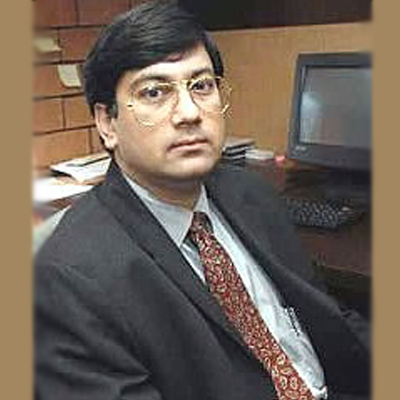
‘Scaling up through film acquisitions is a risky model’ : Mahesh Ramanathan- Big Pictures COO
Rock On! was only the beginning. After going on to create a new set of cult audience with their first co-production, Reliance ADAG's Big Pictures is bullish on its 18-movie slate for 2009.
On the distribution front, Big Pictures rode on the success of Ghajini at the fag end of 2008 to get a slice of the overseas business with Rs 390 million. The challenge this year is to step up the film production and distribution business.
In an interview with Indiantelevision.com's Anindita Sarkar & Gaurav Laghate, Big Pictures COO Mahesh Ramanathan talks about the company’s production plans and the revenue scope that the film business offers as different studios scale up.
Excerpts:
Big Pictures had made a grandiose announcement of producing 18 movies in 2009. But with the economy slowing down, is there a revised plan?
With the Indian film industry growing at a CAGR of 17 per cent, which is almost double the GDP growth rate, box office definitely remains unaffected. Though there is a slowdown in the economy, that definitely does not lead to any de-growth in demand. If the content remains right, there can't be any downturn in consumer sentiments when it comes to movies.Having the financial muscle of Reliance ADAG, why has Big Pictures gone in for six Bollywood co-productions out of this roster of 18?
Co-production deals for us actually bring in a perfect marriage between creativity and commercial acumen. While we bring in certain virtues like financing, marketing, promotion and distribution of content through our various platforms (online, home video, mobile, DTH), the director still calls the shots. However, he has to align his creativity with us to bring in the viability for the product for commercial exploitation.You will also be producing seven regional films this year. What kind of potential do you see in the regional film space?
The regional film space currently accounts for 50 per cent of the Indian film market and is growing. While there is a huge appetite for Bengali films, the Southern region is definitely a huge market to tap. Marathi film industry is also revamping. So the potential to commercially exploit these markets remains huge.Any plans of entering the Bhojpuri market?
We don't plan to step into the Bhojpuri market as of now as there are huge distribution challenges.Recently, we have seen a lot of small and mid budget films raking in good numbers at the box office which also includes your first Hindi production Rock On. Do you plan to create more small budget movies?
Our business model is not based on budgets. While we do have a few low budget films like Sikander and Chaloo lined up for 2009, we will begin the year with our big budget Luck By Chance. Budget is purely a derived figure based on the demands of the script. Our approach is more towards building a portfolio across a variety of genres that include small, medium and mid-budget movies. 'Our business model is not based on budgets. Our approach is more towards building a portfolio across a variety of genres that include small, medium and mid-budget movies'
Year 2008 was a year of film acquisitions for some major studios. Why did you decide to stay away from it?
Scaling up through film acquisitions remains a very risky model. When you are acquiring a film, there is a lot of producer profit that is built in which jacks up the price. Our business model focuses on creating original content. Not only can you keep your costs low but also ensure that the viability of the film remains secured.If you are into acquiring of films, you are entitled to exploit the product only for a stipulated time period. This is not the same case with content creation. Original content helps you build your own catalogue and once the catalogue is built you can use it to create more revenue streams.
What role does marketing and promotion play in increasing a film's occupancy in theatres and multiplexes?
Huge! Take Ghajini for example. The pre-release marketing and promotional activities for the film induced extreme interests amongst audiences and as a result Ghajini witnessed almost 100 per cent occupancy in its first week at theatres. The marketing activities that we did across 40 territories overseas also helped us generate a lot of eyeballs. So marketing is definitely very important to tap the right audiences.How difficult is it to tap the right set of audiences?
Because of media fragmentation, it is becoming very difficult to reach the right set of audiences and engage them. Today, you cannot pin your hopes onto only the press and television. You have to have a 360 degree approach and mass customise your communication to audiences – and this is where we score. We have a presence across almost all media and entertainment platforms – be it radio, home video, online, mobile, social network etc. Thus, synergising all these platforms helps market and promote our films in a much focused way. It is also very cost effective.How do you strategise your film marketing activities in the international space?
Unlike India, it is more of micro-marketing in the overseas market where you target the diaspora. Hence, the choice of media vehicles is more local there. You have to be aware of the local newspapers and have to have a local expertise and channelise them smartly.Though in terms of value the Indian film industry is only 2 per cent of the entire global box office, it is generating interests across international studios. Why?
When it comes to the number of films produced in a year, we are definitely the largest in the world. India produces over 1000 films a year. We are also the largest box office in the world with 3.5 billion admissions a year. While Hindi films account for approximately Rs 50 billion, a similar amount is generated from regional movies. So it's definitely an attractive market for international studios that have long term plans in this country.When it comes to value, our box office stands at only 2 per cent of the global box office. But that is because our collections are still dependent a lot on single screens where ticket rates are really low. However, with the establishment of 3700-3800 multiplex screens in the next five years, we will see a lot of value being added to the box office.
How much of the revenue generation potential of a film is inflicted by piracy?
Between theatrical, home video and cable, it is estimated that the overall piracy eats away almost 80 per cent of the film's entire revenue potential. -
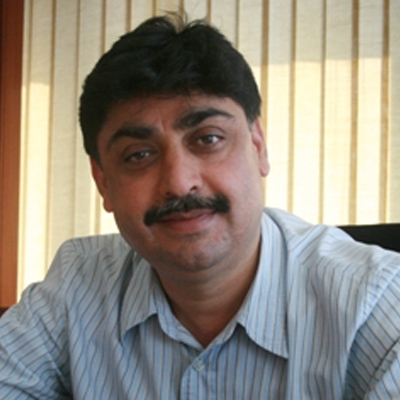
‘We will disrupt the market with our content, distribution and marketing strategies’ : Kulmeet Makkar- Big Music & Home Entertainment CEO
Anil Ambani is pushing hard the home video business to complete his presence in movie production, exhibition and broadcasting business.
Big Music and Home Entertainment is targeting a revenue of Rs 1 billion by the end of this fiscal. The company has signed up four big Hollywood studios – Warner Bros, Universal, Paramount and DreamWorks SKG – for home video distribution, controlling 60 per cent of Hollywood content. The content strategy is also to grab rights for big ticket Bollywood movies.
In an interview with Gaurav Laghate, Big Music and Home Entertainment CEO talks about the company’s growth plans.
Excerpts:
Why is the home video market still to explode despite the entry of several players?
The home video market, which is a huge revenue spinner in developed markets, is yet to take off in India. In the US, this segment contributes to 55 per cent of the total filmed entertainment revenues.In India, this figure is not even six to seven per cent. Due to several reasons including piracy, home video is a very small segment. India is purely a theatrical dominated movie market.
How does India shift to a strong home video market?
There are several issues which need to be addressed in a country where the pirated market is as high as 85 per cent. The distribution system is also largely music-driven – the music companies are also home video companies. We need to change this as the profile of the home video audience is different from the audio music buyers.The hardware penetration of VCDs and DVDs is still not good. Home video companies also need to spend more money on marketing and distribution. This is beginning to happen and we will grow exponentially in the next few years. There are estimates that the Rs 8.3 billion market will grow to a size of Rs 15 billion by 2011-12.
There is also a much disorganised movie rental market which is again driven by a high level of piracy. Only recently large operators like Bigflix, Seventymm and Nimbus have come up. This is good news for the sector as we will have more organised players in the rental business.
Isn’t Bollywood still dominating the home video business?
Bollywood and regional home video content garner around Rs 7 billion. The biggest player in the domestic market is Moser Baer, followed by Shemaroo and TSeries. In the Hollywood movie front, which fetches Rs 1.3 billion, we have rights to 60 per cent of the content.Will the home video market benefit from increased competition?
The market will expand as more organised players step in. The focus will be on better distribution, marketing and packaging.So far, the video market has not been handled in an organised way. There was a 16-18 week window between the theatrical and home video release of a movie. Obviously, that window is shrinking now and consumers are getting to watch films through the home video chain much earlier.
There is also better and more filmed content coming in as movie production companies are scaling up. The content availability on home video will, thus, be more.
With prices dropping to the bottom of the pit, are businesses becoming unviable?
Every company has its own business model. For Moser Baer, it makes sense to compete at low prices because they have a DVD manufacturing plant.Reliance also believes in mass distribution at a good and affordable price. Our strategy is to have various segments of content. We believe in premium content.
For Hollywood content distribution in India, we have partnered with four studios – Warner Bros, Paramount, DreamWorks SKG and Universal. We have acquired rights of Ironman, Hulk, Babe, Indiana Jones, Kung Fu Panda, The Dark Knight, Sex and the City, Mama Mia, among others. We are launching these films by January.
We believe in creating or acquiring content which is premium, then localising it, and selling it at an affordable price. Indiana Jones in English, for example, will be sold with great packaging, value-added content and at a price which the target audience will not mind to pay.
We will release the dubbed version in different languages – Hindi, Tamil, Telugu and Malayalam. The pricing will be around one-third of the English version content.
We want to disrupt the market with our content, distribution and aggressive marketing. We will be promoting home video content as if we are marketing the film. We will not just be playing the pricing game. Pricing doesn’t drive the business, quality does.
‘We are looking at a turnover of Rs 1 billion by the end of this fiscal. About Rs 700 million will come from the home video segment‘Will you have a differential pricing model?
Yes, this is a global practice. During launch, you will have a certain price; you will bring this down three weeks down the line. Welcome was initially priced at Rs 149 per DVD, and later we brought it down to Rs 49.What kind of promotions are you planning?
It will be related to the size of the product. Today in home video, there is hardly any promotional spend. We are going to market this through TV, print, internet, out-of-home, on-ground and FM radio. We are taking a 360-degree approach.You have signed licensing deals with four major studios which were with Saregama. You also were a part of Saregama at that time…
Reliance is a huge brand in India and outside. It is because of this that we got to ink these deals. We will also be pitching for Fox and Disney once their contract gets over with Excel.Do you have given a minimum guarantee (MG) or revenue share arrangement with the studios?
We have given a MG to the studios. A certain part of it is also on an agreed revenue share proportion.How much will the home video segment contribute to Big Music and Home Entertainment?
We are looking at a turnover of Rs 1 billion by the end of this fiscal. About Rs 700 million will come from home video, while music labels will contribute Rs 300 million. As ours is more of a new content company, 50 per cent of our music sales will be in digital (mainly mobile) form.We have Big Music, Big Home Video, Big Talent, and Big Music Publishing under the same company.
The business model of Big Music Publishing will be announced soon while we have already rolled out Big Talent.
What is the size of the music industry?
The music industry is pegged at Rs 9 billion, of which Rs 6.5 billion still comes from physical sales while Rs 2.5 billion comes from digital sales.Piracy is hurting digital sales with file sharing, iPods etc. There is also leakage as the licensing business is not yet formalised.
What is the content strategy for the company?
We plan to acquire 40-50 per cent of the top ten films of Bollywood every year. We have acquired Welcome, Jodhaa Akbar, Singh is Kinng and Rock On.So far as music goes, Bollywood would still be the driver content. The new model which we are working on is artist management – we work with them not just on the music, but also build them as brands. We have signed Hard Kaur not only for albums and films; she will also be with us for live performances, events, brand endorsements, appearances on TV and radio.
As a group, we can drive on the synergies. We can put an artist on Big FM or on our TV channels when they roll out. We also have Reliance mobile, Zapak and Big Pictures where we can promote them.
-

‘The commercialisation of IPTV will happen as we have a policy in place now’ : Sujata Dev – Time Broadband Services Pvt. Ltd co-founder, CEO & MD
Having stitched a deal with state-owned telecom major Bharat Sanchar Nigam Ltd (BSNL), Time Broadband Services Ltd (TBSL) is preparing for an IPTV roll out in 20 cities across Uttar Pradesh and the eastern region of India.
Armed with an investment from Dubai Investment Group, the company has worked out on the technology front with H.264 AVC, Verimatrix encryption system and Amino set-top boxes.
In an interview with Indiantelevision.com’s Gaurav Laghate, TBSL co-founder, CEO & MD Sujata Dev talks about the challenges that are in store for IPTV operators in India and the company’s growth plans.
Excerpts:
Why has a serious IPTV roll out not happened in India despite telecom majors like Reliance, Bharti and Tatas showing an interest in it for the last few years?
The commercialisation of IPTV will happen now as the legislation has thrown some clarity on the policy issue. The Telecom Regulatory Authority of India (Trai) has also given its recommendations. When these were still dark areas, the telcos were in the trial stage. A proper IPTV roll out should happen within the next six months.Aren’t there areas of concern as the government is yet to give the nod to some of Trai’s recommendations?
The policy is not clear whether IPTV providers can downlink directly or it has to be churned through the cable operator. Then there is the pricing issue. We need a similar policy like it is for DTH or digital cable in Cas (conditional access system) areas. If IPTV has to compete with other digital addressable delivery platforms, it has to have a level playing field. For the same content, you can’t have a different pricing.There is also the ‘must carry’ clause for eight Doordarshan channels while in case of cable it is four. This will occupy 16 mbps (2 mbps per channel). Copyright for IPTV is another challenging area.
Time Broadband had a franchisee deal with MTNL for providing IPTV a few years back. Why no roll out happened since then while other players like IOL Broadband and Aksh Optifibre went ahead to launch their services?
Since there was no IPTV policy, we didn’t want to launch commercially. There was no copyright definition for IPTV content. The technology was also evolving. Besides, MTNL worked out a different revenue sharing system with later franchisees like Aksh. We are sorting out our issues with MTNL.What was the roadblock on the technology front?
We had decided on ADSL2+ technology. For a market like India where there is 2 mbps on the last mile, you will need H.264 AVC which was evolving as a technology. We have Amino set-top boxes (STBs) and Verimatrix encryption system.Since you were under arbitration with MTNL, what was it that attracted Dubai Investment Group (DIG) to take a 40 per cent stake in your company through its subsidiary Dubai Ventures?
They were attracted by the knowledge base that we had acquired. DIG has a telecom and IPTV presence in many markets. Time Broadband will be the new technology company which will support their projects in different markets. We have launched IPTV over 2.5G mobile platform in Malaysia. They see us as futuristic telecom company.‘We are be profitable once we reach a 2.5 million subscriber base. For achieving this target, we will require an investment of around Rs 7 billion‘How much has DIG invested into the project and who are the other shareholders?
The company has pumped in close to Rs 1 billion. DIG will continue to invest. We will become profitable once we reach a 2.5 million subscriber base. For achieving this target, we will require an investment of around Rs 7 billion. Aniyan Kutty Kunju, the chairman of Jai Hind TV (a Malayalam news channel), is another shareholder.How will you manage to have 2.5 million IPTV subscribers?
We have signed up with BSNL to roll out IPTV on their network across 20 towns in Uttar Pradesh and the eastern region of India. We are also looking at MTNL. Unlike the private telecom operators, these two state-owned majors have the last mile connectivity. Besides, as content aggregators we have the advantage of even doing business with all the telcos. We are also optimistic about IPTV on mobile phones once 3G opens up in India.We have created a lot of content for mobile, as the screen and user habits are different. We have lifestyle, yoga, spiritual, music and sports content. We have tied up with IMI for music and different producers for other content.
What makes you so bullish when the private telecom operators like Reliance, Bharti and Tatas have jumped into DTH as they feel IPTV can have slow growth in the Indian market, at least in the short run?
The USP of IPTV is the interactivity which is not present in cable or DTH. IPTV has room for interactive and premium content. As for the telcos, they may work out a business model where they offer channels through DTH and rely mainly on interactivity for their IPTV success.In Korea, gaming has driven IPTV while in Hong Kong it is exclusive and premium content which has brought in subscribers. In India, interactive services and e-learning may drive IPTV.
State-owned telcos BSNL and MTNL have gone in for non exclusive franchisees to develop their content delivery network. Do you see business feasibility for all of them?
BSNL and MTNL are limiting their franchisees. Some of the franchisees may have entered to boost their value as they are listed entities. We are in as we see a serious business opportunity in IPTV. We realise that with low ARPUs (average revenue per user) and subsidy on STBs, profitability can come only after five years. IPTV is more part of telecom. We have a serious investor in DIG and have a business plan knowing the hardships of the Indian market.For acquiring content like movies, how successful have you been to work out revenue share arrangements with rights owners?
We believe that is the best model to be in. We have done some deals along these lines. There can also be a MG (minimum guarantee) system for a certain number of subscribers, after which a revenue share model can be arrived at.