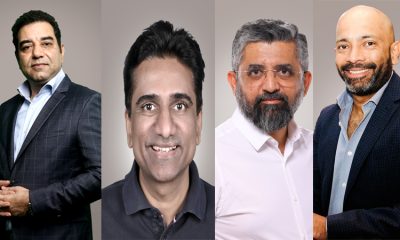
Tag: Gaurav Laghate

  • Sony tunes into new voice with Gaurav Laghate as comms head

    Sony tunes into new voice with Gaurav Laghate as comms head

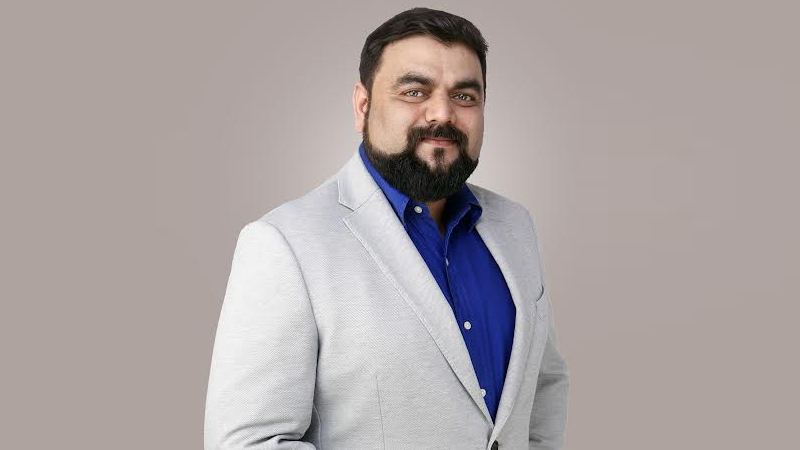
    MUMBAI: When the newsroom meets the boardroom, sparks are bound to fly. Sony Pictures Networks India (SPNI) has tapped journalist-turned-communications strategist Gaurav Laghate as its new head of PR and corporate communications, effective September 2025.

    Reporting directly to Gaurav Banerjee, MD & CEO of SPNI, Laghate will be tasked with steering the company’s communications blueprint shaping narratives, sharpening reputation, and strengthening engagement with stakeholders across its diverse media businesses.

    Armed with 17 years of newsroom experience, Laghate is no stranger to storytelling at scale. Until recently, he was senior editor and head of the consumer bureau at Mint, where he became one of India’s most authoritative voices on the media and entertainment sector. His portfolio spanned linear TV, OTT platforms, advertising, and regulatory affairs, making him a familiar face across the industry’s power corridors.

    From tracking the rise of streaming wars to decoding regulatory shake-ups, Laghate built a reputation for analytical accuracy, deep domain knowledge, and sharp editorial instincts.  He began his career at indiantelevision.com and is prized for analytical rigour and a contact book that spans studios, regulators and agencies. Now, he crosses over to the corporate side, bringing with him the credibility of journalism and the strategic perspective needed to shape SPNI’s narrative in a fast-evolving media landscape.

    For SPNI, the appointment underscores a renewed push to build authentic storytelling and stakeholder trust as it eyes its next growth chapter in India’s hyper-competitive content market.

    Welcoming him onboard, Gaurav Banerjee said: “Gaurav’s deep domain knowledge and strategic perspective make him a valuable addition to our leadership team. His transition from a journalist to a communications leader will bring a unique perspective on how we shape our narrative and engage with multiple stakeholders. We are excited to have him onboard as we aim to strengthen our position as a leading content powerhouse.”

    With the shift from penning headlines to making them, Laghate now faces the challenge of ensuring Sony’s stories resonate not just with viewers, but with every corner of the media and entertainment ecosystem. And if his track record is any indicator, this will be one headline worth watching.

  • ‘No advertiser or competitor can ignore the disruption we have created in the marketplace’ : Channel [V] EVP and GM Prem Kamath

    ‘No advertiser or competitor can ignore the disruption we have created in the marketplace’ : Channel [V] EVP and GM Prem Kamath

    For Channel [V], the radical moment has arrived. The reinvention process it started in 2009 as music channelsfailed to create differentiated content and had to settle for low revenues. Making the shift, the Star group channel has decided to discontinue all the music slots in its programming lineup effective 1 July.


    The new avatar will do away with Bollywood music as it searches for youth audiences that are monetisable. The positioning that it will take is a complete youth entertainment channel with 100 per cent content customised for this target segment. 

    In an interview with Indiantelevision.com‘s Gaurav Laghate, Channel [V] EVP GM Prem Kamath talks about the channel‘s growth plans.


    Excerpts:

    Doing away with music is definitely a bold step. But what about the trailers that channel [V] airs?
    Trailers will continue as they are a source of revenue. We sell them as any other spot for promotions. But we won’t be airing any Bollywood music as part of our programming lineup.

    So from where did this idea come from? Do you see a lacuna in youth-targeted programming?
    The “Youth channel” word has become a misnomer in the Indian context with music channels calling themselves as youth channels. Unless you are creating youth content, you cannot be a youth channel.

    Music is as youth as a movie channel or a news channel or a sports channel is for that matter because if you see demographically with over 60 per cent of youth population, all the channels have youth as their main TG.

    So how is Channel [V] differentiated?
    We are very clear that we don’t want to be a commodity channel playing just music. If you see, all the music channels are in the same GRP (gross rating point) bracket and the content is identical.

    On the other hand, we offer 100 per cent customised youth content. And all our shows have worked really well and today ratings wise, we are two-and-a-half times of these channels.

    As you said, all channels have majority of their audience as youth. Why will an advertiser select Channel [V]?
    We are delivering to a youth audience, which is exclusive and substantial in number. This has made Channel [V] a vehicle through which the advertisers can target the said audience.

    ‘There is a risk in adding original content and not having anything to fall back on (like music) in case the shows don’t work‘

    So when did you finalise on shedding the Bollywood music completely?
    When we relaunched in June 2009, the plan was ready then. We were focussed on increasing the original content.

    In 2009, we had 75 per cent music content while 25 per cent was original content. And we gradually and consciously reversed that order. Since the last six months, we have been airing only three hours of music in a day.

    But don’t you think creating original content will increase the operational cost?
    Substantially, but we were clear that youth centric shows per hour cost a lot more than the usual music that runs on these kind of channels. We, therefore, built slot by slot.

    Today, we have 10 hours of original content per week. We have three successful fiction shows and will add on to have weekday primetime from 6-8.30 pm. And on Saturdays and Sundays, we will be airing a one-hour show at the 7 pm slot.

    Isn‘t one of your shows picked up by Star Plus?
    Yes, Gumraah, our weekly show, which we are changing to a daily. It is being aired on Star Plus at 8 pm as a repeat on Saturdays and Sundays. This also shows the strength of our content.

    Once you stop music, how will you fill up the slots?
    We will air all our shows three times a day. It suits our viewers also as India is predominantly a single TV householdand parents are in charge of the remote. So our TG can catch up on the show during the repeats. Also, colleges here operate in morning and afternoon shifts, so having three repeats will help in that case.

    If you see all the music channels, the main TRPs come from the morning band where you also were playing music. Don’t you think that removing music will affect badly on the ratings?
    Our channel is viewed by over 25 million people and we average over 50 GRPs week on week, which is a proof that our viewers are watching shows and not music.

    Moreover, as you pointed out, most of the GRPs on the music channels come from morning bands, which is ad free. So even if it helps in getting the ratings, it may not necessarily be monetisable.

    But these are safe GRPs?
    I agree that there is a risk in adding original content and not having anything to fall back on (like music) in case the shows don’t work. However, we are extremely confident about our content.

    Our break TVR is four times that of other channels. This goes to show the strength of our content – that is sticky and engaging. In case of music, people tend to change the channel the moment ad begins. Even our show to break conversion is as high as 80 per cent.

    But still when you say Channel [V] or MTV, the first image that comes to mind is that of a music channel. The legacy factor is there. Won‘t that get affected?
    Numbers are absolute truth and perception is not. And we have numbers to substantiate.

    How do you see current competition coming from music and youth channels?
    The disruption that we have created is so wide that it can’t be ignored by the advertisers or competitors. The current problem with music channels is that no advertiser is going to pay a premium, unless you have a differentiated offering.

    Having said that, top players will be profitable, albeit small. There will be a time when some of these players will have to relook on their business models.

    Earlier you had said that monetising the music content is difficult. How?
    Exactly. Today the same music is available on not just the music channels but also on multiple platforms like internet, mobiles and tablets. And consumption of music videos is very high on high-end mobiles and tablets.

    Anything that can get monetised on a television channel is loyalty. And that can‘t happen with the same content. That is why we decided to offer customised youth content.

    Everyone is bullish on digital today. What future role Channel [V] will have on the digital front?
    Everyone is trying to figure out the answer to this question. How and up to what extent digital entertainment will affect TV is yet to be seen. Having said that, if you understand your audience well and create content for them, it will work.

    Moreover, digital as a medium changes very fast, which adds further complexities. There are some myths,though, that are busting – like on internet only short form content works. Today, YouTube plays full length feature films and long format is also working well.

    Talking about our website, for now it will be an extension of the channel adding ancillary programming for TV.

    Unlike some of your competitors, you are not much into licensing and merchandising. Why?
    L&M for us is not making bags or T-shirts. It is not a marketing stunt and our belief is that L&M should be strongly differentiated and have big potential. So we have two properties – [V] Spots and IndiaFest.

    We have seen phenomenal success with [V] Spots. Both Saket (New Delhi) and Gurgaon outlets have broken even within a month of launch. We will soon be launching in Pune and by the end of our next fiscal (June 2013), we will have 10 [V] Spots across India. We are looking at Chandigarh and Bengaluru as potential markets.

    IndiaFest is one of its kind youth festival, which we organise in Goa every year. It is also growing year-on-year.

  • ‘Star Pravah is only entertainment channel with 25% of content aimed at males’: Star Pravah channel head Nachiket Pantvaidya

    ‘Star Pravah is only entertainment channel with 25% of content aimed at males’: Star Pravah channel head Nachiket Pantvaidya

    Star Pravah had a bad start and had to rework on its programming strategy to keep in pace with rivals Zee Marathi and ETV Marathi. Now having found the right content mix and being aggressive in buying movie rights, the channel leads the ratings chart.


    Launching with culturally rich shows like Raja Shivchhatrapati and Agnihotra, the channel changed track and is now focusing on contemporary content reflecting today’s lifestyle. It is betting big on movies and is willing to pay high prices.


    In an interview with Indiantelevision.com’s Gaurav Laghate, Star Pravah channel head Nachiket Pantvaidya talks about the channel’s programming plans and the challenges of the Marathi market.


    Excerpts:

    Q. After joining on 1 April last year, Star Pravah has grown in the Marathi general entertainment genre. What has worked in your favour?

    From 120 GRPs during the last IPL, we have grown to 250 GRPs today. While the ratings are just a number, we have come a long way because we got the right strategy in place.

    Q. Star Pravah started with a show like Raja Shivchhatrpati and other shows portraying rich Marathi culture. Today, the shows are more on the contemporary day-to-day life. Are you talking of this shift in strategy?

    We believe that whatever the content is, it needs to reflect the society of today. So while we respect the ‘Maharashtrian’ culture, we are focussed on catering to today’s generation.


    With the help of our researches and various contact programmes, we have realised that our viewers, staying in whatever part of Maharashtra, are global citizens with big dreams and aspirations. They understand the importance of values versus the changes that are happening in the current economic scenario. With our programming, we are constantly portraying “today’s Maharashtra”.

    Q. Marathi viewer is equally comfortable with Hindi. And if Hindi GECs are offering same shows, doesn’t it pose a challenge?

    One of the major challenges is that a Marathi viewer is equally comfortable in watching Hindi general entertainment channels, news and sports. So we decided to work not just like a Marathi entertainment channel but an entertainment vehicle. We focus on being concurrent as well as on entertaining our viewers.


    And it is paying also. In the last eight weeks we have been ahead of the Hindi GECs. In the week ended 26 May, we clocked 256 GRPs, highest for the channel so far.

    Q. From programming point of view, what is the thought process behind the shows?

    All our shows are based on unique themes and we promote the idea of positive bright relationships.


    Our shows like Bhandaa Saukhya Bhare (game show between saas-bahu), Devyani, Pudhcha Paaul, Swapnanchya Palikadle, and upcoming Laxmi Vs Saraswati portray today’s time, today’s value system and ask relevant questions.


    We have kept the packaging the same… the dresses, attires, setups are still the same, but our approach is very modern.


    Also, we are the only entertainment channel with 25 per cent of the FPC dedicated to the male audience. We decided to have differentiated content, so from 9.30 pm till 10.30 pm we show Lakshya (crime drama) and Anolkhi Disha (supernatural) to cater to the male audience. In future we would also like to create some shows for the kids audience as we are a wholesome entertainment channel.

    ‘The ratings of TV premiere of Marathi movies have doubled. We are progressive and aggressive in the film acquisition space and want better production value, for which a better price is justified ‘

    Q. What are the other genres you are exploring?

    We would like to explore genres like comedy, thriller and socially relevant shows. We are sticking to our identity and will make sure that we offer the complete package.

    Q. Many times a viewer is not happy with the quality of production. How are you tackling this issue?

    A few of our shows are already being shot in high definition. And Shrabani Deodhar (creative director), at the helm of programming, makes sure our programming quality is no less than the Hindi GECs – at the price of Marathi GECs!

    Q. You have been acquiring a lot of movies. How has it helped the channel?

    We are bullish on acquiring movies as we want to see the Marathi film industry grow. So if you see, we have acquired a major chunk of movies, including all the three national award winning movies.


    We are looking at buying the rights of these films prior to the release. And these films have helped us to aggregate the incremental viewers. With every blockbuster, new viewers come to sample the channel and we promote our other properties.


    We have a good mix of high concept cinema as well as commercial films in our library. For high concept films we are investing in subtitling. We also put advertisements in English dailies so that a non-Marathi speaking viewer can also watch and enjoy good cinema.

    Q But many players say that you are also spoiling the market with such high acquisition prices?

    We want to write the resurgence story for the Marathi film industry. If you see, Maharashtra still has the lowest film acquisition price. If we keep doing hard bargain to acquire good films, it will drag us all down.


    In today’s time, the ratings of TV premiere of these movies have doubled and we can recover the cost of acquisition. And after all, the price is just any number; we want to be assured of good cinema. We are progressive and aggressive in the film space and want better production value, for which a better price is justified.


    Today, all the big filmmakers in Maharashtra are willing to partner with us as we are expanding their market and trying to make the economic model work for them as well.

    Q. How are you marketing the channel and the properties?

    We know that as a late entrant in the market, we did not have the legacy to fall back on. Thus, we had to make that extra effort to reach out to our viewer. We have very extensive direct connect programmes and activities through which we keep reaching out to them.


    We want to make the viewers realise that we love them, we know their aspirations and we try to meet and talk to them directly. So you will not see many hoardings from our side just announcing a new show; we will reach to the nook and corner of the state and will meet them in person. Our ground connect programme is very strong.

    Q. And how is the response from the advertisers?

    Today we are a big vehicle for the advertisers to put their message across. A big leap of thought for us is that economic and SEC classification is not a geographic concept anymore. The concept of rural and urban is not there. We see rural parts in metropolitans like Mumbai and Pune as well as an urban class in very small towns. We are working closely with the local brands to help give them a global identity.

    Q. How is digitisation going to help you?

    I believe that digitisation will benefit us more than anybody as the inequalities in the distribution business will iron out.

    Q. How is being part of Star India helping you?

    Today Star India has many No. 1 channels in the national as well as regional space. The group has done great in regional with faith that regional could be the new national. The group strength also helps us in leveraging resources.

  • ‘GEC programmers need to understand IPL viewing behaviour’ : Ormax Media co-founder and CEO Shailesh Kapoor

    ‘GEC programmers need to understand IPL viewing behaviour’ : Ormax Media co-founder and CEO Shailesh Kapoor

    Ormax Media, the consumer knowledge and consulting firm for the media and entertainment industry, has entered into its fourth year of operations with plans to expand its product offerings and business. 

    Launched jointly by research specialist Vispy Doctor and former Filmy business head Shailesh Kapoor in July 2008, the company boasts of growth across sectors, including television, radio and media agencies.
     

    In an interview with Indiatelevision.com‘s Gaurav Laghate, Kapoor talks about the trends in entertainment television across genres – GEC, Sports, English entertainment and infotainment.

    Excerpts:

    What are the significant changes you are witnessing in the Hindi GEC space, both in terms of programming and marketing?
    There has been a definite movement towards light-hearted treatment of content. Stories may still be based around families and social change, but the treatment is less heavy and emotional than what it was before. Meanwhile, reality shows are going through a tricky phase, with no new ideas coming up, except Satyamev Jayate. We seem to have saturated the formats available to us.

    How do you see GECs getting affected from IPL this year?
    There is definitely diversion of viewer attention, but like Bollywood, GECs too have realised that at some point, they will have to take the IPL on. The key is to identify which programmes to focus on during IPL and which to duck. Understanding of IPL viewing behaviour becomes critical for that.

    What do you think of all the sports entertainment properties that are coming up…like Super Fight League? Will they gain traction?
    Mixed Martial Arts, being presented through UFC and SFL, is a very popular International sport. It should surely find its audience.

    What are the trends in sports viewership? Are non-cricket sporting events growing?
    Yes, the growth is there, but slow. Marketing is the key. I‘m glad that a new channel (Sony Six) has launched, as any channel launch always gives impetus to sports in general.

    ‘Language feed is the way forward as C&S penetration will continue to increase in smaller towns. Subtitling has helped English language channels a lot, and so have language feeds for English infotainment‘

    Your view on declining viewership of IPL?
    All trends and data we have suggest IPL viewership is actually 20 per cent higher than last year. I will not like to comment on the ratings.

    Is too much cricket causing viewers’ fatigue?
    A lot of it depends on India‘s performance. Having said that, we have a fairly lean period over the next few months, so cricket should be back in its full glory later this year.

    What are the trends in English infotainment and niche programming? Do you see language feeds getting more eyeballs?
    Language feed is the way forward as C&S penetration will continue to increase in smaller towns. Subtitling has helped English language channels a lot, and so have language feeds for English infotainment.

    And what about programming trends in the English general entertainment space?
    The genre needs some Indian programming desperately. The issue is – are the costs affordable. But a good Indian show, especially comedy or non-fiction, can definitely prove to be a game changer.

    What do you think about English music channels – now three… Will they manage to get viewers share without appointment viewing?
    The genre is very niche and its business model is based largely on imagery, perception, innovations and client servicing. So viewership doesn‘t matter that much.

    How has been the year for Ormax Media in terms of revenue and business growth?
    2011-12 has been an excellent year. We showed 62 per cent growth in our revenue, and added 24 new clients. Our proprietary product line now stands at 19 in number. Film research has been a big growth area for us last year, and should continue to grow this year too. But overall, growth has been across sectors, including television, radio and media agencies.

    What all new clients and new tools and products the company has launched or is launching in the near future?
    We recently launched the third edition of our IPL ad tracking study, Day After Cricket. Our music countdown product ‘Heartbeats‘ is now available in a Kolkata edition also, where we track Hindi and Bangla music in the Kolkata market. Our flagship products Cinematix and Showbuzz recently went through major market expansions. Cinematix expanded from 6 cities to 16 cities, while Showbuzz expanded from 6 to 14 cities. In the coming months, we have a huge product launch lined up. Without revealing much, we can say that it will be a product every advertiser and media agency will find extremely useful and relevant.

  • ‘We are adequately funded by New Silk Route’ : 9X Media business head- new business Punit Pandey

    ‘We are adequately funded by New Silk Route’ : 9X Media business head- new business Punit Pandey

    9X Media has seen its share of ups and downs. Launched in 2007 as INX Media by Peter and Indrani Mukerjea, the company started with a Hindi general entertainment channel 9X, a music channel 9XM and later an English news channel NewsX.


    Then came the economic slowdown and coupled with problems at management level and fund crisis, the Indian promoters exited after selling off the English news channel.


    The new management had a huge task: to reduce debt and turnaround. INX Media sold off 9X to Zee and started focussing on its only success – 9XM.


    Today, with a new name, 9X Media, the company has four channels under its ambit. It has also relaunched in the UK.


    Indiantelevision.com’s Gaurav Laghate caught up with 9X Media‘s business head- new business Punit Pandey to talk about the turnaround of the company and how it plans to grow further.


    Excerpts:

    INX Media was into losses and your Indian promoters exited. Why did New Silk Route agree to fund the music channels while the Hindi GEC 9X was sold to Zee?
    The Hindi GEC did not work and we decided to concentrate all our energies, time and investments on 9XM as it was doing very well right from its day of launch. The turnaround story was around 9XM. NSR as a private equity partner, along with others, assured faith in not only the product but also in the management team.


    Fortunately for us and 9XM, they continued to show faith in us. And obviously, we are backed by a strong product and a strong revenue stream as a business model.


    NSR continues to partner and fund us and we have delivered on what we were supposed to. Today, we are a zero debt company and adequately funded.


    With their funding support, we have launched three more channels over the last seven months. We launched Punjabi music channel Tashan in August, first Marathi music channel Jhakaas in October and recently Jalwaa. We have also relaunched 9XM in UK.

    Weren‘t you planning to first launch the Bengali music channel in the regional space. Why didn‘t it happen?
    While you are at a business plan state, you obviously think of so many things. But if you look at it, we have managed to consolidate 9XM, which is our flagship brand. Then we have also launched three more channels and UK feed.

    And what about the performance of these channels?
    Well, the Punjabi channel has replicated 9XM‘s success across the PHCHP (Punjab, Haryana, Chandigarh, Himachal Pradesh) region and has achieved leadership status in the first week of its launch. So, it has become our second winning product.


    Jhakaas and 9XM UK also have been received well. And though Jalwaa was launched just last week, we are getting tremendous response not just from trade but also from consumers that it is looking well.


    So we have five operating products.

    But Marathi channel has not picked up yet?
    Jhakaas is not only Maharashtra‘s but India‘s first Marathi music channel. Since it is the only music player, it has been received well. But if your benchmark is going to be what Tashan has achieved in Punjabi, it is never going to be there.


    Maharashtra, as a region, is 800 GRP market, and bulk of it is from general entertainment – Marathi as well as Hindi. It is followed by movies and news. And if you see, we have not launched just a channel, but a genre. There was no Marathi music channel before Jhakaas.


    Being the first music channel, viewers have to get used to watching a music channel. Considering that, it is doing well as per our expectations. We are interacting with people, and they are liking it. To my view, it has opened well. There is scope to grow.

    West Bengal is a big market. So is Bhojpuri. But that doesn’t mean that we will launch everywhere. Let’s see, you will hear from us once we are ready to launch

    Talking about the business model, all your channels are FTA and only advertising lead. No plans for other revenue streams?
    India currently is an ad-led business model and this applies to our channels as well. A large part of our revenue is from advertising, but we have also ventured into selling our merchandise through ecommerce.


    We have to build the category. So, we have started merchandising and we have a very strong online presence.

    You have been very bullish on the digital front and all your channels have live streaming. Why?
    Currently, all our offerings and channels are in music space and large part of music consumption also happens on the online platform. So it is important that as a product we are present across all platforms, not just television but online and mobile also.


    The idea is to reach out to your consumers, whoever they are and wherever they are and online cuts across that bet.


    Online is a very important medium for us and is very visible. We are on Youtube, Facebook, Twitter, everywhere.

    But can it be monetised?
    As I said, we have already started ecommerce website; this is our first initiative. And as we move on, we will have revenue lines attached to it also.


    But yes, our business is driven by, and will continue to be driven by advertising.

    How will you differentiate between the business models of all the channels?
    Well, all our channels have a business plan and we ensure that we continuously monitor and follow it. That‘s how you see more new products.


    Each new product brings in a lot of confidence as to how the product is delivering from the content and business perspective. And that is how you move ahead.

    Which all regional markets you think have potential for another regional music channel? And when is the Bengali channel coming?
    Responding to important markets, we saw that Punjab is a good market and we got into that. Marathi is also a good market. We saw that there is a clear need gap for 25+ audiences, so we launched Jalwaa.


    Obviously, West Bengal is a big market. So is Bhojpuri. But that doesn‘t mean that we will launch everywhere. Let‘s see, you will hear from us once we are ready to launch.

    And what about English? 
    English is also an interesting space. I am not saying we are launching, but it should interest a music broadcaster.

  • ‘We have grown without showing gruesome reality shows’ : Zoom Entertainment Television CEO Avinash Kaul

    ‘We have grown without showing gruesome reality shows’ : Zoom Entertainment Television CEO Avinash Kaul

    Zoom, the youth channel with a lazar sharp focus on Bollywood, has found its space in a competitive genre that is waiting to see the launch of UTV Stars in mid-August.

    The channel has consciously stayed away from gruesome reality shows, protecting it from the volatile curve that its rivals like MTV and UTV Bindass are subject to.

    In an interview with Indiantelevision.com‘s Gaurav Laghate, Zoom Entertainment Television CEO Avinash Kaul talks about how this positioning has made the channel a safe proposition for advertisers and ensured its growth across the content pillars that it has built after reinventing twice.

    Excerpts:

    It‘s over a one and a half year now that you have taken charge at Zoom. What changes have you brought?
    There has been a lot of positive momentum that we have built at Zoom. For example, we have more than doubled our GRPs (gross rating points). We are now almost the genre leader.

    There were quite a bit of pieces that we have ironed out across the business. This includes content, distribution, marketing, and ad sales pillar… all the components of the business, as the dynamics of the business change every day. And it needs re-orientation of how to work things out.

    So that‘s what we were focussing on. And we have been successful in all the ventures that we have been in, so far. This is reflecting in the results (ratings) today. And the remarkable thing is that these results are without any reality shows, unlike other channels.

    Zoom is about wholesome inclusive family viewing entertainment, and we do not cater to any gruesome reality show. There are no beepers, no pixilation, and no grungy outlook towards life. We believe in the positive outlook.

    Define your market?
    We specifically target the 1 million + towns in the HSM, 15-24 SEC AB. If you look at the content mix of anybody else in this genre, more than 50 per cent of content comes from the reality shows. And they keep going up and down. A Roadies, for instance, will take them (MTV) to a high and once it is over, they will come back to right at the base.

    So basically, for 13 weeks in a year, you will see a high on some channels or the other. You have to look at consistency, which we offer, because we don‘t have such dramatic crests and dramatic troughs. So for an advertiser it‘s a safe proposition, technically.

    But for such shows, do advertisers pay a premium?
    Advertisers look at the cost-benefit ratio – the cost of making the content versus the returns that you are likely to get from the content. And not all of this is enviable to all of the advertisers. Because with a lot of content, many advertisers might want to associate, many might not to. So it‘s about the environment you create. We have not created any negative dissonances on the content front on the channel and we do not expect anything to change dramatically in the future to go into that zone.

    We have very carefully navigated ourselves out, staying away from that temptation. Demographically, we are aimed at youth but our focus has been Bollywood and we will keep that focus. Which is why today we see that you would see us as India‘s No.1 Bollywood channel, right because that‘s a statement we can obviously make.

    There is not too much competition also ?
    Well the way we look at the competition, we have various content pillars- we have Bollywood news, we have music, we have movies, we have countdowns and we have features. These are the kind of programming we do at Zoom today. So when I look at my review show, it performs better than any other on other channels including Hindi news. So as long as I am the best in every pillar that I am present in, I am in safe hands. Today my Bollywood news performs better than any other mainstream Hindi news channel‘s news flash.

    As far as standalone 15-24 HSM, 1 millionn+ is concerned in Bollywood news dissemination, Zoom is ahead. Of course, I do far more of it because I am a dedicated channel as opposed to say one bulletin on Aaj Tak or any other news channel.

    When I am playing music, I am the No. 1 in the music band. As long as you are successful in all the pillars, your proposition is entirely secured.
    ‘We have various content pillars- Bollywood news, music, movies, countdowns and features. As long as I am the best in every pillar that I am present in, I am in safe hands‘

    So how do you see Zoom poised today?
    Today, Zoom is India‘s No. 1 Bollywood channel, and technically, I would rather go to the extent of saying that we are the world‘s No. 1 Bollywood destination. Because as a network (Times Television Network), we are available in 18 countries, out of which Zoom is in over 15 countries. Now that is again the Bollywood connect spreading out.

    So we reach out and fulfil their daily dose of Bollywood. If I give you some statistics, we are today the No. 2 channel on YouTube in India and 18th in entertainment in the world. Today, as we talk, we have over 420 million views on YouTube and every week, we get 5 million hits on an average. Now that‘s massive consumption.

    Our Facebook page has around 700,000 followers. And as per tracking sites are concerned, we are No. 2 or No. 3 page in India on Facebook among the media channels‘ pages. As far as interactivity is concerned, we get around 20 million impressions every week on Facebook. This is because the interactivity element that we have built is far more superior. Every post of ours gets over 5000 responses in terms of likes and comments.

    We also syndicate our content internationally to various channels, and locally to regional channels here. As a result, the cumulative exposure to the content created by Zoom gets magnified at every level.

    So what all are your revenue streams?
    Digital is a very important component for us. As we have specialised content, our realisation from digital is very healthy. Branded content is another significant part and we also have got syndication as a model.

    So these are the three big chunks. Then we are a pay channel, so we get international and domestic subscription revenues. That balances our portfolio pretty decently; it‘s a well diversified, well matured business.

    Coming to your programming mix, how do you justify having movies on your channels?
    Our choice of movies is something very contemporary, very youth. We will stretch the envelop to go for those kinds of movies that may not be top grossers but give you ratings.

    We are looking at contemporary Bollywood movies which are aimed at youth so that there is a better opportunity to weave it…Fashion for example, would find a way on our channel.

    So how is your content mix at present?
    If you consider the 18 hours cycle of Zoom, you will get 40-45 per cent of music, which is all contemporary; 15-18 per cent is movies, 20 per cent is from news fillers and the balance is from features and countdown shows.

    So far there was no competition for Zoom in a true sense. Now UTV is launching UTV Stars, which will be in similar space. How do you see competition brewing?
    So we hear, but honestly, very little to comment till we see the actual product on air. Anything else can be a ‘me too‘.

    We have had competition; E24 launched, but hasn‘t really been able to cut much ice. There are so many channel launches every day.

    But don‘t you think that UTV Stars will have an advantage as it is also into production of movies?
    Well I would argue that not having a studio is beneficial for us because we are agnostic. We have no vested interest in Bollywood.

    Today, our business is well diversified. It is not just a TV channel; it‘s a Bollywood ecosystem that we have created over the years. So honestly, we do not see any immediate threat.

    A party which is neutral, which has consistency of business, consistency of investing in the business and which is serious about the business, will only succeed.

    As a group, whatever we stand by, we commit; we invest, we build, we grow…and that too profitably. So that‘s the key operating word for us. We are not in business for the sake of business, we are in business for profitability.

    How many new clients do you have advertising on your channel?
    Technically, the highest client count on the genre is with us. It is around 230-240 clients active in a year. In terms of volumes, we are right among the top, if not the top.

    We have a better value proposition for the advertisers in the sense that we, for example, have not been able to crack the HUL business for a while now. Until and unless the client sees the value proposition, we are not going out of the way to seek their business.

    As far as the business is concerned, I have no reason to believe that we are any less than the top in the particular segment. Yes, certain tent pole properties might give an edge, only to say a channel like MTV, but not to anybody else.

    So as far as the pure vanilla advertising business coming from advertisers is concerned, I would probably put up as a strong competitor. Purely talking about the advertiser lead business.

    So what all new shows are coming?
    We are looking at a healthy mix of new shows. There will be shows related to Bollywood and fashion. We are looking at properties which could probably like a Style-cop. We are also looking at a show which will bring in the advent of Bollywood stars on television, Telly Talk. The view primarily is to look at the cross-border pollination that has happened and focus on that angle on what‘s happening in the Bollywood space.

    We have just launched Big Story and, yes, there will be some shows which will be built for appointment viewing, but not with beeps and pixels. We will be unveiling them shortly.

    We will also be shortly announcing Bollywood Summit.

    Your comments on the genre you are in?
    The genre is very dynamic; audience is fickle, every year 10 per cent of audience moves out and a new set of audience comes in. It is just 9 years old and the attention span is small. So we go all out to tap that audience.

  • ‘Food chnnls have tremendous potential to grow’ : FoodFood COO Karthik Lakshminarayan

    ‘Food chnnls have tremendous potential to grow’ : FoodFood COO Karthik Lakshminarayan

    FoodFood, one of the three recently launched food specialty channels in India, is completing six months on 24 July. With Sanjeev Kapoor and Astro as promoters and Madhuri Dixit as the lifestyle promoter, the channel took up the challenge of growing a new genre in India.


    Indiantelevision.com‘s Gaurav Laghate caught up with FoodFood COO Karthik Lakshminarayan to talk about the plans ahead and the journey so far.


    Excerpts:

    FoodFood is completing six months of operations. Has it been a bumpy or a smooth ride for a channel that is exploring a new genre in India?
    We are on track as per our business plan. We launched in January and as we are completing our first phase, we are seeing a healthy growth in terms of ratings as well as revenues.


    Being a speciality channel in Hindi, our connectivity in the Hindi speaking markets is approximately 60 per cent, which is quite good. Also if you see our reach, we have a 5.7 per cent reach in C&S households, while in the core TG of Female 25+ Sec ABC, our reach is almost 9 per cent.

    Isn‘t the ratings too narrow at this stage?
    Our reach is growing and in the core TG we are in the 8-12 GRPs (gross rating points) band. We are more than double of the competition (Zee Khana Khazana and Food First) in terms of ratings as well as time spent on the channel. Our weekly average time spent is over 30 minutes per user, which is extremely healthy.


    So, you see, there is no immediate competition. However, having said that, we do feel there is more potential for the genre to grow. But there is no benchmark as such. If you see the US market, the food channels are doing really well, and we see similar potential here also.

    So are you planning to take the channel overseas?
    There are definitely plans to take the channel to the international markets. We have already signed carriage deals in the Middle East and will launch FoodFood there soon. We are a Hindi food channel and will cater mainly to the Indian diaspora.

    FoodFood seems to be the only channel in this genre that is spending on distribution. How big is your carriage payout?
    I do not call it spend. It is an investment me make for distributing the channel. And as far as our position on the cable platform is concerned, we try to get in the Hyper-band and we are also available on S-band in certain markets.


    The industry is very dynamic and one has to always fight for the right band.


    Having said that, we are now entering into the second phase of growth. We will step up our investments in distribution, marketing and content.

    We are now entering into the second phase of growth. We will step up our investments in distribution, marketing and content.

    And in content?
    When we launched the channel, the buzz generated by Bollywood actress Madhuri Dixit (lifestyle ambassador of the channel), and Sanjeev Kapoor (promoter, celebrity chef) took us to a certain level. Now with our programming, we are going to cash on it.


    Very soon, you will see the launch of our biggest reality show – Maha Challenge which will have both Dixit and Kapoor and their teams of women and men battling it out to answer who is the better cook – men or women. It is a battle of sexes in its true sense. The 13-part series is being produced by Fremantle India. We will launch it in September and you will see Dixit for the first time in this role on television.


    We will also launch another reality show Secret Recipes in which people will come with their recipes and will cook with Kapoor.

    How many advertisers do you have on board now?
    We have over a dozen advertisers right now including Amul and Samsung. Most of them are either kitchen appliances or food related clients, who get perfect exposure on FoodFood.


    And all these get integrated seamlessly in the shows that we air. We do not want to clutter our shows with advertisements at this time and we have only 4-5 minute ads in the half-hour slots.

  • ‘Max is an extremely successful channel’ : Max Sr EVP and business head Sneha Rajani

    ‘Max is an extremely successful channel’ : Max Sr EVP and business head Sneha Rajani

    Multi Screen Media‘s hybrid channel Max has completed 11 years and today is a prime asset of the company.


    While it telecasts the lucrative Indian Premier League (IPL), in the movie space it is in close fight with Zee Cinema for the top spot.


    In an interview with Indiantelevision.com’s Gaurav Laghate, Max Sr EVP and business head Sneha Rajani talks about how Max has successfully run its movie and cricket businesses separately and profitably.


    Excerpts:

    Max has been both, praised and criticised, for changes in cricket programming. Your comments…
    What we did with cricket was pioneering. We changed the way cricket was viewed and consumed in this country. Till then it was like a match being aired and a little bit of analysis thrown. What we wanted to do, and which is where we revolutionised cricket viewing, was that we wanted to increase the base.

    Cricket was predominantly male viewing till we came into the market. We knew that in order to increase the base, it couldn‘t be just confined to the men. We had to make it all inclusive.

    So we took some seriously bold steps like introducing a woman anchor way back in 2002 (Ruby Bhatia) and Extraa Innings.


    In the 2003 World Cup, we had three women instead of one – and purists went ballistic. The ratings increased five times, women audience grew 200 per cent and Extraa Innings touched a 19 TVR.

    Another milestone was duplicating the success of Extraa Innings with movies – Extra Shots. Mandira Bedi became the first movie jockey.


    From 2008 we are having IPL. There has been no dull moment since then – we are made for each other.

    What about movies?
    Blockbuster movie acquisition is something Max has been associated with always. Out of the 10-12 big films every year, Max has easily over half of them. Be it Lagaan, Devdaas, Om Shanti Om or 3 Idiots – you will always see the best and biggest movies on Max.

    3 Idiots is, perhaps, the biggest coup that Sony has pulled off. Look at the ratings of the first three airings.

    With so much controversies and bad publicity going around IPL, will it have any adverse impact on your revenue targets?
    I won‘t comment on numbers but any publicity is good publicity…it helps you look positively. And at the end of the day, the IPL is a league that the audience wants to watch. The thought and vision is so strong that the IPL will continue to be the biggest entertainment spectacle.

    Max being a hybrid channel, the cost of investment is much higher compared to a pure play movie channel…
    Yes, but we look at the two as completely separate businesses. And both are doing fairly well independently.

    And yes, as for cricket, the rights have been acquired for 10 years. We are well aware of the costs. But as far as movie acquisition is concerned, we know the prices have gone up tremendously, which is why we have been extremely careful about how many movies we have picked up this year and at what price.

    But you have acquired very few movies this year?
    Let me put it this way… We have not acquired as many films as we normally do simply because we did not want to pay unrealistically high. Acquisition has to make business sense.

    We have not acquired as many films as we normally do, simply because we did not want to pay unrealistically high. Acquisition has to make business sense

    As Colors is buying movies aggressively for its upcoming movie channel, what will be your plan of action?
    Not just Colors, Star has also picked up a lot of them. Colors is in a different life cycle; they are in a launch phase. We are nowhere in the launch phase, we have a very solid library. We have acquired enough number of premieres.

    So what are the parameters that you look for while acquiring the movies?
    We have a budget and a set of parameters. Our recent acquisitions are Robot, Crook, Raktacharitra, We Are Family and Hisss.

    When you are airing movies, you do not have scope for creative programming. How is your channel different from the other movie channels?
    The scope is very limited simply because we run movies back to back; there is very little space available for us to do anything else. But in the next quarter, we are trying to bring in at least a couple of innovations.

    So far we have Extraa Shots – which has a different look to it every month. We shoot with TV stars; we have picture-in-picture type shots etc. It has been refreshed continuously over time.

    But how will you differentiate between your channel, and say, Zee Cinema and Star Gold if everyone is playing the same movies?
    You are talking about the syndication model. But there are very few movies that have been shared between the broadcasters like Jab We Met airing on 10 different channels.

    I can say 99 per cent of our library is exclusive, and so is Zee‘s and Star‘s. There are very few – around 50 films that are shared in the market.

    So you don‘t believe in the syndication model?
    We as broadcasters are extremely and completely against the syndication model. If you talk to other broadcasters, I think they will also share the same views.

    I think it is not right for the broadcasters and for the movie itself. I think producers also should not encourage this as it completely devalues the product.

    But many channels have formed business models on syndication. Like Colors acquired first airing, Imagine TV got second airings…
    The response to that is the pricing is wrong. It does not mean that you change the model and introduce a model that completely kills your product and the brand of the channel.

    We had to acquire some movies on syndication as they were not available otherwise. But going forward, we have not acquired any film that is on syndication. It is outright acquisition model that we are following.

    Which movies you had to take on syndication?
    Om Shanti Om, Chandni Chowk to China, Bhootnath, Jab We Met and a few others. But after that, we haven‘t. Like 3 Idiots – which we acquired exclusively.

    The window between theatrical release and TV premiere has shortened. But a movie channel gets the movie after it airs on the general entertainment channel. Is there a return on investment?
    If not, why will Colors launch a movie channel? And let me tell you, I can‘t talk about the other movie channels, but Max is a very successful channel. Not just from the ratings point of few, but as a business it is extremely successful.

    And as you rightly said, the big premiere happens on a general entertainment channel simply because the effective rates on a GEC are far higher than a movie channel. But there is a model there which works, and that‘s why everyone is doing it.

    In other words, we recover what we invest.

    But Zee Cinema is not investing heavily on acquisitions and rates higher than Max. So is it not a more effective business channel?
    They do buy, maybe not as much as Star or Sony or Colors, but it is because their business model is different.
     

    And talking about Sony, even before we launched Max, our brand promise was that we are known for our blockbusters. Our strategies

    are different. I wouldn‘t say theirs is more effective or ours is.

    And if you see the last five years, Max has been leading more than them. Obviously our strategy is also working.

    Also don‘t forget that Zee Cinema has got a first mover advantage. It‘s a far older channel. People are used to it and in the Hindi heartland they have a huge following.

  • ‘Our aim is to become the currency tool for media research’ : Ormax Media co-founder & CEO Shailesh Kapoor

    ‘Our aim is to become the currency tool for media research’ : Ormax Media co-founder & CEO Shailesh Kapoor

    Ormax Media, the consumer knowledge and consulting firm for the media and entertainment industry, was launched jointly by Vispy Doctor, the managing director of Ormax Consultants, a specialist in qualitative research, and former Filmy business head Shailesh Kapoor in July 2008.

    The company has expanded across categories like television, radio, films, and media agencies. It has launched various tools, which can predict the future of a show or a film.

    The expansion plan includes doing research in the news and South Indian market. The aim is to establish Ormax Media as the currency tool for media research.

    In an interview with Indiatelevision.com‘s Gaurav Laghate, Kapoor sheds light on the research needs in the media and entertainment industry and Ormax Media‘s drive to plug the gaps.

    Excerpts:

    You have worked with companies like Sony, Zee, Zoom and Filmy in roles across marketing, content and business strategy. So what led to Ormax Media?
    The idea was always there, I wanted to start something of my own. And I wanted to set up something which combined the media and entertainment industry where I came from with the marketing and consumer understanding that was always my interest.

    The exciting part is that we are working on multiple categories – like GECs (general entertainment channels), niche channels, movies, radio and digital. So there is a wide variety that makes the learning experience far more dynamic than it would have been in a traditional media role.

    What the company has achieved in these two years?
    Since it has been a new company, the first year focus was on consolidation and the second year was really of growth and expansion into new categories, businesses and clients.

    We started with TV. It was for two reasons – a far more organised industry in the M&E sector and also because of size.

    In 2009 we started with GECs, then moved on to niche channels and radio. During this time, we also started creating specific products.

    How did you identify the need for the product offerings?
    As we met more and more people, we recognised that there were common needs across the category. For example, there was common need for tracking marketing campaigns for TV programmes. This resulted in a tool – Showbuzz.

    You said you are in expansion mode. What all categories are you looking at?
    Initially, we spent time on developing tools, products and methodology. Then our focus was clearly on categories where we had strength. Like Bollywood – so we launched Cinematix. We are planning to launch a structured product of test screening of Hindi movies soon.

    How has the film industry responded so far?
    We have already worked on 7-8 movies in the last six months. And I think for an industry which is still getting used to the idea of research, it‘s a pretty healthy number. Going forward, the film industry will continue to be the focus. First we were trying to get them on board and trying to make them understand the whole idea of research. And we were pleasantly surprised. Once they (film industry) were exposed to this; they were more than willing to receive research in a far more flexible manner.


    What are the challenges you have been facing for getting clients?
    The biggest challenge has been to meet more and more people and give them the flavour of what research can give them. And once they get the right flavour and do one project, they certainly understand the importance of it.

    Apart from films, what are the other areas you will be focusing on now?
    The areas which we are going to focus on now are specific categories – like South and news.

    What opportunities do you see in the southern regional market?
    South is a very big market for both TV and cinema industry. The fundamentals of TV and film research are not different. And we have teams in the four southern states.

    And what are your plans for the news industry?
    The news market is one that largely relies on Tam. But at the category level, there may not be any tools and products available. So we are looking at that option.

    News is also a big category in terms of revenue. It is a category where the advertiser buying is often based on decisions based not directly on the function of the ratings. Particularly English news channels where many different parameters come into play.

    All your tools basically try to asses and predict the future – cinematix or showbuzz?
    A lot of our work is going into putting tools and analytics in place. We are trying to create ways in which future prediction and future analysis can be made rather than just looking at the past and getting a sense of that.

    Research is not just looking at today and giving feedback at what people are liking or not liking. I think the more important area, where a lot of our energies are focused on, is to predict the future.

    So what all services you offer to clients?
    We have three kinds of products. Syndicated products are owned by us like Showbuzz, Cinematics, Characters India Love, RJ Files. We do them at our cost, irrespective of who is subscribing or not subscribing to it. This is data which is registered and trademarked to us. Whoever subscribes to it, gets it.

    These products are most cost effective for all as they are common to the industry. Multiple people are subscribing and paying for it . It cannot be affordable for someone wanting to do it alone.

    Second is commissioned research, which could be qualitative or quantitative research. These are need based research.

    We also do consulting work, which is specifically beyond consumer research and is more advisory in nature. But it is not our main area of work. We are primarily a consumer understanding firm.

    How much market share are you looking at acquiring in future?
    We hope to be controlling at least 75-80 per cent of the research market in a couple of years. That doesn‘t mean we are going to compete with already established systems such as Tam, Ram etc. We are going to complement the information available through them. So if Tam gives the viewership, we will add value by explaining the viewership understanding. We are more about adding value beyond the measurement systems.

    If some other similar company starts working on the same lines, what will be your plan of action?
    See, eventually, in a category like this, one becomes currency. We have seen that in case of Tam. The second player to come will have a disadvantage. It is difficult to say at this stage who will become currency, but my sense is that till the time other players will come, we will be established as the industry currency. We are moving in the right direction.
  • ‘To not take a position is not a virtue’ : Times Now Editor-in-Chief Arnab Goswami

    ‘To not take a position is not a virtue’ : Times Now Editor-in-Chief Arnab Goswami

    A late player in the news game, Times Now sits at the top with its hard news stance and round-the-clock news focus.


    The Mumbai terror attack coverage is where the tide turned in Times Now‘s favour as the older players ceded ground. Though it is still a close chase in the ratings race, the channel has stayed ahead at a time when the news genre is finding it difficult to expand.


    Some critics have attributed the channel‘s success to its sensational treatment of hard news. Times Now Editor-in-Chief Arnab Goswami, the architect behind the channel‘s uprise, however, believes that the channel has stayed away from it and also kept a distance from the mixing of news and gossip.


    For a channel that just completed four years, the bespectacled Goswami does not hesitate to take a point of view in an obvious case of right and wrong. “In the Ruchika case, we called Rathore a molestor DGP,” he argues. As he says, “to be unsure of news is not a virtue.”


    In a candid interaction with Indiantelevision.com‘s Gaurav Laghate, Goswami shares his views on the definition of news, the relevance and importance of hard news vs sensationalism and the leadership of the channel he manages.


    Excerpts:
     
     
    Did the coverage of 2611 Mumbai terror attack help Times Now increase its viewership share?

    Yes, 26/11 increased our viewership share. We were No 1 even before that but the channel‘s consistent leadership gap grew from then on.


    Many people believe that it‘s because of something different that we did during the terror attacks. I can‘t pinpoint at what we did differently because I was live all the time. So I can‘t give a comparative view. But yes, after that there has been an upsurge in our viewership.


    If you look at all weeks after 2611, there would be about 60 weeks or so that have passed. And we have been number one in 99 per cent of the weeks since 26/11.


    What data are you quoting? Tam says in 25+ All India market, the competition is neck-to-neck…

    We take 25+ AB, 1 million-plus towns. This is the market that everyone considers when it comes to English news channels.


    We are 13-14 per cent ahead of our closest competitor NDTV in this market, and we are very happy with this viewership figure. There is no competition in that sense.


    But from the content point of view, have you incorporated any changes in news gathering after the attacks?

    We don‘t have to do it. Those who may have made mistakes would have to do it. We did not make any mistakes, so there is no question of making any change or taking any corrective step.


    But isn‘t the overall quality of news journalism declining?

    Quality keeps increasing. There is more news content today than there was 2-3 years back. The focus on hard news is coming back. Yes, there are lots of channels which show programmes not centred on hard news, but the excesses are fewer.


    There is a strong code of conduct which seems to be working. So, all in all, I think the last 2-3 years have been good for the news channel industry.


    So you think NBA is the right body to tackle the issues of content regulation? Or is there a need for an independent body?

    I strongly believe that self-regulation is the only way out. Both the NBA (News Broadcasting Association) and the BEA (Broadcast Editor‘s Association), of which I am an active member, are the best forums to carry out that self regulation. There is no scope for slightest government interference in regulatory processes. And I think there is total unanimity amongst them.


    ‘Yes! I had a point of view in the Ruchika case. We called Rathore a molester DGP. Is that wrong? We called the killer of Francis Induwar a Maoist terrorist‘


    Not government interference, but a body like OfCom (UK) may be?

    No. I think the way people are regulating right now is good enough. You don‘t need a new regulatory system. You don‘t have to reinvent the wheel. Self regulation is working, it should be encouraged and that‘s that.


    Are news channels running the risk of dipping into sensationalism to shed the image of bland coverage?

    I don‘t do sensationalism. I don‘t believe in sensationalism, so I don‘t want to discuss sensationalism as it has nothing to do with me.


    But what is sensational and what is not is sometimes a matter of perception. For some people even covering the IPL may be sensationalism. These are subjective matters and I don‘t want to pass a sweeping judgment on it.


    Times Now has completed four years on 1 February. Where do you find yourself today?

    It is quite apparent to us in the Times Now newsroom that almost every other English news channel and several Hindi news channels follow us. I find it flattering.


    What has changed is that with the leadership of Times Now, people in this country are given the news clearer, faster and more directly than any channel or group in the past has given them. People love that. Whether or not it will work for other channels to copy us, I don‘t know. But so far, it doesn‘t seem to be working.


    I will say that Times Now has set totally new standards in news reporting, which some seem to be taking a cue from. And I am happy about that. Besides that news is news, definition of news does not change anywhere.


    And what is the USP of Times Now?

    The USP of a news channel has to be news. I don‘t believe that getting 100 people to sit together and talk for 100 minutes is the job of a news channel. Some channels still do it.


    In my view that is an antiquated approach. Some people believe that the town hall approach, where you get 100 people to sit and talk, is what a news channel should be doing. I don‘t think so.


    So you come to Times Now; it‘s the only place among the news television channels in India today which has news every second, every minute. It works for us.


    So what were the high points in these four years?

    In 2007, when we hit the No. 1 spot for the first time, and within 15 months after entering the market, it was a major high point for me and my team.


    The opportunity to make a real change in our society, and be part of a campaign that reopened the Ruchika case recently, personally was a very big high point.


    I will not call 26/11 a high point, because it was not. It was a painful experience for all of us. But in terms of objectivity of our reporting, it was a high point. My reporters did not hype, did not over dramatize; they were straight forward, to the point and honest. And I think the difference showed. Professionally it was a high point, though personally it was a sad event for all of us.


    And when we completed 2009, we won 50 weeks out of 52, it was a high point. You see, to win is good but to win decisively, like we did in 2009, and that too without any major news event besides the elections is a high point for us.

    For me, staying there is more important than getting there. It means a lot to me and my team. Biggest high point was that my core editorial team has supported me and stayed with me in every step since launch. Many of them are behind the camera, but they run the systems in the channel and help us stay No 1.


    So what all has changed during these four years?

    Oh! Dramatic changes… Times Now today and Times Now when it launched… In fact, there is a new thing happening daily on the channel. On an average, we have introduced over 200 changes, which may be in production style, graphics, shows, nature of reportage… it may vary. I am a great believer of innovation and I think one of the reasons we have won is because we have a very innovative team. But that‘s the beauty of our business which constantly enables us to change according to what‘s happening around us.


    That‘s where we stand out from competition. They do the same and they look the same. But may be it‘s got to do with the youth and energy of Times Now and the average age of our team compared to competition. We have got far more energy and passion as compared to any of our competitors.


    ‘Some people believe that the town hall approach, where you get 100 people to sit and talk, is what a news channel should be doing. I don’t think so‘
     

    Aren‘t you disturbed that the news genre has shrunk as per Tam data?

    I am not concerned about the news genre. I am concerned about my share in the news genre. But what it means is that despite Times Now gaining share, the others collectively are losing. So the others should be worrying.


    I am very pleased with our viewership trend, because it is just growing. If I go by latest Tam figures for the C&S 25+ AB market, we are averaging about 36-37 per cent channel share.


    But why is the news genre shrinking?

    I do not think news genre is shrinking. Everything is relative. The viewership of news channels is greatly dependent on news events. So when there is a major event, you may find a 25 per cent jump and it may not grow further till the next event. But it will not fall majorly. So it means that people who came to you largely stayed with you.


    Now within this share, why Times Now is growing and why NDTV or CNN IBN and other channels are shrinking is something they should be worried about. My relative share is increasing week on week. My polynomial is showing an upward curve. 

     
    Today there is a lot of gossip shown on news channels. So is hard news dying?

    I don‘t think that people will accept gossip after some time. You cannot mix up news and gossip. And so it‘s best if we don‘t cross that line. A lot of gossip passes as news on many channels, but not on Times Now.


    Hard news is what I believe in; it is the only thing that we do, and the only reason why Times Now is No. 1.

     
    You said your focus is on news only. You don‘t see the need for specific features and shows?

    We do specific shows – The Newshour at the very critical 9 pm slot holds almost 60 per cent share. None of the other English news channels come close. Weekend shows like Total Recall is hugely successful. We have feature programming, but yes, I do not believe in diluting news with features. 

     
    Do you consciously take an aggressive stance on television?

    To not take a position is not a virtue, to prevaricate is not a virtue, and to be unsure of news is not a virtue. You look at all the stories recently, and you ask yourself which channel do I remember? Answer is Times Now.


    Take the Australian racial attacks, for instance. Nowhere my reporting was stilted or prejudiced. Similarly, the BT Brinjal case. To not talk about the health issues with BT Brinjal is not appropriate. Similarly, questions raised on RK Pachauri. To report the questions is not taking a position. So the reporting we do is transparent and honest. People see it and accept it. Let viewers decide.

     
    But you have very strong opinions which are visible on the screen.

    If there is an obvious case of right or wrong, I can‘t pretend not to know what is right and what is not. And if in that situation, I prevaricate or chose to be silent, then that is wrong.


    Yes! I had a point of view in the Ruchika case. We called Rathore a molester DGP. Is that wrong? We called the killer of Francis Induwar a Maoist terrorist. On the contrary, you should ask people, who do not call them Maoist terrorists, why they are not calling them that. I am stating the fact.


    I am sure in what we do and my viewers are sure that Times Now will not deliberately keep the truth away from them.

     
    You say news should be popular and not populist. But isn‘t this a very thin dividing line?

    It is a thin line but the challenge of our job is to be sure on which side of the line you are in. There is not a single story where people can say we did anything populist on Times Now.


    My concern is not with my competitors but with my viewers. We have never done anything which is factually incorrect, ethically wrong, or journalistically compromised. And as long as we don‘t do any of these three, we don‘t need to explain where we stand.

     
    What do you think about investigative journalism?

    Ours is not an investigative channel, it is a news channel. There is nothing called 100 per cent investigative channel, neither is Times Now, nor is any other channel. I am no expert in investigative journalism. 

     
    But some channels have investigation teams…
    I don‘t have. You should ask the channels which have had or have special investigation teams. What I can certainly tell you is that I don‘t take or do sting operations from anybody or for anybody.
     

    How much focus is on the website, timesnow.tv?

    We have a very successful website. And we are continuing to innovate on it. There is a lot of synergy between Timesnow.tv, Indiatimes and TimesofIndia.com.


    We have large viewership through these synergies, which we continue to build and expand. And in the future, this is going to be a major thrust area for us. We are planning to increase and revamp our online content, reach and connectivity. This is the area we will be working a lot on in 2010. 

     
    Times Now had taken a very strong stance against Pakistan. But after Times Group‘s “Aman Ki Asha” campaign, it has mellowed down?

    It is not true. What we do on the news and what we do on the campaign Aman Ki Asha are not mutually contradictory. And we have done several shows on Aman Ki Asha, of which some have been the highest rated shows.


    But it doesn‘t mean that we do not report on what Qureshi or Gilani say. Whether the peace process will really move forward or it is just symbolic – we do both. There is no contradiction in this. 
     

    Does the network strength help?

    With campaigns like Aman Ki Asha, it does. It also gives us access to lots of quality content. And our news stories sometimes find space in Times of India, purely on merit of course. So there is a natural synergy.