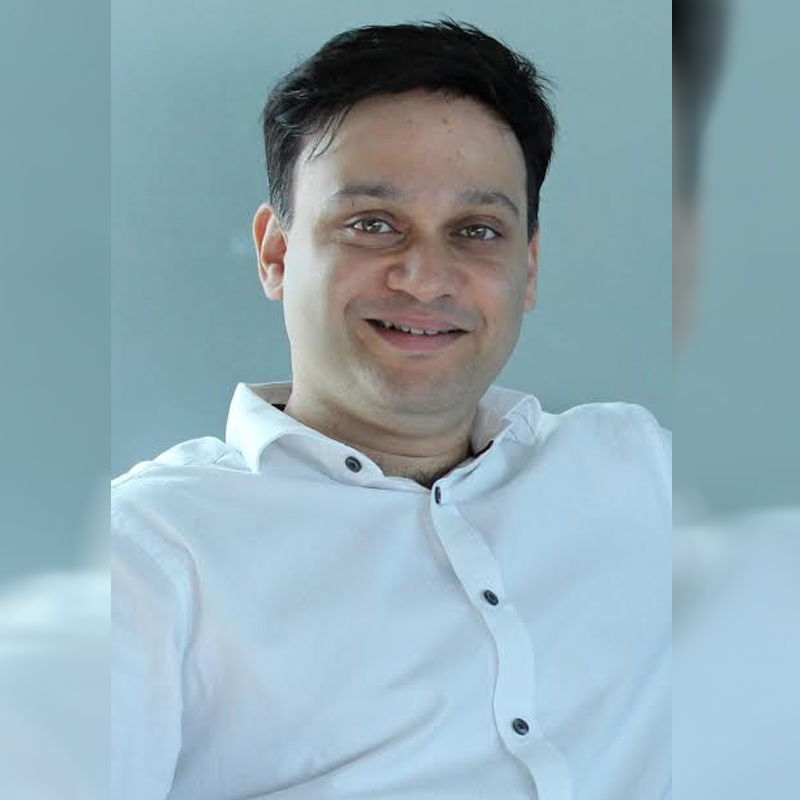
Tag: Gaurav Gokhale

  • Aiming to produce 50 % of content outside of traditional non-fiction space: Gaurav Gokhale

    Aiming to produce 50 % of content outside of traditional non-fiction space: Gaurav Gokhale

    An accomplished professional with an MBA from INSEAD (France/Singapore), and over a decade-long experience in the industry, Gaurav Gokhale has been at the forefront of handling the day-to-day operations for Endemol Shine India since October, 2018. The content production company has been credited with the success of several large format shows including Bigg Boss, Khatron Ke Khiladi, and MasterChef India in multiple languages. As the chief operating officer (COO), Gokhale is also responsible for the long-term strategy and P&L of the content production company.

    In his career spanning over 13 years, Gokhale has worked with several organisations including BCG India, where he helped organisations solve strategic issues and improve business performance. Later on, he went on to work with Nimbus Communications as head of strategy and business development. In his previous stint at Star India, he handled the strategic mandates across sports and distribution businesses. He also played a pivotal role in launching the Indian Super League and Hockey India League, and was instrumental in managing the business transition of Star Sports.

    As the OTT boom brings a content revolution in the media and entertainment industry, Indiantelevision.com got into a freewheeling conversation with Endemol Shine India, COO, Gaurav Gokhale to understand how the company is gearing up for this evolution. Gokhale also delved upon the challenges in meeting the burgeoning demand for content, growth opportunities in regional markets, and how the company is executing multiple scripted productions in parallel.

    Edited excerpts

    On the OTT boom and how it has changed the consumption patterns of viewers? Also elaborate on new opportunities that it offers in terms of content production.

    We’re seeing more of a big-bang moment in the OTT space rather than a boom. Digital content consumption is going through an exponential expansion phase. At one end, cheap data and entry-level smartphones have made streaming content easily accessible. Today, we have about 800 million smartphones in India priced from Rs 1,000 onwards. One hour of watching streamed content consumes about 500-700 MB of data and costs around Rs 7. Monthly, that’s around Rs.210, which is the average cable TV bill in the country. We can say that watching quality streaming content has now become truly democratised in India.

    Moreover, consumption of content on personal mobile devices offers better privacy and convenience over communal TV viewing. At the delivery end, streaming services and OTT platforms are bettering their streaming infrastructure and content supply to meet this burgeoning demand. A billion-dollar industry today, the OTT content ecosystem is estimated to grow 15X in the next nine years! These numbers are indicative and convey an upward move in demand and supply. As creators of content, we are happy to ride the wave and do what we do best – churn out quality content to satiate the rising consumption.

    On how media entertainment companies can meet this burgeoning demand for fresh, high-quality content, and the underlying challenges

    We need to re-invent ourselves constantly to feed this burgeoning demand and keep making investments into the sector. Media companies, producers and broadcasters need to re-think their existing models and come up with more efficient work-flows to accelerate content creation. Unlike a manufacturing process, AI and Robots cannot replace human creativity. One machine cannot substitute 10 writers and create 10X output. The only way to scale up production in a human-intensive industry such as ours, is to quickly build skills and efficiency and try and shorten the turnaround timelines.

    On the production setup, there are genuine supply-side constraints. There are a limited number of trained writers, technicians, artists and HODs who can work on OTT shows. It’s a problem the Indian IT industry faced 20 years back, and they solved it with concerted skilling initiatives across over two decades. By 2025, it is projected to become a $100 billion industry contributing in excess of five to seven per cent GDP. We need to push ourselves and aspire to reach there one day. This requires fresh thinking in the way we plan shows, the turnaround times for development, the post-production cycle and so on. These are real challenges today and over time, we need to find ways to optimise them.

    On Endemol Shine India’s plan for TV, OTT and cinema going forward

    As a production house, we produce quality content agnostic of form-factor and medium of consumption. Over the last decade, we have produced shows for TV – both fiction and non-fiction and in the last few years, we have ramped up our production for OTT platforms. We are also steadily building our films slate and have announced a few interesting collaborations in this space.

    On the balance between non-fiction factual, drama, dailies and cinema

    We have historically been known for our large format non-fiction shows such as Bigg Boss, MasterChef and Khatron ke Khiladi. These shows have given us the experience and expertise of delivering big productions in tight timelines and to a budget. Platforms prefer us for this proven track record, our audit transparency and clean operations — an emerging new factor for international platforms as they commission marquee scripted shows in India. That is a natural extension to our existing skill-sets.

    Over the last couple of years, we put in place a very efficient modular setup for executing multiple fiction productions in parallel. This year alone, we have more than 10 fiction shows on the floor. Over the next few years, our ambition is to produce 50 per cent of content outside of the traditional non-fiction space.

    On the growth opportunities in regional markets

    Regionalisation is critical for all content creators. OTT has made content language-agnostic and as we have seen from shows like Money Heist and Narcos. Good content finds its takers all around, irrespective of the language in which they are created. We must also remember that in India, nearly 40 per cent of TV viewership comes from regional markets. Over time, regional budgets have also gone up and today we have streaming services and OTT platforms dedicated to regional content. We are currently producing five versions of Bigg Boss for the regional markets (Tamil, Telugu, Marathi, Kannada, Malayalam), four regional versions of MasterChef and four regional daily fiction shows. We are producing both theatrical and finite fiction content in Tamil. There is a lot of talent and creativity in regional that is waiting to explode and the potential is huge.

    On whether co-production will become the new norm, and if yes, then the kind of financial structuring deals we might see coming in this area.

    If you look at the macro trends, we have a roughly Rs. 25,000 crore TV content industry growing at 10-12 per cent annually, and a nascent Rs. 2,000 crore OTT content industry growing at over 30-40 per cent annually. To fuel this kind of future growth in volumes of production, we need to create content hubs and content factories that can churn out shows on a large scale. This will require innovative ways of working and new kinds of investments and partnerships that bring together different individuals and entities with diverse and complementary skill-sets. In such a ‘co-production’, idea-generators join hands with execution experts like us to pitch and create multiple shows. The ‘creative producer’ then takes over development and the overall creative onus while the ‘line producer’ takes on execution onus and delivers the financial target. Such a partnership is based on implicit trust between the stakeholders but if done well, the synergies can yield hugely positive outcomes and most importantly, faster turn-arounds.

    Apart from the traditional commissioning model where platforms fund development and production and are deeply involved in creating a platform original, we are seeing a growing demand from platforms for ready-for-sale shows that help fill content gaps at relatively lower costs, especially given the longer turn-around of commissioned shows. A natural need-gap situation has emerged and offers a very interesting opportunity for an institutionalised fund play.

    Today, wealth managers and funds in India are sitting on undeployed capital and need a differentiator to sell to their HNI clients. Now, if done right, here is an opportunity to invest in a low-risk vehicle with fairly guaranteed returns and a fundamentally strong demand cycle and with an implicit X-factor. With the right production partner to bet on, I see a lot of organised financial investors wanting to participate in this asset class.

    On whether Endemol Shine India is looking at the studio model too, wherein it will work as an aggregator and distributor for smaller producers

    Strategically, our interest lies in producing shows we can actively shape. While tactical distribution opportunities may arise due to our strong relationships with platforms, our core business is to develop and produce shows that we strongly believe in, with talented writers and accomplished show-runners.

    On the company’s positioning in India

    Endemol Shine India is today an end-to-end content production powerhouse. We produce premium fiction and non-fiction shows; regional daily fiction shows and also factual content. We manage some of the largest shows produced in India and our USP is managing large productions within agreed timelines and budgets. We are well positioned to take advantage of the growing demand for more original fiction content from India. We are producing shows for all leading platforms – Netflix, Amazon, Disney+ Hotstar, Lionsgate, MX Player, Discovery Plus and AltBalaji.

  • Technology needs to be upgraded for quality storytelling

    Technology needs to be upgraded for quality storytelling

    KOLKATA: The Indian media and entertainment industry is standing at a point when the requirement for video content is, more or less, growing in tandem with the investment in it. While Indian producers are branching out into new types of content across genres, formats, they need to scale up their investment in technology.

    To deliberate upon this changing landscape, Indiantelevision.com hosted a virtual webinar on Friday themed ‘Accelerating the new age of content with technology,” and moderated by founder, CEO and editor-in-chief Anil Wanvari. At the beginning of the discussion, Wanvari elaborated why more focus is required on faster seamless content delivery in the emergence of various formats like HD, 4K, 4K HDR. He also mentioned that a new breed of machine called workstation has emerged which is being increasingly used in studios across the world to deliver on hard and extremely tough specifications that are demanded by platforms.

    Media Partners Asia vice president Mihir Shah agreed that technology is going to play an increasingly crucial role going forward. In terms of production, there is a lot of innovation that is yet to be seen on the online video side. While India has tried to emulate the west, we have only been replicating what’s successful on television and films. Hence, there are a lot of things to be done on the online video side where different streaming options are available, he opined.

    “Technology will be used widely as ever before with the online opportunity available right now and you will see a lot of interactive videos coming in, short videos coming in, different format, vertical videos, we have just touched the tip of the iceberg,” Shah stated.

    He also brought up the aspect of the gap in creating franchises as the audience is used to seeing a lot of daily soaps. If the country starts focusing on more franchises, more innovations will come around. He believes a lot of local franchises can be created and monetised by utilising technology.

    In a fireside chat during the webinar, Dell Technologies’ Dell Precision Workstations marketing consultant & product evangelist Suhas Pingat remarked upon the importance of using workstations and technology to create content. He stated that times are changing and 5G is going to be widespread in a period of 18 to 20 months.

    According to him, India is not behind as far as accepting content is concerned. There are some technologies that are superior in developed markets, among which is MoCap (motion capture), then there is virtual filming which is taking place. In the west, the adaptation of technology is progressing at a pace that far outstrips India, noted Pingat, although he believes the scenario is slowly changing with the rise of OTT platforms.

    However, broadcasters and content studios still have a lot to catch up on, said Pingat. Moreover, there is a need for change in the way content is given to consumers in India and we need to move far ahead, as far as adapting technology is concerned. He also elaborated on how Dell Technologies has a very industry-specific approach to the business ecosystem, with a large media and entertainment vertical. He also touched upon the topic of how Dell workstations are helping its partners in the domain from a technology standpoint.

    “These are exciting times ahead in terms of technology. Whatever is available abroad, globally, is available in India too, in terms of not only workstations but from an infrastructure standpoint as well.  That’s one pint which is very good with Dell. We are the oldest workstation brand. We do partner across industry platforms which would be ISPs, global customers. We have a separate work team that has been helping solve customers’ problems. We look forward to fantastic content being delivered by our great partners in the country. Look forward to more exciting immersive years ahead,” he detailed.

    Post this discussion, the webinar hosted an engaging session on the role of technology with eminent experts. The panel included Excel Entertainment CG supervisor Apul Mehta, Endemol Shine India chief operating officer Gaurav Gokhale, Hats Off Productions chairman and managing director JD Majethia, Contiloe Pictures CFO & Illusion Reality Studioz business head – animation & VFX Nitin Dadoo, Redchillies VFX technology head Rajiv Sharma, and Epic On chief operating officer Sourjya Mohanty.

    The experts came to the conclusion that innovation is key to implement new technologies at this point of time. The transformation journey has started already but a lot more needs to be done. Storytelling and execution need to be in sync with upgradation of technology. It is imperative now to leverage technology at its best because consumers are demanding more quality content, not only on OTT bit also on TV.  While media organisations are significantly upping their investment in content, there is no point in shying away from technology.

    Technology needs to be brought to speed in the country. The demand side constraints can be met by great content and marketing strategy but supply side constraints can be rectified only by technology. Moreover, if big tech companies can look at the media and entertainment vertical as an industry and offer a solution rather than a product, a sea change will take place.

  • Guest column: Pause, Reset, Play – The M&E sector’s mantra during pandemic

    Guest column: Pause, Reset, Play – The M&E sector’s mantra during pandemic

    MUMBAI: This Covid2019 pandemic has forever transformed the way content is consumed across the world. With people confined at home and all outdoor public entertainment shut, and with easy access to 24×7 TV and high-speed internet, viewers consumed content across screens like never before. This paradigm shift prompted the M&E industry to pause, re-assess strategies and finally, scramble back on its feet with a refreshed plan of attack.

    Like most of our contemporaries, we, at Endemol Shine India, were taken by complete surprise when India went into its first lockdown in March. Some of our ongoing shows had to be halted mid-way. Instead of throwing our hands up in despair, we utilised the forced break to go back to the drawing board to reset and put in place extremely detailed blueprints, SOPs and protocols, ready to be deployed for all production units when the lockdown opened.

    When Unlock 1.0 was announced, we were well prepared to hit the ground running. We immediately deployed our well-laid plans, and over the next couple of weeks, started productions across the country. A lot of precious prep-time was saved through meticulous pre-planning that was done between our operating teams and medical experts over numerous Zoom calls.

    Over the next couple of months, we successfully launched three Bigg Boss productions – in Telugu, Tamil and Hindi – all being some of the most complex on-ground productions in India that involve complex workflows and employ significant manpower throughout the day and night, across multiple months. It’s no less than war, but each day brings new learnings, and we are constantly on high vigil – the slightest error can be irreversibly catastrophic.

    Despite inevitable financial setbacks due to a few show cancellations and postponements, we have been able to deliver to our customers what Endemol Shine India has always stood for — top-drawer high quality content. The biggest lesson learnt from this crisis is to always stay prepared for the next one. A great Plan A is now hygiene; the ability to pre-emptively keep Plan B ready is now the true differentiator.

    The other side of the coin

    While the lockdown period stalled productions and original content on TV went off air, repeats of successful older shows saw substantial viewership.

    Ramayan returned to the small screen after 25 years, making DD the #1 channel in the country. Our very own Bigg Boss reruns contributed significant GRPs to our broadcaster partners. With original content back from July and with Bigg Boss and IPL driving viewership in Hindi and regional markets, broadcasters are also looking at a healthy turnaround in the advertising market. With the Covid numbers across India seeming in control and experts staying cautiously optimistic, the M&E industry is slowly but surely raising its head once again.

    These steady progressions have not only fuelled optimism but also investments into the sector. As global brands like Apple, HBO and NBC as well as a few of our domestic giants wait in the wings to test the waters, the timing couldn’t be better for content creators and producers.

    To make the best use of new and emerging opportunities in the post Covid era, it is imperative for organisations to reflect on long-term strategies, consolidate the green shoots and double-down on operating plans for 2021 and beyond. At Endemol Shine India, over the last couple of years, we have been actively pursuing a two-pronged strategy – preserve and grow our non-scripted portfolio, with newer formats and newer platforms; and significantly scale up our scripted portfolio.

    We believe that upstream participation in Intellectual Property (IP) creation is critical and have been investing a lot in creative development – through book rights, original stories, and talent tie-ups. While we are the producer of choice for non-scripted shows, our next frontier is to become the producer of choice in the scripted space. We have set ourselves an ambitious target of delivering 50 per cent of our business from scripted productions over the next three years. As the industry is pivoting around content across devices and as consumption habits change, we realise that we too need to adapt and diversify. To deliver our plans, we are organising ourselves around content. To service the platform demand across the variety of shows we produce, we have created dedicated teams of creative, commercial and production personnel across scripted, non-scripted and factual content.

    As we step on to this ambitious journey, we have identified three critical levers in our production playbook:

    1.    Modularity in execution

    Decentralised, empowered teams for each show, to deliver volumes without sacrificing quality. In 2021, quality supply at scale will be the single biggest USP of production houses.

    2.    Customer-centric approach

    Platform is king and feedback deserves utmost respect. As platforms re-orient their business models and discover newer consumption patterns in 2021, a strategic approach will differentiate production houses and decide who gets repeat volume business.

    3.    Eye on ROI

    The gains of diligent book-keeping cannot be under-stated. Also, we have realised that commercial efficiency and creative excellence are not always a zero-sum game. With granular planning, robust scheduling and tight execution, the interests of the platform and the production P&L can be aligned.

    Looking ahead

    In hindsight, the pandemic has been a steep learning experience, and luckily has not been the unmitigable hopeless disaster it threatened to be. On the contrary, it has made us deliberate and question the fundamentals of our operating models and come up with smarter ways of creating content for our diverse customer base.

    The industry as a whole, has become more resilient and adaptive to new realities – of consumption shifts, lower margins and cost efficiencies. The government can support by easing taxation across the value chain and offering meaningful incentives for productions showcasing our beautiful country, a move that can indirectly help spur domestic tourism. After all, an industry that positively engages 750+ million consumers daily for hours at end, can only boost the revival sentiment in the near and long run as we head into an interesting 2021.

    (The author is COO, Endemol Shine India. Indiantelevision.com may not subscribe to his views.)

  • Star Pravah to launch new singing reality show – ‘Mi Honar Superstar’

    Star Pravah to launch new singing reality show – ‘Mi Honar Superstar’

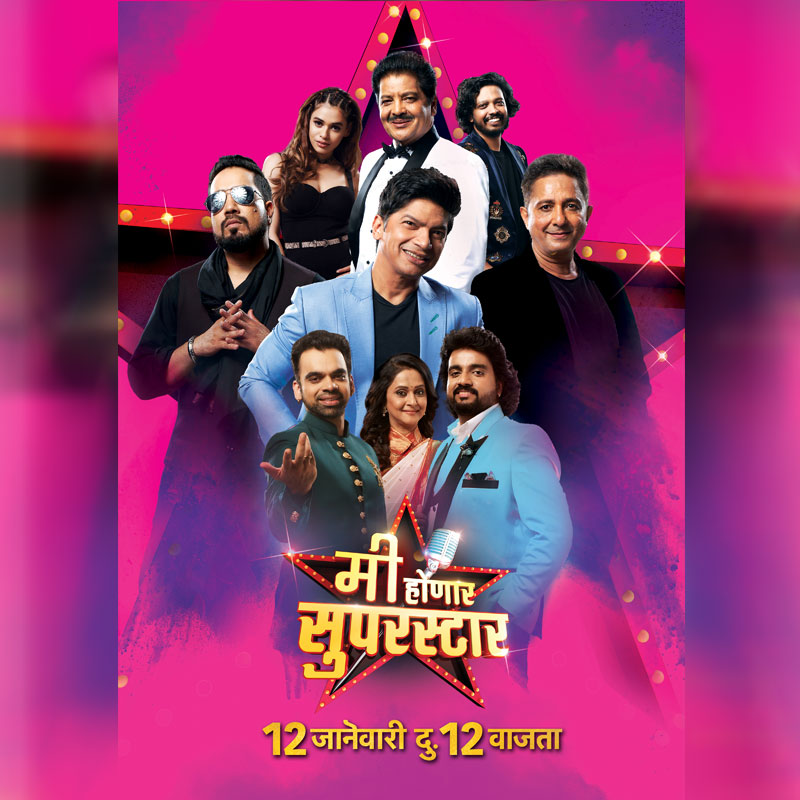
    MUMBAI: Star Pravah is all set to launch an all-new singing reality show “Mi Honar Superstar” (“I am going to be a Superstar”) produced by Endemol Shine India. Launching on Sunday 12 January 2020 at 12 noon, the show is an opportunity for singers who have unfulfilled singing dreams, to prove themselves once again.

    The grand premiere, for the first time in the history of Marathi television, will see Mika Singh, Shaan, Sukhvinder Singh, Udit Narayan, Shalmali Kholgade and Nakash Aziz nominate participants who are striving for a second chance to make a singing career. These are talented individuals who for some reason or other had to put their singing dream on hold and pursue other avenues and careers, but will now have a second chance to present their talent to the world on the stage of “Mi Honar Superstar”. Adarsh Shinde, Rahul Deshpande and Mrunal Kulkarni will be the judges in the show while Pushkar Shrotri will be the host.

    "With ‘Mi Honar Superstar’, Endemol Shine India presents a new format in singing reality on Star Pravah. The platform gives a second chance to the aspiring singers to bring alive their unexplored potential. We expect to bring forth some superb singing talent on the show and will have some of the best from the music industry to mentor and guide the talent besides our formidable jury. Here’s hoping that true to its name the show does put the spotlight on the new superstars of Marathi Music!" said Endemol Shine India chief operating officer Gaurav Gokhale.

    “Talent is one thing that cannot be forgotten. We have seen so many cases of talented people giving up their talent and dreams for household responsibilities, families, not being able to perceive due to lack of support, financial problems, among many other reasons. Had they got the required support and the chance to perceive their dream, they could have been serious talent today and give some leading talent a run for their money. MHS on Star Pravah is such a platform that will give such talented people a second chance to fulfill their dreams and give another opportunity to achieve what they left out of choice or no choice. People with great voice and in perfect tune with their talent will compete with each other. Talent will be judged by established iconic singers and dreams will turn into reality here. Life always gives a second chance and this is the same emotion”, said Star Pravah programming head Satish Rajwade.

    The grand premier will see awesome performance by giants of the music Industry alongside superb talents scouted from all corners of Maharashtra. Post the grand premiere ‘Mi Honar Superstar’ will be presented to viewers every Saturday and Sunday at 9 PM.

    Famous singer Shaan talks about his experience with the platform of “Mi Honar Superstar” and says “I have a lot of love for the Marathi language and I feel a sense of belonging.  Marathi was my favorite subject at school and I used to get more marks in Marathi compared to other subjects. When I was asked to be present in the first episode of the “Mi Honar Superstar” by Star Pravah, I immediately agreed. I have sung Marathi songs on this platform. The special thing is – I loved the concept of the show. Very few people get a second chance in life.  So, participants should make full use of this opportunity given to them. If I had to talk about a second chance in my life – I loved singing right from the time I was young. I used to sing jingles as well, however, my voice changed when I was 12. I felt it won’t be the same as earlier. After 2 – 3 years of practice, I got back the voice which I had earlier. This story sounds unbelievable, but this is the second chance that life gave me.”

    The brand new singing reality show programme will be viewable on 12 January at 12 noon and 6 pm, only on Star Pravah.