Tag: Gaurav Gandhi

  • Voot turns kids ‘goody goody’ with unique TVC

    Voot turns kids ‘goody goody’ with unique TVC

    MUMBAI: Kids are the ready and excited end-consumers of Voot Kids but parents often scale down their enthusiasm by being gatekeepers. The journey of any marketer to promote a product like this and growing from zero to 50+ advertisers is not easy.

    Encouraging the kids to access such a platform as well as making parents comfortable with handing over their phones to them remains crucial. And, how better can this gap be bridged with lucid storytelling and a catchy musical anthem that grabs the attention of kids and parents alike.

    Banking on three things- television content, kids and originals- this OTT platform observes 15 per cent share of the overall traffic coming from kids. Riding high on kids content behind it’s viewership and user growth, Voot has launched a new TVC capturing how kids from across India have taken to the new way of life and turned ‘goody goody’ in their ultimate quest to earn Voot time.

    “The loyalty factor from kids is very high. They are obsessive about characters. So, everything has to revolve around the character that they like. The amount of money parents spent on these characters is huge. We looked at the top 10 characters that the kids like and we built on that,” said Viacom18 Digital Ventures COO Gaurav Gandhi.

    The special anthem Bachche Hum Goody Goody Banenge, Voot Kids Ke Liye Kuch Bhi Karenge! will roll out across all major kids channels and digital  platforms on 30 September.

    With 10 characters to be added to its 100+ character library, the platform will focus more on originals in 2017.

    The time spent by kids on Voot is approximately 30 minutes on an average while they spend close to 45 minutes on weekends and 25 minutes on weekdays. Unlike the traditional, linear from of content consumption wherein the peak viewing of kids content happens during the early evening; Voot Kids in contrast witnesses a peak that coincides with the prime time on national GECs wherein the mobile gets passed onto the kids as the parents take control over the remote. “The primetime for kids on our platform is 9 pm. Adding to that, Sundays are huge for us wherein the consumption just jumps upto 40 per cent compared to any other day,” added Gandhi.

    “Kids are the masters of negotiations. They know what they want and how to get it. But the catch is that the parents know these antics and are willing to evolve the kids if they see a good behaviour being displaced by them. The communication that we have created was to showcase this varied but interesting dynamics between the parents and their kids. You will see the kids doing ‘goody goody’ things in this film. The music and anthem of the campaign is something each one of us can relate to as we have grown up listening to this popular song,” adds Viacom18 head marketing and partnerships Akash Banerji.

    The advertisers too are lapping up this opportunity on Voot Kids with open arms as they seek to connect and engage with this mobile-first generation who are the influencers of today and the decision makers of tomorrow. It has close to 50+ advertisers on board out of which 10 are especially for Voot Kids. Targeted at an age group of 1-12, Voot plans to launch a tablet app in a week’s time followed by a campaign on the same.

    “We feel that this segment is only set to grow, both in size and influence, and we want to be the default digital platform of choice for kids entertainment. Our endeavour is to build a parent-approved kids-favourite brand, and we will continue to develop exciting campaigns and dial up engagement with this community even further,” added Gandhi.

    The campaigns will be promoted across Viacom18 network and will be heavily leveraged on social media.

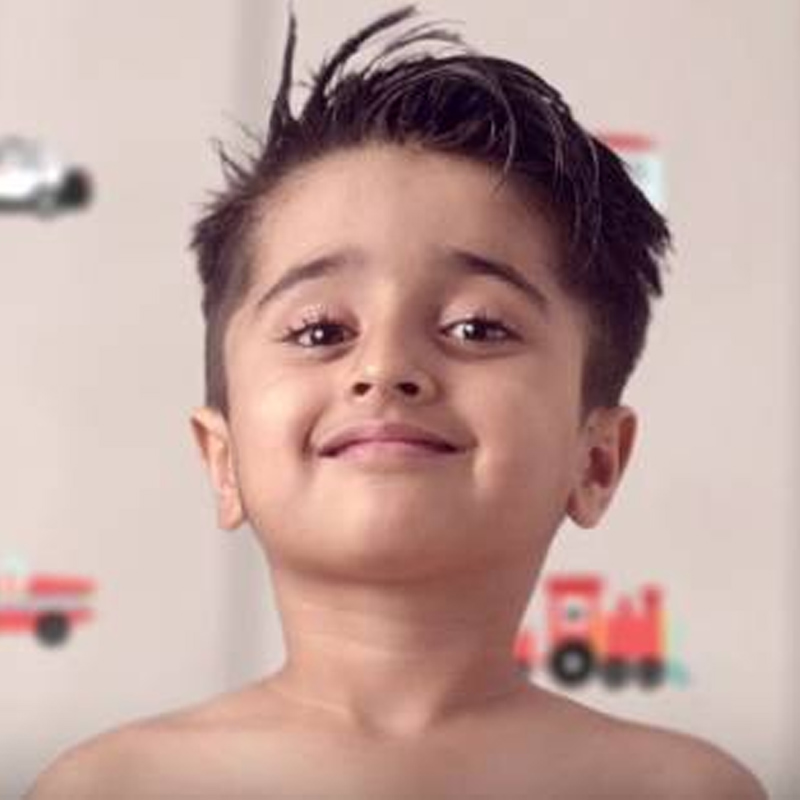
    About the campaigns: The campaign comprises multiple TVCs featuring lots of kids. The films depict kids’ heroics as they happily embrace the very tasks that kids are usually known for not doing willingly.

    The films showcase a range of situations where the kids turn to their ‘goody goody’ best – a boy getting out of the bed in the night to brush his teeth unprompted, another young boy with spiky hair combing it vigorously to turn it into a good-boy hairstyle, a cute little girl goes onto finishing the very last drop of milk from a glass, a young girl wiping clean the wall that once was her canvas, another boy is seen tidying up his bed and surprisingly a boy denying potato chips being offered while sitting on a park bench. What follows is a happy smiley parent handing over their mobile phone to their kid for a well-deserved Voot time. In the background of each of the two films you hear the chorus of kids singing this catchy Voot Kids anthem and reciting their favourite characters for whom they’re turning to this new way of life. The closing line captures the core thought very aptly – Bachche Hum Goody Goody Banenge, Voot Kids Ke Liye Kuch Bhi Karenge!

    TVC:

    Link1: https://youtu.be/55AVLumuWEY

    Link2: https://youtu.be/vrcDmXDnRxM
  • Voot will exclusively stream IIFA 2016

    Voot will exclusively stream IIFA 2016

    MUMBAI: Riding on the back of an immensely successful launch and a high decibel marketing campaign, VOOT by Viacom18, today announced its partnership with India’s most awaited and celebrated film celebration – IIFA 2016. This strategic alliance with the International Indian Film Academy is in line with Voot’s promise of bringing differentiated and engaging content to its digital audience.

    With IIFA 2016 ready to take off later this month in Madrid, VOOT is gearing up to converge the younger generation who are getting their TV entertainment from Internet-connected devices with the razzmatazz of this Bollywood extravaganza.

    Speaking about the association, Viacom18 Digital Ventures COO Gaurav Gandhi said, “We are delighted to partner with IIFA to bring the biggest Bollywood Awards extravaganza to the digital audiences In India. Within a very short period, Voot has already emerged as a go-to online destination for the biggest TV shows, Kids content and Digital Originals (Voot Originals). With this association with IIFA, which already enjoys a massive fan following in India, we are further strengthening our Bollywood proposition as well. Viewers in India will now be able to stream all IIFA 2016 Awards, IIFA Rocks and related content on their mobile and computer screens on-demand and this will be available exclusively on Voot”

    Wizcraft International director Sabbas Joseph said, “IIFA is all about celebrating Indian Cinema and bringing a grand cinematic experience to fans in India and across the world. Within a short span of time Voot has forged its prominence in the digital entertainment world and we are delighted to be partnering with them for IIFA 2016. The partnership will not only magnify the IIFA experience for its Indian fans – with the content now being available on-demand across screens, but it will also increase IIFA’s overall reach to a newer audience base that prefers to consume content primarily on their digital devices.”

    IIFA 2016 hosts the most spectacular celebrity weekend where the stars and their fans converge together in Madrid, Spain. The highlights of the celebrations are the Videocon d2h IIFA Weekend and the Nexa IIFA Awards powered by LeEco. The entire event is organized and produced by Wizcraft International Entertainment.

    Hosted by Shahid Kapoor and Farhan Akhtar, the star-studded event will showcase scintillating performances by the country’s foremost heartthrobs Salman Khan, Hrithik Roshan, Priyanka Chopra, Deepika Padukone, Sonakshi Sinha, Tiger Shroff and many more. VOOT will help all Bollywood aficionados to watch them up close and personal on their preferred screens.

    Amongst all Indian OTT players, Voot, in a very short span, already has the most amount of original content.

    Voot is available for free on iOS, Android and web and delivered over mobile and WiFi networks. With a stellar line-up of content available across genres and languages, Voot assures to keep you definitely wanting for more!

  • Voot will exclusively stream IIFA 2016

    Voot will exclusively stream IIFA 2016

    MUMBAI: Riding on the back of an immensely successful launch and a high decibel marketing campaign, VOOT by Viacom18, today announced its partnership with India’s most awaited and celebrated film celebration – IIFA 2016. This strategic alliance with the International Indian Film Academy is in line with Voot’s promise of bringing differentiated and engaging content to its digital audience.

    With IIFA 2016 ready to take off later this month in Madrid, VOOT is gearing up to converge the younger generation who are getting their TV entertainment from Internet-connected devices with the razzmatazz of this Bollywood extravaganza.

    Speaking about the association, Viacom18 Digital Ventures COO Gaurav Gandhi said, “We are delighted to partner with IIFA to bring the biggest Bollywood Awards extravaganza to the digital audiences In India. Within a very short period, Voot has already emerged as a go-to online destination for the biggest TV shows, Kids content and Digital Originals (Voot Originals). With this association with IIFA, which already enjoys a massive fan following in India, we are further strengthening our Bollywood proposition as well. Viewers in India will now be able to stream all IIFA 2016 Awards, IIFA Rocks and related content on their mobile and computer screens on-demand and this will be available exclusively on Voot”

    Wizcraft International director Sabbas Joseph said, “IIFA is all about celebrating Indian Cinema and bringing a grand cinematic experience to fans in India and across the world. Within a short span of time Voot has forged its prominence in the digital entertainment world and we are delighted to be partnering with them for IIFA 2016. The partnership will not only magnify the IIFA experience for its Indian fans – with the content now being available on-demand across screens, but it will also increase IIFA’s overall reach to a newer audience base that prefers to consume content primarily on their digital devices.”

    IIFA 2016 hosts the most spectacular celebrity weekend where the stars and their fans converge together in Madrid, Spain. The highlights of the celebrations are the Videocon d2h IIFA Weekend and the Nexa IIFA Awards powered by LeEco. The entire event is organized and produced by Wizcraft International Entertainment.

    Hosted by Shahid Kapoor and Farhan Akhtar, the star-studded event will showcase scintillating performances by the country’s foremost heartthrobs Salman Khan, Hrithik Roshan, Priyanka Chopra, Deepika Padukone, Sonakshi Sinha, Tiger Shroff and many more. VOOT will help all Bollywood aficionados to watch them up close and personal on their preferred screens.

    Amongst all Indian OTT players, Voot, in a very short span, already has the most amount of original content.

    Voot is available for free on iOS, Android and web and delivered over mobile and WiFi networks. With a stellar line-up of content available across genres and languages, Voot assures to keep you definitely wanting for more!

  • Will people vote for VOOT?

    Will people vote for VOOT?

    MUMBAI: Banking heavily on building a compelling proposition with a focus on the big drivers of digital video on demand business, Viacom’s recently launched digital arm VOOT has successfully managed to create its own niche within a few months of its launch. From being the biggest online destination in India for kids’ premium content to having four successful originals with one new addition every month, the platform has strategically mapped its differentiated play and competitive edge over the rest.

    Targeted to be the one stop destination from tots to adults, the platform currently airs 17,000 hours of programming which includes reality, drama, comedy and kids’ content. The platform is majorly investing on the network’s rich kids content and plans to go beyond the network’s flagship shows like Motu Patlu and Shiva, and to acquire kids content from an array of producers, small and large.

    “The two critical aspects of a digital video on demand business are content and product and we have a fairly differentiated play, with a competitive edge, on both the fronts. With our collection of biggest toons in Voot Kids’, we have a huge competitive advantage of being the only destination to catch the all your most favourite characters and toons online. And our original strategy gives us the ultimate edge”, says Viacom18 Digital Ventures COO Gaurav Gandhi.

    Apart from the rich kids’ content, Viacom18’s entire content library, including Colors, MTV and Nick is also digitally available on the platform.

    Additionally, VOOT embellishes this with content around content as Voot originals. Long and short form of originals includes web-series like Chinese Bhassad which is written by Raahil Qaazi and directed and produced by Saurabh Tewari, a chat show with Alok Nath titled Sinskari produced by Monozygotic Productions, a mocumentary film Badman starring Gulshan Grover and Soadies, a sitcom tribute to the iconic reality show Roadies which stars Baba Sehgal.

    Sharing the experience of working with the evolving platform, Monozygotic Productions co-founder Rajiv Laxman asserts, “I am happy with the launch of Voot as a player that encourages and supports differentiating edgy content. We created Sinskaari for it and it was an awesome experience for us. This is just the beginning for them. It will eventually see lot more growth during its entire journey”.

    Not only its distinctive UI enhances each of its content piece, the platform also has social features like shouts, micro celebrity and sharing integrated with video, many of which are first in this space. Further, for the kids’ section, it has first of its kind features like parental lock and shake to search.

    “What Indian players can do to improve the industry is that the OTT platforms and the producers can synergise and think together to bring greater value to the consumer. They could start by releasing unseen footages, shooting goof-ups, candid reactions of stars, etc., on OTT platforms over the contextual to the film”, adds another spokesperson from the industry.

    “It was a nice experience working with Voot and Gaurav. Digital gives us the liberty to experiment with various content formats and also gives us an opportunity to attempt various subjects that are not possible to put on TV. Content with limited budget can go on digital platform with a different treatment and narrative like a movie”, says producer Saurabh Tewari.

    According to Frost and Sullivan’s market insight on the OTT video market in India, there are about 66 million unique connected video viewers in India every month, and about 1.3 million OTT paid video subscribers. Growth in the space can be attributed to the increase in smart-phones penetration as well as the improvement in Internet speeds in India.

    Voot has already set an aggressive target of getting to 3 million (30 lakh) daily active users within the first 12 months of launch in India. It also plans to actively evaluate the space on subscription have extensions in that space when the time is right. The team is also exploring the option of taking Voot to international markets.

    “Because the entertainment market is so broad, multiple brands can be successful. Many people will subscribe to several services (including Netflix) since we have different, exclusive content. The transition to Internet TV, with its greater consumer satisfaction, will mean growth for many Internet TV services”, adds a Netflix spokesperson

    “It’s still early days in this space for everyone in India where the overall digital video consumption is booming. While the space is large enough for multiple players, there are many challenges. “The right model (ad supported vs freemium vs pay -TVOD/SVOD) is a function of content as well as target audience and many of these models (and others) will emerge over a period of time. This is an expensive business with long gestation where spends are required on technology (product), content and marketing on a continuous basis. So, players coming into these business need to factor in all of these factors”, stresses Gandhi.

    The platform will start taking advertising from June and already has large advertising deals in place with the two of the largest media agencies as well as several large advertisers. The players are closing out the formalities for the same and will see advertising starting on VOOT very shortly.

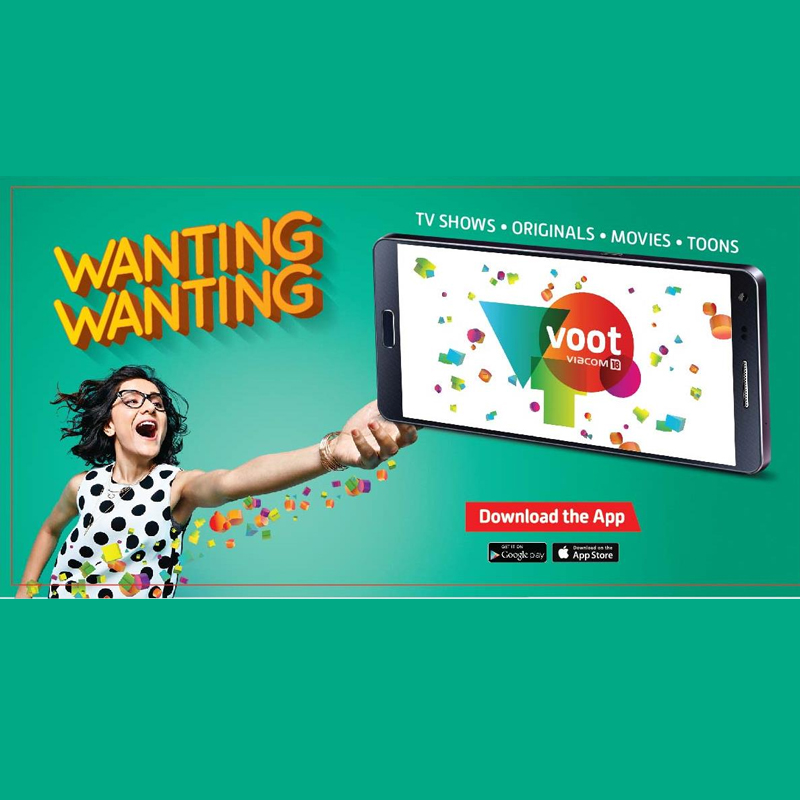
    The new digital content brand has clearly laid down three imperatives, first on the list is building a compelling brand proposition. Establishing on this, the player recently launched three brand campaigns focusing on the uncontrollable excitement of the consumers; all craving for Voot anywhere anytime like a good addiction. This excitement from consumers across all age groups leads to a loud encore Voot Wanting Wanting! Amplification of the brand identity will continue across all mediums.

    The campaigns cater to multiple target groups expanding from kids to adults. With a catchy jingle ‘what to do, VOOT to do, wanting wanting’, the service wants to urge, excite and make its viewers restless for addictive content which if started to consume is unstoppable. An overwhelmed Gandhi adds, “We have had a phenomenal response to our launch campaign (wanting wanting) and have seen a huge inflow of audiences and users both on the app and the web. The engagement time we are seeing on the app as well as the web is also very healthy. The response to our original shows has also been fantastic”.

    The second key element is to drive consumer adoption for a new and a mass brand. Mass media continues to give it reach, helping in driving awareness of the new brand. The player extensively concentrates on digital mediums to get relevant consumers and precisely target their nice. “It becomes important for us to get good quality consumers at scale, each of them watching their favourite content and discovering new stories on the platform”, points out Gandhi.

    The VOD platform accelerates engagement with consumers driving daily watch-time. Its cornerstone marketing strategy implies to all the digital essentials that are primarily focused on getting more people to come often and spend more time in watching videos.

    “Voot looks very promising and will deliver audiences which are tough to catch. Some of the content on it is unique and has huge potential even on mass channels like TV. This might just be the beginning of content reverse flow from digital to TV”, says Vibrant Media VP Karthik Lakshminarayan.

    “The winner is the one who invests heavily on original content and that is Voot’ plus point. This helps in creating its own identity, its own niche rather than banking on other players who just put their GEC content on board. This will definitely make a difference going further”, adds Tewari.

    With YouTube at the helm of this space followed by various other digital properties, the space is poised to grow at a fast pace in the years ahead. Media observers are expecting a revolution in the Indian digital market in the coming two years.

    The competition in the digital space is set to intensify with the key differentiators being user experience and variety of content offering. It will be interesting to see what this new addition to the entire digital ecosystem has in store for its viewers.

  • Will people vote for VOOT?

    Will people vote for VOOT?

    MUMBAI: Banking heavily on building a compelling proposition with a focus on the big drivers of digital video on demand business, Viacom’s recently launched digital arm VOOT has successfully managed to create its own niche within a few months of its launch. From being the biggest online destination in India for kids’ premium content to having four successful originals with one new addition every month, the platform has strategically mapped its differentiated play and competitive edge over the rest.

    Targeted to be the one stop destination from tots to adults, the platform currently airs 17,000 hours of programming which includes reality, drama, comedy and kids’ content. The platform is majorly investing on the network’s rich kids content and plans to go beyond the network’s flagship shows like Motu Patlu and Shiva, and to acquire kids content from an array of producers, small and large.

    “The two critical aspects of a digital video on demand business are content and product and we have a fairly differentiated play, with a competitive edge, on both the fronts. With our collection of biggest toons in Voot Kids’, we have a huge competitive advantage of being the only destination to catch the all your most favourite characters and toons online. And our original strategy gives us the ultimate edge”, says Viacom18 Digital Ventures COO Gaurav Gandhi.

    Apart from the rich kids’ content, Viacom18’s entire content library, including Colors, MTV and Nick is also digitally available on the platform.

    Additionally, VOOT embellishes this with content around content as Voot originals. Long and short form of originals includes web-series like Chinese Bhassad which is written by Raahil Qaazi and directed and produced by Saurabh Tewari, a chat show with Alok Nath titled Sinskari produced by Monozygotic Productions, a mocumentary film Badman starring Gulshan Grover and Soadies, a sitcom tribute to the iconic reality show Roadies which stars Baba Sehgal.

    Sharing the experience of working with the evolving platform, Monozygotic Productions co-founder Rajiv Laxman asserts, “I am happy with the launch of Voot as a player that encourages and supports differentiating edgy content. We created Sinskaari for it and it was an awesome experience for us. This is just the beginning for them. It will eventually see lot more growth during its entire journey”.

    Not only its distinctive UI enhances each of its content piece, the platform also has social features like shouts, micro celebrity and sharing integrated with video, many of which are first in this space. Further, for the kids’ section, it has first of its kind features like parental lock and shake to search.

    “What Indian players can do to improve the industry is that the OTT platforms and the producers can synergise and think together to bring greater value to the consumer. They could start by releasing unseen footages, shooting goof-ups, candid reactions of stars, etc., on OTT platforms over the contextual to the film”, adds another spokesperson from the industry.

    “It was a nice experience working with Voot and Gaurav. Digital gives us the liberty to experiment with various content formats and also gives us an opportunity to attempt various subjects that are not possible to put on TV. Content with limited budget can go on digital platform with a different treatment and narrative like a movie”, says producer Saurabh Tewari.

    According to Frost and Sullivan’s market insight on the OTT video market in India, there are about 66 million unique connected video viewers in India every month, and about 1.3 million OTT paid video subscribers. Growth in the space can be attributed to the increase in smart-phones penetration as well as the improvement in Internet speeds in India.

    Voot has already set an aggressive target of getting to 3 million (30 lakh) daily active users within the first 12 months of launch in India. It also plans to actively evaluate the space on subscription have extensions in that space when the time is right. The team is also exploring the option of taking Voot to international markets.

    “Because the entertainment market is so broad, multiple brands can be successful. Many people will subscribe to several services (including Netflix) since we have different, exclusive content. The transition to Internet TV, with its greater consumer satisfaction, will mean growth for many Internet TV services”, adds a Netflix spokesperson

    “It’s still early days in this space for everyone in India where the overall digital video consumption is booming. While the space is large enough for multiple players, there are many challenges. “The right model (ad supported vs freemium vs pay -TVOD/SVOD) is a function of content as well as target audience and many of these models (and others) will emerge over a period of time. This is an expensive business with long gestation where spends are required on technology (product), content and marketing on a continuous basis. So, players coming into these business need to factor in all of these factors”, stresses Gandhi.

    The platform will start taking advertising from June and already has large advertising deals in place with the two of the largest media agencies as well as several large advertisers. The players are closing out the formalities for the same and will see advertising starting on VOOT very shortly.

    The new digital content brand has clearly laid down three imperatives, first on the list is building a compelling brand proposition. Establishing on this, the player recently launched three brand campaigns focusing on the uncontrollable excitement of the consumers; all craving for Voot anywhere anytime like a good addiction. This excitement from consumers across all age groups leads to a loud encore Voot Wanting Wanting! Amplification of the brand identity will continue across all mediums.

    The campaigns cater to multiple target groups expanding from kids to adults. With a catchy jingle ‘what to do, VOOT to do, wanting wanting’, the service wants to urge, excite and make its viewers restless for addictive content which if started to consume is unstoppable. An overwhelmed Gandhi adds, “We have had a phenomenal response to our launch campaign (wanting wanting) and have seen a huge inflow of audiences and users both on the app and the web. The engagement time we are seeing on the app as well as the web is also very healthy. The response to our original shows has also been fantastic”.

    The second key element is to drive consumer adoption for a new and a mass brand. Mass media continues to give it reach, helping in driving awareness of the new brand. The player extensively concentrates on digital mediums to get relevant consumers and precisely target their nice. “It becomes important for us to get good quality consumers at scale, each of them watching their favourite content and discovering new stories on the platform”, points out Gandhi.

    The VOD platform accelerates engagement with consumers driving daily watch-time. Its cornerstone marketing strategy implies to all the digital essentials that are primarily focused on getting more people to come often and spend more time in watching videos.

    “Voot looks very promising and will deliver audiences which are tough to catch. Some of the content on it is unique and has huge potential even on mass channels like TV. This might just be the beginning of content reverse flow from digital to TV”, says Vibrant Media VP Karthik Lakshminarayan.

    “The winner is the one who invests heavily on original content and that is Voot’ plus point. This helps in creating its own identity, its own niche rather than banking on other players who just put their GEC content on board. This will definitely make a difference going further”, adds Tewari.

    With YouTube at the helm of this space followed by various other digital properties, the space is poised to grow at a fast pace in the years ahead. Media observers are expecting a revolution in the Indian digital market in the coming two years.

    The competition in the digital space is set to intensify with the key differentiators being user experience and variety of content offering. It will be interesting to see what this new addition to the entire digital ecosystem has in store for its viewers.

  • How ready is India for the digital disruption?

    How ready is India for the digital disruption?

    MUMBAI: The Indian media and entertainment industry is enamoured by the possibilities that the digital world poses for it. Within digital, ‘video’ and ‘mobile’ seem to be most used and often abused words. To tap in and make the most of this ‘digital video’ revolution that  the country is set to see in 2016, several small and big players have rolled out or planned VOD or OTT services..

    But is India ready for this digital disruption? Have those who are betting high on the success of the video business really taken into consideration the groundwork and infrastructure needed to actually make profit?  Moderator and Bloomberg TV India consulting editor Vikram Oza raised these questions at FICCI Frames 2016 during a panel discussion – ‘And the walls came tumbling down : Digital disruption.’ In front of him on the panel were  – SPN digital business EVP Uday Sodhi, Viacom18 Digital Ventures COO Gaurav Gandhi, HOOQ cofounder and content head Krishnan Rajagopalan, Arre COO Ajay Chacko and Elemental Tecnologies SVP Daniel Marshal  – each a pioneer of digital world in his own right.

    Within the first fifteen minutes into the discussion, the audience had a good idea of where things stood in the digital video business. “While a fair bit of 3G and 4G is taking off, the industry is still at a nascent stage to make assumptions. Monetization, bandwidth and content needed to fall in place to set the groundwork going,” said Sodhi summing it up.

    When posed a query on bandwidth costs and subscription issues, Gandhi gave an optimistic perspective. “Currently the data prices are very high. So much of the consumption behaviour we are seeing will drastically change as the bandwidth opens up and becomes cheaper. We need to aim for a setting when data prices become part of everyone’s utility bill. That is when no one will hesitate from paying for an OTT service.”

    Marshal added his take from his experience of the international market and how it played out there. “What I have observed in the US is that there are more users with multiple subscriptions since the combined cost is still less than what people used to pay for their cable subscriptions. If India has to really see the end of this convergence, adaptability and bandwidth needs to be worked on heavily,” he suggested.

    Another variable that is a hindrance for digital convergence is the complicated and poor payment gateways. “It is true that in India the present payment gateway options are a major challenge to both the service provider and the consumers. From my experience, a huge part of willing consumers put off payments because of the payment method. It is indeed a big challenge and a part of it is that people are still hesitant to trust their money with online payments. Thus the adoption is lower. TRAI tried to deal with the issue by strengthening the security process in the transaction and sort of got overzealous with it, which is costing the industry in a different way. I would say it will take another 5 years for the payment options to be easy and secure and ready to handle the digital disruption,” Sodhi opined.

    With everyone jumping on the mobile video bandwagon and promising an on demand video service, was there a need for the players to differentiate their offerings? After all, according to Google research, the current range of smartphones in the market allowed users to have only few apps before their devices slowed down. While the industry remained a free market, this clearly meant that only few services would survive this tough competition and make their way to the users’ handsets.

    To put matters into perspective, Gandhi said, “Currently 85 per cent of the content is owned between the five major TV networks and the two TV studios. The content offered by their OTT players may look homogenous because our first natural instinct is to put forth the existing content from our TV and movie library. But newer original content for the web is also being produced currently.”

    Rajagopalan shared that his OTT service HOOQ, which already has a large presence in the international market, is banking on its large Hollywood movie library as the differentiating factor. “Apart from that we have also identified regional and smaller studios that don’t have a contract with major broadcasters’ networks in India to provide us with fresh content. So ours is an international and regional approach.”

    Acknowledging the need to create web only content, instead of banking on existing libraries, Chacko added, “What an audience individually consumes is different social viewing. The content itself needs to be disruptive if it were to survive these initial years of just investment and to break even eventually. Each player will work on its strengths and try everything and anything between micropayments (or pay per view revenue model) to ad-funded content.”

    It is obvious from the discussions that there is a long way to go for India to reach a point when these OTT players can reap the optimum benefits of what they are sowing as investment today. Will they be able to make it through the dry years ahead until the infrastructure and country is ready? Is it worth the time and money that they are putting in?

    Chacko addressed this with a simple comparison to the eCommerce markets. “Compared to the eCommerce business there is almost no customer acquisition cost when it comes to digital media. What we gain organically is what these eCommerce brands pay millions of dollars for. Therefore, with an almost zero marketing budget one can sustain oneself in the industry as long as one has strong content,” Chacko said.

    The panel also pointed out that digital video business paves way for an exponential growth. With better devices and network, the business will grow not just by tens but thousands so it made sense to invest in it.  

    The moderator then rolled the ball in the panellists court by asking them if their advertisers were buying these arguments that they gave in favour of the OTT/ digital business. The panellists unanimously agreed that media planners and buyers were excited about this newly evolving media. They were happy about giving an alternative to their clients and so were the advertisers, given the measurability and reach the media gave them.

  • How ready is India for the digital disruption?

    How ready is India for the digital disruption?

    MUMBAI: The Indian media and entertainment industry is enamoured by the possibilities that the digital world poses for it. Within digital, ‘video’ and ‘mobile’ seem to be most used and often abused words. To tap in and make the most of this ‘digital video’ revolution that  the country is set to see in 2016, several small and big players have rolled out or planned VOD or OTT services..

    But is India ready for this digital disruption? Have those who are betting high on the success of the video business really taken into consideration the groundwork and infrastructure needed to actually make profit?  Moderator and Bloomberg TV India consulting editor Vikram Oza raised these questions at FICCI Frames 2016 during a panel discussion – ‘And the walls came tumbling down : Digital disruption.’ In front of him on the panel were  – SPN digital business EVP Uday Sodhi, Viacom18 Digital Ventures COO Gaurav Gandhi, HOOQ cofounder and content head Krishnan Rajagopalan, Arre COO Ajay Chacko and Elemental Tecnologies SVP Daniel Marshal  – each a pioneer of digital world in his own right.

    Within the first fifteen minutes into the discussion, the audience had a good idea of where things stood in the digital video business. “While a fair bit of 3G and 4G is taking off, the industry is still at a nascent stage to make assumptions. Monetization, bandwidth and content needed to fall in place to set the groundwork going,” said Sodhi summing it up.

    When posed a query on bandwidth costs and subscription issues, Gandhi gave an optimistic perspective. “Currently the data prices are very high. So much of the consumption behaviour we are seeing will drastically change as the bandwidth opens up and becomes cheaper. We need to aim for a setting when data prices become part of everyone’s utility bill. That is when no one will hesitate from paying for an OTT service.”

    Marshal added his take from his experience of the international market and how it played out there. “What I have observed in the US is that there are more users with multiple subscriptions since the combined cost is still less than what people used to pay for their cable subscriptions. If India has to really see the end of this convergence, adaptability and bandwidth needs to be worked on heavily,” he suggested.

    Another variable that is a hindrance for digital convergence is the complicated and poor payment gateways. “It is true that in India the present payment gateway options are a major challenge to both the service provider and the consumers. From my experience, a huge part of willing consumers put off payments because of the payment method. It is indeed a big challenge and a part of it is that people are still hesitant to trust their money with online payments. Thus the adoption is lower. TRAI tried to deal with the issue by strengthening the security process in the transaction and sort of got overzealous with it, which is costing the industry in a different way. I would say it will take another 5 years for the payment options to be easy and secure and ready to handle the digital disruption,” Sodhi opined.

    With everyone jumping on the mobile video bandwagon and promising an on demand video service, was there a need for the players to differentiate their offerings? After all, according to Google research, the current range of smartphones in the market allowed users to have only few apps before their devices slowed down. While the industry remained a free market, this clearly meant that only few services would survive this tough competition and make their way to the users’ handsets.

    To put matters into perspective, Gandhi said, “Currently 85 per cent of the content is owned between the five major TV networks and the two TV studios. The content offered by their OTT players may look homogenous because our first natural instinct is to put forth the existing content from our TV and movie library. But newer original content for the web is also being produced currently.”

    Rajagopalan shared that his OTT service HOOQ, which already has a large presence in the international market, is banking on its large Hollywood movie library as the differentiating factor. “Apart from that we have also identified regional and smaller studios that don’t have a contract with major broadcasters’ networks in India to provide us with fresh content. So ours is an international and regional approach.”

    Acknowledging the need to create web only content, instead of banking on existing libraries, Chacko added, “What an audience individually consumes is different social viewing. The content itself needs to be disruptive if it were to survive these initial years of just investment and to break even eventually. Each player will work on its strengths and try everything and anything between micropayments (or pay per view revenue model) to ad-funded content.”

    It is obvious from the discussions that there is a long way to go for India to reach a point when these OTT players can reap the optimum benefits of what they are sowing as investment today. Will they be able to make it through the dry years ahead until the infrastructure and country is ready? Is it worth the time and money that they are putting in?

    Chacko addressed this with a simple comparison to the eCommerce markets. “Compared to the eCommerce business there is almost no customer acquisition cost when it comes to digital media. What we gain organically is what these eCommerce brands pay millions of dollars for. Therefore, with an almost zero marketing budget one can sustain oneself in the industry as long as one has strong content,” Chacko said.

    The panel also pointed out that digital video business paves way for an exponential growth. With better devices and network, the business will grow not just by tens but thousands so it made sense to invest in it.  

    The moderator then rolled the ball in the panellists court by asking them if their advertisers were buying these arguments that they gave in favour of the OTT/ digital business. The panellists unanimously agreed that media planners and buyers were excited about this newly evolving media. They were happy about giving an alternative to their clients and so were the advertisers, given the measurability and reach the media gave them.

  • Kids content growth is fastest in digital, and monetizing models need to keep up

    Kids content growth is fastest in digital, and monetizing models need to keep up

    MUMBAI: ‘Kids content has already gone digital, catering to its target audience,’ was the unanimous consensus at a session on ‘Kids Go Digital’ at the ongoing FICCI Frames 2016

    Unlike most discussions on digital media, there were no “if’s, ‘but’s and ‘maybe’s” and panelists — Chuchu TV CEO Vinoth Chander, Godimensions’ founders Shravan and Sanjay Kumaran, Nazara Technologies CEO Manish Agarwal  and Viacom 18 Digital Ventures COO Gaurav Gandhi – discussed how to take digital kids content to the next level, expand its market in India and make the most of the resources and eyeballs at disposal. Whizkidz Media founder Amit Agarwal, moderated the panel discussion.

    “Kids content growth is fastest in digital as its consumers are native to the medium. While you and I are adapting to the medium, they are born in the digital world and hence take naturally to it,” said Gandhi, adding that over the years the demography of kids born in the digital world will only grow.

    Currently kids’ content on digital platform is mostly on YouTube which has a few issues. Firstly, there is hardly any premium kids content available in India, then there is a lack of character driven shows, and most of the content for children is targeted at preschoolers leaving out a huge chunk of the audience. Moreover, most of the viewership comes from foreign markets, and the market in India still needs to be developed.

    Reflecting on how one markets kids content, Gandhi had a cryptic answer: “In their own language”. “You need to think like them and market your content on their own terms.”

    Speaking from personal experience, Gandhi added that using TV as a medium is a good start, as a huge chunk of the audience is still on TV. “Sampling videos on YouTube, TV and even reaching out to them through schools and play schools is also a good way to understand them and share your content.”

    As far as Chander was concerned, organic reach has worked wonders for him and his company ChuChu TV and he would vouch for strategically placed promotion within their own YouTube content. “We want to concentrate on quality content, rather than marketing as the former does the latter for us,” Chander said categorically. He also stressed that kids usually take more to visual content, and therefore propagating the message through videos and pictures would work better.

    “Kids are smart,” said Agarwal on the topic of edutainment. “Do not trick them into consuming content that you sell as entertainment, which is actually educational and is meant for learning. You need to separate your own consumers from their parents.” To back his argument Agarwal narrated about his own failed experiment with a gaming app that was intended to teach mathematics to kids. “A minute into the game they figured that this was no game but a trick to teach them, and immediately they got disinterested. For them games is entertainment, and just that.”

    The young entrepreneurs in the panel however differed. The Kumaran brothers said “Kids do like content that mirrors the teachings of their parents. Moreover, content that has an educational value that teaches a skill set like a programming code, or their everyday school syllabus with diagrams and videos, will work immensely well.”
     
    Expectedly monetizing models came up when discussing content production and business opportunity. “Time spent on content is what advertisers swear by. If that is so, as per market insight, kids will spend more and more time on digital or second screens than on TV, it is already happening,” said Agarwal hinting that ad revenue on kids content on digital platform will only grow.
     
    Gandhi shared another statistic from a BCG study: “Out of top 200 YouTube channels that garnered 10 billion views, 5 percent had kids content while 26 percent of the viewership came from children. It indicates that kids watch repeatedly, and they get obsessive over characters,” Gandhi said. Pointing out the simple demand supply ratio in economics, he added, “money will follow.”

  • Kids content growth is fastest in digital, and monetizing models need to keep up

    Kids content growth is fastest in digital, and monetizing models need to keep up

    MUMBAI: ‘Kids content has already gone digital, catering to its target audience,’ was the unanimous consensus at a session on ‘Kids Go Digital’ at the ongoing FICCI Frames 2016

    Unlike most discussions on digital media, there were no “if’s, ‘but’s and ‘maybe’s” and panelists — Chuchu TV CEO Vinoth Chander, Godimensions’ founders Shravan and Sanjay Kumaran, Nazara Technologies CEO Manish Agarwal  and Viacom 18 Digital Ventures COO Gaurav Gandhi – discussed how to take digital kids content to the next level, expand its market in India and make the most of the resources and eyeballs at disposal. Whizkidz Media founder Amit Agarwal, moderated the panel discussion.

    “Kids content growth is fastest in digital as its consumers are native to the medium. While you and I are adapting to the medium, they are born in the digital world and hence take naturally to it,” said Gandhi, adding that over the years the demography of kids born in the digital world will only grow.

    Currently kids’ content on digital platform is mostly on YouTube which has a few issues. Firstly, there is hardly any premium kids content available in India, then there is a lack of character driven shows, and most of the content for children is targeted at preschoolers leaving out a huge chunk of the audience. Moreover, most of the viewership comes from foreign markets, and the market in India still needs to be developed.

    Reflecting on how one markets kids content, Gandhi had a cryptic answer: “In their own language”. “You need to think like them and market your content on their own terms.”

    Speaking from personal experience, Gandhi added that using TV as a medium is a good start, as a huge chunk of the audience is still on TV. “Sampling videos on YouTube, TV and even reaching out to them through schools and play schools is also a good way to understand them and share your content.”

    As far as Chander was concerned, organic reach has worked wonders for him and his company ChuChu TV and he would vouch for strategically placed promotion within their own YouTube content. “We want to concentrate on quality content, rather than marketing as the former does the latter for us,” Chander said categorically. He also stressed that kids usually take more to visual content, and therefore propagating the message through videos and pictures would work better.

    “Kids are smart,” said Agarwal on the topic of edutainment. “Do not trick them into consuming content that you sell as entertainment, which is actually educational and is meant for learning. You need to separate your own consumers from their parents.” To back his argument Agarwal narrated about his own failed experiment with a gaming app that was intended to teach mathematics to kids. “A minute into the game they figured that this was no game but a trick to teach them, and immediately they got disinterested. For them games is entertainment, and just that.”

    The young entrepreneurs in the panel however differed. The Kumaran brothers said “Kids do like content that mirrors the teachings of their parents. Moreover, content that has an educational value that teaches a skill set like a programming code, or their everyday school syllabus with diagrams and videos, will work immensely well.”
     
    Expectedly monetizing models came up when discussing content production and business opportunity. “Time spent on content is what advertisers swear by. If that is so, as per market insight, kids will spend more and more time on digital or second screens than on TV, it is already happening,” said Agarwal hinting that ad revenue on kids content on digital platform will only grow.
     
    Gandhi shared another statistic from a BCG study: “Out of top 200 YouTube channels that garnered 10 billion views, 5 percent had kids content while 26 percent of the viewership came from children. It indicates that kids watch repeatedly, and they get obsessive over characters,” Gandhi said. Pointing out the simple demand supply ratio in economics, he added, “money will follow.”

  • Viacom18 launches its AVOD platform VOOT; to move its entire content library

    Viacom18 launches its AVOD platform VOOT; to move its entire content library

    MUMBAI: Finally setting to rest about when it would launch its OTT platform, Viacom18 launched its digital VOD platform VOOT. VOOT will be an advertising led VOD platform and will be available for free on iOS, Android and web.

    In a major move aimed at curating the largest repository of kids’ characters in the Indian OTT space, VOOT will house popular characters from across networks – from Nick characters like Dora, Spongebob, Motu Patlu to external popular characters like Chhota Bheem and Pokemon. In what it claims to be another first for an Indian OTT player, VOOT has launched with the largest repository of original content. VOOT Originals will roll out shows in both long and short formats across genres like comedy and drama. Bollywood actors Gulshan Grover, Baba Sehgal, Alok Nath and a host of celebrity scriptwriters and directors will be front-lining these shows. Furthermore, Viacom18 will move its entire content library, including COLORS, MTV and Nick, to be digitally available only on VOOT.

    Commenting on the launch, Viacom18 group CEO Sudhanshu Vats said, “India is at the cusp of a digital boom with over 400 million (20 crore) internet users and 200 million plus (20 crore plus)smart phone users spending significant amount of time online with entertainment and allied content being the prime driver. As more people move towards consuming content online, it is time for Viacom18 to move into the world of connected screens. Hence VOOT.”

    VOOT’s target audience strategy is in line with Viacom18’s larger strategy – it is a one stop destination for tots to adults. And this is where VOOT brings its unique proposition. Explaining further, Vats added, “With Kids’ content and our entire VOOT Originals line-up, the focus was to get people addicted to happiness. Through our content strategy, that is what we have held true. Our television channels also provide a very robust content bank that we will build upon, for the digital consumers. VOOT will be Viacom18’s singular gateway to quality and differentiated content, in the digital medium.”

    Echoing his CEO’s enthusiasm, Viacom18 Digital Ventures COO Gaurav Gandhi explained further, “As a network we are a content powerhouse, be it through our television channels or through our film studio. Our content strategy for VOOT is true to Viacom18’s philosophy of inclusive entertainment. Between VOOT Originals, VOOT Kids, our network content and content-around-content created exclusively for the platform, the idea is to peddle happiness to the ‘always wanting’ India, racing to go digital. Our marketing campaign, set to kick off in the next few days, also highlights this brand philosophy that is at the core of VOOT. ”

    With digital advertising led video-on-demand category set to develop into a $1 billion business opportunity, Viacom18 has lined up an aggressive mix of business, content and marketing strategies. “From a business standpoint, we are following the advertising led VOD model. As the market matures in the next 12-24 months, we will be evaluating both freemium and subscription led models,” explained Gandhi.

    The VOOT bouquet of offerings will include fresh, new content mix, keeping in mind the varied demands of the consumer base. VOOT has planned six originals through its launch phase, and is all set to introduce India’s first mockumentary – Badman. Written and directed by Soumik Sen and co-written by stand-up comedian Anubhav Pal; this 4-part film has Gulshan Grover playing himself. Soadies, a comic spin off of the ever popular Roadies, was also unveiled at the launch. With Baba Sehgal in the lead role, the web sit-com produced by Frames has all his trademark antics to laugh your guts out.

    Comedy rules the roost on VOOT. With a web series ‘Chinese Bhassad’ written by Raahil Qaazi (Co-writer of Do Dooni Chaar) and directed and produced by Saurabh Tewari and a talk show with a ‘twist; called’Sinskari’ starring Alok Nath and produced by Monozygotic is all set to keep you in splits this April!

    In the ‘Content around content’ category, there will be specially curated and platform exclusive shows, exploring never before seen footage and storylines to get you hooked. Rounding up the VOOT content mix, will be all of Viacom18’s channels’ shows. The OTT platform will offer a personalised experience and intuitive product features to engage the always on generation. With VOOT Viacom18 continues to enrich the lives of every Indian with something for everyone.