Tag: Gaurav Gandhi

  • Tug of war between AVoD & SVoD, who will win?

    MUMBAI: Content is the king and distribution is the queen. The year 2016 saw this phrase being used several times by the Over-the-top (OTT) players. But, does the struggle end there? Not really.

    While content remains to be crucial, changing consumption patterns is inevitable. Having the right content mix is still a challenge for the players in the digital eco-system.

    Discussing the importance of content and what can work well at the CASBAA OTT Roundtable Summit 2017 were Zee Entertainment Z5 India Business head of digital Archana Anand and Viacom18 Digital Ventures COO Gaurav Gandhi, moderated by TriLegal partner Nikhil Narendran, the session kick-started with the two leading players discussing their evolution.

    While Anand spoke about the ‘BeesKaTV’ app in detail, Gandhi mentioned how the year 2016 saw OTT players burning cash to acquire consumers while it was a fabulous year for them.

    “There is a a lot of demand for content consumption on mobile devices. As an advertising-led video-on-demand (VOD) service, we want to play on our strengths. Acquiring users comes with a heavy cost. There is a streaming cost, technology cost, content cost, etc. A platform has to bare the cost of a stream per user. Voot rides on four pillars – fandom around our reality and drama content available on our TV channel, Kids, Original play, and various languages content. We have built ourselves around content, and are still learning. The market can have 5-6 players with different strategies and we are enjoying a nice slice of the market,” said Gandhi.

    Today, OTT is not just limited to mobile, and the fact that linear TV is not going away yet cannot be denied. How do the consumers consume content is important for which discovery is essential. “Content is crucial and discovery continues to be important. It is beneficial to throw recommendations around one type of content. Curation of original content requires humongous marketing strategy. In the recent Oscars, Netflix and Amazon Prime Video grabbed several awards. What better way to applaud the OTT industry than this,” added Anand.

    It is given that, more than discovery or being a device-agnostic platform, there is a mindset shift required. Making people pay for content remains to be one of the many challenges for the SVOD players. With the data prices coming down, more and more people are going to consume digital video. Though, there is a segment of people who are not part of the data bandwagon, but they have consumed content. So, does it lead to the exit of linear TV in India? Perhaps, not.

    “The next 24 months are going to be crucial for the digital space. TV is here to stay for a long time. There are some segments that will grow faster than the rest. Ad-supported OTT platform complements TV perfectly. We create fandom around our popular TV shows on Voot which gets us more eyeballs and, at the same time, boosts our TV business. There is a lot of headroom for television,” said Gandhi.

    Anand resonated with Gandhi’s point of view on whether digital can replace TV framework.

    But, who will determine the right pricing for each of these platforms? Are the advertisers ready to buy slots? For advertisers to hop on board, the platform first needs to monetise its content, grab maximum number of eyeballs, and then measure it. “The choice is with the players whether they want to play by volume or margin. Indians are ready to pay for transactions than subscriptions. The transactional business will get its value, but the subscription business will take its time. Newer and better models will emerge in the market. The volumes are growing large, but the challenge is — pricing. The advertisers require volume for which more watch-time is a given,” added Gandhi.

    Contradicting that, Anand said, “The real challenge is: value for money. Even the advertisers are invisible in videos. Selling inventories to other broadcasters or platforms becomes difficult.”

    It remains to be seen who’s content will work in the long run, and which model proves to be successful for the players in the digital space.

  • Viacom18’s Voot ranked among 2016’s best apps on Google Play

    Viacom18’s Voot ranked among 2016’s best apps on Google Play

    MUMBAI: In its year of launch, Viacom18’s video-on demand platform, Voot has made it to the prestigious -Best Apps of the year 2016 India list on Google Play. Some of the other top apps which made it to the list are Google Allo, Google Duo, Prisma, Dubsmash, Ted, etc.

    Every year Google releases a list of best performing applications, games, movies, TV shows, and books on Google Play across the globe. Voot has won under Top Trending Apps and Most Entertaining Apps in the country across categories. In fact, VOOT is the only video-on demand app to have made it to this coveted list and one of the only two apps to feature in two categories.

    “To be selected in the list of top trending and most entertaining apps for 2016 by Google Play is a huge honor.It cements our belief that compelling content packaged into a great user experience makes for a winning product, one that is appreciated by consumers and acknowledged by the industry. Having made it to this prestigious list in our maiden year now sets a high benchmark for us,” said Viacom18 Digital Ventures COO Gaurav Gandhi.

    Voot was launched earlier this year and currently has over 30,000 hours of content and plans to add between over 12000 hours of content each year. The ad-supported VOD service, besides being the singular destination for the Viacom 18 network content, also has a big focus ondigital Originals, exclusive unseen content around the network’srealityshows as well as the largest repository for premium kids’ content in India.

    Within just six months from launch, Voot has already garnered more than 16 million downloads, over 15 million monthly active users with monthly watch time of over 1.3 billion minutes.

  • Viacom18’s Voot ranked among 2016’s best apps on Google Play

    Viacom18’s Voot ranked among 2016’s best apps on Google Play

    MUMBAI: In its year of launch, Viacom18’s video-on demand platform, Voot has made it to the prestigious -Best Apps of the year 2016 India list on Google Play. Some of the other top apps which made it to the list are Google Allo, Google Duo, Prisma, Dubsmash, Ted, etc.

    Every year Google releases a list of best performing applications, games, movies, TV shows, and books on Google Play across the globe. Voot has won under Top Trending Apps and Most Entertaining Apps in the country across categories. In fact, VOOT is the only video-on demand app to have made it to this coveted list and one of the only two apps to feature in two categories.

    “To be selected in the list of top trending and most entertaining apps for 2016 by Google Play is a huge honor.It cements our belief that compelling content packaged into a great user experience makes for a winning product, one that is appreciated by consumers and acknowledged by the industry. Having made it to this prestigious list in our maiden year now sets a high benchmark for us,” said Viacom18 Digital Ventures COO Gaurav Gandhi.

    Voot was launched earlier this year and currently has over 30,000 hours of content and plans to add between over 12000 hours of content each year. The ad-supported VOD service, besides being the singular destination for the Viacom 18 network content, also has a big focus ondigital Originals, exclusive unseen content around the network’srealityshows as well as the largest repository for premium kids’ content in India.

    Within just six months from launch, Voot has already garnered more than 16 million downloads, over 15 million monthly active users with monthly watch time of over 1.3 billion minutes.

  • Originals are a big play for us, says Viacom 18’s Gaurav Gandhi

    Originals are a big play for us, says Viacom 18’s Gaurav Gandhi

    If you look at Gaurav Gandhi’s CV, you will see that this NMIMS graduate began as a strategic business media executive with the Sam Balsara-promoted Madison Communications way back in 1998. He then took the plunge into television, joining Turner as a researcher and planner, and then, Star India. He followed that up with a stint in NDTV Imagine. 

    But, for the past six years, he has been associated with the Viacom18 brand – first as the commercial head, then moving on to distribution of traditional television with various assignments in Sun18 and IndiaCast, before being given the responsibility of steering the company into the digital space in late 2015. 

    Burning the midnight oil for more than seven months, he and his team, rolled out their first offering – a VOD service called Voot in March 2016. Rivals such as Star India, and Zee TV had their versions – Hotstar and DittoTV — in play for a longer period. But, that did not faze Voot COO who is known to be a feisty fighter. He is quite clear of the direction that Voot is taking, and he spoke about its journey so far in a tete-a-tete with Indiantelevision.com’s Megha Parmar. Read on to get some Gandhi insights on the Indian OTT space.

    How has the response to Voot been so far?

    The response has been very good. We are happy where we are. To get to be the third largest streaming website in watch time in a short period that we have is very encouraging. It’s been a good journey. We know that, as a market, we have close to 100 million users now, which will go to 400 million. So, the 4x growth is happening in the market, and we are riding that well.  There are three things that really encourage us. First, 45 minutes per day per user on an average is a very good number, so the watchtime is there. We have a large user base now, which excites us. Second is the fantastic response to our content. Of our three properties (TV, kids and originals), specifically for television, there is so much to do around a reality show. Thirty per cent of the views come from the extra stuff that we do around it. We shoot a lot of things along with our TV counterparts. And having 50+ advertisers on board definitely gives us a sense that we are going in the right direction.

    What were the learnings in the past few months?

    There has been a lot of learning. With our kids, we know exactly what is going on.We have a publishing cycle in place and the way it works is to make sure that we refresh it thrice a day. Kids will come back from school by 4 pm, and we thought that we should put our best content there and market it. Reality happened to us at 9 pm as the kids were watching it at that point of time when their parents are busy with dinner. That was the learning, which came alongside. Actually, the father’s phones have been used far more on weekends.

    We initially were of the opinion that 500 cities are enough for us but, in the third month, we crossed 1000 cities. There are viewers in 1100 cities right now who regularly consume Voot.  It’s all been a great learning. We had originally thought that it was about currency or new shows, but the catalogue has been watched by people for new stuff.

    People repeatedly come to us for something they love such as the MTV show, Kaisi Yeh Yaariyan. We look at the data and have witnessed that a lot of people consume data when in office between 1:30 am and 3 pm. There is a big surge of content.

    The kids demo peaks at 9 pm, the GEC at 10 pm and youth escalates from 11 pm to 1 at night. Our traffic only goes down from 2:30 am to 5 am. That is the time when we have some time with us, say, to solve a technical problem. Those things are very different. This is a consumer business, B2C, as against the past. We have not been going to  the consumers directly. We are consumer brands now, and that is an interesting proposition.

    When you say that 75 per cent of video consumption is now happening through WiFi and it is expected to change after digitization, after which a majority of the consumption will happen through telcos. The telcos are also coming into play with their own offerings of VOD and aggregation OTT platforms such as Jio, Wynk, Idea TV. Are the VOD platforms going to be at a disadvantage?

     Let me be honest with you, there is no dearth of platforms, and there will be none going forward. It’s like we have approximately 600 to 800 channels right now technically, and it still has a demand because people are watching. We are ultimately providing content. Those are platforms wherein everything is available but ours is a video-on-demand platform where you can choose what you want to watch and at what time.

    If you are talking from the content front, if you have a clear direction on the partnerships, the consumers as well as the content creation that you are doing, I don’t see a threat. Second, telcos are building services out. How we work with them and tie up is yet to be seen. The fact that we are over the top, we are available to every single person. We are an OTT service and we are available to all.

    Telcos are only concerned about one thing: consumer data. We work very closely with Jio and many other players. I think, from a telecoms perspective, they want to give their users everything possible and encourage them to consume data. From our point of view, we are talking about the fact that we want maximum viewership and that converts to eyeballs, money, and so on. So it’s very much a complementary situation. We provide content, and they get the users to use that content on their network. We get our eyeballs they get their consumption.

    What type of growth do you see after 4G rolls out completely?

     I see currently 120 million digital video users overall to go to 400 million next year. That’s three and a half times growth. You are doubling the user base over digital video every year. Now, if that is the case, all the players will grow automatically. Obviously, there will be top three, four, five, naturally who will see more growth because of more content.

    The other part of India is an interesting challenge because top five or six companies control 80 per cent of the IP. They are investing on the IPs and they are building more and more. Naturally, they will have a bigger advantage. Telcos will build their interesting products. How you will work with the telcos and how they launch their products will be interesting to see.

    Currently, it’s an ad-supported market largely, and that leads to getting more eyeballs because you are making it available to a large set. We foresee growth to be fairly phenomenal in the next 36 months for everyone in the market. We want to grow at a faster pace — naturally.

    So, you think an ad supported model is faring well for you, and that is the way to go? Or, will you also experiment with other models?

    There are multiple models that you can play with. The reason that, today an ad supported model works, and is the right way is because of three main reasons. One, people are psychologically prepared to pay for content. You get 400 channels for Rs 300, and if you go back 10 years, the cable TV monthly subscription was around Rs 200. Channels have increased, it’s become digital, HD has arrived, etc., but the amount you are paying is the same. People think that this is our birthright, we will get it anyhow. So, there is a big mindset shift that needs to happen and it has to happen with the distribution industry. But, till then, the value of content in the mind is benchmarked to the amount you pay on TV, especially if it a subscription base. If it is event based, for eg, paying for a movie where you are paying for the experience of movie, you will not pay the same amount for watching a movie at home. You are paying for the outing, the experience, so there is a challenge.

     The second challenge is data prices, that are very high. To pay for data and to pay for content together for a consumer is very steep today.

    The third one is payment gateways. How do you pay for content? Not many people have credit cards, and people are not using it for recurring charge.

    I see this mindset changing in the next 36 months as well. The data prices will fundamentally come down, you will have data, bundled deals of content, you will have better speed connectivity, you will be offered premium services, HD service and various other services. Even the gateways will emerge. All these things will allow me to do a subscription model or a TVOD model as well. But, the large belly of the business is the ad-supported model.

    To run an advertising model you need humongous volumes. If you are a niche player, however good you might be, you can’t get business on advertising because the whole model of advertising is built on the number of eyeballs.

    It is a very expensive business. There are technology costs which are very high, there are content costs, there are costs of marketing and acquiring a customer, there are costs of streaming to the customer.

    The more content you watch on Voot or Hotstar or Youtube, there are two things which tend to happen. You are charged for data and it will also cost more to me as well as I have to pay the CDN (content delivery network) cost. So, the more you watch, the more I am paying. So I have to recover that cost. Unless you are a large volume player, you can’t do ad-supported. If you are a small player, you have to charge a sensible price to recover that cost. Netflix  – taking the sliver of the market at that price point, saying I only want these people – is one model. You are paying Netflix month on month.

    I think there will be more interesting models emerging in India going forward to break the psychological barrier in people’s mind. It’s not only an affordability barrier, but also a psychological barrier.

    We have to traverse the journey from ‘completely free’ to ‘completely pay.’ That journey has to pass through the consumer’s point of view, who is trying to pay for somethings. Once you are hooked on, then you tend to convert into a smaller package. The consumers will convert, but you can’t straight away give them a shock that tomorrow morning you will have to pay Rs 700. You will then get some, but a small portion.

    However, that’s not enough as in this country you have to build volumes. We are in the volume business. But, with some products, you can say that I want to play the international market game and play on the subscription part. It makes a lot of sense.

    But, one player has minimalised its rate to say the cost of a samosa. What do you have to say about that?

    We are not comparing with them. They only offer channels and not video on demand. I don’t know how are they doing it. Any strategy in my mind has to be sustainable. If they are able to offer all the channels in the world at Rs 20, then I think cable companies should talk to them and figure out why are they not charging that amount for the same channels.

    But, think of it logically. If you have all channels, everything for life at Rs 20 per month, then why would you pay the cable operators? You can choose to acquire customers from any route. You have a different way of acquiring customers and then you can hope them to stay hooked. I think it’s a marketing strategy from their point of view. People use different marketing strategies. But, I don’t think it makes business sense.

    I personally consume Voot content while it also is a ritual for me to catch up on Splitsvilla. But, there is a lag of around eight hours. Why?

    Splitsvilla has a humongous catch-up. There was a day where the Splitsvilla Sunday numbers were bigger than the next three days put together combined in a total value. I am a firm believer that consumers should have an ad model but you also need to understand that an ad supported model, you are getting this absolutely free as compared to me providing it to a cable or a DTH operator who is charging customers for it. There needs to be some gap. I could make this little pay and make it at the same time. But, if it is absolutely free here, you can play it, Chromecast it, share it, then personally I don’t feel that it is the right model. But, you can argue with me why it has to be eight hours? Why can’t it be six hours or a four hour lag? Those things are workable from my point of view but currently we have started with this strategy to put it up next morning. So, the way it works is TV airs it, we then process it, which takes about two to three hours. The team comes up here at 5am and publishes it on for the TV, tablet, mobile, website, etc. By 7:30 am, the content gets published most of the times.
    Is there scope of providing live content? How much, according to you, can the window be narrowed which also makes sense to your business?
    I am not going to comment on live, but, from case to case, we might have a much shorter window. I can narrow it down to zero also but, right now, I am not taking up that call because putting it up in the morning makes sense. You have to look at the larger thing. Currently, TV is measured on ratings and that’s how channels and advertisers are making money. TV has a large business there. This type of an emerging business has a separate sales, cost, structure, separate consumer base; we have to grow both businesses. It can’t be at the cost of the other. Definitely, it can’t be that you are actually working against the partners of yours especially on the distribution side by providing it free or live at the same time. I know some of my competitors have done it on the same time or even before, but as a stunt it is fine. But, if you do it continuously, I think it is should be made a free channel, which should be also free for the cable operators.

     I think giving it absolutely free at the same time is something I am not completely convinced right now. It is just a commercial business challenge to figure out whether it makes sense.

    We at the same time are also trying to increase the ARPU of the consumers. The business will grow but it also needs value. If I say that the same channel is available here for free and you stream it whereas there you are charging Rs 600 for it, then why will you pay? For what? The consumers will come and leave. We are just four months old, and this is an evolving space for us. At this time, we feel a six to eight hours lag is good. But, sometimes we reduce the lag.

    Do you plan to have Colors Infinity content on Voot?

    We do have it with us. The stage is there. We already have all the Indian productions of Infinity. At this time, it will only be home-grown content because the international content has two challenges, one is the third-party rights and the international players are a little more circumspect about putting content on ad-supported models. They want to put it on premium models. So, we are working with them to see what we can do. We have the format for ‘24’ with catch-up available. So, we get the stuff we create here. I think it is a journey. There are only two large ad-supported models in the world i.e China and India. They have never seen many big ad-supported models in the world.

    It’s a shift for us as well. If you talk to large players, they come to India and are amazed by the advertising growth here. Their mindset has changed. Netflix charges $8 in US which is like Rs 500 for us. But, that is their price point. I think as you are playing with the consumers in the market, you also have to adjust your prices and look at that.

    Some are B2B players who don’t talk to consumers directly. It takes sometime for them to figure out their life. So, I think it will take some time to convince the big studios to put their content on the ad-supported model in English.

    How are your originals doing onVoot?

    Very good. We only started with a few. There is a surge in catch-up audience or the ones who were more skewed towards TV content. ‘Chinese Bhasad’ has done well for us. ‘Badman’ has won awards India and internationally as well. ‘Shaadi Boys’ have seen a crazy demand and we have some episodes in place for the next season to come up shortly. The kind of traction we get for trailers is mind-blowing. I have got my competitors writing to us saying the content is phenomenal. Just now, someone from Star wrote that you are killing it with your shows. So, we are very happy with the response. I think the idea really is to create differentiated content that people don’t get on television but also have it relevant. We don’t want flaky things at all. We want to connect with the audience, and this is mature show. This is for everybody who is either married or is in relationship. It is not for a 15, 18 or 20 year old.

    Do you plan to package separately for your originals on Voot?

    As we speak, we have launched six shows. But, overtime, we will create a separate section of Voot Originals on the app. That is the way for us. Totally! Originals are a big play for us.

    Data is crucial for OTT and VOD. Are advertisers buying (agreeing with) the data you are giving them. What do they expect?

    Fifty advertisers on board, it’s not a small number. Everybody can see us as the third largest platform in the country in terms of size, in terms of minute data. You look how we have gotten million downloads. We are amongst the first guys who shared our data weekly dashboard to advertisers. Before us nobody used to do that. We are proud of what we have pursued in the first few months but it’s a long way to go. So advertisers are very keen. We have deals with several agencies, all the big clients are on board, we have long term deals as well.

    What is the sweet spot for advertising rates for OTT and VOD platforms? Let’s say for Voot?

    That is very hard, I can’t guesstimate. Let me tell you that we are on the higher end of the market. Because you know what you get here are the premium audiences – in the sense that they would not be buying Porsche and BMW but a loyal audience who can actually be fully measured and targeted.  You will be able to get a sponsorship opportunity, content, several integrations and lot more things surrounded. Sometimes, you are able to own the entire show as well.

    SonyLiv, Hotstar, Amazon Prime are going to be bidding for IPL rights? Where will that place platforms such as Voot as compared to the one who gets it?

    See, we don’t play in sports. Whether it comes on OTT or television, the reality of it is very simple. When there is cricket and when there is India playing, people are watching something. I do not buy the fact people are watching both things at the same time. The statement that you are watching TV and you are watching Voot or Hotstar or whatever it might be does not work.

    I actually believe that a sport, especially cricket, is something which you watch with a lot of people together. It’s an event-based thing. People watch it so numbers are there is no doubt about it. But, in my mind, it’s not as if those two hours or four hours or three hours of a match impacting my Voot journey too much. Contrary to that, I think we have a clear strategy on three big or four big types of content and I want to put my money behind that and that’s why what I am doing with kids, originals, reality. It is a clear indicator that I was actually putting my money before advertisers came on. I commissioned the shows in originals before they came on right. I am not waiting for the next guy to come who will give me money so that I can start.
  • Originals are a big play for us, says Viacom 18’s Gaurav Gandhi

    Originals are a big play for us, says Viacom 18’s Gaurav Gandhi

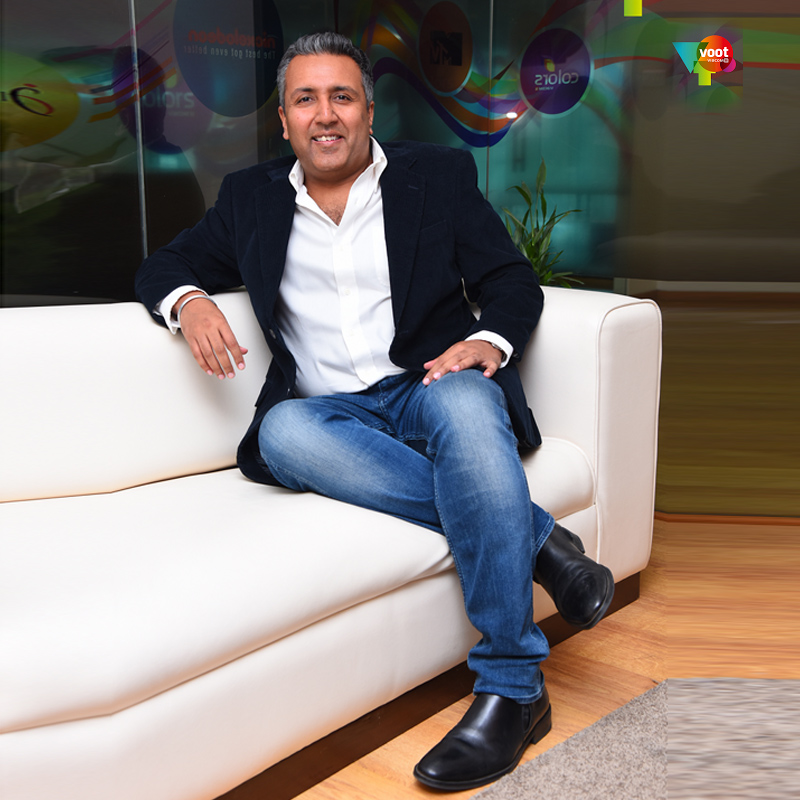
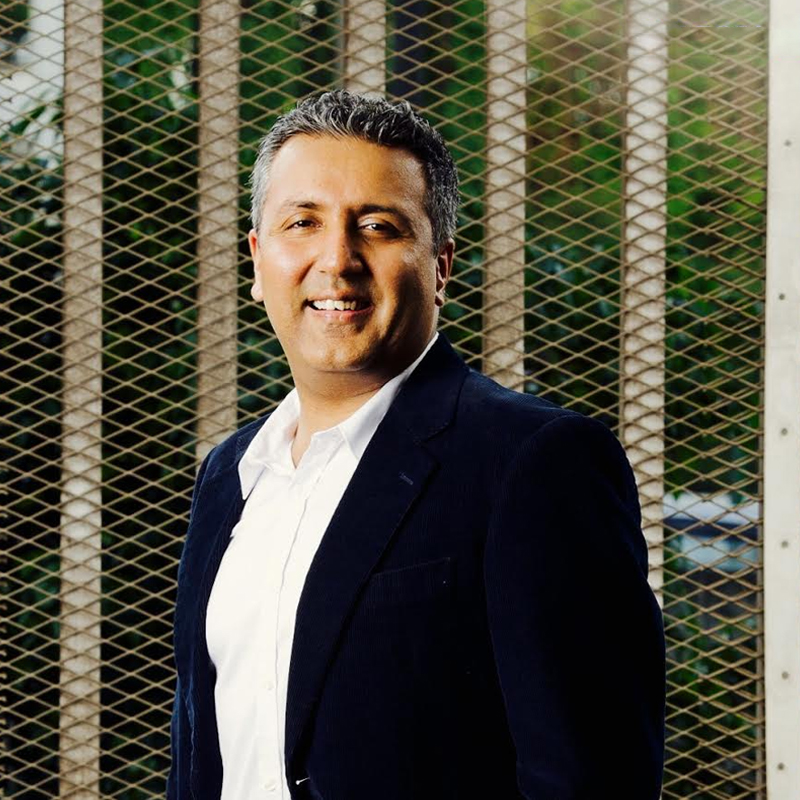
    If you look at Gaurav Gandhi’s CV, you will see that this NMIMS graduate began as a strategic business media executive with the Sam Balsara-promoted Madison Communications way back in 1998. He then took the plunge into television, joining Turner as a researcher and planner, and then, Star India. He followed that up with a stint in NDTV Imagine. 

    But, for the past six years, he has been associated with the Viacom18 brand – first as the commercial head, then moving on to distribution of traditional television with various assignments in Sun18 and IndiaCast, before being given the responsibility of steering the company into the digital space in late 2015. 

    Burning the midnight oil for more than seven months, he and his team, rolled out their first offering – a VOD service called Voot in March 2016. Rivals such as Star India, and Zee TV had their versions – Hotstar and DittoTV — in play for a longer period. But, that did not faze Voot COO who is known to be a feisty fighter. He is quite clear of the direction that Voot is taking, and he spoke about its journey so far in a tete-a-tete with Indiantelevision.com’s Megha Parmar. Read on to get some Gandhi insights on the Indian OTT space.

    How has the response to Voot been so far?

    The response has been very good. We are happy where we are. To get to be the third largest streaming website in watch time in a short period that we have is very encouraging. It’s been a good journey. We know that, as a market, we have close to 100 million users now, which will go to 400 million. So, the 4x growth is happening in the market, and we are riding that well.  There are three things that really encourage us. First, 45 minutes per day per user on an average is a very good number, so the watchtime is there. We have a large user base now, which excites us. Second is the fantastic response to our content. Of our three properties (TV, kids and originals), specifically for television, there is so much to do around a reality show. Thirty per cent of the views come from the extra stuff that we do around it. We shoot a lot of things along with our TV counterparts. And having 50+ advertisers on board definitely gives us a sense that we are going in the right direction.

    What were the learnings in the past few months?

    There has been a lot of learning. With our kids, we know exactly what is going on.We have a publishing cycle in place and the way it works is to make sure that we refresh it thrice a day. Kids will come back from school by 4 pm, and we thought that we should put our best content there and market it. Reality happened to us at 9 pm as the kids were watching it at that point of time when their parents are busy with dinner. That was the learning, which came alongside. Actually, the father’s phones have been used far more on weekends.

    We initially were of the opinion that 500 cities are enough for us but, in the third month, we crossed 1000 cities. There are viewers in 1100 cities right now who regularly consume Voot.  It’s all been a great learning. We had originally thought that it was about currency or new shows, but the catalogue has been watched by people for new stuff.

    People repeatedly come to us for something they love such as the MTV show, Kaisi Yeh Yaariyan. We look at the data and have witnessed that a lot of people consume data when in office between 1:30 am and 3 pm. There is a big surge of content.

    The kids demo peaks at 9 pm, the GEC at 10 pm and youth escalates from 11 pm to 1 at night. Our traffic only goes down from 2:30 am to 5 am. That is the time when we have some time with us, say, to solve a technical problem. Those things are very different. This is a consumer business, B2C, as against the past. We have not been going to  the consumers directly. We are consumer brands now, and that is an interesting proposition.

    When you say that 75 per cent of video consumption is now happening through WiFi and it is expected to change after digitization, after which a majority of the consumption will happen through telcos. The telcos are also coming into play with their own offerings of VOD and aggregation OTT platforms such as Jio, Wynk, Idea TV. Are the VOD platforms going to be at a disadvantage?

     Let me be honest with you, there is no dearth of platforms, and there will be none going forward. It’s like we have approximately 600 to 800 channels right now technically, and it still has a demand because people are watching. We are ultimately providing content. Those are platforms wherein everything is available but ours is a video-on-demand platform where you can choose what you want to watch and at what time.

    If you are talking from the content front, if you have a clear direction on the partnerships, the consumers as well as the content creation that you are doing, I don’t see a threat. Second, telcos are building services out. How we work with them and tie up is yet to be seen. The fact that we are over the top, we are available to every single person. We are an OTT service and we are available to all.

    Telcos are only concerned about one thing: consumer data. We work very closely with Jio and many other players. I think, from a telecoms perspective, they want to give their users everything possible and encourage them to consume data. From our point of view, we are talking about the fact that we want maximum viewership and that converts to eyeballs, money, and so on. So it’s very much a complementary situation. We provide content, and they get the users to use that content on their network. We get our eyeballs they get their consumption.

    What type of growth do you see after 4G rolls out completely?

     I see currently 120 million digital video users overall to go to 400 million next year. That’s three and a half times growth. You are doubling the user base over digital video every year. Now, if that is the case, all the players will grow automatically. Obviously, there will be top three, four, five, naturally who will see more growth because of more content.

    The other part of India is an interesting challenge because top five or six companies control 80 per cent of the IP. They are investing on the IPs and they are building more and more. Naturally, they will have a bigger advantage. Telcos will build their interesting products. How you will work with the telcos and how they launch their products will be interesting to see.

    Currently, it’s an ad-supported market largely, and that leads to getting more eyeballs because you are making it available to a large set. We foresee growth to be fairly phenomenal in the next 36 months for everyone in the market. We want to grow at a faster pace — naturally.

    So, you think an ad supported model is faring well for you, and that is the way to go? Or, will you also experiment with other models?

    There are multiple models that you can play with. The reason that, today an ad supported model works, and is the right way is because of three main reasons. One, people are psychologically prepared to pay for content. You get 400 channels for Rs 300, and if you go back 10 years, the cable TV monthly subscription was around Rs 200. Channels have increased, it’s become digital, HD has arrived, etc., but the amount you are paying is the same. People think that this is our birthright, we will get it anyhow. So, there is a big mindset shift that needs to happen and it has to happen with the distribution industry. But, till then, the value of content in the mind is benchmarked to the amount you pay on TV, especially if it a subscription base. If it is event based, for eg, paying for a movie where you are paying for the experience of movie, you will not pay the same amount for watching a movie at home. You are paying for the outing, the experience, so there is a challenge.

     The second challenge is data prices, that are very high. To pay for data and to pay for content together for a consumer is very steep today.

    The third one is payment gateways. How do you pay for content? Not many people have credit cards, and people are not using it for recurring charge.

    I see this mindset changing in the next 36 months as well. The data prices will fundamentally come down, you will have data, bundled deals of content, you will have better speed connectivity, you will be offered premium services, HD service and various other services. Even the gateways will emerge. All these things will allow me to do a subscription model or a TVOD model as well. But, the large belly of the business is the ad-supported model.

    To run an advertising model you need humongous volumes. If you are a niche player, however good you might be, you can’t get business on advertising because the whole model of advertising is built on the number of eyeballs.

    It is a very expensive business. There are technology costs which are very high, there are content costs, there are costs of marketing and acquiring a customer, there are costs of streaming to the customer.

    The more content you watch on Voot or Hotstar or Youtube, there are two things which tend to happen. You are charged for data and it will also cost more to me as well as I have to pay the CDN (content delivery network) cost. So, the more you watch, the more I am paying. So I have to recover that cost. Unless you are a large volume player, you can’t do ad-supported. If you are a small player, you have to charge a sensible price to recover that cost. Netflix  – taking the sliver of the market at that price point, saying I only want these people – is one model. You are paying Netflix month on month.

    I think there will be more interesting models emerging in India going forward to break the psychological barrier in people’s mind. It’s not only an affordability barrier, but also a psychological barrier.

    We have to traverse the journey from ‘completely free’ to ‘completely pay.’ That journey has to pass through the consumer’s point of view, who is trying to pay for somethings. Once you are hooked on, then you tend to convert into a smaller package. The consumers will convert, but you can’t straight away give them a shock that tomorrow morning you will have to pay Rs 700. You will then get some, but a small portion.

    However, that’s not enough as in this country you have to build volumes. We are in the volume business. But, with some products, you can say that I want to play the international market game and play on the subscription part. It makes a lot of sense.

    But, one player has minimalised its rate to say the cost of a samosa. What do you have to say about that?

    We are not comparing with them. They only offer channels and not video on demand. I don’t know how are they doing it. Any strategy in my mind has to be sustainable. If they are able to offer all the channels in the world at Rs 20, then I think cable companies should talk to them and figure out why are they not charging that amount for the same channels.

    But, think of it logically. If you have all channels, everything for life at Rs 20 per month, then why would you pay the cable operators? You can choose to acquire customers from any route. You have a different way of acquiring customers and then you can hope them to stay hooked. I think it’s a marketing strategy from their point of view. People use different marketing strategies. But, I don’t think it makes business sense.

    I personally consume Voot content while it also is a ritual for me to catch up on Splitsvilla. But, there is a lag of around eight hours. Why?

    Splitsvilla has a humongous catch-up. There was a day where the Splitsvilla Sunday numbers were bigger than the next three days put together combined in a total value. I am a firm believer that consumers should have an ad model but you also need to understand that an ad supported model, you are getting this absolutely free as compared to me providing it to a cable or a DTH operator who is charging customers for it. There needs to be some gap. I could make this little pay and make it at the same time. But, if it is absolutely free here, you can play it, Chromecast it, share it, then personally I don’t feel that it is the right model. But, you can argue with me why it has to be eight hours? Why can’t it be six hours or a four hour lag? Those things are workable from my point of view but currently we have started with this strategy to put it up next morning. So, the way it works is TV airs it, we then process it, which takes about two to three hours. The team comes up here at 5am and publishes it on for the TV, tablet, mobile, website, etc. By 7:30 am, the content gets published most of the times.
    Is there scope of providing live content? How much, according to you, can the window be narrowed which also makes sense to your business?
    I am not going to comment on live, but, from case to case, we might have a much shorter window. I can narrow it down to zero also but, right now, I am not taking up that call because putting it up in the morning makes sense. You have to look at the larger thing. Currently, TV is measured on ratings and that’s how channels and advertisers are making money. TV has a large business there. This type of an emerging business has a separate sales, cost, structure, separate consumer base; we have to grow both businesses. It can’t be at the cost of the other. Definitely, it can’t be that you are actually working against the partners of yours especially on the distribution side by providing it free or live at the same time. I know some of my competitors have done it on the same time or even before, but as a stunt it is fine. But, if you do it continuously, I think it is should be made a free channel, which should be also free for the cable operators.

     I think giving it absolutely free at the same time is something I am not completely convinced right now. It is just a commercial business challenge to figure out whether it makes sense.

    We at the same time are also trying to increase the ARPU of the consumers. The business will grow but it also needs value. If I say that the same channel is available here for free and you stream it whereas there you are charging Rs 600 for it, then why will you pay? For what? The consumers will come and leave. We are just four months old, and this is an evolving space for us. At this time, we feel a six to eight hours lag is good. But, sometimes we reduce the lag.

    Do you plan to have Colors Infinity content on Voot?

    We do have it with us. The stage is there. We already have all the Indian productions of Infinity. At this time, it will only be home-grown content because the international content has two challenges, one is the third-party rights and the international players are a little more circumspect about putting content on ad-supported models. They want to put it on premium models. So, we are working with them to see what we can do. We have the format for ‘24’ with catch-up available. So, we get the stuff we create here. I think it is a journey. There are only two large ad-supported models in the world i.e China and India. They have never seen many big ad-supported models in the world.

    It’s a shift for us as well. If you talk to large players, they come to India and are amazed by the advertising growth here. Their mindset has changed. Netflix charges $8 in US which is like Rs 500 for us. But, that is their price point. I think as you are playing with the consumers in the market, you also have to adjust your prices and look at that.

    Some are B2B players who don’t talk to consumers directly. It takes sometime for them to figure out their life. So, I think it will take some time to convince the big studios to put their content on the ad-supported model in English.

    How are your originals doing onVoot?

    Very good. We only started with a few. There is a surge in catch-up audience or the ones who were more skewed towards TV content. ‘Chinese Bhasad’ has done well for us. ‘Badman’ has won awards India and internationally as well. ‘Shaadi Boys’ have seen a crazy demand and we have some episodes in place for the next season to come up shortly. The kind of traction we get for trailers is mind-blowing. I have got my competitors writing to us saying the content is phenomenal. Just now, someone from Star wrote that you are killing it with your shows. So, we are very happy with the response. I think the idea really is to create differentiated content that people don’t get on television but also have it relevant. We don’t want flaky things at all. We want to connect with the audience, and this is mature show. This is for everybody who is either married or is in relationship. It is not for a 15, 18 or 20 year old.

    Do you plan to package separately for your originals on Voot?

    As we speak, we have launched six shows. But, overtime, we will create a separate section of Voot Originals on the app. That is the way for us. Totally! Originals are a big play for us.

    Data is crucial for OTT and VOD. Are advertisers buying (agreeing with) the data you are giving them. What do they expect?

    Fifty advertisers on board, it’s not a small number. Everybody can see us as the third largest platform in the country in terms of size, in terms of minute data. You look how we have gotten million downloads. We are amongst the first guys who shared our data weekly dashboard to advertisers. Before us nobody used to do that. We are proud of what we have pursued in the first few months but it’s a long way to go. So advertisers are very keen. We have deals with several agencies, all the big clients are on board, we have long term deals as well.

    What is the sweet spot for advertising rates for OTT and VOD platforms? Let’s say for Voot?

    That is very hard, I can’t guesstimate. Let me tell you that we are on the higher end of the market. Because you know what you get here are the premium audiences – in the sense that they would not be buying Porsche and BMW but a loyal audience who can actually be fully measured and targeted.  You will be able to get a sponsorship opportunity, content, several integrations and lot more things surrounded. Sometimes, you are able to own the entire show as well.

    SonyLiv, Hotstar, Amazon Prime are going to be bidding for IPL rights? Where will that place platforms such as Voot as compared to the one who gets it?

    See, we don’t play in sports. Whether it comes on OTT or television, the reality of it is very simple. When there is cricket and when there is India playing, people are watching something. I do not buy the fact people are watching both things at the same time. The statement that you are watching TV and you are watching Voot or Hotstar or whatever it might be does not work.

    I actually believe that a sport, especially cricket, is something which you watch with a lot of people together. It’s an event-based thing. People watch it so numbers are there is no doubt about it. But, in my mind, it’s not as if those two hours or four hours or three hours of a match impacting my Voot journey too much. Contrary to that, I think we have a clear strategy on three big or four big types of content and I want to put my money behind that and that’s why what I am doing with kids, originals, reality. It is a clear indicator that I was actually putting my money before advertisers came on. I commissioned the shows in originals before they came on right. I am not waiting for the next guy to come who will give me money so that I can start.
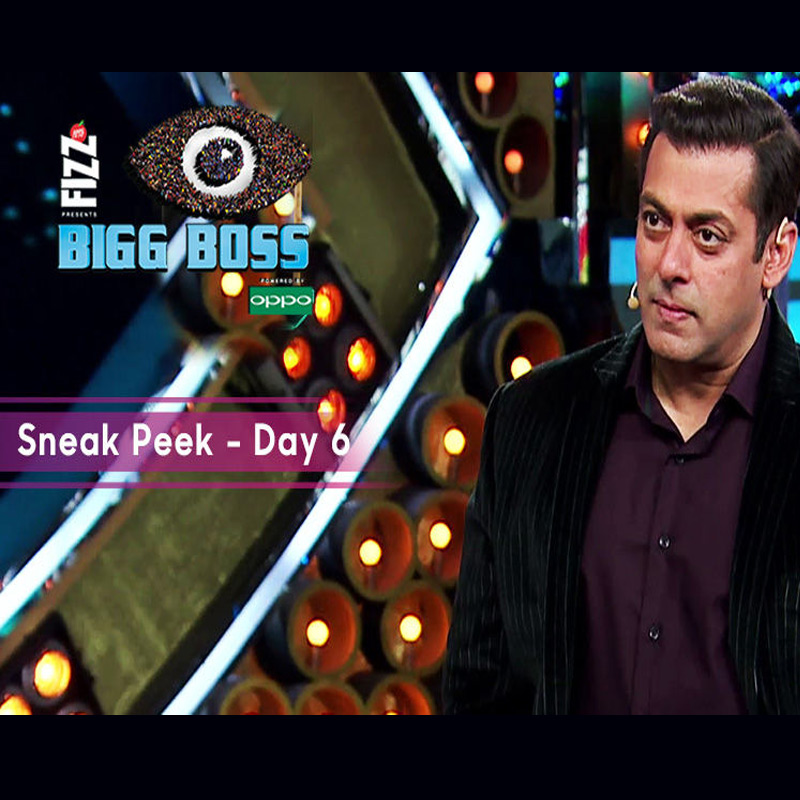
  • Voot to stream Big Boss’s ‘Unseen Undekha’ videos

    Voot to stream Big Boss’s ‘Unseen Undekha’ videos

    MUMBAI: Viacom18’s OTT platform, Voot, will showcase exclusive content of its reality show Bigg Boss 10. The on-demand destination has developed a special space called Unseen Undekha wherein users can stream videos of any celebrity or commoner of their choice from inside the house anytime.

    Additionally, the content will include stories on nominations, results, weekly task announcements, captain selection, post eviction interviews of the contestants, discussions on the luxury budget, etc.

    “Voot, in just five months of launch, is amongst the leading on-demand services in the country –and much of this can be credited to the hugely popular content across the Viacom 18 network channels, our unmatched kids’ content library (under the Voot Kids brand) and the truly differentiated Voot Originals that we are creating. And now, we bring the biggest entertainment show on Indian television – Bigg Boss, for our users on Voot. Bigg Boss is one of the few shows, where the fandom goes to epic levels and the viewers want “all that they can get” about the contestants and whats going on in the house. ‘Unseen Undekha’ answers all such questions and gives you much more ‘never seen on TV’ content. This unique property, along with the full episodes of Bigg Boss being available on-demand , would complete the offering for the fans of the show,” said Viacom18 Digital Ventures COO Gaurav Gandhi.

    Voot has garnered more than 12 million app downloads, and has over 15 million monthly active users across mobile and web, with viewers spending approximately 40 minutes on an average per day.

  • Voot to stream Big Boss’s ‘Unseen Undekha’ videos

    Voot to stream Big Boss’s ‘Unseen Undekha’ videos

    MUMBAI: Viacom18’s OTT platform, Voot, will showcase exclusive content of its reality show Bigg Boss 10. The on-demand destination has developed a special space called Unseen Undekha wherein users can stream videos of any celebrity or commoner of their choice from inside the house anytime.

    Additionally, the content will include stories on nominations, results, weekly task announcements, captain selection, post eviction interviews of the contestants, discussions on the luxury budget, etc.

    “Voot, in just five months of launch, is amongst the leading on-demand services in the country –and much of this can be credited to the hugely popular content across the Viacom 18 network channels, our unmatched kids’ content library (under the Voot Kids brand) and the truly differentiated Voot Originals that we are creating. And now, we bring the biggest entertainment show on Indian television – Bigg Boss, for our users on Voot. Bigg Boss is one of the few shows, where the fandom goes to epic levels and the viewers want “all that they can get” about the contestants and whats going on in the house. ‘Unseen Undekha’ answers all such questions and gives you much more ‘never seen on TV’ content. This unique property, along with the full episodes of Bigg Boss being available on-demand , would complete the offering for the fans of the show,” said Viacom18 Digital Ventures COO Gaurav Gandhi.

    Voot has garnered more than 12 million app downloads, and has over 15 million monthly active users across mobile and web, with viewers spending approximately 40 minutes on an average per day.

  • MIPJunior: Can Indian animation make its mark?

    MIPJunior: Can Indian animation make its mark?

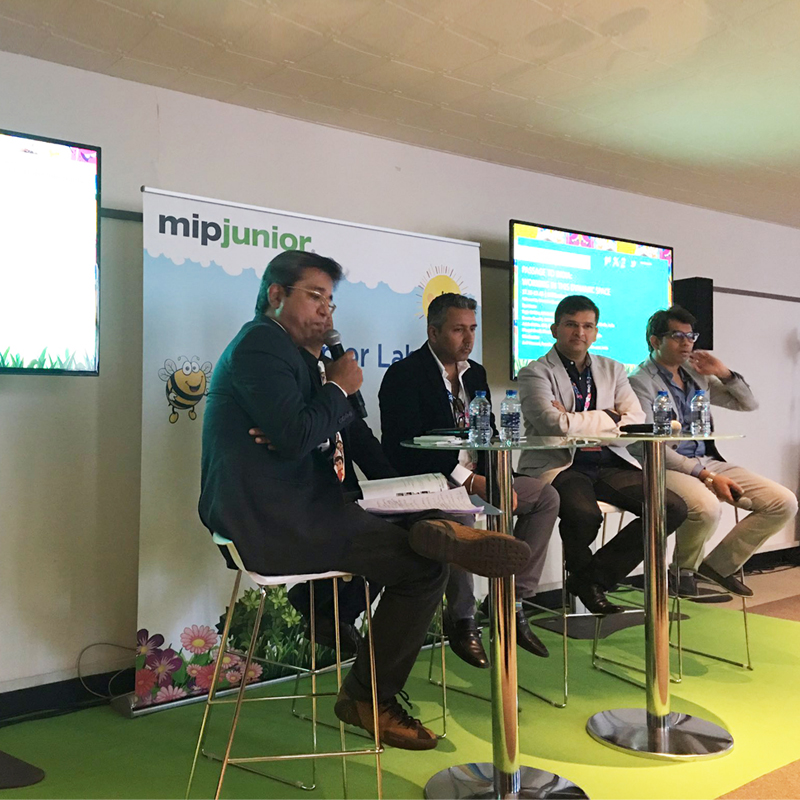
    CANNES: As the MIPJunior Lab got filled with an inquisitive audience, “The Passage to India” session began with the moderator, Indiantelevision.com founder, CEO and editor-in-chief Anil Wanvari, giving facts and figures about the kids broadcasting space in India.

    Wanvari started off by mentioning the humungous size of the 0-14 year population group – at 350 million at last count, which is expected to touch 375 million or so by 2020. Which is why the Indian market is attractive, he pointed out for kids programming and animation. Highlighting statistics from 2015 data, he stated that localization is helping the 20-plus kids channels operating in India up the local-international ratio from 10:90 to 80:20. With that wide a ratio and language dubs of each channel, content from the US dominates the television market with about 44 per cent, Japan 17 per cent, India 16 per cent, the UK and France four per cent, Canada one per cent; and if compared to statistics of 2014, it was 42 per cent, 17 per cent, 13 per cent, seven per cent and four per cent, three per cent, respectively.

    These statistics clearly paint the picture of how locally produced shows are being favoured not just by the audience but also the broadcasters. The top six to eight spots of the kids genre are occupied by locally produced programmes such as Motu-Patlu and Chotta Bheem, among others.

    Wanvari pointed out that kids genre accounts for six minutes per cent of total viewership and most of the kids content is in animation format the production cost of which per 30 minutes is between Rs 1.5 to six million.

    After introducing the panelists – Green Gold Animation founder and CEO, Rajiv Chilaka, Viacom18 Digital Ventures COO Gaurav Gandhi, Cosmos-Maya founder, Anish Mehta, and Graphiti Multimedia director and COO Munjal Shroff, Wanvari threw the question to the panelists asking what makes the prospects of the Indian animation sector so bright this time around; earlier attempts have failed.

    He also queried them about how the Indian animation space has changed over the years, in which areas are the opportunities available for international players, and what content works for broadcasters and digital platform for kids.

    Chilaka mentioned, “Back in 2001, there was only one channel catering to kids segment and now, there are 25-plus channels which showcase content produced locally as well. Over the years, the quality of animation, the technology, the services provided all have improved, and to support that, are the increased budgets.”

    Speaking about the international market, Shroff commented, “Through our show ‘Kulveera’, we did a case study with Cartoon Network UK wherein we produced a pilot episode and gauged the response of the audience and it was interesting to see that kids loved the show.” So, as long as one’s series has a strong storytelling going on, the place from where the content originates hardly matters.

    Mehta’s animation studio Cosmos-Maya has been doing wonders and, at present, has three co-production deals going on. “Our co-production deals are with Italian, French and German companies. We will be launching the French co-produced show ‘Captain Cactus’ which was made in association with Euope’s well-known film maker Olivier Jean-Marie,” expounded Mehta.

    “Over the period of 20 years, our work has evolved from being a service company to IP production, and finally we are at a stage where we can co-produce.”

    With the advent of digital platform, and Voot being probably the biggest kids SVOD service, Gandhi added, “It’s said that, in next three years, more homes will be have the streaming device than television sets. We are an open market, and ready to buy any good content.”

    Mehta also stated that, for co-productions to work, it’s necessary that one needs to understand the demographics. “Personally, after doing research, we follow a mixed model which blends well with both the countries.

    Since ‘Captain Cactus’ is a co-production between India and Europe, the animation style and narrative is set according to the tastes of audience of both the countries.”

    The session was wrapped up with Q&A round wherein many people were interested in learning more about how can they work with not just Indian animation studios but also on how their content can work across the various platforms.

  • MIPJunior: Can Indian animation make its mark?

    MIPJunior: Can Indian animation make its mark?

    CANNES: As the MIPJunior Lab got filled with an inquisitive audience, “The Passage to India” session began with the moderator, Indiantelevision.com founder, CEO and editor-in-chief Anil Wanvari, giving facts and figures about the kids broadcasting space in India.

    Wanvari started off by mentioning the humungous size of the 0-14 year population group – at 350 million at last count, which is expected to touch 375 million or so by 2020. Which is why the Indian market is attractive, he pointed out for kids programming and animation. Highlighting statistics from 2015 data, he stated that localization is helping the 20-plus kids channels operating in India up the local-international ratio from 10:90 to 80:20. With that wide a ratio and language dubs of each channel, content from the US dominates the television market with about 44 per cent, Japan 17 per cent, India 16 per cent, the UK and France four per cent, Canada one per cent; and if compared to statistics of 2014, it was 42 per cent, 17 per cent, 13 per cent, seven per cent and four per cent, three per cent, respectively.

    These statistics clearly paint the picture of how locally produced shows are being favoured not just by the audience but also the broadcasters. The top six to eight spots of the kids genre are occupied by locally produced programmes such as Motu-Patlu and Chotta Bheem, among others.

    Wanvari pointed out that kids genre accounts for six minutes per cent of total viewership and most of the kids content is in animation format the production cost of which per 30 minutes is between Rs 1.5 to six million.

    After introducing the panelists – Green Gold Animation founder and CEO, Rajiv Chilaka, Viacom18 Digital Ventures COO Gaurav Gandhi, Cosmos-Maya founder, Anish Mehta, and Graphiti Multimedia director and COO Munjal Shroff, Wanvari threw the question to the panelists asking what makes the prospects of the Indian animation sector so bright this time around; earlier attempts have failed.

    He also queried them about how the Indian animation space has changed over the years, in which areas are the opportunities available for international players, and what content works for broadcasters and digital platform for kids.

    Chilaka mentioned, “Back in 2001, there was only one channel catering to kids segment and now, there are 25-plus channels which showcase content produced locally as well. Over the years, the quality of animation, the technology, the services provided all have improved, and to support that, are the increased budgets.”

    Speaking about the international market, Shroff commented, “Through our show ‘Kulveera’, we did a case study with Cartoon Network UK wherein we produced a pilot episode and gauged the response of the audience and it was interesting to see that kids loved the show.” So, as long as one’s series has a strong storytelling going on, the place from where the content originates hardly matters.

    Mehta’s animation studio Cosmos-Maya has been doing wonders and, at present, has three co-production deals going on. “Our co-production deals are with Italian, French and German companies. We will be launching the French co-produced show ‘Captain Cactus’ which was made in association with Euope’s well-known film maker Olivier Jean-Marie,” expounded Mehta.

    “Over the period of 20 years, our work has evolved from being a service company to IP production, and finally we are at a stage where we can co-produce.”

    With the advent of digital platform, and Voot being probably the biggest kids SVOD service, Gandhi added, “It’s said that, in next three years, more homes will be have the streaming device than television sets. We are an open market, and ready to buy any good content.”

    Mehta also stated that, for co-productions to work, it’s necessary that one needs to understand the demographics. “Personally, after doing research, we follow a mixed model which blends well with both the countries.

    Since ‘Captain Cactus’ is a co-production between India and Europe, the animation style and narrative is set according to the tastes of audience of both the countries.”

    The session was wrapped up with Q&A round wherein many people were interested in learning more about how can they work with not just Indian animation studios but also on how their content can work across the various platforms.

  • Voot turns kids ‘goody goody’ with unique TVC

    Voot turns kids ‘goody goody’ with unique TVC

    MUMBAI: Kids are the ready and excited end-consumers of Voot Kids but parents often scale down their enthusiasm by being gatekeepers. The journey of any marketer to promote a product like this and growing from zero to 50+ advertisers is not easy.

    Encouraging the kids to access such a platform as well as making parents comfortable with handing over their phones to them remains crucial. And, how better can this gap be bridged with lucid storytelling and a catchy musical anthem that grabs the attention of kids and parents alike.

    Banking on three things- television content, kids and originals- this OTT platform observes 15 per cent share of the overall traffic coming from kids. Riding high on kids content behind it’s viewership and user growth, Voot has launched a new TVC capturing how kids from across India have taken to the new way of life and turned ‘goody goody’ in their ultimate quest to earn Voot time.

    “The loyalty factor from kids is very high. They are obsessive about characters. So, everything has to revolve around the character that they like. The amount of money parents spent on these characters is huge. We looked at the top 10 characters that the kids like and we built on that,” said Viacom18 Digital Ventures COO Gaurav Gandhi.

    The special anthem Bachche Hum Goody Goody Banenge, Voot Kids Ke Liye Kuch Bhi Karenge! will roll out across all major kids channels and digital  platforms on 30 September.

    With 10 characters to be added to its 100+ character library, the platform will focus more on originals in 2017.

    The time spent by kids on Voot is approximately 30 minutes on an average while they spend close to 45 minutes on weekends and 25 minutes on weekdays. Unlike the traditional, linear from of content consumption wherein the peak viewing of kids content happens during the early evening; Voot Kids in contrast witnesses a peak that coincides with the prime time on national GECs wherein the mobile gets passed onto the kids as the parents take control over the remote. “The primetime for kids on our platform is 9 pm. Adding to that, Sundays are huge for us wherein the consumption just jumps upto 40 per cent compared to any other day,” added Gandhi.

    “Kids are the masters of negotiations. They know what they want and how to get it. But the catch is that the parents know these antics and are willing to evolve the kids if they see a good behaviour being displaced by them. The communication that we have created was to showcase this varied but interesting dynamics between the parents and their kids. You will see the kids doing ‘goody goody’ things in this film. The music and anthem of the campaign is something each one of us can relate to as we have grown up listening to this popular song,” adds Viacom18 head marketing and partnerships Akash Banerji.

    The advertisers too are lapping up this opportunity on Voot Kids with open arms as they seek to connect and engage with this mobile-first generation who are the influencers of today and the decision makers of tomorrow. It has close to 50+ advertisers on board out of which 10 are especially for Voot Kids. Targeted at an age group of 1-12, Voot plans to launch a tablet app in a week’s time followed by a campaign on the same.

    “We feel that this segment is only set to grow, both in size and influence, and we want to be the default digital platform of choice for kids entertainment. Our endeavour is to build a parent-approved kids-favourite brand, and we will continue to develop exciting campaigns and dial up engagement with this community even further,” added Gandhi.

    The campaigns will be promoted across Viacom18 network and will be heavily leveraged on social media.

    About the campaigns: The campaign comprises multiple TVCs featuring lots of kids. The films depict kids’ heroics as they happily embrace the very tasks that kids are usually known for not doing willingly.

    The films showcase a range of situations where the kids turn to their ‘goody goody’ best – a boy getting out of the bed in the night to brush his teeth unprompted, another young boy with spiky hair combing it vigorously to turn it into a good-boy hairstyle, a cute little girl goes onto finishing the very last drop of milk from a glass, a young girl wiping clean the wall that once was her canvas, another boy is seen tidying up his bed and surprisingly a boy denying potato chips being offered while sitting on a park bench. What follows is a happy smiley parent handing over their mobile phone to their kid for a well-deserved Voot time. In the background of each of the two films you hear the chorus of kids singing this catchy Voot Kids anthem and reciting their favourite characters for whom they’re turning to this new way of life. The closing line captures the core thought very aptly – Bachche Hum Goody Goody Banenge, Voot Kids Ke Liye Kuch Bhi Karenge!

    TVC:

    Link1: https://youtu.be/55AVLumuWEY

    Link2: https://youtu.be/vrcDmXDnRxM