Tag: Gaurav Banerjee

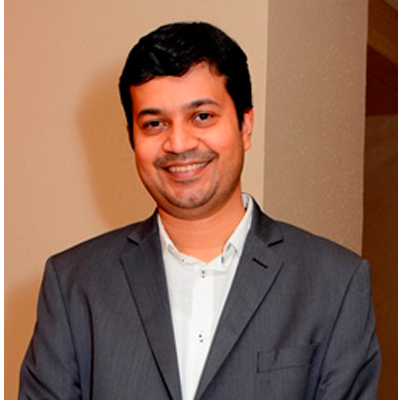
  • Star India’s Gaurav Banerjee’s take on ‘P.O.W. – Bandi Yuddh Ke’

    Star India’s Gaurav Banerjee’s take on ‘P.O.W. – Bandi Yuddh Ke’

    MUMBAI: It has been labeled as the pioneer of saas bahu sagas. But, the leadership trio — Uday Shankar-Sanjay Gupta-Gaurav Banerjee — at the Twenty First Century Corp-owned Hindi GEC Star Plus — has over the past few years been working at breaking down this myth. The mantra has been create differentiated content with the help of real, relevant Indian stories and series. And, Star Plus’ latest effort, the Nikhil Advani-directed Israeli-show Hatufim Khatufim adaptation, P.O.W.- Yudh Ke Bandhi, is once again a reflection of that philosophy.

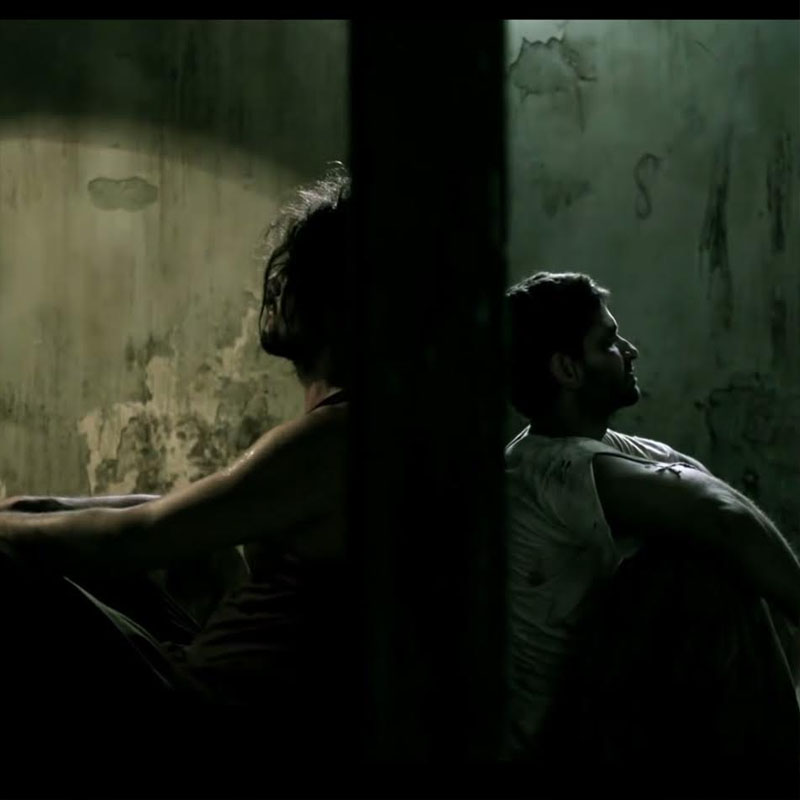
    ‘P.O.W. – Bandi Yuddh Ke’ is very Indian though it is adapted from leading Israeli format licensing house Keshet International’s successful 2010 series; it was also made into the runaway global hit ‘Homeland’, courtesy US cable network Showtime.

    The Indian version works as a large-scale high-octane family drama with a thriller backdrop. The story takes us through the journey of the lives of the two couples Harleen–Sartaj, Nazneen-Imaan and the aftermath of the return of the war heroes after 17 years, over 126 episodes.

    Two Indian PoWs Sartaj and Imaan — declared missing in action (MIA) after the Kargil war ends in 1999 — are rescued from the Indo-Pakistan border after escaping from captivity. They work to overcome the trauma of torture and captivity while settling back into their interrupted family lives.

    An ensemble cast of discerning actors like Purab Kohli, Sandhya Mridul, Amrita Puri, Satyadeep Mishra and Manish Chaudhari have teamed up for the project with Nikkhil Advani. While Purab plays a naib subedar in the Indian army, Mishra will be seen as an air force officer. And, the editor from the channel’s side is Saugata Mukherjee.

    Banerjee and his team chose the Israeli version created by Gideon Raff, which focuses on the emotional upheaval that the two soldiers and families face on their being locked away for 17 years and on their return to their homeland. The US adaptation worked more in the space of a thriller, and questioned whether the protagonist is a terrorist or not.

    Nikkhil Advani, whose company Emmay Entertainment is producing ‘P.O.W. – Bandi Yuddh Ke’, has been quoted in the media as saying: “I realised the real prisoners of war are the soldiers’ wives and families. The wives haven’t been able to move on with their lives…they have this sense of guilt that’s holding them back. They think, ‘What if he comes back?’…The story has a lot of emotions. Homeland is a little cold for Indians. Indians inherently love emotion.”

    Indiantelevision.com had an interaction with Star India deputy chief creative officer Gaurav Banerjee yesterday and he had his own take on the show. Said he: “P.O.W is a deeply emotional story. But, we have thriller dimensions as well. I think for us the difference is that this an Asian story but it was set up in Israel. We found a very strong Indian context in it and also the story in itself is very different. It’s s an art — a challenging art — writing a fresh story and adapting a great story in the current context and in an Indian milieu. We have worked hard on the story over two years.”

    Banerjee admitted that a decision on the time slot and exact launch date for the show has yet to be taken. But, sources expect the airdate to be late October, late prime and that it will run from Monday to Saturday.

    ‘P.O.W. – Bandi Yuddh Ke’ has been under development for two years. And, both Advani and the channel consulted army experts to help maintain accuracy in the writing and while shooting. Filming started earlier this year in locales in Punjab and Mumbai. In all, 36 episodes of the show have been canned. “We have used a proper balance of real-life locations, special effects and VFX,” said Banerjee.

    The channel has roped in two brands Tiago and Patanjali Kesh Kanti as co- powered by sponsors. One can expect some amount of brand integration of the two in the show as is the practice on television these days.

    Highlighted Banerjee: “It’s a big Diwali launch for us and you can expect us to be little ambitious about this. Since, it’s a finite series, we started with the trailer. It will be followed by more glimpses of the characters as we go along. The music has played a very good role in grafting the story and that is important as we set up the marketing of the show. Also we want all kinds of media to be a part of it but moreover we believe in the story.”

    Banerjee is hopeful that Indian viewers will celebrate P.O.W with Star Plus. He stated: “Star Plus is known for great stories. One of the big things for us is to be the platform where viewers gets the best stories, concepts and content. Sixteen years ago, we started with ‘Kaun Banega Crorepati’, which was the first format we adapted from the US and, last year, we did the show ‘Sumit Sambhal Lega’ which was also an adaptation of the big Hollywood iconic show Everybody Loves Raymond. We always want to be the platform for India’s best stories. Therefore, our goal is to bring original stories and also some great stories from the world to the larger Indian audience.”

    Says a media observer: “What could work in Star Plus’ favour is the timing of ‘P.O.W –Yudh Ke Bandhe.’ Indo-Pak relations are at near boiling point following the massacre of Indian soldiers in Uri by Pakistan-backed terrorists, and the incidents and debate thereafter has captured the minds and hearts of Indians. Emotions are running high as most in India want a resolution of the decades-long conflict between the two nations. The story could well strike an emotional cord with Indians who want to see some action from India’s side.”

    Banerjee laughed off the insinuation that show was fortuitous in its timing. “You would like us to believe that,” he said.

    But, in his heart of hearts, he probably knows that the airdate for ‘P.O.W. – Bandi Yuddh Ke’ could not have been timed better, and Star Plus may well have cottoned on to a winner.
  • Star India’s Gaurav Banerjee’s take on ‘P.O.W. – Bandi Yuddh Ke’

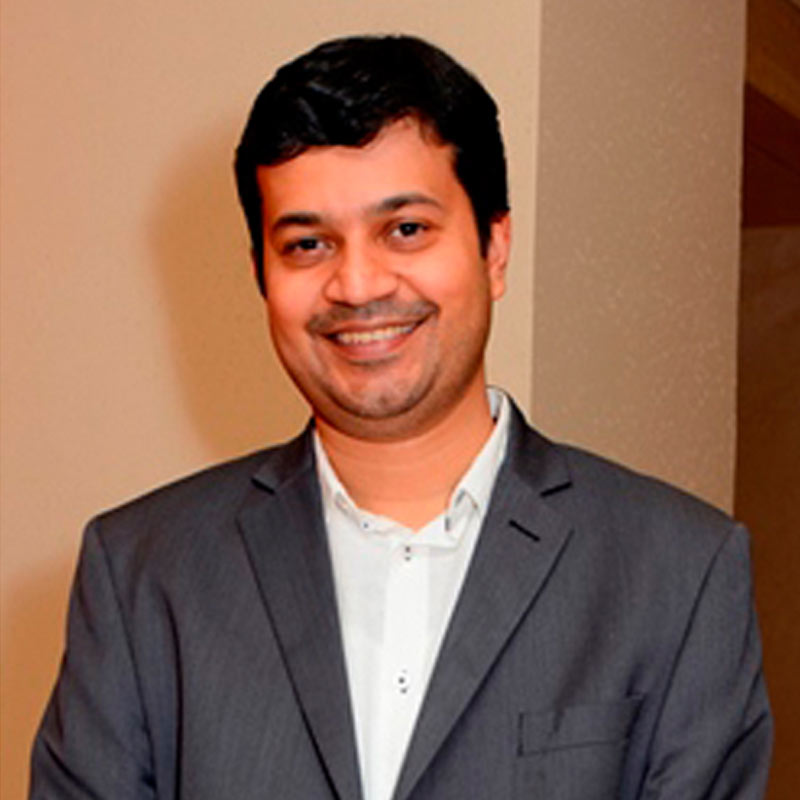
    Star India’s Gaurav Banerjee’s take on ‘P.O.W. – Bandi Yuddh Ke’

    MUMBAI: It has been labeled as the pioneer of saas bahu sagas. But, the leadership trio — Uday Shankar-Sanjay Gupta-Gaurav Banerjee — at the Twenty First Century Corp-owned Hindi GEC Star Plus — has over the past few years been working at breaking down this myth. The mantra has been create differentiated content with the help of real, relevant Indian stories and series. And, Star Plus’ latest effort, the Nikhil Advani-directed Israeli-show Hatufim Khatufim adaptation, P.O.W.- Yudh Ke Bandhi, is once again a reflection of that philosophy.

    ‘P.O.W. – Bandi Yuddh Ke’ is very Indian though it is adapted from leading Israeli format licensing house Keshet International’s successful 2010 series; it was also made into the runaway global hit ‘Homeland’, courtesy US cable network Showtime.

    The Indian version works as a large-scale high-octane family drama with a thriller backdrop. The story takes us through the journey of the lives of the two couples Harleen–Sartaj, Nazneen-Imaan and the aftermath of the return of the war heroes after 17 years, over 126 episodes.

    Two Indian PoWs Sartaj and Imaan — declared missing in action (MIA) after the Kargil war ends in 1999 — are rescued from the Indo-Pakistan border after escaping from captivity. They work to overcome the trauma of torture and captivity while settling back into their interrupted family lives.

    An ensemble cast of discerning actors like Purab Kohli, Sandhya Mridul, Amrita Puri, Satyadeep Mishra and Manish Chaudhari have teamed up for the project with Nikkhil Advani. While Purab plays a naib subedar in the Indian army, Mishra will be seen as an air force officer. And, the editor from the channel’s side is Saugata Mukherjee.

    Banerjee and his team chose the Israeli version created by Gideon Raff, which focuses on the emotional upheaval that the two soldiers and families face on their being locked away for 17 years and on their return to their homeland. The US adaptation worked more in the space of a thriller, and questioned whether the protagonist is a terrorist or not.

    Nikkhil Advani, whose company Emmay Entertainment is producing ‘P.O.W. – Bandi Yuddh Ke’, has been quoted in the media as saying: “I realised the real prisoners of war are the soldiers’ wives and families. The wives haven’t been able to move on with their lives…they have this sense of guilt that’s holding them back. They think, ‘What if he comes back?’…The story has a lot of emotions. Homeland is a little cold for Indians. Indians inherently love emotion.”

    Indiantelevision.com had an interaction with Star India deputy chief creative officer Gaurav Banerjee yesterday and he had his own take on the show. Said he: “P.O.W is a deeply emotional story. But, we have thriller dimensions as well. I think for us the difference is that this an Asian story but it was set up in Israel. We found a very strong Indian context in it and also the story in itself is very different. It’s s an art — a challenging art — writing a fresh story and adapting a great story in the current context and in an Indian milieu. We have worked hard on the story over two years.”

    Banerjee admitted that a decision on the time slot and exact launch date for the show has yet to be taken. But, sources expect the airdate to be late October, late prime and that it will run from Monday to Saturday.

    ‘P.O.W. – Bandi Yuddh Ke’ has been under development for two years. And, both Advani and the channel consulted army experts to help maintain accuracy in the writing and while shooting. Filming started earlier this year in locales in Punjab and Mumbai. In all, 36 episodes of the show have been canned. “We have used a proper balance of real-life locations, special effects and VFX,” said Banerjee.

    The channel has roped in two brands Tiago and Patanjali Kesh Kanti as co- powered by sponsors. One can expect some amount of brand integration of the two in the show as is the practice on television these days.

    Highlighted Banerjee: “It’s a big Diwali launch for us and you can expect us to be little ambitious about this. Since, it’s a finite series, we started with the trailer. It will be followed by more glimpses of the characters as we go along. The music has played a very good role in grafting the story and that is important as we set up the marketing of the show. Also we want all kinds of media to be a part of it but moreover we believe in the story.”

    Banerjee is hopeful that Indian viewers will celebrate P.O.W with Star Plus. He stated: “Star Plus is known for great stories. One of the big things for us is to be the platform where viewers gets the best stories, concepts and content. Sixteen years ago, we started with ‘Kaun Banega Crorepati’, which was the first format we adapted from the US and, last year, we did the show ‘Sumit Sambhal Lega’ which was also an adaptation of the big Hollywood iconic show Everybody Loves Raymond. We always want to be the platform for India’s best stories. Therefore, our goal is to bring original stories and also some great stories from the world to the larger Indian audience.”

    Says a media observer: “What could work in Star Plus’ favour is the timing of ‘P.O.W –Yudh Ke Bandhe.’ Indo-Pak relations are at near boiling point following the massacre of Indian soldiers in Uri by Pakistan-backed terrorists, and the incidents and debate thereafter has captured the minds and hearts of Indians. Emotions are running high as most in India want a resolution of the decades-long conflict between the two nations. The story could well strike an emotional cord with Indians who want to see some action from India’s side.”

    Banerjee laughed off the insinuation that show was fortuitous in its timing. “You would like us to believe that,” he said.

    But, in his heart of hearts, he probably knows that the airdate for ‘P.O.W. – Bandi Yuddh Ke’ could not have been timed better, and Star Plus may well have cottoned on to a winner.

  • Star India to initiate creative freedom discussions with TV producers

    Star India to initiate creative freedom discussions with TV producers

    MUMBAI: Remember the terms perestroika? Glasnost? The first stands for reformation, the second for openness. Both were popular terms used in reference to the USSR as it crumbled to herald the freedom that hit it in the late eighties and nineties.

    Some of that is about to hit Indian television. Remember last week’s admission by Star India deputy chief creative officer Gaurav Banerjee that the network may have erred by starting the mad race of pursuing seven days of soap and drama every week from the five days formula earlier. Speaking at the Indian ScreenWriters’ Conference in Mumbai he candidly stated: “I confess that it was a mistake because we reduced the ideation time of writers and of actors as well. We thought that we could manage the workload and it won’t affect the product but unfortunately we were thinking of a TV industry as a pizza delivery service which was big mistake.”

    He also announced that Star India would cut back the seven-days-a week to five days once again.

    Now Star India and Gaurav are going a step further. He has told producers that he would be more than happy to extend creative freedom to them, something they have been pleading for, demanding and crying for. Each show, said Banerjee, would have a single show runner giving it the much needed vision. He has invited producers for a meeting in Star India’s office on 20 August to further spell out what he means by creative freedom.

    The producers’ fraternity is very excited about the new initiative by Star and are welcoming it. Says Frames Production founder Ranjeet Thakur: “It’s a very great move for the industry on the whiole because the minute the producer comes with a certain plot thought or idea I think it works better. The producer has some vision behind the show and if that creative freedom is given to them to execute in the same manner, it’s a wonderful thing to be happening in the industry. It’s a very positive note. It’s a great move by Gaurav and Star and slowly it will become the norm of the industry.”

    Colosceum Media CEO Lalit Sharma adds, “Firstly, it’s a very good take towards producing good content. Now the show runner will have the responsibility. It’s the happiest moment for the Indian producers but along with that there comes a responsibility. It looks like a win- win situation but one has to be extremely responsible for what they are producing.”

    Fortune Production founder Farhann Salaruddin opined, “It’s totally yes to the intention of giving creative freedom to producers and a lot of people must been waiting for this day to have the ball in their court. Whatever you make good or bad the credit will be yours. It’s a good move but how successful it will be only time will tell us.”

    Shakuntalam Telefilms founder Shyamasis Bhattacharya adds: “ It’s a welcome move. I think we all (producers community) have been wanting this to happen. Last year we met all the CEOs of different channels asked for the same and Star taking the lead is appreciated. Now there will be one vision that can be of the broadcaster’s show runner or the producers. That’s exactly what happens across the world and also in India but not to that extent. If you see Balaji’s shows’ success rate its high because their shows run after Ekta’s vision. I believe the shows’ success rate will go up after this move.”

    And that is exactly what Gaurav is hoping will happen.

  • Star India to initiate creative freedom discussions with TV producers

    Star India to initiate creative freedom discussions with TV producers

    MUMBAI: Remember the terms perestroika? Glasnost? The first stands for reformation, the second for openness. Both were popular terms used in reference to the USSR as it crumbled to herald the freedom that hit it in the late eighties and nineties.

    Some of that is about to hit Indian television. Remember last week’s admission by Star India deputy chief creative officer Gaurav Banerjee that the network may have erred by starting the mad race of pursuing seven days of soap and drama every week from the five days formula earlier. Speaking at the Indian ScreenWriters’ Conference in Mumbai he candidly stated: “I confess that it was a mistake because we reduced the ideation time of writers and of actors as well. We thought that we could manage the workload and it won’t affect the product but unfortunately we were thinking of a TV industry as a pizza delivery service which was big mistake.”

    He also announced that Star India would cut back the seven-days-a week to five days once again.

    Now Star India and Gaurav are going a step further. He has told producers that he would be more than happy to extend creative freedom to them, something they have been pleading for, demanding and crying for. Each show, said Banerjee, would have a single show runner giving it the much needed vision. He has invited producers for a meeting in Star India’s office on 20 August to further spell out what he means by creative freedom.

    The producers’ fraternity is very excited about the new initiative by Star and are welcoming it. Says Frames Production founder Ranjeet Thakur: “It’s a very great move for the industry on the whiole because the minute the producer comes with a certain plot thought or idea I think it works better. The producer has some vision behind the show and if that creative freedom is given to them to execute in the same manner, it’s a wonderful thing to be happening in the industry. It’s a very positive note. It’s a great move by Gaurav and Star and slowly it will become the norm of the industry.”

    Colosceum Media CEO Lalit Sharma adds, “Firstly, it’s a very good take towards producing good content. Now the show runner will have the responsibility. It’s the happiest moment for the Indian producers but along with that there comes a responsibility. It looks like a win- win situation but one has to be extremely responsible for what they are producing.”

    Fortune Production founder Farhann Salaruddin opined, “It’s totally yes to the intention of giving creative freedom to producers and a lot of people must been waiting for this day to have the ball in their court. Whatever you make good or bad the credit will be yours. It’s a good move but how successful it will be only time will tell us.”

    Shakuntalam Telefilms founder Shyamasis Bhattacharya adds: “ It’s a welcome move. I think we all (producers community) have been wanting this to happen. Last year we met all the CEOs of different channels asked for the same and Star taking the lead is appreciated. Now there will be one vision that can be of the broadcaster’s show runner or the producers. That’s exactly what happens across the world and also in India but not to that extent. If you see Balaji’s shows’ success rate its high because their shows run after Ekta’s vision. I believe the shows’ success rate will go up after this move.”

    And that is exactly what Gaurav is hoping will happen.

  • Indian Screenwriters’ Conference: Star Plus to stop 7-days-a-week soaps, says Gaurav Banerjee

    Indian Screenwriters’ Conference: Star Plus to stop 7-days-a-week soaps, says Gaurav Banerjee

    MUMBAI: What kind of content works on Hindi general entertainment channels? Content that reflects our society or the content that is simply driven by the ratings? Are TV producers making content for dumb audiences or content is making audiences dumb? Why we don’t talk about the economy or politics on TV shows? Why are we so much focused on saas-bahu sagas? And most importantly in today’s TV who is telling the story, a producer, writer, broadcaster or a programming team or a research team?

    The Film Writers’ Association had a session entitled Serial Killer during the ongoing fourth edition of the Indian Screenwriters Conference 2016 in Mumbai in a bid to get some answers.

    And to answer all these questions, you could not have had a better set of panelists than Star India deputy chief creative officer Gaurav Banerjee, Epic TV head of content Ravina Kohli, Balika Vadhu writer Purnendu Shekhar, Sasural Simar Ka and Saathiya writer Ved Raj and Sasural Genda Phool’s writer Zama Habib to get some answers.

    The session was moderated by Saurabh Tewari who runs a production house named after himself, but in earlier avatars had donned the hat of a fiction programmer when he worked at Colors and the now defunct Imagine TV.

    The highlight of the session was the admission on a public forum by by Gaurav on a public forum that Star Plus may have erred by starting the mad race of pursuing seven days of soap and drama every week from the five day formula earlier.

    He admitted: “I confess that it was a mistake because we reduced the ideation time of writers and of actors as well. We thought that we could manage the workload and it won’t affect the product that we deliver but unfortunately we were thinking of the TV industry as a pizza delivery service which was a big mistake.”

    He also that announced that from next month Star Plus would stop airing seven days a week programming.

    Tewari set the ball rolling for the session by appreciating the kind of work and content that both Star Plus and Epic were churning out. He spoke especially in reference to Epic TV as it had carved out its own identity. “TV ratings should not always be the only way to measure the content and the feel of channel,” he opined.

    “Epic, since its beginning had a particular DNA which was supposed to be followed and we tried to stick to that goal and it’s been a struggle,” expressed a hapless Kohli. “We have received great feedback, people appreciated our work but what we don’t have, are ratings.”

    Often it so happens that the content is strong and good but it fails to garner the desired ratings, hence the broadcaster has to yank it off.

    “We have a very fragmented audience, may be the data that we are getting is not addressing to that group. In Epic TV, I have not made anything that has been driven by TRPs,” explained Kohli.

    There are some channels that have a very niche audience, and they end up doing very well in that specific demographic. We also have shows on Doordarshan, which are doing well as they have a different set of audience, expressed Tewari.

    Getting to the crux of the matter, was Purnendu whose show Balika Vadhu was not only critically-acclaimed but has also done fabulously well commercially for Colors. “When I wrote Balika Vadhu, many said that it’s D Dish content and, on a satellite channel, rural backdrops will not work. But thanks to Ashwini (Yardi, the Colors programming head then) who had the courage to select the show,” shared Shekhar.

    Purnendu thanked Tewari (Tewari was at Colors for a period when Balika Vadhu was on air) and the entire channel team for giving him the freedom to work on the story as in most of the cases, the conflict between the writer and the broadcaster arises because both have different visions.

    Shekhar also expressed his agony that there were only two broadcasters present on the panel. “Only Gaurav and Ravina are representing the broadcaster side and both of them are doing good things with a vision. And the channels on which we see dumb content have no representation today,” he cried out.

    It’s really important to remember that when we talk about the TV content we shouldn’t forget that saas bahu dramas are the most important part of TV today, opined Raj as they are consumed by the masses. There has been a never ending debate on these shows but the truth is because of this, these are in demand.

    Contradicting Purnendu, Raj said: “We have all reached a conclusion that everything that has been happening on primetime is wrong. There is something good in this dumb content. TV is a mass medium and my first responsibility will be for them. I am not a police, teacher or judge and I am not even at that level from where my audiences look dumb to me.”

    Tewari then raised the question that quantity has subsumed quality over the past 10 years. From once a week, the channels have taken soaps and dramas to seven days a week. While this has meant money for all concerned, it is a dangerous trend. Though business is important and producers and broadcasters are in the business of creating content and if the content is suffering due to business pressures then how long will the business itself last? asked Tewari.

    Talking about the TV ratings, Gaurav elaborated: “Our measurement system is not that sophisticated. We have seen major changes in the TV industry when BARC came in and now we have to wait for next level of innovation in TV ratings. If every story is unique then the tool to measure that story should be different. You can’t compare Star Plus with Epic as both the channels serve a different kind of audience.”

    A lot has been said about the low quality of TV content but who is responsible for that, broadcaster, writer, producer or the audience, expressed Gaurav.

    “Saathiya is a very well-written show. There are two types of writing scientific and artificial. But I am totally against what Ved said that you give what audience demands. The producer and writer should create the market why do we follow the market. If you will give something new and different to them that has always worked and will work. Most producers don’t care about the story, all they want channel to approve to the show,” he added.

    Several varying perspectives ruled the well-moderated session. TV is essentially a two-way communication medium. However, innovation in TV content is essential was the conclusion as one needs to inject some amount of reality in the content that is churned out for the masses.

  • Indian Screenwriters’ Conference: Star Plus to stop 7-days-a-week soaps, says Gaurav Banerjee

    Indian Screenwriters’ Conference: Star Plus to stop 7-days-a-week soaps, says Gaurav Banerjee

    MUMBAI: What kind of content works on Hindi general entertainment channels? Content that reflects our society or the content that is simply driven by the ratings? Are TV producers making content for dumb audiences or content is making audiences dumb? Why we don’t talk about the economy or politics on TV shows? Why are we so much focused on saas-bahu sagas? And most importantly in today’s TV who is telling the story, a producer, writer, broadcaster or a programming team or a research team?

    The Film Writers’ Association had a session entitled Serial Killer during the ongoing fourth edition of the Indian Screenwriters Conference 2016 in Mumbai in a bid to get some answers.

    And to answer all these questions, you could not have had a better set of panelists than Star India deputy chief creative officer Gaurav Banerjee, Epic TV head of content Ravina Kohli, Balika Vadhu writer Purnendu Shekhar, Sasural Simar Ka and Saathiya writer Ved Raj and Sasural Genda Phool’s writer Zama Habib to get some answers.

    The session was moderated by Saurabh Tewari who runs a production house named after himself, but in earlier avatars had donned the hat of a fiction programmer when he worked at Colors and the now defunct Imagine TV.

    The highlight of the session was the admission on a public forum by by Gaurav on a public forum that Star Plus may have erred by starting the mad race of pursuing seven days of soap and drama every week from the five day formula earlier.

    He admitted: “I confess that it was a mistake because we reduced the ideation time of writers and of actors as well. We thought that we could manage the workload and it won’t affect the product that we deliver but unfortunately we were thinking of the TV industry as a pizza delivery service which was a big mistake.”

    He also that announced that from next month Star Plus would stop airing seven days a week programming.

    Tewari set the ball rolling for the session by appreciating the kind of work and content that both Star Plus and Epic were churning out. He spoke especially in reference to Epic TV as it had carved out its own identity. “TV ratings should not always be the only way to measure the content and the feel of channel,” he opined.

    “Epic, since its beginning had a particular DNA which was supposed to be followed and we tried to stick to that goal and it’s been a struggle,” expressed a hapless Kohli. “We have received great feedback, people appreciated our work but what we don’t have, are ratings.”

    Often it so happens that the content is strong and good but it fails to garner the desired ratings, hence the broadcaster has to yank it off.

    “We have a very fragmented audience, may be the data that we are getting is not addressing to that group. In Epic TV, I have not made anything that has been driven by TRPs,” explained Kohli.

    There are some channels that have a very niche audience, and they end up doing very well in that specific demographic. We also have shows on Doordarshan, which are doing well as they have a different set of audience, expressed Tewari.

    Getting to the crux of the matter, was Purnendu whose show Balika Vadhu was not only critically-acclaimed but has also done fabulously well commercially for Colors. “When I wrote Balika Vadhu, many said that it’s D Dish content and, on a satellite channel, rural backdrops will not work. But thanks to Ashwini (Yardi, the Colors programming head then) who had the courage to select the show,” shared Shekhar.

    Purnendu thanked Tewari (Tewari was at Colors for a period when Balika Vadhu was on air) and the entire channel team for giving him the freedom to work on the story as in most of the cases, the conflict between the writer and the broadcaster arises because both have different visions.

    Shekhar also expressed his agony that there were only two broadcasters present on the panel. “Only Gaurav and Ravina are representing the broadcaster side and both of them are doing good things with a vision. And the channels on which we see dumb content have no representation today,” he cried out.

    It’s really important to remember that when we talk about the TV content we shouldn’t forget that saas bahu dramas are the most important part of TV today, opined Raj as they are consumed by the masses. There has been a never ending debate on these shows but the truth is because of this, these are in demand.

    Contradicting Purnendu, Raj said: “We have all reached a conclusion that everything that has been happening on primetime is wrong. There is something good in this dumb content. TV is a mass medium and my first responsibility will be for them. I am not a police, teacher or judge and I am not even at that level from where my audiences look dumb to me.”

    Tewari then raised the question that quantity has subsumed quality over the past 10 years. From once a week, the channels have taken soaps and dramas to seven days a week. While this has meant money for all concerned, it is a dangerous trend. Though business is important and producers and broadcasters are in the business of creating content and if the content is suffering due to business pressures then how long will the business itself last? asked Tewari.

    Talking about the TV ratings, Gaurav elaborated: “Our measurement system is not that sophisticated. We have seen major changes in the TV industry when BARC came in and now we have to wait for next level of innovation in TV ratings. If every story is unique then the tool to measure that story should be different. You can’t compare Star Plus with Epic as both the channels serve a different kind of audience.”

    A lot has been said about the low quality of TV content but who is responsible for that, broadcaster, writer, producer or the audience, expressed Gaurav.

    “Saathiya is a very well-written show. There are two types of writing scientific and artificial. But I am totally against what Ved said that you give what audience demands. The producer and writer should create the market why do we follow the market. If you will give something new and different to them that has always worked and will work. Most producers don’t care about the story, all they want channel to approve to the show,” he added.

    Several varying perspectives ruled the well-moderated session. TV is essentially a two-way communication medium. However, innovation in TV content is essential was the conclusion as one needs to inject some amount of reality in the content that is churned out for the masses.

  • Star India set to up Kevin Vaz, Gaurav Banerjee

    Star India set to up Kevin Vaz, Gaurav Banerjee

    MUMBAI: In a major shuffle of roles, Star India is all set to promote two of its senior employees with extended roles.


    Star India business head – English cluster, Star Jalsha, Jalsha Movies and Channel V Kevin Vaz is all set to take additional responsibility of the network’s Hindi general entertainment channels (GECs). With this, Vaz will now also head Star Plus and Life OK in addition to FX, Fox Crime, Star World, Star World HD, Star World Premiere HD, Star Movies, Star Movies Action, Star Jalsha, Jalsha Movies and Channel V. The total number of channels under him now tot up to 12. It may be recalled that Channel V fell into Vaz’s portfolio only earlier this year.  


    Meanwhile, Star India executive vice president – content strategy Gaurav Banerjee has been upped as the deputy chief creative officer – content studio. 


    Confirming the development to Indiantelevision.com, a source said, “It’s just a reward to their respective contribution to the network.”


    Vaz joined Star India in the mid 90s, while Banerjee was roped in by his mentor Star India CEO Uday Shankar in 2008 to kick-start the broadcaster’s regional news channel business.


    At the time of filing this story, Vaz and Banerjee were unavailable for comment.

  • “Broadcasters need to stop relying on advertisers for revenue”: Sameer Nair

    “Broadcasters need to stop relying on advertisers for revenue”: Sameer Nair

    MUMBAI: Broadcasters need to stop relying solely on advertisers as their main source of revenue. Moreover as digitisation reaches the third phase, it is imperative to for them to come up with new content strategies.


    A FICCI Frames session moderated by media analyst and columnist Vinita Kohli Khandekar saw an aggressive discussion by top level media and broadcast executives on the future of content creation keeping in mind the emergence of digital platforms.


    The panel comprised Balaji Group CEO Sameer Nair, Disney India VP and content head Vijay Subramanium, Reliance Broadcast CEO Tarun Katial, Zee TV business head Pradeep Hejmadi and Star Plus GM Gaurav Banerjee.


    There are approximately 815 channels, which places India amongst the top five video consumers of the world and it is crucial to have varied and captivating content, which caters to the need of the viewers. The biggest question that arises from the scenario is – What should be changed to make better content?


    A pertinent point raised by Nair was that channels need to cut down their dependence on advertisers as their main source of revenue and find alternate sources in order to dish out quality content.


    Nair asserted, “The content we have been producing is often termed as trash, which in reality is not because we all remember the content and no one remembers trash. We are a growing industry and content takes time to transit. We have to give it the necessary amount of time as a sudden transition may lead to confusion. Some years back there were 25 million TV homes and now we have 100 million homes. This proves that we are growing. Like every business, content is dominated by economics. We need to stop our heavy reliance on advertisers. Our need to earn high ratings is because of advertiser pressure and that is what is stopping us from aggressively experimenting with content. We need to start discovering other sources of revenue.”


    Talking about the necessities, Banerjee added, “A lot has changed from where we were a few years back. We are a lot more ambitious from what we used to be. The budget for a half an hour fiction show has risen from Rs 7 lakh– 8 lakh to Rs 15 lakh– 20 lakh and that speaks volumes. Television industry’s biggest power is its reach. We reach twice the audience of the biggest viewed film release and hence with the reach comes responsibility, which we should not forget, while making content. The need of the hour is devoting more time and money to research and development. We need to research in depth before putting up any content as it might have its repercussion and have socio-economic fabric of our nation..”


    During the course of the discussion, an issue that was constantly debated was whether films or TV shows make for better content. Firmly defending TV content over films, Banerjee said, “We should have a more distinguished measurement phenomenon when it comes to cinema and we should also not forget the fact that the number of screens is shrinking. There are a lot of opportunities to improve and no reason to rate films over TV content as of now.”


    Supporting Banarjee’s opinion, Katial added, “Films in recent times have lost their purpose and contribute very little in creating a social impact.”


    “What comes from the production house is just a one line concept and the channel gets into it and executes what is shown on TV. Another part that plays a vital role in improvising content is measurement, which comes from research because what TAM shows is post airing analyses and does not favour in deciding if the content is appropriate. So overall, while we are setting ourselves for the new era of TV content production we have to test, try and excel,” said Hejmadi.


    Now it remains to be seen if TV content makers raise the bar and produce quality content instead of jumping for  quantity and following herd mentality. More importantly, the need of the hour also is for broadcasters to discover alternate source of revenue for their business in order to make compelling content.

  • Kevin Vaz to now head Channel V too!

    Kevin Vaz to now head Channel V too!

    MUMBAI: It was in December 2014 when Indiantelevision.com broke the news of Star India EVP and Star Plus general manager Gaurav Banerjee getting an additional responsibility of its sister channel Life OK, after the position was left vacant when Life OK and Channel V head Ajit Thakur decided to move on to join Eros. 


    Now in a recent development, the network has roped in Star India business head – English cluster Kevin Vaz to head its youth general entertainment channel, Channel V.


    As per industry sources, Vaz has already taken charge of his new role about 10 days ago. 


    Channel V will be the tenth channel in Vaz’s kitty. 


    Vaz, who was Star India president ad sales became head (GM) of English channels (FX, Fox Crime, Star World, Star World HD, Star World Premiere HD, Star Movies, Star Movies Action) and Star Jalsha and Jalsha Movies in March 2013.

  • Gaurav Banerjee to take charge of Life OK?

    Gaurav Banerjee to take charge of Life OK?

    MUMBAI: Last week, indiantelevision.com was the first to break the news of Life OK business head and general manager Ajit Thakur quitting Star India.


    Since then, the industry is abuzz with a question – who will take charge now?


    As per industry sources, Star Plus general manager will be looking after the second GEC from the Star stable till a new person is appointed.


    However, when contacted, Banerjee denied any such development.


    Banerjee had joined Star Plus in October 2009 and was instrumental in shaping content around “Rishta Wahi Soch Nayi” theme. He was elevated as the GM in 2013.


    It can be noted that Banerjee helped shape content strategy for Life OK in addition to Star Plus, earlier as well, where he developed shows like ‘Mahadev’.