Tag: Gaurav Banerjee

  • Sony’s India reboot: fresh faces, big bucks and a bold digital bet

    Sony’s India reboot: fresh faces, big bucks and a bold digital bet

    MUMBAI: Sony Pictures Entertainment (SPE) is doubling down on India, rebooting its strategy under new leadership and betting big on digital, cricket and content to reclaim lost ground in the subcontinent’s fast-evolving media landscape.

    Speaking at SPE’s annual presentation, chief executive Ravi Ahuja described India as a “tremendous opportunity” amid the country’s strong economic and population growth. The rejig came more than a year after the collapse of Sony’s much-hyped merger with Zee Entertainment.

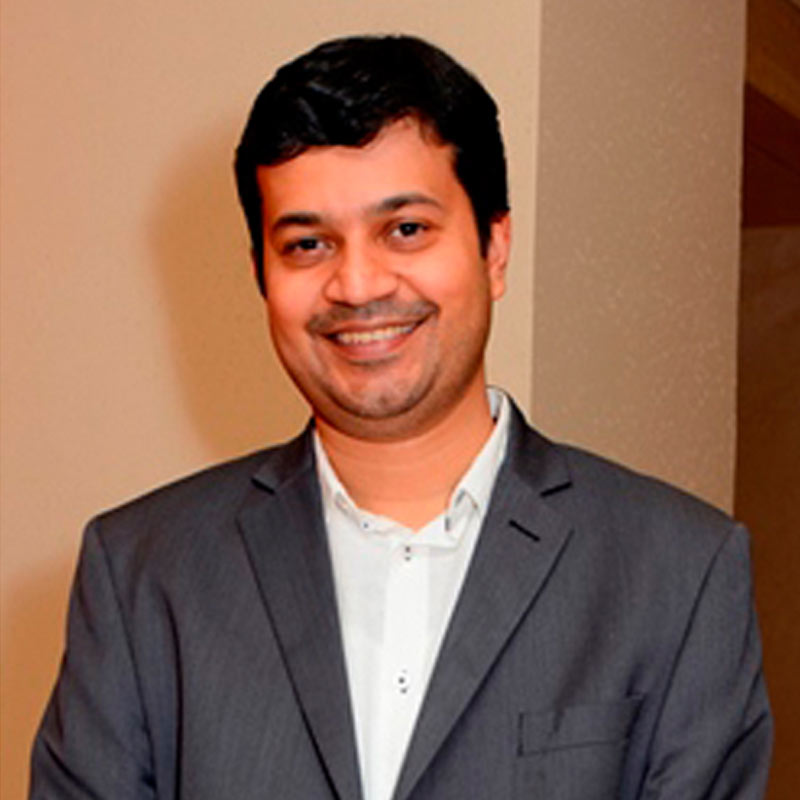
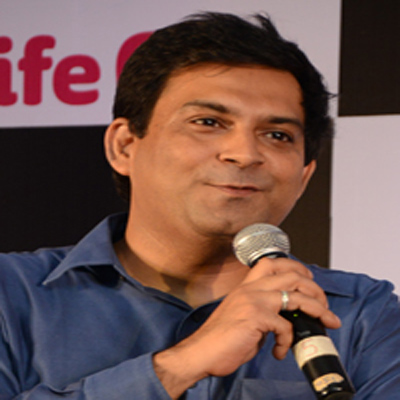
    At the heart of the reshuffle is Gaurav Banerjee, former Star India top content boss, now managing director and chief executive of Sony Pictures Networks India (SPNI)— Culver Max Entertainment.

    Banerjee’s mandate: fix the fiction, fire up streaming, and sharpen Sony’s distribution game.

    SPNI, which runs 27 TV channels and the SonyLiv platform, reported Rs 839 crore in profit on Rs 6,510 crore revenue in FY24. The company is now funnelling fresh investments into digital, particularly SonyLiv, as part of a broader growth revival.

    “We are rebuilding and reorienting our growth strategy, including investment in digital and our Sony LIV streaming platform,” said Ahuja. “We recently secured exclusive media rights for all Asian Cricket Council (ACC) tournaments from 2024 to 2031, which we anticipate will boost viewership and enhance Sony LIV.”

    The sticker price:  $170 million. It also shelled out $200–250 million for the England and Wales Cricket Board rights, sub-licensing the digital India tour rights to JioHotstar but retaining TV control. But there’s a wrinkle: the upcoming Asia Cup in September may be under threat due to rising India–Pakistan tensions post the Pahalgam terror strike.

    Meanwhile, Sony Entertainment Television (SET) is in revamp mode. The channel, battling ratings pressure in fiction, is reloading its primetime slate with a rebooted Bade Achhe Lagte Hain, mythologicals like Prithviraj Chauhan and Shirdi Wale Sai Baba, and the upcoming thriller Aami Dakini. Tentpoles like Kaun Banega Crorepati, Shark Tank India and Indian Idol continue to anchor the lineup. SET also remains a YouTube juggernaut, with 184 million subscribers—ranking fourth globally.

    Globally, SPE posted sales of $9.9 billion and operating income of $774 million despite the Hollywood strike denting series output and SPNI dragging on profits.

    Sony may have dropped its  Zee alliance, but with a rejigged team, fresh IP, and digital firepower, its India innings appears to be just getting into super scoring mode. With both Ahuja and Banerjee  fresh at the crease and gradually getting their shots right, SET might well hit it out of the park this time.

  • Content India: Indian entertainment’s power play as streaming, AI and regulation collide

    Content India: Indian entertainment’s power play as streaming, AI and regulation collide

    MUMBAI: Move over, primetime television, the new battleground for eyeballs is digital. With smartphones doubling as multiplexes and streaming platforms serving as global entertainment highways, Indian content is having its biggest moment yet. But along with opportunities, the industry faces significant regulatory, technological, and monetisation challenges.

    At Content India 2025’s Perspectives for Change session, leading industry executives, including Gaurav Banerjee (MD & CEO, Sony Pictures/Sony Liv), Jason Hafford (founder, Prototype Content), Kilian Kerwin (president, Jaya Entertainment), Roma Khanna (producer), Tanisha Khanna (lawyer, Nishith Desai Associates), and Shoojit Sircar (CEO, Rising Sun Films), discussed what’s next for Indian entertainment. One thing was clear: the rules of the game are changing, and only the agile will thrive.

    Artificial Intelligence (AI) is no longer just a futuristic concept; it’s already shaping how content is produced, consumed, and monetised. AI-powered analytics are refining ad placements and content recommendations, making streaming services more personalised than ever.

    “AI is a game-changer for storytelling,” said Gaurav Banerjee. “We’re now able to understand audiences at an unprecedented level. The way we create, distribute, and monetise content is evolving, and platforms that adapt quickly will dominate.”

    According to industry insights, AI has led to a 15–20 per cent boost in ad revenue and pay-per-view subscriptions, improving monetisation for platforms.

    Banerjee further noted how AI is addressing long-standing biases in content creation. “For years, storytelling was dominated by certain voices. AI-driven insights are now helping us correct that imbalance, ensuring more diverse representation in entertainment.”

    With AI also being used to automatically translate and dub content, regional storytelling is gaining a global reach. “We’re seeing a major shift where a Tamil or Telugu film can be released worldwide with AI-driven localisation. That’s a huge leap forward,” added Kilian Kerwin.

    If AI is supercharging content, regulations are defining the playground. The Indian entertainment industry is increasingly facing scrutiny, particularly in the digital space. The IT Rules and other regulatory frameworks are being challenged in court, with concerns over censorship and content liability.

    This regulatory uncertainty is causing anxiety among streaming platforms. “Creative freedom is crucial,” said Roma Khanna. “At the same time, we understand the need for responsible storytelling. But what we don’t want is ambiguous laws that leave platforms and creators second-guessing what’s acceptable.”

    Banerjee was more direct: “We need clear and predictable regulations. Content creators should not feel like they’re constantly walking on eggshells. Regulation should encourage creativity, not stifle it.”

    While OTT platforms remain largely self-regulated, concerns about political sensitivities and legal repercussions have led to increased caution in content curation. “We have seen instances where content was pulled due to public backlash,” added Tanisha Khanna. “It’s crucial that there’s a structured, fair process in place.”

    While streaming platforms are thriving, making money remains a puzzle. Subscription models have their limits, and ad-supported streaming is still evolving. However, new-age monetisation models like microtransactions, premium ad tiers, virtual goods, and gamified content experiences are gaining traction.

    Banerjee shed light on the shift in viewer spending habits. “Five years ago, people were hesitant to pay for content. Now, we have 62 per cent of Indian households paying for digital entertainment. The audience values good storytelling, and they’re willing to pay for it.”

    The advertising-based video-on-demand (AVOD) model is also witnessing a surge. “We saw a 40 per cent increase in AVOD revenue last year,” Banerjee revealed. “Ad-supported content isn’t just for budget-conscious viewers anymore. Even premium audiences are engaging with it.”

    Interestingly, India’s vast language diversity is proving to be a monetisation goldmine. Viewers are streaming content in multiple languages, increasing the reach of regional cinema and opening new revenue streams for platforms.

    “Regional content is the future,” said Shoojit Sircar. “More than 60 per cent of future content investments are going into non-Hindi programming, and for good reason. The audience is demanding authenticity, and regional storytelling delivers that in a way no other content can.”

    The biggest validation of Indian entertainment’s success? Global audiences can’t get enough of it. Indian shows and films are now regularly trending in the top 10 lists on global platforms.

    Platforms like Amazon Prime and Netflix are doubling down on Indian originals, and franchises such as Mirzapur, Panchayat, and Citadel: Honey Bunny are expanding their universes. In 2024 alone, Indian content trended in the top 10 worldwide every single week.

    “India has always had great stories, but now we have the technology and platforms to take them global,” said Jason Hafford. “We’re no longer just exporting films, we’re shaping global content trends.”

    The rise of international collaborations is also a promising sign. “We’re working with global studios, co-producing, and experimenting with formats that have never been tried before in India,” said Kilian Kerwin. “The future is cross-border storytelling.”

    The future of Indian entertainment is a mix of boundless opportunity and complex challenges. AI is set to revolutionise content, but ethical concerns and biases must be addressed. Regulations will shape how platforms operate, but clarity is needed to encourage innovation. And while monetisation strategies evolve, striking the right balance between subscriptions, ads, and new revenue streams will be crucial.

    For Gaurav Banerjee, the most exciting part is yet to come. “We’re only scratching the surface. With 5G rolling out, AI making content discovery seamless, and regional content driving engagement, the OTT revolution in India is far from reaching its season finale, it’s just getting started.”

    With the entertainment landscape evolving faster than ever, one thing is certain – the golden age of Indian content is here, and the best is yet to come.
     

  • Sony’s New Strategic Vision: Inside CEO Gaurav Banerjee’s Transformation Plan

    Sony’s New Strategic Vision: Inside CEO Gaurav Banerjee’s Transformation Plan

    MUMBAI: Six months into his tenure as CEO of Sony Pictures Networks India, Gaurav  Banerjee (GB as he is called internally and by those who know him)  is orchestrating a remarkable turnaround of the media giant’s Indian operations. In a detailed conversation with CNBC-TV18, GB  outlined his vision for revitalising Sony’s presence in both traditional television and digital streaming.

    Under Banerjee’s leadership, Sony Entertainment Television (SET) has witnessed a dramatic 70 per cent surge in ratings, climbing from the early 50s to the late 80s. This transformation has been driven by strategic content decisions, most notably the revival of the iconic crime drama CID, which achieved the channel’s strongest fiction launch in seven years.

    “Our flagship channel had not been doing well,” GB  acknowledged. “Some of that identity had got diluted”. 
    His response was decisive: streamline programming to reinforce Sony’s distinctive identity whilst reinvigorating successful formats. The strategy has paid dividends, with Indian Idol recording a 30 per cent increase in ratings compared to its previous season.

    “Programs like Shark Tank in its latest season were tweaked and put on the streamer  only and it has notched up a jump in viewership and viewers. 

    GB shocked
    Contrary to industry pessimism about traditional television, GB  remains bullish on linear TV’s prospects in India. “There is no evidence of TV’s decline. In fact, there is substantial evidence that TV is set to grow in our country”, he asserts, pointing to India’s massive television audience of 700 million viewers. This optimism is reinforced by continued support from major advertisers like Hindustan Unilever, who recognise television’s unique brand-building capabilities.

    For Sony as a group, GB  has implemented a four-pillar strategy encompassing sports, television content, original productions, and regional expansion. The company has secured rights to premium sporting events, including three Grand Slam tennis tournaments and 35 days of top-tier cricket coverage. Original content continues to be a priority, building on the success of acclaimed series like Scam and Rocket Boys.

    Addressing the aftermath of the failed Zee merger, GB  maintains a forward-looking stance. “The Sony group is a big believer in the potential of India”, he states, emphasising the company’s commitment to the market. On the competitive landscape of cricket rights, he advocated a measured approach: “We need to have an eye on profitability… Having two different revenue streams is very important Hence, SonyLiv will not be free.”

    GB  who previously held senior positions at Disney Star, brings a clear vision for Sony’s future: “We’re not here to count subscribers; we’re here to build a product.”

    This philosophy underpins his approach to both traditional and digital platforms, focusing on premium content creation and sustainable growth.

    GB refused to be drawn into any conversation about reviving discussions with Zeel about any merger possibilities in the light of the emergence of the JioStar megabeast. 

    “I think me and my team have a job on our hands and we are focused on that. What ever had to be said about it, has been,  before I entered this building,” he reparteed when pushed. ”I want us to build a great portfolio of amazing content and that’s what all of us in this building are focused on now. We have got great brands in-house and we have to grow them in Hindi and in other Indian languages. We have to grow them on television, we have to grow them on digital.” 
    GB smiling
    Looking ahead, Sony’s strategy under GB  appears focused on leveraging its strong heritage while embracing digital innovation. With significant improvements already visible in his first six months, the CEO’s vision for Sony India combines strategic content development with pragmatic business decisions, positioning the company for sustained growth in India’s evolving media landscape.

    “Entertainment isn’t just relaxation-it shapes society”, GB  reflects, highlighting the broader significance of his role in steering one of India’s major media enterprises. 

    As Sony continues its transformation, the early results suggest that Banerjee’s strategic repositioning is successfully reconnecting the brand with Indian audiences across both traditional and digital platforms. Viewers will agree he is the best man to remind India why it fell in love with Sony in the first place.

     If the past six months are anything to go by, Gaurav Banerjee and his team are just about getting started.

  • Sony Pictures Networks India  hires southern market expert Rajaraman Sundaram as head content strategy

    Sony Pictures Networks India hires southern market expert Rajaraman Sundaram as head content strategy

    MUMBAI: Sony Pictures Networks India or Culver Max Entertainment has hired veteran television executive Rajaraman Sundaram as head content strategy. One wonders what one should read into this hire by CEO Gaurav Banerjee.

    Rajaraman has had deep exposure to the southern markets having worked at Vijay Television for almost 11 years in two phases January 2011-March 2006 and April 2009-January 2015. On both occasions, he was in the finance department.

    He was  given charge  of Asianet between December 2017 and September 2021 first as executive vice-president strategy (south) and then as business head. He was given the responsibility of Colors (Tamil) between September 2021 and July 2023.

    Rajaraman was then lured back to Disney Star India to work in the country manager India’s office between August 2023 and November 2024.  In between, the qualified chartered accountant worked with NDTV Imagine for two years (May 2007-April 2009) as vice-president finance. Then he had a stint at Hathway Cable & Datacom as chief operating officer -video business between April 2015 and December 2017.

    A question that needs answering is: in his new role, has Rajaraman been hired  to take Sony into the southern regional language market? Or is he being brought in to help Gaurav Banerjee  build the fictional slate of Sony Entertainment Television?  

    Gaurav Banerjee  and his core management team know it. And he is not telling. As yet. 

  • Indian DTH subscriber base drops further to 59.9 million in June-Sept ’24 quarter

    Indian DTH subscriber base drops further to 59.9 million in June-Sept ’24 quarter

    MUMBAI: Almost every leading TV executive – whether Uday Shankar or Punit Goenka or Gaurav Banerjee – has spoken about his or her belief that television  in India has legs. No doubt they have to speak optimistically. Linear television revenues are what are currently funding their hard-pressed-for-earnings streaming businesses.

    That television is under further duress has become even clearer from the latest Telecom Regulatory Authority of India (TRAI) quarterly report of telecom performence indicators for the period Jul y 2024 to September 2024.

    The continued drop in DTH  active subscriptions is alarming: the figure for end September 2024 is 59.9 million. The comparative figure for June 2024 was 62.17 million subscribers. In September 2023, there were 64.18 million active subs

    With four DTH operators in operation,  it’s not as if they are doing nothing to retain customers. They have been giving customers the freedom to create their own packs, they have slashed prices for their set top boxes, they have been offering easier payment terms and HD services, they have been doling out value-added services for cheap, and they have started OTT aggregator services,  broadband is being offered by them  at reasonable prices.

    But lo and behold, nada, nothing seems to be halting the slide of consumers dumping their satellite TV dishes.

    A few thoughts to ponder  for DTH operators:  

    When will the law of diminishing returns come into play as subscribers drop off? 

    At what level will the business become unviable? 40 million subs, 30 million, to service the well-spread-out India? 

    When will there be a major shakeup? 

    And what will lead to one or two players falling off the treadmill?

    Already, reports keep popping up that talks are continuing between Tata Play and Airtel for the latter to acquire the former. When and if it does happen, we’ll be down to three DTH operators.

    Also, solutions need to be evolved to stop the slide –   complaining about the gold rush towards DD Free Dish is not the best answer.

    2025 is a new year.

    A chance to relook at the business.

    A chance to see if Tata Play’s white-label-service model can be replicated and monetised by licensing it to other  players  in less developed markets to keep revenues coming in.

    A chance to experiment on how customers can be retained..

    Is customer service of the platinum class a good bait?  

    This has been talked about ad nauseum for quite some time; service can be the big differentiator.

    Convenience  be brought in and, if possible, local programming which can be picked up from the more advanced cable TV MSOs and retransmitted.

    There will come a time when subscribing to a nice plateful of streamers will become too expensive. Already some complaints are being voiced about the OTT bundles in the US. The commonly heard plaint is that they are  as – if not more – expensive than the pay TV bundles

    In India, we don’t have to wait for that to happen – Indian pay TV is cheap – very cheap. More than 400 linear channels are available in India for as low as Rs 300-350  on DTH and cable TV. An OTT aggregator will have to struggle to offer as much content at that price.

    The reality is both free TV and OTTs are here to stay. The question is: is India’s pay TV?

    (Picture of Dishes atop house courtesy Dish TV India) 

  • IBDF board admits new members; gets Kevin Vaz as president

    IBDF board admits new members; gets Kevin Vaz as president

    MUMBAI: There’s quite a few new names sitting  atop the Indian Broadcasting & Digital Foundation following its 25th annual general meeting held in New Delhi earlier today.

    No surprises for guessing, Kevin Vaz who heads JioStar just below Uday Shankar was elected  as the president. He is also the chairman of Ficci’s media and entertainment committee. The AGM  also saw some newcomers make their way into the highest echelons of the advocacy body, the IBDF board: Prasar Bharati’s Gaurav Dwivedi, MMTV’s Jayant M. Mathew, TV Today’s Aroon Purie, JioStar’s Sumanto Bose,  and Kairali TV’s John Brittas. 
     

    theibdf office bearers

    Other senior folks  such as Culver Max Entertainment’s  recently appointed CEO Gaurav Banerjee, R. Mahesh Kumar, along with India TV boss Rajat Sharma  were  elected as vice-presidents.  I. Venkat was elected as the treasurer.

    The list of some of the board members includes: Rajat Sharma, India TV, I. Venkat, Eenadu TV, Kevin Vaz, JioStar, R. Mahesh Kumar, Sun Network, Gaurav Banerjee, Culver Max, Nachiket Pantvaidya, Bangla Entertainment, Punit Goenka, Zee Media, Ashish Sehgal, Zee Entertainment,  Sumanto Bose, JioStar and John Brittas, Kairali TV. 

    Rajat Sharma said that the IBDF will continue advocating for a regulatory framework that fosters innovation, supports creators, and ensures fair competition. “Together, we will drive the industry toward a sustainable and prosperous future,” he stated.

    Kevin Vaz  made his first address as the IBDF president highlighting that Indian content can gain international acclaim, further strengthening India’s soft power globally.

    “As we increasingly embrace technology to scale up, it is imperative that we democratize content creation so that it is not demographically or geographically limited. While India consumes content from anywhere, driven by the proliferation of 5G, smartphones, connected TVs and better pay TV infrastructure, we must ensure that opportunities to create professional content from locations beyond the current hotspots is a viable future for the industry,” he emphasised.  “The media and entertainment industry has a multiplier effect that extends to sectors like sports, creating significant opportunities for growth at scale. To ensure that this growth can be sustainable we need to look at business models rooted in equitable collaborations that foster value creation for all stakeholders across the ecosystem.”

  • Sony’s Ravi Ahuja, Gaurav Banerjee  and the art of winning

    Sony’s Ravi Ahuja, Gaurav Banerjee and the art of winning

    MUMBAI: That Sony Pictures Networks (SPN) president & chief operating officer Ravi Ahuja would come a-visiting Mumbai  and the broadcast major’s Malad office was known to those in the trade because of a story that broke in the media. But what is not known to most is what transpired during the dapper executive’s whistle stop tour . 

    GB, Ravi Ahuja and Manu Wadhwa

    One of the activities conducted was a town hall, in which he and the SPN  India managing director & CEO Guarav Banerjee  (GB)  sat down with SPN India  chief human resources officer Manu Wadhwa for a fireside chat. The topic of discussion: Sony’s content first approach and SPN India’s pivotal role in SPN’s global strategy.

    The key message GB sent out was that SPNI is a content-focused company with a goal to create hits that resonate with its audience.

    And Ahuja had only one major message to give out: “Exceed expectations, take on new challenges, and build your skills and network – that’s the path to leadership!”

    With that kind of a mandate, the rest of the  GECs and sports channels had better watch out. For not only does GB have youth on his side, he also has a point to prove. Which he is known to do. Whilst, SPNI has been a profitable venture in India, it has lacked leadership in fiction. 

    The townhall meet during the fireside chat

    Its non-fiction shows like Shark Tank India, KBC, Indian Idol have set new benchmarks with targeted audiences. But what has been missing is top rung family dramas, telenovellas, and thriller shows which have gathered viewers time and mindspace. Something the creative teams under GB have been working on silently and stealthily. 

    Expect some real action in this space, especially when leaders at rivals such as Colors and Star Plus are absorbed with the merger and Zee is just about gearing up with its new slate of productions. 

  • SPNI appoints Sibaji Biswas as chief financial officer

    SPNI appoints Sibaji Biswas as chief financial officer

    Mumbai: Sony Pictures Networks India has announced the appointment of Sibaji Biswas as its new chief financial officer (CFO), effective the first week of January 2025. In this role, Sibaji will lead SPNI’s financial strategy, planning and corporate finance, to enhance operational efficiency and growth across the company’s multi-channel and digital platforms.

    With over two decades of financial leadership and expertise in strategic transformation, Sibaji has a proven record of delivering growth and driving innovative solutions. As CFO and executive director at Syngene International, a Biocon Group listed subsidiary, he has played a key role in its growth where revenues doubled, and market cap nearly tripled in the last five years. During his tenure, he drove supply chain and digital transformation in the business for optimising operations, futureproofing the business and enhancing efficiencies.

    Sibaji’s career highlights include a 12-year tenure at Vodafone, where he held pivotal roles such as CFO of Vodafone Romania, EVP of corporate development, and head of procurement. As part of Vodafone’s senior leadership team, he contributed to strategic growth initiatives in India and other markets. His previous role as head of corporate finance at Hutchison India saw him collaborating with its distinguished leadership team, shaping innovative finance strategies that propelled the company’s expansion.

    Sony Pictures Networks India MD & CEO Gaurav Banerjee stated, “Sibaji’s financial expertise and strategic approach make him a strong fit for SPNI’s leadership team. His experience in building operational efficiency and navigating complex financial landscapes will be valuable as we strengthen our brand and enhance the viewer experience. We look forward to his contributions as we enter this next phase of growth.”

  • SPNI hires Nimisha Pandey for top programing job at Sony-SAB

    SPNI hires Nimisha Pandey for top programing job at Sony-SAB

    MUMBAI; It’s homecoming for television creative professional Nimisha Pandey. Market sources say that she is set to join Sony Entertainment Television’s profitable Sony SAB channel as its programming head.

    For those not in the know, Nimisha had joined Multiscreen Media (as Sony was known then) for two years as an executive producer between 2004-2006 at the start of her career after completing her course in direction from the Film & Television Institute of India in Pune.

    It may be recalled that the long-serving NP Singh had retired as Sony Pictures Network India CEO a couple of months ago; he was replaced by content star Gaurav Banerjee. Nimisha is one of GB’s (as he is known) first unconfirmed senior creative hires since taking over.

    Nimisha was last the chief content head, originals at Zee5 for almost four years. Prior to that she was director international originals for nearly two years at global streaming powerhouse Netflix’s India ops Before that she held the position of head of content at Alt Balaji for three years.

    She has  had year-long-project-led stints at various production houses right from Balaji Telefilms, 4 Lions Films, Fireworks, Directors Kut, Sphere Origin (for three years),  and Shreya Entertainment over the years.

    We tried to reach out to the normally effervescent and bubbly Nimisha but she was unavailable for comment. Neither was anyone from Sony; it, being a Sunday.

    With the buzz being extremely strong, Indiantelevision.com decided to go ahead and report her appointment.

    With 20 years’ varied experience under her belt producing and commissioning shows, Nimisha does seem like the right candidate for the job.
     

  • Sony Pictures Networks celebrates 29th anniversary

    Sony Pictures Networks celebrates 29th anniversary

    MUMBAI: It’s celebration time at Sony Pictures Networks. The company is celebrating its twenty-ninth anniversary. The leading entertainment and sports network which turned up a healthy profit in the year ended March 2024 is pulling out all the stops to make it a memorable occasion for its employees.

    The company has come out with a hip hop song featuring its executives and creative talent (marching in its offices in north Mumbai’s Malad suburb) to celebrate the occasion titled “29 Years of going beyond the ordinary. Tell stories beyond the ordinary.”

    “We’re Sony. We steal the show. Sony, Where Legends Grow. We are Sony. We Go beyond. Extraordinary stories. We are always on,” go the lyrics.

    The video has been posted on its linkedin page with the message “From Script to Screen, 29 Years Strong! 
    Happy Anniversary to #SonyPicturesNetworksIndia! Cheers to sparking imaginations, setting trends, and bringing thrills to screens everywhere!” 

    It should prove extremely motivational at a time when leading broadcast networks have been issuing pink slips to their executives to cut costs courtesy the tough advertising climate. 

    https://www.linkedin.com/company/sony-pictures-networks-india/posts/

    In fact, for the first time, Sony has also given us a look see at its new managing director & CEO former Disney and Star executive Gaurav Banerjee stating “that the energy in the network is palpable ever since has joined, in another post.”

    It continues; “His interactive floor walks and insightful coffee chats are already igniting a wave of creativity and innovation across SPN. …. we’re thrilled to be on this journey together as we gear up to tell stories beyond the ordinary and shape an exciting future ahead!”