Tag: Ganesh Naidu

  • Demands for channel price ceilings to be extended to non-CAS areas

    Demands for channel price ceilings to be extended to non-CAS areas

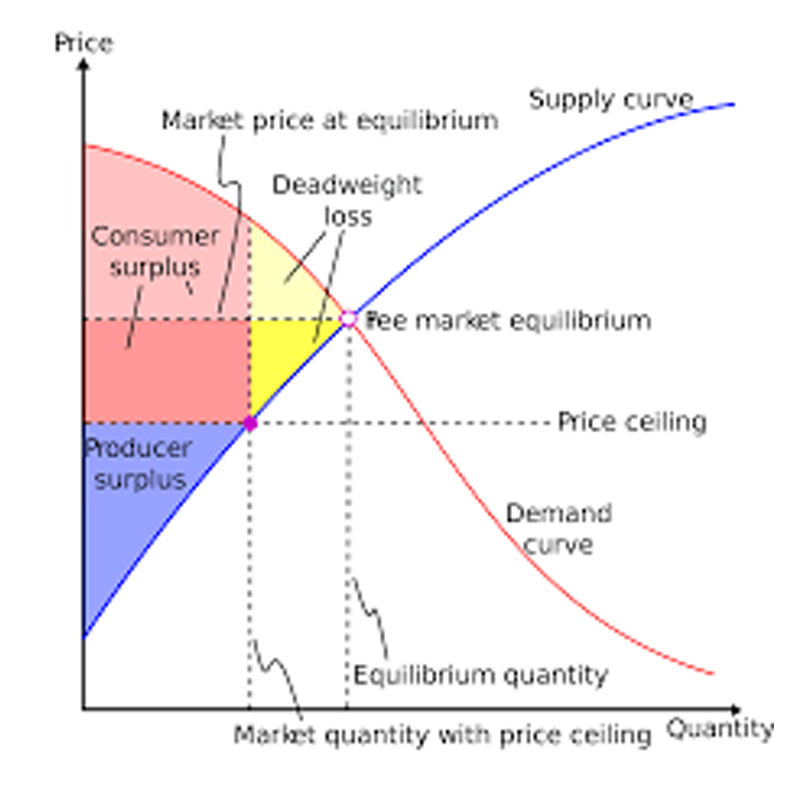
    NEW DELHI / MUMBAI: An immediate fallout of the Trai mandated Rs 5 for all pay channels in CAS areas is that demands have started surfacing from various quarters to regulate prices in non-CAS areas as well.

    “CAS should be beneficial for consumers and we hope that it is extended to other parts of the country soon, rather than being restricted to small areas of Kolkata, Mumbai and Delhi. This way, cable TV prices can be regulated,” Col SN Aggarwal, head of the Delhi-based consumer organization Voice, said today, while briefing newspersons.

    Aggarwal told Indiantelevision.com that prices of pay channels should be brought down in non-CAS areas as well since both “broadcasters and cable operators are fleecing consumers.”
    As per a Delhi High Court mandated understanding between the government and broadcast industry, CAS is scheduled to be rolled out in the south zones of Kolkata, Delhi and Mumbai from the midnight of 31 December 2006.

    Voice, which had been an active participant in the CAS debate, has also demanded that the government should make rules that force pay channels either to air programmes without any advertisement or become free to air.

    Aggarwal’s comments were echoed in a “non-CAS city” like Pune as well. Sudhakar Velankar, president of Grahak Panchayat, a Pune-based consumer forum, welcomed the Trai diktat saying, “We are in active negotiation with the MSOs to voluntarily adopt CAS for the consumers’ benefit.”

    Meanwhile, independent cable operators in non-CAS areas have slowly started realizing that low prices in notified areas would result in disparity in pricing, leading to discontent amongst general consumers.

    Cable Operators’ Federation of India president Roop Sharma today said that a meeting has been scheduled next week with Trai chairman Nripendra Misra, wherein a demand for extending the CAS regime to other areas would be made.

    “Prices in non-CAS areas too, need to be regulated and lowered and this would be our agenda at the meeting with the Trai chairperson,” says Sharma, adding that her organization would speak on the behalf of small cable operators in non-CAS areas.

    That independent cable ops in non-CAS areas are making demands for pay channels to lower their prices is evident from what several broadcasters said today.

    “I have got several calls from cable operators saying that we should shed our channel prices to bring them at par with Trai stated prices for CAS areas,” a broadcaster, controlling several pay entertainment channels, said.

    In Mumbai, Cable Operators & Distributors Association (Coda) president Ganesh Naidu says he wants CAS to be pushed not just in Mumbai but also across India. According to Naidu, “The new rates issued by Trai should be awarded to all consumers, rather than just restricting it only to certain sections of society. Unlike in the past, we are fully in support of CAS now that there is à la carte pricing of pay channels (something the cable fraternity has long been asking for).”

    Simultaneously, a divided broadcasting community is trying to come to terms with the “ridiculously low” prices.

    A sports broadcaster admitted that amongst the several options there is also one that envisages non-supply of its channels in CAS areas if the government refuses to budge on the Rs 5 per subscriber for any ay channel diktat.

    “It’s a fundamental decision to be taken. There is certainly an option to let go of the CAS notified areas and suffer the loss rather than bear the ignominy of investing huge amounts of money in programming and getting paid peanuts as subscription, which would upset the whole business model,” the broadcaster said.

    Still, the regulator feels such threats could only be addressed when it finally becomes a reality. “Trai would address the issue (of blackout of pay channels in CAS areas) when it is brought to it. Till now, no broadcaster has told us that it will switch off channels in CAS areas,” a Trai official told Indiantelevision.com.

    There are valid reasons for the Trai official being so sanguine about the “blackout threat”. According to another broadcast executive Indiantelevision.com spoke to, non-supply of channels “is not an option”. The executive pointed out that the new downlink policy allowed the government enough powers to cancel the broadcast licence of anyone it deemed as being out of line.

    So what are the options before the broadcasters? There are only two, he says. “Accept the Trai diktat or else fight it out in court.” No prizes for guessing the course the channels will be taking.

  • LMOs And The CAS Conundrum

    LMOs And The CAS Conundrum

    Nothing can get more complex than this. It is not only the pay-TV broadcasters and the government who are wanting to take time out for implementation of conditional access system (CAS). Opposition is coming from within the value chain of the cable TV industry itself with the distributors and the last mile operators (LMOs) expressing concern over CAS.

    “CAS is not good for consumers, distributors and last mile operators. It will lead to too much of confusion in the market. Besides, broadcasters are not providing a la carte rates,” says Cable Operators and Distributors Association (Coda) vice president Ravi Singh.

    Clearly, the mood among the cable operators is not to rush with CAS. They would rather wait to see if direct-to-home (DTH) picks up once Tata Sky launches its service later in the year. Their fear of CAS is grounded in the fact that they will lose control of their subscribers to the multi-system operators (MSOs). And in the transparent system of digital cable, they will have to open up the unreported subscribers to the MSOs.

    Cable operators’ fear of CAS is grounded in the fact that they will lose control of their subscribers to the multi-system operators
    _____****_____

    To counter this “two-way defeat,” the distributors and last mile operators are willing to vote CAS out. So how do they plan to compete with DTH? By dropping prices of analogue cable while throwing the offer open for digital service without CAS.

    Quite a miserable situation to be in if you are a MSO as you will be hurt both ways. In the scenario of a price drop, the MSOs will have to absorb the slippage. And in case of digital cable without CAS, they will have to invest while facing the uphill task of luring subscribers away from analogue. Particularly in a market that has grown a spoilt breed of over 52 million (NRS says its 61 million) cable TV consumers who are used to a large menu of channels on a comparatively low monthly subscription fee.

    The LMOs, in fact, have an open-ended strategy. If DTH starts pocketing cable TV subscribers, the gameplan is up for change. They will bend and cooperate with the MSOs, becoming a part of an organised distribution system with margins well-defined and structured.

    Yes, broadcasters have been dilly-dallying on CAS. But MSOs have not made it any easier for them with such statements as “the true value of pay channels has come to the surface in Chennai where consumers have thrown them out.”
    _____****_____

    But wait. Having enjoyed the spoils of a long grown unorganised industry, the distributors and LMOs do not want to let go so soon. Coda, an association of cable operators and distributors in Mumbai, is even talking of setting up a digital headend in a CAS regime. This is nothing new. In 2003, when the CAS topic was hot, Coda made similar rumblings that threatened but sounded empty. But this time, there is a significant change. There are around 50 distributors in Mumbai and they have invested in fibre. What this means is that they are connected by fibre with each other, except in small patches where work is going on, and have the infrastructure to put up a digital network.

    “We will jointly invest in a headend and run it as partners,” says Coda president Ganesh Naidu.

    Talk is easier than action. Investments on setting up a digital infrastructure is not all; a sizeable chunk of money needs to be set aside for subsidising set-top boxes (STBs). Then there is the issue of professionalising customer care services like a call centre and technical team for maintenance. Besides, negotiations with broadcasters can be a tedious process. And who can forget management issues between as wide a body as the distributors and the LMOs?

    Behind the garb of an entrepreneurial spirit may lie the hidden agenda of bargaining for a “pound of flesh.” The distributors, who feel insecure of their role in a CAS system, want to ensure that their place is protected as a bridge between the MSOs and the LMOs. They, along with the MSOs, have been asking for more, as share in terms of commission from conversions into digital consumers.

    The MSOs can take the blame for not ironing out differences with their distributors and LMOs. Even as the time frame for implementation of CAS is set for delay, there is no effort to fix the margins. The argument on offer: such margins can be settled only after the broadcasters come out with their proposals.

    Yes, broadcasters have been dilly-dallying on CAS. But MSOs have not made it any easier for them with such statements as “the true value of pay channels has come to the surface in Chennai where consumers have thrown them out.” Perhaps, MSOs went overboard thinking that this would win them support from the consumers and, hence, the government as it would imply cheaper cable subscription fees. The sad fate of CAS is that consumers didn’t quite agree with this.

  • Maharashtra Budget; tax levied on cable TV up by 50 per cent

    Maharashtra Budget; tax levied on cable TV up by 50 per cent

    MUMBAI: Get set to pay more for your cable TV connection. The state finance minister Jayant Patil presented a surplus budget of Rs 305.85 crore for 2006-2007 in the Assembly. With a view to mop up an additional revenue of Rs 500 crore, Patil proposed a hike in taxes which included a 50 per cent hike in entertainment duty levied on cable operators, among other items.

    Unchanged since the year 2000, this increase means that your monthly cable bills could rise anywhere between Rs 5 to Rs 15.The amount would differ from place to place, as specified by the state government.

    According to news reports, those areas under municipal corporations, such as Mumbai, Navi Mumbai, Thane and Nagpur, would see their tax rise from Rs 30 to Rs 45. Also, Grade-A municipal council areas would now pay Rs30 instead of Rs 20, while Grade-B & C municipal council zones would pay Rs15 instead of Rs10.

    “This hike will pinch the consumer. This is extremely unfair, especially, when the government recently reduced the tax on DTH services from Rs90 to Rs30 per connection,” said a Sena MLC Anil Parab to a Mumbai newspaper.

    “We cannot charge our customers in slums an exorbitant amount. They can’t even pay Rs30 as tax. So, we subsidise the rate by charging other customers more. We are likely to do the same to implement this hike,” said Cable Operators & Distributors’ Association president Ganesh Naidu in the same news report.

    The Budget also proposes a hike in taxes on other items like liquor, motor vehicle tax on four wheelers and water charges. But, the Budget does bring some cheer for state finances. Apart from a revenue surpus for the second year in a row, this year’s total plan outlay is Rs 14, 829 crore and growth is projected to be 8.6 per cent.