Tag: gaming

  • “Esports content consumption will grow 3x by 2021”: Nodwin Gaming’s Lalita Nayak

    “Esports content consumption will grow 3x by 2021”: Nodwin Gaming’s Lalita Nayak

    After her degree in English Literature from Ramnarain Ruia College, Lalita Nayak went on to work with some of the biggest brands including Times Group and JP Morgan for brand strategies and advertising, sponsorship and more.

    As she mentions, she has been a marketer for a large portion of her career and has driven operations at some respected positions. Having seen the axiomatic paradigm shift with the advent of digital, she is a seasoned marketer with valuable experience. A few months back, the marketing veteran joined NODWIN Gaming as the head of sales and marketing to drive the brand to further success after a stint of almost six years with CNBC-TV18 as the head of marketing (west).

    Esports being a fairly new industry is already turning heads. According to a market research report, the global esports market is expected to grow from $1.09 billion in 2019 to $1.11 billion in 2020 at a growth rate of 2.16 per cent. The slow growth in 2020 is mainly due to the economic slowdown across countries owing to the COVID2019 outbreak and the measures to contain it. The market is then expected to grow and reach $2.11 billion in 2023 at CAGR of 23.82 per cent. North America was the largest region in the esports market in 2019. The Asia Pacific is expected to be the fastest-growing region in the forecast period.

    Indiantelevision.com group’s Krishanu Ghosal spoke to Lalita Nayak to get an idea on what to expect out the market and NODWIN Gaming. She was precise and insightful about best marketing practices and her newfound love for the gaming and esports industry.

    Edited excerpts:

    Let’s talk esports, this is your foray into esports, what do you feel about the transition?

    You’re right. I’ve not worked with the esports industry before. Earlier I used to work for television and news and I’ve worked with a few renowned media houses. In both places, the audiences were very mature and evolved. Gaming or esports has a very different audience. The audience is diametrically opposite. The consumption of esports-related content is mostly done by an age group and almost 60 per cent of our audience is in that specific age bracket. I won’t say they are mostly but they are primarily in the 16 to 24 age group.

    If you could elaborate a little more on that?

    Today’s 11 to 24-year-old age group hardly watch TV; they are all on OTT platforms they are all consuming digital content. The generation after that I am not even sure, they will be even more specific, I think. So, my audience majorly stays on a platform like YouTube. It provides interactive entertainment. You are sitting and watching stuff on YouTube and reacting to it live. Esports has grown over the past few years in India. It’s not just about active views but about active interaction with the game. They are no longer sitting and watching they are actually commenting on it.

    What about the audience?

    This audience has a mind of its own, this audience believes that they understand the world and they also want to change the world. So, there is a big difference and this is, of course, connected to the next generation, the future. The next set of entertainment sport will be coming from this sector is what I believe.
    .
    What are your views on the Indian esports scenario as opposed to the southeast Asian or the western counterparts?

    The southeast Asian (SEA) counterparts have developed a lot. So, in places like Thailand, the Philippines, they have an evolved set of audience. There is a vast difference in the scenario between SEA and India because their audiences consume far more digital entertainment. We have other issues such as huge parts of our country surviving on 2G network.

    What do you think can be done to make Indian esports much more lucrative for brands?

    Firstly, it is the comparison that the marketers make between traditional activation of a brand vs esports. Esports is a very niche industry where we need specific branding to people who understand gaming and are strategy-oriented. This consumer base has a very stoked up interest and they have very particular preferences. So, our first interaction is to make them understand the fan base.

    The second thing about esports is that there is a lack of standardisation. For example, when the tournaments arrive, everybody proclaims that they are the largest tournament in the world. Is that really true? So, those things create an imbalance in the market because the contradiction is there.

    What about the shift in marketing paradigm?

    Most marketers need immediate results and in esports that cannot be. It will take time. That doesn’t mean it will take two decades but it is a bus that nobody should miss. When I started my career around 2013-14, digital was something that didn’t exist. It was two or three per cent of the marketing budget. Today in esports it is almost 100 per cent. For other brands from 30 per cent in March, it has gone to 80 per cent. Esports is something you don’t want to live without. It is a bit more complicated with much more novelty. It is an industry full of people with a lot of passion, who love challenges and gaming. I am talking about people who are not just a part of this industry, I’m talking about people who are actually viewing and playing.

    Let’s talk about viewership.

    Our viewership has gone up by 50 per cent in the last four months. In fact, recently I was talking to one brand and it was astonishing. They told me that there is a group of people of a particular age group about 14 to 24. They were either studying or playing games. They were not even watching a lot of content because there was no new content coming out on OTT platforms. Recently in the last month, we’ve started posting fresh content. Every day we were streaming live for three to four hours over the last three months.

    So, the pandemic has been kind of a boost for you as well?

    Well, yes, there has been a massive reach for us. Let me put it this way, it has been a catalyst. So, what may have happened a year later has happened a year earlier. See, what happens is when you’re involved in work or you’re going to the office, you think there is a schedule. But when you’re sitting at home and you’ve watched every new thing that has come on OTT platforms and your child is playing a game, you would like to join.

    What according to you should be the role of an esports marketer catering to the Indian market?

    Esports marketer is a combination of a conflict manager and a community manager. You should provide the right brand solutions and ensure that you speak regularly with your consumers. My audience has very less tolerance level but I will say that their tolerance for inefficiency is very low. They could judge you as inefficient so you have to ensure that you put out the right content every time.

    Do you see more brands coming into the Indian esports ecosystem in the next one year? 

    I see that if a brand is not a part of this yet, they will inevitably be curious about it.

    How is the market in terms of languages, the regional ones?

    Our viewership in Hindi far exceeds English. It is no longer an elitist game and that’s why there has been an upsurge in Hindi shoutcasting as well. We have started getting branches from our service providers that we need to put out content in other languages. So, we are now branching out in other languages like Hindi and Tamil as well.

    How do you tackle the challenges for the stakeholders of the industry?

    I am extremely proud to tell you that our teams are evolved and evolving a lot. They have very smart mechanisms and knack to ensure that such problems are not created. We have ensured that we value a particular rule. As I mentioned, there is a lack of standardisation. So, every time it brings in new challenges, we are learning and evolving. We craft a smart enough solution and we solve it first. We try to solve them before things get out of hand. To answer your question, there is a standardisation issue but most of it is often smoothened out by our teams.

    Taking everything into account, the pandemic, user count increasing, participation, more deals for everybody, where do you see Indian esports in the next two years?

    The industry is evolving so quickly that we are trying to catch our breath. Inevitably right now, the digital content space is taking up a major percentage of the nation’s content consumption. I have a feeling that the percentage right now that is esports occupied is going to double or triple go higher in the following year. The viewership, which is perhaps right now huge, will only grow. Live streaming something is yet to be recognised by a lot of marketers and is something we need to engage with.

    (The article is sourced from https://www.animationxpress.com) 

  • Pocket Aces’ Loco sees over 6x rise in daily active users

    Pocket Aces’ Loco sees over 6x rise in daily active users

    KOLKATA: With the lockdown accelerating the growth of India’s gaming market, the country’s leading game streaming and esports app, Loco, has witnessed a 6x growth in DAUs in the past month. The viewership increase has been driven by a growth in the number of active streamers on the platform, including India’s top streamers, who are now actively streaming on Loco. Monthly active streamers have increased by 122 per cent month on month during the last three months and continue to accelerate at a breakneck pace.

    Loco sees over 1,000+ hours of live gaming content being streamed per day and this is likely to grow further in the coming months. The platform enables users to watch and stream gameplays of different games such as PUBG Mobile, FreeFire, and Call of Duty Mobile. Loco houses some of India’s top competitive gamers such as Jonathan, Ghatak, IND Snax, and Xyaa, who, along with top teams like Fnatic, IND, 8bit, and Team Tamilas, provide viewers with the very best of gaming entertainment. The platform is also pioneering the regional language game streaming space with regular South India-focused programming being created in association with Sky esports and Midfail, the leading Tamil streamer, streaming on the platform.

    Commenting on Loco’s growth trajectory, Pocket Aces founders Anirudh Pandita and Ashwin Suresh said, “With game streaming and esports, we are witnessing the rise of a completely new category in entertainment and we are excited to serve this ecosystem through Loco. Over the past few months, we have seen consumption growing rapidly and this has been accompanied by strong positive sentiment from content creators, publishers, and advertisers. The gaming community and culture is getting stronger by the day as the sector transitions from a niche hobby to a mainstream interest. We are now seeing streamers come to the fore from various walks of life and different parts of the country, entertaining audiences in their own unique way. We are really grateful for the support of various ecosystem participants and believe that we are just scratching the surface when it comes to the potential of this sector.”

    Loco’s notable growth comes amidst a recent report on India’s media and entertainment sector by FICCI and EY, stating that the online gaming industry grew at a rapid rate of 40 per cent in the year 2020. With a mission of transforming esports into popular culture in India, the homegrown app forged an esports partnership with Redbull, manufacturer of the world’s leading energy drink to broadcast the finale of the Red Bull Flick tournament. The platform has also struck an industry-defining strategic alliance with Fnatic India, where the two will co-create unique esports content together which includes multiple tournaments and non-fiction shows. In August, Loco, in association with the POCO M2 Pro hosted its first ever original PUBG tournament that garnered over three million views, with Team Celtz winning the tournament and 8bit Akshat winning the MVP title. 

    Being one of the earliest entrants in the Indian game streaming and esports broadcasting space, Loco has cemented its position in the rapidly growing ecosystem which comprises over 600 million gamers.

  • MX Player witnesses a big jump in consumption on its gaming platform

    MX Player witnesses a big jump in consumption on its gaming platform

    KOLKATA: Democratizing entertainment with offerings ranging from video streaming, original web series, live TV, audio streaming and gaming – MX Player has stayed true to its vision of providing Indian audiences with “Everytainment”.

    With the huge proliferation of smartphones and cheap data, gaming has evolved far beyond consoles and personal computers. Mobile platforms have become the most significant segment of the gaming industry. Having launched its gaming feature in February this year, Games on MX Player has grown exponentially, going from 9 hyper-casual games to over 60 games, that is now available across its Android and iOS apps.

    MX’s approach, like it had been across all its products, has been to create a platform for partnering with gaming giants Nazara, Gamezop, Gamespix and Google games Snacks amongst others. Its inventory ranges across categories from popular Indian board games to strategy, quiz, racing, arcade, sports, action and more to cater to the diverse gaming interest of the users.

    MX has also built various product layers on top to make the gaming experience and ecosystem more robust and alluring. The gaming platform now also has virtual currencies, PvP battles, tournaments and leaderboards, real-cash prizes and social features to provide an immersive gaming experience.

    The online gaming market has greatly benefitted from a nationwide lockdown. Reports from BARC India & Nielsen suggest that in 2020, the time spent on online gaming has grown by 44% in mid-May from around 11 per cent  in mid- March.

    Over the past few months, MX Player has seen a big jump in consumption on its gaming platform, having grown to 25m Monthly Active Gaming Users, and is seeing engagement north of 70 minutes/user per day.

    Given consistently low mobile internet costs and its existing depth of penetration, the platform has successfully welcomed India’s new digital audience to the app ecosystem and sees over 50 per cent traction coming in from Tier II markets and beyond.

     MX Player CEO Karan Bedi commented, "The past few months has seen supercharged growth for MX as a platform, across video, games and music. the COVID pandemic has seen Digital first, at home businesses move to the mainstream of life in India."

    MX Player COO Vivek Jain noted, “MX Player hosts a slew of hyper casual mobile only games that cater to both regular and new gamers. To give a consistent flavour of freshness to our users, we have been adding four-five new games every week since May. As a result, the time spend per user is skyrocketing and is up 180 per cent over the four-month pandemic period. We have curated and built these games with an India first mindset featuring popular household games like – Ludo, Cricket and Carrom. With our pervasive presence across demographics, we intend on making gaming experience democratic, and act as a one-stop solution to all entertainment needs of Indians.”

  • Lower 2020 outlook, review investments, use big data for advertising, says EY M&E report

    Lower 2020 outlook, review investments, use big data for advertising, says EY M&E report

    MUMBAI: Given how things have unfolded in the last three months, media and entertainment companies foresee a lowered outlook for 2020, will have to review their investments and ramp up capacity to address the challenges, as per a new report by EY titled ‘Building a resilient enterprise- Now, Next and Beyond’. It shows that OTT, gaming, eSports, digital subscriptions and VFX will be most benefitted in the near future while live events, films, sports, out of home and print will be hard hit.

    The report adds that digital advertising saw five per cent to 15 per cent growth till 31 May but will drop to under five per cent by 30 June. Additionally, TV subscription will also reduce from minus five per cent to minus 15 per cent in the same time period. However, film will be worse off with minus 50 per cent.

    The media and entertainment sector is facing unprecedented challenges from the spread of Covid2019. Rapid changes in consumer behaviour and consumption, stoppages in content production, cancellation of live events and sports and cuts in advertising spend are impacting companies across the ecosystem.

    Publishers and media companies are benefitting from some marketers seeing the opportunity but face advertising revenue losses. Film and TV producers are under pressure to mitigate the impact of delayed-release schedules, theatre closures and production stoppages. Companies are currently focused on enterprise resiliency and triaging revenue, but will likely need to turn to rapid cost reduction as business models settle into new norms as business models are not on a solid foundation. Bright spots across the industry include digital pure-plays (such as video gaming) and other virtualised production capabilities, the report said.

    The report suggests that for ad revenue, companies should provide ad packages that are “calibrated to the gradual geographical lift of the lockdown as well as reorient ad products and capabilities to build targeted offerings for marketers.” The industry also needs to shift to a big data-based advertising.

    As a way to mitigate costs, companies can develop work-from-home strategies and consider real estate cost reduction strategies, with a focus on utilising purpose-built spaces. It also suggests updating the insurance coverage and contract clauses to provide cover for similar events in the future.

    Going forward, the report stated that segments such as online education, broadband and internet, hygiene, home entertainment and OTT, e-commerce/home shopping, health and wellness and online banking will see a rise.

    For advertisers, EY suggests engaging with marketers to understand changes to media strategy, content and ad placement. Additionally, leverage consumer insights and brand sentiment analyses to better engage marketers and provide targeted packages and offerings. One good source will be to introduce ad spend continuity initiatives.

    For content producers, it suggest coming with precaution-led production schedules to get back to shoot. Companies can repurpose their library or acquire content to serve loyal customers with new things. There needs to be more ways to shoot from home and ideation.

    Content distributers should look at leveraging digital platforms and OTT solutions to engage consumers and potentially serve as alternative channels for planned launches.
     

  • DE-CIX India’s cloud exchange service to benefit M&E industry

    DE-CIX India’s cloud exchange service to benefit M&E industry

    MUMBAI: While cloud computing practices are taking on the online ecosystem, neutral internet exchange operator DE-CIX India launched its DirectCloud Exchange service in the country recently.  It is looking forward to go beyond peering and aims to bring its customers more value for the service.

    In an interaction with Indiantelevision.com, DE-CIX India vice-president and national head Sudhir Kunder spoke on the new cloud exchange service along with other industry-related issues.

    Edited excerpts:

    Which is your target market for the new service?

    Geographically, four locations across India: Chennai, Kolkata, Delhi and Bombay being the hub. As for the target audience it would typically be the higher level of SMBs, SMEs and enterprises because this is where the cost optimisation is going to come. Once you have a larger picture emerging when companies would want to optimise their costs, you will see a lot of adoption in that category and if you see the kind of growth as India is concerned and the requirement of the enterprise to be on multi-cloud the solution we are probably going to catch up soon on the global trends where at least 22 per cent of the enterprises are already on a multi-cloud adoption.

    Are you looking at the M&E sector?

    What we intend to do going forward is to look at the enterprise from a verticalised standpoint. Create a use-case scenario for vertical saying how I am relevant to each vertically because, by being in the ICT space, one is aware of the kind of consumption models that you have across verticals. So there will be a proposition for BSFI, manufacturing and distribution, media and entertainment, etc. In media and entertainment, you will have the entire ISP and OTT segments.

    How are you doing your service promotion?

    When we are referring to the cloud business, what typically happens is the outreach to a minuscule extent will be through the existing ISP because some of them have a huge customer base already in the SMB and enterprise segment. They might not be the primary service providers, but from a redundancy factor, a lot of them are already entrenched in those accounts. So for them, it is already a plug and play kind of an affair, where with the right kind of digital marketing and outreach program, we will be in a position to reach out to the right decision-makers and he just has to know. Since he's already on my access port, all that he needs to do is an order for anything between as small as 10 Mb to as big as one gig or 10 gigs of cloud-connected. We have already generated a base, which is entrenched in the enterprise segment. So what that does for me is these organisations themselves have the reach. All we are trying to be doing with them is to help them monetise their relationship within the existing accountabilities that they have. And we will probably have one of the most lucrative distributions, margin setups and the entire programme; from an ecosystem point of view that the industry would have seen in terms of how much do they put in and what is it the work they get in response. Miniscule amount of inputs from their side is going to lead to a lot of direct and collateral benefits. So if you have to make it a very simplistic channel, which I call from our terminology point of view as a distribution model, that’s the way to go in terms of b2b distribution for cloud service.

    How did you cope with the sudden spike during the Covid2019 period?

    I don't know whether I should call it foresight or whatever but in January, we started looking at our traffic and our network in a microscopic manner. I would do complete slicing and dicing of anybody who's consuming more than 75 per cent of the subscribed port services. I knew what was happening as a real time basis, and this would get me into a review mode. So we already had a program going on whereby there was an outreach happening to my customer saying that, "Hey, guys, you know what you are at 80 per cent and this is what your current consumption is." During Covid2019, it was like a battlefield environment , initially, the fear was very high. Today, the capacity between data centre to data centre right at the onset of Covid2019, has been increased to a capacity level of about 400 odd gigs which can travel from any data centre to any data centre in the bar. This, along with the customer outreach program helped me to ensure that I was able to serve the traffic surge that I saw on my platform. So just to give you some numbers – for OTT traffic we have seen about 258 per cent growth since February, CDN traffic saw 54 per cent growth and gaming traffic increased by 150 per cent.

  • SugarBox Network’s seamless offline video delivery tech, ZEE5 integration & monetisation plans

    SugarBox Network’s seamless offline video delivery tech, ZEE5 integration & monetisation plans

    MUMBAI:  While data revolution has catalysed the emergence of over-the-top (OTT) platforms and e-commerce services in the last two-three years, there are still challenges existing in the ecosystem regarding data speed and patchy internet connectivity. SugarBox Networks is offering an alternative plan as it is a platform that enables a user to use mobile apps and digital services seamlessly without requiring internet connectivity. Although the OTT industry is of utmost importance for the company's business strategy, SugarBox is also looking at the e-commerce sector, educational apps and the gaming industry as well.

    SugarBox Networks CEO Rohit Paranjpe spoke to Indiantelevision.com on its product USP, business strategy, revenue models and target markets. Edited excerpts: 

    When did you start the journey? If you could tell us about your initial experience…

    We started the company in August 2016. We started out as very similar to what offline content distribution companies do but it was slightly different. What they do is they put some content on the box, they create an application that talks in the box so that you can watch the content on the application which is very similar to the system inside Jet Airways and Vistara Airlines.  What we always wanted to achieve was to not make a separate platform for this. The endeavour was to see if an OTT app really works from this box rather than having to create a separate platform altogether.

    In September and October of 2016, ZEE had an app called OZEE. We made OZEE work off the box. At that time what happened is any player who would install this box would be able to watch OZEE. But OZEE was a very simple OTT app. It did not really have all the layers. Then, we tried integrating with ZEE5. Then we realised there are far more complex equations. That’s what the product completely evolved to what it is today.

    How does your platform differentiate itself from others?

    So today if we want to describe it in a nutshell, we are something that can be attributed as a hyperlocal or intermittently-connected content distribution. What I really want to mean is, if you take an equivalent of an Akamai, which is CDN, what it does is deliver the content file for an OTT where everything else is coming from the OTT. Because we are hyperlocal we are doing two things, the first thing we have done is figured out an Akamai CDN server and miniaturising it so the CDN can work from anywhere in the world instead of requiring a data centre. It can fit in a bus, train, plane, hotel, mall, corporate park, residential complex etc. Anything that is a physical constraint, I can configure a box to support that place and install a CDN server. The second thing is because it is in a premise, I can expose the CDN server over what we call as LAN. So, the moment you expose it over a LAN, you are not dependent on the internet anymore because a device can talk to a CDN server without the help of the internet. Most importantly, today a CDN has to be permanently connected, so that is why it is put in a data centre. What we manage to do is we make a CDN run without being permanent.

    How does it benefit end consumers?

    As a product what this does is for consumers, it facilitates three things. A consumer who is using an OTT app that is using SugarBox, can now get unlimited, uninterrupted, unrestricted service. Today, the problem OTT industry is facing that the data speed is going down, so the buffers are getting worse and the availability of the data is going down. As I go beyond tier 1 cities, I don’t get 4G most of the times. SugarBox acts as a perfect alternative. It’s not about OTT only.

    How do you plan to monetise your product?

    Because we are a CDN, we monetise like one. A CDN typically works on how much data I am delivering to you. Data hosting and data delivery are the two main revenue models for us because we host the data for OTTS, we deliver data for OTTS. But in addition to this, we are right down to premise and consumers. We also act as a marketing channel and we also act as a payment gateway. I also act as a channel where people can communicate and acquire customers. And also I act as a channel wherein people can use my network to do billing, voucher distribution, offline payment, etc.

    Who are your major clients?

    Today, the only client we are live in the market is ZEE5 as an OTT app. We are in the process of integrating with a few more apps. These are not just OTT. We were keenly looking at certain industries such as e-commerce, education, gaming, etc. Gaming is a very large industry for us. The biggest problem with gaming is, if you look at the popularity of PUBG, everyone wants to play PUBG but the game needs uninterrupted connectivity and low-latency streaming. SugarBox can solve all of these problems. The fourth industry that is very important for us is hyperlocal communication.

    Which are the segments you are primarily targeting?

    The reality of the situation is every place is relevant. But if I started saying every place is relevant, I would not know where to go. So, typically our strategy has been threefold. We began with places that would give us the biggest bank in the market. By biggest bank I mean, where I can get the highest number of people with the least amount of effort. And in this fashion, something like transport has the biggest opportunity. We work with multiple metro bodies, railways and a lot of bus bodies. We also intend to work with a lot of multi-city bus operators where a person’s need for entertainment is also very high. The second thing is we have not gone into households yet but we did a lot of pilots in what we call a Basti (settlement). We also did a lot of deployments in places like hostels. The second foray which is now coming along is going right down to the grassroots being a part of the digital India movement, going right down to the panchayats, villages and seeing if we can power them there. The third is we come to establishments like five-star hostels, housing societies, complexes, corporate parks. We consume a lot of content when we are in the office, hence going to the office is more important.

    How do you strike deals usually?

    Sometimes, we only install SugarBox which is typically an 11-month long deal. There are lots of places where we install the entire wi-fi system. We work on a lease model of 3-5 years contract.

    How big your team is currently?

    Currently, we are about 90 people. We are now growing at 5-7 people per month. Out of the 90, 65 are tech guys. But we started scaling up our business functions. I think over the next 2-3 quarters there will be a substantial increase in the business function. So, the marketing team will be also bulked up.

    Going back to your initial days, how did you find investors?

    Investment part was actually completely unforeseen. What really happened is we had this idea and founders got together. As a pilot, we went to Goregaon station and we literally put our box and four access points. There were 200 movies on the box that we had. We went to vegetable vendors and promoted it. On average, people ended up watching the entire 200 movie collection. Realising the demand for content, we understood we need more content and that's why we need one of the major broadcasters. Zee said I am not giving you content unless I buy you out. They invested Rs 75 crore for 80 per cent stake and essentially acquired us in 2016 and we have been a subsidiary of the company since 2016.

    Who are your major competitors?

    The data delivery ecosystem in the world is $220 billion per year. From a competition standpoint, there is nobody in the world who does what we do. And which is the reason why we also have a few patent applications at a global level. One of the patents has been granted, another is expected soon. If you ask me who my competitor is, it is everyone who delivers data.

  • TIL launches BrainBaazi, a live gaming and entertainment show on mobile

    TIL launches BrainBaazi, a live gaming and entertainment show on mobile

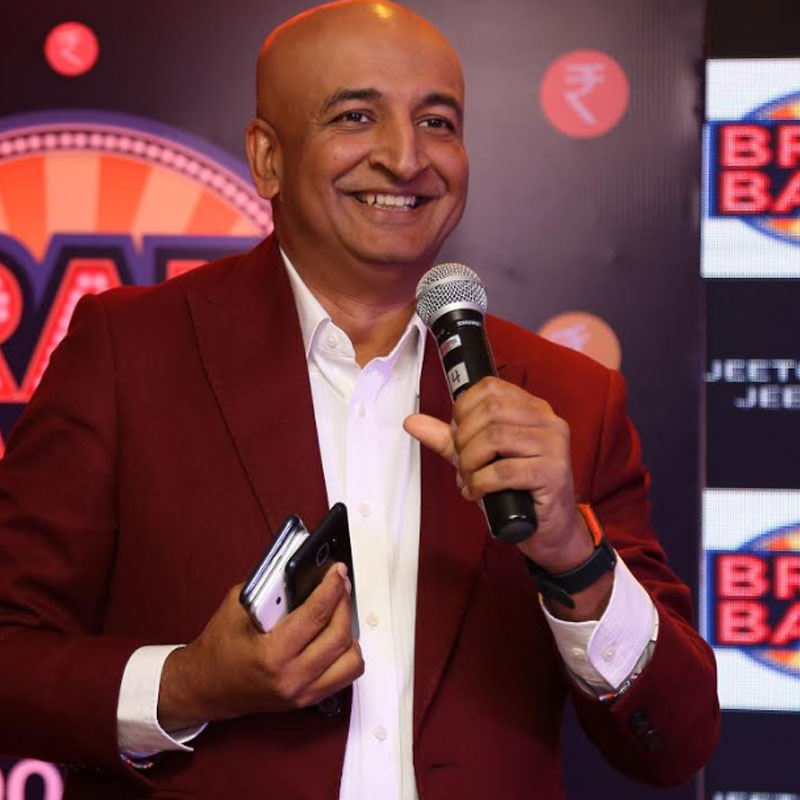
    Times Internet, India’s largest digital products company, announced the launch of its interactive live gaming and entertainment show – ‘BrainBaazi’. The show follows on the heels of Times Internet’s digital strategy and reimagines live video entertainment. Audience participation is facilitated through a downloadable app, currently made available on the Play Store for android devices.

    “At Times Internet, we think digital-first, and we wanted to reimagine what mobile video entertainment could be. And, so we built BrainBaazi, a completely new format for video entertainment. It’s a live trivia show, with real participation from the people who watch it. It’s engaging, exciting, and the thrill isn’t just watching someone else, but actually being in the show, as someone with a chance to truly win.

    We’ve built BrainBaazi to scale, using the latest and strongest technologies. We have carefully put together a stack of codecs along with proprietary handling of cues and quiz payloads to ensure realtime delivery of video and questions to millions of users with high diversity in devices and bandwidth. 

    Today, we’re excited to bring this to a wider audience. Our hope is to see this become the first true primetime show for millenials, with a reach that is competitive with television, and the engagement of an immersive digital product.

    BrainBaazi is built for India with a deep understanding of the nuances of its consumers and the infrastructure. It’s a major technical challenge to be able to have a real-time, responsive, live show at that scale, everyday, and we’re excited to put our platforms to the test”- said Gautam Sinha, CEO, TIL.

  • VoD, OTT music & gaming to overtake Indian traditional media by ’22: EY

    MUMBAI: Digital media may take over traditional by 2021-22, when broadband and smartphone penetration increases in India, according to EY India. The second factor is when broadband is equal to one-third of the smart phone penetration, which in India’s case will happen only by 2021-22, according to EY estimate. EY India media and entertainment advisory leader Ashish Pherwani said that the third factor was parity between cost of the two services.

    Market research firm e-Marketer has estimated that Indians spend around two-and-a-half hours a day on traditional media — radio, television, newspapers, and magazines, compared to an hour they spend on digital media on an average, PTI reported. Pherwani pointed out that the cost of a cable pack in the U.S. is US$ 80-90 a month and that of broadband is $25-30, while in India, it is the other way round, with cable costing Rs 250 and broadband at Rs 500-1000.

    That equation would change by 2020-2021. Therefore, one would see a big uptick in digital and a downfall of traditional media. In traditional media, English (print) was likely to get affected first because that shift was already pretty strong, he said. With the hike in regional media print circulation, Pherwani said that it had scope to grow.

    From Rs 8,490 crore at present, India’s digital sector market is projected to cross Rs 20,000 crore in the next three years. The industry includes the four key areas of digital revenues — OTT and digital advertising, music OTT subscription, video OTT subscription, and gaming (in app and paid).

    EY estimated that the smart phone penetration was expected to be up to 59 per cent by 2020, from 31 per cent in 2015, and digital ad-spend is slated to be Rs 18,500 crore by 2020, constituting a larger pie of the overall media spend. The real uptick, where the Rs 20,000 crore becomes Rs 30,000 crore, might happen between 2020 and 2022, Pherwani added.

  • InMobi looks to monetise Tapjoy’s inventory in India

    InMobi looks to monetise Tapjoy’s inventory in India

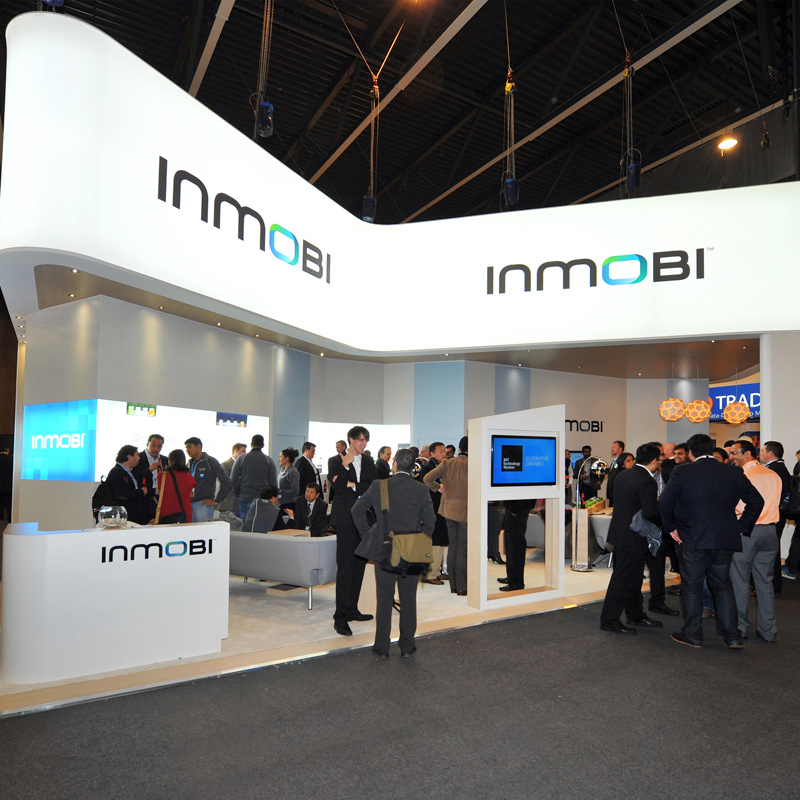
    MUMBAI: InMobi, a global mobile advertising and discovery platform,has recently partnered with Tapjoy, a platform for mobile advertising and app monetisation, to monetise Tapjoy’s inventory in India.

    Mobile gaming continues to see growing adoption in India. According to a report by Nasscom, mobile game downloads are expected to expand at a CAGR of 58 per cent over the next five years, touching an estimated 5.3 billion downloads in 2020.

    Capitalising on this trend, InMobi’s partnership with Tapjoy presents a robust opportunity for Indian advertisers to enhance their reach to a wide selection of global mobile gaming apps. Tapjoy has 40 million unique users in India across popular mobile games such as 8 Ball Pool, Criminal Case, Shadow Fight 2, and Subway Surfers, and advertisers will be able to expand their reach beyond InMobi’s 135mn unique devices in India through access to Tapjoy’s India inventory.

    Tapjoy’s Interplay ads help marketers connect with a qualified audience in premium apps.

    “We are excited to be Tapjoy’s exclusive monetization partner in India. Mobile gaming is growing at an exponential pace in India and through this partnership we are bringing the best of global mobile gaming inventory to advertisers in India who want to reach high quality users,” said InMobi VP and GM India Vasuta Agarwal.

    “Our international game studio partners are seeing very strong growth with Indian consumers and we’re excited to work with InMobi to ensure those audiences are presented with highly engaging rewarded ads from their favorite local brands,” added Tapjoy strategy SVP Paul Longhenry.

  • InMobi looks to monetise Tapjoy’s inventory in India

    InMobi looks to monetise Tapjoy’s inventory in India

    MUMBAI: InMobi, a global mobile advertising and discovery platform,has recently partnered with Tapjoy, a platform for mobile advertising and app monetisation, to monetise Tapjoy’s inventory in India.

    Mobile gaming continues to see growing adoption in India. According to a report by Nasscom, mobile game downloads are expected to expand at a CAGR of 58 per cent over the next five years, touching an estimated 5.3 billion downloads in 2020.

    Capitalising on this trend, InMobi’s partnership with Tapjoy presents a robust opportunity for Indian advertisers to enhance their reach to a wide selection of global mobile gaming apps. Tapjoy has 40 million unique users in India across popular mobile games such as 8 Ball Pool, Criminal Case, Shadow Fight 2, and Subway Surfers, and advertisers will be able to expand their reach beyond InMobi’s 135mn unique devices in India through access to Tapjoy’s India inventory.

    Tapjoy’s Interplay ads help marketers connect with a qualified audience in premium apps.

    “We are excited to be Tapjoy’s exclusive monetization partner in India. Mobile gaming is growing at an exponential pace in India and through this partnership we are bringing the best of global mobile gaming inventory to advertisers in India who want to reach high quality users,” said InMobi VP and GM India Vasuta Agarwal.

    “Our international game studio partners are seeing very strong growth with Indian consumers and we’re excited to work with InMobi to ensure those audiences are presented with highly engaging rewarded ads from their favorite local brands,” added Tapjoy strategy SVP Paul Longhenry.