Tag: Gamezop

  • Exploring trends in casual gaming and digital content distribution

    Exploring trends in casual gaming and digital content distribution

    The landscape of casual gaming and digital content distribution has evolved dramatically over the past decade. Technological advancements and shifting consumer behaviours have fostered a vibrant ecosystem where innovation thrives. India boasts a colossal gaming audience – a whopping 550 million, projected to reach 650 million by 2027. This optimistic outlook is driven by several key factors, including innovation in monetisation techniques and increasing consumer demands.

    At Gamezop, a leading casual gaming platform, we are witnessing this growth firsthand. Over 20 per cent of our 45 million monthly active users are first-time gamers, highlighting the democratizing power of casual gaming. This explosion in casual gaming translates to a thriving industry. In FY23, India’s gaming market raked in a cool $3.1 billion, marking a significant 19 per cent jump from the previous year.

    Let’s explore the current trends in the casual gaming industry:

    Growth of HTML5

    HTML5 is acting as a game-changer, paving the way for seamless cross-platform gaming. Gone are the days of downloading separate apps for each game. HTML5 empowers players to jump into the action using any device with a web browser, be it a smartphone, tablet, or PC.  

    This not only expands the player base but fosters vibrant gaming communities. Players from various devices can connect and play together, boosting engagement and retention. Additionally, HTML5 streamlines the development process, potentially reducing costs and accelerating game launches.

    Rise of Mobile Gaming

    One of the most significant trends in casual gaming is the rise of mobile gaming. The global gaming industry has a market size of $185 billion, with mobile projected to be the dominant platform. This underlines the need for a mobile-first approach for game developers and publishers.

    Mobile gaming’s success can be attributed to several factors, including the convenience of gaming on-the-go, the proliferation of free-to-play models, and the ease of playing HTML5 games. Furthermore, improved graphics, faster processors, and longer battery life, have enhanced the gaming experience, making mobile devices a preferred platform for casual gamers.

    Marketing dollars vhasing casual gamers

    Gaming platforms are becoming a prime target for advertisers, as casual gamers are the most diverse online demographic – over three billion strong globally! This allows for hyper-targeting that reaches specific audiences based on interests, behaviours, and demographics. This level of precision is unmatched. Whether advertisers aim for brand awareness or sales, including gaming platforms in their media mix is crucial for reaching target audiences effectively.

    Gaming also offers unique interactive advantages in engagement and brand storytelling. This creates a conducive environment for advertising messages to resonate and drive results. Additionally, games allow for non-intrusive placements through formats like rewarded ads, which incentivise players to watch ads in exchange for in-game rewards. This fosters a more positive brand perception compared to traditional advertising methods.

    Game adoption in non-gaming products

    The integration of casual games into non-gaming products is set to rise. Notable digital platforms such as Samsung Internet, Sony News Suite, Tata Play, ixigo, Paytm, and Business Insider now feature dedicated sections for HTML5 games. Utilising games can significantly boost user engagement, exemplified by increasing transactions through the unlocking of exclusive coupons as rewards for in-game achievements.

    Other offerings also built on HTML5 – such as quiz, astrology, and cricket content – enrich digital platforms worldwide. Adding products like Quizzop, Astrozop, and Criczop empower apps and websites to seamlessly integrate diverse and captivating content, thereby boosting user engagement and advertising revenue by 15-40 per cent.

    A look ahead: charting the course for casual gaming

    The future of casual gaming in India is brimming with exciting possibilities. Here are some key trends to watch:

    1  Hyper-casual evolution: The hyper-casual market, known for its fast-paced, addictive games, is expected to mature. Look for deeper gameplay mechanics and a shift towards user retention strategies.

    2  Monetization mix: Hybrid monetization models that combine advertising, in-app purchases, and subscriptions are likely to gain traction, catering to diverse player preferences.

    3  Emerging market boom: Regions like India, Southeast Asia, and MENA are expected to experience explosive growth due to increasing smartphone penetration and affordable data plans.

    A final thought

    Casual gaming in India is more than just a leisure activity; it’s a booming industry with the potential to revolutionise entertainment and reshape advertising strategies. As this dynamic market evolves, developers and platforms that embrace innovation and cater to the diverse needs of gamers will be the ones who truly level up.

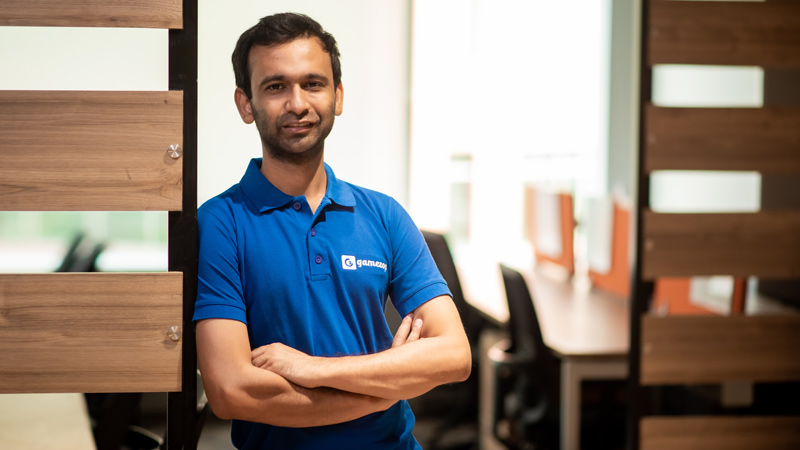
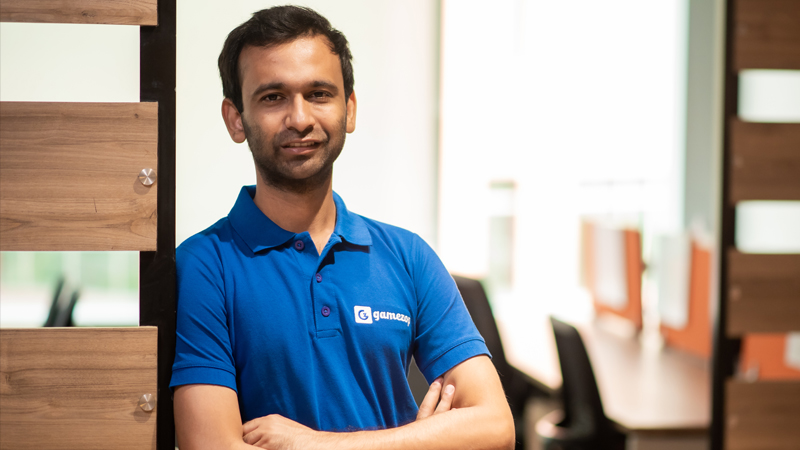
    The article has been authored by Gamezop co-founder Gaurav Agarwal.

  • Playful persuasion – Why games are the new playground for brands

    Playful persuasion – Why games are the new playground for brands

    In the modern entertainment landscape, a new empire has risen – one built not on bricks and mortar, but on pixels and play. Gaming has exploded into a cultural colossus, captivating billions across the globe. And amidst this digital renaissance, a new frontier beckons: the intersection of gaming and branding.

    As gaming’s meteoric ascent reshapes the landscape, brands and advertising agencies are seizing the moment to craft immersive experiences and forge profound connections with audiences. The recent launch of Dentsu Gaming by Dentsu, a titan among advertising agencies, serves as a testament to this shift, marking a strategic pivot towards harnessing gaming as a potent platform for brand engagement. Joined by Havas with Havas Play and Omnicom with LevelUp OAC, these industry leaders epitomize a broader trend – brands swiftly reinventing their marketing strategies to unlock the transformative potential of gaming and cultivate deeper connections with consumers.

    A global playground

    The gaming industry, boasting over three billion active players globally, transcends demographics. Age, gender, and location are increasingly irrelevant, with gaming reaching a cultural crossroads. It dissolves language barriers and fosters unique connections, allowing people to bond, compete, and forge memories with friends and perfect strangers alike. This universality makes it a goldmine for advertisers.

    Casual gamers, some of the most diverse demographics online, offer brands unparalleled granularity in targeting. Psychographic and behavioral data lets you tailor messages to resonate with specific player motivations and preferences. Whether it’s through in-game banners, native placements, or esports sponsorships, the avenues for brand integration are as diverse as the gamers themselves.

    Luxury companies stand in queue

    Even the realm of haute couture isn’t immune to the allure of gaming. Luxury titans, keenly aware of the burgeoning spending power wielded by millennial and Gen Z gamers, are forging strategic alliances with popular gaming titles. From Louis Vuitton’s coveted character skins in League of Legends to Gucci’s limited-edition esports watch co-created with Fnatic, these collaborations elevate product storytelling to new heights within the captivating gaming universe. Burberry’s designs for Tencent’s Honor of Kings further exemplifies this innovative marriage.

    The rise of gaming influencers and the emergence of shoppable games within these virtual worlds promise a future brimming with fresh storytelling and revenue streams for the fashion industry.

    Non-gaming apps want games too

    In a quest to tap into the lucrative gaming market, non-gaming companies are strategically integrating games into their apps and websites. Bajaj Finserv (a one-stop finance app), ZEE5 (an OTT platform), and even Explurger (a social app for travellers), have all added dedicated gaming sections to their apps. This seemingly unorthodox strategy underscores the undeniable power of games to enhance user engagement.

    At the heart of this approach lies HTML5, enabling seamless integration of casual games within apps and websites. According to a recent survey conducted by Gamezop, the provider of gaming solutions for the aforementioned, the incorporation of games leads to a notable 15-40 per cent increase in the time users spend on these apps. Put simply, casual games are proving to be instrumental in keeping users actively engaged within non-gaming platforms.

    Borrowing game elements

    For companies seeking an even deeper level of engagement, crafting bespoke mobile games or infusing existing platforms with gamification mechanics presents a golden opportunity. Imagine a loyalty program where points morph into power-ups for a custom-built mobile game, or a fitness app that showers users with virtual badges and rewards for conquering exercise milestones.

    These gamified experiences seamlessly weave brand messaging directly into the fabric of gameplay, igniting a spark of excitement and a tangible sense of achievement. In this symbiotic relationship, marketing and entertainment converge to forge enduring connections with consumers in the ever-evolving digital landscape.

    Future of playful persuasion  

    Gaming’s metamorphosis from a solitary pastime to a vibrant social hub represents a cultural evolution. The gaming industry has spurred companies to toss out their outdated marketing playbooks and embrace the irresistible allure of casual games and other forms of interactive content. An engaged and diverse audience, the seamless integration of games, and gamified experiences allow brands to craft meaningful connections with consumers in a fun and effective manner. The lines between gaming and marketing are blurring delightfully, and the future looks anything but serious – it looks playful, personalized, and brimming with innovative possibilities. Brands that fail to embrace the power of gaming risk missing out on a powerful new channel for engagement and growth.

    The article has been authored by Gamezop co-founder Gaurav Agarwal.


  • PubNation: Converging segregated data should be next big martech success

    PubNation: Converging segregated data should be next big martech success

    NEW DELHI: The confluence of marketing and technology has reshaped how sales and promotions are done by marketers. With the infiltration of digital technologies even in the remotest corners of the world, marketers now sit on loads of data and possess the means to target their customers better. However, most of them might be missing the bus by a few miles. 

    Dentsu Performance Group CEO Vivek Bhargava pointed out, “There is so much information we have in the marketing world that we are not using effectively to make advertising more targeted and result-oriented. The data remains segregated in so many disparate sources and we need to connect them.” 

    He was speaking at PubNation (print & digital) organised by Indiantelevision.com, in partnership with Quintype and Gamezop, in a panel discussing ‘Marketing & Technology: Two Sides of the Same Coin.’ Other speakers on the panel, moderated by Indiantelevision.com founder, CEO, and editor-in-chief Anil Wanvari, were Affle co-founder, chief revenue & operating officer Anuj Kumar, Xaxis country head – India Bharat Khatri, Gamezop co-founder Gaurav Agarwal, Publicis Groupe COO – Indigo Consulting Jose Leon, Schbang co-founder, chief design & technology officer Sohil Karia, and Foxymoron & Zoo Media Network co-founder Suveer Bajaj. 

    Bhargava cited the example of a food delivery platform to make his point. “Say one person gets registered on Swiggy and the platform doesn’t have any algorithm in place to identify what food one actually likes. It identifies it as a virgin. So, if in the past he has skipped 10 ads of various pizza-delivery platforms and had clicked on a keto diet programme, there is data in the marketing world available. There should be a merging of this data for both the platforms, so they can build on each other. This will create significant efficiencies on both ends of the system.” 

    He added that he sees a great opportunity for companies that can aggregate this data and find out niche tools to support this segment. 

    The panel agreed that there is a huge scope of growth in the martech world and digital advertising – if all brands start keeping consumers at the core of their marketing functions and not as mere numbers. 

    Kumar highlighted that it is very important for brands and marketers to understand how consumers are engaging with technology: what kind of devices they are using, what platforms they are present on, etc, to reach them better using the power of programmatic advertising. 

    Karia noted, “What I am seeing is that a lot many brands are now working with the D2C (direct to consumer) model and they have consumers at the centre of their experience. For B2B operations, websites are becoming their focus. While we speak about programmatic buying and driving traffic to the website, it is also essential to look at how we’re retaining these consumers and how we are serving them better during and after-sale. Personalising their experience on the site post-sale is how we can nudge them to make repeat purchases.” 

    He added that if the marketers have third-party data visible and the right tools to identify what industry is this person (customer) coming from and what are his preferences, they will be better able to serve him with a personalised experience on the platform. 

    In the same vein, Khatri highlighted, “If you look at young brands like Mamaearth, they worked excellently in the D2C category. They opened with a reverse approach that okay, I don’t want to create a big buzz or have millions of views on my YouTube videos, but they instead identified their target customers and pitched to them directly. They did not say that I want 10 million customers in that market but instead, they said that they want 50 per cent of their revenue from there and this is the return on my advertising spend I am expecting.” 

    He continued, “So, they got themselves present on each channel they found fit to reach their target audience. Be it through Amazon or Flipkart, or having influencers onboard whose single post or tweet would have converted into hundreds of buyers.” 

    There are more than 8,000 platforms today, offering various data and tech solutions, noted Leon, but what should remain any brand’s focus is to realise who the consumer is and what the consumer wants. “Is the platform able to differentiate the consumer behaviour on a real-time basis and hence you can go back to the advertiser and monetise it better? The way to this is to start (campaign) testing on digital platforms,” he advised.

    Another interesting insight was brought to the table by Bajaj, who said that marketers should also keep into consideration how technology can support and enable the content they are creating. 

    “Today, the right tools and technologies could even tell me what should I name my video, which ‘influencer’ should be starring in my video, what music I can use, what keywords are to be used, and how to package my video using predictive intelligence. That’s where open-source platforms guide us, they let us use their tools and marketing intelligence,” he stated.

    Agarwal seconded the thought and shared how better and engaging content can help acquire and retain new consumers. “With Gamezop, we work on a B2B2C model, that means we partner with publishers who want to create unique gamified experiences for their consumers and help them with that. So, we are in the process of creating better experiences where users might compete for discounts and offers.”

    The panel opined that publishers and advertisers both should be focusing on creating better experiences for consumers, and ethically use the data available to curate unique products and services. 

  • PubNation: Decoding the future of print & digital industry

    PubNation: Decoding the future of print & digital industry

    NEW DELHI: The print industry is at a Rubicon moment; the process of digitalisation has opened up new avenues of information dissemination and advertising, although concurrently, there is room for newsprint to flourish. While convergence still remains at the core of it, the aftershocks of the Covid2019 crisis could entirely upend this fragile equilibrium.

    To discuss the new form of print media, its relevance as an advertising medium, the content that will define print publications in future, and technology that will shape the copies of tomorrow, Indiantelevision.com will host PubNation 2020 (print & digital), in partnership with Quintyoe Technologies and Gamezop, on 9-10 December. 

    The two-day virtual conference will have industry leaders discussing a host of topics, including how they dealt with the pandemic, the current and future scenario of ad rates on print, programmatic advertising, subscription growth, and the role of influencers.

    The panellists who will be speaking at Pubnation 2020 (Print & Digital) are Punjab Kesari group of newspapers director Abhijay Chopra, Dentsu Impact president Amit Wadhwa, BBC Global News SVP – commercial development for Asia & ANZ Alistair Mcewan, The Washington Post director – global agency partnerships Baldeep Singh, Moneycontrol editor Binoy Prabhakar, Gamezop co-founder Gaurav Agarwal, Mirror Now managing editor Vinay Tewari, among others. 

    For more information and registration, visit here (https://www.indiantelevision.com/pubnation/index.html). 

  • Snapdeal adds more games from Gamezop

    Snapdeal adds more games from Gamezop

    MUMBAI: E-commerce marketplace Snapdeal added a range of popular games from Gamezop to its platform. Through this arrangement, obstacle crossing fun games like Savage Revenge, Tower Twist, Battle Fish, Rafting Adventure, and Sticky Goo are now available for users on Snapdeal.

    Users will be able to play these games instantly within Snapdeal’s properties without the need to install them as standalone apps. Additionally, each game will have a predefined target for users; upon achieving these targets, discount codes will be unlocked that can be redeemed against purchases on the eCommerce giant. These games are driving higher engagement with shoppers who are regularly visiting the platform as they wait for the complete range of products to be made available. At present, only government-defined essentials can be shipped out via e-commerce platforms.

    A Snapdeal spokesperson commented, “Online games create ways for our users to spend more time indoors during the lockdown. With Gamezop, we are excited to bring a suite of engaging games to our platform.”

    “Snapdeal’s penetrating reach across India has fascinated us for a long while. We are extremely excited to play our part in increasing time spent and transactions on their platforms,” remarked Gamezop head of partnerships  Manpreet Randhawa  .

    Earlier, Snapdeal built games like Stack up, Jackpot Machine, Find The Queen, Guess The Price, Spin the Wheel and Shuffle and Win on the platform. Some of these games unlock coupon codes for discounts on the app.

    Gamezop has over 250 popular games and more than 25 million monthly active users. Its games can also be played on hundreds of other apps, including UC Browser, ixigo, Grofers, NewsPoint, and Xender.

    During this ongoing lockdown, Snapdeal has witnessed a 24X increase in items on its wishlist, with users waiting to buy apparel, personal grooming products, fitness accessories and household items like pressure cookers, kitchen tools, LED bulbs, bed sheets & towels, etc. Nearly 25 per cent of the lockdown shopping list is generated by new shoppers on Snapdeal. Users are also waiting to buy spiritual books, anti-snoring devices, musical instruments etc.