Tag: Gaana

  • NewsPoint launches a reward program ‘NewsPoint Tokens’ for its users

    NewsPoint launches a reward program ‘NewsPoint Tokens’ for its users

    New Delhi: Keeping in line with its promise of providing a delightful experience to its consumers, Times Internet's multilingual information & engagement platform, NewsPoint today announced the launch of an unique customer gratification programme. Newspoint Tokens is a virtual currency powered by TimesPoints, that users can redeem for exciting offers at several brand partners including Amazon Pay, BookMyShow, Paytm Travel, ixigo, Myntra, Dineout, Gaana and TimesPrime among others. The reward program will soon add more exciting offers and benefits to its fold.

    With a wide variety of services available for redemption, NewsPoint Tokens aims to build more consumer loyalty while adding additional engagement layers to the app.

    “We are delighted to announce the launch of NewsPoint Tokens. The program seamlessly  integrates with the core experience of the NewsPoint app.  Users earn tokens as they read stories and /or watch videos. Further, bonus tokens are awarded for our most loyal users who use the app daily for 7 days or more ” said Ruchir Khanna, Product Head, NewsPoint.

    This is in line with our aim to drive engagement and consumer loyalty. Over the last one year, Newspoint has witnessed already 5X growth in users and hopefully consumer gratification will allow us to not only keep the reader constantly engage but also provide a wow experience across the NewsPoint platforms” said Ruchir Khanna,Product Head,NewsPoint.

  • Gaana ‘Tunes – Up’ App For An Elevated User Experience

    Gaana ‘Tunes – Up’ App For An Elevated User Experience

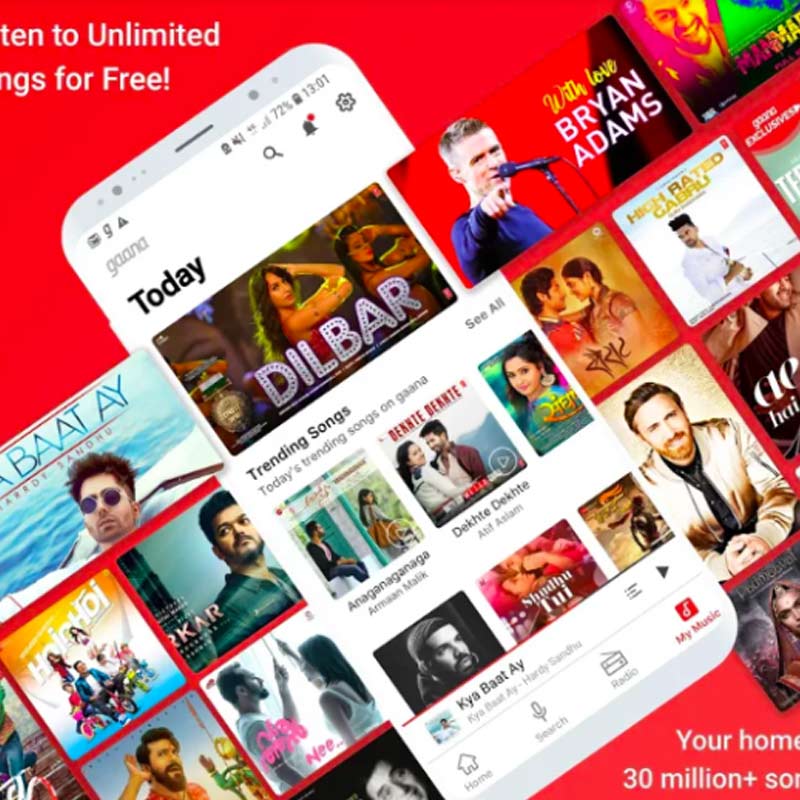
    MUMBAI: Gaana, the leading music streaming player in the Indian market has rolled out a  new version of the app on Android and iOS platforms that would offer music lovers a never before immersive experience by enhancing the discoverability of music, aiding in decision making of playlists, a better voice search and with the availability of lyrics making it more engaging and interactive than ever before. 

    The app is now with with more than 80 mn users and over 1.2 billion streams a month across 30 languages including Indian regional languages has introduced a facelift to improve user experience on the app. Some of the new introductions are as follows:

    Hassle Free Discoverability:

    With the new app discoverability become a lot simpler. Users can now quickly select their choice of music by taking help of the Personalized Music Feed at Search. The app will track your listening history and prompt suggestions thus saving you the drudgery of browsing through a vast library of music to make your pick. The smart feed is powered by the ML models to expose users to varied content in one go.

    Aids Decision Making:

    The revamped version also features a Made for you Mixes and Playlists. This will aid in decision making with tailor made playlists to cater to your eclectic preferences. These will have tracks across genres for various occasions put together just for you. 

    Engaging Content

    And engaging modern UX will ensure that music lovers  experience a Fresh Content Everyday. It will filter music based on what you have listened and what you have not and will suggest new content accordingly. AI and Machine Learning (ML) has been the key driver in leveraging the user behavior for understanding taste profiles and tailoring music listening experiences for each unique user. 

    Easy Accessibility

    Voice is the most convenient medium for input unlike a keyboard and we see the millennial generation moving to Voice in a big way.  Also the new wave of internet users will primarily use Voice as input as many will not be comfortable with typing. The Voice Search option will make accessibility faster as it gives you the freedom to make movements on the app without having to type details of the songs. Users can search for their favourite songs by saying the name of song, singer, movie, lyrics, moods and occasions. 

    Immersive Experience

    Consumers can not just listen to the music but also sing while the song is playing. The new feature will let consumers view Lyrics With Full Screen Players. The font and the style can be changed to make it appear more legible. 

    In addition to the above, the app has been made more user-friendly with an increased focus on imagery and breathing spaces. It has also improved player experience and onboarding process.

    Commenting on the new launch, Mr. Prashan Agarwal, CEO – Gaana said,“Today we are at more than 80 mn monthly active users with an active subscription base. We are extremely passionate about elevating consumer experience at every step which is why we decided to give the app a facelift to further enhance user interaction. Over the last few months, we have increased investment in machine learning and AI to improve our recommendation algorithms and today almost 15% consumption on the platform is being delivered through our recommendation engine. “

    He further added, Our focus at Gaana is to be the everyday companion of every user by being there through all the different moods and phases that our user goes through.  Keeping in line with this, we are certain that the revamp will help us curate a fulfilled user experience on the App.”

    The new app will be available to Gaana’s IOS and Android user base. 

  • OTT trumps TV by 44 min among youth: Chrome DM

    OTT trumps TV by 44 min among youth: Chrome DM

    BENGALURU: Online was larger of the two platforms for consumption of content by youngsters who consumed content only on television or only online in India, a Chrome Data Analytics and Media (Chrome) “OTT Consumption” study has revealed.

    The average daily time spent on content consumption online was 44 minutes higher than the average daily time spent on content consumption on television. Chrome’s survey included 2,505 respondents of which 28 per cent were aged between 15 and 24 years and 72 per cent were in the age group of 25 to 34. 49 per cent of the respondents were male and 51 per cent were female.

    Television versus online

    According to the study, 16 per cent of the respondents consumed content only on online devices, while only two per cent said that they consumed content on television alone. 81 per cent of the respondents said that they consumed content on both the platforms.

    Consumption patterns by respondents who used both platforms for content consumption

    2,054 respondents consumed content both on television and online.

    Genres consumption

    A mobile phone was the preferred device for music consumption among respondents who used both platforms. Eighty three per cent of the 2,054 respondents said that they consumed music on mobile phones as compared to 34 per cent that said that they also consumed music on television and 17 per cent who said that they also used a desktop/laptop for listening to music.

    In the case of movies, television was the preferred device with 66 per cent saying that they watched movies on television as compared to 39 per cent who watched movies on mobile phones and 29 per cent who watched movies on a desktop/laptop.

    Television was also the preferred device for news consumption, with 64 per cent watching it on television and 29 per cent who also watched it on a mobile phone and 9 per cent who also consumed news on a desktop/laptop.

    Seventy four per cent of the respondents consumed sports content on television. 21 per cent and 14 per cent also consumed it on mobile phone and desktop/laptop respectively.

    Sixty nine per cent consumed GEC content on television, and 17 and 6 per cent watched it on mobile phone and desktop/laptop respectively.

    Daily time spent on the mediums

    The average daily time spent online by the 2,054 respondents who consumed content on both television and online was 1 hour 37 minutes on television and 2 hours and 21 minutes online.

    Twenty nine per cent spent less that 30 minutes viewing television, 39 per cent spent between 1 and 2 hours viewing television daily; 26 per cent spent between 2 and 3 hours daily watching television, 3 per cent spent 3 to 5 hours viewing television daily and 3 per cent spent more than 5 hours on daily television viewing.

    Comparative numbers for online consumption of content were: 23 per cent spent each less than 30 minutes daily and between 1 and 2 hours daily; 29 per cent spent between 2 and 3 hours daily; 9 per cent spent between 3 and 5 hours and 17 per cent spent more than five hours on online content consumption daily.

    Frequency

    Seventy four per cent of were daily watchers of television and 26 per cent had no fixed routine for watching television. 77 per cent watched content online daily; 14 per cent watched content online during weekends and 9 per cent had no fixed routines.

    Apps

    YouTube was the preferred app for consumption of all types and genres of content. Other apps/websites such as hotstar, JioTV, Eros Now, Voot, gaana, saavn, Wynk Music, Sony Liv, TOI and NDTV were used for different content genres.

    Top three apps for music consumption

    The top three apps for Hindi music consumption were YouTube, Hungama and gaana , while for English music consumption they were YouTube, Wynk Music and gaana. In the case of Regional Music, the top three apps were YouTube, saavn and JioTV

    Top three Movie apps

    The top three apps for Hindi content consumption were YouTube, hotstar and Eros Now, for both English and Regional content they were YouTube, hotstar and JioTV.

    Top three GEC apps

    The top three apps for Hindi GEC content were YouTube, hotstar and Voot, while for English and Regional content they were YouTube, hotstar and JioTV.

    Top 3 sports apps.

    The top 3 sports apps were YouTube, hotstar and Sony Liv

    Top 3 News apps/websites

    The top 3 News apps/websites were YouTube, NDTV and TOI

    Top 3 apps for Online exclusive content

    The top 3 apps for online exclusive content were YouTube, Hotstar and Voot

  • Artistes can launch non-film Originals on Gaana, ‘Tum Hardafa Ho’ breaks records

    Artistes can launch non-film Originals on Gaana, ‘Tum Hardafa Ho’ breaks records

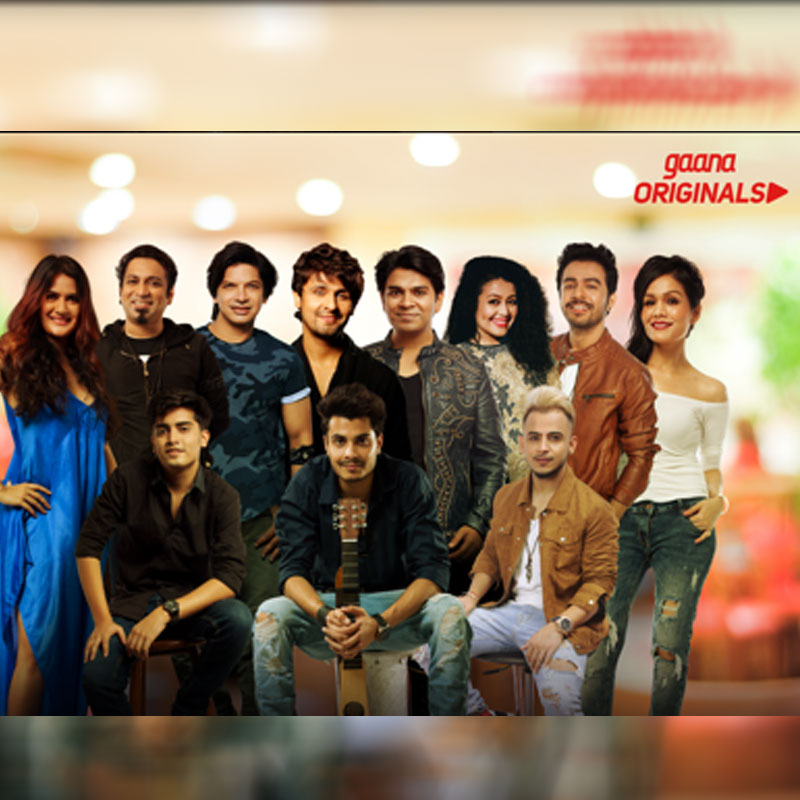
    MUMBAI: Gaana, India’s favourite music streaming app, has launched a platform to promote non-film music from artistes under the brand ‘Gaana Originals’. The platform will provide mainstream reach to music artists to launch their Original content at the same scale of a film-based music.

    The first single under Gaana Originals, ‘Tum Hardafa Ho’, composed and sung by the music composer and singer Ankit Tiwari has already garnered about a million streams in five days. This puts it in the same league as most popular film songs on Gaana like Mere Rashke Qamar, Chalti Hai Kya 9 se 12, Tamma Tamma Again, Badri Ki Dulhaniya, et al. This is a new record, which also proves that audience appreciation for independent music is paramount, provided discovery and accessibility for such songs are simplified as done by Gaana.

    Gaana under its ‘Originals’ platform is attempting to reimagine trends in music listening by establishing a platform to promote creativity and move beyond film-based song compositions. This is the first time ever that artistes are being provided a platform to showcase their ingenuity.

    Gaana Originals will feature 11 original songs from top Bollywood/Regional artistes releasing one song a week. It will showcase ingenious works from best of the Bollywood & Punjabi singers like Sonu Nigam, Shaan, Ankit Tiwari, Neha Kakkar, Sona Mohpatra, Tony Kakkar, Millind Gaba, Sonu Kakkar, Gurnazar, Sachin Gupta and Soham.

    Prashan Agawarl, COO, Gaana said, “It is a proud moment for Gaana to launch a platform to help artistes launch non-film music in India. Unlike international markets, most music consumption in India is still Bollywood centric and this is our initiative to empower artistes.”

    Tiwari said, “As a composer, Original music is very important for me and many of us in this creative field. I really want to thank Gaana for giving us the platform to feature and showcase our independent work, it really means a lot to me.”

  • Gaana throws up ‘Yodlee Challenge’, video garners 50 mn impressions

    MUMBAI: As a part of The Glad and The Sad of Kishore campaign, Times Internet’s music streaming app Gaana launched ‘Yodlee challenge’ on 31 July that has gone viral as many reputed singers & Kishore Da fans are challenging their friends and loved ones to Yodlee like Kishore , yesterday #YodleeLikeKishore was trending on twitter for six hours.

    4 August marks the 88th birthday of legendary singer and actor of Indian cinema Kishore Kumar. Popularly known as “Kishore da”, the iconic singer had the ability to give a musical meaning to all human emotions, and therefore has stayed at the pinnacle of musical feats in Indian popular culture across time.To commemorate Kishore Da and his contribution to Indian Music & Bollywood industry, Gaana launched a campaign called – ‘The Glad and The Sad of Kishore Kumar’.

    This campaign is Gaana’s endeavour to get all Kishore Da fans to celebrate life through his music which he left as tribute to Indian cinema. Kishore has the audience encapsulated with a song for every occasion and every phase, and this tribute is only a fitting display of love and respect to the legend.

    On Web/App:

    We’ve created a special occasion page that showcases the best of his music highlighting two themes: ‘The Glad’- the entertaining, the jovial and upbeat Kishore and ‘The Sad’- the solitary, heartbroken, comforter Kishore.

    Landing Page: https://gaana.com/occasion/thegladthesadofkishore

    On Social Media: #YodleeLikeKishore

    Since Kishore Kumar was extremely popular for his unique Yodeling style, we took ‘The Glad’ aspect of the campaign ahead and launched the #YodleeLikeKishore Challenge. We went all-out to challenge artists like Meet Bros, Shaan, Armaan Malik, Darshan Rawal, Shivani Kyshap, Asees Kaur and more to #YodleeLikeKishore which they gladly accepted and went a further notch to challenged their friends in turn.

    The challenge was launched on our social media channels and the audience responded so enthusiastically that it went to on #1 trending spot on Twitter for six hours. The campaign reached out to seven million people on Twitter garnering 50 million impressions for the hashtag-trend in total.

  • Gaana signs exclusive alliance for Jassi Gill’s latest track ‘Dill Tutda’

    Gaana, India’s favorite music app has announced another exclusive association, this time with Punjabi youth icon – Jassi Gill; a heartthrob, an exceptional performer, a gifted artist- a complete superstar of Punjabi cinema in his own capacity. Gaana, will have the exclusive rights for online music streaming of this song for next six months.

    This single is a clear hit and is already trending across social media. Within 2 weeks of its release, it has reached crossed 1.5 million playouts on Gaana which is fastest for any Punjabi song till now!

    Prashan Agarwal, COO, Gaana, said “Jassi Gill is a talented versatile singer and is the voice behind foot-tapping numbers such as Bapu Zimidar, Snapchat and has also sung heart-wrenching ballads such as Ik saal, Pyaar Mera, Gabbroo, Fer ohi hoyea and many more with awe inspiring finesse.”

    Jassi Gill’s ‘Dill tutda’ is the second exclusive song alliance for Gaana, our first exclusive ‘Laembadgini’ with Diljit Dosanjh has done superbly well & crossed 15 million mark on Gaana in less than 5 months.

    On exclusive association with Gaana , Jassi said “ Gaana is the biggest music streaming platform and I am really excited about this partnership. I am eagerly waiting to see the response my new song Dill Tutda gets from the audience. I have put my heart and soul in this song. It is piece of work that I believe everyone will be able to relate to”.Listen to this song only on Gaana – http://gaana.com/song/dill-tutda

  • Gaana acted on users’ desire to share, says COO Prashan Agarwal

    MUMBAI: Listening to Gaana is no longer a solitary pursuit, limited to one’s headphones, car or room… with Gaana Social, users can share their music with anyone, anywhere, anytime – spreading the joy that only music can bring.

    When a listener hears a song that sets her pulse racing – she wants to share it with her gang, friends and family immediately. The new Gaana Social feature lets her do just that. Users can share their favorite playlists, see what their friends are listening to, follow favorite artists and top trends – creating deep social connections.

    Gaana.com COO Prashan Agarwal said, “We spent a lot of time in understanding how our users listen to music and found that they had a deep emotional desire to share their music with their friends and family in a seamless experience..Gaana Social does just that for its users, developing deeper social connections and creating content virality.”

    Gaana Social will enable users to maintain social media connections, when logged in from Facebook and will also allow making new friends through various discovery points in the app. With Gaana social users will be able to:

    Connect with Friends: Follow your friends, Discover music they love, Share music you love

    Discover amazing people & music: Find people who love music. Connect with them. Discover with them
    Discover best of Gaana: Enjoy music curated by editors & Gaana network – all personalised

    Gaana’s continued focus to enrich product experience has also been applauded by its users; Gaana app has received 4.65 star rating on all its all recent releases taking its overall rating to 4.3 stars on playstore. This is an impressive feat considering the fact that Gaana has over a million reviews on the playstore alone. Gaana has received 5-star ratings from nearly 60% of its million+ reviewers on the store. This speaks volumes of Gaana’s loyal user base and consumer affinity for Gaana app.

    Gaana continues to strengthen its leadership position, after adding Facebook messenger bot, Android Auto, Amazon Fire TV & Chromecast last year; Gaana is now working on a voice search & play feature for its Android users. Users would simply tap the mic to hear their favourite tracks as the voice search delivers much better experience as it is faster, more convenient, and less prone to typing errors.

  • How will Jio’s launch impact the digital ecosystem?

    How will Jio’s launch impact the digital ecosystem?

    MUMBAI: Jio’s launch last week has caused a stir in the telecommunications industry. Calls and messages on the new network are free while mobile data is 3 to 5 times cheaper compared to competitors. For Jio as a disruptor this is a reasonable strategy: Silicon Valley’s leading VC Peter Thiel has said that “[start-ups] have to be 10 times better than second best”.

    But in addition to rattling up the stock market, Jio’s strategy is likely to have a longer and beneficial impact on India’s digital ecosystem.

    Jio has thrown a glove to other mobile operators by slashing service costs for consumers. While Jio’s offering is only available to LTE customers, that is not relevant: consumers on 2G or 3G will ask their carrier, why do they need to pay 3x to 5x more for slower internet speeds? This is likely to create a pricing war between India’s mobile operators. Such price wars have been commonplace across the world, latest example being Singapore just a few months ago.

    As prices go down, more people will switch on their mobile data services for the first time. GSMA Intelligence estimates only 15% of people in India used mobile broadband in Q4 2015, while smartphone ownership would allow much higher rates already today. Cheaper data increases the share of smartphone users who use mobile data but also incentivizes feature phone owners to upgrade to a smartphone as the main benefit (online access) becomes affordable.

    It wouldn’t be an exaggeration to say that this would accelerate the progress of digital democracy or the vision of digital India by breaking the perception barrier among the bottom of the pyramid. “Data is for everybody” would be the new mantra.

    This will also spur the growth of affordable 4G devices and a multi-SIM environment; further reducing the customer loyalty towards the network. Customers will keep on switching for better price or data bandwidth.

    This in turn helps the digital ecosystem grow. While India’s own services like Ditto TV, Hooq and Gaana are already present in the market, a majority of global digital merchants do not have India in their sights yet. Beside few smartphone owners and lack of access to online payment methods, low mobile data penetration has been one of the key roadblocks.

    Globally, average Netflix users watch 133 hours of video per month which translates into roughly 133 gigabytes (GB)  of data consumed. The average Spotify user listens to 28 hours of music (34-35 GB data) per month. In Western markets a large portion of this content is consumed through landline internet, so such data volumes are not an issue. But for a mobile-first market like India, they have so far made such digital services inaccessible to a large part of the population.

    Reduced cost of data will then result in a bigger uptake of digital content services as users can consume more for less. Local providers will be able to increase their audience while international merchants like Netflix, Spotify, Apple and Amazon are going to reconsider their strategy for India in light of the changing ecosystem.

    With the challenges of mobile data considerably reduced, all other factors point to growth and make India one of the most attractive markets for global merchants.

    Another consequence of the data revolution is voice over IP services like Skype, Viber, and others will get more acceptance in the eco-system from the telecom operators; while this will create more opportunities for them we can see many home-grown companies ready to challenge their hegemonies. Obviously, for customers the more means the merrier.

    While the pricing war will create a temporary setback for carriers, in the long run everyone will benefit. Consumers get affordable internet and access to more digital content. Carriers will be able to increase user stickiness (by negotiating and offering exclusive deals and co-promotions with digital service providers) and average revenue per user (from both increased data consumption and from providing carrier billing for these services).

    (The author is the general manager of Fortumo India Mobile Payments. The views expressed are entirely his own and Indiantelevision.com does not subscribe to them)

  • How will Jio’s launch impact the digital ecosystem?

    How will Jio’s launch impact the digital ecosystem?

    MUMBAI: Jio’s launch last week has caused a stir in the telecommunications industry. Calls and messages on the new network are free while mobile data is 3 to 5 times cheaper compared to competitors. For Jio as a disruptor this is a reasonable strategy: Silicon Valley’s leading VC Peter Thiel has said that “[start-ups] have to be 10 times better than second best”.

    But in addition to rattling up the stock market, Jio’s strategy is likely to have a longer and beneficial impact on India’s digital ecosystem.

    Jio has thrown a glove to other mobile operators by slashing service costs for consumers. While Jio’s offering is only available to LTE customers, that is not relevant: consumers on 2G or 3G will ask their carrier, why do they need to pay 3x to 5x more for slower internet speeds? This is likely to create a pricing war between India’s mobile operators. Such price wars have been commonplace across the world, latest example being Singapore just a few months ago.

    As prices go down, more people will switch on their mobile data services for the first time. GSMA Intelligence estimates only 15% of people in India used mobile broadband in Q4 2015, while smartphone ownership would allow much higher rates already today. Cheaper data increases the share of smartphone users who use mobile data but also incentivizes feature phone owners to upgrade to a smartphone as the main benefit (online access) becomes affordable.

    It wouldn’t be an exaggeration to say that this would accelerate the progress of digital democracy or the vision of digital India by breaking the perception barrier among the bottom of the pyramid. “Data is for everybody” would be the new mantra.

    This will also spur the growth of affordable 4G devices and a multi-SIM environment; further reducing the customer loyalty towards the network. Customers will keep on switching for better price or data bandwidth.

    This in turn helps the digital ecosystem grow. While India’s own services like Ditto TV, Hooq and Gaana are already present in the market, a majority of global digital merchants do not have India in their sights yet. Beside few smartphone owners and lack of access to online payment methods, low mobile data penetration has been one of the key roadblocks.

    Globally, average Netflix users watch 133 hours of video per month which translates into roughly 133 gigabytes (GB)  of data consumed. The average Spotify user listens to 28 hours of music (34-35 GB data) per month. In Western markets a large portion of this content is consumed through landline internet, so such data volumes are not an issue. But for a mobile-first market like India, they have so far made such digital services inaccessible to a large part of the population.

    Reduced cost of data will then result in a bigger uptake of digital content services as users can consume more for less. Local providers will be able to increase their audience while international merchants like Netflix, Spotify, Apple and Amazon are going to reconsider their strategy for India in light of the changing ecosystem.

    With the challenges of mobile data considerably reduced, all other factors point to growth and make India one of the most attractive markets for global merchants.

    Another consequence of the data revolution is voice over IP services like Skype, Viber, and others will get more acceptance in the eco-system from the telecom operators; while this will create more opportunities for them we can see many home-grown companies ready to challenge their hegemonies. Obviously, for customers the more means the merrier.

    While the pricing war will create a temporary setback for carriers, in the long run everyone will benefit. Consumers get affordable internet and access to more digital content. Carriers will be able to increase user stickiness (by negotiating and offering exclusive deals and co-promotions with digital service providers) and average revenue per user (from both increased data consumption and from providing carrier billing for these services).

    (The author is the general manager of Fortumo India Mobile Payments. The views expressed are entirely his own and Indiantelevision.com does not subscribe to them)

  • Gaana introduces Ashish Vidyarthi – the “kahanibaaz” on Gaana Specials

    Gaana introduces Ashish Vidyarthi – the “kahanibaaz” on Gaana Specials

    MUMBAI: Gaana, India’s favourite music streaming app, adds a non-music audio show by eminent Indian film actor Ashish Vidyarthi to its Original Programming series “Gaana Specials”.

    Prashan Agarwal, COO, Gaana said “Gaana Specials is our effort to enthrall audience across audio genre’s including but not limited to music related shows, movie reviews, comedy and story telling. Ashish is well known for his work in Bollywood, Tamil & Telugu movies and has a distinct tone which suits audio presentation. Through this show, called “Kahanibaaz”, for the first time people will listen to him narrating stories. Each episode in this series is a veritable performance piece, mixed and sound designed like an audio movie.”

    The show is inspired by stories from all around the world – from Alexei Tolstoy to Oscar Wilde to O Henry – which have been brilliantly adapted and reinvented into the Indian context by writer Saurabh Bhramar.

    This rich musical narration experience series is now live on Gaana for the listeners. The first season has 10 episodes and every 15 days a new episode will be featured. Apart from the original content audio shows, this meta-story interweaves good music with life experiences, and progresses from episode to episode.

    The episodes are mixed and designed like an audio movie. Each episode has around 4 to 5 chunks of talk, each chunk ranging from 5-8 minutes.

    Along with the stories that Kahanibaaz narrates, Ashish Vidyarthi threads together his own personal stories. Through this meta-story, the listeners get to know about Ashish’s personality, which seems a bit eccentric and strange. The stories for the First Season are in the dark space, featuring horror and morbid tragedies. The mystique of Kahaanibaaz will be revealed in Season 2 only.

    The hunt is on for young creative and media minds under 30 years. Brand Equity Young Spikes 2016 competition. Winners get a free trip to Singapore to compete at Spikes Asia 2016. www.etbrandequity.com/youngspikes