Tag: Future Group

  • Big Bazaar launches game to promote R-day sale

    Big Bazaar launches game to promote R-day sale

    MUMBAI: Hypermarket chain from Future Group, Big Bazaar, has created a mobile game to promote its mega property, ‘Big Bazaar Sabse Saste 5 Din’. Designed and executed by L & K Saatchi & Saatchi, Big Bazaar’s innovative deal game is set to transform the shopping experience in India. Consumers and gamers can play the game and win shopping vouchers worth up to Rs 1 crore.

    The ‘Deal Skyfall Sabse Saste 5 Din’ mobile game has the group’s iconic Chidya as a playable character. The game consists of five levels and will change from one to the other on preset scores. The speed at which the products appear on screen will keep on increasing along with the frequency of obstacles as the level increases. The game will have various deals. Each deal will have its own value/points. The user will be awarded a reward for crossing a predefined score and they can redeem the voucher code from the rewards section of the game on 23 January 2018.The game is available on the App Store, Playstore and bigbazaar      

    Future Group’s head of digital Pawan Sarda says, “With Deal Skyfall – Sabse Saste 5 Din game we want to reach out to the hidden consumer in everyone. Be it a gamer, a next gen consumer, mobile addicts or our huge base of loyal consumers, the game can be played by one and all. It is a simple and rewarding game, where your points in the virtual world get you a chance shop in the real world for free.”

    L & K Saatchi & Saatchi Managing Partner Anil K Nair adds, “The game is a unique way in which a household brand like Big Bazaar is promoting one of its biggest properties. We have kept the game simple and it is sure to get many addicted and win as many vouchers they like.”

    Revolutionising the shopping experience in India, Big Bazaar started the first ever Republic Day Sale in 2006, which has over the years come to be known as Sabse Saste Din. Celebrating the 12th successful year of Sabse Saste 5 Din, Big Bazaar has owned the period around Republic Day and has been a trendsetter.

  • Future Group launches premium gourmet gifting brand

    MUMBAI: Future Consumer Limited the food and FMCG arm of Future Group launches a premium gourmet gifting brand – ‘Gruezi’, in partnership with ‘Chocolat Frey AG’ headquartered in Switzerland. Chocolat Frey AG is one of the world’s most premium chocolate manufacturer and is part of Migros Group. The brand name ‘Gruezi’ is inspired by the Swiss word for ‘hello’ which signifies the welcoming of new moments that will be etched in memories for life! 

    Gruezi offers pure Swiss chocolates crafted by a technique that has been mastered for over 200 years, with a unique blend of flavors, ranging from a crunch to mouthfuls of soft and delicious soft-fills – concepts inspired by various Swiss elements like the behemoth, the king of mountains, Matterhorn. Gruezi’s initial range of gourmet offerings include finest assortment of Swiss chocolates available in two special packs Gruezi Swiss Matterhorn Chocolates and Gruezi Assorted Centre Filled Chocolates.

    Rahul Kansal says, “We are extremely excited to launch Gruezi, as it’s our first foray in the premium chocolates category. Gruezi is a gourmet gifting brand that is not limited to festivals or special celebrations. Instead, whenever the moment calls for expressing more than a casual gesture, Gruezi finds place. A perfect way to say hello to joy!”

    Gruezi Swiss Matterhorn Chocolates are jagged peaks of velvety milk chocolate that sit around honey and almond nougat which make every bite worth savouring. Gruezi Assorted Centre Filled Chocolates include four indulging flavors such as Triangolo, Mandolina, Caramelita and Giandor. Both packs are priced at Rs. 450 per box and can be purchased from Foodhall, select Big Bazaar Gen Nxt, Big Bazaar and Nilgiris stores in Mumbai, Delhi and Bangalore.

    public://future-group.jpg

  • Future Group’s Kosh Oats partners Indian Railways

    MUMBAI: The catering service providers in Indian Railways has partnered with Kosh Oats, a premium oats grain brand by Future Consumer Limited to serve nutritious meals to Rajdhani and Shatabdi travelers.

    Oats are a source of high dietary fiber, protein and energy as compared to plain wheat atta, hence in-train parathas will be made & served using Kosh Wheat + Oats Atta.

    Future Consumer Limited head – business strategy and marketing Rahul Kansal says, “With our products one can include oats to prepare any type of food be it breakfast, lunch or dessert making it high in nutrition and flavor.”

    Kosh Wheat + Oats Atta parathas are currently provided on select Rajdhani and Shatabdi train routes where meals are served as a package with the ticket and will end on 14 August 2017. During this association, Kosh Wheat + Oats Atta parathas will be served to approximately 4.5 lakh travelers in a month. In addition to this, travelers will get an exclusive discount voucher of Rs.50 on Kosh Wheat + Oats Atta.

  • #SpreadSmartness with Future Group’s Eid celebration

    MUMBAI: Brand Factory, India’s fashion discount chain, part of Future Lifestyle Fashion presents its latest campaign called #SpreadSmartness this festive season.

    The brand has launched a TVC called ‘Mir Ki Eid’, conceptualised and created by Karma – Division of DDB Mudra Group. Picturing a family celebrating Eid, the TVC narrates a tricky situation faced by the protagonist, ‘Mir’ when he meets his in-laws and how Brand Factory comes to his rescue.

    Rendering a fresh perspective, the campaign uses situational humor to communicate that shopping at Brand Factory is the smartest thing to do. Adding an element of surprise, the TVC also promotes the special Buy 1 Get 1 offer which is on during Ramzan in a very interesting way.

    Speaking about the campaign, Roch D’souza, CMO, Brand Factory says, “Keeping the tradition of infusing humor in real life situations, through this campaign we have tried to portray a modern take on gifting during festivals. As a brand, we want to be relevant in the lives of consumers during the festive season and give them an experience of the Best Brands at Smart Prices.”

    Talking about the creatives of the campaign, Sanjay Panday, Business Partner Karma (Division of DDB Mudra Group) says, “We opted to portray a different perspective of shopping during festive occasions, rather than the typical emotional festive narrative. Whilst humorously showcasing the festive moments shared by families, the campaign encourages them to spend their money wisely by making the most of the best prices at Brand Factory.”

    The campaign will be extensively promoted on television, OOH and all social media platforms. Buy 1 get 1 free offer is valid from 14th to 25th June across all Brand Factory outlets in the country.

  • FremantleMedia to handle global rights to IMR TV format co-developed with Future Group

    MUMBAI: FremantleMedia has unveiled the first look at the ground-breaking ‘Lost in Time’, a newly-developed, entertainment format created in collaboration with The Future Group.

    The format will be showcased to buyers at MIPTV. The Norwegian series is due to launch on TV Norge on 25 March.

    Using Interactive Mixed Reality (IMR), Lost in Time follows three contestants as they are transported into different eras including the Wild West, Ice Age, Medieval age and the Jurassic period where they compete in a series of epic challenges against the clock with the aim of winning one jackpot prize. The fast-paced entertainment show will keep viewers on the edge of their seats as they watch the contests battle it out to be crowned Champion.

    Viewers can also be taken to the Lost in Time virtual world where they are able to play against the show contestants and players from across the country in real-time with the chance to win prizes through an iOS or Android app – a first-ever blending of primetime TV and mobile entertainment.

    Lost in Time is set to push the boundaries of television as we know it by incorporating real-time special effects pioneered in The Matrix that bring a feature film experience to the TV.

    Produced in partnership with Norway-based IMR pioneer The Future Group, the initial version of Lost in Time will be hosted by Fridtjof Nilsen.

  • Future Group unveils ‘Free Shopping Weekend’

    Future Group unveils ‘Free Shopping Weekend’

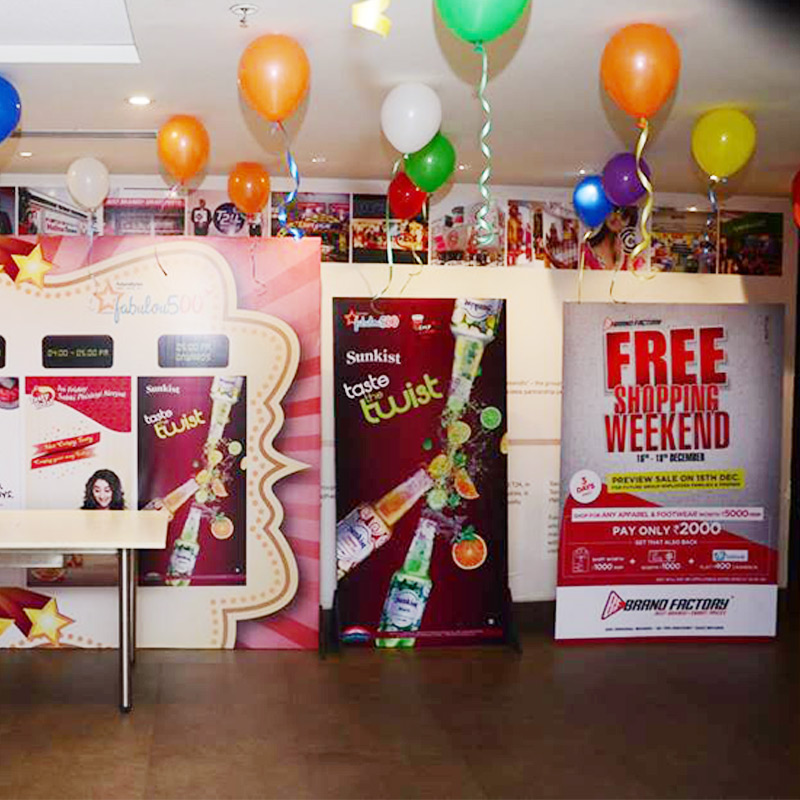
    MUMBAI: Brand Factory over the years has created many successful promos. Despite being on sale 365 days of the year they wanted to break the stereotype of a typical Sale which happens during this period. The need of the hour was to create a big day/s for shopping, increase awareness and establish a property as unique and unprecedented. We were actually offering Free Shopping to customers apart from giving them a flat 60 per cent discount.

    Future Group Brand Factory CMO Roch D’souza said, “While each offer from Brand Factory is in itself a big deal, we wanted to create a campaign that will be direct and yet communicate the bigness of the offer. As we offer 20-70 per cent discount throughout the year, this was the biggest deal that Brand Factory or any retailer has ever offered to consumers. We believe that the campaign will be an iconic property that shoppers will remember for a long time. As a brand we have made big promises and have always delivered on the promises. Our offers are transparent and the proposition is delivered at the stores. Even in the Free Shopping Weekend, we are returning more than 100 per cent to the customer.”

    DDB Mudra Group EVP & business partner Karma Sanjay Panday added, “The films are based on the typical consumer behaviour of how consumers get excited about small discounts and offers while shopping online or at a retail store when they feel they have done something very smart by grabbing the best deals. The idea was to make them realize that they can actually get it free instead of looking for discounts or offers at Brand Factory ‘Free Shopping Weekend.’ We took this insight and weaved it into 2 interesting daily life situations, ‘Boss Ji Ka Chamcha’ and ‘Love Gifts’ where both the protagonists behave as if they have grabbed a smart discount/offer only to make them realize their folly later that they could have got all of it for free. Thus the campaign idea of ‘Mauka hai smart bano.’”

  • Future Group unveils ‘Free Shopping Weekend’

    Future Group unveils ‘Free Shopping Weekend’

    MUMBAI: Brand Factory over the years has created many successful promos. Despite being on sale 365 days of the year they wanted to break the stereotype of a typical Sale which happens during this period. The need of the hour was to create a big day/s for shopping, increase awareness and establish a property as unique and unprecedented. We were actually offering Free Shopping to customers apart from giving them a flat 60 per cent discount.

    Future Group Brand Factory CMO Roch D’souza said, “While each offer from Brand Factory is in itself a big deal, we wanted to create a campaign that will be direct and yet communicate the bigness of the offer. As we offer 20-70 per cent discount throughout the year, this was the biggest deal that Brand Factory or any retailer has ever offered to consumers. We believe that the campaign will be an iconic property that shoppers will remember for a long time. As a brand we have made big promises and have always delivered on the promises. Our offers are transparent and the proposition is delivered at the stores. Even in the Free Shopping Weekend, we are returning more than 100 per cent to the customer.”

    DDB Mudra Group EVP & business partner Karma Sanjay Panday added, “The films are based on the typical consumer behaviour of how consumers get excited about small discounts and offers while shopping online or at a retail store when they feel they have done something very smart by grabbing the best deals. The idea was to make them realize that they can actually get it free instead of looking for discounts or offers at Brand Factory ‘Free Shopping Weekend.’ We took this insight and weaved it into 2 interesting daily life situations, ‘Boss Ji Ka Chamcha’ and ‘Love Gifts’ where both the protagonists behave as if they have grabbed a smart discount/offer only to make them realize their folly later that they could have got all of it for free. Thus the campaign idea of ‘Mauka hai smart bano.’”

  • Patanjali continues TV ad blitz in Feb 2016; spends Rs 20 crore

    Patanjali continues TV ad blitz in Feb 2016; spends Rs 20 crore

    MUMBAI: It’s got ambition: turn Indian prime minister Narendra Modi’s dream of ‘make in India’ a reality. The Swami Ramdev-Acharya Balkrishna-founded Patanjali Yogpeeth & Divya Mandir Trust has launched a slew of fast moving consumer goods products over the past couple of years, set up vast and deep distribution channels reaching them into every nook and corner of rural – and now spreading into urban –  India. Beginning first with ayurvedic products, it moved into cateogries  like toothpaste, ghee, oil, noodles, soap, shampoo, biscuits and what have you dominated by multinationals like Hindustan Lever, Prctor and Gamble, Colgate Palmolive. And it has been making the big boys nervous, slowly chewing away impressive market shares in almost every category.  Revenues are slated to touch Rs 5,000 crore this year and Rs 20,000 crore over the next three years.

    It is backing its onward march with a massive advertising warchest  over the past year, emerging as the top spender on television, a position it continued to retain in the period 11 February 2016 to 11 March 2016.

    According to data that indiantelevision.com has obtained, the brand gave out out checks of close to Rs 28 crores on television ads in this period,  without considering the discounts it has enjoyed on individual deals. As per several industry experts, if one were to take these discounts into account, the guesstimated figure is close to Rs 20 crore.

    What is interesting to note is that unlike most of its rivals,  the genre that Patanjali spends most on is news channels, be it regional  or national news, instead of Hindi GECs. The brand used 65.5 percent of its total television advertising spends on news channels, followed by Hindi GECs with 29.89 per cent and 3.89 percent on regional entertainment channels. The brand also shells out 0.76 per cent or Rs 15 lakhs of its advertisisng spends on its in-house spiritual channel Aastha TV.

    “Going by its advertising spends in the media, Patanjali is going with media differentiation as a strategy. A lot of FMCG brands invest in soft programming which mostly comes down to the GEC sector. When everyone is in one sector, it is good to differentiate oneself and take another positioning,” explained veteran brand consultant and business strategist Harish Bijoor.

    “Secondly”, Bijoor noted,” news is the new entertainment. As a genre, it has changed from simple reporting of facts to what we call news entertainment. If you look at the television debates today, they are often pitted against highly rated entertainment shows, and therefore have larger audiences these days. Not only do you have the men watching, but women also enjoy this new variation of entertainment. Therefore I think Patanjali is playing smart by being visible on the news space.”

    In the Hindi GEC space, it spent close to Rs 1.8 crore on Star Plus, followed by Rs 1.5 core on Sony Entertainment Television and Rs 1 crore on Zee TV approximately. However, the brand buys inventory from most number of channels under Zee Entertainment Enterprises Limited (ZEEL).

    Patanjali has a good presence in the regional entertainment market as well, with Zee Kannada leading others in the genre in terms of Ad EX from the brand.

    As per Broadcast Audience Research Council India’s ‘Top 10 Brands’ report, the Patanjali brand has bagged as many as 21,751 insertions in week 10, followed by Colgate with 15,553 television ad insertions. One can easily see the clear lead that Pantanjali commands over the second in the list. While the brand’s investment is definitely a leading factor for its growing visibility on both TV and the shelves, careful and strategic media buying is also to be credited for its continued domination of television space. The Patanjali group has given part of its media buying mandate to Delhi based agency Vermillion Communications, and if reports by industry insiders are to be believed, there are two other local agencies that work with Patanjali.

    A late entrant to India’s Fast Moving Consumer Goods market with a wide number of retailable products, Patanjali has quickly moved on to go head on with market leaders such as Parle. The brand’s quick rise to fame, at least can be attributed to its aggressive direct marketing strategy and strong distribution reach, thanks to its retail deal with the Future Group.

    Patanjali branded products were already selling well before it decided to invest heavily in TV ads. A media expert close to the development said, “The products were selling a lot already, even before the brand was well known in the media space. But for sure this strong media presence has given the brand a very good exposure, and its sales must have augmented as well. It clearly shows that the brand is aiming for a multi-fold growth.”

    Lauding Patanjali’s  effort in going aggressive with its TV buying, Bijoor cautioned, “I think other brands need to be worried of this late entrant. Not only does it have a very hard working product and an excellent distribution network, its recent entry into advertising spends clearly shows it is reaching for the top.”

    Several industry veterans however beg to differ. Dentsu Aegis Network South Asia CEO and chairman Ashish Bhasin said, “I don’t think Patanjali poses a serious worry for other players in the category. In the FMCG business, they have plans for every competitor. Hypothetically, if there were five competitors for an FMCG brand earlier, now they have one more to consider and marketers will plan accordingly. ”

    When asked if spending huge advertising money will work in the brand’s favour in the long run. Bhasin replied, “The brand has definitely spent a significant amount on television in the past few months. Whether it will sustain the same throughout the year is hard to say. It is understandable for a brand launching itself and trying to build a quick presence for itself to spend in the tried and trusted media. It is too early to say how long its continued dominance of the television space will work out for it.”

    Bhasin isn’t the only one who voices uncertainty about Patanjali continuing with its chart topping spending spree in the coming months. A veteran media player under condition of anonymity opined, “I think Patanjali’s current trend of buying TV ad slots aggressively will go down in a month. It had the gall when it entered media marketing with its aggressive strategy, the brand has achieved that, and I don’t think it has a reason to continue the same spends on television.”

    Other media observers state that the Patanjali group is working to a plan. “The foot on the advertising pedal is not going to be eased,” sas a source very close to the group. “Patanjali’s marketing mavens are  going to move into more clever and refined media buying as it starts  rolling out its products in even more kirana stores and large outlets in urban and suburban India. Both Swamiji and Acharyaji want to create a mutli-product giant competing with long established players, and for that aggressive marketing, distribution and advertising will have to continue.”

    Whether Patanjali continues to spend tens of crores per month or not, the presence of such an aggressive spender among the advertisers definitely augurs well for TV advertising as a whole – and news channels in particular.