Tag: Funskool

  • Toy story triumph: Funskool wins top honour for export excellence

    Toy story triumph: Funskool wins top honour for export excellence

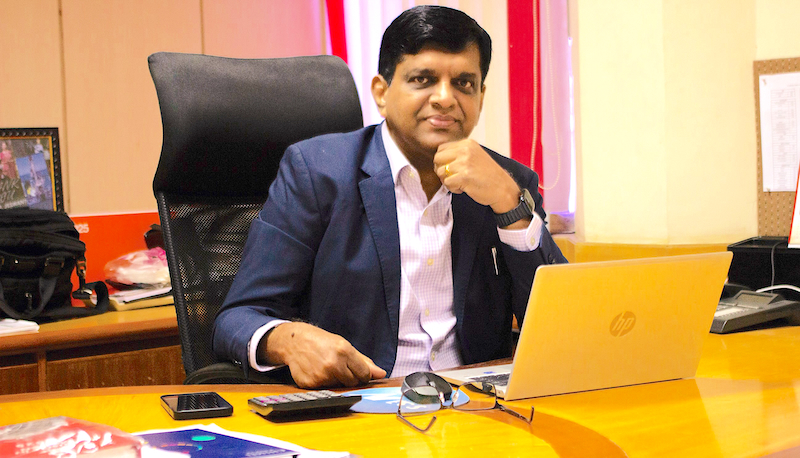
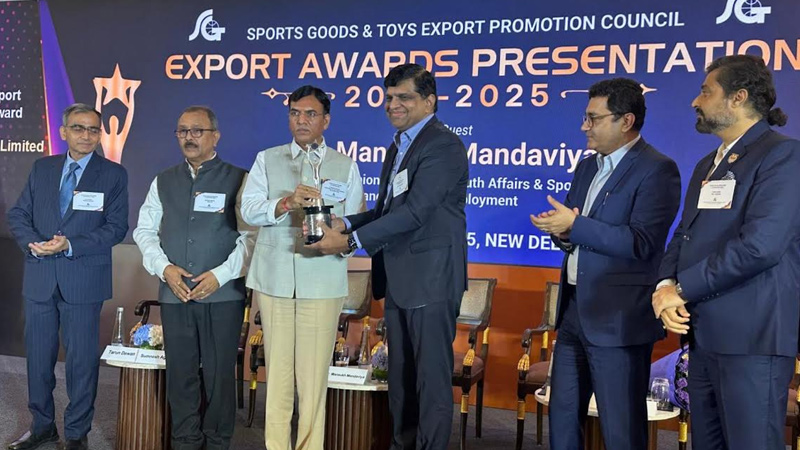
    MUMBAI: Playtime just turned into prize time. Funskool India, the country’s biggest toymaker, has clinched the coveted platinum award from the Sports goods & toys export promotion council (SGEPC) for outstanding export performance in 2024–25.

    The award, highest in its category, was presented to, Funskool India Ltd., CEO, K A Shabir at a ceremony in New Delhi attended by union minister of youth affairs and sports, Dr Mansukh Mandaviya.

    Celebrating the win, Shabir said, “We are truly honoured to receive this recognition. It reflects our team’s relentless focus on quality, innovation, and excellence. At Funskool, we have always believed in showcasing India’s toy-making capabilities to the world, and this award reaffirms our mission to make India a global hub for toy manufacturing.”

    Founded in 1987 and backed by the MRF Group, Funskool has been a pioneer in introducing safe, high-quality toys to Indian households, while also exporting a vast range of products worldwide. With state-of-the-art facilities in Goa and Ranipet, the company continues to raise the bar for India’s toy industry.

    For parents and children alike, Funskool’s success means more than just play, it’s proof that Indian toys are winning hearts and markets across the globe. After all, when it comes to fun, this homegrown brand knows how to play to win.

  • Funskool India appoints old-timer K.A. Shabir as new CEO

    Funskool India appoints old-timer K.A. Shabir as new CEO

    MUMBAI: Being in the toys business is no child’s play. But KA Shabir is willing to take on the challenge. From 1 January 2025, he has taken on the mantle of leading the leading Indian toymaker Funksool India Ltd , part of the MRF group,  as its CEO.. He replaces the very affable R. Jeswant  who was appointed in CEO  in 2020 and  retired year-end 2024. 

    Shabir has been with Funskool for over 33 years and is an accomplished techno commercial expert who has led many departments in Funskool such as international business, manufacturing, factory operations and new product development while also driving organisational growth. 

    “Funskool pioneered the concept of quality and safety in toys and has been instrumental in raising the standards of toys in India. To lead this 39-year-old organisation which has many firsts to its credit at a time when it is expanding rapidly, is an honour. As a team, we will bring out interesting and innovative creations to make playtime a delight for children,”  said Shabir.  

    Amongst the firsts to its credit is the BIS certification for the electric toys it manufactures  in its Goa plant as well for its non-electric toys it makes in its Ranipet  manufacturing facility. It received both the certifications in October 2020, much before the government set deadline of 1 January 2021. 

    For over a decade, Shabir has been the face of Funskool in the international fora within the toy industry.  He is hailed as one of the expert voices in the Indian toy industry. Shabir’s acumen for identifying market opportunities and devising tailor made strategies for new customers has expanded Funskool’s global footprints and its exports revenue. 

    Having excelled in his earlier role as vice president – international division and manufacturing, Shabir’s transition to the new role of CEO marks a new chapter in Funskool’s growth journey.  Under his leadership, Funskool is poised to drive innovation in product development, explore new markets, win more marquee customers from across the globe, use the best of technologies to improve toy manufacturing, further the sustainability initiatives and redefine toy industry standards, says a company press release..

  • High mall rentals holding back toy sales in India: R Jeswant, Funskool

    High mall rentals holding back toy sales in India: R Jeswant, Funskool

    MUMBAI: The Indian toy market is currently estimated at Rs 3000 crore at retail, which makes it only around 0.5 per cent of the world toy market. It is however expected to be one of the fastest growing markets over the next 10 years. Since the rate of growth is 15 per cent, the industry promises to rise rapidly, especially when there is an entry of popular games and characters at regular intervals, which in turn ensures that retailers do not miss on licensing the particular product.

    According to LIMA (International Licensing Industry Merchandisers’ Association) Global Licensing Industry Survey, 2018, the market size is $271.6 billion with a 3.3 per cent growth since 2017, making it more competitive because of limited shelf space for toys, reasonable price range and a large number of retailers.

    Funskool is India’s largest domestic manufacturer of children’s’ toys that started operations in 1987. The company is a licensed distributor of famous international toy brands including Disney, Warner Bros, LeapFrog, LEGO, Rubik Cube, TOMY, Hasbro, Beyblade, Engino among others.

    Additionally, Funskool is focusing on expanding its footprint to tier 2 city to start own brand stores.

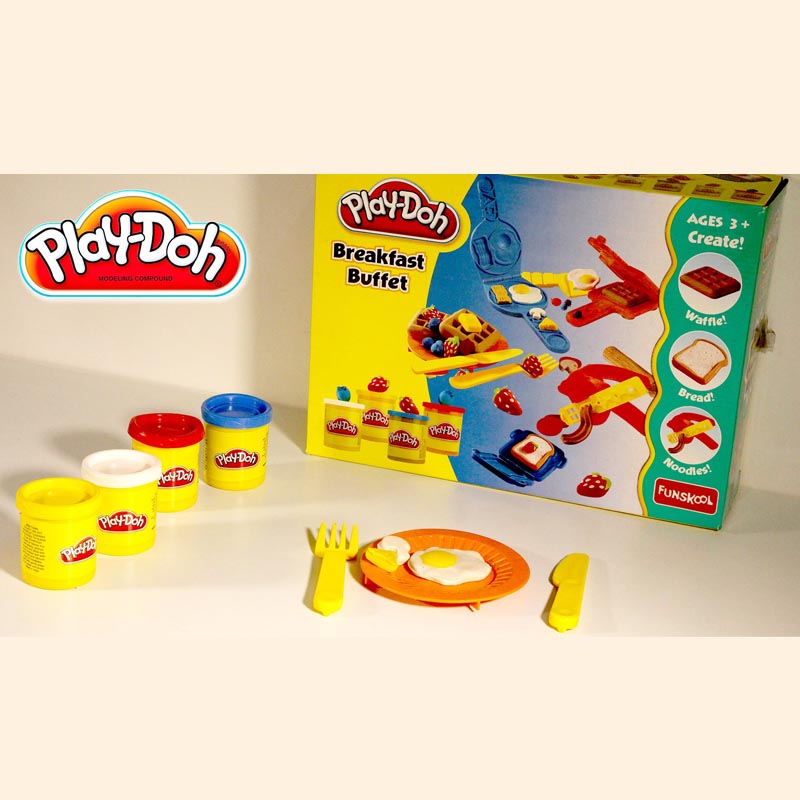
    Licensing also helps the toy business to grow, since consumers recognise toys based on fictional movie characters, TV shows and are sold easily. In addition, the company feels that brand licensing is a stable marketing endeavour in addition to its own home brands such as Giggles, Fun Dough, and Play & Learn, etc.

    Indiantelevision.com spoke to Funskool India SVP of sales and marketing R Jeswant about the toy industry in India, what’s holding it back and growth opportunities.

    We just got over summer time which is the peak season for your category. But since we are in the midst of the rainy season, are your toy sales hit during this season?
    Toy sales tend to peak during the summer vacations in April and May. The festival season from October to December is also a peak selling period for toys. December is probably the biggest month for toy sales. The winter vacation along with Christmas and New Year fuels demand for toys. Rains impact the category as much as other discretionary categories on a typical rainy day but over the full rainy season, the impact is not very significant.

    What has been your year-on-year growth been in India?
    We have been growing steadily over the last five years and are quite happy with the way the business is moving currently.  Our company has been growing at a CAGR of 18-20 per cent over the last few years.

    What was the revenue from 2017 and what is your expectation from this fiscal year?
    We closed the financial year 2017-18 with a turnover around Rs 240 crore and are optimistic about this year as well. Although we can’t really project the number that we will close at, it will definitely be better than the previous year’s closing.

    What’s your marketing strategy for Funskool products? How much do you invest on television?
    For products where the decision maker is a kid, we advertise on kids television channels including Nickelodeon, Cartoon Network, Sonic, Disney among others. For our Infant & Pre School toy category, where the decision to buy is mostly taken by the mother, we advertise on general entertainment channels and on movie channels. We also advertise these products in women’s magazines. We have a network of Funskool retail stores and if we are advertising for these stores we use more of print advertising. Increasingly we are using the digital media and our spends in digital are seeing an increase every year.

    Do you conduct any on-ground activations in malls or in schools to connect with your target consumer, i.e., kids?
    We conduct several events and competitions in malls and also in individual retail points. With our on ground activations, we encourage children to try out our games and puzzles. We also work with teachers and students in schools for products like Fundough that helps in the development of children and are educational in nature.

    What’s your organisational structure like? How many manufacturing units do you have and expansion plans?
    We have two manufacturing units in Goa and Ranipet and a third unit will come up soon in Ranipet. We have six regional offices and 85 members in our sales and marketing team. So, it is a pretty huge team.

    What’s your distribution strength and how do you plan on penetrating in rural India?
    Our distribution network is our biggest strength with 16 warehouses across the country and a network of over 5000 retail points. We think the next wave of revenue will come from tier 2 towns. To strengthen the distribution in smaller segments, we are in the process of expanding to more small towns.

    What is your plan for the retail expansion?
    We are always looking at expanding our Funskool Stores network. Currently, we have 16 stores and we are planning to double the store count over the next two years.

    With growing popularity of digital, games on mobile and internet, do you think physical toys, puzzles and games are still relevant to the new generation of kids?
    The Indian toy market is very small for toys as of now and is estimated to be no more than 0.5 per cent of the world toy market. The market will surely grow at a double digit CAGR for at least the next 10 years. Digital gaming has surely caught the imagination of children but considering that the market is so small, we expect the future of the Indian toy industry to be very bright in the medium term, even for traditional toys.

    Today, there are several international brands present in the market. Do you see competition and challenge to create distinguished products?
    Almost all major toy brands are present in the Indian toy market today. All toy majors see India as the market for the future and are investing here. However, the very high mall rentals are a major factor for toy sales not growing faster. There is not enough shelf space for toys due to the category not delivering enough sales to justify the high rentals.

    Do you see this changing with young parents increasingly understanding the importance of educational toys and puzzles for the physical and mental growth of their child?
    Over the next few years, we can expect the toy industry to really blossom. More awareness among young parents about toys being important for the development of children and increasing purchasing power coupled with the availability of all the leading brands of toys will result in exponential growth of the toy market over the next few years.

  • TRAI unlikely to take final call on draft orders soon

    TRAI unlikely to take final call on draft orders soon

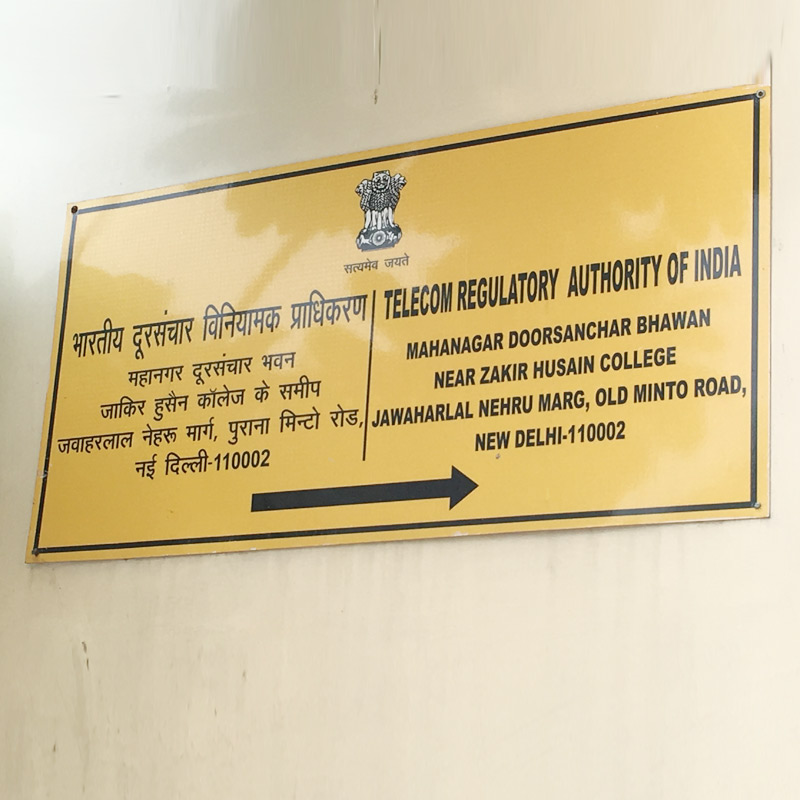
    NEW DELHI: The Telecom Regulatory Authority of India (TRAI) is unlikely to come out soon with its final recommendations on broadcast sector tariffs, interconnect and quality of service issues.

    “Considering the responses from stakeholders to our draft guidelines are exhaustive and lengthy running into over 100 pages, we would also need time to study them properly before taking a final call,” a senior TRAI official told indiantelevision.com.

    The broadcast companies, in particular, have been strident in criticising the draft orders and subsequent consultation papers from TRAI. The Indian Broadcasting Foundation (IBF) has gone to the extent of questioning whether TRAI can issue such guidelines as they conflict with international copyrights law and the Indian Copyright Act, 1957.

    In general, TRAI officials opine that if all the comments were to be taken into consideration, including IBF’s, then there would be no guidelines at all, draft or otherwise.

    A section of the broadcast and cable industry were hoping that if  TRAI came out with its final recommendations on issues related to tariff and interconnect by first half of January 2017, the big picture on digital rollout of TV services would have become clearer.

    Officially, the sunset date for all analog TV services in India is 31 December, 2016. However, a section of the MSO community contends that, apart from the last and Phase IV, there are still some 10 million homes in Phase III of digitisation left to be seeded with boxes.

    Also Read:

    TRAI draft tariff order skewed in favour of DPOs, will harm industry: IBF

    Slow pace of court cases, MSO registration may delay DAS deadline


  • TRAI unlikely to take final call on draft orders soon

    TRAI unlikely to take final call on draft orders soon

    NEW DELHI: The Telecom Regulatory Authority of India (TRAI) is unlikely to come out soon with its final recommendations on broadcast sector tariffs, interconnect and quality of service issues.

    “Considering the responses from stakeholders to our draft guidelines are exhaustive and lengthy running into over 100 pages, we would also need time to study them properly before taking a final call,” a senior TRAI official told indiantelevision.com.

    The broadcast companies, in particular, have been strident in criticising the draft orders and subsequent consultation papers from TRAI. The Indian Broadcasting Foundation (IBF) has gone to the extent of questioning whether TRAI can issue such guidelines as they conflict with international copyrights law and the Indian Copyright Act, 1957.

    In general, TRAI officials opine that if all the comments were to be taken into consideration, including IBF’s, then there would be no guidelines at all, draft or otherwise.

    A section of the broadcast and cable industry were hoping that if  TRAI came out with its final recommendations on issues related to tariff and interconnect by first half of January 2017, the big picture on digital rollout of TV services would have become clearer.

    Officially, the sunset date for all analog TV services in India is 31 December, 2016. However, a section of the MSO community contends that, apart from the last and Phase IV, there are still some 10 million homes in Phase III of digitisation left to be seeded with boxes.

    Also Read:

    TRAI draft tariff order skewed in favour of DPOs, will harm industry: IBF

    Slow pace of court cases, MSO registration may delay DAS deadline


  • TRAI draft tariff order skewed in favour of DPOs, will harm industry: IBF

    TRAI draft tariff order skewed in favour of DPOs, will harm industry: IBF

    NEW DELHI: The Indian Broadcasting Foundation (IBF), an apex body of broadcasting companies, has criticised sector regulator TRAI for over-regulating and proposing draft guidelines on tariff and interconnection that are skewed in favour of distribution platform operators (DPOs).

    Responding to Telecom Regulatory Authority of India (TRAI) draft orders relating to tariff, inter-connections and quality of service, IBF said the new regime will lead to “de-growth” of the industry and discourage investments and production of good quality content in the television industry.

    Pointing out that the proposed regulatory regime “regresses rather than advances”, IBF in a lengthy reply has said with over 830 channels for consumers to choose from and a large pubcaster offering of over 100 private and public TV channels, whether there a “need to regulate all aspects of a set of 200 odd pay TV channels”.

    “The question for the Authority would be, is there proven evidence of market failure that a dire need has arisen to over-regulate these 200 odd pay TV channels(?). We are of the firm belief that there is no compelling reason to regulate these channels and, accordingly, only a light touch regulation, if at all, ought to have been proposed,” IBF has submitted justifying its criticism of  draft  guidelines.

    Contending that pay TV channels (read cable and DTH services) were not essential services IBF counters there was no compelling reason to regulate these channels. “The present tariff order is based on the ‘erroneous premise’ that pay TV channels are essential services,” the broadcasting industry body said.

    Citing international copyrights and IPR laws, IBF pointed out that whole exercise undertaken by TRAI was in direct conflict with the provisions of the Indian Copyright Act, 1957.

    According to IBF, the proposed tariff and inter-connect orders conflict with the Copyright Act in the following ways and need to be “harmonised”:

    a.       The proposed tariff order(s) that impose restrictions on nature of content, prices of channels, mandated discount caps and commissions, manner of offering, etc have to be reviewed and modified in the light of specific copyright laws providing freedom to broadcast organisations to charge royalties and any other consideration/fees for their works and BRR in accordance with the market demands and contract laws.

    b.      The draft interconnect regulations issued by TRAI that take away the broadcast organisations’ exclusive rights to deal and imposes restrictions on their contractual abilities and takes away their ability to negotiate the terms of trade need to be reviewed and modified to harmonise the same with the provisions of the Copyright Act pertaining to voluntary licensing and assignments by Broadcast Organisations by permitting mutual negotiations.

    c.       The existing commercial tariff orders and regulations issued by TRAI in relation to commercial establishments is also at odds with copyright laws in as much as the Copyright Act clearly provides broadcast organisations the right to charge differential rates of royalties and license fees on commercial establishments vis-a-vis domestic/residential subscribers.

    Going a step further, IBF has raised questions over transparency and the manner in which draft guidelines were issued: “The draft consultations also do not meet the threshold of transparency mandated by Section 11(4) of the TRAI Act 1997, which requires that the Authority will ensure transparency while exercising its powers and discharging its functions.”

    Also Read:

    TRAI unlikely to take final call on draft orders soon

  • TRAI draft tariff order skewed in favour of DPOs, will harm industry: IBF

    TRAI draft tariff order skewed in favour of DPOs, will harm industry: IBF

    NEW DELHI: The Indian Broadcasting Foundation (IBF), an apex body of broadcasting companies, has criticised sector regulator TRAI for over-regulating and proposing draft guidelines on tariff and interconnection that are skewed in favour of distribution platform operators (DPOs).

    Responding to Telecom Regulatory Authority of India (TRAI) draft orders relating to tariff, inter-connections and quality of service, IBF said the new regime will lead to “de-growth” of the industry and discourage investments and production of good quality content in the television industry.

    Pointing out that the proposed regulatory regime “regresses rather than advances”, IBF in a lengthy reply has said with over 830 channels for consumers to choose from and a large pubcaster offering of over 100 private and public TV channels, whether there a “need to regulate all aspects of a set of 200 odd pay TV channels”.

    “The question for the Authority would be, is there proven evidence of market failure that a dire need has arisen to over-regulate these 200 odd pay TV channels(?). We are of the firm belief that there is no compelling reason to regulate these channels and, accordingly, only a light touch regulation, if at all, ought to have been proposed,” IBF has submitted justifying its criticism of  draft  guidelines.

    Contending that pay TV channels (read cable and DTH services) were not essential services IBF counters there was no compelling reason to regulate these channels. “The present tariff order is based on the ‘erroneous premise’ that pay TV channels are essential services,” the broadcasting industry body said.

    Citing international copyrights and IPR laws, IBF pointed out that whole exercise undertaken by TRAI was in direct conflict with the provisions of the Indian Copyright Act, 1957.

    According to IBF, the proposed tariff and inter-connect orders conflict with the Copyright Act in the following ways and need to be “harmonised”:

    a.       The proposed tariff order(s) that impose restrictions on nature of content, prices of channels, mandated discount caps and commissions, manner of offering, etc have to be reviewed and modified in the light of specific copyright laws providing freedom to broadcast organisations to charge royalties and any other consideration/fees for their works and BRR in accordance with the market demands and contract laws.

    b.      The draft interconnect regulations issued by TRAI that take away the broadcast organisations’ exclusive rights to deal and imposes restrictions on their contractual abilities and takes away their ability to negotiate the terms of trade need to be reviewed and modified to harmonise the same with the provisions of the Copyright Act pertaining to voluntary licensing and assignments by Broadcast Organisations by permitting mutual negotiations.

    c.       The existing commercial tariff orders and regulations issued by TRAI in relation to commercial establishments is also at odds with copyright laws in as much as the Copyright Act clearly provides broadcast organisations the right to charge differential rates of royalties and license fees on commercial establishments vis-a-vis domestic/residential subscribers.

    Going a step further, IBF has raised questions over transparency and the manner in which draft guidelines were issued: “The draft consultations also do not meet the threshold of transparency mandated by Section 11(4) of the TRAI Act 1997, which requires that the Authority will ensure transparency while exercising its powers and discharging its functions.”

    Also Read:

    TRAI unlikely to take final call on draft orders soon

  • Cartoon Network makes the daily woes of kids fun

    Cartoon Network makes the daily woes of kids fun

    MUMBAI: Surprise tests, math homework, brushing teeth, early bedtime deadlines are some of the biggest, albeit sometimes dramatized, villains in every child’s life. In a truly cartoony and entertaining style, Cartoon Network’s School Contact Program (SCP) – Kris ka Magic Mantra, will try and help tackle all these childhood problems in classrooms across the country.


    Kris, student-superhero of Cartoon Network’s popular series Roll No. 21, not only tackles homework and bullies but also villains disguised as teachers in a fun and hilarious manner. Deriving inspiration from the series, Kris ka Magic Mantra SCP addresses real life villains such as preparation for exams, exercising, etc. that children consider cumbersome and mundane. The program is meant to instruct via fun games, trivia and activities slotted into an hour-long session. A jiggle-wiggle dance to calm nerves before exams, a game of dodge-ball to explain the ill-effects of bacteria on teeth are just some of Kris’s magical tips a.k.a. mantras.


    That’s not all! For kids across the country, Cartoon Network will be conducting an exciting on-air contest based on the theme of the SCP. In order to participate in the Kris ka Magic Mantra contest, kids need to create a new and devious villain and send their entries on www.cartoonnetworkindia.com. The winning entry/villain will be animated and featured in the series Roll No. 21 opposite Kris. For more details, watch Roll No. 21 every Monday-Friday at 1:00 PM.


    The Cartoon Network SCP will reach out to over 5 lakh students in approximately 500 schools across 10 cities. The list of cities include Mumbai, Delhi, Bangalore, Chennai, Lucknow, Ludhiana, Kanpur, Kolkata, Pune and Ahmedabad. Having started in the first week of August, the SCP will conclude mid-September.


    Speaking about this initiative, Krishna Desai, Executive Director & Network Head – Kids, South Asia, Turner International India Pvt. Ltd. said, “School contact programs are one of Cartoon Network’s most successful initiatives that get bigger and more innovative every year. Through Kris ka Magic Mantra, we aim to not only strengthen our connect with kids but also help them solve daily childhood problems in a highly entertaining manner.


    Cartoon Network’s Kris ka Magic Mantra is powered by Creamfills Alpenliebe with associate sponsors Dabur Red Paste, Ranbaxy Chericof, Dabur Real Fruit Juice, Hajmola Chuzkara, Hero Cycles, Funskool, Scoopies, Doms and Crizal Junior UV.

  • Disney launches Power Rangers’ merchandise, new season & contest

    Disney launches Power Rangers’ merchandise, new season & contest

    MUMBAI: Walt Disney India has three aces up its sleeves. The company has launched the latest season of Power Rangers — Power Rangers SPD (Space Petrol Delta) coupled with an extensive range of merchandising for the franchise and a contest weaved around the show.

    The merchandising around Power Rangers includes toys, books, apparel, bed linen, stationary and mobile games. The price of the products will be in the range of Rs 50 – Rs 899.

    Power Rangers now has five different series namely – Power Rangers Wild Force, Power Rangers Ninja Storm, Power Rangers Dino Thunder, Power Rangers Lightspeed Rescue and the latest one being Power Rangers SPD. Touted as the highest performing property on Disney, this franchise airs on the Jetix block on Toon Disney and has a new series with novel adventure plots releasing every season.

    Disney will go all out to promote the new multi-product merchandise launch of the Power Rangers franchise with an integrated online, on-ground and on-air campaign.

    Disney’s different businesses namely Disney Consumer Products (DCP), Disney Worldwide Publishing (DWP) and the Walt Disney Internet Group (WDIG) have tied up with various merchandisers across India for the products. DCP has partnered with New Boy, Weekender, Funskool, Milton, Frank Educational Aids and Art for All to retail the products. DWP has tied up with Sterling Publishing to launch a wide range of comics, story books, colouring and activity books, whereas the WDIG will soon be launching a new Power Rangers game on the mobile.

    Additionally, the company will also make available the merchandising in Lifestyle, Shoppers’ Stop, Archies, Pantaloon and Funskool outlets across the country.

    The Walt Disney Company India managing director Rajat Jain said, “Product innovation drives Disney. Our teams, in every corner of the world have a shared passion to design and develop world class products that bring stories alive. In recent years, Disney has transformed from passive to active licensing. From a deal-making focus where relationships were singularly with the licensee without much value add from Disney beyond great brands we create; the focus has shifted to consumers, retailers and product. Now, we work with licensees and retailers as partners.”

    What’s more, the channel is also planning to weave a contest around this property called the SPD contest that will aim to find the biggest Power Rangers fan in India. GlaxoSmithKline’s brand Boost ChocoBlast will be the main sponsor of the contest and will give away four special Power Rangers special edition badges with every purchase of Boost ChocoBlast. Kids will have to collect seven unique badges in order to become the biggest fan. Brands like Peppy, Maggi and New Boy have been roped in as associate sponsors for the contest. The grand prize of the contest will be a trip to the NASA museum in the US.

    “With the Power Rangers show, which enjoys the highest GRPs across all kid shows in India in the 4 – 14 age group, we are confident that this contest will be immensely popular and will break all records,” said Walt Disney Television International India director programming Nachiket Pantvaidya.

    In March – April this year, Toon Disney had rolled out the Power Your Rangers contest and had partnered Reliance and Britannia for the same. The contest received 523,000 entries, the highest number of mobile downloads on Reliance and also stepped up Britannia Treat’s sales by 40 per cent. Disney had branded 10 million Britannia Treat packs, which alone amounted to a display value of Rs 71 million.

    “The response we got for the Power Your Rangers contest was huge and we are sure that this one surpass all expectations,” Pantvaidya added.