Tag: FTTH

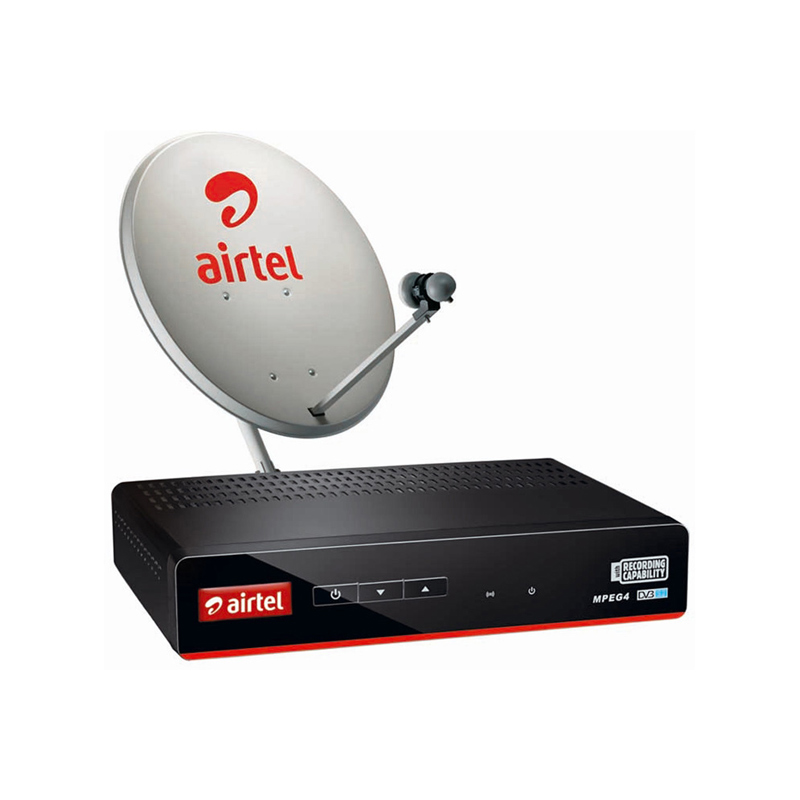
  • Airtel plans special box for full converged entertainment & broadband

    Airtel plans special box for full converged entertainment & broadband

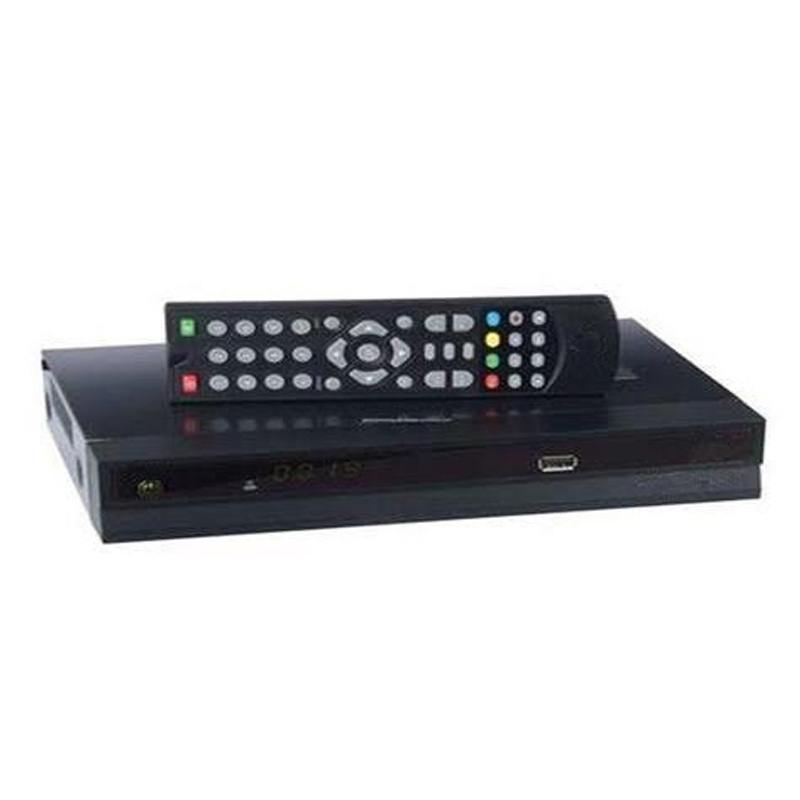
    MUMBAI: Sunil Mittal-led Bharti Airtel is significantly upping its direct-to-home (DTH) and broadband business. The leading telecom player is looking at bringing a box which will offer a full converged entertainment as well as the capacity to deliver broadband. Although the timeline has been not revealed yet, the box is expected to be launched very soon.

    “One of the things we are looking at is to bring in a box, which will offer a full converged entertainment as well as the capacity to deliver broadband. This will happen soon and we are very excited that once we do that, it is a full converged play that we can potentially deliver across multiple spaces. There have been some concerns about cord cutting in the urban areas and metros. We have not seen any evidence of that yet,” Bharti Airtel India and South Asia managing director and chief executive officer Gopal Vittal said in an earnings call. 

    Airtel Digital TV saw net addition of 634K customers in the quarter. At the end of the first quarter, the DTH arm of Bharti Airtel had 16 million customers with a year-on-year growth of 9.4 per cent. The change in cable and broadcasting sector with the rollout of new tariff order has helped Airtel to grow with a lot of new subscribers coming in from the cable side.

    The company’s investments in FTTH pass deployment are now reaping benefits with an expansion in the base and an increase in ARPU as well after ten consecutive quarters of decline. The company is optimistic on the overall market opportunity and focusing on expansion of its fibre presence.

  • Cable TV subscription drives Hathway revenue growth in Q1 FY 2020

    Cable TV subscription drives Hathway revenue growth in Q1 FY 2020

    BENAGLURU: Hathway Cable and Datacom Ltd (Hathway) reported 38 percent growth in subscription revenue from its cable TV business (CATV) for the quarter ended 30 June 2019 (Q1 2020, quarter or period under review) as compared to the corresponding year ago quarter (y-o-y) Q1 2019. CATV subscription revenue for Q1 2020 grew 28 percent as compared to the immediate trailing quarter Q4 2019 (q-o-q). CATV subscription revenues for the period under review, the corresponding year ago quarter and the immediate trailing quarter were Rs 216.7 crore, Rs 157.4 crore and Rs 169.9 crore respectively.

    Placement revenue in Q1 2020 grew 5 percent y-o-y to Rs 78.7 crore from 75.2 crore and grew 35 percent q-o-q from Rs 58.2 crore. Activation revenue declined 13 percent y-o-y to Rs 15.3 crore from Rs 17.6 crore and declined 3 percent q-o-q from Rs 15.7 crore. The split of placement and activation revenues for iCATV and Broadband business has not  been mentioned.

    Overall, CATV business revenue in Q1 2020 grew 24 percent y-o-y to Rs 315.97 crore from Rs 254.91 crore and grew 27.1 percent q-o-q from Rs 248.51 crore. The company reported an operating profit (segment result) of Rs 2.82 crore from CATV business for Q1 2020 as compared to an operating loss of Rs 31.16 crore in Q1 2019 and an operating loss of Rs 333.89 crore for Q4 2019. The high losses for Q4 2019 were due to exceptional items to the extent of Rs 410.74 that included impairment of trade receivables, advances and exposure to certain entities including joint ventures, write down to property plants and equipment and expenses relating to equity infusion. The exceptional items for Q4 2019 were a one time expense and had non-routine material impact on financial statements says the company. Q1 2020 is the first full quarter after the implementation of Telecom Regulatory Authority of India (TRAI) New Tariff Order.

    Comparatively, the broadband business revenue of the country’s now fourth largest wired broadband internet services provider grew 3.1 percent y-o-y and 1 percent q-o-q. Hathway reported Rs 133.81 crore, Rs 129.8 crore and Rs 132.43 crore as broadband revenue for Q1 2020, Q1 2019 and Q4 2019 respectively. Hathway reported less than half the operating profit (segment result) from its Broadband business at Rs 9.14 crore for Q1 2020 as compared to an operating profit of Rs 19.89 crore for Q1 2019. The company had reported an operating loss of Rs 18.11 crore for the immediate trailing quarter from its broadband business.

    The company says that it has deployed 60 lakh (6 million, 0.06 crore) set top boxes and claims 8.4 lakh (0.84 million, 0.084 crore) broadband internet subscriber base at the end of the quarter under review in an investor presentation. Comparative broadband subscribers for Q1 2019 and Q4 2019 were 7.7 lakh (0.77 million, 0.077 crore) and 8.1 lakh (0.81 million, 0.081 crore) respectively. While data consumption per user has gone up, broadband ARPU has declined in Q1 2020 to Rs 650 in Q1 2020 from Rs 690 in Q1 2019 and from Rs 662 in Q4 2019. It says further that FTTH markets will be leading growth in customer acquisition and that its focus will be on doubling net additions momentum Q2 2020 onward.

    Let us look at the other numbers reported by the company

    All numbers in this report are consolidated unless stated otherwise.

    Hathway’s total operating revenue for Q1 2020 grew 16.9 percent y-o-y to Rs 449.78 crore from Rs 384.71 crore and grew 18 percent q-o-q from Rs 381.04 crore. Total income or revenue for Q1 2020 grew 29.2 percent y-o-y to Rs 506.68 crore from Rs 392.18 crore and grew 20 percent q-o-q from Rs 422.10 crore. The company reported a loss of Rs 9.38 crore for Q1 2020 as compared to a loss of Rs 51.72 crore for Q1 2019 and profit after taxes (PAT) of Rs 6.61 crore in Q4 2019.

    The company reported EBITDA growth of 15 percent y-o-y in its investor presentation for Q1 2020 to Rs 104.38 crore (23.2 percent margin) from Rs 90.5 crore (23.5 percent margin) and growth of 37 percent q-o-q from Rs 76.1 crore (20 percent margin). Simple EBITDA calculated from the company’s numbers reported to the bourses was Rs 93.14 crore (20.7 percent margin) for Q1 2020 which was 30.6 percent higher y-o-y than Rs 71.32 crore (18.5 percent margin) reported for Q1 2019 and was 11.2 percent more than the Rs 83.73 crore (22 percent margin) for Q4 2019.

    Total expenditure in Q1 2020 grew 16.1 percent y-o-y  to Rs 519.61 crore from Rs 447.52 crore and grew 19.2 percent from Rs 435.97 crore.

    Pay channel cost during the period under review declined 15.5 percent y-o-y to Rs 130.06 crore from Rs 153.88 crore and declined 1 percent q-o-q from Rs 131.41 crore. Employee cost in Q1 2020 grew 15.6 percent y-o-y to Rs 23.63 crore from Rs 20.45 crore and grew 6.3 percent q-o-q from Rs 22.22 crore. Operational cost in Q1 2020 grew 29.6 percent y-o-y to Rs 77.13 crore from Rs 59.51 crore and grew 16.5 percent q-o-q from Rs 66.23 crore. Finance cost grew 58.7 percent y-o-y to Rs 81.79 crore from Rs 51.53 crore and grew 47.7 percent q-o-q from Rs 83.28 crore. Other expenses in Q1 2020 grew 58.2 percent y-o-y to Rs 125.82 crore from Rs 79.55 crore and grew 62.5 percent q-o-q from Rs 77.45 crore.

  • Jio Gigafiber tops Netflix report on best internet speeds

    Jio Gigafiber tops Netflix report on best internet speeds

    MUMBAI: Reliance Jio Gigafiber has topped the list of internet service providers (ISPs) with the highest speed, according to a report by Netflix. In the month of February, it had a speed of 3.61 mbps beating rivals Airtel, Spectranet and 7 Star Digital.

    Since its launch in September 2018, Jio has consistently maintained its pole position in the chart giving speeds above 3.41 mbps. The report is released by Netflix to show which provider can give the best viewing experience for its videos.

    After Jio, 7 Star Digital gave a speed of 3.43 mbps, Spectranet with 3.34 mbps and Airtel with 3.29 mbps. Some of the other bigger players such as Hathway, ACT Fibernet, MTNL and BSNL were ranked lower in the list.

    The company is leaving no stone unturned to ensure it dominates the internet space. Last week, it was reported that Reliance Jio is testing a Triple Play Plan for its fibre to the home (FTTH) service, Jio GigaFiber. The plan will enable users to access Jio GigaFiber, Jio Home TV and Jio Apps in a single pack. The plan will offer 100GB of high-speed data, unlimited voice calling, Jio Home TV subscription along with access to Jio’s portfolio of app. It will be valid for 28 days.

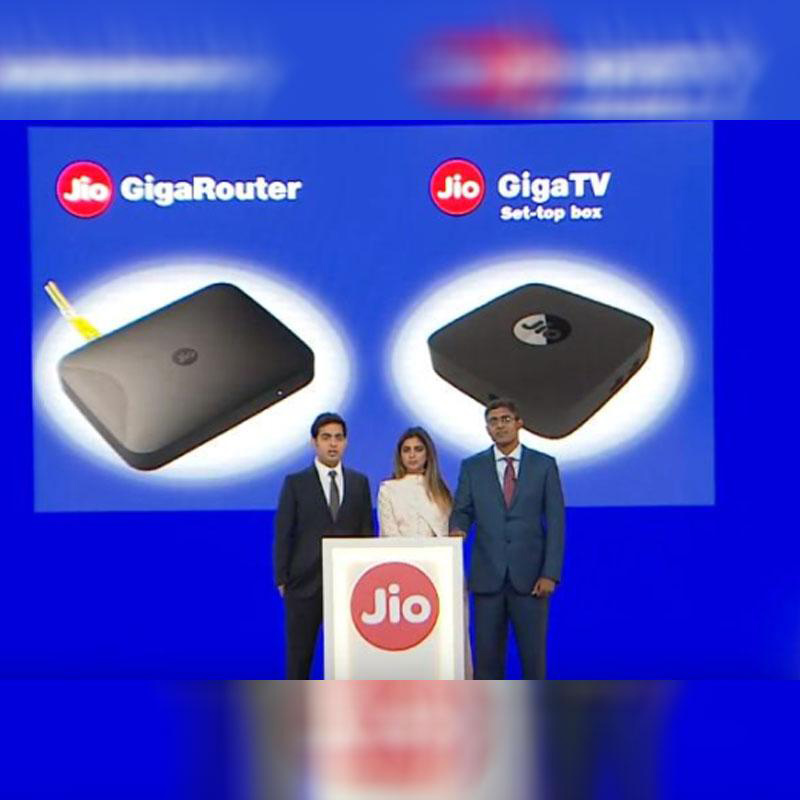
    Mukesh Ambani-led Jio announced its high speed fixed line broadband services for retail customers last year. During the formal announcement, it was announced that Jio Giga Fibre would come with a Jio Giga TV set top box offering more than 600 TV channels as well as over 1000 movies with enabled voice command feature for TV.

    Along with that, an interesting feature of video calling through TV was also highlighted. Users can call every other TV connected through Jio Gigafibre.  For smooth rollout of the service, the company also acquired majority stakes in multi system operators such as Hathway and DEN Networks.

  • Jio to connect GigaFiber, Home TV and apps

    Jio to connect GigaFiber, Home TV and apps

    MUMBAI: Reliance Jio is reportedly testing a 'Triple Play Plan' for its fibre to the home (FTTH) service, Jio GigaFiber. The plan will enable users to access Jio GigaFiber, Jio Home TV and Jio Apps in a single pack.

    As per a report from Telecom Talk, the company is testing the triple play plan with its employees and the plan can be seen on the GigaFiber account dashboard.  The plan will offer 100GB of high-speed data, unlimited voice calling, Jio Home TV subscription along with access to Jio’s portfolio of app. It will be valid for 28 days.

    Mukesh Ambani-led Jio announced its high speed fixed lined broadband services for retail customers last year. During the formal announcement, it was announced that Jio Giga Fibre would come with a Jio Giga TV set top box offering more than 600 TV channels as well as over 1000 movies with enabled voice command feature for TV.

    Along with that, an interesting feature of video calling through TV was also highlighted . Users can call every other TV connected through Jio Gigafibre.  For smooth rollout of the service, the company also acquired majority stakes in multi system operators such as Hathway and DEN Networks.

  • Rajan Raheja resigns as non-exec director of Hathway Cable and Datacom

    Rajan Raheja resigns as non-exec director of Hathway Cable and Datacom

    MUMBAI: Billionaire industrialist Rajan Raheja has resigned as non-executive director of Hathway Cable and Datacom Ltd on 30 January. A pioneer in the Indian cable TV industry, he has been widely credited for Hathway’s expansion.

    The resignation came in accordance with the agreement between Hathway and Jio Content Distribution Holdings Private Ltd, Jio Internet Distribution Holdings Private Ltd, Jio Cable and Broadband Holdings Private Ltd and the existing promoters of the company.

    Last October, Mukesh Ambani’s Reliance Industries Ltd (RIL) acquired majority stake in two leading cable TV broadband companies – Hathway Cable and Datacom and Den Networks. “We are glad to join hands with Rajan Raheja (Hathway promoter) and Sameer Manchanda (DEN), two of the pioneers in MSO industry,” Ambani said in a statement after the acquisition.

    After Jio launched its flagship fibre-to-home service Jio GigaFiber, the company asserted that it is open to work with local cable operators. Many experts looked at it optimistically terming the deal “win-win” situation for all the parties.

  • NDMC is first civic body to provide HD cable TV service

    NDMC is first civic body to provide HD cable TV service

    MUMBAI: New Delhi Municipal Corporation (NDMC) has become the first civic body to provide high-definition cable television services to residents of Lutyens' Delhi from mid-February. The municipal body has entered into a partnership with Mahanagar Telephone Nigam Ltd and telecom company Oneott Intertainment to provide the service.

    According to media reports, NDMC will provide HD satellite TV service through the underground optic fibre network. In select NDMC areas, MTNL is providing high-speed internet and voice facility through the FTTH technology. Apart from over-the-top services like Netflix, YouTube, television channels can now be accessed also. However, users have to take the MTNL-NDMC internet connection to enjoy all the services together on any screen.

    "We can't offer rates below those decided by the Telecom Authority of India (TRAI) for implementation from 1 February, but we assure users they will be marginally over that," MTNL CMD Pravin Kumar Purwar said but he assured the cost would be "reasonable”.

    The headend-in-the-sky (HITS) technology is also being employed along with FTTH to enable a smooth service which would not be hampered by sun or rain outage. Along with signing a MoU with MTNL, the civic body signed an agreement with leading HITS service provider Nxt Digital too.

    Earlier in 2017, NDMC entered into a partnership with MTNL to offer internet connectivity through Wi-Fi service in public places and FTTH services. NDMC chairman Naresh Kumar said that success of the earlier project encouraged them to utilise the same facility for providing cable TV services.

    “By 15 February, we will start publicising the service and holding camps to invite applications from subscribers for commercial connections,” he added. The services will be initially offered in Connaught Place and its neighbourhood on a pilot basis.

  • Wireline broadband pricing might reduce by 40-50%

    Wireline broadband pricing might reduce by 40-50%

    MUMBAI: Home broadband, television services and integrating wireline voice is expected to move towards bundled plans by the Indian wireline broadband market. With this, ICRA predicts, the pricing is expected to reduce by around 40 to 50 per cent.

    As per the ET reports, the agency said that similar to the strong growth that was observed for wireless broadband, wireline broadband subscriber base can also witness growth due to its high price elasticity and expanding demand. It also added that over the next five years, the home broadband and DTH market would see a greater role of telecom operators with a higher subscriber base and revenue generation. But the key watch-outs for the industry would be the extent of competitive intensity, and the need for capex.

    ICRA sector head and VP – corporate ratings Harsh Jagnani said that the wireline broadband penetration in India is much lower as compared to international standards and presents a significant opportunity for telcos. 

    In India, the wireline broadband coverage would largely expand through the fibre to the home (FTTH) networks which have the capability to deliver high speeds with stability in the network. "This will allow it to be the bedrock for content delivery to homes, thereby encompassing an umbrella of services including wireline voice, wireline broadband and television. Increasingly, the television industry is shifting towards content on demand and high-quality videos/content," he said.

    ICRA said in a statement that India's wireline broadband subscriber base can increase to 100 million households over the next five years, and the revenue generation from these segments could expand to Rs 80,000 crore as against Rs 14,500 crore now from wireline voice, home broadband and DTH services, with the combined ARPU of Rs 875.

    "In such a scenario, wireline broadband can be the next growth driver with the potential to subsume television/DTH services, also providing diversification from the mobile services revenues," ICRA said.

    The penetration of wireline broadband is low in the country as of now and the subscriber base has not seen any meaningful traction over the years. As on September 2018, the subscriber base was only 18 million, accounting for less than 7 per cent of the total households, much lower than 44 per cent in Brazil and 99 per cent in France. In the television segment, while the total penetration is around 66 per cent of the total households, of this, around 65 per cent are provided over copper cable, on which the capability to provide high bandwidth services are limited and not fully developed.

    Jagrani said, “Even at a penetration level of 30 per cent of the households, this could translate into subscriber base of 100 million by FY2024, generating revenues to the tune of Rs 80,000 crore. Correspondingly the revenue contribution from these services is expected to increase from current 8 per cent to around 30 per cent on an expanded revenue base."

    As of now, the industry has fibre network of 17,20,000 route km. Much deeper and wider penetration is required to be able to meet the envisaged FTTH demand, which will encumber the financials of the telcos.

  • Jio and organised retail add to RIL’s growth in second quarter

    Jio and organised retail add to RIL’s growth in second quarter

    BENGALURU: Mukesh Dhirubhai Ambani’s largest startup in the world in the form of Reliance Jio Infocomm Ltd or Jio has only gone from strength to strength since its inception. The mobile and broadband subsidiary of Reliance Industries Ltd (RIL), which is already the largest mobile data carrier in the world with more than 25 crore subscribers, reported EBITDA growth of nearly 2.5 times for the quarter ended 30 September 2018 (Q2 2019, quarter under review) as compared to the corresponding year ago quarter. Jio’s operating revenue for Q2 2019 grew by a healthy 50.3 percent year-on- year (y-o-y).

    Some of the highlights of Jio’s performance in Q2 2019 include:

    Standalone revenue from operations for Q2 2019 was Rs 9,240 crore  with a 13.9 per cent q-o-q  growth as compared to Rs 8,109 crore in the previous quarter Q1 2019.

    Jio’s standalone EBITDA of Rs 3,573 crore for Q2 209 was 13.5 per cent higher q-o-q with EBITDA margin of 38.7 per cent as compared to Rs 3,147 crore and an EBITDA margin of 38.8 per cent in Q1 2019.

    Jio’s standalone Net Profit was Rs 681 crore.

    The company says that it closed Q2 2019 with a subscriber base  of 25.23 crore. Jio says in a press release that it had the lowest churn in the industry at 0.66 per cent per month. ARPU during the quarter was Rs 131.7 per subscriber per month.

    RIL’s organised retail arm’s revenue for Q2 FY19 grew by 121.5 per cent y-o-y to Rs 32,436 crore from Rs 14,646 crore. The segment’s EBIT rose by an unprecedented 272.5 per cent y-o-y to Rs 1,244 crore from Rs 334 crore.

    RIL chairman Amabani said in a press release, “Jio was conceived with a mission to connect everyone and everything, everywhere – always at the highest quality and the most affordable price. We, at Jio, are glad with our progress towards our mission with more than 250 million subscribers on our network within 25 months of commencement of services. We have enabled our customers to adopt the digital life, with record consumption of data and use of digital services. Our next generation FTTH and enterprise services are now being made available to our customers to further enhance our value proposition to our customers.”

    “We are making rapid progress on the growth of our digital platforms, across new commerce, media and entertainment, agriculture, education, healthcare and financial services, which will further enhance the quality of life and productivity of the people of India, ” added Ambani.

    In an RIL earnings release, Ambani said, “Our commitment to create consumer value is gathering momentum, with the robust scale-up of India- centric consumer facing businesses. The financial performance of both Retail and Jio reflect the benefits of scale, technology and operational efficiencies. Retail business EBITDA has grown three fold on y-o-y basis whereas Reliance Jio EBITDA has grown nearly 2.5 times. Jio has now crossed 250 million subscriber milestone and continues to be the largest mobile data carrier in the world.”

    RIL achieved revenue of Rs 156,291 crore ($ 21.6 billion), an increase of 54.5 per cent as compared to Rs 101,169 crore in the corresponding period of the previous year. RILs’ Profit after tax (PAT) was higher by 17.4 per cent at Rs 9,516 crore ($ 1.3 billion) as against Rs 8,109 crore in the corresponding period of the previous year. Operating profit before other income and depreciation increased by 35.6 per cent to Rs 21,108 crore ($ 2.9 billion) from Rs 15,565 crore in the corresponding period of the previous year.

  • RIL close to buying majority stakes in DEN, Hathway

    RIL close to buying majority stakes in DEN, Hathway

    MUMBAI: Reliance Industries is expected to buy controlling stakes in two of India’s largest cable TV and broadband service providers, DEN Networks and Hathway Cable & Datacom, according to a report by the Times of India (TOI). The plan mostly is to increase the reach in particular regions of the country for its Gigafiber, Fiber-to-the-Home (FTTH) service.

    In May 2017, Reliance Jio had begun rolling out beta trials of the FTTH service at select locations in six cities- Mumbai, Delhi-NCR, Ahmedabad, Jamnagar, Surat and Vadodara.

    RIL is likely to own more than 25 per cent each in the two companies which will enable it to control developments and get a seat on the board. The deal is expected to be announced in the next few days. Both companies have told the stock exchanges that the respective boards are meeting on 17 October to discuss and approve a proposal for raising funds.

    “RIL wants to create a platform which will accelerate home broadband penetration in India, which is currently in a low single-digit. The aim is to push home broadband penetration to around 60 per cent in the coming years,” TOI quoted a source.

    Last September, RIL was in advanced talks to acquire DEN but could not reach an agreement. Some months ago, it began talks with Hathway as well.

    Industry experts told TOI that a stake in Hathway and DEN will be a major boost to Jio. Both operators have 7.2 million digital cable subscribers each, with operations across 350 and 200 cities, respectively.

  • OTT players, cable ops find harmony in integration

    OTT players, cable ops find harmony in integration

    MUMBAI: Studies have shown that as far as India is concerned, nothing is going to dethrone TV’s position for a while. But the OTT boom is undeniable. Even TV broadcasters want to have their cake and eat it too by setting up their own video on demand services. Although cord-cutting is not as prevalent in India as developed markets, it is certain that viewing habit of consumers has already started changing. Cable TV (http://www.indiantelevision.com/iworld/broadband/cable-tv-dth-players-cautiously-optimistic-on-jio-fiber-competition-180706 ) operators are most vulnerable to the major shift in the near-term while DTH players are also under pressure to come up with new strategies.

    Recently, Hathway took a step to bridge the gap between TV and OTT by landing a deal with streaming giant Netflix. Hathway is more vulnerable to the change due to its urban-centric business. Another large operator Siti Networks announced its first hybrid set-top box that has YouTube and YouTube Kids in-built. However, this is not about only cable operators, OTT players also have high chances to reap the benefit of it.

    “Traditional cable players are already penetrated very deep, with 90-100 million TV households and broadband customers too. That is a huge customer base for OTT platforms to leverage. It’s a win-win situation: the OTT (http://www.indiantelevision.com/iworld/over-the-top-services/higher-production-values-of-ott-content-wont-put-pressure-on-tv-biz-punit-goenka-180814 platform gets access to the customer base while the cable company can increase subscription ARPUs,” Ernst & Young media and entertainment advisory services partner Ashish Pherwani commented.

    Netflix, the US streaming giant is trying to beef up its business in India very soon. With deep pockets, it wants to make a premium content library. But as the platform has high pricing and still does not have a considerable amount of regional content, it’s not easy for it to acquire customers here.

    KMPG India media and entertainment partner and head Girish Menon said it’s definitely a starting point for cable operators to be able to offer OTT content. With the rapid growth of mobile internet, linear TV may be under threat at least for certain situations. According to him, by offering OTT platforms, these cable operators are protecting their business from digital.

    “The biggest challenge for any OTT platform is physical distribution and customer acquisition. So by a deal with Hathway, Netflix is actually taking them into many more households than they are currently able to access on a direct basis. It partially helps them with both distribution and acquisition challenges,” Menon commented.

    A study by Parks Associates said approximately 33 per cent of cord cutters in the US would have stayed with their service provider if offered a Netflix-style service bundled with broadcast TV channels. In the US, where the cord-cutting started first, viewers love to get both experiences at the same time. As traditional TV still remains the primary screen in India, these integrations can definitely help cable operators to reduce churn and increase stickiness.

    On the contrary, Dolat Capital VP research Karan Taurani thinks the deal won’t help Netflix to acquire customers as the service is not bundled and will cost the same amount of money. According to him, Netflix is much easier on Chromecast.

    “It may help Hathway in some way if they tie up with four to five VoD platforms rather than just one; further, they will also have to provide the set top box with VoD access at a minimal price in line with the price of a Chromecast device which gives access to any VoD platform,” he added. However, the new set top box with a special button on remote for Netflix has been priced at Rs 2999.

    Talking about the benefits of the deals, Menon mentioned another vital point. As most of the cable companies also have broadband businesses, the alliance between cable and OTT players can lead to the broadband growth of the cable companies. Moreover, for cable companies, broadband operates at a much higher margin than traditional cable business.

    It seems as if even broadcasters are growing alert to the potential danger in OTT unless you make them your friend. Recently Zee Enterprises Entertainment Ltd entered into a content deal with Airtel after breaking up with Jio while ALTBalaji partnered Xiaomi with Mi TV. Eros Now, the OTT platform from Eros International, struck a deal with FashionTV.
    It is very certain that the industry is about to see more partnerships along the same line. Even DTH players have also struck few deals with OTT players. Acknowledging it as an upcoming trend, Pherwani commented that every OTT platform is trying to maximise its reach.

    “I think you will see more and more such partnerships and this is not just in cable, even in DTH. The reason behind it is that to a certain extent they are preparing for a future. Because the FTTH broadband roll out front that Reliance has announced makes it a significant player that could actually impact the distribution business of cable and DTH players. So the partnerships are a protection,” Menon commented.

    Large players like Hathway, Siti Networks, Den Networks will find it easy to invest more in the technological update and remain relevant. But small MSOs with lesser investment, cash flow will not be able to survive in the thriving competition. Hence, the cable industry is definitely going to witness a number of consolidations. The DTH and telecom industries have already realised that they need to merge if they want to sustain their businesses.
    Going forward, we will see more partnerships and deals between traditional TV and modern OTT.