Tag: FTTH

  • BSNL signs IPTV provider Skypro to offer entertainment services to its customers

    BSNL signs IPTV provider Skypro to offer entertainment services to its customers

    MUMBAI:: It’s a connection that they are hoping will work out for the best. State-owned telecoms provider Bharat Sanchar Nigam Ltd (BSNL) has announced a strategic link up  with IPTV provider Skypro as a part of which it hopes to bring next generation TV  and internet experiences to the telco’s consumers across India.

    A press release states that BSNL’s FTTH  customers will gain free-of-cost access to Skypro’s IPTV services through the Skypro TV app in their smart TVs. The app will offer  500 plus  HD/SD/live channels, 20+ OTT and various other value added services, interactive features, with no set-top required.

    BSNL CGM Punjab circle Ajay Kumar Karaha said – “On 28 November CMD  Robert Ravi launched our new internet TV service, powered by Skypro’s state-of-the-art IPTV platform. This service offers FTTH customers access to popular channels like Colors, Star, Zee, and sports channels like Star Sports, with no need for separate bandwidth and set-top box. After thorough testing, we’re ready to roll it out in Chandigarh, starting with 8,000 customers. We also plan to expand internationally, providing BSNL users with easy access to this exciting new feature.”

    Skypro chief technology officer Pawanpreet Dhaliwal said “ This partnership with BSNL is a proud moment for Skypro as we continue our mission to revolutionise entertainment in India. We are starting from Punjab circle and the service will extend to other circles soon. Our focus has always been on delivering innovative solutions that transform the way people consume content. By joining forces with BSNL, we are combining reliable connectivity with cutting-edge entertainment to make world-class viewing experiences accessible to every home.” 

    “We are excited to partner with BSNL to bring Indians a truly modern and immersive entertainment experience,” added  Skypro business head Nitin Sood. “At Skypro we have been working towards building solutions that bring the quality of the theatre screen in the comfort of your living rooms. This partnership represents a major milestone for us, enabling Skypro to expand its reach and deliver cutting-edge entertainment solutions to a wider audience. By combining our expertise with BSNL’s extensive network, we are setting a new benchmark for home entertainment in India.”

    Skypro claims that its service offers the lowest latency, multi CDN, low bandwidth, low channel zap time and crystal clear viewing experience for the customer.  

    “By joining forces with BSNL, Skypro is stepping into a new era of entertainment,” said Skypro president emeritus Ranjit Singh Sandhu. “This collaboration is a huge leap towards our vision of making premium content accessible to all, combining BSNL’s reliable network with Skypro’s innovative technology to deliver an unparalleled viewing experience that connects and engages audiences across India.“

    To date, Skypro has partnered with over 100+ ISPs across the country, expanding their reach and ensuring high-quality services for users nationwide. Additionally, it is also planning the launch of Oneplay – an online cloud gaming platform. 

    With Oneplay, consumers will be able to stream their favourite games anytime, anywhere, on any device, especially on TVs without the need for high-end gaming consoles with players’ progress securely saved in the cloud for seamless gaming experiences. This service will enable rural India access to high-end games at a fraction of the cost. 

  • Hathway Cable reports gross revenues of Rs 455 cr for Q3 FY22

    Hathway Cable reports gross revenues of Rs 455 cr for Q3 FY22

    Mumbai: Hathway Cable and Datacom Ltd posted its third-quarter financial results for FY 2022. The company reported its gross revenue at Rs 455 crore an improvement of three per cent year-on-year.

    The company saw broadband revenue of Rs 154.9 crore and cable TV (CATV) revenue of Rs 300.1 crore. It posted EBITDA of Rs 122.7 crore and EBITDA margin at 27 per cent.

    CATV business

    In the last two years, the company has created an extensive incremental infrastructure for market share gain with focus on Southern and Eastern states. “We have connected over 250 new locations with IP links and added 3,000 KMs of fiber network,” it said in a statement.

    The company has piloted a new generation of HD set-top boxes that allow the casting of OTT apps. Hathway Cable TV customers can now access OTT content without any need to buy an additional box. It also piloted a TV plug using which it can provide reliable last mile cable TV connectivity from a mobile tower network. The company has a presence in more than 109 cities and major towns with 5.5 million STBs deployed and 46,000 kms of the fiber cable network.

    ISP business

    The company saw strong FTTH customers acquisition during Q3 FY 22 with net additions of 24,000 FTTH customers. FTTH consumers now account for up to 65 per cent of overall ISP consumers and 70 per cent of ISP revenue.

    The company has 1.08 million broadband subscribers and sees an average consumption of 223 Gb. It has completed next-generation Docsis upgradation in all cities resulting in 70 per cent decline in Docsis speed complaints and 64 per cent of Docsis consumers have been upgraded to 100 mbps speed plans. The company has 76 per cent redundancy in FTTH PON ports up to the splitter level achieved as of December 2021. It saw an average of a single complaint per year per consumer regarding any FTTH service issue. FTTH capacity has been augmented to accommodate 1.2 lakh consumers.

  • NXTDigital’s broadband subsidiary OneOTT surpasses 600K subscribers

    NXTDigital’s broadband subsidiary OneOTT surpasses 600K subscribers

    KOLKATA: NXTDigital’s broadband subsidiary OneOTT intertainment Ltd (OIL) has surpassed 100,000 home broadband subscriber additions in the fourth quarter of the financial year 2020-21.

    According to a press statement issued by the company, OIL has attained a momentum of more than 1,000 subscribers-a-day on its way to crossing the 600,000+ mark, to retain its position in the top five private ISPs in India.

    OIL CEO Yugal Kishore Sharma believes that the dependence on internet has never been so high. “Internet use cases have moved beyond browsing and social networking to work-from-home (WFH), on-line education, OTT entertainment and gaming, online-shopping, online-health, e-governance and others. This requires broadband connections to deliver real ‘high speed’ to support multiple users, devices and sessions with consistency and near 100 per cent availability.”

     OIL has implemented unique business models to facilitate its rapid growth. The concept of “DST” or direct sales team has now evolved into digital sales teams, where the company is supplementing the traditional ‘push’ method of sales with digital mediums.

    On strategy for growth, Sharma shares, “We have imbibed learnings from the evolution of the telecom sector, not just in India, but globally – and we’ve applied a lot of those learnings to our own business model to ensure robustness and sustainability.” OIL has in fact achieved 42X growth over the last five years – with commensurate growth in revenues.

    Additionally, the broadband provider has adapted to the surge in consumption by doubling its internet capacity on the supply side without passing the additional cost to its customers to maintain customer experience.

    NXTDigital MD & CEO Vynsley Fernandes remarked, “Team ONE has redefined the business of broadband in India through innovative modelling, getting in the right skillsets and developing a performance centric organisation culture. The results of a focused strategy of OIL as demonstrated is visible in OIL’s consistently raising the bar on Q/Q basis.”

    OIL has also been steadily leveraging the cable television and HITS (Headend-In-The-Sky) subscriber base of NXTDigital – by expanding its footprint across the country.

  • What is hindering the fixed broadband growth in India?

    What is hindering the fixed broadband growth in India?

    KOLKATA: The last few years have seen a major explosion in internet usage, especially post Covid2019 crisis with the boom of digital payments, e-commerce, online video consumption, e-learning. Despite the huge scope, fixed broadband sector has seen a tepid growth in India, unlike mobile broadband. Issues like poor optical fibre infrastructure, high capex cost for ground networks, hardship in obtaining Right to Way (RoW) permission are deterring the expansion of the sector, as major players have commented in response to the Telecom Regulatory Authority of India’s (TRAI) consultation paper.

    GTPL Hathway pointed out three main reasons for the poor subscription of fixed broadband service – lack of availability, affordability, accessibility. The MSO has pointed out that more and more optical fibre infrastructure in the access network needs to be rolled out across the country. Along with the high capex cost involved in rolling out of last-mile access network, obtaining NoC and RoW permissions at several levels of authority for laying cable also prevents the development, as per the MSO.

     “Fixed-line services are capex intensive as the provider needs to invest a lot of funds in providing the services in the ground networking and also at the subscriber end so availability is very limited so is the subscription,” Siti Networks said.

    However, one of the largest Internet Service Providers in India, Atria Convergence Technologies (ACT) has denied that the subscription rate of fixed broadband is low. But the reach of the optical fibre cable network needs to be greatly improved upon, ACT said.

    The telecom service provider Bharti Airtel echoed the same sentiment. Lack of single window clearance and the complicated and time-consuming process for obtaining RoW permissions coupled with exorbitant fees result in unviable commercial fibre deployments, it said.

    “Another hindrance to creating a viable fixed-line network is the cost TSPs incur in installing and maintaining the infrastructure of a fixed network. Also, the additional burden of license fees of 8 per cent on AGR further reduces the commercial viability of such networks,” Airtel added. Moreover, several government and private projects for road widening, laying of electrical cables, maintenance of water and sewer pipelines result in damage to the laid fibre, it mentioned.

    GTPL Hathway mentioned that less than 15 per cent of wireline broadband connections are working on FTTH technology. Commenting about the slower growth of fibre-to-the-home (FTTH) in the country, Siti Networks said the absence of local supply chain is a major issue. The ISP added that the government should take the initiative in developing a robust supply chain in the country in order to facilitate local production to ensure sufficient inventory.

    “The wired broadband penetration is capital intensive and it’s difficult to lure financial investors to this industry due to slow reachability, fees, and taxes applicable on the sector,” ACT added. The ISP also noted that ease in the policy framework for promoting FTTH connectivity will result in-service providers providing an affordable and better quality of services which in turn, will enable the public at large to subscribe to these services.

    While the local cable operators in the country could play significant role in fixed broadband growth, there are several factors like non-lucrative business model, the burden of AGR issues, high cost for obtaining ISP license, requirement of high capex for upgrading to new technology that is holding them back from providing broadband services. 

  • Airtel has perfected the LCO model for home broadband, says Gopal Vittal

    Airtel has perfected the LCO model for home broadband, says Gopal Vittal

    KOLKATA: Bharti Airtel (Airtel) is going head-to-head with archrival Jio in the home broadband segment by putting pedal to the metal on its expansion plans. While the company has seen record subscriber addition in September, it will keep focusing on LCO partnership model.

    In an earnings call after Q2 results, Bharti Airtel India and South Asia MD & CEO Gopal Vittal declared the company has “perfected” the LCO model. Vittal said that the model has done well after being tested for seven-eight months using several different approaches in a handful of different cities. Hence, the company is scaling up the model now and has rolled it out in 29 more towns in Q2.

    Under this model, the company has a standard toolkit where it is able to go out and actually work with the local cable operator in a particular town. Airtel gives them a revenue share for laying the last mile fibre and maintaining it. On the other hand, the router, the billing system, the plan and customer relationship is managed by Airtel.

    Read more news on Airtel

    Vittal has credited work from home, surge in streaming and online education for spurring growth in  the home broadband sector. He also mentioned that the price reduction in wired broadband sector would also help in overall growth. However, the impact of the price correction would be noticeable in the next quarter.

    In the quarter ended September 30, Airtel has added 129,000 new consumers along with a million homes passes, which is amongst the highest that it has seen in any quarter.

    Other than its core telecom business, Airtel has registered a gradual growth in the DTH business as well. “We are pleased with the progress that we have made on DTH – adding more than half a million customers. Primarily that is because we are able to synergise our distribution systems of mobility and DTH. Mobility has a distribution system that’s almost 25 times that of DTH. In places like Bihar, UP, Rajasthan, we are getting significant synergistic effort by eventually finding the right model to synergise but yet keeping enough focus on DTH business,” Vittal commented.

    Bharti Airtel India and South Asia chief financial officer Badal Bagri added that most of the acquisition in the DTH segment has come in the later part of July. While July, August are softer months in terms of recharges and addition, the company has seen the traction picking up in September. Bagri is optimistic that the trend will hold.

    A recent Crisil report stated that DTH broadcasting, which accounts for 37 per cent of total television (TV) subscribers in India, is set to buck the economic downturn and log a revenue growth of 400-600 basis points (bps) to Rs 22,000 crore this fiscal, because of healthy subscriber additions.

    Airtel has struck content partnerships with all major OTT platforms lately. Vittal acknowledged that content can be a differentiator for telecom players, while also mentioning that he has not seen any compelling evidence to suggest that general entertainment content is a strong differentiator. However, he added that topical events like sports work quite well.

  • Hathway profits up on lower revenue in second quarter

    Hathway profits up on lower revenue in second quarter

    BENGALURU: The Mukesh Dhirubhai Ambani controlled MSO and broadband internet services provider Hathway Cable and Datacom Limited (Hathway) reported consolidated profit after tax (PAT) at Rs 52.33 crore for the quarter ended 30 September 2020 (Q2 2021, quarter or period under review) against loss of Rs 2.42 crore for the corresponding year-ago quarter Q2 2020 (y-o-y). PAT for the period under review was 20.8 percent lower quarter-on-quarter (q-o-q) than the Rs 66.06 crore the company had posted for the immediate trailing quarter Q1 2021. However, consolidated operating EBDITA for the period under review at Rs 120.39 crore (27.9 percent of operating revenue) grew 14.7 percent y-o-y from Rs 105.71 crore (23.8 percent of operating revenue) and was also 1.9 percent higher q-o-q than the Rs 118.18 crore (28.2 percent of operating revenue) in Q1 2021.

    Hathway’s consolidated operating revenue fell 2.5 percent y-o-y in Q2 2021 to Rs 431.24 crore from Rs 442.11 crore in Q2 2020, but was 2.8 percent higher q-o-q than Rs 419.56 crore. Consolidated total income (total revenue) during the quarter fell 9.8 percent y-o-y to Rs 460.66 crore from Rs 510.77 crore, and was 5.6 percent lower q-o-q than Rs 488.22 crore.

    Broadband and CATV segment numbers for Q2 2021

    Hathway has two major segments – broadband internet services (BB) and cable television or CATV.

    BB segment saw operating revenue increase 10 percent y-o-y in Q2 2021 to Rs 153.34 crore from Rs 139.36 crore in the corresponding year ago quarter and grew 4.7 percent q-o-q from Rs 146.51 crore in Q1 2021. The segment’s operating result (operating profit) in Q1 2021 was Rs 6.68 crore as compared to an operating loss of Rs 25.10 crore in Q1 2020, but was 14.8 percent lower than the operating profit of Rs 7.84 crore in Q1 2021.

    CATV segment revenue declined 8.2 percent y-o-y in Q2 2021 to Rs 277.90 crore from Rs 302.75 crore in Q2 2020, but was 1.8 percent more q-o-q than the Rs 273.05 crore for Q1 2021 The segment reported more than two-fold increase in operating result (operating profit) – which grew 116 percent y-o-y in Q2 2021 to Rs 21.32 crore from Rs 9.87 crore in Q2 2020 and was 25 percent higher q-o-q than Rs 17.06 crore in the immediate trailing quarter/

    Let us look at the other numbers reported Hathway for Q2 2021

    All numbers in this report are consolidated unless stated otherwise.

    Total expenditure in Q2 2021 declined 19.9 percent y-o-y to Rs 407.90 crore from Rs 509.50 crore in the corresponding period of the previous year and was 4.7 percent lower q-o-q than Rs 427.92 crore in Q1 2021.

    Pay channel cost during the quarter under review declined 4.4 percent y-o-y to Rs 132.46 crore from Rs 138.55 crore, but was almost flat (up 0.2 percent) q-o-q as compared to Rs 132.18 crore for Q1 2021. Employee cost in Q2 2021 declined 3.6 percent y-o-y to 24.44 crore from Rs 25.36 crore, but was 0.6 percent higher q-o-q than Rs 24.30 crore in Q2 2020. Operational expenses in Q2 2021 grew 19.8 percent y-o-y to Rs 81.65 crore from Rs 68.18 crore and were 5.1 percent more q-o-q than Rs 77.67 crore in Q1 2021.

    Finance cost was less than one-twelfth (declined 91.8 percent) y-o-y to Rs 4.27 crore from Rs 51.87 crore in the corresponding quarter of last year and was a little more than one-eighth (declined 87 percent) than the Rs 32.96 crore in Q1 2021. Other expenses in Q2 2021 declined 31.5 percent y-o-y to Rs 72.30 crore from Rs 105.01, but were 7.5 percent higher q-o-q than the Rs 67.23 crore in Q1 2021.

  • Hathway reports higher profits despite lower revenue

    Hathway reports higher profits despite lower revenue

    BENGALURU: The Mukesh Dhirubhai Ambani-controlled MSO and broadband internet services provider Hathway Cable and Datacom Ltd (Hathway) reported consolidated profit after tax (PAT) at Rs 66.06 crore for the quarter ended 30 June 2020 (Q1 2021, quarter or period under review) against loss of Rs 9.38 crore for the corresponding year ago quarter Q1 2020 (y-o-y). Consolidated operating EBITDA for the period under review at Rs 118.18 crore (28.2 percent of operating revenue) grew 26.9 percent y-o-y from Rs 83.14 crore (20.7 percent of operating revenue).

    Hathway’s consolidated operating revenue fell 6.7 percent y-o-y in Q1 2021 to Rs 419.56 crore from Rs 449.78 crore in Q1 2020. Consolidated total income (total revenue) during the quarter fell 3.6 percent y-o-y to Rs 514.46 crore from Rs 506.68 crore.

    Hathway has two major segments – broadband internet services (BB) and cable television or CATV.

    BB segment saw operating revenue increase 9.5 percent y-o-y in Q1 2021 to Rs 146.51 crore from Rs 133.81 crore in the corresponding year ago quarter. The segment’s operating result (operating profit) declined 14.2 percent y-o-y in Q1 2021 to Rs 7.84 crore from Rs 9.14 crore.

    CATV segment revenue declined 13.6 percent y-o-y in Q1 2021 to Rs 273.05 crore from Rs 315.97 crore in Q1 2020. The segment reported more than six-fold increase in operating result (operating profit) – which grew 505 percent y-o-y in Q1 2021 to Rs 17.06 crore from Rs 2.82 crore in Q1 2020.

    Let us look at the other numbers reported Hathway for Q1 2021

    All numbers in this report are consolidated unless stated otherwise.

    Total expenditure in Q1 2021 declined 17.6 percent y-o-y to Rs 427.92 crore from Rs 519.61 crore in the corresponding period of the previous year. Pay channel cost during the quarter under review increased 1.6 percent y-o-y to Rs 152.70 crore from Rs 130.06 crore. Employee cost in Q1 2021 grew 2.8 percent y-o-y to Rs 24.30 crore from Rs 23.63 crore in Q1 2020. Operational expenses in Q1 2021 grew 0.7 percent (almost flat) y-o-y to Rs 77.67 crore from Rs 77.13 crore. Finance cost was less than half (declined 59.7 percent) y-o-y to Rs 32.96 crore from Rs 81.79 crore in the corresponding quarter of last year. Other expenses in Q1 2021 declined 46.6 percent y-o-y to Rs 67.23 crore from Rs 125.82 crore.

  • GTPL Hathway increases CAPEX in upgrading network, 70% transmitted into GPON technology

    GTPL Hathway increases CAPEX in upgrading network, 70% transmitted into GPON technology

    MUMBAI: Traditional distributors like cable operators are feeling the heat of the competition from a number of easily accessible streaming services. But large multi-system operators are not sitting idle to watch the ruin of their long-built businesses. Hence, constantly upgrading has become the key to adapt in changing business environment. GTPL Hathway is one of them which is putting more CAPEX in upgrading the network and moving towards a hybrid model of business.

    The company is looking at Rs 250-260 crore CAPEX for FY 21 and around Rs 150 crore to Rs 160 crore will go into the cable business; the rest will go into the broadband business. But it will have to reevaluate it somewhere in quarter two to see what is the Covid2019 effect and how much longer the effect is going to be. 

    GTPL Hathway chairman and non-executive director Rajan Gupta explains in an investors call that a significant amount of CAPEX has been invested in upgrading the network. While the MSO was earlier relying on Metro Ethernet Network (MEN) technology,  most of that has been upgraded now to fiber-to-building (FTTB) and fiber-to-home (FTTH). 

    He adds that they have seen see a huge increase in network training also in the last few quarters or a few months. 

    “We have to divide it into two parts. One is something called an access network and second is the last mile consumer equipment. So access network is capable of handling anything. On the last mile, you put two consumer premises equipment, or you put a hybrid equipment. And as far as legal is concerned, cable and broadband have separate licenses, one is MIB and second is the DoT. So, in any case, combined bill, etc., is not possible because both have different licensing requirement. So we have to differentiate between the access network technology and the last mile which is the consumer home,” Gupta speaks about the required investment for upgradation.

    GTPL Hathway CATV business head and chief strategy officer Piyush Pankaj says that now almost 70 per cent network is transmitted into GPON technology i.e, FTTH or FTTX. He also adds that they are working on the hybrid box and the order has been given. While the launch of the hybrid boxes, the combined business of cable, broadband and OTT together was scheduled somewhere in July, it may be extended it by one quarter due to Covid2019 crisis. He notes that they want to take benefit of these opportunities of all latest technologies to serve their customers better. 

    Jio, the shareholder of GTPL Hathway, is also focusing on broadband business highly. But GTPL Hathway promoter and managing director Anirudhsinh Jadeja mentions that Jio is not launching any cable TV business, so it isn't posing any additional competition. “They are majorly into the broadband business. So, yes, it's a privilege that Jio is our partner and we have almost very good understanding and we have a lot of synergy in terms of the infrastructure sharing and content sharing. So, we are not seeing right now any competition from Jio. We are complementing each other,” he adds.

    “See, all the synergies (with Jio) and benefits we are getting as GTPL Hathway will continue as usual, such as, from all the vendor negotiations, lease line side, etc. Yes, GTPL Hathway is doing its own broadband business as we are mainly doing it in Gujarat. Jio is with us, it's our privilege and we are going to complement each other's business on the ground,” Pankaj adds.

    The MSO launched Giga HD last year where it started providing cable and broadband together but had to roll it back just because of the NTO which was getting implemented. Now, it is coming with the hybrid box where it will provide cable, broadband and OTT together to the customer. The endeavour is to get double, triple or quadruple customers to take up the stickiness much higher. The company also seems less bothered about competition as it says all the areas where GTPL is operating there is no other private player but BSNL being the primary competition. 

  • Cable business drives Hathway’s return to profitability

    Cable business drives Hathway’s return to profitability

    BENGALURU: Mukesh Ambani’s Reliance Industries Limited-owned Indian multi-system operator and internet services provider Hathway Cable and Datacom Limited (Hathway) reported consolidated profit after tax (PAT) of Rs 105.47 crore for the year ended 31 March 2020 (FY 2020, year under review) as compared to a loss of Rs 187.67 crore for FY 2019. The company’s cable division reported a consolidated operating profit of Rs 84.77 crore and operating revenue of Rs 1,230.71 crore as compared to a consolidated operating loss of Rs 457.46 crore on operating revenue of Rs 1,030.66 crore in FY 2019. Cable business revenue for the year under review grew 19.4 per cent as compared to FY 2019.

    Follow Tellychakkar for the consumer facing news & entertainment

    The other business of Hathway – broadband internet services saw operating revenue grow 7.6 per cent in FY 2020 to Rs 567.59 crore from Rs 527.63 crore in the previous year. The internet services business incurred an operating loss of Rs 20.54 crore in FY 2020 as compared to an operating profit of Rs 42.01 crore in FT 2019.

    Hathway’s consolidated operating revenue in FY 2020 grew 15.4 per cent to Rs 1,798.39 crore from Rs 1,558.29 crore in FY 2019. Consolidated total income for the year grew 26.2 per cent to Rs 2044.14 crore from Rs 1,619.20 crore in the previous year.

    For the quarter ended 31 March 2020 (Q4 2020, quarter under review), Hathway reported consolidated operating revenue of Rs 455.68 crore, which was 19.6 per cent more than the Rs 381.04 crore in the corresponding quarter of the previous year Q4 2019 (Y-o-Y). Consolidated PAT for the quarter under review grew more than sevenfold (up 642.5 per cent) in Q4 2020 Y-o-Y to Rs 49.08 crore from Rs 6.61 crore.

    Cable business operating revenue for Q4 2020 increased 22.4 per cent to Rs 304.36 crore Y-o-Y from Rs 248.61 crore. Hathway reported operating profit of Rs 39.04 crore as compared to an operating loss of Rs 333.89 crore for Q4 2019. Internet services business revenue for the quarter under review grew 14.3 per cent Y-o-Y to Rs 151.32 crore from Rs 132.43 crore. Internet services business saw an operating profit of Rs 1.24 crore in Q4 2020 as compared to an operating loss of Rs 18.11 crore in Q4 2019.

    Let us look at the other numbers reported by the company

    All numbers in this report are consolidated unless stated otherwise.

    Total expenditure in FY 2020 grew 7.6 per cent to Rs 1,960.53 crore from Rs 1,822.72 crore in the previous year. Pay channel cost during the year under review declined 8.1 per cent to Rs 560.56 crore from Rs 609.85 crore. Employee cost in FY 2020 grew 14.4 per cent to Rs 94.79 crore from Rs 82.86 crore. Other operational expenses in FY 2020 grew 21.1 per cent to Rs 306.62 crore from Rs 253.30 crore. Finance cost grew 2.5 per cent to Rs 226.37 crore from Rs 220.80 crore. Other expenses in FY 2020 grew 32.2 per cent to Rs 401.09 crore from Rs 303.50.

    Total expenditure in Q4 2020 grew 5.2 per cent Y-o-Y to Rs 458.53 crore from Rs 435.97 crore. Pay channel cost during the period under review increased 16.25 per cent Y-o-Y to Rs 152.70 crore from Rs 131.41 crore. Employee cost in Q4 2020 reduced 3.1 per cent Y-o-Y to Rs 21.53 crore from Rs 22.22 crore. Other operational expenses in Q4 2020 grew 20.4 per cent Y-o-Y to Rs 79.72 crore from Rs 66/23 crore. Finance cost declined 22.1 per cent Y-o-Y to Rs 43.13 crore from Rs 55.38 crore. Other expenses in Q4 2020 grew 5.5 per cent Y-o-Y to Rs 81.70 crore from Rs 77.45 crore.

  • Jio Fiber impact on multiplex business to be limited, will boost OTT

    Jio Fiber impact on multiplex business to be limited, will boost OTT

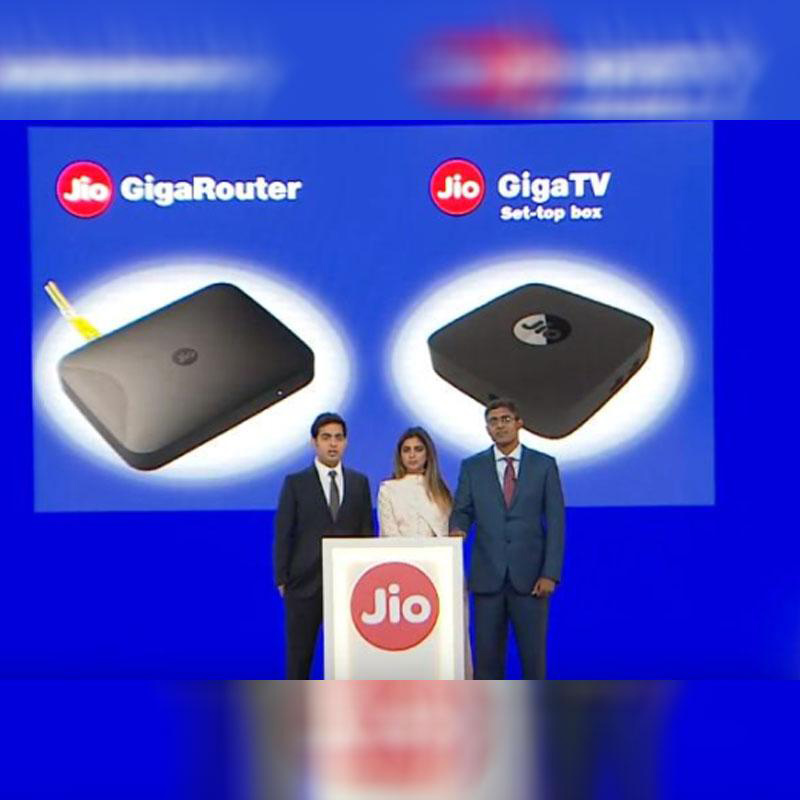
    MUMBAI: After revolutionising the mobile data use in the country, telecom giant Jio is now ready to turn around the fortune for the broadband sector in India. Jio Fiber is not only merely providing high-speed internet connection but it is bundling a number of offers and features like access to premium OTT services and the concurrent release of movies. The high-speed home broadband will definitely boost the over-the-top ecosystem but experts have mixed views on how it will impact theatres and multiplexes.

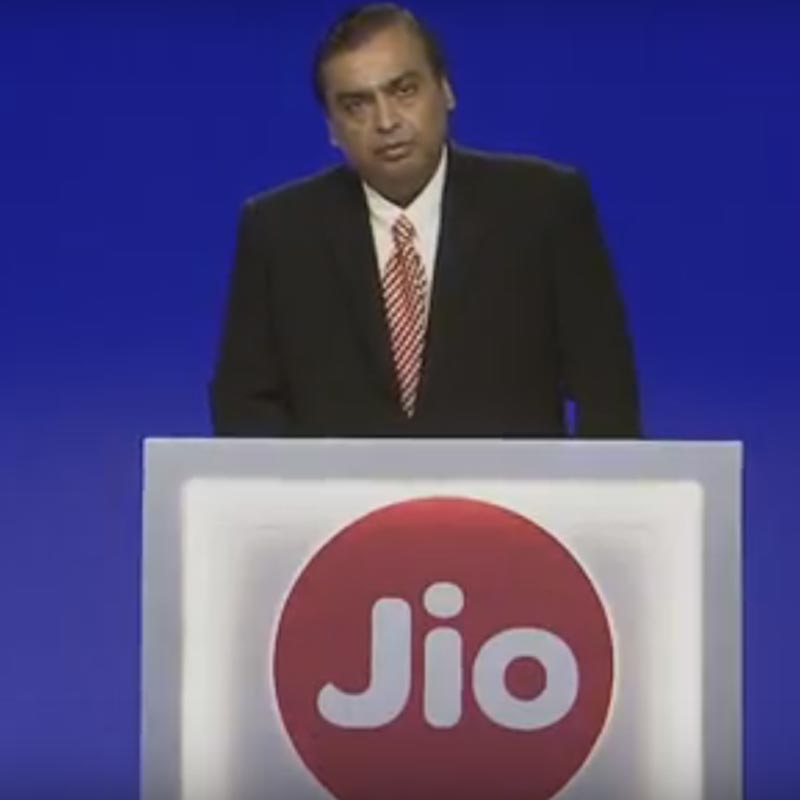
    At the 42nd annual general meeting of Reliance Industries Ltd (RIL), CMD Mukesh Ambani revealed 5 September as the date for the commercial launch of the much-awaited service. “Jio Fiber Services to be launched on commercial basis on 5 September 2019 – on the third anniversary of Jio’s launch. (We) plan to reach 20 million residences and 15 million business establishments in 1,600 towns,” the business tycoon announced.

    Industry veteran Paritosh Joshi pointed out that watching cinema is much more than just a question of consuming a few hours of content as it is an immersive experience. He also compared the arrival of the multiplex revolution in India about 15-20 years back which signalled a departure from basic movie experience. He added that multiplexes are trying to make experiences rich and interesting.

    “So in my opinion, theatrical exhibition business will not disappear merely because of cinema being released concurrently on digital media. Watching a film at home is different than in a
    cinema theatre where you get completely emerged in the movie experience. At some level it might even help the theatrical release because people who would not have had a chance otherwise to experience that film may sample it on their personal devices at home and then still want to really experience what the full thing is by going to the theatre,” Joshi added. Moreover, he also added that international studios operating in India may not agree for a concurrent window with Jio Fiber.

    Another veteran media analyst also agreed that multiplexes won’t be affected by Jio. He added that Indian audiences still like to go to the theatre for community viewing.

    PwC – Risk Assurance (Media, Entertainment & Sports) Managing Director Anand Punmiya said, “Getting movies at home on the day of release will be a boon for many, however going to multiplex & watching is considered "friends & family time" and there will still be takers for that as well. In fact, in recent past we experience reverse migration, wherein selective Cricket World Cup matches were exhibited in multiplexes, since multiplexes offers an enhanced viewing experience.”

    PVR Ltd also said in a statement that cinemas continue bringing people together to share a communal experience. This irreplaceable element, which is at the core of theatrical experience, continues to deliver a robust box office performance not just in a growing market such as India but also in the more matured markets such as the US, China, Europe, etc. where cinemas have regularly competed with many similar initiatives such as Netflix Original Movies.

    The company also added that for decades, theatrical release window has been a valuable model for exhibitors and producers alike. In India and globally, producers have respected the release windows and kept a sacrosanct gap between the theatrical release date and the date of release on all other platforms, i.e. DVD, DTH, TV, OTT, etc.

    "We would also like to point out that producers, distributors and multiplex owners in India have mutually agreed to an exclusive theatrical window of 8 weeks, between the theatrical release of a movie, and release on any other platform. This exclusive theatrical window is a model that is followed internationally, in order to ensure the robust financial viability of all the segments of the sector, and has been replicated in India," Inox said in a press release.

    Elara Capital vice president research Karan Taurani said that the Jio deal won’t have a big negative impact for multiplexes as the release of a movie in cinema is very important in order to get deals on digital and satellite. He also added that there are about 400 films released every year across genres and hence release of a few films directly on Jio won’t impact footfall.

    “Cinema-going is considered a family outing in India and we don’t see large budget films going for direct release on Jio. It will be limited to smaller films going directly on digital, as the economics of a big film doesn’t work for the same,” Taurani added.

    Keeping the mixed economy structure of Indian internet users, Jio Fiber’s plans have been fixed from 100 mbps speed to all the way up to 1 Gbps. The pricing will range between Rs 700 per month to Rs 10,000 per month. “Premium JioFiber customers will be able to watch movies in their living rooms the same day these movies are released in theatres,” Ambani said while revealing all the offers. Jio Fiber also comes bundled with a free subscription to premium OTT services.

    “Vodafone, Airtel, Jio are already bundling content from over-the-top platforms. It’s the sheer scale on which Jio operates and subscribers they may have that makes it more interesting for streaming service operators to deliver the product to broadband and mobile customers. One thing became clear last year – the telecom play is substantially data play and data play is all about entertainment content. The main use of data is consuming audio-visual entertainment content,” Joshi commented on Jio Fiber’s impact on the over-the-top ecosystem.

    Another analyst added that while the OTT ecosystem will definitely improve, the question is about how Jio wants to bundle the offering, which mainly depends on the pricing.

    Punmiya said, “There is a kind of "OTT War" which is in place for some time now and wherein every platform is engaged in creating unique and engaging content. While, OTT is "Content at Convenience" multiplexes offers a great viewership experience. Even if small and big screen are competing they will continue to thrive Indian markets for long given every platform have their ardent followers.”

    Balaji Telefilms’ management is also upbeat about the changes that Jio will bring. “We are looking upon this as a very positive development, it will help consumers access internet at a very high speed. We have seen previously when Jio was launched that Reliance has revolutionised this market and made internet accessible to the masses of India that fits very well with our strategy. Our content has been historically mass content, so all steps and measures taken to spread internet out at high speed like Jio Fiber will do is a positive move and a very positive development for us,” said Balaji Telefilms management in its earnings call.