Tag: FTII

  • Arora urges FTII to strengthen its activities, attends P K Nair condolence meet

    Arora urges FTII to strengthen its activities, attends P K Nair condolence meet

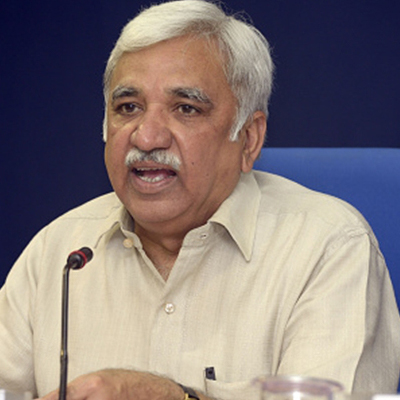
    New Delhi, 6 March: Information & Broadcasting Secretary Sunil Arora said today that the Film and Television Institute of India should strengthen its activities and improve on its functioning to become an Institute of Excellence in the country.

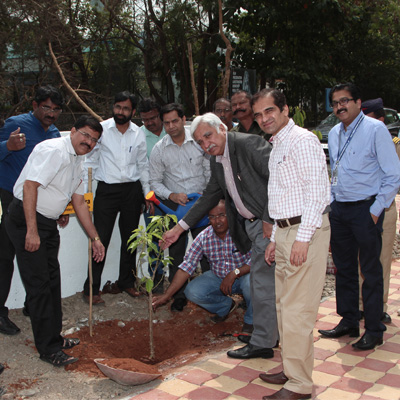
    Arora, who was in Pune to attend the concluding function of the National Film Archives of India Workshop on Film Preservation and Restoration, also planted a sapling at the Kothrud site of FTII wherein 32 new staff quarters are being constructed. He also visited the legendary Prabhat Studios at the Law College campus of FTII. He met the dean (Films) Kedar Awasthi, Dean (Television) and the faculty members as well as the staff.

    Director Prashant Pathrabe and Awati shared with him the details of the activities conducted by the Institute in the past four months.

    In the morning, he attended the condolence meeting at NFAI arranged on the demise of film archivist and former NFAI Director P.K.Nair who passed away two days ago.

    Arora said “P K Nair’s contribution was big in setting up the film archive. I hope his work would inspire and help build up larger momentum in the film archiving and preservation movement of the country.”   He said there was no greater tribute to Nair than to hold this workshop and carry on diligently with preservation/restoration work.

    Around sixty persons were present at the meeting including NFAI director Prakash Magdum, filmmaker Amol Palekar and former director Suresh Chabria. Ashay Film Club on behalf of FFSI hoped a scholarship in the name of Nair would be instituted.


  • Gajendra Chauhan assumes office at FTII amidst protests; BP Singh to head Academic Council

    Gajendra Chauhan assumes office at FTII amidst protests; BP Singh to head Academic Council

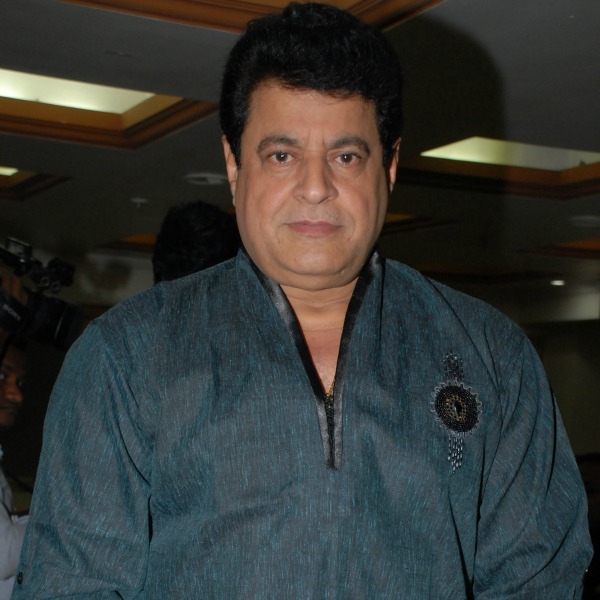
    NEW DELHI: Gajendra Chauhan, whose appointment in the Film and Television Institute of India (FTII) had led to a furore some months earlier, today formally took over as chairman of the premier body.
     
    There was slogan-shouting and protests by students as he entered the premise in Pune for the first meeting of the newly appointed FTII Society and the Governing Council in Pune and some students were taken away by the police.
     
    Chauhan is chairman of the Governing Council and President of the FTII Society.
     
    However in an attempt to meet one of the demands of the agitating students, television producer-director Brijendra Pal Singh, who was elected as the vice president of the Society and vice chairman of the Governing Council, will head the Academic Council as chairman.  
     
    An alumni of FTII, Singh is noted for his series CID, which is one of the longest running television series in India.
     
    The meeting of the Society was attended by its Chauhan, additional secretary and financial advisor Dr Subhash Sharma, director Rajkumar Hirani, producer-director B. P. Singh, actors Satish Shah and Rahul Solapurkar, and Information and Broadcasting Ministry Joint Secretary (Films) Sanjay Murthy.
     
    Anagha Ghaisas, Narendra Pathak, film critic Bhawana Somaiyya, Urmil Thapliyal and Pranjal Saikia were also present at the meeting. 
     
    The ex-officio members included Films Division DG Mukesh Sharma, FTII director Prashant Pathrabe, Ministry OSD Chaitanya Prasad, Children’s Films Society, India, CEO Shravan Kumar, and Satyajit Ray FTII director Sanjay Pattnayak.
     
    The Society also decided to nominate Hirani, Singh, Shah, Saikia, Pathak and Somaiyya to the Governing Council.
     
    The GC also approved the Annual Report and Statement of Accounts of the Institute for 2013-14 & 2014-15. The Revised Estimates for 2015-2016 and Budget Estimates for 2016-17 were also sanctioned at the meeting.
     
    Addressing Staff members on arrival, Chauhan said he would do his best to solve the problems of the Institution including the longstanding demand of pension for the staff.  
  • FTII students expected to meet MIB MoS Rajyavardhan Rathore

    FTII students expected to meet MIB MoS Rajyavardhan Rathore

    NEW DELHI: A meeting of the student leaders of Film and Television Institute of India (FTII) with Minister of State for Information & Broadcasting (I&B) Rajyavardhan Rathore will be convened in the near future, according to information given to students today.


    The meeting is likely to be in Delhi, though no date has been fixed. Further discussions would depend on the outcome of this meeting, I&B sources told Indiantelevision.com.


    I&B secretary Sunil Arora, in a brief second round of discussions with the students in Mumbai took their opinion on proposals to make FTII an institution of excellence.


    The Ministry was represented by Joint Secretary (Films) Sanjay Murthy, Films Division director general Mukesh Sharma, FTII director Prashant Pathrabe and FTII eegistrar U C Bodke. The Students’ Association was represented by seven members and Aruna Raje Patil of GRAFTII.


    In the earlier round of negotiations with the FTII student leaders on 7 October, the Mukesh Sharma Committee had been set up to look into the issues of operational flexibility and procurement of equipment for FTII.  

  • MIB to examine FTII demand for greater financial powers

    MIB to examine FTII demand for greater financial powers

    NEW DELHI: The Ministry of Information and Broadcasting (MIB) has agreed to examine a demand for an enhanced delegation of financial powers and flexibility in purchase of hardware etc to the Film and Television Institute of India (FTII) in order to enable the students to do their creative work.


    Films Division director general Mukesh Sharma has been asked to study the demand and give his report within a fortnight.


    Following the end of the strike by FTII students after an assurance of meeting the MIB officials, a meeting was held in Mumbai today between representatives of FTII Students Association and the Ministry team headed by MIB secretary Sunil Arora.


    The students, under the coordination of Aruna Raje, who represented GRAFTII – a body of alumni of the institute – will submit a blue print within a fortnight for turning FTII into an institute of national excellence at par with reputed institutions across the world.


    The Ministry has already announced its intentions in this regard, but the students were told that their views would form a major input for taking this matter forward. 


    A second round of talks will be held with the Ministry delegation on 10 October in Mumbai. A request would also be made to MIB Minister of State Rajyavardhan Rathore to meet the students in Delhi in the near future.


    Apart from the Secretary, the Ministry was represented by Joint Secretary (Films) K Sanjay Murthy; Films Division director general Mukesh Sharma; FTII director Prashant Pathrabe and FTII registrar U C Bodke.


    The FTII Students’ Association was represented by Harishankar Nachimuthu, Ajayan Adat, Vikas Urs, Reema Kaur, Malayaj Awasthi, Ranjeet Nair and Shini J K.

  • Road fraught with political & bureaucratic potholes for new MIB secy

    Road fraught with political & bureaucratic potholes for new MIB secy

    For a person taking charge as the head of bureaucracy in any Ministry, perhaps the biggest challenge is to put aside his or her own personal views and get down to translating the decisions of the Government and the Minister into action.


    However, this becomes even more onerous when there are tasks that have to be accomplished within just a few months.


    For senior Indian Administrative Services (IAS) officer Sunil Arora, who is slated to take over as secretary in the Ministry of Information and Broadcasting (MIB) from 1 September, the first major task looming over him is Phase III of the Digital Addressable System (DAS) for Cable TV, which has to be accomplished within four months. 


    Arora is an IAS officer from the Rajasthan cadre of the 1980 batch. His immediate predecessor – Bimal Julka belongs to the 1979 batch from Madhya Pradesh. Julka took over his post in the MIB in July 2013 when Uday Kumar Varma retired.


    DAS PHASE III


    Even though the present government changed the deadlines for the last two phases of DAS, the stakeholders do not appear to be ready for it. There is still a dire shortage of compatible set top boxes (STBS), and there has been little headway despite the incentives offered under the Make in India scheme. Even at present, a large number of local cable operators (LCOs) are having to work with poor quality STBs made in China or other countries. 


    Added to that is the fact that a large number of broadcasters, multi system operators (MSOs), and LCOs still have to work out their agreements – an issue further complicated by the directives of the Telecom Disputes Settlement and Arbitration Tribunal (TDSAT), which wants a re-look at the tariffs.


    It is also a fact that analogue transmission continues in many parts of cities and towns that have gone digital and the Government has failed to get the stay of DAS in Chennai vacated. 


    TRAI


    Although these are issues that the Telecom Regulatory Authority of India (TRAI) is dealing with, all decisions relating to the broadcasting sector can only be effective if there is proper coordination between the regulator and the Ministry. This effectively means there has to be a quick response to any issues that either parties raise to the other, if deadlines have to be met.


    Other issues pending before TRAI relating to broadcasting include the need to reconsider the foreign direct investment (FDI) norms for media, shortage of spectrum, a growing demand by states seeking permissions to start their own television channels despite the TRAI having opined against it twice since 2008. 


    Although broadcasting duties were handed over to TRAI just over a decade back, it is also clear that the Ministry will have to consider whether there is need to form a broadcasting-specific body as TRAI is primarily a body set up for the telecom sector. If the Government decides to continue with TRAI handling both portfolios, the Regulator will be under pressure from the MIB to strengthen its broadcasting team and also ensure greater coordination among officers in both broadcasting and telecom.    


    With convergence of technologies becoming a reality, and with issues of spectrum already bringing telecom and broadcasting together, the National Democratic Alliance (NDA) Government has again begun to talk about convergence and this is bound to gather pace over the next two years.


    SPECTRUM


    Though the Defence Ministry has in principle agreed to hand over some spectrum and swap some other spectrum, the whole process is caught up in bureaucratic wrangles. If the Ministry wants to continue with its policy of ensuring there are no caps on the number of television and FM radio channels or direct-to-home (DTH) and Headend in the Sky (HITS) platforms in the country, the issue of spectrum will need early solution. 


    FM RADIO AUCTION


    The Government is in the midst of the FM Radio e-auction, and is committed to continue the process till all slots in the first stage of Phase III – of 69 cities, which already have FM channels – are completed. With at least 13 cities failing to get even a single bid, the new secretary may have to find ways of either lowering the reserve price for those cities or move those cities to the next stage. 


    The fact that the cumulative winnings from the channels auctioned so far has exceeded the reserve price by more 100 per cent is undoubtedly a matter of great satisfaction, but some cities failing to attract bidders remains to be an irritant.


    AD CAP


    The matter of enforcing the advertising cap of 12 minutes an hour is already before the Courts, but the Ministry may have to do a rethink in the light of the I&B Minister Arun Jaitley having said that he was opposed to ad caps on the print or electronic media, and because the free-to-air channels (most of which are news channels) have already expressed their opposition to this. TRAI had failed to get permission to take action against television channels violating its diktat of the total of 12 minutes of commercial and promotional advertisements every hour, though all broadcasters were asked to keep records of this by the Delhi High Court. 


    SPREAD OF FM RADIO vs DRM


    Even as All India Radio (AIR) has spent crores of rupees on the digitised Digital Radio Mondiale (DRM), Prasar Bharati feels that Frequency Modulation (FM), which is an analogue technology should be promoted until the nation is ready for digital radio sets. The Ministry can resolve this issue only if it can ensure adequate manufacturing at affordable process of DRM sets under the Make in India programme. Until then, this continues to be a thorn in the already dicey relations between the public service broadcaster and the Ministry.


    COMMUNITY RADIO


    More than a decade has elapsed since the introduction of community radio, but the number of operational stations still remain very low. To boost this sector, the Government introduced a new scheme last year for funding community radio, but bureaucratic wrangles continue to hold up the smooth implementation of this scheme. 


    PRASAR BHARATI & THE MINISTRY


    On paper, as per the Prasar Bharati (Broadcasting Corporation of India) Act 1990, it is clear that the pubcaster is autonomous. However, in reality this appears quite contrary.


    On the one hand, as a measure to help the pubcaster, a Group of Ministers had decided that persons employed as on 5 October, 2007 will get the salary and pension from Government funds. However, for employees who joined after that date, Prasar Bharati was left to fend for itself.  


    Since Prasar Bharati is listed as an autonomous company under the Ministry, this means – and it appears so even from the manner in which questions relating to the pubcaster are answered in Parliament – that there is dispute on what real autonomy is.


    Prasar Bharati CEO Jawhar Sircar – a former bureaucrat himself – feels the government does not given him full freedom and there is interference at every level and has said so either in speeches in articles by him or others in the pubcaster.


    While there is generally full autonomy as far as content goes, there are allegedly checks and balances placed by the government in administrative matters. 


    Journalists on the Parliamentary beat are often flabbergasted by the fact that when it suits the Government, a reply will say that the pubcaster is an autonomous body, and yet there are times when the Government has intervened even in appointments in Prasar Bharati.


    FOREIGN DIRECT INVESTMENT


    The TRAI had given its recommendations for an increased FDI in many sectors of the media in a report in July 2013. Although there was some change by the Government earlier this year, it has still not implemented the FDI report of TRAI in full.  


    SECURITY CLEARANCE


    While the Home Ministry has decided it is doing away with security clearance for MSOs, it has not taken a decision as far television channels are concerned. While the issue relating to foreign ownership can be understood, the denial of security clearance to Sun TV continues to flummox everyone in the media.


    It is generally felt that an accused is not guilty till proven, but the Home Ministry and the MIB appear to have decided that the Maran brothers should be denied security clearance despite the fact that the cases against them have no relation to the security of the country, and are in fact an incursion on the freedom of the media. Even the Supreme Court while permitting Sun Group companies to take part in the FM auction said so.


    PAID NEWS


    It is now almost five years since the issue of paid news became the talk of the town. The Press Council of India set up a committee, which even gave recommendations, and a Parliamentary Panel along the Election Commission also wanted some steps to be taken to stop this. However, there has been no tangible action so far in this matter.


    FILM INDUSTRY


    The film industry has been raising similar issues year after year. As far as taxation issues were concerned, it was hoped that the Goods and Services Tax (GST), when implemented will help. But the way the matter is stuck in Parliament forces the industry to just wait and watch.


    Entertainment tax is another issue on which there has been no unanimity and states have different taxes. About a decade earlier a proposal for bringing cinema into the Concurrent List of the Constitution might have solved the problem, but most states opposed the idea. 


    In a country producing around 1000 feature films every year, apart from the large number of films from overseas, India still suffers from an acute shortage of theatres, with the number less than 11,000. With the high rates of ticketing charged by the multiplexes, the average cinegoer is denied the pleasure of seeing a film in a cinema hall. 


    All attempts to curb video piracy appear to have failed because the film industry and the government have failed to work together to curb the menace. This in turn means huge losses for the makers of bold films unless there are big stars to lure the audiences.


    The Film Museum has been in the planning and making for more than a decade, but it does not appear that the Museum planned for 2013 to coincide with a centenary of cinema will see the light of day for at least a couple more years.


    The Film and Television Institute of India (FTII) has been caught in a logjam that just refuses to untangle. The appointment of a Chairperson, who was said to be close to the ruling party, is what triggered the issue, but the continued struggle has led to the police making an entry into the campus in Pune. 


    Clearly, the new MIB secretary has his job cut out for him and will have to tread carefully on the long road ahead – but it is not without political or bureaucratic potholes that can hold up even his best intentions.
     

  • FTII impasse continues, 5 students arrested & released on bail for rioting

    FTII impasse continues, 5 students arrested & released on bail for rioting

    NEW DELHI: Film and Television Institute of India (FTII) director Prashant Pathrabe has justified his action in calling in the police after he was gheraoed for close to nine hours last night (18 August) by students.


    Speaking to Indiantelevision.com, Pathrabe said that the students verbally abused him and even termed him as inefficient for not being able to resolve their problem with regard to the appointment of Bharatiya Janata Party member and TV actor Gajendra Chauhan as FTII chairman.


    He said that he had attempted to pacify the students and requested them not to resort such tactics but to no avail. He was confined to one room and was verbally assaulted. 


    Five students, who were arrested in a post-midnight swoop and sent to judicial custody, were then released on bail this evening (19 August).


    The police said the students had been charged with rioting and damaging property amongst other charges.


    Pathrabe said there were around 40 students who were protesting against what they alleged was “irrational and unjustified” pro-rata course project assessment of the 2008 batch.


    The police crackdown came after the 72-day old agitation in which a section of the students are opposing the appointment of Chauhan.

  • Pathrabe to replace Narain as FTII director; no decision on Gajendra Chauhan

    Pathrabe to replace Narain as FTII director; no decision on Gajendra Chauhan

    NEW DELHI: Even as the protest against the appointment of actor Gajendra Chauhan as chairman of the Film and Television Institute of India (FTII) continues, former National Film Archives of India head Prashant Pathrabe has been appointed as the director of the Institute, replacing DJ Narain.


    The Information and Broadcasting (I&B) Ministry decided to replace Narain, who is considered popular with students, despite reprimands from the government.


    Meanwhile, the protest against Chauhan’s appointment as FTII chairman has been going on for over a month now and has even seen multiple actors entering the fray either for or against him.


    Many Bollywood celebrities including Salman Khan and his father Salim Khan, Ranbir Kapoor, Anupam Kher and Rishi Kapoor have expressed their opinion on the issue, siding with students.


    FTII students have been protesting against government interference, saying that Chauhan who had enacted the role of Yudhishtra in the mega series Mahabharata, lacked qualification for the important post.


    On the other hand, Narain’s term was to end at the end of July. He is a 1990 officer of the Indian Information Service.


    Pathrabe has been in the media field for more than 18 years, having previously worked in Doordarshan News and All India Radio News in Mumbai. He has also been spokesperson for Southern Command, Pune.


    Pathrabe, a MBA from IIM Ahmedabad, joined the Indian Information Service in 1993 after a stint in public and private sector companies. He is currently with the Press Information Bureau in Pune.

  • Dolby Institute’s sound designing techniques to help broadcasters

    Dolby Institute’s sound designing techniques to help broadcasters

    MUMBAI: A movie experience is usually about compelling video effects that has the power to blow one’s mind away. But have you ever paid attention to the sound of an aeroplane crashing into a building or a fast moving car bashing against another one. The effort that a sound designer puts into layering sounds and making it sound real is hardly ever recognised.

    In order to create more awareness about sound designing, two renowned sound designers from the US are undertaking a unique teaching model along with Dolby Laboratories. The Dolby Institute, created over a year ago, is a non physical place that aims to reach out to producers and writers both professional and budding. As part of this training, Dolby Institute director Glenn Kiser and supervising sound editor Steven Cahill are traveling to various countries.

    Currently amazed with the Indian culture as they tour film schools and broadcasters, the duo are trying to spread the word about the opportunities sound designing can provide to film and TV. In its India leg, they are meeting students at FTII and Whistling Woods as well as providing insights to broadcasters such as Star India, Viacom18, Epic TV, Zee Network etc. “We are presenting case studies where sound was used creatively to enhance quality. The idea is to bring rich experience from outside to India,” says Kiser.

    While students get an introduction into the sector, broadcasters will learn the aesthetics and nuances of the technique. This apart, the Dolby Institute has tied up with the Sundance Film Festival to provide aid to low budget movie producers who have the idea but not the technique to execute it.

    According to them, VFX has made its mark as to how fulfilling it is for storytelling and the institute’s hope is to get sound designing to the same level. However, while sound has been created in 3D for nearly five decades, it is actually picture that has taken time to change from SD to HD.

    It was in the 1990s when sound became an important aspect of storytelling but in India it is only now that some directors have started giving it a thought. “Between Indian personality driven stories and music being so overly thought of before, the chances are that they would be less apt of sound driving at the moment,” says Cahill.

    The four day workshop will demonstrate how to use sound as a budget saving device as well as script writing and directing with sound in mind. “The entire sound budget of a film could be less than five VFX shots,” says Cahill adding that it constituted just 1 per cent of the budget of blockbuster Avatar.

    In the American television scenario, a lot of film directors shifted to TV in the 1990s, primarily due to HBO, bringing along with them their teams and sophistication. “The technology and aesthetics of a film director made an immersive experience on both broadcast as well as OTT,” says Kiser naming NCIS, True Detective, House of Cards, 24 and Game of Thrones as examples of fantastic sound designing.

    Action, thriller and horror lend themselves as most apt for good sound designing. Kiser adds that it is also possible to alter sounds so that the viewer can experience it from the character’s point of view. With lesser processes and people, sound can have the same narrative impact as visuals, he says. This was adapted by Pixar in its animated movies where they built a whole realistic audio world that could be experienced with closed eyes.

    However, the challenge that sound designers face is about being the last in the chain of processes. “The best ones were where the scriptwriter and sound designer would collaborate to imagine the sound while the script was made,” says Kiser. Usually, sound is added once the entire film is cut so the options are limited. He adds that scenes have to be thought of by the director and executed by the sound designer.

    Nowadays, too little time is allotted for post production, so this crucial part gets pushed to the end. “If you don’t give sound its full due, it’s only 50 per cent good because you aren’t giving it even 50 per cent of the time or talent,” says Cahill.

    The duo seem to be elated with the response they have been receiving from India and will be looking forward to return and check some of the students’ projects to provide tips and criticism.


  • Indian documentary becomes eligible for entry into Academy awards

    Indian documentary becomes eligible for entry into Academy awards

    NEW DELHI: Love.Love.Love directed by FTII alumna Sandhya Daisy Sundaram, which won the Silver Hugo for Best Short Documentary at the 50th Chicago International Film Festival, has now become eligible for being nominated to the documentary section of the Academy awards.


     It has been screened at over 40 festivals and won eight awards till date including Special Jury Mentions at Sundance Film Festival and Indian Film Festival, Los Angeles 2014.


     Love.Love.Love was made as part of Cinetrain, a Russian winter project held in Russia in January 2013. Set against the Russian winter landscape, it is a film about a Russian woman and her big love. It explores the different voices of the Russian women and examines themes such as love, sacrifice, family and values that are ingrained in the Russian women.


    During the 1930s in Soviet Russia, film crews, under the guidance of Aleksandr Medvedkin, used to travel through the Soviet Union in specially equipped wagons, with the idea of giving power of speech to people who did not normally have the opportunities to voice out opinions. Cinetrain is based on this concept, where filmmakers from across the globe set out to make documentaries travelling about in trains. Every other year, a different route and a theme is chosen.


    In 2013, the topic was Russian stereotypes set in the Russian winter. Seven films were made, of which Love. Love. Love. was one. The sub themes were pre-decided when the applications were out and the film was based on stereotypes about the Russian women. The team included director of production from Russia, Alexey Filippov, sound designer from Poland, Marcin Knyziack, producers from Russia and France – Tanya Petrik and Guillaume Protsenko and the director and editor.


    Over a period of a month, all participants travelled through the vast landscape of Russia in the extreme Russian winter, shooting and editing on the go. It was shot in Moscow, Irkutsk, St. Petersburg, Tomsk, Murnmask and the Baikal. The journeys were set in the train and for the most part of it, the trains became the base for all post-production.

  • DD Bharati commences daily telecast of short films from FTII

    DD Bharati commences daily telecast of short films from FTII

    NEW DELHI: Films made by students of the Film and Television Institute of India (FTII) are to be screened by DD Bharati everyday from today.


    The films will be screened at 6 pm and repeated the next day at 2 am and 10 am.


    Some of the films to be screened are Chabiwali Pocket Watch being screened today (1 July), Gadha Janam Safai on 2 July, Kramasha Om 3 July and Undertakes Samvad on 4 July.


    Chabiwali Pocket Watch is set in old Delhi and deals with the story of a romantic Urdu poet now dying anonymously and the struggle between his daughter and an opportunist publisher. 


    Spandan with story, screenplay, dialogue and direction by Shailesh Bhimrao Dupare is about the fight of a mother to ensure her son’s last wish to donate his organs after his death is fulfilled.  


    DD is the only channel which has accepted films by present and former students of the FTII for screening them.


    Other films include A Route Called 13, Experience Bar, Theeram, Hazy Skies, Fever, Sanshodhan, Death of Prodigal Son, Play Time and Bhaaba Pagal.