Tag: FTA

  • DD Freedish e-auction scheduled on 22 Sept with reserve price of Rs 3.7 crore

    DD Freedish e-auction scheduled on 22 Sept with reserve price of Rs 3.7 crore

    NEW DELHI: Barely six weeks after the last e-auction, Doordarshan will hold the 22nd e-auction for its free-to-air DTH platform Freedish on 22 September in an attempt to touch the target of 112 television channels in the next few months.


    Doordarshan has set a reserve price of Rs 3.7 crore per slot (as in the last few auctions) for the online e-auction, though Indiantelevision.com learnt that the bid amount went up to Rs 4.7 crore in earlier e-auctions.


    In the 21st auction on 12 August, DD Freedish managed to auction six slots for approximately Rs 23.2 crore.


    However, DD sources refused to divulge the number of slots being auctioned to prevent bidders forming consortia to bid or resort to other malpractices.


    Sources also said that while Freedish may be encrypted from Mpeg2 to Mpeg4 shortly to keep a tab on the number of subscribers, it would remain free-to-air.


    The e-auction will be conducted by C1 India Pvt. Ltd., Noida which is also conducting the FM Radio Phase III auctions on behalf of Prasar Bharati.   


    The reserve price in the 15th e-auction was Rs 3 crore and was raised to Rs 3.7 crore in the 16th auction.


    Currently, Freedish has 64 channels including its own channels, and Lok Sabha and Rajya Sabha TV.


    The participation amount (EMD) in the e-auction is Rs 1.5 crore, which has to be deposited in advance before or by 12 noon on 22 September along with the non-refundable processing fee of Rs 10,000 in favour of PB (BCI) Doordarshan Commercial Service, New Delhi.


    Incremental amount for the auction will be Rs 10 lakh and the time for every slot e-auction will be of 15 minutes duration.


    Of the reserve price, Rs 1.1 crore has to be deposited within one month of placement and another Rs 1.1 crore within two months along with service tax of 14 per cent on the bid amount.


    The balance bid amount needs to be deposited within six months, failing which the reserve price will be forfeited.
  • TRAI issues new tariff order to balance consumer rate and broadcaster demands

    TRAI issues new tariff order to balance consumer rate and broadcaster demands

    NEW DELHI: In a major initiative aimed at simplifying tariffs and meeting demands of consumers, the Telecom Regulatory Authority of India (TRAI) today issued a new tariff order which apart from fixing tariffs also amended the definition of addressable systems (DAS) as understood at present.
    The Telecommunication (Broadcasting and Cable) Services (Second) Tariff (Fourteenth Amendment) Order, 2015 said “addressable system” means an electronic device (which includes hardware and  its  associated  software)  or  more  than  one  electronic  device  put  in  an integrated system through which signals of digital addressable system can be sent in encrypted form, which can be decoded by the device or devices, having an activated Conditional Access System at the premises of the subscriber within the limits of authorisation made, through the Conditional Access System and the subscriber management system, on the explicit choice and request of such subscriber, by multi-system operator or DTH operator or IPTV operator or HITS operator  to the subscriber; and the expression “non-addressable system” shall be construed accordingly.
    The Order shall come into force on the date of its publication in the Official Gazette.
    The order also specifies that it will apply to specified states, cities, towns and areas notified from time to time and not the entire country.  
    The order has specified that if any new pay channel is launched or any free-to-air channel is converted to pay channel after the first day of January 2015, then the ceiling shall not apply if the new pay channel or pay channel converted from free-to-air to pay channel is provided on a standalone basis, either individually or as part of new, separate bouquet.The broadcaster shall declare the genre of its channels and such genre shall be either News and Current Affairs or Infotainment or Sports or Kids or Music or Lifestyle or Movies or Religious or Devotional or General Entertainment (Hindi) or General Entertainment (English) or General Entertainment (regional language).
    The rates of channels, referred to in the first proviso shall be similar to the rates of similar channels existing as on the date of such launch of new channel or such conversion of free-to-air channel into a pay channel and the ceiling of charges, specified under sub-clauses (a), (b) and (c) shall not, in any case, exceed by the rates of channels referred to in the third proviso.
    In case a multi system operator or a cable operator reduces the number of pay channels that were being shown on the date of coming into force of the Telecommunication(Broadcasting and Cable) Services (Second) Tariff (Fourteenth  Amendment) Order 2015, the ceiling shall be reduced taking into account the rate(s) of the channel(s) so removed. In the case of the commercial subscriber, for each television connection, the charges payable by the Ordinary cable subscriber under sub-clause (a), shall be the ceiling.

    If a commercial subscriber charges his customer or any person for a programme of a broadcaster shown within his premises, he shall, before he starts providing such service, enter into agreement with the broadcaster and the broadcaster may charge the commercial subscriber, for such programme, as may be agreed upon between them.
    The charges referred to in sub-clause (a) shall in no case exceed the maximum amount of charges specified in the Part I or Part II, as the case may be, of the Schedule annexed with this Order.”
    In determining the similarity of rates of similar channels referred to in the provisos below clause 3 above the following factors shall be taken into account:
    (i)  the genre and language of the new  pay or converted Free to Air  to pay channel; and
    (ii) the range of prices ascribed to the existing channels of similar genre and
    language in the price of a bouquet(s) and prices of bouquet(s) that exist.”
    Every broadcaster shall offer or cause to offer on non-discriminatory basis all its channels on a-la- carte basis to the multi system operator or the cable operator, as the case may be, and specify an a-la-carte rate, subject to provisions of sub-clause (2) of this  clause and clauses 3 and 3B, for each  pay channel offered by him.
    In case a broadcaster, in addition to offering all its channels on a-la-carte basis, provides, without prejudice to the provisions of sub-clause (1), to a multi system operator or to a cable operator, pay channels as part of a bouquet consisting only of pay channels or both pay and free to air channels, the rate for such bouquet and a-la-carte rates for such pay channels forming part of that bouquet shall be subject to the following conditions, namely:-
    (a) the sum of the a-la-carte rates of the pay channels forming part of such a bouquet shall in no case exceed one and half  times of the rate of that bouquet of which such pay channels are a part; and
    (b) the a-la-carte rates of each pay channel, forming part of such a bouquet, shall in no case   exceed three times the average   rate of a pay channel   of that bouquet of which such pay channel is  a part and the average rate of a pay channel of the bouquet be calculated in the following manner, namely:
    If the bouquet rate is Rs. ‘X’ per month per subscriber and the number of pay channels is ‘Y’ in a bouquet, then  the average pay channel rate of the bouquet shall be Rs. ‘X’ divided by number of pay channels ‘Y’:
    Provided that the composition of a bouquet existing as on the 1 day of December 2007, in so far as pay channels are concerned in that bouquet, shall not be changed: and nothing contained in the first proviso shall apply to those bouquets of channels existing on the first day of December 2007, which are required to be modified pursuant to the commencement of the Telecommunication (Broadcasting and Cable Services) Interconnection (Seventh Amendment) Regulation, 2014.
     
    If there is a bouquet, comprising of 10 channels of 3 broadcasters as per the following details.

    After  the  reconfiguration  the  bouquets  to  be  offered  by  the  individual broadcasters shall be as under:
    Broadcaster B shall offer the bouquet as per the following details

    Broadcaster C shall offer the bouquet as per the following details:

    While the Broadcaster A can offer channel 1 at a-la-carte rate of Rs. 2.”
    TRAI has aslo appended an Explanatory Memorandum which traces the history of discussions and orders over the last 11 years on its website trai.gov.in.

  • FTA DD Freedish to soon encrypt with MPEG-4

    FTA DD Freedish to soon encrypt with MPEG-4

    MUMBAI: Since inception, DD Freedish has been the only DTH service that hosts free to air (FTA) channels. Boasting 18 million subscribers on the platform, it soon plans to encrypt signals for its future channels.


    With nearly 60 channels in its roster, Freedish plans to encrypt future channels with MPEG-4 compression technology to take it up to 110. Speaking exclusively to indiantelevision.com, Doordarshan deputy director general CK Jain said that the auction for the encrypted channels will happen in November with the commercial roll out of set top boxes (STBs) soon after. “48 channels will be on MPEG-4 and 64 on MPEG-2. Viewers who opt for MPEG-4 STBs will be able to view a total of 112 channels, including the FTA ones,” he said.


    The extended version of Freedish will have two streams of MPEG-4 and four of MPEG-2 so that the existing subscribers can continue watching the FTA channels. Currently the DTH service has five transponders on Insat 4B and will be soon getting an additional one, taking its tally to six. “The two encrypted streams will allow us to know definite subscriber numbers,” he adds.


    Jain is confident that digitisation drive in phase III and phase IV markets will see households pick Freedish. He is also sure that the plus point would be in the new TV households. The MPEG-4 STBs will be sold at a price higher than the current Rs 1200 for MPEG-2. But Jain says that given an option to watch more channels, he expects people to pick MPEG-4 boxes.


    Both the boxes will be available for sale through its distributors. November will see the auction for the 48 encrypted slots. Broadcasters who wish to be on the MPEG-4 bands, will have to undergo the auction, including ones who are also available on FTA.

  • I&B Ministry may relax FTA channels from proposed 10+2 ad cap

    I&B Ministry may relax FTA channels from proposed 10+2 ad cap

    NEW DELHI: The News broadcasters, music channels as well as a few general entertainment channels are still fighting the case against the 12 minute advertising cap per hour proposed by the Telecom Regulatory Authority of India (TRAI). While they await the decision of the Delhi High Court, news is that the Information and Broadcasting Ministry (I&B) may consider a relaxation in the proposed ad cap for the Free to Air (FTA) channels as these channels depend only on commercials for survival.


    A source from the Ministry confirmed the news to indintelevision.com while adding that the ad cap fixed under the Cable Television Networks (Regulation) Act, 1995, was in view of the international practice in other countries.


    It was in March 2013, when the TRAI had notified the regulations, which restricted advertising time on TV channels to a maximum of 12 minutes per hour. The Regulator had then said that the move was to protect the interest of consumers and quality of service being offered to them.  


    I&B Minister Prakash Javadekar has assured the FTA channels at various forums that he would favourably consider their plea of scrapping the proposed 12 minute ad cap.


    The FTA channels claim that as they are pitted against pay channels, that also get subscription fee, there is a need for the government to intervene to create a level-playing field.


    Of the 810 channels approved by the government as of 31 August 2014, close to 548 are FTA, which include both news and non-news channels.

  • Going FTA suits most broadcasters and advertisers

    Going FTA suits most broadcasters and advertisers

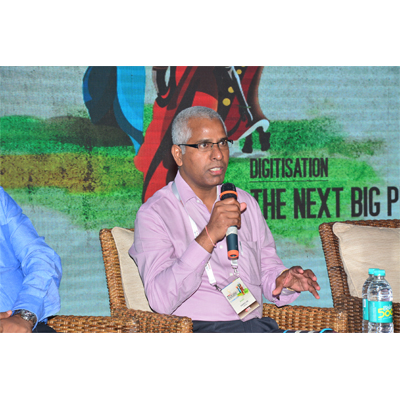
    MUMBAI: With increasing number of channels in the country, much of the interior towns have found solace in having free-to-air (FTA) channels. Doordarshan’s own Direct to Home (DTH) service Freedish has found 12 million active subscribers in the interior parts of the country with its list of FTA channels.


    Discussing the FTA market were MCCS India CEO Ashok Venkatramani, TAM Media Research LV Krishnan, Zee Entertainment Enterprises chief content and creative officer Bharat Ranga, Reliance Broadcast Network Limited (RBNL) CEO Tarun Katial and RK Swamy Media group senior VP K Satyanarayana. The session was moderated by Chrome Data Analytics and Media Pankaj Krishna.


    Krishna started off by asking Satyanarayana if advertisers are monetising the platform to which he said that Freedish has very few satellite channels and it is not necessary to look at FTA channels particularly for media planning. However, he stated that research shows that Freedish is able to add 10 per cent incremental reach so it has more monetisation scope.


    Venkatramani heads three channels under the ABP brand name which hasn’t yet gone pay and in fact isn’t available on Freedish either. He said, “We haven’t gone pay because the ecosystem doesn’t allow us to do so. The price at which we sell channels to MSOs is not in our hands. Freedish is too expensive and cost per household is Rs 30.” FTA channels depend heavily on advertising revenue and according to Venkatramani, this is not sustainable and he doesn’t see any incremental reach happening in the news genre.


    Krishna questioned LV Krishnan on how TAM ensured fair representation from houses which were either metre dark or power dark. To which Krishnan said that the important metric is to see who the consumer is. “Is this consumer accepting FTA channels because he is economically unable to graduate to pay? What is the value of this customer for targeting advertising? And is it financially viable to create content especially for this industry?” he questioned. The positive points of this market, according to him, is that this audience doesn’t have any distraction and so time available for entertainment is higher than urban audiences. But the issue they face is frequent power cuts.


    Katial said that in its studies, RBNL has found that the northern market is less penetrated as compared to south or east but it needs a unique distribution for which Freedish fits perfectly. “Many advertisers will pay the delta for it whether it is FMCG or Telecom. Metros are fragmented while these markets have low penetration,” he said.


    Zee Anmol is Zee’s FTA channel that shows handpicked content from its channels. Ranga pointed out that a lot of marketwise and platform-wise research is done before deciding which content from its flagship channel Zee TV will work for this audience rather than just replicating the entire set of shows. He also feels that in future there will be three modes- FTA, pay and premium and soon Freedish will also offer pay channels. “Distribution will be far more competitive in the next 10 years. Currently, there isn’t much difference between FTA and Rs 200 for all channels. In future the gap will be large,” he said adding that he expects average revenue per user (ARPU) to rise up to Rs 1500 to Rs 2000.


    While geotargetted advertising is on the rise, Katial feels that is it more suitable for large MSOs and Freedish can’t do it. But the real winning situation will be when the ad cap regulation is resolved. “Today a radio station in Mumbai takes more ad rate than a national news channel,” he informed.


    Ranga said that when a new channel enters the market it can start off as FTA and then convert to pay, which is what Zee does. Krishnan highlighted that the audience doesn’t care about platform but about content. This was emphasised by Satyanarayana as well that the advertisers look at the audience and not the platform. FTA is not actually FTA, because the customer is paying money for the carrier’s bandwidth. In the future, advertising will be aligned either to content, such as in-branding or to the carrier.


    Katial shared the data that across Europe, there is the phenomenon of cord cutting at the rate of 5-10 per cent every month and every year and then going FTA.


    Krishnan shared data that according to their research, while five years ago 4.5 to 5 members of a home were watching at the same time, this has dropped to 3.8 today. However, the repeat gets about 1.5 members. “Broadcasters have started segmenting by ensuring repeats to cater to various age groups,” he informed.


    So while the FTA market has begun in India, it remains to be seen where it will finally head.

  • Spin TV: A real estate based channel to launch soon

    Spin TV: A real estate based channel to launch soon

    MUMBAI: Looking at investing in real estate? Well, now rely not only on a half an hour real estate based show on some channel, but tune into a real estate channel. Christened Spin TV, the soon to be launched free to air (FTA) channel will be headquartered in Mumbai, showcasing the real estate industry and its related topic based programmes.  The channel will be launched by Optimmus Media Network India, and has been conceived by its CEO Manish Rachh.

    Spin TV will not only provide platforms for promoting real estate information, market analysis, housing policies and advertisements for developers to sell their real estate but also provide important services like raising issues relevant to developers in government and non-government forums, suggesting policy changes, making representations via panel discussion, and giving the developers a unified front.

    The channel will act as a single point of information for the developer community for the latest developments in the industry and will also help members connect with experts who can offer specific advice.

    Set to go on air in the second quarter of this year, Spin TV will air a bouquet of programmes across genres of real estate, tourist destination, architectures, vastu and interiors. The channel has included programmes that introduces new concepts in living styles and provides information on dream home, real estate advisors, renovation ideas and latest trends in interior furnishings and so on.

    Targeted at the age group of 25 to 50, Spin TV will be distributed via all DTH, cable and satellite platforms across the western region of India. The channel is looking at airing original and engaging programming which can bring high audience involvement and viewer loyalty.

    OMNIL CEO Manish Rachh said, “The channel will be one of the key platforms for showcasing the vast growth potential of the real estate sector and introduction of their property that respond to viewers needs. The real estate markets in India have been developed to a phase of rapid growth in recent years and hence, television plays an important role influencing the real estate market which can have an effect on people’s understanding of the real estate Industry, which can then affect their actions and purchase behaviours.”

    “Spin TV will be driving traffic through our various targeted marketing strategies and partnerships. The channel is supported by its own portal www.spintv.in and mobile apps making it available on every device riding multiple cloud and content delivery networks. It is India’s first video support portal. It offers any device, any place video upload to the seller and a true video-on-demand facility for the prospective buyer,” he added.

    While the channel has been launched in the western region, it will be available in north and south and would also be introduced in Middle East and USA in a short span of time.

  • TRAI says 44% of DTH subscribers inactive

    TRAI says 44% of DTH subscribers inactive

    MUMBAI: Direct-to-home television service providers appear to be having a tough time retaining their subscribers. A large portion of their registered subscribers are inactive.


    Of the total registered subscriber base of 60.71 million of the six DTH companies as on 30 September, 2013, the number of active subscribers was just 34.26 million (or 56 per cent), according to the Telecom Regulatory Authority of India’s quarterly report titled ‘The Indian Telecom Services Performance Indicators’.


    The DTH subscriber base as on 30 September 2013 was three per cent more than a quarter ago.


    The report said the number of internet subscribers (excluding internet access by mobile devices) has increased 1.38 per cent  from 21.89 million at the end of June 2013 to 22.19 million at the end of September 2013.


    The number of broadband subscribers has also risen. The figure went up from 15.20 million in June to 15.35 million in September, thus registering a quarterly growth of 0.99 per cent and year-on-year (y-o-y) growth of 4.52 per cent. That apart, the number of narrowband subscribers (except internet access by mobile devices) increased from 6.69 million to 6.84 million, registering a quarterly growth of 2.25 per cent from a quarter ago.


    The report also mentions that the number of private satellite TV channels as permitted by the Information and Broadcasting Ministry is 784, of which 187 are pay channels. The maximum number of TV channels (Pay, FTA and Local) being carried by any of the reported Multi System Operators (MSOs) is 218 whereas in the conventional analogue form, maximum number of channels being carried by any of the reported MSOs is 100 channels.


    As per the report, the number of telephone subscribers has decreased from 903.09 million at the end of June 2013 to 899.86 million at the end of September 2013, thus registering a negative growth of 0.36 per cent over the previous quarter. “This reflects y-o-y negative growth of 4.03 per cent over the same quarter last year,” states the TRAI report.


    The report also highlights a net decline of 2.78 million telephone subscribers during the quarter. “The total wireless (GSM + CDMA) subscriber base has decreased from 873.36 million to 870.58 million, registering a negative growth rate of 0.32 per cent over the previous quarter. The y-o-y negative growth rate of wireless subscribers for September is 3.97 per cent,” says the report.


     The number of subscribers who accessed internet using a mobile device is 188.20 million during the quarter ending September 2013.

  • SAB TV adds another key ‘Free-to-Air’ market with San Francisco

    SAB TV adds another key ‘Free-to-Air’ market with San Francisco

    NEW YORK: Sony MSM Network is proud to announce the addition of San Francisco as the next key free-to-air territory for SAB TV through its tie-up with KFTL TV28. SAB TV will be available on Channel 28.10. 


    SAB TV a 24/7 South Asian television channel in the United States and India’s premier family comedy channel is already available on channel 23.4 in USA’s largest Designated Market Area (DMA) of the New York metro area and channel 44.4 in the fifth largest DMA of Dallas/Fortworth, TX, with a combined reach of over 10 million households.


    San Francisco, USA’s sixth largest DMA adds another 1.7 million households including key ethnic groups in the Bay Area. This new digital initiative makes SAB TV the first free-to-air South Asian channel with the largest reach in North America.


    Viewers can now enjoy SAB TV programs for free within the NYC, DFW and the Bay Area areas with no monthly subscription or fees. To access this free-to-air channel, viewers in the coverage area will need a low-cost UHF antenna hooked to their television sets that are DTV-capable. UHF antennae are available at most electronic retail stores.


    SAB TV reinforces its brand message ‘Asli Mazaa SAB ke Saath Hai’  with a current programming line-up that includes a host of popular shows such as ‘Taarak Mehta Ka Ooltah Chashmah’’, ‘Baal Veer’, ‘Chidiya Ghar’, ‘Jeannie Aur Juju’, ‘Lapataganj’, ‘FIR’, “Pritam Pyaare Aur Woh, and other popular comedy shows. This light-hearted fare makes for an enjoyable family-viewing experience.


    KFTL’s General Manager, Ian Milne commented, “SAB TV is a strong addition to KFTL’s high quality line-up of programming reflecting the cultural diversity of the San Francisco / Oakland / San Jose community that we are so proud to serve.”


    Jaideep Janakiram, SVP International Business-Head of North America, said, “With the success of SAB TV’s free-to-air model in New York and Dallas and in line with our strategy to be a forerunner in distributing our programming to the widest audience possible, it gives us great pleasure to bring the best in entertainment – SAB TV to the people of San Francisco who reside in the KFTL coverage area and to local advertisers who can now target the expanding South Asian audience in these markets”.


    About Sony Entertainment Television Asia:


    Since its launch on the Indian subcontinent in 1995, Sony Entertainment Television (SET) has enjoyed rapid success, leading to the establishment of European, North American and African feeds known as SET Asia. SET and SET Asia are now available in over 150 countries. The channels offer their viewers a distinctive blend of entertainment programs twenty four hours a day, including, soap operas, dramas, sitcoms, concerts, movies, and game shows.  Besides SET Asia, SEN also has four other leading channels, as part of its bouquet: MAX, India’s #1 premier movies and special events channel, SAB, the only dedicated comedy channel, MIX, the recently launched Hindi Film Music channel and Aath, the only dedicated Bengali Movie channel.


    About KFTL:


    KFTL offers companies, media professionals, programmers and entrepreneurs the opportunity to lease digital broadcast spectrum on free-to-air Channel 28 in the San Francisco Bay Area. Reaching over 5 million people and 1.7 million households, including key ethnic groups, KFTL leverages the power of free digital television to offer diverse programming to Bay Area viewers using nothing more than an inexpensive set-top antenna (such as “rabbit ears”), available online or at any electronics retailer.

  • After FreeDish, Rishtey rides onto Dish TV

    After FreeDish, Rishtey rides onto Dish TV

    MUMBAI: It debuted in India on 1 December on the pubcaster DD’s free DTH service FreeDish. Now Viacom 18’s second GEC channel Rishtey has got carriage on India’s oldest DTH platform Dish TV.

    Rishtey is currently running its test feed on Dish TV at LC number 1000 as well as on Freedish, India’s only FTA DTH broadcaster. Deals with other cable and DTH players are in progress to get the channel’s distribution intact before launch. Sources say that it would have paid anywhere between Rs 4 to Rs 6 crore get carriage on the pubcaster’s DTH service.

    IndiaCast – which is distributing the channel in India – sources indicate that test feeds will soon commence on Airtel Digital TV and Videocon d2H as well.

    The FTA channel that launched September last year in the UK, broadcasts reruns from Colors and original programming from channels in Pakistan such as Maat (currently on) and Humsafar (completed).

    Recently, Rishtey UK doubled its ad rates on completion of its successful run in year one during the course of which it beat even Colors there. Primetime commercials are being sold there for as high as ?600 for a mainstream advertiser and ?100 for an ethnic one.

  • Close Kolkata LCOs appeal to MIB for 10 year license

    Close Kolkata LCOs appeal to MIB for 10 year license

    KOLKATA: Since the time the process of cable TV digitisation started, if any faction has been really troubled, it’s the local cable operators (LCOs). To make their future secure, they have raised their voice time and again.

    In an attempt to form a united front and take up the common issues troubling them, around 8,000 Kolkata LCOs, who claim that mandatory digitisation has adversely affected their livelihood, are requesting the Parliamentary Standing Committee of Information Technology for 10-year license from the Ministry of Information and Broadcasting (MIB).

    One of the reasons that worry the LCOs the most is that they are registered with the post office and get only a year’s license at a time.

    “But the Multi System Operators (MSOs) get a 10-year license from the MIB,” says Cable & Broadband Operators Welfare Association (CBOWA) general secretary Swapan Chowdhury, who thinks that the present condition of licensing is unfair and is making LCOs uncertain about their future.

    “We have requested the authority to recommend the licensing provisions made in the ‘Recommendations on Restructuring of Cable TV Services’ dated 25 July, 2008 to be implemented for LCOs and MSOs,” he adds.

    The body has also appealed to Member of Parliament and Member of Parliamentary Standing Committee of IT, Tapas Paul to review the arbitrary rule and act of Digital Addressable System (DAS) in order to protect the cable operator’s fundamental rights of livelihood.

    Chowdhury thinks that the current revenue sharing model between the MSOs and LCOs is not viable for the cable operators and in due course of time it may even compel the LCOs to quit the business. In the current scenario, as defined by the regulator, the ratio of revenue sharing between MSOs and LCOs is 55:45 for free-to-air (FTA) channels and 65:35 for the pay channels. “The business model should be reconsidered to protect the livelihood of lakhs of people,” says Chowdhury and adds that CBOWA believes that the model is discriminatory and thus they have put in a request for that as well.

    Another thing that is bothering the LCOs is that the MSOs are not executing the terms in the agreement even though DAS has been implemented since February this year. CBOWA has also put in a request about this so that these issues can be addressed in the winter session.

    A cable TV analyst, Namit Dave thinks that the digitisation process is a massive exercise and requires all stakeholders – broadcasters, MSO and LCOs to work in collaboration. “It would be difficult to execute the herculean task if any of these parties don’t cooperate,” he concludes.