Tag: FTA

  • Major FTA channels to pull out of DD Free Dish as hope for carriage fee waiver dims

    Major FTA channels to pull out of DD Free Dish as hope for carriage fee waiver dims

    MUMBAI: Businesses have been struggling to stay afloat since the Covid2019 pandemic has broken out in the country. A number of TV channels have since then been in dire straits as productions have paused, leading to a shortage of fresh content coupled with falling advertising revenue. While pay channels can still look at subscription revenue, free-to-air (FTA) channels are running out of options to chalk out a sustainable business model. As the appeal to waive off carriage fee for the public broadcaster-run DD Free Dish has fallen on deaf ears, the chances of FTA channels pulling out of the free DTH platform rise.

    While Free Dish has been an inevitable part of FTA channels' strategy, the platform has also generated over Rs 400 crore of revenue on the back of these channels. After a good phase of increased reach post the new tariff order, FTA channels have entered a dark phase due to the pandemic. A consortium of those channels appealed to the ministry of information and broadcasting (MIB) to waive off carriage fee at least for a quarter.

    Even after repeated requests, Prasar Bharati has stated that a channel can avail of deferment from the requirement of paying the carriage fee in an advance monthly statement, up to three months, subject to it furnishing separate bank guarantees towards the amount of each instalment amount with interest after availing of this deferment for three months n a letter/email dated 17 May. It has also offered to pay 67 per cent of the carriage fee for three months. But the latest notification clearly shows the pubcaster’s firm decision of not waiving off carriage fee to these troubled businesses.

    FTA channels are of the view that this move will not help them in the crisis. “The expense remains the same for the channels but advertising revenue comes down at 15-20 per cent that covers only minimum expenses. It does not even cover the full salary of employees while we have decided to pay full salary to our employees. Even if the payment is deferred for three months, we don’t know from where the revenue will come. We don't want the loan but a waiver of the carriage fee. I think it won't help anyone although it depends on sustaining capacity,” Happii Digital and Broadcasting Network director Kailash Adhikari says.

    “The decision of Prasar Bharati remains the same; now it's upon the broadcasters. Two to three channels are also suspended from the platform,” he adds. Asked about their plan, he says that they don’t want to withdraw currently. But he adds that if this situation prolongs, then it is a mammoth exercise for everybody in the industry.

    “The new notification says they will offer deferment instead of waiver which will offer some liquidity for the short term but the main issue is after three months the burden increases. It’s small support and I think it is not going to make any material impact on the decision or business as such,” a spokesperson of a large FTA broadcaster says. He also mentions that after seeing the latest notification, it might stick to the decision of pulling out from DD Free Dish this month.

    He also adds that two to three channels have already gone off. Even if some channels pay now, they can go off later after observing the situation for one month, he adds.

    “This move of deferred payment and charges of interest is not something FTA channels were looking at. However, I believe the government is also under pressure to completely waive off because this was through an e-auction that was considered. Under the e-auctions and the policies, only the PMO or a minister at a higher level can take a call on this and I believe it is still unnoticed and unheard at that level,” a spokesperson from a Marathi FTA channel adds.

    He notes that if advertising revenue does not fall back in proper books by the month of June, then it will become difficult for people to survive. “We are observing the situation and we believe the lockdown won’t extend beyond 31 May because it is already about 60-plus days that Maharashtra has been under lockdown. So a lot of people will try to kickstart and resume the activity as early as possible because the economy needs to be pushed,” he reflects a gleam of hope.

    Notably, Swami Films Entertainment Pvt Ltd which runs two FTA channels on DD Free Dish moved the Telecom Disputes Settlement and Appellate Tribunal (TDSAT) against Prasar Bharati for interim relief against disconnection of the channel from its DTH platform. The state broadcaster offered two more alternatives to the broadcaster. The tribunal noted that it was a fair stand with more alternatives being offered to the broadcaster.

    Swami Films requested for some more time to consider the alternative reliefs as a final solution and even as an interim arrangement. TDSAT did not pass any interim order till the next date of hearing. 

  • NBF decries Congress president Sonia Gandhi’s suggestion to ban media ads

    NBF decries Congress president Sonia Gandhi’s suggestion to ban media ads

    MUMBAI: The News Broadcasters Federation (NBF) has appealed to the prime minister to reject the suggestion by Congress president Sonia Gandhi for a “complete ban on media advertisements- television, print and online – by the government and public sectors undertakings (PSUs) for a period of two years”. The NBF also requests Gandhi to withdraw her suggestions in this regard.

    The NBF says: “At a time when other industries and sectors are scaling down resources and expenses, we, the news broadcasters of India are facing increased costs as we provide emergency and essential service at the time of national crisis. We request the government to support the news broadcasters through all means to ensure their survival.”

     News broadcasters serve as an influential, public awareness and emergency communications system to get information on the doorsteps of the common citizens across the length and breadth of the country, especially in current times of national lockdown due to the world health emergency of COVID-19. Due to this, news television viewership has increased exponentially by 298 per cent, according to BARC, says the NBF release.

    The NBF also requested the government to consider advertising spends by private and public sector companies to news broadcasters disseminating public awareness campaigns/information/publicity during the current period to prevent the spread of COVID-19, to be considered as a corporate social responsibility activity.

    “The advertising revenue contribution by government and PSUs is minuscule in comparison to the overall advertising market which is pegged at less than 0.5 per cent to India’s GDP. But in contrast, the advertising sector acts as a key catalyst to create mass and expeditious awareness among  citizens, creating demand among consumers and leading to higher spending which creates employment to millions, directly and indirectly, and ultimately benefiting the exchequer in terms of tax revenue.”

    “Advertising revenue forms the backbone for sustenance of FTA news broadcasters, especially at such crucial time when the operational cost has increased by more than 20 per cent, as news channels are scaling up their effort, by putting hundreds of experts, doctors, public health experts, civil and police personnel, and government officials on air in a massive effort to disseminate the right information and counter the barrage of fake news by reaching out to the largest part of India’s 1.3 billion people at the time of national crisis while themselves at risk,” it goes on to add.

  • Role of NTO in the rise of FTA channels

    Role of NTO in the rise of FTA channels

    MUMBAI: With New Tariff Order (NTO) coming into force, 2019 has been one of the best years for free-to-air channels. The initial period was dark when people took time to select the channels of their choice. In this transition period FTA channels got an opportunity to be sampled on pay platforms as well. Because of NTO, FTA channels have not only marked their presence there but also made price corrections. Going ahead FTA channels, like 9XM, Fakt Marathi, plan to focus on content.

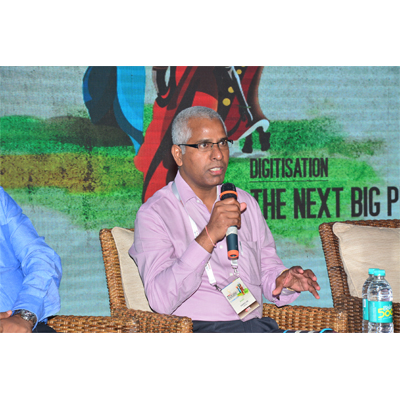
    One of the most interesting sessions of VBS 2019 organised by Indiantelevision.com on 11 December 2019 was ‘FTA: The Roadmap Ahead’. The panel discussed NTO impact, key issues faced by the FTA channels, content focus on FTA channels, how FTA channels are dealing with distribution, carriage issues and the roadmap for next 2 years.

    The panel was moderated by Indiantelevision.com founder, CEO and editor-in-chief Anil Wanvari with 9XM Media chief revenue officer Pawan Jailkhani, Enterr10 Media Fakt Marathi MD Shirish Pattanshetty and IN10 Media COO Akul Tripathi.

    FTA channels largely got their reach because of the distribution but now like any other pay channel they want to focus on content. “There is a possibility that we were running the traditional old content but now we started producing fresh content as well,” said Pattanshetty.

    Jailkhani believes distribution has done a fantastic job whether it is pre NTO or post NTO. Channels have got unimaginable reach and penetration. Earlier FTA channels used to get reach largely because of distribution and not because of content. “But now, FTA platforms are focusing on content not because of TV or competition but largely because OTT is a threat. From a content perspective, it is a threat because time spent is shifting to videos, to those platforms basically. So that’s how TV channels or FTA channels have woken up and said we need to focus on content,” said Jailkhani.

    Tripathi opined, “We never need to produce new content, there is always content available which people haven’t seen even in different eras.  The content also needs to be relevant. Right now, they would be watching it because it is a new thing and they are watching it for the first time. Going forward with the availability of the content and with the way of accessing the content, they are going to find the content that is more relevant.”

    Even FTA music channel 9XM curates fresh music content every Thursday or Friday. There are close to 7-10 movies every week that are released. 9XM runs fresh songs and curates them too. “Curation plays a part but on GECs, the time spent plays a major role. Fresh content with the current theme is very important,” said JailKhani.

    Post NTO, 9XM has gained the number 1 position in terms of reach. It’s also ahead of Star Plus in terms of reach. But what it is not able to convert is the actual viewership. Because it does not have time spent like GECs  as it runs two and a half minutes of song and not half an hour of fiction show.

    Jailkhani said that India is an underdeveloped, undersold advertising market. “We don’t get the ROIs which we should have got as per reach these guys get about channels – 100 million, 150 million reach week on week unduplicated. And it's huge. But we are not able to monetise it as per our expectation. But with NTO some price correction of about 15 to 20 per cent happened on 9XM.”

    The panelists also informed that there is a perception that FTA channels are free channels or will not have viewership in urban cities like Mumbai. But data of channels like Dangal, 9XM or Show Box show they did well on pay platforms and also lead in pay homes.

    Like any other paid channel, FTA channels invest in buying content and even pay premium to buy exclusive content to grab the maximum eyeballs. The channels don't compete with its competitors but overall TV viewership to get the maximum eyeballs.

    Pattanshetty also informed that regional FTA channels do face issues when they get carried. “We recently launched Bangla so it becomes very mandatory that we are available in the Bangla market. And it’s not easy to get carried. The comparison is who is the last guy who launched and what charge he has paid. He has to pay the premium charge and you might not be able to get the required placement that you are looking at,” he said.

    The panelists also revealed their company’s upcoming two-year plans. 9XM plans to bring digital channels. Enterr 10 plans more regional channels and fresh content for the views and IN10 Media intends to launch a new channel.

  • Sun Direct offers 155 channels for Rs 130 network capacity fee

    Sun Direct offers 155 channels for Rs 130 network capacity fee

    MUMBAI: DTH operator Sun Direct is now allowing subscribers to select up to 155 channels for a monthly network capacity fee of Rs 130/- plus applicable taxes.

    Sun Direct is the first DTH to officially declare NCF allowing more than 100 channels along with the removal of the additional slab. The operator has been offering almost the entire FTA channels bouquet available on its platform on complementary basis with the Rs 130 NCF base pack from the start of the new tariff order.

    While most operators have declared Rs 130 as NCF for 100 channels, most of them have been offering hundreds of FTA channels on a complimentary basis with discounted NCF on bundle packs.

    The DTH operator had on 24 January declared its network capacity fee days ahead of the switch over to the new tariff order. The network capacity fee payable monthly back then was set at Rs 130/- plus applicable taxes for 100 SD channels. Additional slab NCF was set at Rs 20/- plus applicable taxes for the next 25 SD channels.

  • Sanjeev Kapoor on FoodFood’s FTA avatar, DD Free Dish & TRAI tariff order impact

    Sanjeev Kapoor on FoodFood’s FTA avatar, DD Free Dish & TRAI tariff order impact

    MUMBAI: With the new tariff order bringing in a major change to India's television distribution, several broadcasters are adopting alternative ways to stay relevant in the ecosystem. Chef Sanjeev Kapoor-promoted FoodFood channel is among those trying to negate the impact of the new regulatory framework by converting it into a free-to-air channel from its current pay model to maintain its reach. Ahead of its 11 July FTA launch, Kapoor interacted with Indiantelevision.com to outline the reasons behind the decision and offered insights into the category his channels operates in.

    What was the objective behind taking this call?

    When the tariff order was released, we were contemplating how to approach this. We realised that we should keep it the way it was and when the dust settles, we will take the call depending upon which way the viewership is moving. We studied and evaluated what the viewership patterns are, how things are moving, what is happening in the market, what is happening to specialty content, what’s the best way to approach it and we realised that for a single channel without bouquet strength the best way is to approach it differently. When there are bouquets, no matter what the order says that this can not be done, the reality is that bouquets for large players are much simpler and easier. Whether it is through Facebook, Youtube, we see that food content consumption has gone up exponentially on digital whether. The only way to bring it at par with what the consumer needs and demands is to increase the reach and that’s why we took this call.

    What were your key observations from three-four months of tariff order implementation?

    So as we know the overall viewership has dipped, that is because the reach is not there because you aren't there. Then, how does the viewer find you? Whether it is an MSO, DTH, small LCO, how do you get discovered? In a-la-carte, when you try to educate a person, it takes time and effort and when a single channel does not have the power to fight that, then it becomes very difficult. Even in my house it took my personal intervention to get Food Food, so it would be difficult for normal viewers. So to break this resistance, one must go the FTA way. We believe it will be better now because if the pressure of paying the broadcaster is not there, hopefully, it will be better. We evaluated Free Dish as well. It format have any specific advantage for a smaller channel. For devotional channels, there is a lesser fee but for specialty channels like us it is not beneficial.

    Do you see consolidation, mergers or more channels being added in the category you are operating in?

    Difficult to say. Bigger broadcasters with 40-50 channels have their own challenges. Some of them are shutting down, some of them are rationalising. In such a case, consolidation is the most obvious choice but really we have not seen that happen yet because these are early days. For people like us, fortunately, it's not something that bothers us too much because we have over 1200 hours of high quality HD content. We have the ability to syndicate, licence and monetise through multiple ways. So we are not too worried.

    Do you have to spend more on content to attract consumers as the new tariff order puts power in their hands to pick and chose?

    I would say that even if the power is given, if the consumer cannot use it how is it going to help. You can be FTA and still not be present as the must-carry rule is no longer there. How do you ensure that? Though digital has come to the rescue but at whose cost? It’s not at the cost of content creators or at the cost of distributors. There used to be a normal camera now there are more digital cameras. There could be transitions. Three years ago when I visited the US, people were talking about cutting the cords and if that is a global phenomenon that has to come. The power of content will stay. We consider that as content creators we distribute content through different platforms and whenever consumers find it convenient to access our content, they will consume it there.

    How do you plan to monetise your content across digital?

    We already do. We have a fairly large plan on digital. So, our overall community including Food Food is over 20 million that across platforms could be Facebook, Twitter, YouTube etc. We use that community to reach out to core Food lovers. We work very closely with brands. We are launching a series on biryanis. We have Dawat Biryani Rice on board as a large partner for that.

    Do you see your revenue more skewed towards digital in the near future?

    I would guess so.

    Do you tweak your programming in terms of going from pay to FTA?

    Our focus does not change. We want to stay focused on who we are. We don’t want to really change the programming too much.

    Do you see a change in nature of your core viewer given that you are a free platform now?

    It’s difficult to say. We want to stay core to our value and we will see if in each market we have enough consumers. We want to work with all the distributors in creating something unique and special for them. So, we don’t want to change the core product. We want to give a few things which no other TV channel can do.

  • DD Free Dish policy: New bucket created in MPEG2 slots for devotional genre

    DD Free Dish policy: New bucket created in MPEG2 slots for devotional genre

    MUMBAI: Public broadcaster Prasar Bharati has amended the DD Free Dish policy in a meeting held earlier this week. Under the amended policy, a new bucket has been created to reserve MPEG2 slots towards devotional channels. The reserve price of the bucket has been fixed at Rs 3 crore.

    “Consequently a new Bucket R1 has been created to reserve MPEG2 slots towards devotional/spiritual/AYUSH channels which may be placed through the open eAuction process as laid down in the policy,” Prasar Bharati CEO Shashi Shekhar Vempati said on Twitter.

    Spiritual channels including channels promoting Yoga, Ayurveda, Health & Wellness (AYUSH) based on traditional methods fall under the devotional category or bucket R1. Under amended policy, three slots have been reserved for genres deemed to be in public interest. The amended policy also says that placement of regional channels of Doordarshan that are currently not available on DTH/cable may be considered for placement on vacant MPEG2/MPEG4 slots reserved for the same.

    Vempati also revealed on Saturday the results of the first annual e-auction for MPEG4 slots on  FreeDish. After robust bidding, a total of 15 MPEG4 slots were successfully sold to channels across genres and languages.

  • DD Free Dish e-auction: 15 MPEG4 slots sold

    DD Free Dish e-auction: 15 MPEG4 slots sold

    MUMBAI: The first annual e-auction for MPEG4 slots on Doordarshan’s FTA DTH platform FreeDish, witnessed intense competition. After robust bidding, a total of 15 MPEG4 slots were successfully sold to channels across genres and languages.

    Prasar Bharati CEO Shashi Shekhar Vempati said on Twitter that the slots were being taken at an average price that was nearly eight to nine times the invitational price. “With this overall projected annual revenue from DD Free Dish will cross 400 cr between MPEG2 and MPEG4 slots,” he added.

    Vempati added that the new line up of 15 channels will be published on Monday, subject to completion of procedural formalities. He also mentioned that three slots have been reserved for public broadcasting purposes.

    Earlier in February, 40 MPEG2 slots were successfully sold under revised guidelines after recommencement of e-auction. Vempati said that the estimated revenue from the sold slots is Rs 395 crore and added that the new channels will be on air from 1 March 2019.

    The Prasar Bharati Board gave a green signal to e-auctioning of DTH slots on DD FreeDish in January. The e-auctioning was arbitrarily called off in October 2017. Earlier, FreeDish would conduct the e-auction every couple of months to award vacant channel slots to private broadcasters. The last e-auction was held In July 2017.

    While revealing the new policy guidelines, Vempati had said a key consideration factored in was to increase the diversity of content available on FreeDish and to expand its reach across India, especially within the non-Hindi speaking states.

  • TRAI tariff order shakes up pay and FTA channel uptake

    TRAI tariff order shakes up pay and FTA channel uptake

    MUMBAI: Six weeks into the new tariff order (NTO) and the television landscape is changing, says Chrome data analytics and media report. It says that 96.5 per cent of the consumers in India are aware of the NTO, with 83.6 per cent coming to know about it via television.

    The report also highlighted the packages that the consumers have chosen. It mentioned that 50 per cent has gone with the DPO-defined packages, packages defined by operators, leaving the balance 50 per cent split into two components– 25 per cent with packages from broadcasters and the rest from a la carte package. 26 per cent has exercised both, which is a combination of a DPO package along with some kinds of a la carte, 2 per cent don't remember what they exercised. The report signalled that the consumers felt that they were earlier paying for content that they were not willingly subscribing to. So that leaves the tariff order in the right spirit of transparency where consumers are getting an idea of what each channel and each bouquet costs and they feel empowered to pick what they want.

    Specifying about the reach or Chrome connectivity (OTS faired over the last six weeks), while broadly dissected into pay that observed a downfall and FTA which witnessing a hike. On one hand, pay channels with an average national connectivity of 75 per cent went down to an average of 51 per cent. FTA on the other hand, gained from 21 per cent to 26 which is a 23 per cent gain. 

    The report added that the operators right now are competing for consumers by providing the maximum number of channels within the fixed one hundred and thirty rupees. DTH –Tata Sky, Dish, Airtel – Average of 250 channels in the network capacity fee.

    Networks offering maximum channels within their Base pack

    HEAD END

    TOTAL FTA RUNNING

    TOTAL PAY RUNNING

    VISION POINT DIGITAL

    277

    23

    GAJANAN CABLE/NXT DIGITAL

    274

    180

    NXT DIGITAL

    264

    37

    AFTAB CABLE VISION

    230

    4

    JAK COMMUNICATION

    219

    48

    ATHULYA INFO MEDIA PVT. LTD.

    216

    14

    NXT DIGITAL

    190

    37

    CHIKHALI CABLE NETWORK

    186

    74

    KBC DIGITAL

    185

    110

    CRYSTAL CABLE

    185

    46

    PUNE CABLE SYSTEM

    185

    42

    VK DIGITAL NETWORK

    179

    71

    NXT DIGITAL

    177

    38

    MCBS DIGITAL

    176

    100

    ACT DIGITAL

    175

    32

    SITI DIGITAL

    174

    125

    KABLE FIRST DIGITAL

    173

    235

    GRAND GUMBER

    172

    8

    TATA SKY

    262

    135

    DISH TV

    202

    145

    AIRTEL DTH

    195

    125

    Source: Chrome LIVE, ALL India (Urban), WK 10, 2019

    State wise Package offtake status

    MARKET

    100 FTA CHANNELS RUNNING ON NETWORKS

    MORE THAN 100 FTA CHANNELS RUNNING ON NETWORKS

    LESS THAN 100 FTA CHANNELS RUNNING ON NETWORKS

    BIHAR

    17%

    67%

    17%

    GUJ, D&D & DNH

    9%

    55%

    36%

    KERALA

    3%

    72%

    25%

    MADHYA PRADESH

    5%

    31%

    64%

    MAH & GOA

    3%

    44%

    53%

    UP & UTTARAKHAND

    2%

    25%

    74%

    All INDIA

    2%

    46%

    52%


    MARKET

    100 FTA CHANNELS RUNNING ON NETWORKS

    MORE THAN 100 FTA CHANNELS RUNNING ON NETWORKS

    LESS THAN 100 FTA CHANNELS RUNNING ON NETWORKS

    AP & TELANGANA

    0%

    38%

    62%

    CHHATTISGARH

    0%

    60%

    40%

    DELHI

    0%

    42%

    58%

    HHPJ&K

    0%

    20%

    80%

    JHARKHAND

    0%

    17%

    83%

    KARNATAKA

    0%

    50%

    50%

    KOLKATA

    0%

    83%

    17%

    ODISHA

    0%

    53%

    47%

    PUN & CHA

    0%

    100%

    0%

    RAJASTHAN

    0%

    50%

    50%

    TN & PONDICHERRY

    0%

    100%

    0%

    WEST BENGAL

    0%

    89%

    11%

    Source: Chrome LIVE, ALL India (Urban), WK 10, 2019

    According to Chrome DM, in the long term, there is a price-quantity relationship which is already happening with operators putting in maximum number of channels to get maximum subscribers. On the broadcasting level, companies are graduating from pure distribution, lobbying driven business to consumer marketing organisations.

  • FTA channel adoption shoots up post TRAI tariff order implementation; pay channels dip

    FTA channel adoption shoots up post TRAI tariff order implementation; pay channels dip

    MUMBAI: Five weeks into the new TRAI tariff regime, there seems to be some shift in viewership patterns and consumer choices. According to Chrome LIVE data, pay channels witnessed a drop of 24 per cent from week 4 to week 9 in 2019. On the other hand, FTA channels saw a spike from 21 per cent to 26 per cent in the same time span.

    Prior to the implementation of the new tariff order (NTO), DPOs and broadcasters were mostly operating on a fixed fee model. However, the new regime is showing a significant impact on the channel reach, channel share, ratings of non-driver channels and the overall revenue.

    Major fluctuations were seen across national channels over the last couple of weeks including Hindi GECs which saw a drop ranging between 0.5 to 10 per cent for pay channels and 0.1 to 5 per cent for FTA channels.

    Some passable changes enumerated in week 7 by way of reversal of the impact on connectivity of channels – exponential loss on pay had somewhat reduced owing to multiple operators putting on channels as per the old package after having switched them off. The same has also had an effect on FTA which had seen a spike.

    The second week of NTO extension continued seizing changes at PAN India level which earlier was a 3 per cent gain for pay and 5 per cent gain for FTA channels in Chrome DM’s week 7 data which in week 8 changed to 5 per cent and 4 per cent gain respectively.

    Some more interesting changes as the NTO appendage concluded its third week on ground with pay channels registering a drop of 6 per cent owing to changes in channels’ connectivity across Free Dish and FTA gaining 2 per cent across the standard definition channels in Chrome DM week 9 data.

    The key to address these challenges for securing the correct revenue share amongst other things would entail consumer education, constant monitoring of consumer preferences and realignment of the bouquet packaging strategies taking into account consumer preferences.

    Under the new regime, consumers have the option of paying only for channels they want to watch and can drop other channels from their list and hence, the subscriber base will now solely depend on the communication between the DPOs and the end consumer, and in the event of any communication gap, the last mile consumer will not subscribe to the channels and these may result in significant erosion of subscriber base impacting the revenue of DPOs and the broadcasters.

  • TV9 enters Hindi heartland with TV9 Bharatvarsh

    TV9 enters Hindi heartland with TV9 Bharatvarsh

    MUMBAI: TV9 News Network is all set to launch its national Hindi channel, TV9 Bharatvarsh, next month in Delhi. The channel is ready with its largest news studio in the country, which will use the best of AR and VR technologies, and BOT news tracker in its presentation.

    Already a leader in regional media with six news channels in different parts of the country, this will be TV9 network's grand entry into the national media with its wealth of journalistic experience.

    TV9 Bharatvarsh will strive to change national television with its unique style of aggressive presentation blended with investigative journalism that will focus on the rights of the people. The Hindi channel will bring back issues that really matter and use the medium of television keeping the core values of humanity and people's interests in the forefront.

    Associated Broadcasting Company Private Limited (ABCL) was started in 2003 by a group of young journalists lead by Ravi Prakash as CEO. TV9 Bharatvarsh will be a free to air news channel. It will be available across all the platforms and will have a presence on cable, DTH and digital platforms worldwide.