Tag: FTA

  • ‘Burgeoning distribution costs eating into money that should have been spent on content’

    ‘Burgeoning distribution costs eating into money that should have been spent on content’

    Much has happened this year and yet not a lot has happened.

    For India TV it has been a good year. Two years ago we were number six or seven in the news channel category, with a 5 to 6 per cent share; today we are number three with a 17-18 per cent share.

    The broadcasting industry has seen a huge amount of debate and discussion on the proposed Broadcast Bill and the Content Code. It perhaps looks to an observer like there is much heat and no movement, but I do believe such debate and discussion is essential.

    This is not something that can be done in a hurry. It has very wide implications in a country as free as India, where the media are genuinely free.

    And while the arguments for and against regulation are many, the fundamental thing is that any attempt to legislate a free media has to be done with a great deal of care. It is at the heart of Indian democracy. And as the world acknowledges, we may have a myriad problems but we are a robust democracy despite all odds: it is too valuable to risk.

    On the Content Code there has been a discussion for well over a year, and the government has been open to dialogue, which is excellent. The broadcasters have offered to create their own Code for self-regulation.

    The government has welcomed the offer of the industry to develop its own Code, as it has accepted and notified the ASCI Code for advertising. ASCI is a voluntary body, so the government has encouraged self-regulation, which is great.

    The single biggest problem in the industry today is distribution. It is getting more and more competitive, as more and more channels come into business. The cost is enormous and growing wildly, and it is hurting every broadcaster from the biggest to the smallest, FTA or pay.

    In this battle MSOs and LCOs point fingers at each other, but either way it is costing the broadcaster. And money that could and should have been spent on content is getting spent on distribution instead, and it weakens the industry.

    And as that burgeoning cost is eating into money that could and should have been spent on content, in the end it is affecting the viewer, with no medium term solution in sight.

    Digitisation is the only real answer. Digitisation is slowly coming in the non-CAS areas, but the operative word is ‘slowly’. Anything that the government can do to accelerate digitisation will be for the good of all, mostly for the good of the consumer.

    The other important thing with growing competition is the issue of audience measurement. Periodically there is heated debate, and everyone has an expert opinion on the subject. But listen to what each broadcaster says, and you know how good their ratings are: why else are yesterday’s critics silent today and why were today’s critics silent yesterday, when the system has been the same for years?

    And even as broadcasters and agencies criticize the measurement system they continue to use the data to help in buying and selling Rs 5-6,000 crore worth of advertising, on the nonsensical plea that some data is better than no data.

    There have been impassioned complaints about how the broadcasters and production houses are victims of the rating system, how every Friday when those wretched numbers come in they have to slog overnight to fix the content according to what the numbers tell them.

    That’s like a hypochondriac taking his temperature and blaming the thermometer. No one is forcing anyone to use the data, much less what to do about it. If you choose to be tyrannised by it, that’s your choice.

    That is not to say the current system is perfect. That it needs upgrading is beyond doubt. The industry has taken the initiative in that, with the formation of the Broadcast Audience Research Council.

    Whatever the outcome, it can only lead to a better, more robust measurement system.

    The best thing that has happened this year?

    It may sound like a strange thing to say, but to my mind the best thing that has happened is the ongoing debate about the Broadcast Bill and the Content Code. It brings many issues to the fore, many things that we need to be more aware of and many that we need to engage with the government about.
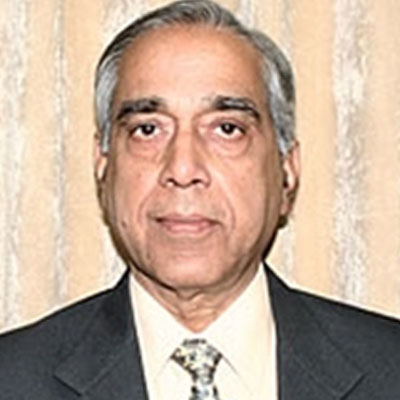
  • ‘Cas is here to stay’ : Nripendra Misra – Trai chairperson

    ‘Cas is here to stay’ : Nripendra Misra – Trai chairperson

    Nripendra Misra is a suave IAS officer with a reputation of being completely above board, and perhaps lacking the ‘guile‘ that puts many others in the topmost slots of the bureaucracy, fellow officials say of him in a positive sense. After the first initial setback for Conditional Access System in 2003, it was during Misra‘s tenure that Cas was enforced in parts of Mumbai, Kolkata and Delhi. And it was war… MSOs had to be readied, LCOs trained to shift to higher technology, broadcasters‘ resistance to be broken down by assuaging their fears and yet, the court order had to be implemented within the deadline: 31 December 2006.

    It could not have been a pleasant task. Amidst all this, Misra and his dedicated but small team is going about handling one of the noisiest of industries in the country, issuing consultation papers, and ushering in new technologies.

    Misra took his stand on various contentious issues during an interview with indiantelevision.com‘s Sujit Chakraborty.

    Excerpts:

    It has been nine months since Cas was implemented in parts of Kolkata, Mumbai and Delhi, after Chennai was brought under Cas. Towards the beginning there were uncertainties, and some people even opposed Cas. So today, what is your assessment of Cas? Is it a success or a failure in numerical terms?
    Well, we never had a target in terms of penetration percentages. It was left to the subscriber who wanted to opt for choice, whether he wanted pay channels or FTAs and which are the ones he wanted. The latest numbers tell me that about six lakh (600,000) homes have opted for Cas in the mandated areas.

    That is out of a universe of around 1.6 million cable homes…?
    Yes, so that is about 30 per cent of subscribers. Then you have also a similar facility in DTH, which has also been accepted by many. In Kolkata particularly, the response has been poor because most of the popular channels are FTAs. So if the criterion is in terms of numbers, I think it has been a very satisfactory performance.

    But it is not the number that is important. Unfortunately, we are always missing the true substance when attempting to evaluate Cas.

    What is it we are trying to do? We are trying to set up a mode of digital transmission, which is more efficient and more accommodative. It is the global practice. Analogue is gradually getting out of the scene, and so we have to make a beginning. That was made into a kind of a pilot in these four areas.

    Today you have a choice, you have DTH and you have Cas. Tomorrow you may have HITS… which is another option. You have voluntary Cas. So a beginning has been made, a seed has been sown, which must someday fructify in terms of an all India feature. Success has to be measured in terms of whether it is a trendsetter or not, and not in terms of how many people have opted for it or not.

    So would you say that the target of becoming a trendsetter has been achieved?
    Oh yes! It is perhaps a watershed in that in the broadcasting industry, digital transmission has begun.

    But one main area that remains disturbing is the quality of service, which in many parts of the mandatory Cas zones remains highly dissatisfactory. Lots people are not getting the channels they have opted and paid for.
    Firstly, I do not want to defend the quality of service, and there are problems of channels being discontinued. But it is not just at the level of local cable operator. I think somewhere down the line, the MSO also has to take his role seriously. Unlike in non-Cas areas, the role of the broadcaster and MSO in implementing Cas is far more important than that of the LCO. So, if these things have happened, they have happened because of the inadequacy of the functioning of MSOs.

    When it started in January, we wanted to take a very liberal view. We did not want to enforce all the regulatory provisions in the first four or five months. They wanted time so that the consumer preference could be registered, and we gave them enough time. The subscriber register that has to be maintained was not complete to the extent we wanted. Therefore billing got delayed, payments also got delayed… subscribers have also not made payments. But we have made it clear that come 1st of July, we are not going to forgive anyone.

    But how do you enforce this, as it has clearly not happened in many places till now?
    There are three ways of how to enforce this. First is the awareness of the consumer. There is a quality of service regulation in the Cas area which is operational. Therefore the subscribers must reach to and judge the performance of the MSOs and cable operators. There are great details in the regulation about the kind of rebate that has to be given if the channels are not coming, or how much time it should take which kind of interruption, what should be the response time for the MSOs… these are all standardised and fixed.

    Broadcasters have been cooperative in rolling out Cas, despite serious reservations about the Rs 5 channel price

    But that brings us to a moot point…. The consumer is not truly aware and also does not seem to care about implementing his rights?
    It takes time…

    So you are saying that MSOs are primarily responsible for QoS, so where have they failed? Because there are lots of complaints about failure across the board.
    The MSOs initially were perhaps not ready with the level of demand. That has settled down, STBs have been imported and they are in plenty today. The second stage was to get the reference of the subscribers. Now, I know and it is correct to say that the MSO representatives have gone to the homes four or five times, asking the subscribers to fill up the forms. But the gentleman says, you have come at the wrong time, that he will have to consult his family.

    But gradually, that too has ceased to be a problem. Ninety percent of the subscriber registers have been completed and the choice is now there. Now the stage is where the subscribers must know what their right is. That is, the manual of practice of the MSOs must be made available to the subscribers. That manual of practice in most of the cases is not available. The contractual conveyance, that we have between us signed a contract, and this is our right, that message is still not being passed on, which is reflecting in the lack of awareness.

    Broadcasters have been extremely cooperative in rolling out Cas, despite serious reservations about the RS 5 channel price, and all the Reference Interconnect Offers are in place.

    So what have you told the MSOs about this?
    We have conveyed to them that look, we shall view very seriously if there are defaults. We have written to the state governments, because they are the enforcement machinery.

    So what is holding back the extension of Cas in the three metros?
    The Central government wanted us to report back on this, we have sent that report, we have said it will take six to eight months‘ time to implement after notification of the extension. But then the state governments said that it is better to evaluate before extending Cas. We on our own without waiting for such instructions have engaged some outside agency to advice us on the level of implementation.

    Has that audit been completed?
    It will take another two months, we are expecting the reports by the end of October or beginning of November.

    So it will further delay Cas extension by that much time?
    Well this has nothing to do with Cas extension, this is something we are doing independently, and as far as the government goes, they can extend Cas, and we have just said that it would take six months from the day of notification to implement the extension. It is for the government to take a view when they wish to notify.

    Resistance to Cas had been from the broadcasters, but even from the grassroots level, due to privileges of piracy and under declaration, there had been resistance from the cable operators as well, so have the realised that this is the business model of the future?
    I think they have realised this more than anybody else. Today there is demand from many, many parts of India that they be given the permission for implementing voluntary Cas.
    Like Ortel and Sristi in Orissa and West Bengal?
    Ortel is one, then Pune is another, and there is demand from Bangalore, Mumbai and many other places. Some have in fact gone ahead with the implementation of voluntary Cas. So what the LCOs know very well is that the competition from DTH is very strong. The LCOs thus know that of they have to remain in the industry, two or three things are required.

    First, investment is required, which is not come if the industry is so disorganised as it is today. Second, they know that there has to be some regulatory provisions to give stability, which will ensure certain amicable relations between them the broadcasters and the MSOs. So to answer your question as to why they are not implementing voluntary Cas, perhaps for that some regulatory initiative is required.

    Now, for that the expert committee had been set up, and it has suggested that voluntary Cas be rolled out in 55 cities and towns. But they have also said that you have got to have a regulatory regime for at least one year. Even for voluntary Cas, certain things are important, like Standard Interconnection Offer, what should be the connectivity, what should be the revenue sharing formula. So these are the issues we are looking at, and we are going to put up the paper on voluntary Cas.

    “Fixing of channel pricing in non-Cas is a challenge, but we shall come out with something that meets the expectations of both the high and low income groups”

    When is that likely?
    Oh any day, we are working on HITS and next is the paper on voluntary Cas.
    The consultancy paper on HITS is already out?
    Yes, but we have to now recommend the terms and conditions of licensing provisions to the ministry of Information & Broadcasting. Even the voluntary Cas paper is also in the pubic domain, and so we have to now concretise our views. And then specifics like what are the regulatory issues, what are the areas in which facilitation is required… perhaps some technical training is required, and the go ahead.
    But voluntary Cas would mean that channel prices will be dictated by the broadcasters and subscribers may suffer?
    Let‘s see. Voluntary Cas does not mean it cannot be regulated, and as such I do not have any views on the subject now.
    It follows that even in voluntary Cas you could regulate prices?
    If it requires so in the case of DTH I can regulate prices. In fact, there has been some judicial expectations on this, when TDSAT in one of its judgments asked that if channel price is regulated in Cas, why it is not there in DTH? We had our reasons, it is an infant industry, we wanted DTH to grow.
    But then Cas is also an infant system?
    The difference is that DTH is a new initiative, and I am of the view that there should be minimal regulation. Cas was a shift from the old cable industry.
    The cable industry has been insisting on a level playing field and they are pointing out to the IPTV and DTH consultation papers as proof that Trai is not creating that level playing field. And in Trai‘s own meetings on Cas in Kolkata and other places, LCOs and MSOs have accuse Trai of siding with broadcasters?
    There was never such an accusation. You may have been told so, but never, never has a single cable operator said that Trai is favouring broadcasters. It is all a matter of which platform you are utilising. You fix the price at RS 5, and someone will say, it is against broadcasters. If you do not do that, they will say you are favouring the broadcasters. There is a bogey being raised that in many of the countries channel prices are fixed. The truth of the matter is channel prices have not been fixed in a majority of the countries. And majority means, more than 90 per cent of the countries.
    So there, prices have panned out according to market pull and push?
    Of course.
    So how much time do you think we will need for market forces to create prices that are compatible with the pockets of the average consumer, who are the vast majority, that is, when would deregulation start and prices shape up as per market forces?
    It is already there, because in non-Cas it is already there according to the market forces. I haven‘t regulated prices there. The prices have been fixed by the cable operators and the subscribers. In 2004 when there was such a noise, there was an order on freezing the prices. You know that order was an interim measure. The ideal situation, which is there in our consultation paper, is it should go to forbearance. And I think that the day is not very far. The moment there is healthy competition and prices should be put on forbearance.

    There is the issue of price freeze versus price cap?
    That I won‘t answer because we have not issued the regulation on that so far.

    It is important for the cable industry to grow and I am not a great votary for centralised economic activity, or vertical integration, so franchise should be the mode.

    Is it in the offing?
    Yes, the next thing for the non-Cas areas.
    In recent meetings the ministry of broadcasting has said that content control in IPTV is not in their domain because that platform is under the ministry of telecom. Despite that Trai has said that it is I&B which should control content in IPTV, so do you think you have usurped some of the government‘s prerogatives?
    No, not all. It is a viewpoint. I can‘t say anything on content regulation, who will or who will not do. It is not within my powers. It is simply this, that we are of the view that the control of all content of all broadcasting and on all technological platform is best done by the broadcasting ministry. It is just a view point.
    So what are the forthcoming issues in the cable or rather the video-related industry?
    Well after introducing digitisation in non-Cas, there will be the issue of pricing. Then the other issue will be also of the structure of the cable operators. Can we contribute to their organisational strength? This comes from the understanding that there is the issue of investment, because we know there is an opportunity.
    But that investment with such small players would not be possible, so what does one do to ensure investment?
    In some manner it has to be there. Whether in the franchise mode, or through takeovers, or vertical integration. But I think that in countries such as India, perhaps there will be a role for everybody. I am not a great votary for a centralised form of economic activity. So it is better that we perhaps have a relationship in which franchise is the mode and there is mutually shared revenue principles.
  • Trai faces QoS issue to ensure improved Cas rollout

    Trai faces QoS issue to ensure improved Cas rollout

    NEW DELHI: Many cable households are unhappy with repeated signal failure and Trai is now faced with the issue of what to do about enforcing Quality of Service provisions, sources tell indiantelevision.com.

    One of the major confusions in the market in the national Capital is what are the cable operators doing about the billing of chosen channels.

    At the moment, the operators are giving all the channels that can be shown in India, and they have been telling the subscribers, those who have filled up the forms indicating their choice, that at the end of the month, they would be charged for what they have indicated in the forms.

    “The COs have told us that the programming for each STB is taking time, but they would charge each household what the latter has opted for,” the official said.

    He said also that the COs are watching the scenario. “They feel that in a month or two, subscribers might want to drop some channels and want others, or just want more channels than they have opted for now. So then, they would have to do the programming all over again.”

    The official felt that the COs want the situation to stabilise before they get into programming for “watch what you pay for”.

    However, in many cases, the COs have registered the subscribers and taken the advance charges at the beginning, when they gave the STBs but have so far not returned for collecting the advance fees for February.

    “This means subscribers would suddenly be faced with having to pay for two months if the COs do not take the fees for February now,” said an official, agreeing that all this is causing more confusion than is good for the ongoing Cas rollout to regain the traction it has lost quite a bit of recently.

    One MSO is not showing contact numbers in the appropriate window when the signal goes off, and still signal loss is quite a regular phenomenon and, though less than in the beginning, there is a lot of pixelisation of images.

    The MSOs have so far not raised the issue of QoS being enforced, for reasons best known to them. But they are aware that this is one of the reasons for not just slowdown of Cas rollout, but in many cases, people wanting to return the boxes and settle for just the FTAs.

    In a report last week, indiantelevision,com had reported the worries amongst MSOs on these issues, and their informing Trai that broadcasters and they themselves need to do attractive packaging and ensure QoS, but nothing seems to have materialised so far.

  • Sun ready, DTH play becoming hot chase for satellite space

    Sun ready, DTH play becoming hot chase for satellite space

    MUMBAI: Having finalised on Malaysia-based Astro as his 20 per cent equity partner, Sun network chairman and managing director Kalanithi Maran is preparing the ground to launch his direct-to-home (DTH) service. He has decided on Iredeto as the encryption system while the set-top boxes (STBs) will be from Coship Electronics in China and South Africa-based UEC Technologies, a source close to the company says.

    “He is also looking at more STB vendors. Besides the basic box which will be competitively priced, he will have graded STBs. Multiple vendors will ensure supply safety in case of a huge demand for his service,” adds the source.

    Maran will be using MPEG-4 technology that will allow him to compress more TV channels per transponder. While MPEG-2 can pack in around 12 channels, the advanced compression technology will be able to accommodate over 20 channels.

    Maran will have seven Ku-band transponders on Insat-4B, which launches on 10 March, while Prasar Bharati’s free-to-air (FTA) package DD Direct Plus will have five on the same satellite.

    He may consider himself lucky when the launch of Insat-4C satellite failed in July 2006 after the rocket carrying it veered off course and exploded. He had booked six Ku-band transponders (and one more for digital satellite news gathering) on it for Sun Direct’s DTH service.

    By being located on the same satellite, Sun’s subscribers will be able to access DD Direct’s channels without Maran having to separately put them on his transponders.

    Dish TV which was sharing the NSS-6 satellite with DD, will not be hit badly after the migration. Since NSS-6 is at 95 degree East, a minor realignment of antenna will be required for receiving the channels as Insat-4B shall be located at 93.5 degree East. Tata Sky, on the other hand, will have to recarry DD channels on their transponders.

    The DTH play in India is, indeed, turning out to be a hot chase for satellite space. If Tata Sky had to wait for the launch of Insat-4A as rival Dish TV aggressively went on mopping up customers, it is now the turn of Anil Ambani’s Bluemagic and Bharti Telemedia to plead with the Indian Space Research Organisation (Isro) to provide them with Ku-band transponders.

    In the sprint to start DTH before the market gets taken away, Bharti may be the clear loser. Unless, of course, it gets the approval from Isro to be on Measat-3, a foreign satellite launched from the Astro Group.

    “Measat has made their Ku-band transponders available for us and have supplied the data. We are studying it technically and are making an internal evaluation,” says Isro contract management and legal services director SB Iyer.

    The satellite has 49 dbW (decibel Watts) as compared to Insat’s 53. “We have indicated this problem and Measat has said that it would examine it and come up with a solution. Insat-4B has 53 dcW and offers a powerful beam across the country. We will have to ensure quality and also come into an agreement with Measat. Besides, the users will also have to express their interest in the satellite,” says Iyer.

    Measat-3 has 24 Ku-band transponders and has been designed to provide capability for data services and DTH applications in Malaysia, Indonesia and the Indian Subcontinent.

    If no clearance is given to Measat, Bharti will have to wait the longest with Insat-4G launching only by 2008-end. The DTH market could possibly have settled by then with the spoils being distributed among Dish TV, Tata Sky, Sun and Reliance’s Bluemagic.

    Anil Ambani will get a shot at the DTH market after Insat-4CR (replacement) launches in the quarter beginning July this year. Reliance has asked for eight Ku-band transponders and Isro is reserving the remaining four for other users like National Informatics Centre.

  • Mumbai leads STB penetration, SEC A early adopters: Tam

    Mumbai leads STB penetration, SEC A early adopters: Tam

    MUMBAI: Of the three metros, Mumbai leads in Cas (conditional access system) adoption with a 25 per cent penetration in set-top boxes (STBs), according to a study by Tam.

    While Mumbai has 139000 subscribers buying STBs on a Cas home of 548000, Delhi has a 14 per cent penetration with 97000 out of 676000 homes opting for boxes.

    Kolkata is a clear laggard with a 10 per cent penetration, indicating significant differences in offtake across the three metros. Out of 409000 homes, 41000 subscribers have gone ahead and bought boxes.

    “Of the 1.63 million homes covered by the Cas footprint, 277000 homes had taken up a STB/DTH connection to access pay channels. Pay TV homes amounted to 17 per cent of the Cas-mandated area,” the study said.

    In the first week of January, Tam commissioned AC Nielsen to conduct a ‘Pay TV Homes’ estimation study in the Cas-mandated zones of Mumbai, Delhi and Kolkata. The fieldwork periods were 12-16 January in Mumbai, 11-15 January in Delhi and 11-16 January in Kolkata. The fieldwork mid-point was 14 January, Tam said.

    Tam further divided the zones into 100 sampling nodes, ensuring “adequate geographical coverage.” It conducted face-to-face interviews using a structured questionnaire. The interviewee was the decision maker pertaining to cable subscription. The sample size was 2250 respondents (750 per city).

    According to the study, an additional 198000 homes claimed to have subscribed but are awaiting installation of ‘pay TV services.’The ‘under served’ segments included 109000 (20 per cent awaiting installations) in Mumbai, 43000 (6 per cent) in Delhi and 46000 (11 per cent) in Kolkata.

    “Cumulatively, 475000 homes had subscribed comprising 29 per cent of the Cas-mandated homes,” the study said.

    There are 7.96 million cable homes across the three metros with 1.63 million (approximately 21 per cent) falling under the Cas-mandated zones. Mumbai has 3.25 million cable homes while in Delhi it is 2.61 million and in Kolkata 2.1 million.

    The highest offtake for the boxes is in the SEC A strata of Mumbai. Interestingly, the response by Mumbai’s SEC C is nearly on par with those from SEC A residing in Delhi and Kolkata There is zero demand from SEC D/E in Kolkata. “The offtake levels vary significantly across markets even at a SEC level. The highest offtake is observed in the higher SEC and it declines as one comes down the SEC ladder. Owing to the pre-dominant non-responsive lower SEC, the offtakes seem to have got dampened significantly,” the study pointed out.

    Despite low offtake in Kolkata, consumer awareness appeared to be higher than in Delhi and Mumbai. Consumers residing in Delhi appeared to be the least aware.

    While consumer awareness has significant ground to cover, price remained the pre-dominant reason for subscribers preferring to decide in favour of free-to-air (FTA) channels.
     

  • RATINGS: Narrowing divide in the English news space

    RATINGS: Narrowing divide in the English news space

    MUMBAI: If the last six months’ TAM ratings in the English news space could tell a story this is what they would reveal:

    What started as a one horse market with NDTV 24×7 garnering the lion’s share of the pie saw two new entrants with CNN IBN and Times Now. Headlines Today, the English news channel from the TV Today Network continued to be in the shadows of Aaj Tak.

    But has the market dynamics changed with Cas in place? Certainly a better picture so far as the niche channels are concerned has appeared post Cas. NDTV 24×7, CNN IBN and Headlines Today have gone pay while Times Now has chosen to stay free-to-air (FTA) at least for the time being.

    CNN IBN, which started on a high note and even managed to equal market share with NDTV 24×7 (See table 15 Nov- 15 Dec) has stabilized at the end of one year and occupies the third position with a 20 per cent relative channel share (TG:CS AB 15+ years- 1 January to 13 January/ Market :HSM ). CNN IBN director marketing Dilip Venkatraman would only say that as far as CNN IBN was concerned, despite the numbers, he was confident that the “content quotient” of their channel was bound to bring in viewership. Also the “stickiness of viewership with the channel” is higher, he asserts.

    GENRE / CHANNEL 15 JULY – 15 AUG 15 AUG – 15 SEP 15 SEP – 15 OCT 15OCT-15NOV 15NOV-15DEC 15DEC-30DEC 01JAN – 13JAN 07
    ENG NEWS – TG: CS AB 15 Years + Market: HSM  
    BBC World 0 0 0 0 0 9 5
    CNN 8 0 0 0 0 0 5
    CNN IBN 23 30 30 27 33 18 20
    Headlines Today 15 10 10 9 11 9 15
    NDTV 24×7 38 40 40 36 33 36 30
    Times Now 15 20 20 27 22 27 25

    (Courtesy: TAM Peoplemeter System)

    Mindshare managing director Gautaman Raghotama believes that the increase in news channel shares is not so much a reflection of eating into each other’s share but eating into the channel shares of GEC. Mindshare is also the media agency for CNN IBN.

    Says Raghotama, “There is a definite movement of viewership from general entertainment channels to niche channels and especially news channels. The news genre is increasingly becoming a space for ‘infotainemt’. Look at how the Shilpa Shetty controversy was played out across news channels. It was as good as watching Celebrity Big Brother on a news channel.”

    “Another problem with the English news space is that at present there are no clear differentiatiors. So while the audience is slowly building a loyalty to certain news channels, the tendency is also to watch news on one channel and then breeze through the others for a different point of view.”

    “With Times Now and Headlines Today there is a connectivity concern.”

    Despite that concern, it is these two channels that one must watch out for in 2007. Times Now weathered a stormy year, to stabilize at the number two spot with a channel share of 25 per cent (See Table 01 January-13 January 2007). The channel achieved better clarity on its personality as a general news channel by slimming down the business band segment and focusing on what it called the ‘Big Story’ in the day, mentioned Times Now CEO Sunil Lulla in an interview to Indiantelevision earlier in the week. Times Now also led the pack in the TAM Elite Panel ratings.

    It is the minnow of the pack Headlines Today, however, that has switched gears into the fast mode with some good programming. TV Today CEO G Krishnan says, “Unlike General Entertainment Channels that get viewership spikes on tent pole programming – News Channels get a spike during big stories. Headlines Today has been able to effectively look at innovative wrap around content around big stories whether it is cricket, the Shilpa Shetty controversy or Abhishek-Aishwarya wedding to engage the viewers. In addition, shows like Entertainment Quarter, Sports Quarter are doing well for us. This week the time spent and the reach of the channel has increased by 50 per cent. We are definitely on the growth path and it’s heartening to note that more viewers are consuming our content for a longer duration.”

    Assuming that there is a potential clutter in this space would it be easier for network channels to woo the advertiser? Says Krishnan, “Headlines Today as a product caters to the metro-urbanite. Thus an advertiser is able to reach out to the younger metro audiences. From a sales strategy – we are able to optimize revenues by looking at a network approach. Now with the increase in viewership – we are also working on a stand alone strategy to maximize on the revenue opportunity.”

    What is noteworthy is that the market share for these channels is now more evenly divided. But does a 4-player market spell a cannibalization of the market share?

    “I don’t think there is a clutter in the news space with four channels in the fray. But is there space for a fifth channel? I would assume not. I don’t know if they will be able to garner channel share but what is certain is that the existing players will definitely find it tough,” says Gautaman.

    Madison Media Group CEO Punita Arumugam looks at the scenario optimistically as far as the ad pie is concerned?

    “Yes, the ER and growth rate will get affected but the genre itself will grow. Take a look at what’s happened in the kid’s channels market or the Hindi movies market. The market also grew as the players increased.”

    It’s anybody’s story so far as English news goes and each one of them must be looking at increasing channel share. But isn’t the English news channel market a niche within a niche segment.

    Counters Arumugam, “As far as the viewers are concerned what would happen is that as more and more choices are available within a particular genre, fragmentation is inevitable. But personally I don’t think this will affect any of the channels adversely.”

    “If you consider the profile of new advertisers that is already happening as the market sees an explosion. The FMCG sector is looking at this genre more aggressively. Also a healthy competition between the four channels would see advertising rates become more competitive.”

    Gautaman agrees that FMCG players are moving out of the GEC bracket and looking at niche channels.”The English news channels targeted at the affluent, metro consumers will certainly benefit from this shift. Local operators and retail clients will also look at this genre closely. Besides much of this money will have to come from GEC’s and other media options. There will be a rearrangement of revenue to various genres,” he says.

    Krishnan surely speaks for all channels when he says, “The operating principle for all advertisers is – “Have viewership – Will advertise”. He further adds, “With Headlines Today being on a growth path in terms of viewership, advertisers wanting to reach out out to the younger affluent metro audiences will look at Headlines Today as an ideal platform.”


  • Trai happy with Cas rollout, needs to look into customer choice

    Trai happy with Cas rollout, needs to look into customer choice

    NEW DELHI: With 178,000 STBs seeded in the South Delhi Cas area, and an overall of just a little under 450,000 STBs seeded in the three metros as of date (Mumbai 210,000 and Kolkata 48,000-plus), the Telecom Regulatory Authority of India is happy with the physical roll out of Cas, Trai Advisor Rakesh Kacker tells indiantelevision.com.

    However, there still remains the issue of implementation of the consumer choices, which has not been done so far, he informed.
    Explaining the surprisingly small number of STBs that south-Kolkatans have opted for, Kacker said: “I am told that the area chosen is the problem. That (Behala and other places) is not typically the area where people would opt for the boxes.”

    He explained that though people there could afford the boxes, since the initial deposit is as little as Rs 250, “I believe that people in these areas have a monthly billing of as low as Rs 70 or 80 at the most, so they feel that the FTAs is good enough for them.”

    But why has the “pay-for-watching” system not been implemented so far?

    “The main problem, of course, is human resources available with the cable operators to give the connections as per choice expressed by the customer. That being limited, it is taking time because of bunching of applications,” he explained.

    In fact, it is a complex problem, he admitted.

    “In some cases, the operators tell us that the customers have yet not filled up the form because they cannot decide. In other cases, there is the lack of manpower.”

    Interestingly, one of the practices that MSOs resorted to during the transition period has further caused delay in the implementation of customer choice, or what is usually termed as “watch what you pay for”.

    In the beginning, whoever paid for either renting or buying an STB had been given access by MSOs to all the available channels, and the latter had said that once the customers filed their choices – a la carte or bouquets – the bill for the first month would reflect that alone and not the entire package being shown initially.

    “But customers may have started feeling that they are getting everything for the same amount of money, so why should they fill forms for specific choice? So they too are not submitting their forms,” Kacker explained.

    Wasn’t there a cut off date for implementation. Some of the MSOs had told indiantelevision.com that the system of receiving all the channels would stop from January 20. Kacker, however, differed: “I am not aware of any such order by us at Trai.”

    “Actually, seeding the boxes was the first priority, so now that has stabilised and now we have to implement the customer choice. I am more than happy with the number of boxes seeded, which goes a little beyond my original calculations. There was a shortage in the beginning of January because of the sudden spurt in demand, but the situation has stabilised,” Kacker added.

    But what about the problem of frequent signal loss? And the fact that when there is signal box, there are no helpline numbers available on the TV screen, where it should be? Isn’t that an issue of ‘quality of service’?

    Kacker dismissed the issue of signal loss and pixelisation of images, saying that the number of complaints are insignificant, and they could occur for a variety of reasons. And in any case, the helpline is always available with the customer. “Don’t tell me the customers do not know the telephone numbers of their cable operators!” he said.

    Is there a decision to extend Cas to other areas in the three metros? It is too premature to say, he opined. Instead, he wants the system to stabilise.

    There is no way of knowing the actual number of sets seeded by the DTH operators. But as far as controlling tariff for DTH is concerned, Kacker said Trai’s position has been expressed in an affidavit placed with TDSAT and he could not further comment on that.

    Earlier last month, during a hearing of TDSAT, it was read out in the court by a lawyer for a DTH player that Trai had said it has been considering the issue of DTH tariff fixation and a consultation paper would be distributed. Trai counsels present at the hearing, but had not objected to the lawyer’s statement.

    A news agency had reported that Tra has said it is too premature to consider tariff fixation for DTH, but Kacker dismissed the issue: “The agency can say what it wants to, how does it make a difference to me. We have told TDSAT what we had to.”

    However, today Kacker still refused to comment, saying that the matter was in the court.

    And would Trai – futuristically speaking – have any role to play in regulating Mobile TV?

    “It is not clear. People speak of mobile TV as if it is one system, but this can happen through telecom through Internet, through terrestrial lines and so forth. Maybe there could be issues of quality of service or tariff fixing, but it all depends on who is providing the service and through which platform,” Kacker concluded.

  • FTA subscription sharing: TDSAT for expanded review by Trai

    FTA subscription sharing: TDSAT for expanded review by Trai

    NEW DELHI: The Telecom Disputes Settlement Appellate Tribunal (TDSAT) has sent back the case related to MSO’s demanding a share of the Rs 77 for FTAs to be paid by consumers under the Cas regime, for an expanded review by the Telecom Regulatory Authority of India (Trai).

    The tribunal, in its order issued yesterday, said that the process would have to be completed within six weeks.

    According to the TDSAT, since the case is of great importance and has wide repercussions, Trai should also incorporate the views of all stakeholders, including those of the cable operators.

    Wire and Wireless India Limited (formerly Siticable) had filed the case against the 31 August, 2006, order by Trai, giving to the cable operators the entire Rs 77 that consumers pay for Free-to-air channels under the Cas regime.

    “We said that if this is done under the Cas regime, the Rs 75-odd in fees that we get for carrying pay channels will not even cover our variable costs, let alone overheads,” Arvind Mohan, vice president, WWIL, told Indiantelevision.com.

    In the court the WWIL counsel proffered his logic, stating that Trai had said that while cable operators could keep the Rs 77, MSOs could keep the subscription from pay channels, as well as the carriage fees.

    However, the subscription for the pay channels would also be shared between MSOs and LMOs as well as broadcasters, as per a Trai formula.

    ‘Carriage fees’ are the amount charged by MSOs for carrying a certain pay channel in the ‘prime band’ or ‘colour band’, that is, special, viewer-preferred slots. This was applicable when the channels were streamed in the analogue system, because in that system, the number of channels would be limited to a maximum of 60.

    Under the Cas system, where digitalisation is compulsory, the number of channels shown can be innumerable, theoretically, and not less than 600, or 10 times that under the analogue system.

    WWIL argued today that Trai itself had gone on record that ‘carriage fees’ are a temporary phenomena and would disappear under the Cas regime, because the carrying capacity would shoot up from 60 to at least 600. Hence, the MSOs would lose that avenue of revenue.

    Trai argued that sharing of the FTA purse would lead to disputes and hence it had opted for a simple formula that MSOs could keep the carriage fees and the cable operators could keep the Rs 77 from the consumer subscription for FTAs.

    The tribunal, however, felt that he matter was seminal and the views of all the stakeholders need to be incorporated, and asked Trai to file the response of the views of all parties concerned within six weeks.

    Incidentally, this is the second time in two weeks that TDSAT has asked Trai to review aspects of an important case. The first was last week when TDSAT asked Trai to give their views on transponder capacity issue after examination of the facts. That case too, had been filed by Siticable, now known as WWIL.

  • Toon Disney is FTA in Chennai, Trai clarifies

    Toon Disney is FTA in Chennai, Trai clarifies

    NEW DELHI: Toon Disney in English and in Tamil are distributed as free-to-air (FTA) channels in the areas covered by conditional access system (Cas) in Chennai.

    The Telecom Regulatory Authority of India (Trai) clarified today in a release, placing the details of maximum retail prices fixed by the broadcasters in respect of Cas areas on the basis of the reporting done by them in terms of clause 7 (ii) of the Tariff Order of 31 August last year.

    The change had been made as the Authority was informed that some of the pay channels listed in its website are not pay channels in some of the notified areas and also some new pay channels for the CAS notified areas, have been reported, asserts an official release.

    TRAI has accordingly updated its list of channels with the charge per channel.

    Meanwhile, CAS has come into effect in South Delhi and some parts of Mumbai and Kolkata. Cable operators had begun blacking out pay (encrypted) channels from the evening of 31 December itself.

  • ‘Trai has come up with the correct CAS economics’ : K Jayaraman – Hathway Cable & Datacom MD & CEO

    ‘Trai has come up with the correct CAS economics’ : K Jayaraman – Hathway Cable & Datacom MD & CEO

    The Telecom Regulatory Authority of India (Trai) has laid out a fertile ground for digital cable TV take off. The formula is simple: price everything low and large volumes will create a viable market dynamics.

    India has seen it in mobile phones. The lessons will repeat itself in the television industry. Despite the initial blip, the industry will correct itself and grow as at the centre of this pull of gravity rests the consumers.

    Broadcasters are not in tune with this logic. Their programming costs are rising. So why not let them have the freedom of pricing their products?

    The cable operators, along with the consumers, are in love with the a la carte pricing of pay chanels at a maximum of Rs 5. The multi-system operators (MSOs) feel that a new business model is being set.

    In an interview with indiantelevision.com‘s Sibabrata Das, Hathway Cable & Datacom managing director and CEO K Jayaraman argues how every stakeholder will eventually stand to gain. The a la carte pricing will make digital cable popular while the revenue share across the value chain has been “very accommodative.”

    Excerpts:

    Do you agree with what the Telecom Regulatory Authority of India (Trai) has fixed as the price and revenue share under conditional access system (Cas)?
    The regulator has come up with the correct economics. Consumers will have choice and at a real affordable cost. The a la carte pricing of channels at a maximum of Rs 5 in Cas areas will increase the penetration of set-top boxes (STBs) and drive in volumes. The revenue share allocation across the value chain is also very accommodative. Broadcasters will get 45 per cent share and have access to advertising revenues as well. While multi-system operators (MSOs) will have 30 per cent and carriage fee, local cable operators are also given a fair share with full revenue on the free-to-air (FTA) package and a 25 per cent share on pay channel revenues. Also, the government will get more tax revenues.

    Broadcasters complain that the maximum price of Rs 5 per channel is too low and doesn‘t take into account their high programming costs.
    When subscription becomes transparent, the rate has to be low. For digital technology to take off, we need such a price regulation. Let us face the reality: these are the consequences of a new environment and a change in business model. Besides, the price regulation is only for one year. Free market will prevail and price will be discovered eventually.

    With a la carte pricing, cable bills are expected to drop. How will falling ARPUs (average revenue per user) affect the cable companies?
    Nothing can be worse than the current model. But under Cas, we will, at least, have a legally sanctioned revenue, albeit lower. No doubt we will get a Hindu rate of return. But we will not have under-reporting of subscribers. We are happy that a proper business model is being set. Revenues Will grow once the business model settles. Everybody will be on the move. As consumers have choice, broadcasters will have to worry about pricing their channels correctly within a maximum of Rs 5. If they do that, then MSOs can also make money. We will have to focus on providing quality cable TV service. If we don‘t do that, we have competition from direct-to-home (DTH) service and will face threat of being wiped out.

    Cable companies will also have to subsidise the boxes. Do they have the resources to absorb subsidy costs and still scale up?
    All of us will have to be in investment mode because the business model is changing. The initial subsidy on each box will work out to Rs 1,500. This is the price we have to pay for a change in the business model. But this can be squared off once it settles down. The price of STBs will fall by 15-20 per cent with a surge in volumes. Cable companies will have to raise resources, either through debt or equity. For those who can‘t, survival will be tough. The telcos like Reliance Infocomm are waiting to step in. We should be prepared for a high volume, low margin game. Distribution, initially, is a volume business.

    Won‘t your traditional business from non CAS areas be a support?
    Yes, we will have other businesses to run: internet, non CAS placement fee, ad revenues from local cable channels. We will also have carriage fee from FTA channels in a CAS system. For cable companies to cover up their overhead and variable costs (STBs), they will have to do other related businesses.

    A la carte pricing will drive down our ARPUs. But we are happy that a proper business model is being set

    Like having a well-rounded revenue stream?
    If you are a composite cable company, you will survive. We will have to provide video, voice and data through a common pipe. Standalone players will have a tough time. We, for instance, are preparing to launch voice over internet protocol (VoIP) services by the last quarter of this year. Test runs are currently on. We are also be aggressively pushing digital cable TV in non CAS markets. We recently launched in Jalandhar, having rolled out our digital services earlier in New Delhi, Mumbai, Pune, Bangalore, and Hyderabad.

    Do you see DTH having a perceptional advantage over cable?
    DTH platform providers are well capitalised and have a more long term vision. Their ARPUs can also settle higher as they better their products. But they have a huge variable cost in occupying transponder space. Cable companies, in contrast, have already made the investments and have low operating costs. Of course, now they will have a variable cost towards procurement of boxes. But they have an existing relationship with customers and cable is two-way enabled. Digital cable can also offer more channels. Composite cable companies with focus on multiple revenue streams can effectively fight DTH.

    How are you planning to infuse capital to fund digitisation?
    We will raise Rs 1 billion as debt to fund the first phase of CAS The bulk of the investments will be towards subsidising the STBs. Funding will also be required in setting up VoIP and expanding broadband infrastructure.

    Is it a good time to acquire last mile operators?
    If cable companies have the resources, acquisition of last mile will make sense. In the CAS areas where you have an administered price regime for one year, the payback period will be longer. But once the price is market-based, then recovery will be faster as more channels come under the pay system and people start subscribing to them. Even in non CAS areas, acquisition will provide size upon which a digital platform can be built later. But in case of Hathway where we have limited resources, we would rather put the money in placing more STBs.

    Will Valuations of cable companies go up under CAS?
    CAS will bring some semblance of order into the business. But it is a long term roll out and needs cash flow. What is more important is that cable companies will attract capital, whether in the form of equity, debt or convertible bonds.

    Will there be a consolidation in the industry?
    Consolidation will happen wherever digitisation is required because of new technology and service requirements.

    Zee network‘s Wire & Wireless India Ltd (WWIL) is planning to launch a headend-in-the-sky (Hits) platform and has expressed intent to make inroads into south and western suburbs of Mumbai. Do you see territorial warfare among MSOs returning?
    Hits is right now viewed more as a fashion statement. We are delivering digital without having Hits. If it is necessary, then everybody will do it. As far as poaching of operators go, it is an open ground. Cable companies who focus on good service and have capital to create capacity will turn out winners. Competition is not a one-way street.