Tag: FTA channels

  • TRAI rationalises tariff for non-DAS areas, providing for inflation

    TRAI rationalises tariff for non-DAS areas, providing for inflation

    NEW DELHI: Meeting a long-felt demand, the Telecom Regulatory Authority of India (TRAI) has decided to allow the balance inflation linked hike both at the retail and wholesale levels, from 1 January 2015.

    The Telecommunication (Broadcasting and Cable) Services (Second) Tariff (Thirteenth Amendment) Order 2014 applicable for non-addressable (analogue cable TV) systems prescribes ceiling retail tariff on pan-India basis depending upon the number of pay and free-to-air (FTA) channels.

    The ceilings are Rs 117 per month for minimum of 30 FTA channels; Rs 234 per month for minimum 30 FTA channels and up to 20 pay channels; and Rs 292 per month for minimum 30 FTA channels and more than 20 pay channels.

     At the wholesale level, price ceilings will continue, subject to inflationary adjustments allowed from time to time.

    TRAI said the order was aimed at rationalising retail tariff and simplifying implementation. The Authority had undertaken a similar exercise in April 2014. 

  • Viewers of pay TV channels should not be burdened with ads: Javadekar

    Viewers of pay TV channels should not be burdened with ads: Javadekar

    NEW DELHI: Even as a few broadcasters continue to grapple with the ad cap issue in the Delhi High Court, Information and Broadcasting Minister Prakash Javadekar today said pay channel viewers should not be burdened with advertisements.


    He said that while the government felt the logic of permitting advertisements was logical in the case of free-to-air channels, it would shortly decide whether this kind of restriction should also apply to pay channels who also earned through subscriptions. FTA channels have no other means of revenue apart from advertisements.


    The Minister was answering a question relating to the 10+2 ad cap presently permitted to all television channels. 


    The News Broadcasters Association and other stakeholders have already challenged the 10+2 formula in the Delhi High Court and it is pending hearing.


    While the NBA contends that news broadcasters being free to air do not earn any other revenue, the government has reiterated that the ad cap was part of the Cable TV Networks Regulations 1994 and the Cable TV Networks (Regulations) Act 1995. 


  • Star, Zee and Viacom 18 among successful bidders for FTA channels on DD Freedish

    Star, Zee and Viacom 18 among successful bidders for FTA channels on DD Freedish

    NEW DELHI: Rishtey owned by Viacom18, Zee Anmol and Star Utsav are among the six slots filled through the 14th online e-auction for the direct-to-home (DTH) service of Doordarshan Freedish conducted on 11 and 12 August.


    Doordarshan sources told indiantelevision.com that the slots were auctioned in the range of Rs 4.5 crore to Rs 4.7 crore, while the reserve price had been Rs 3 crore. The other slots went to Big Magic, B4U Music, and Shree News.

     
    The e-Auction was conducted by Synise Technologies, Pune, on behalf of Prasar Bharati.

     
    Prasar Bharati CEO Jawhar Sircar had said earlier this month that the aim was to reach the target of 97 channels by October-end and 125 by March-end.


    The participation amount given by the channels had been Rs 1.5 crore which was deposited in advance along with processing fee of Rs 10,000 (non-refundable).

     
    Applicants also deposited a demand draft of Rs 5,500 as registration amount (mandatory) favouring Synise Technologies, payable at Pune at the time of submission of the application.
     

    Prasar Bharati sources said that the demand drafts of unsuccessful bidders were to be returned within a week after the e-auction process was completed. 

  • TDSAT ad cap: All arguments done

    TDSAT ad cap: All arguments done

    MUMBAI: It has been a long three weeks of hearings at Telecom Disputes Settlement Appellate Tribunal in the ad cap case between the News Broadcasters Association and other channels versus the Telecom Regulatory Authority of India (TRAI). Several arguments went back and forth between all the parties and, finally, it has come to an end.


    The last day saw the music channels, Polimer Media and TRAI give their rejoinders. Polimer Media’s rejoinder was that Article 19 1 a of the Constitution does not apply in this case since it is not a writ petition. It also said that pay channels and FTA channels cannot be treated the same.


    The music channels’ counsel Ramji Srinivasan argued that TRAI cannot use both section 36 and section 11 of the TRAI act for the regulation and now do a flip and call it a direction. If TRAI did want to frame the regulation, it should have done so under section 36 and not used multiple sections from multiple acts.


    However the music channels’ counsel said that they do have a license from the TRAI but if the regulator wants to use it then it needs to to apply section 7 (11) of the Cable TV Networks act strictly without additions or subtractions.


    He also presented data showing the effect the ad cap will have on their revenues. He said that channels in this genre will need to resort to a 30 per cent hike in ad rates if the cap does come into effect.


    Srinivasan said that amicus curiae Aman Ahluwalia had said that news channels will be severely affected by ad cap since their viewership is low; similarly the music channels are also in danger since they are are also niche with a limited viewership. And hence the ad regulation should not be applied to anyone at all.


    Finally the TRAI gave its rejoinder clarifying that it has framed a regulation under section 36 of the TRAI act and if the TDSAT feels it is a direction then it is not impeded in saying so. However the regulator maintained that it is not a direction, it is a regulation.


    The TDSAT is supposed to announce its judgement on the case.

  • “The appeal for Indian content amongst Britasians in the UK is strong”: Business Head – FTA channels, mainstream sales head at Zee Network UK Archana Kanade

    “The appeal for Indian content amongst Britasians in the UK is strong”: Business Head – FTA channels, mainstream sales head at Zee Network UK Archana Kanade

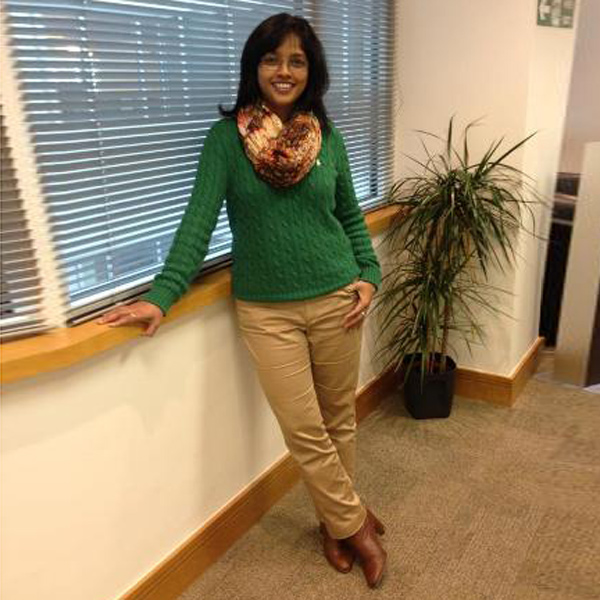
    Archana Kanade is the young and dynamic head of free to air channels business of Zee UK. Her job: increase the cachet that the two channels she heads – Zing and Lamhe – have with Britasians in the UK. In addition, she has the added responsibility of looking after mainstream advertising sales for the network.

    Under her leadership, Zing has become the most watched Asian lifestyle channel in the UK. She has also been responsible for the launch of ‘Cloud 9‘ – the UK’s first Asian drama shot locally.

    Kanade’s background is from mainstream sales, wherein she pushed Zee TV’s shows and film catalogue to global clients. This apart she has had a three year stint in Mumbai with Applause Entertainment, a former Birla group company, involved in production of TV shows and films.

    She recently spearheaded the luanch of Lamhe in the UK, giving it a snazzy look and feel. Indiantelevision.com spoke to her to get her perspective on the potential for Lamhe and Zing in the UK in a short bite interview.

    Excerpts:

    How large is the market for Indian content in the UK? How big is the TV advertising market in the UK?

    South Asians are the largest ethnic group in the UK, with a population close to three million. The appeal for Indian content amongst this group is strong with a large number of channels catering to them. Zee is the largest and fastest growing network catering to this group and aims to distinguish its offerings and provide the best in the genre for them. The advertising expenditure of the UK market is close to US $7.5 billion.

    How many viewers do you currently cater to? How many of those belong to the South Asian and Indian community?

    Zee’s two free-to-air channels are available across the major platforms – Sky on DTH and Virgin Media on cable as well as on the mobile TV service Yamgo. Zee offers premium South Asian content to the South Asian community. Its shows and movies offer English subtitles, making it accessible to the UK’s mainstream communities too. The appeal of the Indian culture and especially Bollywood is widespread across ethnic boundaries, which extends the reach of Zee’s content.

    Furthermore, many of Zing’s shows are in English and the channel aims to be a platform targeted to the second and third generation British Asians in the UK. It is showcasingCloud 9, which represents a milestone in Asian entertainment as it is the very first daily soap-series to be produced in the UK, specifically catering to the UK Asian audiences. This soap highlights the British Asian lifestyle, drawing on themes relevant to their way of life. In a never-before-seen method, the soap showcases the British Asian community in its true form, taking away stereotype perceptions regarding the UK‘s largest ethnic group – the South Asians.

    How many viewers are you catering to currently?
    The channel is available to DTH provider Sky’s subscriber base of almost 11 million, as well as on the cable service Virgin Media’s M+ Pack.

    Lamhe gives viewers the opportunity to view some of the most popular and award-winning shows in the history of South-Asian entertainment

    How are you promoting Zee Lamhe in the UK?

    The promotional plan of the new channel is designed to target the UK’s South Asian audiences through a complete 360 degree marketing plan across outdoor, print, TV, radio and the digital space. The mediums have been carefully selected to target the key pockets of the South Asian population spread in the UK to reach the almost three million strong South Asian community.

    Since both Lamhe as well as Zing are free to air channels are you planning to take them pay anytime soon?

    Zee operates along two models – its pay products and free-to-air offerings – both with distinct offerings. The premium pay products are Zee TV, Zee Cinema and Zee Punjabi. Lamhe offers a free to air window into the GEC space; it is a platform to celebrate the best in the genre of South-Asian dramas and Bollywood Classics. Zing is the UK’s number 1 Asian Lifestyle channel, delivering the best variety of the glamour of Bollywood – music, movies and news. Both channels offer content not accessible on other channels in the UK, which is why we want maximum viewers to enjoy it for free, with no current plan on making the channels subscription based.

    With the current line-up of shows that you have to offer, are you also looking at including more shows and if so, which ones?

    Lamhe gives viewers the opportunity to view some of the most popular and award-winning shows in the history of South-Asian entertainment, including classics such as:

    • Astitva – a popular series, winning many awards in 2005, focusing on the strength and courage of women’s identity.
    •  
    • Amanat – one of the most popular Hindi television shows of its time that received the highest television ratings among many of 2000’s Hindi language shows in India.
    •  
    • Hasratein – one of the most popular television shows of the 1990s, looking at the bold topic of extra-marital relationships.
    •  
    • Kasamh Se – among the top shows in India in 2008, featuring the trials and tribulations of three sisters.

    The channel will also highlight the magnanimity of Bollywood with classic movies, featuring the best of evergreen stars such as Rishi Kapoor, Dev Anand, Kishore Kumar, plus a Raj Kapoor special season at the weekends. We are delighted to already receive great enthusiasm towards this content, with many requests for other classics that people are eager to watch again. We will be monitoring this in line with the remit of presenting the best of South Asian entertainment.

    We will be monitoring the feedback, researching and accordingly selecting the content that would connect with the audiences for Lamhe

    Since Zing is targeted at the youth and Lamhe is bringing back memories from the times passed, which is the target audience group that you are looking at?

    Lamhe is targeted at an audience that will enjoy the best in the genre of dramas and classic movies. Its content is relevant to both younger and older viewers due to the nature of the topics explored by the selected shows and also the treatment of the programming. The selected shows portray topics that were ahead of their times when they were first aired. They focus on strong storylines and their edit patterns mean they are more real to life, compared to many of today’s shows, which holds for an appeal to an international audience.

    Lamhe also endeavours to bring back memories of the time when Zee TV was the only Asian channel in the UK enthralling viewers and Zee was their home away from home. With Lamhe, we want to gift our viewers an opportunity to experience those beautiful memories once again.

    What kind of content would you like to showcase in the coming months? Any movie rights acquisition going forward?

    Lamhe’s content will be driven by what the viewers want to watch. We will be monitoring the feedback, researching and accordingly selecting the content that would connect with the audiences.
  • MSOs divided on Trai’s ad regulation policy

    MUMBAI: Trai’s ad regulation proposal has divided two of the country’s leading multi-system operators (MSOs) into opposite camps with Digicable coming out in support while Hinduja Ventures-owned operator IndusInd Media and Communications Ltd opting for a no-regulation line.

    The regulator had initiated the policy to regulate ads on a clock hour basis on the premise that the country is moving towards digitisation and subscription income will become the primary source of revenue stream for broadcasters, an argument which the broadcasters have trashed outright.

    However, Digicable in its response to Trai’s consultation paper ‘Issues Related to Advertisements in TV Channels’ has suggested the cap to be only 10 minutes (eight minutes for commercials and two minutes for self-promotion) instead of 12 minutes proposed by Trai for FTA channels.

    For pay-channels, Digicable favours a cap of eight minutes (six minutes for commercials and two minutes for self-promotion) while it is against allowing commercials on HD channels except for two minutes in a clock hour.

    “If the broadcaster agrees to have a 100 per cent advertisement free channel, then he can have total forbearance on the subscription rate charged for that channel,” Digicable said.

    It also demanded that certain channels which are presently FTA in digital domain but pay in analog should be treated as pay till they have a uniform status across the country.

    IIMCL, on the other hand, favoured a more open market policy where consumers must be allowed to decide whether they want an ad-free channel or a free to air channel subsidised by advertisements.

    “It is up to the subscriber to opt to watch a channel with advertisements at a lower cost or pay premium to watch a channel without ads. Broadcasters on the other hand will automatically regulate the ad time as too many ad breaks will drive away subscribers, thus affecting their resources,” IIMCL said.

    Both the MSOs were in agreement that in case of sporting events, advertisements should be carried only during disruptions as most of the sportscasters are pay channels with certain sports like cricket being monetised heavily.

    In the case of News and Current Affairs channels, the two operators agreed on Trai’s proposal to run not more than two scrolls at the bottom of the screen and occupying not more than 10 per cent of the screen space for carrying non-commercial scrolls and tickers.

    The audio level of the advertisements should also not be higher than the audio level of the programme, both Digicable and IIMCL held.

    Stressing that India is not a pay market as consumers do not pay for content, Cable Operators Federation of India is of the view that the so called pay channels were introduced in India in an illegal way in the non-addressable networks by forcing cable operators to pay to receive them, once they became popular as FTA channels. For the last 18 years pay channels have been exploiting the cable operators using all unethical ways like blackmailing with threats of a black out, arbitrary increase in rates, forcing bouquets on consumers and making cartels for distribution.

    Cofi wants FTA channels to get 12 minutes ads in a clock hour and pay channels not to be allowed to carry any ads as they would get 100 per cent subscription in the digital regime.

    The cable association did not favour allowing ads in sports channels as they already charge the highest amount amongst all pay channels. It also agrees to permitting only full screen ads and not more than two scrolls at the bottom of a page for news and current affairs channels.

    Also Read:

    Trai‘s ad review policy to hurt biz models of sportscasters

    News channels ask Trai to sort out carriage before capping ad time

    TV networks flay Trai for ad regulation

  • ‘We have stepped up work on digitalization for Prasar Bharati’ : Baljit Singh Lalli – Prasar Bharati CEO

    ‘We have stepped up work on digitalization for Prasar Bharati’ : Baljit Singh Lalli – Prasar Bharati CEO

    Baljit Singh Lalli, who took charge as chief executive officer of Prasar Bharati at the end of December 2006, is an Indian Administrative Service officer of the 1971 batch from the Uttar Pradesh cadre with vast administrative and managerial experience spanning over three decades.


    In an interview to indiantelevision.com’s BB Nagpal, Lalli answered various questions relating to the falling revenue of Doordarshan, the cricket telecast rights controversies and other issues.


    Excerpts:

    Doordarshan’s gross revenue fell by about Rs 1300 million to RS 8,182.2 million in 2006-07, as compared to RS 9,469.6 million in 2005-06. But the gross revenue of All India Radio rose marginally by RS 148.2 million to RS 2,836.5 million in the same period. To what do you attribute these losses?
    As you know, Doordarshan has lost around RS 3400 million because it did not have the telecast rights for cricket. If you do not count what we lost because of cricket, the revenues of Doordarshan have actually gone up as far as other programmes go. But we have already made up RS 2 billion. On the other hand, AIR earned just under RS 96.4 million from the World Cup 2007.

    Why is it that Prasar Bharati wakes up so late to bid for the cricket telecast rights and then has to pass a mandatory sharing legislation?
    I cannot answer that because it happened before I joined. But you must understand that the amount for bidding for rights for up to five years is more than what a public broadcaster can afford. As far as the legislation is concerned, it is necessary to understand that the Uplinking and Downlinking Guidelines issued in November 2005 were clear on mandatory sharing of rights for terrestrial showing, but were being violated by the rights holders.

    For a long time, Prasar Bharati has been talking of strengthening its marketing strategy, but the results do not seem to be showing?
    That is not true. As I said, we have made up a lot of the losses caused because of not having telecast rights. We have now taken steps to streamline the marketing procedures. Also, the attempt is to bring in greater synergy between All India Radio and Doordarshan. We have set up a committee and sent out new proposals to our marketing people in Mumbai, Kolkata, Chennai, Guwahati and other places.


    AIR has already made more than five times the projected revenue from cricket. You should also not forget that Prasar Bharati is a public broadcaster and cannot resort to generating revenues the way some other channels can. At the same time, we are now having closer monitoring of the marketing activity, and are also recruiting professionals for the work.

    A Comptroller and Auditor General Report talks of losses on various counts, including arbitrary fixation of advertisement rates for feature films to favour certain filmmakers. How will you ensure proper checks and balances?
    I have not seen the report so far, and in any case it relates to 2004-05. We have now put a new system in place for acquiring films. We will now be able to get the best films at competitive rates, through a policy that will be completely transparent. The films will be selected in good time. The Grading Committee in Doordarshan will then categorise the films as specified in the policy. No individual producer or filmmaker will be shown favours of any kind.

    An Acquisition Policy announced by Doordarshan to acquire quality programmes has reportedly led to scams including submission of duplicate or blank tapes?
    Yes, I am aware of this case. The matter relates to October-November last year when new programmes were being acquired for the DD Urdu Channel. Our internal inquiry showed that around 250 blank tapes had been submitted along with other programmes. A committee of officers in Doordarshan is inquiring into the matter and would be able to identify those guilty and action would be taken, irrespective of whether it is only outside producers or someone within Doordarshan. As no money had been paid to any producers so far, there is no question of any loss of revenue on account of this. I am in principle opposed to acquiring old programmes, and this had been done under a policy announced before I joined.

    But this has already led to an order for transfer of senior officers in Doordarshan who have been in their posts for more than six years?
    That order has nothing to do with the tapes. In fact, I issued that general order separately for transfer at Supervisory levels. And all sections of employees have welcomed it. The section of employees most affected by this, the Programme Staff Association of AIR and DD, has sent me a letter welcoming this decision.

    You had announced earlier that Prasar Bharati would switchover to the Indian satellite Insat-4B by June. Is that work on schedule and how many transponders will you be using?
    Yes, we are shifting DD Direct, the Direct-to-Home service, to the Insat-4B from 1 June. We have been assured by the Indian Space Research Organisation that we will not face any shortage of transponders. We will initially be using five transponders but can ask for more whenever needed.


    The shift from the Netherlands-based NSS 6 will not only mean savings in foreign exchange, but also clarity in picture since the Indian satellite is better placed than the European satellite. Prasar Bharati pays NSS around RS 225 million annually. The initiative was motivated by patriotic instincts. Insat-4B is located in a geostationary orbit of 93.5 degrees East, which is closer to Indian than NSS 6, which is located at 95 degrees East.

    What about the commitment by Isro to Sun TV because of the loss of Insat-4C?
    I am aware of the reported commitment by Isro, but this will not affect DD’s requirement. The Insat-4B has 12 KU band and as many C band transponders for communication and broadcasting services. DD Direct will be able to beam up to 10 channels from each transponder. It presently beams around 32 channels of which 26 are its own, but this number is expected to go up to 50 with private FTA channels becoming available.

    What are you doing to effect a smooth transition to Insat-4B?
    We have held meetings with cable operators, hardware manufacturers and multi system operators to familiarize them with the changes that will have to be made to reach out to 4.8 million viewers of the free-to-air DD Direct. Doordarshan has circulated a four-page brochure to educate viewers and service providers about the changes to be made to their dish antennae and in the set top boxes. Though the service providers will make these changes, this can be done even by subscribers themselves. Each antenna has to be rotated (with the person standing behind the dish antenna) clockwise by 1.5 degrees to the right and tilted up by 1.5 degrees.


    DD’s DTH would be available across five transponders in the KU Band on Insat-4B, on the frequencies 10990, 11070, 11150, 11490 and 11570 MHz on vertical polarisation and a uniform symbol rate of 27500 ksps.

    We have now taken steps to streamline the marketing procedures. Also, the attempt is to bring in greater synergy between All India Radio and Doordarshan

    Will DD Direct continue to be Free-to-air?
    For the present, yes. We do not see it becoming encrypted in the near future.

    The Planning Commission’s Sub-Group on ‘Going Digital’ has recommended that Doordarshan should commence digital terrestrial transmission by the 2010 Commonwealth Games, and should have a phased approach for going digital covering all the seven mega cities by 2011 in the first phase and the rest of the country by 2013.
    Yes, the Report had also recommended a group chaired by me with some private broadcasters like Star, Zee, Sony, Eenadu etc. and their major MSOs to examine an 11-stage process. We will also consider introduction of HDTV in a phased manner starting from Delhi (2008-09), extending it to all the six mega cities to ensure coverage of Commonwealth Games in HDTV format in 2010.


    We have made some proposals which are with the Planning Commission. In fact, this is a major thrust area in the Eleventh Five-Year Plan. I personally met officials of the Planning Commission recently and gave a projection of RS 5000 crore (RS 50 billion).


    Has Prasar Bharati begun working on plans for optimum coverage of the Commonwealth Games?
    Yes. In fact, I have had one meeting with Mr Suresh Kalmadi, President of the Indian Olympic Association and Chairman of the Organising Committee for the Games, and told him we will need financial support for adequate coverage of the Games. I will be meeting him again shortly.

    A Technical Group had been set up to examine Encryption Mandate for DD signals, particularly for cricket telecasts. There appears to be a lot of disagreement among members of the Group on the issue. What is the position about this?
    Yes, the Ministry had set up a Group headed by AIR Director General Brajeshwar Singh to go into the issue. The report of the Group has already been submitted to the Information and Broadcasting Ministry, and perhaps you should be asking the question there. As far as I know, the report was unanimous.

    Prasar Bharati had announced a policy on telecasting series based on Indian Classics. What is the progress on that front?
    The work is going as planned. The Committee met recently and cleared twenty to twenty-five proposals related to Hindi, Punjabi, Bangla, Gujarati and Telugu classics. Filmmakers like MS Sathyu, Gulzar and Muzaffar Ali have been commissioned for some of the classics.

    The concerned Parliamentary Standing Committee has expressed its displeasure over the progress in Digitalisation and building of archives for Prasar Bharati?
    We have stepped up the work on digitalization. We will be able to work even after the Archives are shifted to the Central Production Centre Building in Sirifort Village. This will be done in the next two or three months after DD News shifts to the DD Building in the Mandi House area. Meanwhile, digitalization of broadcasting in the public broadcaster would be completed by 2017. Out of the 64 Doordarshan studio centers, 17 had been fully digitalized while another 30 were partly digitalized.

    DD India is available via Satellite all over the world, but there are few takers even in countries with large Indian population. DD has had to tie up with local cable operators in the United Kingdom recently. What are you doing to popularized Indian channels in other countries?
    Doordarshan has launched two channels DD India and DD News in the United Kingdom with the help of Rayat Television Enterprises Ltd. following an agreement with Prasar Bharati for the distribution of these channels in UK for a period of five years.


    DD India has seven Hindi and six English news bulletins daily, while DD News has 19 English and 24 Hindi news bulletins daily respectively. Although both these satellite channels are free to air and could be seen anywhere in the world, this is the second time that Prasar Bharati has entered into an agreement with a distributor to ensure the channels reach viewers’ homes.


    Prasar Bharati also has a similar arrangement in the United States with companies owned by persons of Indian origin. The aim will also be to reach out in the Middle East, Malaysia, the rest of Europe, Canada and so on, and the broadcaster has invited ‘Expressions of Interest’ from entrepreneurs in these countries.

    Prasar Bharati Act has provision for Broadcasting Council which never came into existence. Will this become redundant under the new Bill that provides for a Regulatory Authority?
    I think you should ask the Ministry to answer that question. I can only tell you that we have urged the Ministry to strengthen our hands, and have asked for extra funds to be invested in public service broadcasting.

    Doordarshan has launched the Digital Video Broadcasting – Handheld (DVB-H) as a Pilot Project in Delhi. What about other cities?
    The Pilot Project is aimed at reaching mobile phones within a radius of 12 kilometers of the Doordarshan television tower on Parliament Street in New Delhi. After watching the outcome of the launch of this service in Delhi, the system will be replicated in Mumbai, Kolkata, and Chennai. The service is initially free to air and the channels available are DD National (DD 1), DD News, DD Bharati, DD Sports, DD Urdu, DD Punjabi, DD Bangla and DD Podhigai. The scheme is ‘vendor neutral’ and any mobile provider with a compatible handset can download the signals and transmit them. I hope the number of channels would be raised to ten to 15 in the next few months.

    There have been promises for increasing a scientific temper in the country through the media. The private channels have not done much, and DD’s efforts in the initial years also appear to have come to a stop?
    That is not true. We recently launched Mike Pandey’s series at an appropriate time, and have commissioned the Bedi Brothers to make a new series. We have finalised an MoU with Vigyan Prasar of the Department of Science and Technology to encourage a scientific temper. Programmes have been made earlier also for Science Channel which is a joint venture of Isro and Vigyan Prasar under Department of Science and Technology (DST). Till August 2006, 60 episodes have been transmitted. The programmes are being transmitted on DD-1 as a 30-minute capsule, and programmes are aimed at children in the age group 12 to 18.

    What specific programmes are being telecast to mark 150 years of the freedom struggle?
    DD has identified a series of programmes from its own archives, like Bharat Ek Khoj by Shyam Benegal based on Jawaharlal Nehru’s The Discovery of India, Swaraj by Manju Singh, and Colours of Freedom by Buddhadeb Dasgupta. DD has also commenced telecast of Dr Girish Karnad’s series Swarajnama.

  • Pay channels fixed at Rs 5 each in CAS regime

    Pay channels fixed at Rs 5 each in CAS regime

    MUMBAI: The Telecom Regulatory Authority of India (Trai) today set a common price on all pay channels directing that under the conditional access system (CAS) regime they will cost Rs 5 per channel per subscriber per month (excluding taxes).

    The broadcast regulator has fixed the price of free-to-air (FTA) channels in the basic tier at Rs 77 (exclusive of taxes).
    The regulator, which oversees the broadcast and telecom sectors, has fixed the costing for pay channels whether new or existing at Rs 5 making it mandatory to offer all pay channels on a la carte basis.

    However, the broadcasters have been given the option to fix prices of individual pay channels, but within the prescribed ceiling. One of the salient features the regulator has highlighted is that the ‘minimum period of subscription of a pay channel has to be at least four months.

    This tariff will come into effect from 31 December 2006 in Mumbai, Delhi and Kolkata.
    Pertaining to the FTA channels, the price charged will be Rs 77 (exclusive of taxes) per subscriber/ month for a minimum of 30 channels. Additional FTA channels, if provided, also have to be accommodated within the above maximum amount.

    Trai has ensured adequate commercial interoperability, which means that a consumer can easily exit the scheme whenever desired. The regulatory has drawn two schemes for supply of set top boxes by the MSO / cable operators to compulsorily provide as part of a standard tariff package:

    a monthly rental of Rs 30 per digital set top box plus a refundable deposit of Rs 999 per box (refund will be made after deducting Rs 12.50 per month for use of the STB).

    a monthly rental 45 per digital set top box (Rs 23 for analogue set top box) with a refundable deposit of Rs 250 per box (refund will be made after deducting Rs 3 per month for use of the STB).

    The operators can offer alternative tariff packages in addition to the mandated standard tariff package, without any separate charges for installation, activation or reactivation, smart card viewing card and repair and maintenance (for five years) allowed. This salient aspect comes into force from 15 October 2006.

  • Trai poised to finish CAS-related work; price fixing of pay & FTA channels next on the agenda

    Trai poised to finish CAS-related work; price fixing of pay & FTA channels next on the agenda

    NEW DELHI: Telecom Regulatory Authority of India (Trai) is close to fixing prices of pay and free to air (FTA) channels, which will complete part of the formalities for rollout of addressability from 1 January 2007.

    According to sources in the regulatory body, which oversees the broadcast and telecom sectors, over the next few days more directives are likely to come on pricing of channels in a conditional access system (CAS) regime.

    The sources said that most major bouquets and TV channels have submitted a formula for pricing of channels for a regime when pay channels will have to go through a set top box on a mandatory basis.

    “Networks like Star and bouquets like Zee Turner and (Discovery-Sony) One Alliance are there with prices of individual channels,” a Trai source said when asked whether a la carte prices of TV channels have been submitted to the regulator or not.

    CAS is scheduled to be rolled out in the south zones of Kolkata, Delhi and Mumbai from midnight of 31 December 2006, as per a Delhi court-mandated understanding that the government has reached with the broadcast industry.

    Trai sources said that over the weekend the regulator is first likely to fix the price of free to air channels, which will form the basic tier in a CAS regime, and then follow it up with pricing of pay channels.

    Trai had asked various pay TV channels to submit a la carte prices instead of bouquet pricing, which was being pushed vigorously initially by a section of broadcasters.

    The regulator had also clarified that if the pricing of a pay TV channel in a bouquet seems unreasonable or on the higher side compared to other siblings, it will then fix a price, which will be valid for a year.

    What is not clear at the moment is whether Trai will okay individual prices of pay TV channels in a bouquet or go in for genre-wise pricing like bunching all movie channels across the spectrum, for example, and then fixing their individual prices.

    It is also expected that the price of FTA channels in the basic tier is
    likely to be more than what was fixed three years back at Rs. 72 (exclusive of taxes).

    This time round, cable operators have petitioned to Trai that the basic tier should be priced around Rs. 150 keeping in view the general inflation and increase in other sundry costs like usage of electricity poles in various cities. These charges are given to local power companies as cable ops use electricity poles to string their own cable.

    According to the sources in the regulatory body, the whole CAS-related work will have to be finished before month-end.

    Over the past few days Trai has come out with directives on quality of service for cable operators and multi-system operators and revenue share formula amongst various industry stakeholders.

  • Cable, DTH locked in ad war

    Cable, DTH locked in ad war

    MUMBAI: The ad war between direct-to-home (DTH) service providers and cable TV operators has started. Soon after Dish TV ran a full page campaign on print asking viewers to stop watching cable TV, operators have retaliated with the tagline “Cable TV – Service at your doorstep.”

    The most obvious attack is on pricing. Dish TV, the ad says, offers all channels without the Star bouquet at Rs 300 per month. After adding up the 10 per cent licence fee and taxes (entertainment and service), the monthly bill in Mumbai will work out to Rs 412. Then there is the hardware and rental cost for the set-top boxes (STBs) which have to be paid in advance. Besides, there are no discounts for multi-TV homes, the ad states.

    Cable prices in the conditional access system (CAS) areas, on the other hand, will begin from Rs 77 per month for the free-to-air (FTA) channels. The pricing for the pay channels is yet to be decided as broadcasters have to fix the rates. As for the set-top boxes, the early bird offer is Rs 2000. “With judicial intervention and government regulation now being brought in place, you too will reap benefits of CAS once it takes off from 1 January,” the ad says.

    Regarding service, cable TV has run even on days of calamities. Most of the consumer complaints are pricing related issues which are linked to pay channel hikes. “Cable networks also provide internet service. How come you never faced price related issues when dealing with the same cable network,” the ad states.

    The cable TV industry is “geared to usher in a new digital cable revolution with over 140 channels, radio services, games and on screen electronic programme guides.”

    The cablewallah may have finally woken up to the competition from alternate digital distribution platforms. The battle, as they say, is just beginning.