Tag: FTA bouquet

  • ‘CAS’e closed – Prasad allays Sena Supremo’s fears

    ‘CAS’e closed – Prasad allays Sena Supremo’s fears

    MUMBAI: “The post-CAS scenario – good interplay of market forces; healthy intervention of the government!” These were the words with which information and broadcasting minister Ravi Shankar Prasad signed off at a press conference held in Doordarshan Kendra in Mumbai this afternoon.
     

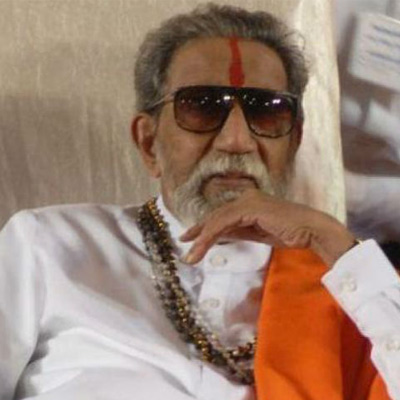
    The minister addressed a packed media conference after a delay of nearly two hours – he met Shiv Sena supremo Balasaheb Thackeray (at his Bandra residence). Prior to that, he attended an Indian Merchants Chamber- organised seminar on the conditional access system (CAS) earlier in the day.
    Speaking about his meeting with Thackeray, Prasad said the Sena chief’s concerns were justified and shouldn’t be seen as “opposition”. It may be recalled that on 5 June Thackeray, an ally of the BJP-led coalition government, had warned that the decision to go ahead with CAS would prove an “expensive one”.

    Prasad said that Thackeray’s reservations about CAS revolved around two key issues: 
    a) consumers interests must be safe-guarded and 
    b) the interests of cable operators must be taken care of because the cable operators had spearheaded the cable revolution in India through their enterprise
    (entrepreneurial spirit). 

    Prasad said Thackeray had asked him to focus on these two aspects while implementing CAS.

    Prasad said he had given assurances to Thackeray and his son Uddhav Thackeray on the matter. He also added that he had informed the Sena leaders that the monthly rental cost of the set-top-boxes (STBs) would be as low as Rs 30; as against the initial apprehensions that consumers would have to shell out up to Rs 7,000 for buying STBs outright. Prasad added that he would continue to have further interactions with the Thackerays and would keep them abreast of developments.

    Prasad added that as a step in this direction, he was appointing Shekhar Joshi of Cablevision on the CAS task force. Prasad said that this move would allay the fears of the Mumbai cable trade, which didn’t have any representation on the government appointed CAS task force.

    While reiterating that CAS would soon be a reality, Prasad noted that he was happy with the latest developments wherein MSOs (multi system operators) were willing to offer 70 plus free-to-air (FTA) channels at a monthly price of Rs 72. “I have got confirmation from the MSOs and cable operators that the channels in the FTA bouquet include 25 entertainment channels, 10 news channels, all the Doordarshan and it’s affiliate channels, several film/movie channels, music channels such as Balle Balle, regional channels such as Lashkara amongst others. Consumers will get choice,” Prasad added.

    While talking about pay channels, Prasad said he didn’t foresee any problems in the non-declaration of individual channel rates by several broadcasters as yet. “The broadcasters have asked for some extra time as they need to address several issues and I don’t see any problem or resistance. In the near future, every cable operator will have to display a list of all the pay and FTA channels outside his premises – akin to that of a ration shop,” said Prasad, while expressing the hope that all the constituents of the trade would work unitedly to make CAS a resounding success.

    Prasad expressed confidence that the monthly outgo for consumers wouldn’t exceed Rs 200. He also said that MSOs had given assurances that they would make things convenient for the consumers by giving quality after-sales service – such as warranty; buy back schemes; replacements; receipts amongst others. He envisaged that the post-CAS scenario would entail practicality and scientifically oriented practices into the earlier disorganised nature of the cable business.

    Prasad was optimistic that CAS would go through primarily because the government and ministry had taken care of two important aspects — 

    * Choice of platform – in terms of CAS, DTH, HITS 

    * Choice of content – choice in the FTA as well as pay bouquet

    While answering queries about the need for a regulatory body, Prasad said that he was open to suggestions but decried the fact that there were some
    vested interests pushing for a regulatory body in an attempt to delay and frustrate CAS. “This kind of manipulation wouldn’t be tolerated, as the
    appointment of a regulatory body would be juxtaposed with the wider context of the Convergence Bill,” Prasad said. 

    Referring to the process of educating the consumer, Prasad said several activities had been initiated and more would come. He added that the MSOs would start their helpline (call centres) by mid-June. He also requested the media to avoid creating confusion in the minds of the consumer.

    While answering a query on the issue of licences or monopoly of the cable operator in any given region post-CAS, Prasad said: “Our primary concern is to
    ensure quality of service, choice of content and platform. We feel that the industry constituents will not disappoint the consumer – and the policy makers.

    If a consumer is disillusioned, he can opt for DTH. Even in DTH, we have taken steps to ensure that there is no private monopoly. The national broadcaster
    Doordarshan has been encouraged to start DTH services and attain a big degree of professionalism.”

    Prasad might have inherited CAS from his predecessor but the I&B minister is leaving no stone unturned to ensure that the CAS “project” becomes
    successful.

    Also present at the briefing were several MSO representatives including Ashok Mansukhani (Hinduja TMT), Jagjit Singh Kohli (Win Cable) and others from the Star India-backed Hathway Cable and Datacom.

  • FTA price to be Rs 70-80 per month

    MUMBAI: The JP Morgan report concludes the final price of the FTA (free-to-air) bouquet will be around Rs 70-80 per subscriber per month.
    The JP Morgan report raises the following points about the parameters for FTA bouquet, likely prices, stance of pay channels, bundling and changes in subscription rates post CAS:
    Free-to-air bouquet parameters
    The 17-member government task force panel is in the process of deciding on the following issues:
    o The minimum number of channels that should be there in the FTA bouquet.
    o The ‘must-carry’ channels in the FTA tier. For example, the state-owned Doordarshan is likely to be a ‘must-carry’ channel.
    o The channels may also be specified genre-wise, like education and news.
    o The maximum permissible rate that should be set for the FTA bouquet.
    o All the above may be specified as separate values for different towns or provinces. For instance, it may be necessary to carry a regional channel for a particular province.
    Likely price of the FTA bouquet
    The FTA price is what the LCO will keep with himself and will not be shared with any other body. There is currently a stalemate in the decision on FTA prices. The LCOs feel that their costs justify a price of over Rs 150 per subscriber per month. The finance ministry has suggested a rate of around Rs 40-50 per subscriber per month for the FTA bouquet.
    The final price of the FTA bouquet will be around Rs 70-80 per subscriber/month. Talks with the LCOs, MSOs and broadcasters indicate that the final settlement will be reached around the above-mentioned levels.
    A point to note regarding FTA is that the subscriber will have to pay entertainment and service tax on top of the set FTA price. Currently, the entertainment tax is different across states. For example, Mumbai has a flat entertainment tax rate of Rs 30/subscriber/month. The government is trying to work out some uniform rate in this regard. Overall, the FTA bouquet inclusive of taxes will cost around Rs 105-110 /month to the subscriber.
    Stance of pay channels 
    The decision to go FTA is like a prisoner’s dilemma for the broadcasters. If any of the three flagship general entertainment channels go FTA, for want of better reach and boost in advertisement revenues, it might lead to all of them going FTA. Thus, effectively it will spoil the subscription revenue stream for all the bouquets.
    The revenue mix between advertisement and pay revenues has been shifting towards pay for all the players, due to the heavy growth in domestic pay revenues. As such it is unlikely that any of the three channels will shift to FTA mode. The chairman of Zee TV had announced in the company’s earnings call about their unwillingness to go FTA. Industry people confirm that all three flagship channels will remain pay.
    Will Subscription Rates Come Down?
    There is a definite chance that subscription rates will come down in the long term.
    The Star bouquet, for instance, had announced that it was going to charge a lower rate to cable operators with higher declaration in their latest price revision. The prices that pay channels will charge will depend on the FTA bouquet pricing as determined by the task force.
    Additionally, rates can only come down when the declaration levels increase, i.e., there is considerable offtake of the STBs. Thus, there is a chicken and egg situation here, where lower prices will lead to a rise in subscriber offtake and a rise in subscriptions will lead to a drop in prices. The situation is very similar to the Indian cellular market where subscriber numbers exploded with the drop in tariffs.
    Overall, the broadcaster will determine how much lower prices will drop. There might be a small drop in prices initially, though these are likely to drop further in the medium to long term.
    Bundling of channels 
    The government statement that subscribers will be able to choose and pay for only the channels they want to see is often quoted as an argument that each channel should be offered separately as well. The law requires that every cable operator must publicly declare to his subscribers the price of each pay channel. This implies that satellite broadcasters must list the individual cost of each pay channel.
    However, there is no diktat against the grouping together of pay channels-even offering a group of channels at a lower rate than the individual channel as a stand-alone. The matter of whether a bundle of channels can be offered is thus one possible grey area. Currently, there is nothing to stop the bouquets from bundling their channels, as long as they provide the individual channel rates as well.
    The bundling of channels is also disadvantageous from the viewpoint of the cable operator who sets up the encoders. If bundling is done, the realization from the incremental channel (which is bundled with stronger channels) will effectively be low, but the investment required for it will be equal to the stronger channel.
    Revenue-Sharing agreement for the Pay Channels
    Negotiations are on between broadcasters and cable operators to reach an amicable settlement regarding the revenue share of subscription revenues. Currently, cable operators are demanding around 70 per cent of the revenues, which broadcasters are not willing to part with.
    Globally, the broadcasters retain around 40-60 per cent of the subscription revenues. The situation in India will be similar, where broadcasters will likely get around 50 per cent of the total revenue pie, though this will depend on the popularity of the channel per se. The remaining revenue will be shared between the MSO and the LCO, with the MSO getting a much greater share.
    Legislation To Limit Advertising Time on Pay Channels
    It is unlikely that there will be any legislation curtailing or specifying time limits for advertising on pay channels. Industry sources indicate that they believe that market forces should be allowed to handle issues like these.
    Possibility of Under-Declaration in the CAS scenario
    The digital STBs that are likely to be used for CAS can be hacked. In fact, some industry people claim that high-end analog boxes offer more security than lower-end digital boxes. Piracy is unlikely to be eliminated overall. There will certainly be improvements in the declaration levels, but we expect the declarations to be around 70-80 per cent and not the entire 100 per cent.