Tag: FTA

  • Star Utsav snatches crown from Dangal in FTA showdown

    Star Utsav snatches crown from Dangal in FTA showdown

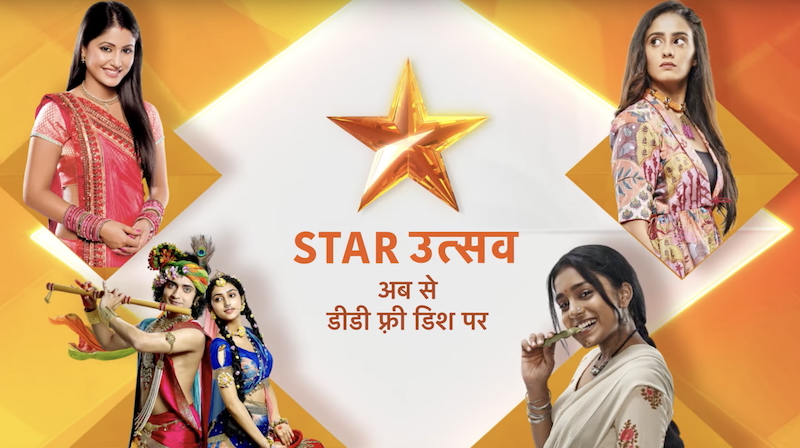
    MUMBAI: Star Utsav has stormed back into the Free-to-Air (FTA) arena, snatching the No. 1 spot from long-time leader Dangal and catapulting itself to fourth place overall across the Hindi-speaking market, both pay and FTA, in urban and rural India.

    Having rejoined DD Free Dish on 1 April, Star Utsav wasted no time making its presence felt—reaching 111 million viewers within just 11 days of its comeback.  The channel says it managed to get 102 GRPs against Dangal’s 97 in BARC week 14 HSM U+R.

    With heavy-hitters like RadhaKrishn, Rabba Ve, Yeh Rishta Kya Kehlata Hai and Ghum Hai Kisikey Pyaar Meiin, the channel seems to have found its old rhythm and then some.

    “Star Utsav has risen to become the new  no1 FTA channel, ushering in a transformative era in Hindi entertainment. This is just the beginning of a revolution in FTA television, reshaping India’s viewing habits for the future,” said the network’s advertising sales team in a post on Linkedin.

    The timing couldn’t be better. With rising data costs, patchy rural internet, and pricey pay-TV packs, FTA TV is looking more attractive than ever. Add to that a boom in electrification and cheaper TV sets, and it’s a recipe for ratings gold.

    The return of legacy FTA giants—Star Utsav, Sony Pal, Colors Rishtey and Zee Anmol—has breathed new life into DD Free Dish, Prasar Bharati’s free DTH service. As per the FICCI-EY report, FTA homes are set to rise from 49 million in 2024 to 57 million by 2030. And with ad revenues already north of Rs 2,000 crore, there’s more than just eyeballs at stake.

    Star Utsav’s re-entry has shaken up the pecking order—and with more homes plugging in every year, the FTA slugfest has only just begun.

  • Zeel Q2 PAT down by 58.3%; revenue up by 2.5%

    Zeel Q2 PAT down by 58.3%; revenue up by 2.5%

    Mumbai: Zee Enterprise Entertainment on Friday reported that second quarter revenue grew by 2.5 per cent to Rs 20,284 million compared to the same quarter in the previous fiscal. Q2 FY23 Ebitda (earnings before interest, taxes, depreciation, and amortisation) was down 28 per cent to Rs 2,973 million. It was impacted by slower growth in revenue and elevated investment in content, marketing, and technology. Ebitda margin was 14.7 per cent compared to 20.8 per cent for the same quarter in the previous fiscal. Profit after tax (PAT) fell by 58.3 per cent to Rs 1,128 million. Profit Before Tax fell by 50.7 per cent to $1,769 million.

    It said that a challenging macroeconomic environment continues to impact operating performance. Domestic ad revenues came in at Rs. 9,610 million, a decline of 7.7 per cent. Ad revenue growth was hampered by FTA withdrawal (Zee Anmol) and a difficult macroeconomic environment. Other sales and services revenue YoY is up 92 per cent aided by theatrical revenues and other syndication deals. Programming and technology costs increased due to higher theatrical releases, investments in Zee5 and higher programming hours in the linear business. Subscription revenue was up 4.2 per cent compared to the same quarter in the previous fiscal year.

    Q2 FY23 subscription revenues were aided by catch-up revenue from the previous quarter in the linear business and underlying organic growth in Zeee5 and music subscription revenues. Other sales and services revenue was up by 92 per cent aided by theatrical revenues and other syndication deals. The increase in marketing costs on a YoY basis is on account of new content launches and higher theatrical releases. Internationally, in Q2 FY23 ad revenue was Rs 518 million and subscription revenue was Rs 1,060 million.

    It stated that it would continue to invest in ZeeTV, Zee Marathi, Zee Tamil, and Movies in order to increase market share.

    Further, it strengthened its market position in Bangla, Odiya, Telugu and in the Kannada market. Q2 FY23 all-India TV network share was 16 per cent. QoQ it was up by 30 bps.

    Its OTT platform Zee5 reported Q2 revenues of Rs1,671 million, marking a 28 per cent growth over the same period in the previous fiscal. Zee5 global MAUs in Q2 FY23 were 112.4 million. This was an increase of 19 million over the same period in the previous fiscal year. The average watch time per month in Q2 FY23 was 198 minutes, an increase of 12 minutes over the same period in the previous fiscal. Over 66 shows and movies (including six originals) were released during the quarter.

    For Zee Studio, four Hindi and six regional movies were released during the quarter. Zeel also said that Zee Music Company is the second-largest music label with 89 million subscribers on YouTube.

  • Centre approves amendments in FM Radio Phase-III Policy guidelines

    Centre approves amendments in FM Radio Phase-III Policy guidelines

    Mumbai: The central government has approved the amendments to certain provisions contained in the policy guidelines on the expansion of FM radio broadcasting services through private agencies (phase-III), referred to as the private FM phase-III policy guidelines.

    The decision was taken in a cabinet meeting chaired by Prime Minister Narendra Modi.

    The three-year window for restructuring FM radio permissions within the same management group throughout the licensing duration of 15 years has been eliminated by the government in order to move in this direction.

    The government has also agreed to remove the 15 per cent national cap on channel holdings, which has been a long-standing demand of the radio industry.

    Furthermore, as part of the FM radio policy’s simplification of financial eligibility norms, an applicant company can now participate in bidding for ‘C’ and ‘D’ category cities with a net worth of just Rs 1 crore, as opposed to Rs 1.5 crore previously.

    These three amendments will help the private FM radio industry fully leverage economies of scale and pave the way for further FM radio and entertainment expansion in tier-III cities across the country.

    This will not only create new job opportunities but will also ensure that music and entertainment are accessible to the general public in even the most remote parts of the country through FTA (free-to-air) radio media.

    To improve the ease of doing business in the country, the government has focused on simplifying and rationalising existing rules in order to make governance more efficient and effective, so that the benefits reach the common man.

  • FanCode & DD Sports partner for exclusive TV broadcast of India tour of West Indies

    FanCode & DD Sports partner for exclusive TV broadcast of India tour of West Indies

    MUMBAI: The Indian cricket team will play with West Indies in an eight-match series comprising three ODIs and five Twenty20 Internationals. The series will run from 22 July – 7 August 2022. The matches will stream digitally on the Dream11-owned platform FanCode. The company, which has the rights for West Indies Cricket till 2024 has sub-licensed the broadcast rights to free-to-air (FTA) platform DD Sports, which is available in 210 million homes across the country. Sports-only digital platform FanCode has announced the exclusive partnership with DD Sports aims to build accessibility for the tour for television viewers across the country.

    This marks the first time in over two decades that the pubcaster will exclusively telecast Indian cricket on the television. The matches will be on air during primetime. ODIs start at 7 p.m and T20Is start at 8 p.m.

    Prasar Bharati CEO Mayank Kumar Agrawal said, “Cricket is the undisputed leader in sports & entertainment in India. Even in the fast-growing digital age, there continues to be a significant market and audience for sports consumption on television, and we are glad to bring the upcoming India tour of the West Indies to the masses through DD Sports. While FanCode is building a unique digital experience for sports fans, their extension of rights to DD Sports will mean wider access to all sports fans for the series.”

    FanCode co-founder Prasana Krishnan said, ”FanCode’s single-most objective is to provide superlative user experience and solve for accessibility gaps fans to witness in sports consumption and experience, in line with the government’s vision to transform India’s adaptability for digital through initiatives like Digital India. DD Sports’ reach in smaller cities and towns is unbeatable, making it the ideal platform to televise the India tour of West Indies, while we continue to build a superior digital experience for fans nationally.”

    The series for the record will be absent on private channels. Normally DD only airs India cricket on Freedish for which content sharing by the rights holder is mandatory. In this case, the rights holder is a subscription-based digital platform that does not have a TV channel. Last year, FanCode had inked a deal with the West Indies Cricket Board (WICB) to air the series until 2024. During the rights period, India is also scheduled to make another visit to the West Indies besides the upcoming series.

    Other teams who will visit the West Indies in the rights period for cricket series include England, Australia, South Africa and Pakistan. Earlier, WICB rights were with Sony Pictures Networks India (SPNI).

    FanCode decided to go after consolidated rights (TV+Digital) as it wants to grow its subscriber base. It has been learnt that the rates on DD Sports are Rs 3 lakh for a spot on ODIs and Rs 5 lakh for the Twenty20 Internationals. Vin Global Media is the sales agent that is selling the series on DD Sports to advertisers. Ad revenue is the norm and will be shared 75:25 in favour of the rights holder who in this case is FanCode.

    Advertisers are said to be surprised that the series is on FTA. The last two Twenty20 Internationals will be played in Florida, America.

    Lodestar UM VP Avinash Hegde said that the good news is that the matches are in primetime. At the same time, marketing and promotional activities will need to be done to inform consumers that the matches are going to be available on TV exclusively on DD Sports. “Consumers were used to watching West indies cricket matches on Sony. The need would be to see how Doordarshan manages to communicate to the cricket fans and promote the series effectively. The series not being on a private broadcaster could see a small amount of viewer disconnect. So the communication must be effective. This is where things will settle”. FanCode will also need to do effective marketing to drive cricket fans to its subscription platform.

  • TV Adex likely to grow by 13% in 2022, says ZEEL ad sales chief Ashish Sehgal

    TV Adex likely to grow by 13% in 2022, says ZEEL ad sales chief Ashish Sehgal

    Mumbai: Despite the threat of inflation, which is already hurting the fast-moving consumer goods (FMCG) category, which accounts for around 40 per cent of the television advertising market, Zee Entertainment Enterprises (ZEEL) chief growth officer – ad sales, Ashish Sehgal expects the TV Adex (TV advertising exchange) to grow by 13 per cent in 2022.

    He said that so far this year, due to the declining impact of Covid-19, the growth stood at 10 per cent. However, this was not the case last year due to the pandemic restrictions. He expects local brands, which were absent from the market for the last couple of years because of Covid-19, to make a strong comeback.

    “In January due to Covid-19 the TV Adex went down a bit, but from February the Adex started to grow. Due to the IPL, things have been good since February. Entertainment, cinema and even news have enjoyed a good run. Elections benefit the news industry in the first quarter,” he added. “The TV Adex should have grown by 10 per cent over the previous year so far. By 2022, it should grow by 13 per cent.”
    He proceeds further by adding that inflation is mainly hurting FMCGs. “Even in auto, the activity is growing now. New launches will happen. Telecom is advertising. BFSI has been quite active over the past six months. BFSI may slow down in July and August but in the upcoming festive season it should pick up. When the LIC IPO came, LIC advertised. I see other companies in insurance and banking following suit in terms of the same activity. The new D2C startups are bringing in a lot of money. E-commerce ad spends from the likes of Flipkart and Amazon will only grow in 2022.”

    When asked about startups experiencing funding slowdown and potential impact on ad spending he said that they will shift money from cricket to less expensive avenues like entertainment. “Companies will pump in money into the entertainment category. Earlier, they were putting money into cricket but now they are diverting money into cheaper genres like entertainment. Of course by the time the funding slowdown hit startups the IPL ad deals had already been done. Also, the IPL ratings were down but the deals are signed now. IPL made more revenue than last year.”

    Speaking about the same, he added, “but cricket might get impacted by startups shifting track going forward. These startups are also advertising in print. You have to remember that D2C startups cannot stop advertising otherwise their customer acquisition strategy will get affected. They are looking at cheaper options and are aiming to rationalise their ad spends better.”

    Sehgal feels that the English genre is likely to benefit from the New Tariff Order (NTO) because the ad pie is small. The subscription revenues now are important for them. “As far as music is concerned the genre is benefiting from free-to-air (FTA) viewership. Infotainment is in the same boat as English but it is slightly better off because there is not much content on OTT. So their ad revenue situation is better.”

    According to ZEEL, from his perspective, entertainment accounts for around 65 per cent of revenue, but cinema is also growing. “We have the largest cinema library as well as the largest number of cinema channels. Tentpole properties are very important for the topline. In cinemas, a lot of movie premieres are lined up, which was not the case last year. This will propel ad revenue.”

    Talking about the importance of regional channels, Sehgal said that the major ad revenue growth for ZEEL is happening here, whether it is in the South, Punjabi, Oriya, Bangla or Marathi. “They all are contributing to the growth. They can tap into the local retail brands. Their contribution was subdued for the last two years due to Covid-19. Now, they are back in business and so they are advertising now.”
    Simultaneously, he mentioned the OTT as an addition to TV not eating the TV’s pie. “Today advertisers use the TV for reach and OTT for re-targeting. The AVOD (advertising-based video on demand) consumers are similar viewers to TV. The kind of content being watched on OTT AVOD is the same that airs on TV first.

    Explaining ZEEL’s strategy for ad solutions, he said that the company’s branded solution team has created an Ad funded program. “In some shows, brands get integrated which allows them to be present within the content. In addition, ZEEL helps brands through influencer marketing where characters from shows become influencers for brands. Commercials are created.”

    Sehgal believes the number of pay television channels consolidation will stay the same, as the number of non-premium channels is not growing. The only new channels are in the FTA space. “Everybody has their space. In an unexplored market, a new pay channel might be launched which we did in Punjab two years back, but not otherwise, channels will sustain. FTA will also sustain as the viewership is different. Advertisers use FTA channels as there is no other medium to reach that consumer.”

    He also noted that news will do well as it has a wide reach from pay to FTA. “In metros, event development led people to switch to news channels even on direct-to-home (DTH). News is a unique genre, from metros to rural the audience is available, for advertisers news has separate FTA space. Also, for the upcoming 2024 general elections, the government (in the next four to six months) will start pumping in money. The news genre will certainly fetch the majority of this fund. The state elections are an addition to this genre.”

    “The four big networks including ZEEL adhere to the ad cap guidelines and they do not violate them. For ZEEL it tends to be 12+2,” he concluded.

  • The Q’s client list has grown 6 times since its launch on DD Free Dish: CEO Simran Hoon

    The Q’s client list has grown 6 times since its launch on DD Free Dish: CEO Simran Hoon

    Mumbai: Since its launch in December 2017, growing the channel’s distribution has been a top priority for The Q. Realising the potential of small-town India for which television is still either the only or main source of entertainment, the media start-up hopped on to DD Free Dish in March-April and the numbers thereafter are a testimony to the plan’s success.

    Earlier this year, the Company issued a statement declaring that it has “reached its 2021 goal of distribution to 100 Million TV Households as a result of launching on both DD Free Dish and Dish TV in April. The Q India has gone live to 50 million additional TV homes in the month of April.”

    As regards GRPs – the vital metric used to project revenue growth – The Q recorded the highest-ever GRP of 53 in Barc Week 21 (June) in addition to an eight-week average of 46.23, indicating it’s heading into the big league of channels. Buoyed by the growth the ‘start-up’ is gradually expanding into a full-fledged network. It has also ventured into content production with the first TV original ‘Jurm Ka Chehra’ launching in September.  

    While the figures speak for themselves, Indiantelevision.com decided to decode the recent developments on the creative, business, and organisational front in a candid interaction with The Q CEO- Simran Hoon who joined the Company in April. With over two decades of experience in the industry having worked for leading brands including Viacom18, ZEEL, STAR, and SET, Hoon is responsible for driving The Q’s overall growth and vision. The marathoner and animal lover CEO charts the brand’s trajectory post coming on to DD Free Dish.

    Programming for a Changing Audience

    From VOD to DTH and now DD Free Dish, the path trodden by The Q has been quite unlike any other in the Hindi GEC space. Yet, says Hoon the “journey became more interesting April onwards, since launching on DD Free Dish.” Previously, the channel’s programming was targeted at an urban audience, but with the footprint expanding into the hinterland, the content evolved into a more massy and family-inclusive tone. “The moment we came on to DD Free Dish we had to address the big households in Tier 1 and 2 towns without antagonising the urban viewer who obviously has a lot in common with the smaller towns; the differentiation is more pronounced in the minds of the marketers.”

    The change has translated into a preponderance of shows such as ‘Yo-Yo Yogesh’ and ‘Baklol’ over the likes of ‘Tantra by Vikram Bhatt’ and ‘Living in Trends’ (LIT) in the content mix.

    Through all the experimenting with family-oriented shows and now with content production, the channel has been able to successfully uphold its brand ethos of ‘Zara Hat Ke’ and having a ‘social element’ in all its programming. While other players in the FTA space are running repeat content consisting mostly of family dramas that are over a year old, The Q has no plans of going the ‘saas-bahu way’ which according to Hoon is suited for an older audience. “Though finally family-inclusive, we have stuck to our core TG of 15 to 35-year-olds and the promise of offering them more fun, differentiated and easy kind of programming. Our content is carefully curated to suit all age groups,” she shares adding that comedy is a big genre on the channel now.

    Since its launch as an independent advertiser and influencer-marketing-supported Hindi youth entertainment channel, The Q has been redefining TV to mean ‘social’ by delivering digital programming to the medium. For the unorthodox FTA player, the description of ‘Connected TV’ entails not just a connection to the internet, but to the network of people as well. Going forward, even as the Company steps up original production, it will ensure a social connect for all its content. Sharing an example, Hoon reveals, “The casting for our upcoming crime show ‘Jurm Ka Chehra’ was done on ‘Chingari’ (the short video app). In the future, the audience will see a lot of stuff where we bring social to TV.”

    The Advertising Windfall

    Hoon shares that as a brand offering fresh (on TV) content, The Q has not faced the problem of discounted ad rates like other FTA players, and now, with the steady growth in viewership post launching on DD Free Dish, there has been an increase in advertiser onboarding, awareness and acceptance of the channel.

    From around five clients in the first quarter of CY 2021, the numbers have grown six times to include 30 advertisers in the current list. “The mainstay of the FTA channels is FMCG, but we have a lot more e-commerce, pharma, and digital payment companies coming in, even as our client list continues to grow further,” shares Hoon.

    In order to service the increasing demand, the Company hired Ashish Kotekar as head of ad sales for South & West regions in May, and Pankaj Rai for North & East in August. The channel also has plans to go regional, but for now, the focus will be on the HSM.

    Recently, The Q and Chtrbox (an influencer marketing platform acquired by The Q in June) announced the launch of an integrated marketing platform BharatBox which will deliver integrated advertising solutions across linear and digital platforms to marketers, thus maintaining the channel’s ‘social DNA’ even on the business front. “It’s a unique proposition where we will be offering to brands integrated advertising solutions that synergise the reach of social media influencers with The Q’s TV reach.  BharatBox will reach out to tier 2 and 3 towns,” Hoon elaborates.

    Future-ready

    Moving ahead from content and business, The Q has a lot of action happening on the organisational front as well. In addition to Krishna Menon’s elevation as the COO in May, and the new hires for ad sales, the Company appointed Sujata Samant as head of marketing this month. It is pertinent to note here that The Q has not launched any extensive marketing campaigns till now. Further, a distribution consultant and HR head were brought on board recently.

    Hoon credits Tanya Shukla, the programming head, for bringing the brand to where it stands today in that context. Shukla has been in the role for a year now. Giving an understanding of the Company’s overall vision, Hoon remarks, “We are in the process of maturing from a small operating company, a start-up that we still are, to a full-fledged organisation. More people are starting off in different roles and departments even as we speak right now. The recognition that The Q has got has been a little overwhelming for us, but with the right elements in place, we are ready to be seen as a ‘network for the future.”

  • Guest column: Is FTA ready for format shows?

    Guest column: Is FTA ready for format shows?

    MUMBAI: FTA Channels in the prequel era, before they left the space, had for the first time opened up a world of eyeballs and revenue that was being under-served and built successful revenues and business models. Since content was free and was already monetized and exposed on the pay channels catering to urban eyeballs for all the main players. However, while the business was lucrative and it added hundreds of crores worth in revenue to all the players in the FTA platform. Even the weakest player pulled in almost 100crs worth of advertising revenue with a relatively low cost of operation to air/run these channels. But the revenues weren’t negligible. In fact, a few channels almost matched big urban pay Hindi movie channel revenues. That was the kind of weight that FTA channels were punching with.

    Even at that time, over 170+ clients were buying these eyeballs & markets. These were mainly led by the FMCGs. The GRP pie was 500+ amongst the top six players in GEC FTA space and the trading levels were very low, as the mystical CPRP was designed for the urban & pay channel trading. A few players of the market got smart and made it U+R base, purely for negotiations and better rates. But no one was willing to unlock or set a benchmark for the rural group as GRPs on Rural base were available in 100s and more. So, the FTA pricing then became a Sell that had very little buy in from both sides of the table. But still, the revenue pie was over Rs. 1200 crores two to three years ago.

    Today, all players are back. The GRP pie is again back to its glory of 500 + and the clientele is also back to in excess of 160+ advertisers. This time we have new categories of clients that include education, gaming, etc but FMCG still leads the pack. But as most old clients have matured in the urban market, they are looking for newer markets to grow in. The brightest minds speaking and predicting about the recovery of the economic growth are pointing towards “Rural first”. All this is giving the FTA channels a massive advantage as these markets had to depend on print/outdoor/radio and cinema and got very little support for TV. That has now changed. The revenue pie too has recovered the fastest for FTA and has grown despite the challenges that the other categories of channels are facing in terms of ad bucks.

    Learnings from then and now: Will the Twain meet?

    The trading levels are designed for urban pay channels to take lion’s share of the revenue pie. Investments for pay channels are of course significantly more or rather better read as that investment in FTA Hindi GEC is significantly low. Most FTA channels have a larger interest as they have pay and urban centric channels as a group. So, it’s a catch-22 on how to work the true value of the seemingly presented poorer family member. If the business plan is to be looked with the lens of ‘Since content is free, all the value generated is profit’ then this space will languish instead of flourishing.

    Is FTA ready for format shows? Is FTA ready for original shows with U+R or rural taste in programming? Are education and sports (non-cricket) ready to build successful revenue models on this platform? Can made for FTA movies be produced at budgets that can be supported by these channels? In spite of having the world’s leading badminton players, we struggle to build a revenue model around it. Wresting too has arguably been a great opportunity missed.

    All in all, can FTA be priced  aptly and fairly for the audiences it delivers and the markets that it reaches? Can FCT that was free commercial time but was always paid for be applicable to FTA as it’s called free to air?  Interesting times await…

    (The author is COO, Enterr10 Television. Indiantelevision.com may not subscribe to his views.)  

  • Goldmines Telefilms goes big with Dhinchaak, aims to cover 90% HSM market

    Goldmines Telefilms goes big with Dhinchaak, aims to cover 90% HSM market

    MUMBAI: Goldmines Telefilms recently reached a new milestone with the launch of its free to air (FTA) Hindi movie channel Dhinchaak on India’s only FTA DTH platform DD Free Dish on 24 May 2020. Within three months of its launch, the channel rose through the ranks to become number one, that too in a highly competitive category with 30 plus rivals. Dhinchaak is now a leading movie channel in both the Hindi speaking market (HSM) overall (U+R) and rural market.

    In a chat with indiantelevision.com, Goldmines Telefilms director Manish Shah said that the company had participated in an auction of DD Free Dish and they were all set to go on air from 1 April 2020. But as the nationwide lockdown was imposed from 16 March, Shah was not able to launch Dhinchaak on time.

    “It has been a very exciting journey along with a lot of stress and we went into a scenario where everyone was working from home. It called for a lot of efforts. But since I have been running Goldmines Telefilms for the past 15 years and I have a better understanding of content, we know what audiences want and what they prefer,” added Shah.

    Dhinchaak came in on the number five spot with 48 GRPs in its first reported data in week 31, and grew steadily over the subsequent months to reach a 73 GRP mark in the week ending 1 October. The movie channel has been consistent, being the number one ranked channel for the last four weeks in HSM 2+ Overall and the HSM FTA Category. Five out of the top 10 movies in week 38 and 39 in HSM 2+ and nine out of the top ten movies in HSM rural in week 37 were from Dhinchaak.

    The channel is currently available on DD Free Dish, Dish TV, Tata Sky, DAN, Hathaway and InDigital cable among other distribution platform operators in India.

    Looking at the big picture

    Over the years, Goldmines Telefilms has become one of the biggest players in terrestrial television rights. The studio has assigned the satellite rights of many movies to major channels in the Hindi movie industry with a success ratio of over 80 per cent, said Shah. He is interested in designing content that can be watched by the entire family together. According to Shah, Goldmines has covered 70 per cent of the Indian market and the rest 30 per cent will be swept up in due course of time.  

    The company already has a powerful digital presence, with 15 channels and 42 million subscribers for the main Goldmines Telefilms channel on YouTube, and an ever-growing digital revenue model, revealed Shah.

    Besides having the biggest library of south Indian movies, Goldmines has also been a pioneer in their dubbing. But Shah is now looking at the big picture: he will distribute his content pan India, with Hindi-speaking market being the prime focus. He mentioned that the studio has covered 90 per cent of the Bihar and Madhya Pradesh segment whereas for Uttar Pradesh it is at 70 per cent. Till December, Shah aims to have a distribution model that will attract 90 per cent of the audiences.

    Read more stories on Goldmine Telefilms

    Content is king

    Elucidating more about syndication and acquisition of content, Shah said that the channel has a library of 2000+ blockbuster titles. From time-tested chartbusters like Sarrainodu, DJ, Kanchana, Kanchana 2, Theri, Bhairava, Betting Raja, they also have a slew of world television premieres lined up. Apart from dubbed south Indian movies Dhinchaak will also screen Hindi movies like Badhaai Ho, Kalank, Gentleman, India’s Most Wanted, Mohenjo Daro, among others.

    During the pandemic, the studio opted a digital route to acquire content. As of now the studio will continue using its own library to showcase movies on Dhinchaak but Shah is willing to source content from other production houses as well. However, he is clear that he will not syndicate his movies to anyone. Whatever content they have it is only for their channel. He considers Sony Max, Zee Cinema, Star Gold as their closest competitor.

    On marketing and monetisation

    As far as marketing and promotion are concerned, the Goldmines director is looking at organically growing the channel. “We have not spent a single amount on promotions, I always believed that your growth has to be organic. I am extremely happy with the responses that I receive. We do promotions through our own social media platforms. On YouTube we have 100 million views a day. Based on audience response, we create our content. Across all platforms we have 10,000 videos uploaded. On Facebook we are growing 100 per cent on a month-on-month basis. We are also present on Amazon, MX Player and other similar platforms,” he said.

    Shah is confident that with the help of Siddharth Chopra, who heads the revenue department for the network, he will be able to associate with major brands. Chopra’s last stint was with Times Network, where he was VP and national sales head of the English entertainment cluster. Shah also admitted that as of now the channel is not being monetized, but he is currently in talks with various advertisers and expects they will be onboard by mid-October.

  • DD Free Dish adds three new channels

    DD Free Dish adds three new channels

    KOLKATA: The state broadcaster run free-to-air DTH platform DD Free Dish has added three new channels. These include ANB News, Aryan TV National and News India 24×7.

    These channels won the bid during the 47th e-auctions that was held on 26 August. They are allotted slots for the period between 1 September 2020 to 31 March 2021.

    The broadcaster announced the addition of two new channels earlier in August.

    All of the three channels which have a presence on other DTH platforms as well fall under News category- ANB News is a Punjab based Hindi news channel,  Aryan TV National, a Bihar based Hindi news channel and News India 24×7 is a Rajasthan based Hindi news channel.

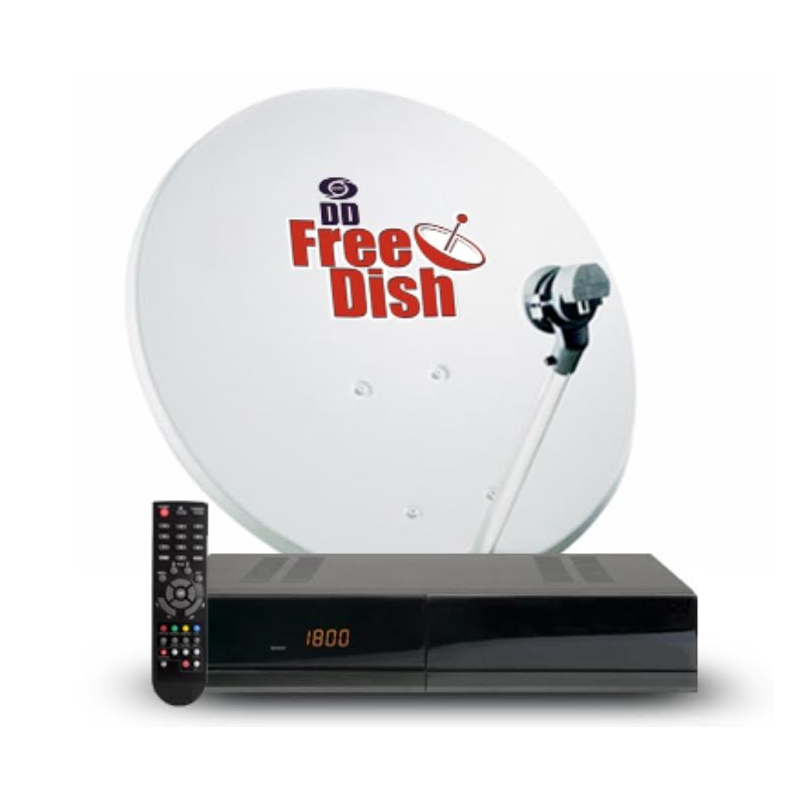
    Doordarshan started its DTH service as DD Direct+ in December 2004, which was renamed as DD Free Dish on 27 August 2013. At present, its capacity is two HD channels, 106 SDTV channels along with 48 Radio channels. DD Free Dish has a reach of more than 38 million households, which is about 15 per cent of the total TV Households in the country.

  • ABP Network to shift from FTA to pay

    ABP Network to shift from FTA to pay

    KOLKATA: The news network which recently decided to reposition its brand identity from ABP News Network to ABP Network is also bringing a change to its business model. ABP Network chief executive officer Avinash Pandey said that the network will soon go pay from its current free-to-air (FTA) model.

    “We are quite determined we will soon become pay. We are building that kind of content to be acceptable to the people who pay for content.  Our regional channels were already on pay model. We only went FTA because of uncertain environment caused by NTO 1.0. From carriage perspective, NTO 2.0 is favourable,” Pandey said in a virtual fireside chat with Indiantelevision.com founder, CEO and editor in chief Anil Wanvari.

    Pandey also noted that he is not in favour of the free-to-air model because anything free in this country is taken for granted. “So, in today’s world when you have WhatsApp circulating all the videos you are likely to show in the evening and Twitter already debating views and counter views before you discuss anything on TV it’s already discussed online. In this scenario, how to build a pay channel is the challenge,” he said.