The print media scene in the country is set for exciting times ahead. Recently the Financial Times of London announced that it picked up a 13.85 per cent of equity stake in Business Standard for Rs 140.1 million.
All editions of the Business Standard carry one page of Financial Times content from Monday to Saturday. FT’s content also appears on Business Standard‘s website.
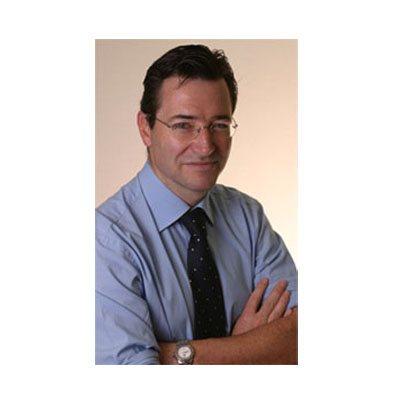
Indiantelevision.com’s correspondent Ashwin Pinto caught up with Financial Times Asia editor and publisher John Ridding for a quick chat on the sidelines of a media briefing. Based in Hong Kong. he is also part-time chairman of Pearson, the group which owns the FT, in Asia.
John was the deputy editor of the FT from September 2001 to July 2003. Before taking up that position, he had been the managing editor for two years. Joining the FT in 1987, he held a series of reporting and editing posts, including Hong Kong bureau chief, Paris correspondent, deputy features editor, Korea correspondent, UK companies reporter and foreign desk correspondent. Between 1986 and 1987, John worked at Oxford Analytica on the Asia Pacific desk.
Could you provide an overview of the strategy of The Financial Times?
Broadly in a nutshell our strategy is to be the dominant global source of business news and analysis.
Last year we completed the final piece in the jigsaw puzzle which was the Asia expansion. We are very
strong in the UK, Europe and US. More than two thirds of our circulation comes outside our home market.
I think that this shows that we are thoroughly international. It also means that we have an independent balanced view of the world. We don’t have a US, UK or a European agenda. We are very international in our perspective. Our journalists including myself have worked in many countries. So we have a very balanced view of world politics and economics.
The second important strategy is that in all of our markets wherever we are our focus is the top end of the market. It is the decision makers, chief executives, the finance directors and the top
politicians. So we are not necessarily trying to sell millions of copies. However we do want to make sure that anyone who is influential and who is making significant decisions in business, finance, politics
and society read the FT. Our message is that if they are not reading the FT then they are losing out. They are not as well informed as they should be. So it is really about targeting that top end of the market.
What are you hoping to achieve through tying up with Business Standard?
Our relationship with The Business Standard is a symbol of our broad global strategy. This is to find
partners in markets that share the same vision as we do. We feel that the Indian business audience is
growing rapidly. It is becoming increasingly global in its perspective.
Therefore a combination of a newspaper that puts forth quality news and analysis on India along with quality news and analysis on the global economy seems to be very complimentary and very competitive. Our aim is for businessmen and senior politicians to read the Business Standard if they want to get the best information.
What is the kind of content that we can expect to appear from FT on Business Standard?
The branded page. The FT page will comprise of mainly international business, economics and finance. Apart from that we will provide a lot of comment and analysis. Sir Martin Woolf for example is one of our top commentators. He will appear regularly. So I think Indian readers will get the best of FT’s global news and analysis. There is also no fixed amount of Business Standard content that we would use for FT‘s Asia edition.

“We manage to get our global newsroom to work together much more effectively than any other organisation”
|
|
How do you view our regulations for the print media, which have been dogged with controversy?
We have always played by the rules. We go by the book. That is what we have done. We have been working with Business Standard for 11 years. We feel that you have to go by the rules of a particular society, which is what we are doing.
At the same time we would like for it to be possible for international news papers to be printed in India. We fly copies from Dubai into India. We cannot provide the best service to Indian business readers because we come later as we cannot print here. It also becomes more expensive. We feel that Indian business people should be on a level playing field with the rest of the world. That means getting the newspaper when they want to which is in the morning.
What would you say are the key factors that differentiate you from the competition?
I would say that they are reliability, quality and and independent global perspective. We don’t have a US, UK or a European agenda. We maintain our international perspective at all times. We constantly strive for balance in our views. We manage to get our global newsroom to work together much more effectively than any other organisation.
This is achieved by having a team of journalists who have worked together for quite some time. Therefore they know each other well. I know the team in New York, the team in London. They know me. We discuss stories. We don’t have first and second class editions across the world. The FT is a global organisation and every body has the same set of values, judgments and experiences. As a result of that we have a very similar vision about the work we are involved with.
Could you talk about the size of your newsroom?
We have about 25 correspondents and eight editors based in Asia. We did our expansion by setting up a presence in Asia last year. We are also further developing our presence in the US. We also hire journalists from a wide range of backgrounds.
What are the main challenges facing the global newspaper industry?
There are a lot of them. Global advertising is going through a difficult period. However we think that it
is coming back. The balance between electronic and print media has to be maintained.
People who say that electronic media will be the death of print media are wrong. I just think that it changes the nature of print journalism. Competition in our space is stiff but we are very confident of our strategy and how we are going about things.
Could you specify more on the change in print journalism you just mentioned?
What you find with new technologies is that they do not kill the previous technology. For newspapers that means focusing more on value added and in-depth reporting as well as exclusives. You can get commodity news online as well as all the facts, data.
So there is no point in newspapers merely reproducing facts. Newspapers have to set the agenda. They have to make complex choices as to what the most important stories are. They will increasingly need to reply on more in-depth and quality reporting analysis.
In common area you need to have perspective. That is how you differentiate yourself. Again you come back to our reason for teaming up with Business Standard. They have a similar vision as us about the differentiation. This is to provide the highest quality and the most reliable news analysis with the integrity intact over the long term. We are not in the business of shortcuts and neither are they.
|
“Newspapers have to set the agenda. They have to make complex choices as to what the most important stories are”
|
I read an article recently, which stated that news, which is slanted, sells more in the US. Is this a trend that is being seen elsewhere in the world?
I actually think that most people don’t want the news slanted in a certain direction. Most people would want the news told straight, balanced and objective.
Besides Business Standard which are the Asian publications in which FT has taken a stake in and what is the nature of the deal?
Business Standard is the only Asian publication in which we have a stake. The FT Group however has a number of joint ventures outside the region. FTSE International is a JV between us and the London Stock Exchange. We also have a 50 per cent stake in The Economist Group.
Recently the print media abroad was rocked by scandals. You had the Jayson Blair plagiarising case at the New York Times. Then there was Stephen Glass who made up stories and sold them off as fact for publications like Rollingstone. This damages reputation and credibility. Editorially what safeguards do you have in order to prevent stories being cooked up on account of a solid lead or being speculated upon?
We have a very clear code of conduct. More importantly, we devote a great deal of time to training and developing the right values and ethics among our journalists. We also have a rigorous editing process.
For FT Asia are you using tactics like more colour, photos and indexes to pull the readers inside?
We have always placed a lot of emphasis on design and accessability. I believe that the FT is one of the best organised and presented papers in the market.
As far as FT.com is concerned one of the problems is that there is so much great content on the internet for free. How are you able to meet this challenge?
We believe that our audience is willing to pay for online access to FT material. This is because our content is very diffgerent from free material. It is exclusive, value added news and analysis delivered by specialist reporters who are all experts in their field. FT.com has 3.7 million unique users a month. We get over 59.6 million page views. We have been ablke to attract over 76,000 subscribers.
You earlier mentioned the ad slump. In this scenario controlling and reducing costs becomes important. How has FT managed this in Asia and the US?
We have been very rigorous in our management of costs. We have phased our expansion and investment in line with the business environment and have developed a very efficient system for producing our various international editions.
This year The Olympics is expected to be a major factor in reviving ad revenue. To what extent will the print media in Asia benefit from this?
The Olympics always give a boost to advertising. However for Asia the impact is significantly greater if the event is held here. That will be the case in 2008 when the event goes to China.