Tag: FSSAI

  • Domino’s faces FSSAI heat as viral video raises question mark on its hygiene standards

    Domino’s faces FSSAI heat as viral video raises question mark on its hygiene standards

    Mumbai: Days after a Twitter user posted a video allegedly showing poor hygienic practises followed at a Domino’s outlet in Bengaluru, the Food Safety and Standards Authority of India (FSSAI) has swung into action. The authorities on Wednesday issued a spot memo to food business operators seeking an explanation regarding “unhygienic food handling practices” at the pizza outlet reported in the complaint.

    An improvement notice was also issued based on “inspection observations” which are to be complied with within 15 days, reported news agency ANI. Further necessary action will be taken against the multinational pizza restaurant chain by the designated officer (state licensing), Bangalore Urban District, as per the provisions under the FSS Act upon receipt of the explanation, said ANI in a tweet. 


    :


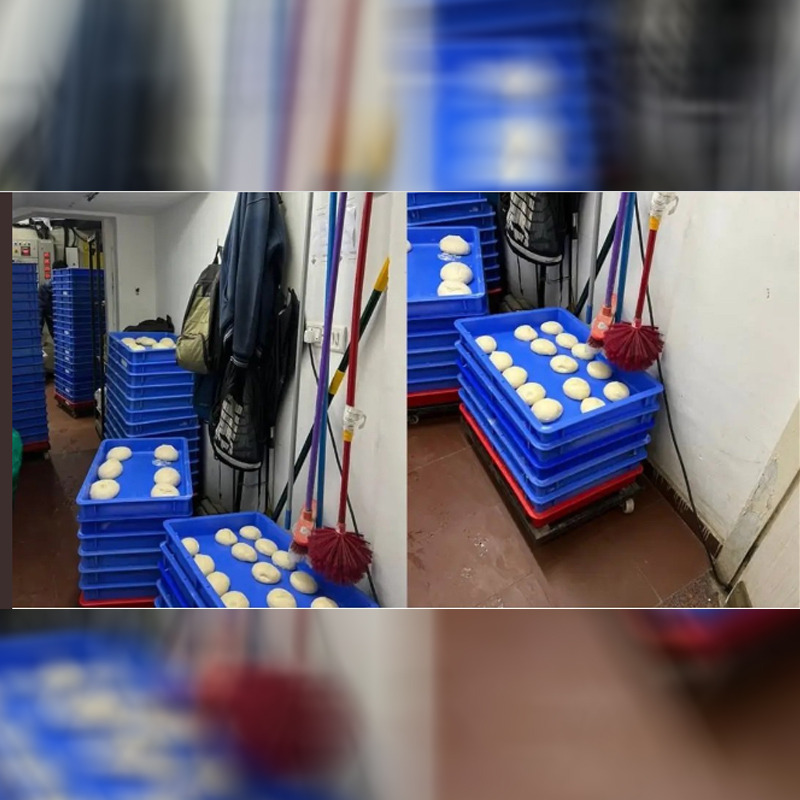
    The FSSAI crackdown comes on the back of a complaint raised by a Twitter user against alleged unhygienic practises being followed at the pizza brand’s outlet. The user had posted a picture last month, allegedly of a Domino’s outlet in Bengaluru, showing a mop and a toilet brush hanging in close proximity above the pizza dough.

    The user who identifies himself as an IT graduate wrote: This is how @dominos_india serves us fresh Pizza! Very disgusted. Location: Bangalore.

    He also tagged the FSSAI, the ministry of Health, the Karnataka health minister, and the union health minister.


    The Twitter user named Sahil Karnany followed it up with a video on 14 August, captioning the tweet, “Here is the video of the scene.”

    The tweet soon became viral, with several other netizens responding to it, some of them sharing their own bad experiences with the pizza brand.

    Soon after, the FSSAI took notice of the tweet. Responding to Karnany’s tweet on Tuesday, the official Twitter handle of the agency wrote, “FSSAI has taken note of the incident. The response of the FBO has been sought and appropriate action shall be taken in the matter as per the regulatory provisions under the FSS Act, 2006.”


    Meanwhile, Domino’s India has issued an official statement saying the brand adheres to “world-class protocols for ensuring the highest standards of hygiene and food safety.”

    “An incident involving one of our stores was recently brought to our notice. We want to assert that this is an isolated incident, and we have taken the strictest action against the restaurant in question. Please be informed that we have zero tolerance for violations of our high safety standards,” the pizza restaurant chain further stated.

  • ASCI, FSSAI join hands to curb misleading claims in F&B ads

    ASCI, FSSAI join hands to curb misleading claims in F&B ads

    Mumbai: In order to curb the spike in the number of misleading claims made in food and beverage (F&B) ads seen during the COVID-19 pandemic, the Advertising Standards Council of India (ASCI) has signed an agreement with the Food Safety and Standards Authority of India (FSSAI) to safeguard consumers against such advertisements.

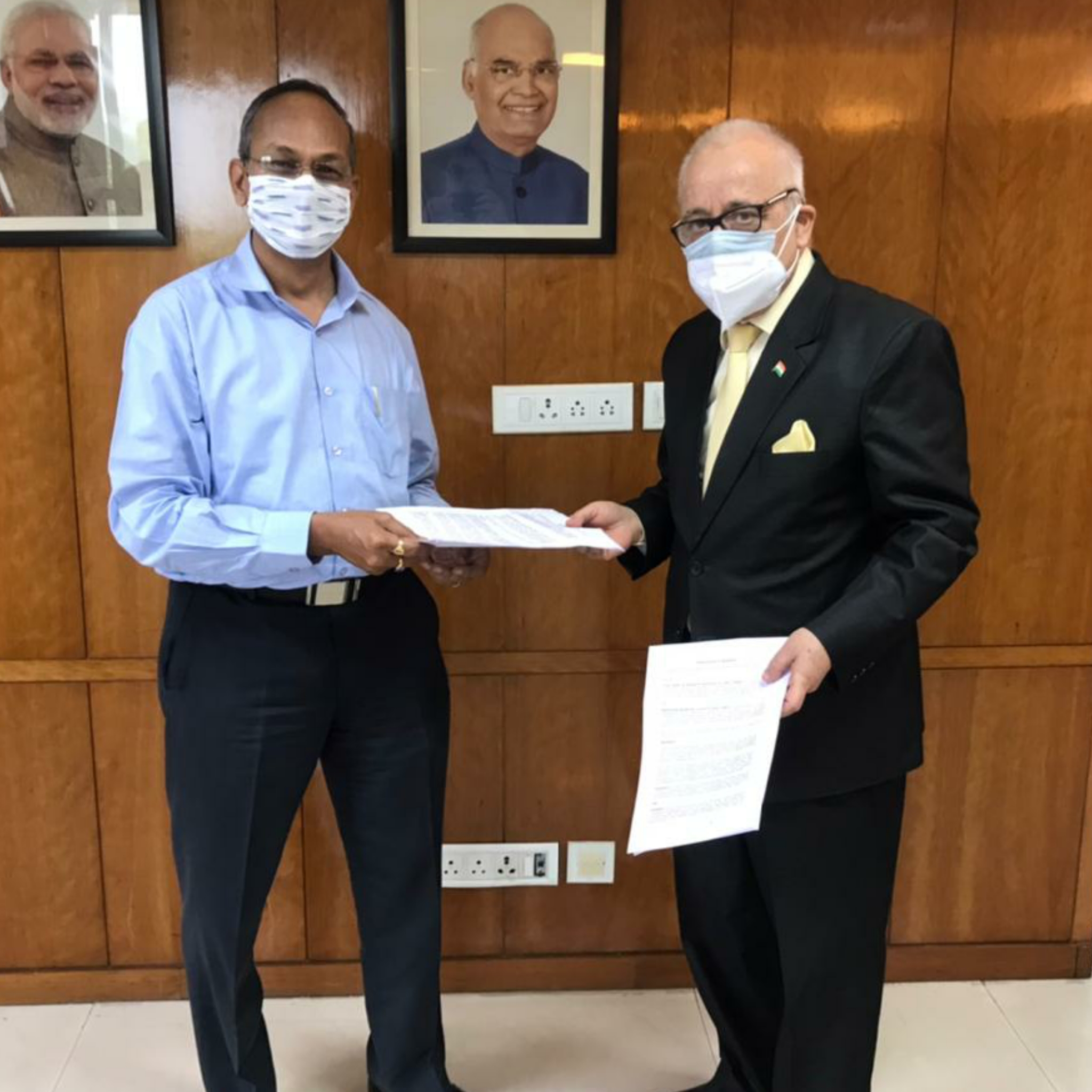
    The agreement was signed in the presence of FSSAI CEO Arun Singhal and ASCI adviser- public affairs professor Bejon Misra on 1 July. As per the agreement, ASCI will identify advertisements that prima facie violate provisions of Food Safety and Standards (advertising and claims) Regulations, 2018, and FSSAI would further investigate these. Under the agreement, ASCI will set up a three-member expert panel to evaluate F&B advertising identified by the ASCI monitoring team.

    In the last financial year (FY) ASCI has processed a total number of 284 complaints compared to 175 in FY 2019-20. So, claims by F&B brands, particularly those related to health and nutrition, are under greater scrutiny. With this association, ASCI further strengthens its 360-degree approach of protecting consumers as well as guiding brands, agencies, and influencers towards greater responsibility. As per a report published by media agency Zenith, India will be the fastest-growing market for FMCG brands’ F&B advertising over the next three years with spending rising 14 per cent a year. This further necessitates the monitoring of F&B advertisements.
    ASCI secretary-general Manisha Kapoor said, “With this agreement, ASCI will intensify its scrutiny of the F&B sector. We will tap our National Advertising Monitoring Service, which monitors over 900 TV channels and publications, and over 3,000 websites. Besides national brands, we will examine regional and local ones. Our experts, with decades of experience in the F&B sector, will shortlist those advertisements that require further scrutiny by FSSAI.”

    ASCI chairman Subhash Kamath said, “This is a significant collaboration. The common goal of consumer protection drives us all to share skills, expertise, and resources in the most effective way to curb the menace of misleading advertising.”

  • Pizza Hut starts contactless takeaway across stores in India

    Pizza Hut starts contactless takeaway across stores in India

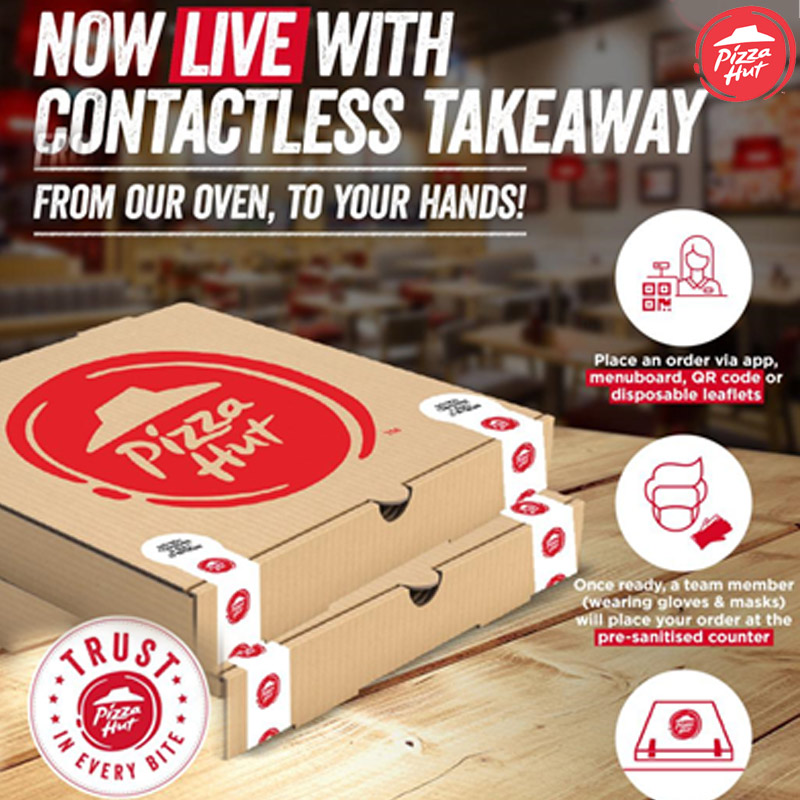
    MUMBAI: As social distancing becomes the new norm, Pizza Hut, India’s most trusted and loved pizza brand, will now offer contactless takeaway across all operational stores in India. The company will continue its oven-to-home contactless delivery facility as well, which has been functioning throughout the lockdown.

    With contactless takeaway, Pizza Hut is ensuring the maximum level of safety and hygiene for consumers who choose to pick-up their order from the store. Customers just need to simply place orders on the Pizza Hut app, m-site, website or via the menu board in stores. Food is then baked at over 240 degree Celsius for a minimum of six minutes to eliminate all viruses and bacteria and packed piping hot straight from the oven into disinfected boxes. The container is then sealed with tamper-proof stickers to ensure that only the consumer is able to touch the meal inside.  The staff thereafter places the order on a designated pre-sanitized table from where the customers can pick up their orders and exit. No direct contact is established at any point in this process, ensuring the safety of customers and employees.

    Pizza Hut India marketing director Neha said, “With the easing of lockdown norms, more people will be out and about for work and will need access to safe and hygienic food. Our Contactless Takeaway service ensures that customers can pick-up their order while on-the-go, in an easy and fast manner, without compromising on their safety. It is the need of the hour and we are happy to have responded quickly by starting this service in India.”

    Since the start of the pandemic, Pizza Hut has upgraded all its existing stringent safety and hygiene processes across India. The brand has implemented all regulatory protocols and guidelines issued from time to time by the government, WHO and FSSAI such as thermal screening of employees and visitors, mandatory use of face masks and gloves, washing hands every 30 minutes and disinfecting all kitchen surfaces, food packing boxes, delivery bags and bikes. The brand has been following a Contactless Delivery system, wherein the Pizza Hut delivery executive places the packed food on a clean surface, near the doorstep of the customer and waits at a distance of six feet to make sure that the customer has picked up the order.

  • No proposal to ban junk food ads on TV: Smriti Irani

    No proposal to ban junk food ads on TV: Smriti Irani

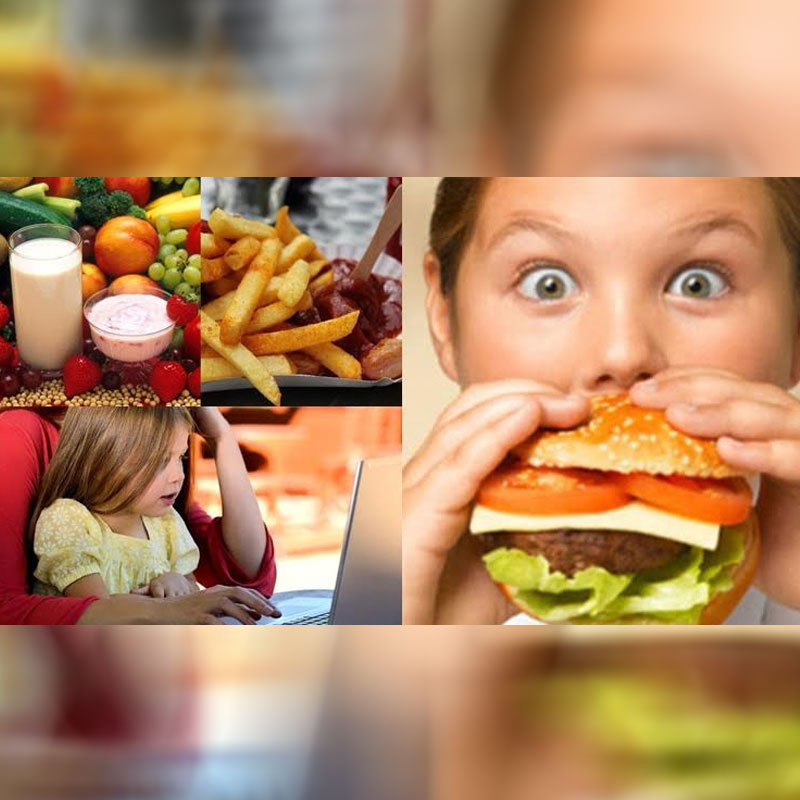
    MUMBAI: Childhood obesity is a rising problem in India. The issue was addressed in today’s Lok Sabha session when a reply was sought from the Minister of Information and Broadcasting Smriti Irani on whether the government is aware of the study that correlates watching ads on TV with increasing habit of eating junk and if there is a proposal to impose a ban on telecast of junk food and cold/soft drinks advertisements on television.

    In a written reply, Irani said that presently there is no such proposal to bank such ads on TV. Admitting that obesity in children was a concern, she mentioned that the Ministry of Health and Family Welfare has informed that the Food Safety and Standards Authority of India (FSSAI) has constituted an expert group to address the issue of High Fat, Sugar and Salt foods (HFSS).

    The expert group in its report made a recommendation regarding ban on foods with HFSS advertising on children’s channels or during children shows. 

    On this recommendation, the remarks of the FSSAI was that the food businesses could be asked to voluntarily desist from advertising HFSS foods on kids’ channels. Bodies like Food and Beverage Alliance of India have already decided to voluntarily restrict food and beverage advertisements concerning children. 

    Nine major food business operators have already joined this campaign and have decided not to advertise products with HFSS on kids’ channels.

    Although the move of banning will promote healthy eating habit among children, it will hamper revenues of major advertisers on channels such as Pogo, Nickelodeon, Disney and others. 

    In December 2017, the Ministry had asked TV channels not to air advertisements selling and promoting condoms calling them indecent, especially for children. The government further reasoned that such ads can create unhealthy practices among them. Following this, there was a complete ban on condom ads on television between 6 am to 10 pm.

    Also Read:

    ‘Sanskari’ India wants condom ads off primetime

    MIB recants, says only explicit condom ads banned during the day

    MIB mulls broadcast of DD News to 100 countries

    Cross-media holding: Indian policymakers push for regulations

  • No ‘junk food’ ads on kids shows & channels, recommends govt’s food safety panel

    MUMBAI: The Food Safety and Standards Authority of India (FSSAI) has put together a report on junk food and suggested a blanket ban on the telecast of such advertisements on kids’ channels.

    The report also recommended discouraging celebrities from endorsing food that is high in HFSS (salt, fat, and sugar) and imposing an extra tax on sweetened beverages and processed foods.

    Apart from sweetened beverages, the junk food category included pizzas, chips, burgers and several Indian foods such as pakoras and samosas, FNB News reported. It had been observed that ads for a majority of HFSS food were aired during kids’  shows and mostly on kids channels.

    Experts flayed the practice of sale of such food by impressing upon young minds, stating that such TVCs influenced the eating habits of the young and made them vulnerable to diseases. Besides, the extra tax on sweetened beverages and processed commodities was recommended as could be seen as a practical approach to cut down their intake.  

    The report also recommended proper and positive nutritional labelling of such products.

    Health Foods and Dietary Supplements Association (HADSA) admits that there was no specific definition stated in any of the regulations for “junk food” in India. It only referred to such food which has no nutritional or health benefit, and a high amount of calories.

    Also Read :

    Healthcare products lead in ASCI norms breach, 143 complaints upheld

    Over 250 complaints of misleading ads about AYUSH products since Jan 2015

  • FY-2015: Nestle ups marketing spends to Rs 525 crore

    FY-2015: Nestle ups marketing spends to Rs 525 crore

    BENGALURU: That the Maggi fiasco was going to cost Nestle India Limited (Nestle India) dear was a given. Post the relaunch of one of the most staple dishes of modern India, the company had to follow up with a massive damage control and marketing push. Not only has the company had to pay more towards marketing, for the first timein this century, it has reported a drop in revenues. Also for the first time in this century, profit margin in terms of profit after tax (PAT) as percentage of total revenue from operations (TIO) has slipped down to a single digit. Further, in September 2015, the company completed 100 years in India. In its corporate campaign, the Swiss major conspicuously avoided mention of its biggest brand Maggi noodles while mentioning features of its other brands such as Nescafe and KitKat .

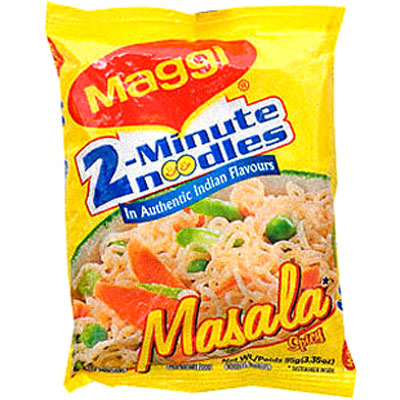
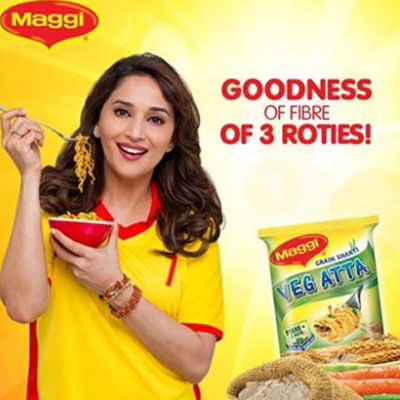
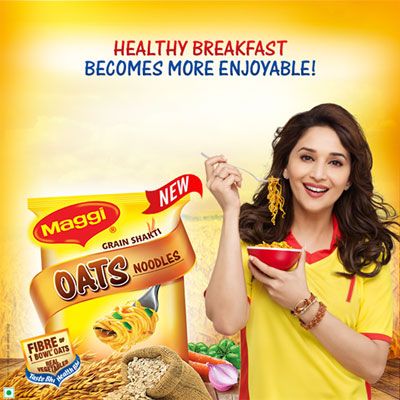
    Nestle India hired McCann World Group for the Maggi Noodles relaunch, with the agency’s India unit chief executive Prasoon Joshi in charge of the creatives for the campaign. Reportedly the largest food company in the world, Nestle India kicked off there launch campaign in October 2015 with a print advertisement that said: ‘Your Maggi is safe, has always been.’ The ad went on to explain that around 3,500 samples of the noodle brand were put to rigorous test in India and in places such as the USA, Canada, UK, Australia, New Zealand and Singapore.During the Maggi noodles recall and ban, the brand’s past and present endorsers, including actors Madhuri Dixit, Amitabh Bachchan and Priety Zinta, were served notices by the Uttarakhand Food and Drug Administration for making false claims.Further, since a court case had been filed against the brand’s ambassadors in Uttar Pradesh for their endorsement of Maggi, the relaunch communications did not carry any brand ambassadors.

    As is known, Maggi noodles were banned by the Food Safety and Standards Authority of India (FSSAI) and the commissioner of Food Safety, Maharashtra (FDA) in June 2015, mainly due to the allegation that they contained higher than the permissible limits of the metal lead. The company had to stop production of Maggi noodles, recall existing stocks of the noodles from the market and destroy them.The company says that it conducted extensive tests of over 3,500 samples representing over 200 million (20 crore) packets of Maggi Noodles in both national and international accredited laboratories. It said that all the results showed that the levels of lead were below permissible limits The companyalso claimed that several other countries also found Maggi noodles safe after testing samples of the product exported from India.

    Court orders directing fresh testing of samples from three national laboratories, while revoking the ban on Maggi noodles, were issued. Nestle India says that all the results from three National Accreditation Board for Testing and Calibration Laboratories (NABL) said that 100 per cent of samples were clear, with lead within the permissible limits. Manufacture of Maggi noodles was recommenced from November 2015 onwards. FSSAI has challenged the judgement that lifted the ban on Maggi noodles and the matter is still in court.

    Brand and trust had to be re-built, and is still an on-going process. Nestle India is one of the biggest spenders on advertising in the country. Nestle India’s new chairman and managing director Suresh Narayanan said in a financial release, “I am happy to report that despite the exceptional toll the Maggi noodles crisis took on our financials, our optimism about the future helps us with a healthy dividend payout. The high point of the last quarter has been the return of Maggi noodles to the market and the consumers to whom it rightfully belongs. The sales evolution and reception in the marketplace gives us satisfaction, but we have ambitions ahead to strengthen the brand. Following the reintroduction of the Maggi Masala variant, we have launched another favourite Maggi Chicken noodles. As a team we are committed to serving our consumers with more offerings from Maggi and our other brands by accelerating the pace of innovation and renovation.”

    Ad spends and other numbers

    Nestle India increased its advertisement and sales promotion (ASP, marketing) spends by 18.9 per cent for the year ended 31 December 2015 (FY-2015, current year) to Rs 525.21 crore (6.42 per cent of TIO) as compared to the Rs 445.47 crore (4.52 per cent of TIO) in the previous year (year ended 31 December 2014, FY-2014).

    Note:(1) Nestle India financial year is the calendar year. It reports annual results for the period 1 January to 31 December. Hence FY-2015 represents the period between 1 January 2015 and 31 December 2015.

    (2) The unit of currency in this report is the Indian rupee – Rs (also conventionally represented by INR or ).The Indian numbering system or the Vedic numbering system has been used to denote money values in this report. The basic conversion to the international norm would be:

    (a) 100,00,000 = 10,000,000 = 100 lakh = 10 million = 1 crore.

    (b) 10,000 lakh = 100 crore = 1 billion = 1 arab.

    Over a 12 year period starting FY-2004 until FY-2015, Nestle India’s year on year ASP spends had been dropping in terms of percentage of TIO from a high of 5.5 per cent in 2005 to a low of 4.3 per cent in FY-2011, FY-2012 and FY-2013. The previous year saw a slight percentage increase of 20 basis points in ASP to 4.5 per cent, and this year saw a massive 190 basis points increase in ASP as percentage of TIO to the above mentioned 6.4 per cent as compared to FY-2014.

    During the 12 year period under consideration, ASP has seen a CAGR of 14.3 per cent from the Rs 251.92 crore (5.4 per cent of TIO) to the above mentioned Rs 525.21 crore in the current year. Until the previous year, ASP at Rs 445.47 crore (4.5 per cent of TIO) had seen CAGR of 13.9 per cent since FY-2004.

    The FMCG major’s TIO declined 17 per cent to Rs 8,175.31 crore in FY-2015 as compared to Rs 9,854.84 crore in FY-2014. Please refer to figures 1 and 2 below.

    During the same twelve year period under consideration, Nestle India’s TIO has shown a CAGR of 12.5 per cent from Rs2,227.57 crore in FY-2004 to the above mentioned Rs 8,175.31 crore in FY-2015. Last year, the company’s TIO had a CAGR of 16 per cent since FY-2004 with TIO of Rs 9,854.84 crore in FY-2014. CAGR at 16.9 per cent since FY-2004 was even higher in FY-2013, when Nestle India had reported TIO of Rs9,101.05 crore.

    Nestle India’sPAT had crossed the Rs 1,000 crore mark in FY-2013, when the company had reported PAT of Rs 1,067.93 crore (12.8 per cent margin) on TIO of Rs 8,334.53 crore.

    PAT in the current year declined to less than half – declined by a massive 52.5 per cent to Rs 563.27 crore (6.9 per cent of TIO) as compared to the Rs 1,184.69 crore (12 per cent of TIO) in FY-2014. Please refer to figure 3 below.

    In terms of percentage of TIO, Nestle India’s simple avarage PAT between FY-2004 and FY-2014 was 12.3 per cent. This has dropped to 11.8 per cent of TIO between FY-2004 and FY-2015.

    Between FY-2004 and FY-2014, Nestle India’s PAT had shown a CAGR of 16.7 per cent growth from Rs 251.92 crore (11.3 per cent of TIO) to the above mentioned Rs 1,184.69 crore (12 per cent of TIO). Between FY-2004 and FY-2015, PAT CAGR declined to less than half at just 7.6 per cent.

    Report background: Being a part of a multi-national group, the company is generally quite tight lipped about sharing financials unless it has to legally do so. Details about the company’s advertisement spends are not indicated even in the company’s annual reports – what you have is a combination of the Advertisement and Sales Promotion spends declared as a single entry in the notes forming the part of the company’s annual financials. There is really no way that one could pin an exact number for these spends unless one has an inside track on the company’s marketing budgets. The projections and numbers in this report are pure conjecture based on the author’s statistical tools used on the historical annual numbers revealed by the company in its annual reports. The author has no knowledge about Nestle or Nestle India’s strategy, past or present.

  • FY-2015: Nestle ups marketing spends to Rs 525 crore

    FY-2015: Nestle ups marketing spends to Rs 525 crore

    BENGALURU: That the Maggi fiasco was going to cost Nestle India Limited (Nestle India) dear was a given. Post the relaunch of one of the most staple dishes of modern India, the company had to follow up with a massive damage control and marketing push. Not only has the company had to pay more towards marketing, for the first timein this century, it has reported a drop in revenues. Also for the first time in this century, profit margin in terms of profit after tax (PAT) as percentage of total revenue from operations (TIO) has slipped down to a single digit. Further, in September 2015, the company completed 100 years in India. In its corporate campaign, the Swiss major conspicuously avoided mention of its biggest brand Maggi noodles while mentioning features of its other brands such as Nescafe and KitKat .

    Nestle India hired McCann World Group for the Maggi Noodles relaunch, with the agency’s India unit chief executive Prasoon Joshi in charge of the creatives for the campaign. Reportedly the largest food company in the world, Nestle India kicked off there launch campaign in October 2015 with a print advertisement that said: ‘Your Maggi is safe, has always been.’ The ad went on to explain that around 3,500 samples of the noodle brand were put to rigorous test in India and in places such as the USA, Canada, UK, Australia, New Zealand and Singapore.During the Maggi noodles recall and ban, the brand’s past and present endorsers, including actors Madhuri Dixit, Amitabh Bachchan and Priety Zinta, were served notices by the Uttarakhand Food and Drug Administration for making false claims.Further, since a court case had been filed against the brand’s ambassadors in Uttar Pradesh for their endorsement of Maggi, the relaunch communications did not carry any brand ambassadors.

    As is known, Maggi noodles were banned by the Food Safety and Standards Authority of India (FSSAI) and the commissioner of Food Safety, Maharashtra (FDA) in June 2015, mainly due to the allegation that they contained higher than the permissible limits of the metal lead. The company had to stop production of Maggi noodles, recall existing stocks of the noodles from the market and destroy them.The company says that it conducted extensive tests of over 3,500 samples representing over 200 million (20 crore) packets of Maggi Noodles in both national and international accredited laboratories. It said that all the results showed that the levels of lead were below permissible limits The companyalso claimed that several other countries also found Maggi noodles safe after testing samples of the product exported from India.

    Court orders directing fresh testing of samples from three national laboratories, while revoking the ban on Maggi noodles, were issued. Nestle India says that all the results from three National Accreditation Board for Testing and Calibration Laboratories (NABL) said that 100 per cent of samples were clear, with lead within the permissible limits. Manufacture of Maggi noodles was recommenced from November 2015 onwards. FSSAI has challenged the judgement that lifted the ban on Maggi noodles and the matter is still in court.

    Brand and trust had to be re-built, and is still an on-going process. Nestle India is one of the biggest spenders on advertising in the country. Nestle India’s new chairman and managing director Suresh Narayanan said in a financial release, “I am happy to report that despite the exceptional toll the Maggi noodles crisis took on our financials, our optimism about the future helps us with a healthy dividend payout. The high point of the last quarter has been the return of Maggi noodles to the market and the consumers to whom it rightfully belongs. The sales evolution and reception in the marketplace gives us satisfaction, but we have ambitions ahead to strengthen the brand. Following the reintroduction of the Maggi Masala variant, we have launched another favourite Maggi Chicken noodles. As a team we are committed to serving our consumers with more offerings from Maggi and our other brands by accelerating the pace of innovation and renovation.”

    Ad spends and other numbers

    Nestle India increased its advertisement and sales promotion (ASP, marketing) spends by 18.9 per cent for the year ended 31 December 2015 (FY-2015, current year) to Rs 525.21 crore (6.42 per cent of TIO) as compared to the Rs 445.47 crore (4.52 per cent of TIO) in the previous year (year ended 31 December 2014, FY-2014).

    Note:(1) Nestle India financial year is the calendar year. It reports annual results for the period 1 January to 31 December. Hence FY-2015 represents the period between 1 January 2015 and 31 December 2015.

    (2) The unit of currency in this report is the Indian rupee – Rs (also conventionally represented by INR or ).The Indian numbering system or the Vedic numbering system has been used to denote money values in this report. The basic conversion to the international norm would be:

    (a) 100,00,000 = 10,000,000 = 100 lakh = 10 million = 1 crore.

    (b) 10,000 lakh = 100 crore = 1 billion = 1 arab.

    Over a 12 year period starting FY-2004 until FY-2015, Nestle India’s year on year ASP spends had been dropping in terms of percentage of TIO from a high of 5.5 per cent in 2005 to a low of 4.3 per cent in FY-2011, FY-2012 and FY-2013. The previous year saw a slight percentage increase of 20 basis points in ASP to 4.5 per cent, and this year saw a massive 190 basis points increase in ASP as percentage of TIO to the above mentioned 6.4 per cent as compared to FY-2014.

    During the 12 year period under consideration, ASP has seen a CAGR of 14.3 per cent from the Rs 251.92 crore (5.4 per cent of TIO) to the above mentioned Rs 525.21 crore in the current year. Until the previous year, ASP at Rs 445.47 crore (4.5 per cent of TIO) had seen CAGR of 13.9 per cent since FY-2004.

    The FMCG major’s TIO declined 17 per cent to Rs 8,175.31 crore in FY-2015 as compared to Rs 9,854.84 crore in FY-2014. Please refer to figures 1 and 2 below.

    During the same twelve year period under consideration, Nestle India’s TIO has shown a CAGR of 12.5 per cent from Rs2,227.57 crore in FY-2004 to the above mentioned Rs 8,175.31 crore in FY-2015. Last year, the company’s TIO had a CAGR of 16 per cent since FY-2004 with TIO of Rs 9,854.84 crore in FY-2014. CAGR at 16.9 per cent since FY-2004 was even higher in FY-2013, when Nestle India had reported TIO of Rs9,101.05 crore.

    Nestle India’sPAT had crossed the Rs 1,000 crore mark in FY-2013, when the company had reported PAT of Rs 1,067.93 crore (12.8 per cent margin) on TIO of Rs 8,334.53 crore.

    PAT in the current year declined to less than half – declined by a massive 52.5 per cent to Rs 563.27 crore (6.9 per cent of TIO) as compared to the Rs 1,184.69 crore (12 per cent of TIO) in FY-2014. Please refer to figure 3 below.

    In terms of percentage of TIO, Nestle India’s simple avarage PAT between FY-2004 and FY-2014 was 12.3 per cent. This has dropped to 11.8 per cent of TIO between FY-2004 and FY-2015.

    Between FY-2004 and FY-2014, Nestle India’s PAT had shown a CAGR of 16.7 per cent growth from Rs 251.92 crore (11.3 per cent of TIO) to the above mentioned Rs 1,184.69 crore (12 per cent of TIO). Between FY-2004 and FY-2015, PAT CAGR declined to less than half at just 7.6 per cent.

    Report background: Being a part of a multi-national group, the company is generally quite tight lipped about sharing financials unless it has to legally do so. Details about the company’s advertisement spends are not indicated even in the company’s annual reports – what you have is a combination of the Advertisement and Sales Promotion spends declared as a single entry in the notes forming the part of the company’s annual financials. There is really no way that one could pin an exact number for these spends unless one has an inside track on the company’s marketing budgets. The projections and numbers in this report are pure conjecture based on the author’s statistical tools used on the historical annual numbers revealed by the company in its annual reports. The author has no knowledge about Nestle or Nestle India’s strategy, past or present.

  • Bombay HC lifts ban on Maggi; Nestle to lab-test product

    Bombay HC lifts ban on Maggi; Nestle to lab-test product

    NEW DELHI: Just a day after the Government announced it was moving a Consumer Court, the Bombay High Court lifted the nationwide ban on Maggi Noodles but asked Nestle India to test five variants of noodles at three accredited labs.


    The Court said in a sharp indictment that principles of natural justice were not followed by Food Safety and Standards Authority of India (FSSAI) in passing the impugned order of ban. 


    Holding that tests must be completed within six weeks, the Court told Nestle India that if test reports suggest that lead is within permissible limit then it can start the sale of products. 


    In June, the FSSAI said the popular snack was found “hazardous and unsafe for human consumption.”


    More than 2,700 samples of Maggi noodles have been tested by laboratories in India and abroad in recent months, and each test confirmed the level of lead to be “far below permissible limits,” Nestle had said in a recent statement.


    The Department of Consumer Affairs’ claim for Rs 639.95 crore in damages from Nestle is to be heard by the National Consumer Disputes Redressal Commission (NCDRC) in probably the class-action suit against a multinational. The ruling of the quasi-judicial body will be legally binding.


    In June, the country’s food safety regulator banned Maggi after excessive amounts of lead and monosodium glutamate (MSG) were reported in samples tested in Uttar Pradesh.

  • More instant food products to come under the scanner

    More instant food products to come under the scanner

    NEW DELHI: Even as the ban on Nestle’s Maggi continues and food safety authorities are examining other brands of noodles, pasta and macaroni, many more popular packaged snacks including various brands of chips and Kurkure are to be checked for their contents.


    Meanwhile, while refusing to stay the 5 June order of the Food Safety and Standards Authority of India (FSSAI) relating to Maggi, the Bombay High Court has questioned why the authorities have charged brand ambassadors.


    While directing that Maggi will remain off the shelves till 30 June but no action to be taken against Nestle without giving 72 hours notice, the Court noted that many stores in the city had still not removed the product from their shelves.  The Centre and FSSAI were asked to file their reply to Nestle’s petition within two weeks.


    In Delhi, the FSSAI has collected 32 samples of popular brands of chips, Kurkure and baby food for testing and will pick more in the days to come. The report for this batch is expected in a week’s time, according to Delhi Food Safety commissioner K K Jindal.


    Health supplements, energy drinks and imported packaged foods are already being tested.


    Medical experts said metals like lead or toxins in food may not have any effect immediately, but can even affect the mind as the child grows older.

  • Nestle India recalls Maggi from shelves; maintains it’s safe

    Nestle India recalls Maggi from shelves; maintains it’s safe

    MUMBAI: It comes as no surprise that Nestle Global CEO Paul Bulcke is in India for damage control and takes stock of the situation here. Having reduced production by a third, sales halved for the brand with a 75 per cent market share and market price plunging by nine per cent in a day, Nestle India’s Maggi is indeed seeing a slow boil.


    In a statement, the MNC said that it had decided to withdraw the product from shelves across India.


    Addressing the media in a press conference held in Delhi today, Bulcke said that the company applied the same quality standards everywhere in the world. “We do not add MSG in Maggi noodles and it is safe for consumption in India,” he said.


    Speaking about recalling the product from the market, Bulcke said, “What we do here is only with the consumer in mind. I don’t feel this is the right environment to have the product on shelves.”


    Additionally, India’s central food safety regulator Food Safety and Standards Authority of India (FSSAI) has now ordered Nestle India to recall nine Maggi variants from the market.


    Justifying its stance Nestle has said in an earlier statement that the batch in which the UP government found lead was an expired batch. The company’s reasoning remains restricted to testing the product in their labs and some external labs as well. However, as many as six Indian state governments have not accepted their testing and have called for a ban for the noodles brand.


    “We are aware of media reports that say a case has been filed against us by the authorities in Uttar Pradesh. On receipt of the official notice we will take appropriate action under the guidance of our legal advisors. We cannot comment any further at this stage,” the company had said.


    The company, like its CEO Bulcke, has maintained that there was no added flavour to its product. “We do not add the flavour enhancer MSG (E621) to Maggi Noodles in India. However, the product contains glutamate from hydrolysed groundnut protein, onion powder and wheat flour. Glutamate produces a positive result in a test for MSG,” said Nestle India.


    In light of the trust of its consumers and the safety of its products being Nestle’s first priority, recent developments and unfounded concerns about the product has led to an environment of confusion for the consumer, to such an extent that the product has been withdraw from the shelves, despite the company claiming it to be safe.


    While it is unlikely that this controversy will die down in “2 Minutes,” Maggi Noodles nonetheless promises to come back in the market as soon as Nestle India takes corrective measures in order to get out of this imbroglio.


    After all the hullabaloo about Nestle withdrawing nine variants of its noodle brand from the shelves, the latest development in the Maggi controversy is that the government has asked the company to stop further production, processing, import, distribution and sale of the product. 


    The FMCG major was also asked to withdraw and recall the food product “Maggi Oats Masala Noodles with Tastemaker” and any other product for which risk assessment has not been undertaken and product approval granted.


    The FSSAI did not find a satisfactory response from Nestle India’s representatives, who were given a hearing on 4 June by FSSAI chairman and CEO to seek their response in the matter and hence this decision was taken.