Tag: Freedish

  • Doordarshan turns 56: Time to celebrate or introspect?

    Doordarshan turns 56: Time to celebrate or introspect?

    NEW DELHI: 15 September, 2015 marks 56 years to the day when Indian public broadcaster Doordarshan (DD) was first launched with an experimental telecast starting in Delhi in 1959 with a small transmitter and a make shift studio.


    The regular daily transmission started in 1965 as a part of All India Radio (AIR) and that’s when DD too began a five-minute news bulletin. The television service was extended to Bombay (now Mumbai) and Amritsar in 1972. Up to 1975, only seven Indian cities had a television service and Doordarshan remained the sole provider of television in India. Krishi Darshan was the first program telecast on Doordarshan. It commenced on 26 January, 1967 and is one of the longest running programs on Indian television.


    Television services were separated from radio on 1 April, 1976. Each office of AIR and DD were placed under the management of two separate director generals (DG) in New Delhi.


    Finally, in 1982, DD came into being as a National Broadcaster. National telecasts were introduced in 1982. In the same year, colour TV was introduced in the Indian market with the live telecast of the Independence Day speech by the then Prime Minister Indira Gandhi on 15 August, 1982, followed by the 1982 Asian Games, which were held in Delhi.


    Since then, DD has seen growth in many ways. Today, DD broadcasts in 17 languages including DD Urdu, and has the country’s only free-to-air (FTA) sports channel. DD Bharati has kept alive the decades-old archives of broadcasting in the country, DD India reaches almost the entire world and is watched by the diaspora, and it also recently launched DD Kisan, which is a dedicated channel for farmers. In addition, DD News – barring a few aberrations – remains one of the most dependable news channels in the country.


    More than five decades down the line, while the numbers have changed with greater reach, little else has and the pubcaster is struggling for viewership. Though it is claimed that DD has the largest viewership in the country since it is a terrestrial network, the fact remains that viewers in the metros and the larger cities generally tend to stay away from Doordarshan, which despite the so-called autonomy is perceived a propagandist channel.


    Today, Doordarshan’s terrestrial coverage is estimated to be available to about 92 per cent of population spread over 81 per cent area of the country. There are 1416 TV transmitters of varying power in the country. However, by the government’s own admission, the percentage of rural viewers who are accessing Doordarshan through its terrestrial network is a mere seven – eight per cent of 170 million TV households.


    The areas uncovered by terrestrial transmitters along with rest of the country have been provided with multichannel TV coverage through Doordarshan’s free to air DTH service FreeDish. Pertinent to note here is that despite claims that its capacity would be raised to accommodate over 100 channels, FreeDish today has a total of 56 channels, of which a majority are DD’s own channels.


    As far as the clause for all platforms to mandatorily show DD channels in the prime band is concerned, very few are doing so and in any case viewers do not bother since they feel attracted to the juicer sagas that most channels put out.


    Even though it has been in the eye of constant criticism, DD has still not been able to ensure that private DTH players or even its own FreeDish carries the name of the programme and a basic summary – something which DTH players do for all the major private broadcasters.


    The British Broadcasting Corporation (BBC) – arguably having the most diverse, exciting and long history – keeps examining and re-examining its role as a pubcaster and independently takes its decisions about changes it wishes to make to reach out to more and more viewers in an era of increasing competition from private broadcasters.


    The BBC, which will be marking its centenary in 2022, has come out with a Green Paper, which examines whether it is failing audiences, whether it should be advertisement-funded or take licence fee as it has been doing, and even whether it should be putting on-air certain shows that have drawn the ire of the general public. Not only that, the document has been made public for viewers to react as it would help decide the pubcaster’s future course.


    In comparison, Doordarshan has failed to make any in-depth study into why it has failed to make a dent in the hearts of the viewers despite its largest geographical reach. Its own Audience Research Unit exists only in name, and with a sample of only 900 homes, TAM does not cover DD adequately. Now that BARC India and TAM have formed a JV to form a meter management company, what DD’s representation in that will be, remains to be seen.


    If BBC has issued a Green Paper, there have been endless reports before Doordarshan became part of the pubcaster Prasar Bharati through an act of Parliament of 1990, which was only half-heartedly notified in 1997. And it had taken the country around 20 years to – at least on paper – notify an autonomous body since the first report on such a body came in the form of the BG Verghese Committee report in 1978, the aftermath of the manner in which the electronic media was controlled by then Prime Minister Indira Gandhi during the National Emergency.


    Sadly, there has been just one report after the pubcaster was operationalised: the Sam Pitroda Committee Report.


    Unfortunately, this report came out with nothing new that was not already being done by the pubcaster or had not been said by the Parliamentary Standing Committee in report after report, year after year.


    The pubcaster’s real test would have been to implement the recommendations given by the Sam Pitroda Committee but that is not the case. This is because the biggest stumbling block to the pubcaster moving ahead is the government, which does not leave it free to move on its own and instead believes in the general principal of he who pays the piper plays the tune.


    If there has been any movement within Prasar Bharati – like the recent appointment of a large number of fresh talent to fill the huge number of vacancies – it has been due to the individual action of the different chief executive officers or chairmen of the Board at different times. 


    What Prasar Bharati needs to do is to take a serious look at the Sam Pitroda Committee recommendations to find out why these were not implemented when they were under consideration much before the Committee came on the scene, and also to radically examine the relationship of Prasar Bharati with the Government or the ruling party.


    However, that is easier said than done, since the pubcaster and particularly Doordarshan continues to be a valuable tool for the government in power.
  • DTH operators woo customers with lucrative offerings

    DTH operators woo customers with lucrative offerings

    The year has started on a good note for direct to home (DTH) subscribers. Even as Indian DTH players have seeded close to four million set-top-boxes (STBs) across the country in Q1-2015 alone, with growing competition and increasing digitization push, the companies are now also putting their best foot forward to woo more subscribers, while retaining existing ones.


    Going by the latest Telecom Regulatory Authority of India (TRAI) report, almost 34.90 million DTH subscribers in India are inactive as against the total registered subscriber base of 76.05 million till the quarter ending March 2015. So while the DTH operators have been thumping their chests about adding new subscribers, their constant effort is channelized towards luring existing subscribers to stay on. And one such way to do that is by launching new products and services.


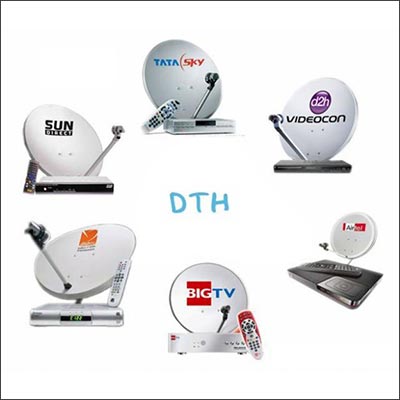
    As the year kicked off with the ICC Cricket World Cup and Indian Premiere League (IPL), DTH players got into overdrive mode early on with offerings galore. From Tata Sky launching 4K STBs, Videocon d2h rolling out a 4K Ultra HD multi genre channel, Dish TV offering discount packs, Sun Direct giving away an HD DVR connection at the cost of an HD connection on buying Samsung Curve to Airtel Digital TV’s UHD TV, it has been the year when DTH subscribers have been spoilt for choice.


    Over the past eight months, different players have come up with different strategies to increase subscription as well as add more active subscribers.


    Here’s a lowdown on who did what:


    Dish TV


    The DTH operator, which had in 2014 created a sub-brand called Zing, started the year by launching Zing for the Tamil Nadu market. Dish TV had introduced the sub-brand to cater to the specific needs of consumers in different regions and also give competition to the cable industry. Through this, Dish TV offered more than 145 channels, including 49 Tamil channels and services in a mere price of Rs 99 per month. Soon after, the operator launched Zing for the Kerala region as well. This time, it gave more than 150 channels, including 16 Malayalam channels at Rs 99 per month.


    Cashing in on the IPL, Dish TV, which was one of the sponsors for Kolkata Knight Riders, introduced a special Cricket+ package to increase its subscription revenues as well as the entertainment quotient.


    Dish TV, in order to get the ‘Art of Living’ lovers onboard launched Anandam Active to showcase the teachings of the spiritual guru Sri Sri Ravishankar. The service was made available to the subscribers of Dish TV with a monthly subscription fee of Rs 59 per month.


    “It has been our constant endeavour to make television viewing a wholesome experience for the entire family. We have always believed in offering unique content to our subscribers,” Dish TV COO Salil Kapoor had then said.


    Soon after, in order to lure music lovers, Dish TV tied up with Hungama to launch ‘Music Active Service.’ The service was launched to enhance Dish TV’s portfolio in the field of VAS and music and provide unlimited music to subscribers. While it launched the service at an introductory price of Rs 35 till 31 October, it will be priced at Rs 45 starting 1 November.


    The platform has something for everyone. In order to satiate the needs of movie lovers, Dish TV launched its first Home Video System – DishFlix. With this first of its kind push VOD service, Dish TV aims to empower consumers to enjoy uninterrupted ad-free entertainment. Through the service, viewers will be able to pause, play, fast forward and rewind movies or TV shows at their own convenience. Another unique feature is that this service will not require an internet connection as the content will be pushed to the customer’s STB via satellite. The customers for the service will need a DishFlix Box, which is priced at Rs 5990 that comes preloaded with 50 movies. Out of these, 15 movies will be refreshed every month on FIFO (First in First Out) basis (one new movie every two days) so that the viewable movie library is always updated. The monthly subscription to Flix studio is Rs 100.


    Tata Sky


    Tata Sky started its year with the launch of first 4K STB in India at a time when the country was preparing for the biggest cricketing extravaganza, the ICC Cricket World Cup 2015. While for the new subscribers, the 4K box was available for Rs 6400, existing subscribers could avail the box at Rs 5900.


    Soon after, the DTH operator decided to disrupt the market by making DTH connections affordable for its customers. Keeping this in mind, the operator launched the ‘Daily Recharge’ voucher, which empowered subscribers to pay only for the day they watched TV at Rs 8. This also became the smallest denomination of recharge voucher in the television-viewing sector globally. Tata Sky’s aim was to make inroads into untapped markets.


    “This initiative elevates the DTH sector by redefining the pace of digitization and reach to markets nationwide,” said Tata Sky MD & CEO Harit Nagpal at the time of launching the service.


    The latest addition to the DTH operator’s offering is its new upgraded STB – Tata Sky+ Transfer, which will enable users to transfer the recorded content onto alternative screens. The new product addresses the growing consumption of video on the move, through smartphones, tablets and other alternative screens. The new STB, which is priced at Rs 9300 for new subscribers and Rs 7200, for existing customers, will work on a Wi-Fi connection.


    Videocon d2h


    For Videocon d2h, the highlight of the year has been the launch of the first 24-hour 4K Ultra HD multi genre channel in January. The 4K Ultra HD channel is a content pipe that can carry multi genre feeds like movies, video on demand, travel, infotainment, sports etc provided by international broadcasters or independent content providers. The channel was launched just before the ICC Cricket World Cup, thus enabling subscribers to experience the sport in 4K Ultra HD.


    In June, the company unveiled its new initiative aimed at preschool and elementary school aged children with the launch of SMART Services. This comprised value-added bouquet of learning activities and games available exclusively to Videocon d2h subscribers at a subscription rate of Rs 45 per month. The banner included Smart Learning, Smart Kids and Smart Games, all available on subscription basis.


    Airtel Digital TV


    Airtel Digital TV was the first to launch indigenously manufactured STBs, in keeping with Prime Minister Narendra Modi’s ‘Make in India’ campaign. The STBs have been made available in HD and soon all of Airtel Digital TV’s STBs will be manufactured in India. These indigenous Airtel Digital TV HD+ STBs offer features like – Full HD 1080p support, MPEG-4 video with Dolby Digital Plus Surround Sound; 5X picture clarity; unlimited recording (via USB-drive); and USB-based Wi-Fi connectivity for On-demand, Anytime TV and Interactive Gaming.


    In order to make available DTH account details easily, Airtel Digital TV launched the missed call service for customers. Through this, customers can get their DTH account details on their mobile number by just giving a missed call on 08130081300. The service is completely free of cost for all Airtel Digital TV customers and provides information regarding customer ID, balance and validity, package name, monthly rental, base package rental, top up rental, last recharge date and amount and number of connections to customers on an SMS within five seconds of the missed call.


    The company also rolled out an innovative and easy to use Self-Care application for television sets, a first-of-its kind by a DTH service provider. A TV replica of the ‘My Airtel mobile app,’ the Self-Care enables customers within Airtel Digital TV HD STBs could easily access their account details real-time on their TV sets. The app can be accessed by connecting the STB to an internet connection via a LAN cable or with the help of the newly launched plug and play Wi-Fi dongle– Airtel Infinity.


    Sun Direct


    DTH operator Sun Direct wooed its customers during the two mega sporting events of the year – the ICC Cricket World Cup and IPL. The platform, which believes that events like these help increase its existing subscriber base, came up with special packs during the World Cup and IPL. While it offered the Star Sports bouquet on its bestselling Cinema+Sports pack for the World Cup, it provided Sony Six, the official broadcaster for the league free to new customers in order to incentivize them during the IPL.


    Sun Direct offered the Cinema+Sports package at Rs 195 per month during WC and focused on the pack in order to fulfill the requirements of its customers, during the cricketing season.


    During IPL, the operator also provided IPL add-on free for customers, who recharged beyond six months. That apart, Sun Direct also came up with an add-on for Rs 44, which allowed customers to watch the T20 matches for the entire duration of the tournament. “We see the IPL as a good tool to win back customers and improve our recharges substantially,” Sun Direct CEO Mahesh Kumar had earlier told Indiantelevision.com.


    While DTH operators have been putting their money where the mouth is by launching innovations as well as technological upgrades, the fact remains that close to 45 per cent of DTH subscribers are inactive in India. Going by this figure, DTH players will have to ramp-up their offerings to ensure that those coming onboard stay with them on as loyal customers in the long run.

  • Doordarshan Freedish to hold e-auction; looks to tot 112 TV channels

    Doordarshan Freedish to hold e-auction; looks to tot 112 TV channels

    NEW DELHI: Doordarshan will be holding its 21st e-auction for its free-to-air DTH platform Freedish on 12 August in an attempt to touch the target of 112 television channels in the next few months.


    While Doordarshan has set a reserve price of Rs 3.7 crore per slot for the online e-auction, according to information available with Indiantelevision.com, the bid amount is said to have gone up to Rs 4.2 crore in earlier e-auctions.


    However, DD sources refused to divulge the number of slots being auctioned to prevent bidders from forming a consortia to bid or resort to other malpractices.


    DD sources also said that while Freedish may be encrypted to keep a tab on the number of subscribers, it would remain free-to-air.


    The e-auction will be conducted by C1 India Pvt. Ltd., Noida on behalf of Prasar Bharati.   


    The reserve price in the 15th e-auction was Rs 3 crore and was raised to Rs 3.7 crore in the 16th auction.


    Currently, Freedish has 64 channels including its own channels, and Lok Sabha and Rajya Sabha TV.


    The eligibility terms and conditions including other relevant details for this e-auction are displayed on DD’s website- www.ddindia.gov.in


    However, the participation amount (EMD) in the e-auction is Rs 1.5 crore, which has to be deposited in advance on or before 12 August evening along with a non-refundable processing fee of Rs 10,000 in favour of PB (BCI) Doordarshan Commercial Service, New Delhi.


    Incremental amount for the auction will be Rs 10 lakh and the time for every slot e-auction will be of fifteen minutes duration.


    Of the reserve price, Rs 1.1 crore will be deposited within one month of placement and another Rs 1.1 crore within two months along with service tax of 14 per cent on the bid amount.


    The balance bid amount will be deposited within six months, failing which the reserve price will be forfeited. 


    Applicants must provide details of the uplink and downlink permission documents received from the concerned Ministries with the applications to ensure they are not rejected. 


    The demand drafts of unsuccessful bidders will be returned immediately or within a week after the e-auction process is completed.

  • Headlines Today becomes India Today; group to pump 10% of budget in marketing

    Headlines Today becomes India Today; group to pump 10% of budget in marketing

    NEW DELHI: Emphasising that the launch of the ‘India Today’ news channel was being treated as a fresh channel launch and not a re-branding of Headlines Today, spokespersons from the channel said that it sports a completely new look as compared to any other news channel in the country.


    Speaking about the key reason for changing the brand name of the channel, India Today group CEO Ashish Bagga told Indiantelevision.com that research had shown that the brand recall value of India Today was much higher than that of Headlines Today and therefore it was being promoted as a new news channel.


    The channel will also be promoted through television commercials, newspaper and web advertisements and outdoor publicity. In addition, the channel will also be eyeing media partnerships with events like the Indian International Film Academy (IIFA) Awards or premieres of important films.


    Bagga informed that approximately five to ten per cent of the channel’s total budget would be spent on marketing it. 


    He considered this the biggest initiative by the India Today Group in the last forty years.


    Bagga also said that the channel was not visible on all DTH platforms including Doordarshan’s FreeDish.


    With 40 niche magazines in its kitty, the group had already connected with viewers and readers all over the country.


    When asked if a research had been conducted before the channel’s launch, he said research was conducted on two levels. On a qualitative level, the aim had been to gauge what people were seeing and what they wanted in news channels. Secondly, an Eye-7 test had been conducted whereby special kind of glasses were worn to gauge eye movements and also check if the viewer had any problem in seeing a channel, which carries more than one box of written matter apart from the visuals. 


    Talking about the channel’s branding and content, India Today Group synergy and creative officer Kalli Purie said that the new channel had a lot more depth.


    Purie said that the India Today magazine had set a standard that other print publications were attempting to emulate, and the aim was to bring the same standard to television news reporting. 


    The new look of the channel not only has a headline at the top and bottom of the screen, but also on the left of the news presenter, which is in the form of a box making it legible even from a distance. She denied that this would be make the screen look cluttered and said it had been tested amongst viewers who had liked the format.


    Speaking on whether there would be any changes in content, Purie said that the Group had around forty print magazines and the experience would be used for formatting shows on niche programmes on automobiles, luxury items, celebs, and so on. 


    Unlike most channels, the content presentation on the India Today news channel would not follow a linear pattern but would be multi-layered. 


    When queried on the involvement of senior journalists like Rajdeep Sardesai and Karan Thapar, Purie said that they were already established and credible names in the news world, who didn’t believe in beating around the bush but in getting the real news out. 


    “Their contribution will be immense in formatting various programmes,” she added.   


    She also confirmed that the show On The Couch with Koel would continue on the channel.


    While Bagga refrained to comment on the ad cap matter as it was in court, he opined that the group did not agree with the government on cross-media investments. 


    “No single group dominates in media fragmentation,” he said. 


    At the same time, he said that the group had no intention to enter FM Phase III for more radio channels.


    Referring to Music Today, he said that the aim had been to bring out recordings of non-film music. “While all music is now available on digital platforms, we have no intention of entering that sphere,” he added.


  • Kisan TV set to launch on 26 May

    Kisan TV set to launch on 26 May

    NEW DELHI: After numerous delays, Doordarshan’s Kisan TV will finally see the light of day on 26 May, 2015.


    The channel, which was earlier slated for formal launch on Baisakhi Day last month as a 24-hour channel devoted to farmers and rural India, will be launched by Prime Minister Narendra Modi in the presence of the Information and Broadcasting Minister Arun Jaitley at a formal function in Vigyan Bhavan.


    While trial runs have already been on for some time, a test run which will make it available to other platforms commenced today (25 May).


    Jaitley had said last month that the delay had been caused as the PM was traveling.


    The channel, to be run by Doordarshan, was initially slated for launch on Makar Sankarti Day on 14 January, 2015.


    A budget of Rs 100 crore had been set aside in July last year. However, this year’s budget had cut down Kisan TV’s corpus to Rs 90 crore for 2015-16.


    The Parliamentary Standing Committee on Information Technology, which also examines issues linked to the I&B Ministry had said in a recent report that emphasis should be laid on local dialect on regional basis so that farmers all across the country are able to access the channel in their local language/dialect, thereby getting benefited by this laudable initiative of the Government.


    The Parliamentary Committee in a subsequent report also said that the Ministry should spend Rs 35 crore, earmarked in this year’s budget for content, judiciously.


    The FTA channel will be available on major direct to home (DTH) platforms including Tata Sky, Videocon d2h, Dish TV apart from pubcasters’ own DTH platform Freedish. 

  • Freedish is key to Doordarshan’s turn around: Parliamentary Committee

    Freedish is key to Doordarshan’s turn around: Parliamentary Committee

    NEW DELHI: The Ministry of Information and Broadcasting (MIB) has been asked to make efforts to complete all procedural formalities so as to facilitate the expeditious execution of Doordarshan’s Freedish project.


     The Parliamentary Standing Committee on Information Technology, which deals with MIB issues, in its report emphasized that popularization of Freedish may indeed prove to be one of the major keys, which can turn around Doordarshan in a big way, especially when it is competing with private TV channels who are providing hundreds of channels to its viewers.


    The Committee recognized that the idea of providing Freedish and progressive FM-ization can play vital role in shaping future roadmap for revival of Prasar Bharati.


    As part of its Freedish endeavour, Doordarshan has upgraded the technical infrastructure of DD Freedish DTH platform and is presently providing free to air 64 SDTV channels in MPEG-2DVB-S.


    The technical infrastructure of the remaining 48 SDTV channels has also been installed and tested. Once these channels are made Conditional Access System (CAS) enabled in free-to-view mode, subscribers can view these channels with a one-time annual registration.


    Doordarshan is planning to commission these 48 SDTV channels in Freedish MPEG-4 DVB-S2 channel mode only after implementing the CAS Service, upgrading its platform to 112 channels.


    This will mean upgrading its platform to 112 SDTV channels in 2015-16, but this is subject to approval of the Home Ministry regarding security clearance of one of the shortlisted CAS service providers, which is a Chinese party. The Ministry wrote to the Home Ministry on 9 March this year seeking its views on the matter.

  • “The programming strategy of Sony Pal is very hypothetical currently”: Anooj Kapoor

    “The programming strategy of Sony Pal is very hypothetical currently”: Anooj Kapoor

    MUMBAI: In early January this year, Indiantelevision.com broke the news about the almost six month old baby from the Multi Screen Media (MSM) stable, Sony Pal looking for a revamp. Reason: failure of few of its shows to connect with the hearts of its target audience. 


    Launched on 1 September, 2014, the channel targeted women in the age group of 15-34 years in SEC BCDE. 


    The channel, from December 2014, had slashed 1.5 hours of content from 3.5 hours and showcased only two hours of original content till February 2015 until they decided to clamp down on fresh content and continue to air repeats.


    Sony Pal and Sab SVP and business head Anooj Kapoor had earlier stated, “We are soon going to come back in the same slots, which have been shut down with new programmes in terms of dailies and with consumer feedback on-board. Hopefully, this time around we will go to the next level. We are going to come back with exact consumer expectations as they have articulated after viewing the channel.”


    Now until the time that the channel is back with a fresh line-up of shows, MSM has come up with a strategy to put Pal on Prasar Bharati’s free-to-air (FTA) digital platform DD Freedish. 


    Moreover, it has added shows of its two other GECs – Sony Entertainment Television (SET) and Sab on Pal to attract audiences from the Freedish market.


    However the channel will continue to remain a pay channel on all other platforms. Kapoor reiterates that Pal will continue to be a pay channel and it has not compromised on the pricing of the channel on other platforms. 


    So how will getting on Freedish help Sony Pal? According to Kapoor, the idea on Pal is to get a certain threshold level ingredients and get in fresh and original programming again. 


    He goes on to say that in the repeat format today, Star Utsav from the Star India stable, gets 67 per cent of its ratings from Freedish. “Our understanding was that if we want to reach anywhere near to those figures, we had to get onboard Freedish,” he said.


    It can be recalled that one of the reasons for the failure that Kapoor had stated was of distribution. The channel was not optimally present everywhere at the time of launch. That affected the initial sampling. The fact that, in the digital space, the channel was about 15 LCNs (local channel numbers) away from the leading Hindi GECs made it worse. For the audiences to locate, sample and actually break a habit of viewing other shows was a task.


    When questioned about the progress on that front, Kapoor explained, “Whatever the learnings have been, we will plug it in when we bring in fresh programming. And if the channel has already hit a certain threshold, then the investment will also be poured in as that is also required to plug in the distribution gaps.”


    When asked about the revamp stage, Kapoor defines its programming strategy currently to be very hypothetical. “We don’t know how much time it will take for us to reach the threshold level. But once we reach there, we will start our original programming.”


  • Delhi HC bars DD from sharing 2015 World Cup feed with cable ops

    Delhi HC bars DD from sharing 2015 World Cup feed with cable ops

    NEW DELHI: Delhi High Court has barred public broadcaster Doordarshan from sharing the live feed of the 2015 Cricket World Cup, of which ESPN and Star have the exclusive broadcasting rights, with cable operators.


    A bench of Justice Badar Durrez Ahmed and Sanjeev Sachdeva passed the order on the plea of Board of Control for Cricket in India (BCCI), ESPN and Star who had contended that cable TV operators were getting live feeds through DD channels free of cost, resulting in loss of revenue for them.


    The Court however refused to grant relief of striking down a 2000 notification issued by Prasar Bharati which made it mandatory for cable operators to carry DD National and DD News channels. Simultaneously, the Court also rejected the additional prayers by ESPN Star to strike down section 3 of the Sports Act, which makes it mandatory for them to share with Prasar Bharati the live feed of sporting events of national importance.


    A DD official who did not want to be named told indiantelevision.com that under the Sports Broadcasting Signals (Mandatory Sharing with Prasar Bharati) Act 2007, DD could show the matches only on its terrestrial network and via its direct-to-home platform, Freedish. “The directive by the Court appeared to be a precautionary measure aimed at warning cable operators who pirate the signals and not Doordarshan,” the official said.


    A legal expert dealing with broadcasting laws told indiantelevision.com that since the ‘must-carry clause’ had not been struck down, it would be very difficult to prevent the local cable operators from showing the matches. The expert indicated that DD may need to approach the Court to seek clarity on the order.


    In the order, the Court said: “The appeal as well as writ petition (civil) 8458/2007 are allowed to the extent that the live broadcasting signal shared by ESPN/STAR by virtue of the Sports Act with Prasar Bharati, shall not be carried in the designated Doordarshan channels under the must carry obligation cast by the Cable TV Network Act on cable operators. This shall operate prospectively.”


    In its directive, the Court observed that while the advertisement revenue received by DD in respect of the shared content of the sports channels was to be shared in the ratio of not less than 75:25, “it still does not cater to the loss of subscription revenue” by ESPN and Star.

    BCCI, Nimbus Communications and the two sports channels (ESPN and Star) had challenged the High Court’s single judge November 2007 order rejecting their pleas that no cable television network, Direct-to-Home (DTH) Network, multi-system network or local cable operator could broadcast such sports events without a licence from the content owners.

  • Broadband continues upward spiral as narrowband declines in June-Sept 2014

    Broadband continues upward spiral as narrowband declines in June-Sept 2014

    NEW DELHI: The number of narrowband Internet subscribers declined from 190.31 million at the end of June 2014 to 178.67 million at the end of September 2014, showing a quarterly decline of 6.12 per cent.


    However, the quarterly report of the Telecom Regulatory Authority of India (TRAI) ending September 2014 shows the number of Broadband Internet subscribers increased from 68.83 million at the end of June to 75.73 million at the end of September with a quarterly growth of 10.03 per cent.


    The report says as at the end of September 2014, there were a total of 187 pay channels as reported by broadcasters for which the wholesale channels rates have been taken on record. During the quarter ending September 2014, the rate of Raj Music Kannada channel was taken on records.


    In non CAS areas, the maximum number of television channels being carried by any reporting multi-system operator was 400, whereas the maximum number of channels being carried by any reporting MSO was 100 in conventional analogue form.


    Apart from All India Radio, there were 243 private FM radio stations in operation at the quarter ending September 2014, according to information supplied to TRAI by the Information and Broadcasting Ministry.


    Apart from the free DTH service of Doordarshan, Freedish, there are six private DTH operators. All the six private DTH operators are offering pay DTH services.


    The total numbers of registered and active subscribers being served by these six private DTH operators as reported to TRAI were 70.33 million and 39.13 million respectively as on 30 September 2014.

  • Govt. has no plans to place restrictions on number of DTH platforms

    Govt. has no plans to place restrictions on number of DTH platforms

    NEW DELHI: Even as it is in the process of revamping its free-to-air direct-to-home (DTH) platform Freedish, the government has made it clear that it has no intentions to impose any restrictions on the total number of DTH licenses.

    The Ministry has till now granted license to six private companies: Dish TV, Tata Sky, Sun Direct TV, Reliance BIG TV, BhartiTelemedia and Videocon d2h.

    These platforms provide DTH services in India under the DTH Guidelines issued on 15 March, 2001, as amended from time to time.

    Information and Broadcasting Ministry sources told Indiantelevision.com that Freedish is in the process of making changes so that it can provide up to 100 FTA television channels in the first stage in addition to All India Radio channels. A total of 19 e-auctions have also been held in this regard.

    DTH licenses, under the DTH guidelines, are granted to those companies which fulfil the eligibility criteria, terms and conditions and subject to security clearance and technical clearances by the appropriate authorities of the Government.

    The details are available on the website of this Ministry at www.mib.gov.in.

    Under clause 3.1 of the DTH Guidelines, the licensee, in addition to an initial non-refundable entry fee of Rs 10 crore, is required to pay an annual license fee at 10 per cent of its gross revenue.