Tag: Freedish

  • Around Rs 35 crore spent by Prasar Bharati in left extremist affected areas

    Around Rs 35 crore spent by Prasar Bharati in left extremist affected areas

    NEW DELHI: Both All India Radio and Doordarshan have spent around Rs 35 crore in setting up transmitters and programming in left wing extremist (LWE) areas.

    Programmes are aired on the theme of dissuading the youth from getting involved in anti-social activities and persuading those, who have misguidedly taken to arms, to come back and join the mainstream, Parliament was told recently.

    These are telecasting Developmental programmes on Education, Youth Welfare, Women Empowerment, welfare schemes for the area, Forest Act and Rights of Tribals including coverage of local festivals and tribal folk music in their local languages and dialects.

    The thrust is largely on the developmental schemes/activities of the Government of India and the State Governments. These programmes also dwell on the need of maintaining law and order in the concerned areas so that people’s progress could be achieved faster.

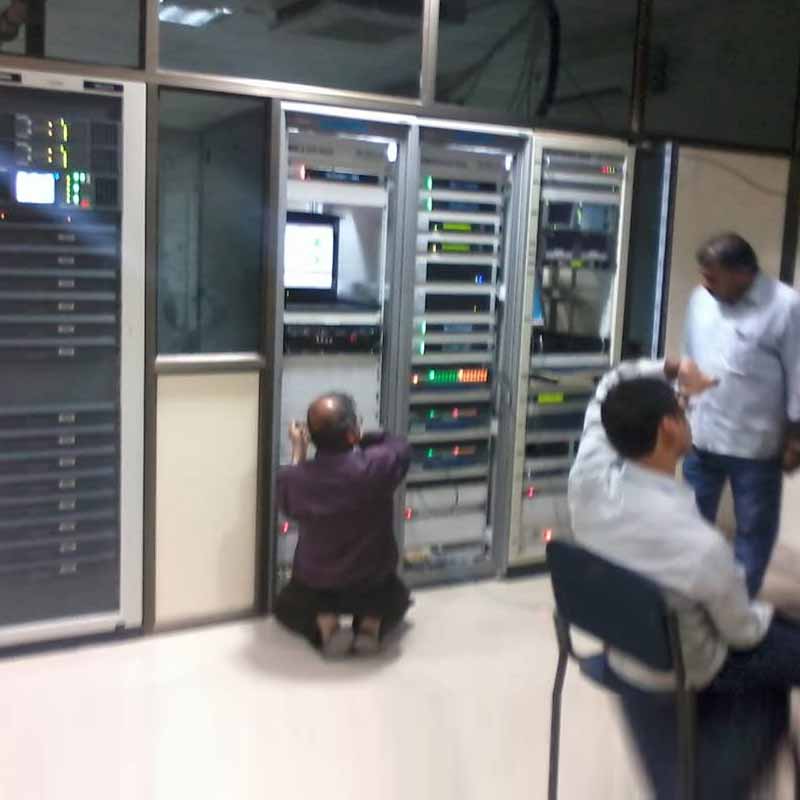
    As far as AIR is concerned, six new FM High Power Transmitters have been planned in LWE affected areas at a total cost of Rs.28.06 Crores at Kakinada East Godavari/Andhra Pradesh; Muzaffarpur in Bihar; Amibikapur Sarguja in Chhattisgarh; Dhanbad in Jharkhand; Bhawanipatna in Kalahandi (Odisha), and Suryapet in Nalgonda (Telangana).

    In addition to this, existing old/outlived transmitters at AIR stations functional in LWE affected areas are also planned for replacement by High Power Transmitters.
    As far as Doordarshan is concerned, a part of digitalization scheme approved under the 12th Plan Projects of setting up digital HPTs at a cost of Rs. 6.62 crore each have been implemented at Muzaffarpur (Bihar); Jagdalpur (Chhattisgarh); and Jamshedpur (Jharkhand).

    It was also emphasized by the sources that all the areas uncovered by terrestrial transmitters are covered with multichannel TV coverage through Doordarshan’s free to air DTH service Freedish.

  • Around Rs 35 crore spent by Prasar Bharati in left extremist affected areas

    Around Rs 35 crore spent by Prasar Bharati in left extremist affected areas

    NEW DELHI: Both All India Radio and Doordarshan have spent around Rs 35 crore in setting up transmitters and programming in left wing extremist (LWE) areas.

    Programmes are aired on the theme of dissuading the youth from getting involved in anti-social activities and persuading those, who have misguidedly taken to arms, to come back and join the mainstream, Parliament was told recently.

    These are telecasting Developmental programmes on Education, Youth Welfare, Women Empowerment, welfare schemes for the area, Forest Act and Rights of Tribals including coverage of local festivals and tribal folk music in their local languages and dialects.

    The thrust is largely on the developmental schemes/activities of the Government of India and the State Governments. These programmes also dwell on the need of maintaining law and order in the concerned areas so that people’s progress could be achieved faster.

    As far as AIR is concerned, six new FM High Power Transmitters have been planned in LWE affected areas at a total cost of Rs.28.06 Crores at Kakinada East Godavari/Andhra Pradesh; Muzaffarpur in Bihar; Amibikapur Sarguja in Chhattisgarh; Dhanbad in Jharkhand; Bhawanipatna in Kalahandi (Odisha), and Suryapet in Nalgonda (Telangana).

    In addition to this, existing old/outlived transmitters at AIR stations functional in LWE affected areas are also planned for replacement by High Power Transmitters.
    As far as Doordarshan is concerned, a part of digitalization scheme approved under the 12th Plan Projects of setting up digital HPTs at a cost of Rs. 6.62 crore each have been implemented at Muzaffarpur (Bihar); Jagdalpur (Chhattisgarh); and Jamshedpur (Jharkhand).

    It was also emphasized by the sources that all the areas uncovered by terrestrial transmitters are covered with multichannel TV coverage through Doordarshan’s free to air DTH service Freedish.

  • Govt earns over Rs 2,400 crore as licence fee from DTH players in 3 years: Rathore

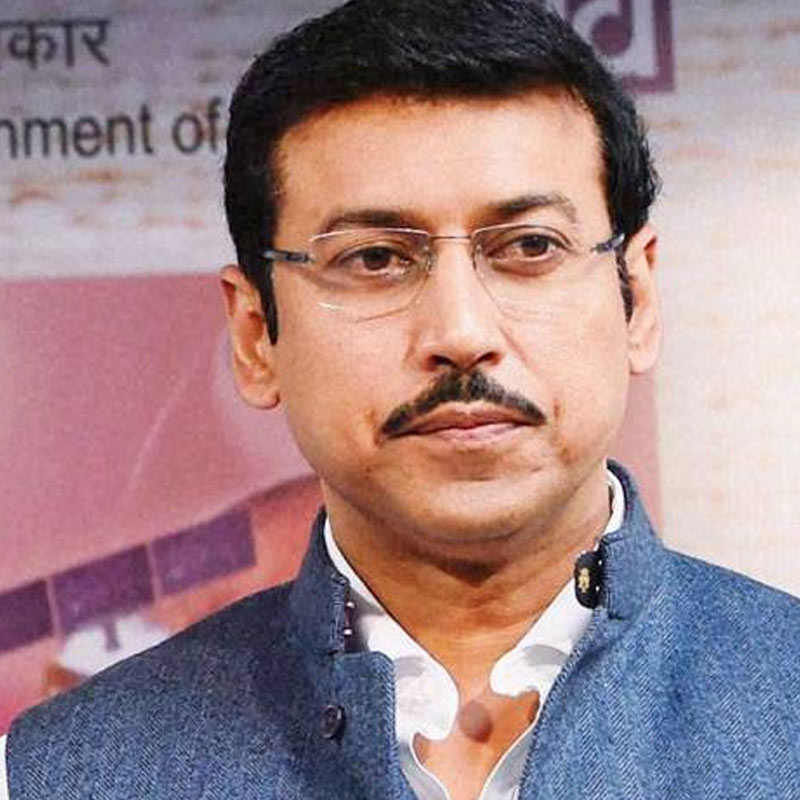
    Govt earns over Rs 2,400 crore as licence fee from DTH players in 3 years: Rathore

    NEW DELHI: A sum of Rs 2400.45 crore has been earned by the government from licence fee from the six private direct-to-home players in the last three years.

    Lok Sabha was told in a written reply by Minister of State for Ministry of Information and Broadcasting (MIB) that while “there is no restriction on the total number of DTH licenses, no new application has been received in the Ministry for grant of DTH license.”

    He said that a sum of Rs Rs.836.52 crores was earned in 2014-15, while the revenue from licence for 2015-16 was Rs.816.15 crores and for 2016-17 was Rs.747.78 crores.

    The Ministry has granted license to six private companies: Dish TV India Limited; Tata Sky Limited; Sun Direct TV Pvt. Limited; Reliance BIG TV Limited; Bharti Telemedia Limited and Videocon d2h Limited

    In addition, pubcaster Doordarshan provides a free-to-air DTH services in the country from its platform Freedish, which only requires a one-time investment in purchasing the dish and linked set-top-box.

    DTH licenses, under the DTH guidelines, are granted to those companies which fulfill the eligibility criteria, terms and conditions and are subject to security clearance and technical clearances by the appropriate authorities of the government. The details are available on the website of this Ministry at www.mib.gov.in.

    In a related development, broadcast carriage regulator TRAI has set in motion a consultation process to explore whether the private DTH operators and other distribution platforms can share infrastructure so as to optimise their usage and reduce overall cost.

    The TRAI proposal has elicited mixed response from DTH operators till now, while Hong Kong-based Asian pay TV industry organisation CASBAA has opposed any government or regulator mandated sharing on the ground that consumers will not benefit ultimately, apart from other reasons.

  • Govt earns over Rs 2,400 crore as licence fee from DTH players in 3 years: Rathore

    Govt earns over Rs 2,400 crore as licence fee from DTH players in 3 years: Rathore

    NEW DELHI: A sum of Rs 2400.45 crore has been earned by the government from licence fee from the six private direct-to-home players in the last three years.

    Lok Sabha was told in a written reply by Minister of State for Ministry of Information and Broadcasting (MIB) that while “there is no restriction on the total number of DTH licenses, no new application has been received in the Ministry for grant of DTH license.”

    He said that a sum of Rs Rs.836.52 crores was earned in 2014-15, while the revenue from licence for 2015-16 was Rs.816.15 crores and for 2016-17 was Rs.747.78 crores.

    The Ministry has granted license to six private companies: Dish TV India Limited; Tata Sky Limited; Sun Direct TV Pvt. Limited; Reliance BIG TV Limited; Bharti Telemedia Limited and Videocon d2h Limited

    In addition, pubcaster Doordarshan provides a free-to-air DTH services in the country from its platform Freedish, which only requires a one-time investment in purchasing the dish and linked set-top-box.

    DTH licenses, under the DTH guidelines, are granted to those companies which fulfill the eligibility criteria, terms and conditions and are subject to security clearance and technical clearances by the appropriate authorities of the government. The details are available on the website of this Ministry at www.mib.gov.in.

    In a related development, broadcast carriage regulator TRAI has set in motion a consultation process to explore whether the private DTH operators and other distribution platforms can share infrastructure so as to optimise their usage and reduce overall cost.

    The TRAI proposal has elicited mixed response from DTH operators till now, while Hong Kong-based Asian pay TV industry organisation CASBAA has opposed any government or regulator mandated sharing on the ground that consumers will not benefit ultimately, apart from other reasons.

  • Chrome Data rolls out massive rural habits report, cable TV included

    Chrome Data rolls out massive rural habits report, cable TV included

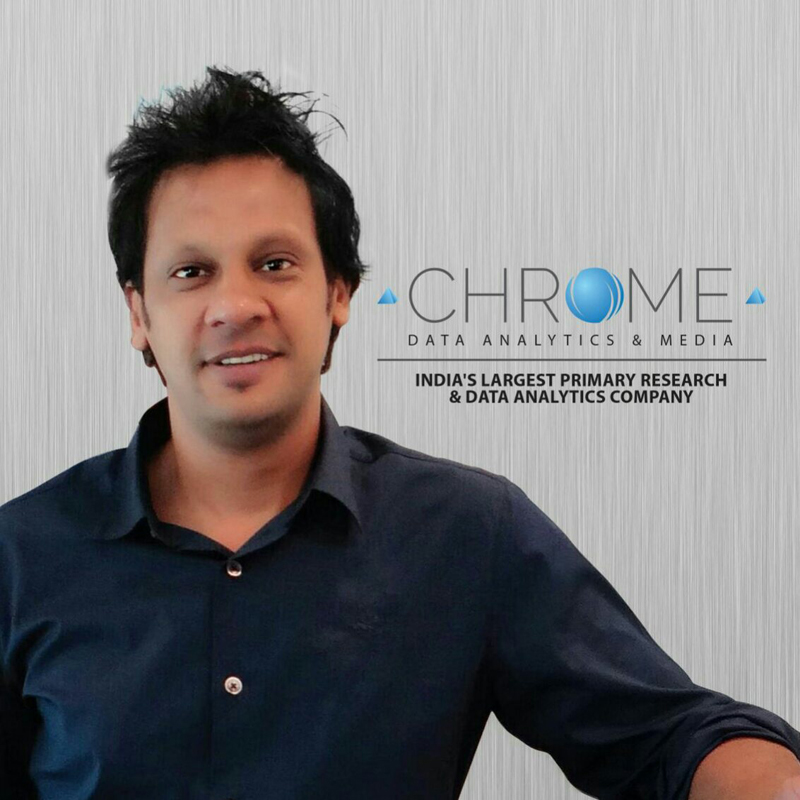
    MUMBAI: The Pankaj Krishna-led Chrome Data Analytics & Media today announced the completion of their proprietary Rural Establishment Survey (RES), an unprecedented study covering consumer behaviour and habits in over 200,000 Indian villages, representing over 300 million Indians.

    The survey, which was done over a period of 15 months, involved the entire Chrome Data infrastructure of over 650 field executive, 450 telecalling staff and the 150 strong analytics team, together speaking over 22 languages to map the length and breadth of the country. According to Chrome Data, one in a 100 households covering the sample area were reached.

    Respondents were made to fill out a detailed questionnaire which included consumer habits, family income and lifestyle patterns among other things.

    All the products in the naional consumer classification survey (NCCS), cable penetration, electricity, power cut data, political preferences, subscriber attached to each platform by village, are some of the data points which have been captured by the rural establishment report.

    The survey holds direct actionables for brands and agencies to help target growth regions

    Broadcasters, for example can know the exact subscriber base of cable networks in the villages covered. Along with this, it also gives the number of active subscribers of each cable network. The company believes RES will add immense value to business strategies for broadcasters, agencies and advertisers.

    Speaking on the product, Chrome Data CEO Pankaj Krishna: “It has been a humbling experience to be a part of a study of such a massive scale, and I’m proud of the team for the amount of efforts they’ve put in over the past 15 months. Even we weren’t prepared for some of the findings – for broadcasters for example, there are pockets of rural areas that have seen Freedish penetration spiral up to almost a hundred percent.”

    Chrome RES, he added, will be key for any business planning to capitalize on data driven strategies to exploit the 74% rural population.

    Pricing for the rural establishment report varies between Rs 35 lakh to Rs 1.8 crore depending on the number genres and channels that are subscribing to to it.

  • Chrome Data rolls out massive rural habits report, cable TV included

    Chrome Data rolls out massive rural habits report, cable TV included

    MUMBAI: The Pankaj Krishna-led Chrome Data Analytics & Media today announced the completion of their proprietary Rural Establishment Survey (RES), an unprecedented study covering consumer behaviour and habits in over 200,000 Indian villages, representing over 300 million Indians.

    The survey, which was done over a period of 15 months, involved the entire Chrome Data infrastructure of over 650 field executive, 450 telecalling staff and the 150 strong analytics team, together speaking over 22 languages to map the length and breadth of the country. According to Chrome Data, one in a 100 households covering the sample area were reached.

    Respondents were made to fill out a detailed questionnaire which included consumer habits, family income and lifestyle patterns among other things.

    All the products in the naional consumer classification survey (NCCS), cable penetration, electricity, power cut data, political preferences, subscriber attached to each platform by village, are some of the data points which have been captured by the rural establishment report.

    The survey holds direct actionables for brands and agencies to help target growth regions

    Broadcasters, for example can know the exact subscriber base of cable networks in the villages covered. Along with this, it also gives the number of active subscribers of each cable network. The company believes RES will add immense value to business strategies for broadcasters, agencies and advertisers.

    Speaking on the product, Chrome Data CEO Pankaj Krishna: “It has been a humbling experience to be a part of a study of such a massive scale, and I’m proud of the team for the amount of efforts they’ve put in over the past 15 months. Even we weren’t prepared for some of the findings – for broadcasters for example, there are pockets of rural areas that have seen Freedish penetration spiral up to almost a hundred percent.”

    Chrome RES, he added, will be key for any business planning to capitalize on data driven strategies to exploit the 74% rural population.

    Pricing for the rural establishment report varies between Rs 35 lakh to Rs 1.8 crore depending on the number genres and channels that are subscribing to to it.

  • Private broadcasters, DD, telcos and the terrestrial TV dilemma

    Private broadcasters, DD, telcos and the terrestrial TV dilemma

    MUMBAI: There was once a treasured medium. Everyone – 300 million when it started and -800-odd million two decades ago – flocked to it everyday. Every evening and more so on Sunday mornings they gathered around the one eyed God in their homes. They switched it on manually – and later with a remote device – waited for the picture to appear on the glass screen to be transported to another universe. Where they could laugh, learn, cry, enjoy unencumbered. In the comfort of the home.

    For years, terrestrial television run by the state owned broadcaster Doordarshan – and later by its parent Prasar Bharati – was our main source of information, entertainment, and education. We Indians used to carp and crib that it gave us one sided information, did not entertain us enough, delivered low quality images, was too rigidly controlled. But the reality is it did engage the nation – at least three generations – during different periods since 1960 when TV was flagged off in India – in internet-before times, in prior-to- liberalisation times.

    And yes it did present a platform to a preferred few, to churn out content, which would become the opium for many. Allegations of nepotism, favouritism, corruption were hurled at the powers that be in the portals of Doordarshan and in the ministry of information and broadcasting as a few producers became rich. As did the paanwala below Mandi House who directed and passed on the scripts and proposals of producers to the higher ups or so it was rumoured

    Doordarshan was a God supreme. Impenetrable. Ubiquitous. And all pervasive. It reached out to every nook and cranny of this nation of ours thanks to the lavish spread of transmitters. In TV set and electricity poor regions of heart land India, its magnetic appeal was so great, that villagers would bring out a generator, which would crank out power, and supply it to a single TV as an entire community sat enthralled before it. In urban India, streets used to be deserted as cities’ denizens huddled around it in worship like awe.

    The Doordarshan of today has the same reach. But not the appeal. The terrestrial network has over the years become a very poor shadow of its earlier muscular self. Indians have fled to cable TV, DTH TV, online and OTT linear services on their mobile phones. A new crop of Gods has emerged – Star India, Zee TV, Sun TV, Sony Pictures, Viacom18, Youtube, Facebook, Hotstar, Voot, dittoTV, Netflix – and they are obsessing a nation wanting to be entertained.

    An archaic government diktaat – passed under the Cable TV Regulations Act- forces both cable TV and DTH networks to carry DD channels at no cost to government, even as other services struggle to pay top dollar to get carriage.

    The spectrum that Doordarshan occupies for its terrestrial transmissions nationally is extremely valuable. And the Modi-led government probably realizes this. Hence, the recent release of the consultation paper by the Telecom Regulatory Authority of India that seeks to understand how private players could be allowed in the terrestrial broadcasting space. Auctioning it or allowing public private sector participation could provide tens of thousands of crore to the exchequer. And possibly to the ailing Doordarshan, which depends on government dole and tax payer money for its continued existence. Prasar Bharati CEO Jawahar Sircar has been tearing his hair out but has admitted that he has found it very difficult to bring a sense of discipline to its vast employee force nationally. He has said that he is sitting on a gold mine with Prasar Bharati but he has confessed the culture in the organization has made it very difficult to mine and yield profits.

    Globally, broadcasters in most markets have migrated to digital using one of the four technical standards: DVB-T (European), ATSC (American), ISDBT (Japanese), and Chinese (DTMB). DD has been tentative about the migration; it has stayed put in standard analog mode with its 1,400 transmitters standing tall. It has installed only some 20-odd DVB-T transmitters; another 40-odd are planned; altogether 600 odd digital transmitters are to replace the current analog ones.

    The cost of this migration is going to run into tens of thousands of crore as old archaic transmitters and analog work flows are converted to digital. It’s something which Prime Minister Narendra Modi would definitely like to be done. But the question is: does it make economic sense under Doordarshan and Prasar Bharati?

    DD is taking the slot sale route once again and inviting private producers to create content, sell the advertising air time, and pay it a flat fee. Sounds interesting, but it’s not something that’s attracting successful private sector producers by the truck load. Most of them are tied up with productions on private channels like ZeeTV, Sony, Star and Colors. The risk factor of producing something on DD is proving daunting for them. So only time will tell whether DD’s private slot sale scheme will work or not. The previous attempt was a sheer disaster as at that time DD dished out oodles of cash to producers who did not really care about what they put out on air. They only pocketed their high margins, which they made, according to DD sources.

    Does DD have a future on its own? Yes, its FreeDish DTH service has caught on like wildfire because of its low cost. But research has shown that some viewers are not staying loyal to it; they are rotating the small dish around to catch signals from other private providers. Also, overall, churn in the DTH space is pretty high as consumers have been service-hopping to avoid paying the high tab each of the operators is charging.

    An issue that the government could think about is: why not privatise the analogue DD as well instead of just selling out slots? The reasons governments at the Centre in the past have held on to the public caster is because they wanted to have a media outlet through which their viewpoint could be heard, and also provide public service programmes to help those in the rural heartlands. But of what use is a network that fewer and fewer viewers are opting for is something those in power need to think about. Private newspapers and TV news channels are anyway behaving like handmaidens of the Narendra Modi-led government. And it could easily sell most of the DD network to private players while retaining some time slots for itself to propagate its views. Additionally, it could mandate leading Indian broadcasters to do really good public service TV programmes on their more popular channels even while paying them to do so. That could prove a cheaper proposition, than running a unwieldy behemoth.

    So does it make sense to privatize the digital terrestrial television space? And who else apart from Doordarshan could venture into it? Prima facie it does: the world over DTT is holding its own against cable and satellite television. Of course, in India’s case, the impact of mobile has been humungous with nearly a billion subscribers, and around 250 million mobile internet users.

    The 4G LTE revolution has yet to hit India. The era of fast cheaper data and internet access is knocking on its doors. Things will change drastically when it does arrive. Among the major players in this segment everyone has been watching to turn on the data juice are: Reliance, Airtel, Idea, Vodafone. 4G LTE and DTT can easily be married to each other thus allowing users to watch terrestrial television on their tablets and phones while on the move. All it requires is a dongle or a chip to be inserted into the smart HD-ready handsets. And viola, you could get a clutch of digital channels.

    And that brings us to the answer of who could get into DTT – obviously the telcos, and primarily Reliance Industries, which is bidding to revolutionise India’s mobile habits.Yes, its Jio venture is heavily laden with debt, but even that is a drop in the ocean, compare to what the megacorp makes from its oil and gas businesses. Then possibly Airtel; the company is already in the DTH platform space. The Tata group: it operates a platform along with Rupert Murdoch’s Sky. The ZeeTV-Essel group which has a strong presence in cable TV, DTH, OTT, and broadcasting. Star India, which has stuck to being a content creator, but its parent Twenty First Century Fox has deep and rich experience in DTH, and terrestrial TV.

    However, a note of caution here: they will get in only if it is economically feasible. On the face of it, the RoI will take a long time – a very long time. Unless innovative models are resorted to. One of these could be to have the private sector bid for either cities, states or regions. This will help distribute the capital risk among several players, each of who could take up a city or a region for their individual DTT service.

    The DTT solution could take some time finding. And it may well be buried because of the rapid strides that online content consumption is making. But at least a start has been made.

  • Private broadcasters, DD, telcos and the terrestrial TV dilemma

    Private broadcasters, DD, telcos and the terrestrial TV dilemma

    MUMBAI: There was once a treasured medium. Everyone – 300 million when it started and -800-odd million two decades ago – flocked to it everyday. Every evening and more so on Sunday mornings they gathered around the one eyed God in their homes. They switched it on manually – and later with a remote device – waited for the picture to appear on the glass screen to be transported to another universe. Where they could laugh, learn, cry, enjoy unencumbered. In the comfort of the home.

    For years, terrestrial television run by the state owned broadcaster Doordarshan – and later by its parent Prasar Bharati – was our main source of information, entertainment, and education. We Indians used to carp and crib that it gave us one sided information, did not entertain us enough, delivered low quality images, was too rigidly controlled. But the reality is it did engage the nation – at least three generations – during different periods since 1960 when TV was flagged off in India – in internet-before times, in prior-to- liberalisation times.

    And yes it did present a platform to a preferred few, to churn out content, which would become the opium for many. Allegations of nepotism, favouritism, corruption were hurled at the powers that be in the portals of Doordarshan and in the ministry of information and broadcasting as a few producers became rich. As did the paanwala below Mandi House who directed and passed on the scripts and proposals of producers to the higher ups or so it was rumoured

    Doordarshan was a God supreme. Impenetrable. Ubiquitous. And all pervasive. It reached out to every nook and cranny of this nation of ours thanks to the lavish spread of transmitters. In TV set and electricity poor regions of heart land India, its magnetic appeal was so great, that villagers would bring out a generator, which would crank out power, and supply it to a single TV as an entire community sat enthralled before it. In urban India, streets used to be deserted as cities’ denizens huddled around it in worship like awe.

    The Doordarshan of today has the same reach. But not the appeal. The terrestrial network has over the years become a very poor shadow of its earlier muscular self. Indians have fled to cable TV, DTH TV, online and OTT linear services on their mobile phones. A new crop of Gods has emerged – Star India, Zee TV, Sun TV, Sony Pictures, Viacom18, Youtube, Facebook, Hotstar, Voot, dittoTV, Netflix – and they are obsessing a nation wanting to be entertained.

    An archaic government diktaat – passed under the Cable TV Regulations Act- forces both cable TV and DTH networks to carry DD channels at no cost to government, even as other services struggle to pay top dollar to get carriage.

    The spectrum that Doordarshan occupies for its terrestrial transmissions nationally is extremely valuable. And the Modi-led government probably realizes this. Hence, the recent release of the consultation paper by the Telecom Regulatory Authority of India that seeks to understand how private players could be allowed in the terrestrial broadcasting space. Auctioning it or allowing public private sector participation could provide tens of thousands of crore to the exchequer. And possibly to the ailing Doordarshan, which depends on government dole and tax payer money for its continued existence. Prasar Bharati CEO Jawahar Sircar has been tearing his hair out but has admitted that he has found it very difficult to bring a sense of discipline to its vast employee force nationally. He has said that he is sitting on a gold mine with Prasar Bharati but he has confessed the culture in the organization has made it very difficult to mine and yield profits.

    Globally, broadcasters in most markets have migrated to digital using one of the four technical standards: DVB-T (European), ATSC (American), ISDBT (Japanese), and Chinese (DTMB). DD has been tentative about the migration; it has stayed put in standard analog mode with its 1,400 transmitters standing tall. It has installed only some 20-odd DVB-T transmitters; another 40-odd are planned; altogether 600 odd digital transmitters are to replace the current analog ones.

    The cost of this migration is going to run into tens of thousands of crore as old archaic transmitters and analog work flows are converted to digital. It’s something which Prime Minister Narendra Modi would definitely like to be done. But the question is: does it make economic sense under Doordarshan and Prasar Bharati?

    DD is taking the slot sale route once again and inviting private producers to create content, sell the advertising air time, and pay it a flat fee. Sounds interesting, but it’s not something that’s attracting successful private sector producers by the truck load. Most of them are tied up with productions on private channels like ZeeTV, Sony, Star and Colors. The risk factor of producing something on DD is proving daunting for them. So only time will tell whether DD’s private slot sale scheme will work or not. The previous attempt was a sheer disaster as at that time DD dished out oodles of cash to producers who did not really care about what they put out on air. They only pocketed their high margins, which they made, according to DD sources.

    Does DD have a future on its own? Yes, its FreeDish DTH service has caught on like wildfire because of its low cost. But research has shown that some viewers are not staying loyal to it; they are rotating the small dish around to catch signals from other private providers. Also, overall, churn in the DTH space is pretty high as consumers have been service-hopping to avoid paying the high tab each of the operators is charging.

    An issue that the government could think about is: why not privatise the analogue DD as well instead of just selling out slots? The reasons governments at the Centre in the past have held on to the public caster is because they wanted to have a media outlet through which their viewpoint could be heard, and also provide public service programmes to help those in the rural heartlands. But of what use is a network that fewer and fewer viewers are opting for is something those in power need to think about. Private newspapers and TV news channels are anyway behaving like handmaidens of the Narendra Modi-led government. And it could easily sell most of the DD network to private players while retaining some time slots for itself to propagate its views. Additionally, it could mandate leading Indian broadcasters to do really good public service TV programmes on their more popular channels even while paying them to do so. That could prove a cheaper proposition, than running a unwieldy behemoth.

    So does it make sense to privatize the digital terrestrial television space? And who else apart from Doordarshan could venture into it? Prima facie it does: the world over DTT is holding its own against cable and satellite television. Of course, in India’s case, the impact of mobile has been humungous with nearly a billion subscribers, and around 250 million mobile internet users.

    The 4G LTE revolution has yet to hit India. The era of fast cheaper data and internet access is knocking on its doors. Things will change drastically when it does arrive. Among the major players in this segment everyone has been watching to turn on the data juice are: Reliance, Airtel, Idea, Vodafone. 4G LTE and DTT can easily be married to each other thus allowing users to watch terrestrial television on their tablets and phones while on the move. All it requires is a dongle or a chip to be inserted into the smart HD-ready handsets. And viola, you could get a clutch of digital channels.

    And that brings us to the answer of who could get into DTT – obviously the telcos, and primarily Reliance Industries, which is bidding to revolutionise India’s mobile habits.Yes, its Jio venture is heavily laden with debt, but even that is a drop in the ocean, compare to what the megacorp makes from its oil and gas businesses. Then possibly Airtel; the company is already in the DTH platform space. The Tata group: it operates a platform along with Rupert Murdoch’s Sky. The ZeeTV-Essel group which has a strong presence in cable TV, DTH, OTT, and broadcasting. Star India, which has stuck to being a content creator, but its parent Twenty First Century Fox has deep and rich experience in DTH, and terrestrial TV.

    However, a note of caution here: they will get in only if it is economically feasible. On the face of it, the RoI will take a long time – a very long time. Unless innovative models are resorted to. One of these could be to have the private sector bid for either cities, states or regions. This will help distribute the capital risk among several players, each of who could take up a city or a region for their individual DTT service.

    The DTT solution could take some time finding. And it may well be buried because of the rapid strides that online content consumption is making. But at least a start has been made.

  • Prasar Bharati’s monopolistic-era mind-set has to change: CEO Jawhar Sircar

    Prasar Bharati’s monopolistic-era mind-set has to change: CEO Jawhar Sircar

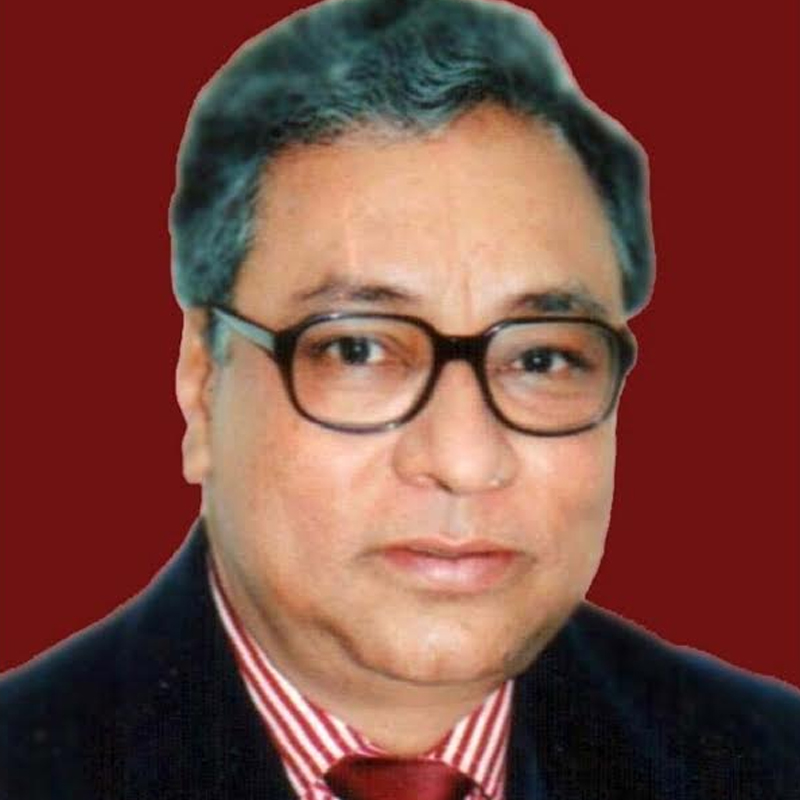
    Jawhar Sircar, the 60-something chief executive of India’s public broadcaster Prasar Bharati, is bubbling with ideas and energy —- in sharp contrast to the organisation’s headquarters that gives a casual visitor a sense of life in slo-mo.

    Prasar Bharati is the parent organisation of 57-year-old Doordarshan and 86-year-old All India Radio, the country’s public broadcasters who claim to cover almost the whole of this vast country stretching from Kashmir to Kanyakumari — and a little beyond to a few islands in the Indian Ocean.

    Critics say age and a semi-lethargic attitude of the over 40,000-strong workforce impede both the organisations from being nimble footed in an age when technology has vastly changed the speed and mode of delivery of video and voice. Add to these government controls (via annual funding from taxpayers’ money to bridge the gap between revenues and expenditure) and Prasar Bharati continues to function as a moribund government organisation despite an autonomous status.

    The chief executive of Prasar Bharati, who joined the organisation in 2012 after serving in the government for over 30 years, is not shy to admit that some fundamental problems stop it from being `India’s BBC’ or `India’s NHK’. He goes a step ahead to say (with tongue firmly in cheek) that functionaries of Prasar Bharati “are living in a time warp” — in a world of their own that could be a zillion years behind reality.

    Even if you give full marks to the tech and social media-savvy Sircar for being candid, it cannot be wished away that both DD and AIR will continue to be an extension of the government’s PR division unless there’s a radical change in the thought process of India’s ruling class and policy-makers.

    Sitting in his office, in New Delhi’s PTI Building, amidst files and colleagues, many of them keep trooping in and out for advise and suggestions, the multi-tasking Sircar, is completely at ease conversing with Indiantelevision.com’s consulting editors B B Nagpal and Anjan Mitra on a wide range of subjects. Edited excerpts from the interview:

    Q: What could be the five guiding principles that you have etched out for Prasar Bharati’s possible reform?

    JS: Having joined the organisation in 2012, I don’t have much time left now, but I am still trying to (a) bring about transparency (b) prioritise our objectives as a public broadcaster (c) get the organisation adjusted to competition (d) get the organisation to look at non-terrestrial and satellite-based transmission and (e) strengthen the FreeDish platform.

    Q: Do you think all of these could be achieved; especially as majority of Prasar Bharati workforce seems to still live in a pre-Independence era?

    JS: Sadly, the majority mindset is a big hurdle in moving forward in an era where technology is changing fast and competition (from private sector) reacts faster to changing situations and ground realities. Many of my colleagues still believe they are in a monopoly era when DD and AIR were the only source of entertainment and news for Indians. Such a mentality needs to change if we are to be in the race as a viable and relevant organisation.

    Moreover, I and the board of Prasar Bharati, have been functioning with inadequate human resources at senior levels too. There had been no Member-Finance for a long time and regular Director-Generals for DD and AIR are yet to be put in place.

    However, I also believe that with some change in mindset and additional revenue, which can accrue from infrastructure sharing with private sector players and better use of under-utilised existing infrastructure, Prasar Bharati can be more relevant as an organisation and to the Indian public.

    Q: Can you give an example of monopolistic era mindset that, probably, tries to be immune to technological advances?

    JS: (Smiles) During the first few years of my tenure nobody here understood what OTT (over the top) stood for and how it’s relevant to our services. Another example is that of adoption of MPEG-4 broadcast technology. It had been cleared one and a half years back, but procedural delays hampered quick adoption.

    Q: Now that we are talking about new technologies, what would your reaction be if digital terrestrial TV (DTT) is thrown open to private sector players by the government?

    JS:  Prasar Bharati approved DTT over a year back. We were told to come up with a plan but no base paper could be prepared as there was some resistance internally from certain quarters. And, Prasar Bharati is not afraid of private players’ entry into DTT… we are quite open to the idea. Rather we’d support any such move if the government some time allows private players in DTT.

    Q: What can Prasar Bharati gain by supporting private players’ entry in an arena that had been a monopoly of the pubcaster?

    JS: Changing with the times makes you relevant. Why should DTT be Prasar Bharati’s monopoly? By allowing others, Prasar Bharati can earn additional revenue as we can lease out our infrastructure to private players who, otherwise, would have to make huge investments in setting up infrastructure. Let a private sector (content) aggregator come forward with a business plan. DD, anyway, is investing on DTT infrastructure.

    Q: You earlier talked of bringing about transparency in Prasar Bharati. In what way do you feel the proposed e-auction system will be an improvement on the systems adopted until now to obtain content?

    JS: The proposed e-auction would be a completely transparent method and a step towards overall transparency in the organisation to acquire content for DD. It will also put the onus on the successful bidder to ensure good content.

    Q: But, before the current SFC system of self-financed commissioned programmes, DD had a system of sponsored programmes whereby good programmes where especially produced for DD. How is e-auction going to be an improvement over the sponsorship scheme?

    JS: That kind of system had led to monopolization… with a few big names dominating the entire prime time of the public broadcaster. Ultimately, the same big names from Bollywood made serials for Doordarshan and left little scope for fresh talent.

    In fact, I had initially faced internal resistance to the plan for e-auction of prime time slots too, and it took serious convincing on my part for the idea to sink in with others. DD has already announced that this is being done on an experimental basis and may be extended to its other channels if the scheme is accepted.

    I am confident that audience loyalty, national sentiment, and the vast reach of  Doordarshan would help to make the scheme a success.

    Q: You referred to giving a push to FreeDish, which is the country’s only free-to-air KU-band service. What are the plans and what would be the present subscriber base of FreeDish?

    JS: As the antennas are available in the market (at a nominal one-time price ranging between Rs 3,000-4,000) and no monthly subscription is paid, it is difficult to know how many television households have FreeDish. This audit will become easier when we complete the process of encryption of FreeDish while keeping it free to air.

    Exact figures may be difficult in our case as even the Telecom Regulatory Authority of India admits there is a gap between the number of active and registered subscribers of private DTH operators. But it is understood (from feedback from market and sale of antennas) that there are around 15 million households hooked to FreeDish.

    In recent times, FreeDish has got some very good response from private TV channels…many of them, including the big names, want to hop onto FreeDish’s platform for wider reach of their products. We have plans to increase the number of FTA television channels on the platform so a consumer gets more choice.

    Q: There were plans to upgrade FreeDish to MPEG 4 to increase its capacity to carry more signals. But there has been no report on the progress in this regard.

    JS: It is not possible to implement MPEG 4 and the new Indian Conditional Access System (iCAS) together at the same time. But the commitment of FreeDish is to reach the rural areas and also cover all the areas not reached so far by television.

    Q: After initial protests by Prasar Bharati, Broadcast Audience Research Council had begun to give rural data separately. Are you satisfied with the audience measurement system?

    JS: We at Prasar Bharati have had some issues with BARC, which we would prefer to raise directly with the organisation. But our understanding is that DD covers a large part of India via its terrestrial and satellite services.

    Q: Why is it that Prasar Bharati cannot function like BBC or other public service broadcasters in the world?

    JS: The move to greater professionalism is eventually bound to happen, but some hurdles have to be crossed including those relating to budgets.

    Public funding on the public broadcaster in India is just Rs 2,400 crore as compared to Rs 51,653 crore in Germany, Rs 39,800 crore in the United Kingdom, Rs 34,097 crore in Japan. The amount spent on Prasar Bharati was even lower than those spent on pubcasters in Canada, Australia, and Korea.

    The per capita funding in India on the pubcaster is only Rs 19 as compared to UK and Germany where it is approximately Rs 6,000 to Rs 7,000. Even Malaysia has a per capita funding of Rs 350.

    Q: What are the constraints on acquiring good content for Doordarshan? 

    JS: The expenditure on content in India is a mere six per cent as compared to 75 per cent by NHK in Japan and 71 per cent by the BBC.
     The Indian Government gives 62 per cent as compared to 100 per cent in Russia, 98.2 per cent in Malaysia, 97 per cent in Germany, and 83 per cent in the UK. So, this should answer your question.     
  • Prasar Bharati’s monopolistic-era mind-set has to change: CEO Jawhar Sircar

    Prasar Bharati’s monopolistic-era mind-set has to change: CEO Jawhar Sircar

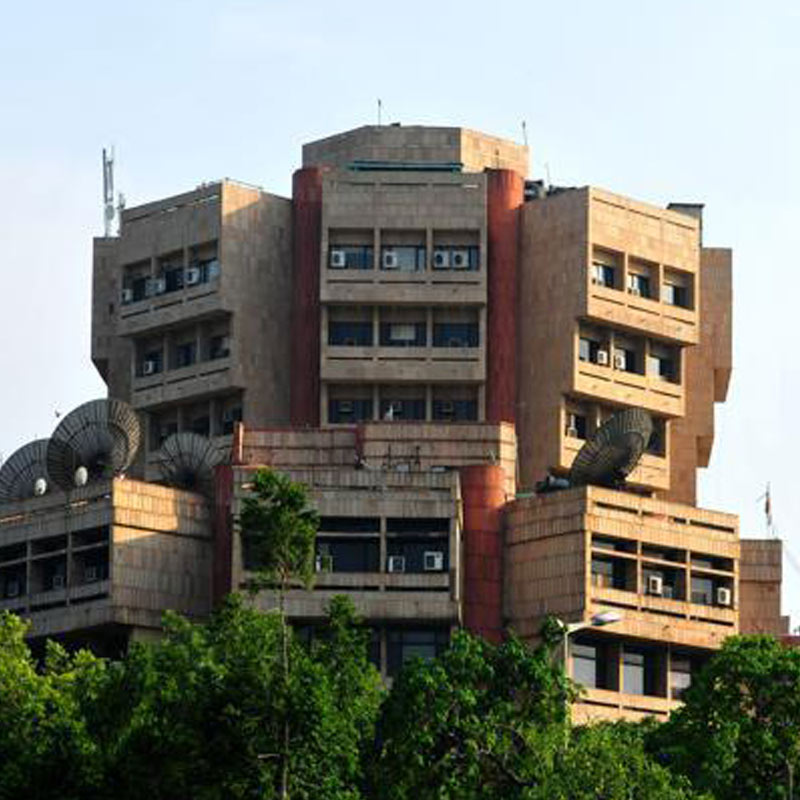
    Jawhar Sircar, the 60-something chief executive of India’s public broadcaster Prasar Bharati, is bubbling with ideas and energy —- in sharp contrast to the organisation’s headquarters that gives a casual visitor a sense of life in slo-mo.

    Prasar Bharati is the parent organisation of 57-year-old Doordarshan and 86-year-old All India Radio, the country’s public broadcasters who claim to cover almost the whole of this vast country stretching from Kashmir to Kanyakumari — and a little beyond to a few islands in the Indian Ocean.

    Critics say age and a semi-lethargic attitude of the over 40,000-strong workforce impede both the organisations from being nimble footed in an age when technology has vastly changed the speed and mode of delivery of video and voice. Add to these government controls (via annual funding from taxpayers’ money to bridge the gap between revenues and expenditure) and Prasar Bharati continues to function as a moribund government organisation despite an autonomous status.

    The chief executive of Prasar Bharati, who joined the organisation in 2012 after serving in the government for over 30 years, is not shy to admit that some fundamental problems stop it from being `India’s BBC’ or `India’s NHK’. He goes a step ahead to say (with tongue firmly in cheek) that functionaries of Prasar Bharati “are living in a time warp” — in a world of their own that could be a zillion years behind reality.

    Even if you give full marks to the tech and social media-savvy Sircar for being candid, it cannot be wished away that both DD and AIR will continue to be an extension of the government’s PR division unless there’s a radical change in the thought process of India’s ruling class and policy-makers.

    Sitting in his office, in New Delhi’s PTI Building, amidst files and colleagues, many of them keep trooping in and out for advise and suggestions, the multi-tasking Sircar, is completely at ease conversing with Indiantelevision.com’s consulting editors B B Nagpal and Anjan Mitra on a wide range of subjects. Edited excerpts from the interview:

    Q: What could be the five guiding principles that you have etched out for Prasar Bharati’s possible reform?

    JS: Having joined the organisation in 2012, I don’t have much time left now, but I am still trying to (a) bring about transparency (b) prioritise our objectives as a public broadcaster (c) get the organisation adjusted to competition (d) get the organisation to look at non-terrestrial and satellite-based transmission and (e) strengthen the FreeDish platform.

    Q: Do you think all of these could be achieved; especially as majority of Prasar Bharati workforce seems to still live in a pre-Independence era?

    JS: Sadly, the majority mindset is a big hurdle in moving forward in an era where technology is changing fast and competition (from private sector) reacts faster to changing situations and ground realities. Many of my colleagues still believe they are in a monopoly era when DD and AIR were the only source of entertainment and news for Indians. Such a mentality needs to change if we are to be in the race as a viable and relevant organisation.

    Moreover, I and the board of Prasar Bharati, have been functioning with inadequate human resources at senior levels too. There had been no Member-Finance for a long time and regular Director-Generals for DD and AIR are yet to be put in place.

    However, I also believe that with some change in mindset and additional revenue, which can accrue from infrastructure sharing with private sector players and better use of under-utilised existing infrastructure, Prasar Bharati can be more relevant as an organisation and to the Indian public.

    Q: Can you give an example of monopolistic era mindset that, probably, tries to be immune to technological advances?

    JS: (Smiles) During the first few years of my tenure nobody here understood what OTT (over the top) stood for and how it’s relevant to our services. Another example is that of adoption of MPEG-4 broadcast technology. It had been cleared one and a half years back, but procedural delays hampered quick adoption.

    Q: Now that we are talking about new technologies, what would your reaction be if digital terrestrial TV (DTT) is thrown open to private sector players by the government?

    JS:  Prasar Bharati approved DTT over a year back. We were told to come up with a plan but no base paper could be prepared as there was some resistance internally from certain quarters. And, Prasar Bharati is not afraid of private players’ entry into DTT… we are quite open to the idea. Rather we’d support any such move if the government some time allows private players in DTT.

    Q: What can Prasar Bharati gain by supporting private players’ entry in an arena that had been a monopoly of the pubcaster?

    JS: Changing with the times makes you relevant. Why should DTT be Prasar Bharati’s monopoly? By allowing others, Prasar Bharati can earn additional revenue as we can lease out our infrastructure to private players who, otherwise, would have to make huge investments in setting up infrastructure. Let a private sector (content) aggregator come forward with a business plan. DD, anyway, is investing on DTT infrastructure.

    Q: You earlier talked of bringing about transparency in Prasar Bharati. In what way do you feel the proposed e-auction system will be an improvement on the systems adopted until now to obtain content?

    JS: The proposed e-auction would be a completely transparent method and a step towards overall transparency in the organisation to acquire content for DD. It will also put the onus on the successful bidder to ensure good content.

    Q: But, before the current SFC system of self-financed commissioned programmes, DD had a system of sponsored programmes whereby good programmes where especially produced for DD. How is e-auction going to be an improvement over the sponsorship scheme?

    JS: That kind of system had led to monopolization… with a few big names dominating the entire prime time of the public broadcaster. Ultimately, the same big names from Bollywood made serials for Doordarshan and left little scope for fresh talent.

    In fact, I had initially faced internal resistance to the plan for e-auction of prime time slots too, and it took serious convincing on my part for the idea to sink in with others. DD has already announced that this is being done on an experimental basis and may be extended to its other channels if the scheme is accepted.

    I am confident that audience loyalty, national sentiment, and the vast reach of  Doordarshan would help to make the scheme a success.

    Q: You referred to giving a push to FreeDish, which is the country’s only free-to-air KU-band service. What are the plans and what would be the present subscriber base of FreeDish?

    JS: As the antennas are available in the market (at a nominal one-time price ranging between Rs 3,000-4,000) and no monthly subscription is paid, it is difficult to know how many television households have FreeDish. This audit will become easier when we complete the process of encryption of FreeDish while keeping it free to air.

    Exact figures may be difficult in our case as even the Telecom Regulatory Authority of India admits there is a gap between the number of active and registered subscribers of private DTH operators. But it is understood (from feedback from market and sale of antennas) that there are around 15 million households hooked to FreeDish.

    In recent times, FreeDish has got some very good response from private TV channels…many of them, including the big names, want to hop onto FreeDish’s platform for wider reach of their products. We have plans to increase the number of FTA television channels on the platform so a consumer gets more choice.

    Q: There were plans to upgrade FreeDish to MPEG 4 to increase its capacity to carry more signals. But there has been no report on the progress in this regard.

    JS: It is not possible to implement MPEG 4 and the new Indian Conditional Access System (iCAS) together at the same time. But the commitment of FreeDish is to reach the rural areas and also cover all the areas not reached so far by television.

    Q: After initial protests by Prasar Bharati, Broadcast Audience Research Council had begun to give rural data separately. Are you satisfied with the audience measurement system?

    JS: We at Prasar Bharati have had some issues with BARC, which we would prefer to raise directly with the organisation. But our understanding is that DD covers a large part of India via its terrestrial and satellite services.

    Q: Why is it that Prasar Bharati cannot function like BBC or other public service broadcasters in the world?

    JS: The move to greater professionalism is eventually bound to happen, but some hurdles have to be crossed including those relating to budgets.

    Public funding on the public broadcaster in India is just Rs 2,400 crore as compared to Rs 51,653 crore in Germany, Rs 39,800 crore in the United Kingdom, Rs 34,097 crore in Japan. The amount spent on Prasar Bharati was even lower than those spent on pubcasters in Canada, Australia, and Korea.

    The per capita funding in India on the pubcaster is only Rs 19 as compared to UK and Germany where it is approximately Rs 6,000 to Rs 7,000. Even Malaysia has a per capita funding of Rs 350.

    Q: What are the constraints on acquiring good content for Doordarshan? 

    JS: The expenditure on content in India is a mere six per cent as compared to 75 per cent by NHK in Japan and 71 per cent by the BBC.
     The Indian Government gives 62 per cent as compared to 100 per cent in Russia, 98.2 per cent in Malaysia, 97 per cent in Germany, and 83 per cent in the UK. So, this should answer your question.