Tag: Freedish

  • Going FTA suits most broadcasters and advertisers

    Going FTA suits most broadcasters and advertisers

    MUMBAI: With increasing number of channels in the country, much of the interior towns have found solace in having free-to-air (FTA) channels. Doordarshan’s own Direct to Home (DTH) service Freedish has found 12 million active subscribers in the interior parts of the country with its list of FTA channels.


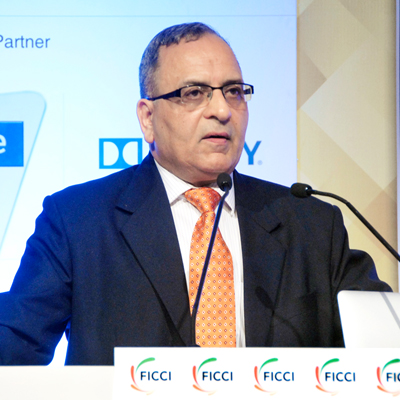
    Discussing the FTA market were MCCS India CEO Ashok Venkatramani, TAM Media Research LV Krishnan, Zee Entertainment Enterprises chief content and creative officer Bharat Ranga, Reliance Broadcast Network Limited (RBNL) CEO Tarun Katial and RK Swamy Media group senior VP K Satyanarayana. The session was moderated by Chrome Data Analytics and Media Pankaj Krishna.


    Krishna started off by asking Satyanarayana if advertisers are monetising the platform to which he said that Freedish has very few satellite channels and it is not necessary to look at FTA channels particularly for media planning. However, he stated that research shows that Freedish is able to add 10 per cent incremental reach so it has more monetisation scope.


    Venkatramani heads three channels under the ABP brand name which hasn’t yet gone pay and in fact isn’t available on Freedish either. He said, “We haven’t gone pay because the ecosystem doesn’t allow us to do so. The price at which we sell channels to MSOs is not in our hands. Freedish is too expensive and cost per household is Rs 30.” FTA channels depend heavily on advertising revenue and according to Venkatramani, this is not sustainable and he doesn’t see any incremental reach happening in the news genre.


    Krishna questioned LV Krishnan on how TAM ensured fair representation from houses which were either metre dark or power dark. To which Krishnan said that the important metric is to see who the consumer is. “Is this consumer accepting FTA channels because he is economically unable to graduate to pay? What is the value of this customer for targeting advertising? And is it financially viable to create content especially for this industry?” he questioned. The positive points of this market, according to him, is that this audience doesn’t have any distraction and so time available for entertainment is higher than urban audiences. But the issue they face is frequent power cuts.


    Katial said that in its studies, RBNL has found that the northern market is less penetrated as compared to south or east but it needs a unique distribution for which Freedish fits perfectly. “Many advertisers will pay the delta for it whether it is FMCG or Telecom. Metros are fragmented while these markets have low penetration,” he said.


    Zee Anmol is Zee’s FTA channel that shows handpicked content from its channels. Ranga pointed out that a lot of marketwise and platform-wise research is done before deciding which content from its flagship channel Zee TV will work for this audience rather than just replicating the entire set of shows. He also feels that in future there will be three modes- FTA, pay and premium and soon Freedish will also offer pay channels. “Distribution will be far more competitive in the next 10 years. Currently, there isn’t much difference between FTA and Rs 200 for all channels. In future the gap will be large,” he said adding that he expects average revenue per user (ARPU) to rise up to Rs 1500 to Rs 2000.


    While geotargetted advertising is on the rise, Katial feels that is it more suitable for large MSOs and Freedish can’t do it. But the real winning situation will be when the ad cap regulation is resolved. “Today a radio station in Mumbai takes more ad rate than a national news channel,” he informed.


    Ranga said that when a new channel enters the market it can start off as FTA and then convert to pay, which is what Zee does. Krishnan highlighted that the audience doesn’t care about platform but about content. This was emphasised by Satyanarayana as well that the advertisers look at the audience and not the platform. FTA is not actually FTA, because the customer is paying money for the carrier’s bandwidth. In the future, advertising will be aligned either to content, such as in-branding or to the carrier.


    Katial shared the data that across Europe, there is the phenomenon of cord cutting at the rate of 5-10 per cent every month and every year and then going FTA.


    Krishnan shared data that according to their research, while five years ago 4.5 to 5 members of a home were watching at the same time, this has dropped to 3.8 today. However, the repeat gets about 1.5 members. “Broadcasters have started segmenting by ensuring repeats to cater to various age groups,” he informed.


    So while the FTA market has begun in India, it remains to be seen where it will finally head.
  • E-auction for six DTH slots for DD Free Dish next week

    E-auction for six DTH slots for DD Free Dish next week

    NEW DELHI: The 14th online e-auction for filling up six slots for the direct-to-home (DTH) service of Doordarshan Freedish will be conducted on 11 and 12 August beginning with a reserve price of Rs 3 crore.


    The e-Auction will be conducted by Synise Technologies, Pune on behalf of Prasar Bharati.


    Prasar Bharati CEO Jawhar Sircar said earlier this week that the aim was to reach the target of 97 channels by October-end and 125 by March-end.


    The eligibility terms and conditions including other relevant details for this e-auction are displayed on DD website: www.ddindia.gov.in.


    The participation amount (EMD) is Rs 1.5 crore which will be deposited in advance on or before 11 August by 12:00 noon along with processing fee of Rs 10,000 (Non-refundable) in favour of PB (BCI) Doordarshan Commercial Service, New Delhi.


    Applicants have to deposit a Demand Draft of Rs 5,500 as registration amount (mandatory) favouring Synise Technologies, payable at Pune at the time of submission of the application.


    The applicants must provide their e-mail address, contact numbers and uplink/downlink permission documents received from the concerned ministries, failing which their application will not be entertained in any case.


    The demand drafts of unsuccessful bidders will be returned immediately or within a week after the e-auction process is completed.

  • DD to use Hotbird satellite to reach out to Europe, West Asia and North Africa

    DD to use Hotbird satellite to reach out to Europe, West Asia and North Africa

    NEW DELHI: Doordarshan will now be available on the direct-to-home (DTH) platform in the Free-to-Air (FTA) basic pack in the whole of Europe and Arab countries. This, as DD Freedish gets onboard EUTELSAT’s Hotbird-13 B satellite.


    This will help the public broadcaster project India’s viewpoint to the global audience in a cost effective manner. DD will be offered in the basic pack of the DTH service which does not require any individual to either subscribe or pay for viewing the channel.


    This has been made possible with the signing of a memorandum of understanding (MoU) between Prasar Bharati CEO Jawhar Sircar and the German public broadcaster Deutsche Welle (DW) head of distribution (Asia) Dorothee Ulrichs.


    Speaking on the occasion, Sircar said the MoU provided an important platform to position DD’s content globally. The content for the platform would be created based on the consultation with various stakeholders and the taste of the target audience.


    Congratulating Prasar Bharati on the occasion, Culture Secretary Ravindra Singh said the MoU had given an opportunity to project India’s soft power to the world. 


    The offer by DW is on extremely favourable terms and DD India does not even require a licence immediately.  The licence can be obtained within a period of one year if the experiment is successful.


    Placing DD on Hotbird DTH platform will also give it full access to the Middle Eastern GCC countries, where Indians work and reside in large numbers.


    Hotbird-13B is the most chosen satellite by European countries because of its polarity.  It has a reach of 120 million homes in the whole of Europe, Northern Africa and the Middle East. The DTH platform has a total number of 1543 TV channels of which 1117 TV channels are Free-to-Air. 124 English channels are available on this satellite, prominent amongst which are BBC, CNN, CCTV, RT, France24, VOA TV, Euromans, Sky News, Bloomberg TV, Al Jazeera, etc.  


    While Independence Day was initially the target date for launch, it is now expected to be put off to either 15 September which marks the date Doordarshan first began telecast in 1959 or Mahatma Gandhi’s birthday on 2 October as that will give sufficient time to plan the appropriate content.


    Prasar Bharati CEO Jawhar Sircar said that DD currently has a budget of Rs 2 crore to Rs 3 crore per year, for production of programmes, which has to go up and so other Ministries will need to pool in their resources/content for quality shows for the viewership abroad.


    “Programming will be mainly accessed from archival material and current shows, apart from some live and deferred live content,” he added.


    Sircar also admitted that DD India was available on Indian satellites to Europe, but this deal would help overcome the hurdle of getting people to see Doordarshan programmes. He said in India, DD Freedish continues to have the largest reach.


    He said the programming was mostly in English and Hindi, but subtitling may be used where necessary.


    Indian satellites reach around 34 countries, he said.


    He said Australian Broadcasting Corporation was expected to come on board DD Freedish within the next few weeks, and France was proposing to beam to India via an Indian satellite.


    Asked if the private channels which were beaming on the Freedish platform would also be able to reach Europe, he said DD Freedish had separate beams for public service broadcasters.


    Ulriche said there was a possibility that this may lead to co-productions with DD. She denied reports that DW had cut down on its coverage of India. Speaking to indiantelevision.com on the sidelines, Ulriche said DW beamed to the world in four beams: English, German, Arabic and Spanish. Asia was reached through the Asiasat I satellite.


    The five broad areas/regions to be covered are Central Asia, Middle East or West Asia, East Europe, West Europe and North Africa. The content would primarily target different cultures, keeping in mind the different languages of the regions like Turki, Persian, Arabic, French etc and English being reasonably the lingua franca.


    The shows for the target audiences would be decided in consultation with the concerned Ministries who have experience and expertise in the various fields and assessing the cultural and political sensitivities of the areas. A few private series will continue to be broadcast with their own view point of India. 


    Doordarshan has been trying since 1995 to build bridges of communication with Indians living abroad and also trying to showcase its diverse culture, values and rich heritage to the world by launching its first international channel.


    Upon the expansion of this  international channel into 24×7 transmission, Doordarshan signed an agreement with Pan Am SAT (later Intelsat) for achieving global footprint of its international channel in Asia, Africa, Europe and North America by placing it on ‘C’ & ‘KU’ band of IS-10 , IS-906 and G-13 satellites.


    In 2011, the services provided by Intelsat were dispensed with and the ccontract was terminated.


    From March 2011, Doordarshan started availing the service of ISRO’s INSAT-4B in both KU band & C band. However, the inadequacy of not being able to locate any significant global partners to distribute and connect DD to homes overseas continued.


    In the past also DD did make efforts to distribute its international channel in various parts of the world but made little progress in the last mile distribution due to policies which did not permit large scale spending on carriage fees.


    The pubcaster made renewed efforts through Indian missions to distribute its international channel abroad, but it could make little progress in this last mile distribution, because of several reasons. However, significant local partners could not be located to distribute and connect DD to homes overseas continued. 


    Sircar said many stereo type systems need to be broken up and the Public Broadcaster can do better. On the other hand, countries like Japan, Germany, China, Russia, France etc have invested heavily between Rs 4000 crore and Rs 8000 crore to ensure a global reach for its international channels.  

  • DTH licensing recommendations: TRAI restricts vertically integrated broadcasters from owning more than one DPO

    DTH licensing recommendations: TRAI restricts vertically integrated broadcasters from owning more than one DPO

    MUMBAI: The Telecom Regulatory Authority of India (TRAI) has come out with some rules and regulations regarding a host of issues including crucial ones such as DTH licences and cross holding. In a recommendation paper that it gave out, it has said that certain restrictions be placed on vertically and horizontally integrated broadcasters and distribution platform operators (DPOs).


    A vertically integrated broadcaster will be permitted to control only one DPO while a vertically integrated DPO will be restricted from controlling any other DPO of other category in the relevant market. For this it has defined the meaning of cross holding and control to be as: ‘a broadcaster includes the broadcaster itself, its subsidiary companies /associate companies/ companies of its relatives, its holding company and subsidiary companies /associate companies/ companies of its relatives of its holding company and any other broadcaster in its control. Similarly, a DPO includes the DPO itself, its subsidiary companies /associate companies/ companies of its relatives, its holding company and subsidiary companies /associate companies/ companies of its relatives of its holding company and any other DPO in its control.’


    In its paper, TRAI states that ‘In order to ensure orderly growth of the broadcasting and distribution sectors and to avoid compromises or limitations on competition, certain cross-holding restrictions may be required to be put in place. Accordingly, the Authority recommends uniformity in the policy of cross holding /control between broadcasters and DPOs and amongst DPOs in the broadcasting and distribution sector.’


    Depending on the shareholding patterns as prescribed by TRAI, companies will have to restructure their operations within one year. Industry sources say that the only two probable companies that are likely to be affected are the Zee group with Siti Cable and Dish TV and the Sun group with Sumangli Cable and Sun Direct.


    However TRAI also states that there can’t be cross holding amongst DPOs of different categories. The paper states, ‘there cannot be any cross holding/control between an MSO (A), MSO cum HITS operator (B) or a HITS operator (C) and a DTH operator (D), while there could be controlling stakes amongst A, B and C subject to market share restrictions, as specified from time to time.’


    DPOs have been given set parameters for market share/dominance. For DTH operators, the relevant market would be the entire country while for an MSO it is the state. The market share of a DPO would be the number of active subscribers of that DPO as a percentage of the total number of active subscribers of that category of DPOs.


    On the DTH side, most operators are glad with the outcome of the paper that will now go through the Ministry of Information and Broadcasting (MIB). Says DTH Operators Association of India president and Tata Sky CEO Harit Nagpal, “We are glad with the outcome. There were two main issues that needed to be addressed: continuity of DTH licences and licence fee. The paper has made both amply clear, the migration process included. When the licence fee of 10 per cent was introduced there wasn’t any additional service and entertainment tax on it. We had been asking for relief on the licence fee to be calculated on adjusted gross revenue rather than gross revenue.”


    The period of DTH licence has been extended from the current 10 years to 20 years while the one time entry fee has been retained at Rs 10 crore. The big relief is the reduction of licence fee from 10 per cent of gross revenue (GR) to 8 per cent of adjusted gross revenue (AGR). An industry source said that the DTH industry earns anywhere between Rs 8000 crore to Rs 9000 crore annually, pegging the savings that will come due to the 2 per cent relief at nearly Rs 200 crore. “The reprieve on overall taxation is the highlight point. Although industry would have liked it to be 6 per cent of AGR, this isn’t bad at all,” said the source.


    Speaking on the new guidelines, Videocon director Saurabh Dhoot says, “This is a step in the direction towards encouraging industry riddled with high taxation and double taxation. However, content cost not included in deduction remains a concern area.”


    Supporting the extension of DTH licence, TRAI states that though the guidelines are silent on the provision of extension, it could not be its intent to disallow them from continuing their business post 10 years of existence. ‘Starting a DTH business entails a huge investment of resources. It would, therefore, be a reasonable expectation on the part of DTH licensees that, on the expiry of the initial 10 year licence, they would be eligible to apply for issue of a new licence, so that they could continue their business,’ it states.


    The new DTH licensing regime has been brought to bring fair degree of stability in the sector, to proper overall growth of the sector as it will create a conducive environment for investment from strategic investors. This will in turn spur innovation in terms of adoption of better technology and services.


    The DTH Operators Association had requested TRAI to consider initial licence of 20 years which it has agreed to give on the lines of Telecom licence while its second request of a 20 year extension has been kept to 10 years. ‘The Authority also recommends that the renewal shall be on the terms and conditions, including renewal fee, specified by the Licensor (MIB), in consultation with the TRAI.’


     AGR is calculated by excluding service tax, entertainment tax and sales tax/VAT paid to the government from the GR. The annual licence fee shall be subject to a minimum of 10 per cent of the entry fee while the licence should have a provision that prescribes that the licensor has the right to modify the licence fee as a percentage of AGR any time during the currency of the agreement.


    The earlier rule of providing a bank guarantee (BG) of Rs 40 crore has been changed. Licencees will have to furnish a BG for an amount that is equal to payable licence fee for two quarters and other dues not otherwise securitised.  The BG has to be valid for a year and renewed on a year on year basis in a way that it will be valid for the entire licence period. New entrants will have to give a fixed BG of Rs 5 crore for first two quarters and then continue in the manner prescribed above.


    Those DTH operators that are serving their time in the existing regime can migrate to the new regime any time during its current licence period. Before migrating, it has to however clear dues and fulfill obligations under the old regime as well as clear legal cases. The ones who want to migrate will have to pay the entry fee again for a new licence but a rebate, commensurate to the remaining licence period may be granted to them.


    The quantum of migration fee will be as follows:


    Migration fee = [Entry fee in the new DTH licensing regime – (Entry fee under existing License/existing license period i.e. 10 years) x (No. Of years remaining in the existing regime at the time of migration)]. In this formulation part of a year is not to be counted.


    Currently, STB interoperability isn’t possible because of the different technologies being adopted by the operators due to their entering the market at different times. Therefore, the bureau of Indian standards (BIS) has been asked to regularly keep updating the standing of STB technology, in consultation with TRAI. A tariff order for DTH was recommended by TRAI last year that allowed an easy exit option to subscribers, ensuring availability of consumer–premises-equipment (CPE – that primarily consists of STB and Dish antenna) at reasonable prices, easy to understand terms and conditions and at the same time, protecting the interests of the service providers. This order is sub-judice in TDSAT.

  • DTH ops face jammers again

    DTH ops face jammers again

    MUMBAI: Direct to home (DTH) operators are already facing annoyed users because of signals being disconnected due to rains. Now, they have a fresh problem to tackle, that of jammers being used in the city of Mumbai to distort DTH signals.


    Bringing the issue to light, the DTH Operators Association of India president and Tata Sky CEO Harit Nagpal has written letters to the Telecom Regulatory Authority of India (TRAI), Sanchar Bhavan, Ministry of Information and Broadcasting, Department of Telecommunications, the Prime Minister’s Office, Ministry of Home Affairs and the Mumbai Police commissioner.


    The letter states that ‘these jammers are being used by anti social elements to disrupt DTH signals and are also a threat to national security as the same are capable of being used to interfere with other signals besides DTH.’


    The letter also states that several incidences of signal losses were found during the FIFA World Cup matches in areas such as Versova, Yari Road and Lokhandwala. The jammers were disturbing the signals of all DTH ops including Freedish. Five specific dates have been tracked which were key FIFA match dates- 4 July, 10 July, 11 July, 12 July and 13 July.


    While locating the area of mischief, the technical team came across destroyed DTH antennas. During the service visits, interference was found in the lower Ku band between 10.7 GHz and 11.7 GHz.


    Similar cases have happened in Noida in 2011 and in Mumbai in 2008 and 2012. While the culprits were put behind bars in Noida, the signal disruption stopped in Mumbai after a written complaint was sent to the police.


    DTH ops feel it could be cable ops that are hampering their service. “Government has made it a fair playing field for MSOs and DTH with digitisation and this has put pressure on some operators to provide quality in their offering such as HD channels, interactive service etc. Just because someone can’t cope with DTH’s offering they shouldn’t get into such low acts,” said a senior executive of a leading DTH brand.


    Nagpal states that Tata Sky has received several complaints from consumers about poor picture quality and freezing of pictures on screen and so it has tracked certain key locations.


    The letter states that according to section 20, 21 and 25A of the Indian Telegraph Act, 1885 and section 3 of Indian Wireless Telegraphy Act, 1933, possession and use of unauthorised equipment and interference with transmission of authorised signals is illegal.


    It ends by stating that the real loser is the DTH operator since there is no continual preventive measure to keep jammers away. ‘Due to such illegal activity the subscribers think that the signal interference is caused by the DTH service providers and they lose goodwill and credibility resulting in loss of subscriber base,’ states the letter.

  • Dish TV adds some Zing to Maharashtra

    Dish TV adds some Zing to Maharashtra

    MUMBAI: After targeting the east of the country, Dish TV has trained its sights on the diametrically opposite part of India – Maharashtra – with its regional sub brand Zing.  The western state has arguably the highest penetration of TV viewing homes nationally.

    Zing has been spreading out gradually over various towns and districts of Maharashtra right from Nashik to Ratnagiri to Aurangabad to Amravati over the past few days. It will however be focusing primarily in the heartlands and on areas where language consumption is very high; hence bigger cities like Mumbai, Thane, Pune and Nagpur won’t be exposed to the brand.


    Earlier this year, Zing was launched in West Bengal, Odisha and Tripura. The aim is to provide a DTH offering that can compete with cable but with digital picture quality, stereophonic sound and at affordable rates. Says Dish TV marketing VP Anjali Malhotra, “When these analogue consumers think of going digital we come as the first proposition. As markets will open up in phase III and IV, we do see an opportunity between other private DTH players and DD’s Freedish.”


    There are three packs available – Utsav, Anando and Shubharambh that will have 16 Marathi channels such as Zee Talkies, Zee 24 Taas, Zee Marathi, Star Pravah, Mi Marathi, ABP Mazha, IBN Lokmat, Saam TV, Maayboli, 9X Jhakaas, Jai Maharashtra, TV9 Maharashtra,  DD Sahyadri and ETV Marathi.


    Estimates peg Maharashtra’s cable TV and DTH homes at around 4-5 crore with a considerable amount of that being covered under the first two phases of digitisation.

    A marketing campaign worth Rs 6 crore has already begun across various towns and cities. The first phase was ground activations through mobile vans and merchandising activities. The ATL campaign that just commenced includes Marathi newspapers, local radio spots and close to 100 outdoor billboards in city and market areas. The ATL marketing that has been executed by McCann with planning in the hands of Madison will go on for a month.

    “Consumers are warming up to the idea that they are getting an offering that his cablewallah will have,” says Malhotra while highlighting some of the learning from Zing in the east. West Bengal and Odisha were test areas and she says that at an aggregate level the two brands, Dish and Zing, have collectively taken 40 to 50 per cent share.


    The regionalisation of DTH also means that new channels need to be added as and when they come. Earlier this year the DTH operator secured additional transponder space on the newly launched SES 8 satellite, thus allowing it to add several more channels.


    While there is a worry that the sub brand may eat up into the parent brand, Malhotra says that research has shown that isn’t the case. “The customers for Dish and Zing are very different. Which is why we aren’t even bringing Zing to the cities. In some places we will only display Zing, in some Dish and in some both, depending upon the language consumption in each of the areas,” she says.


    While on the one hand, a couple of DTH operators are going high tech and targeting premium viewers with 4K Ultra HD announcements, Dish TV, the oldest of them all, is going desi and local.

  • DTH operators to challenge I&B Ministry’s notice on arrears

    DTH operators to challenge I&B Ministry’s notice on arrears

    NEW DELHI: Operators of private direct-to-home (DTH) platforms, who recently received a notice from the government with regard to licence fee dues amounting to Rs 2,066 crore, plan to challenge the notice on the ground that the matter is subjudice and is pending in the Supreme Court.


    However, the DTH Operators Association of India is yet to decide whether the challenge will be in the form of a reply to the Ministry or an application in Court.


    According to the notice sent earlier this week, the six private operators have been asked to pay the amount within fifteen days.


    However, most of the operators contacted by indiantelevision.com said they had cleared the dues of licence fee.


    The operators say the licence fee as demanded under the rules is on gross revenue (GR) whereas they have been asked to pay the fee on the basis of actual gross revenue (AGR). The operators have said the fee should be only on subscription revenue and not on allied earnings such as dividend and interest income.


    When the operators insisted that they had been paying the licence fee on the GR, the government went to the Supreme Court on the issue and the matter has been pending for the past four years and is now expected to come up early next month.


    However, Information and Broadcasting Ministry secretary Bimal Julka told indiantelevision.com that the Ministry was justified in sending the notices since the apex court had not levied a stay order in the matter. Asked about possible action after 15 days, he said this would be done according to the provisions of the licensing rules.


    Tata Sky MD & CEO Harit Nagpal said that the demand of Rs 2,066 crore is the differential between the GR and the AGR.


    He also said that I&B Ministry had itself asked the Finance Ministry to reduce the fee from 10 per cent to six per cent but the latter had not taken a decision on this so far.


    According to the notices sent to the operators, Dish TV has to pay Rs 625 crore while Tata Sky has been told to pay Rs 620 crore. Airtel Digital TV has to pay Rs 298 crore, while Sun Direct has to clear Rs 230 crore. The Videocon-owned d2h has to pay Rs 157 crore while Reliance Digital TV has to pay Rs 136 crore.


    While DTH companies provide for 10 per cent licence fee on overall revenue in their profit and loss account, they pay less (only on subscription revenue net of content cost) at about five per cent of overall revenue. The rest is booked as a provision in the balance sheet, along with applicable interest.


    As of 31 March 2013, Dish TV’s closing provision pertaining to regulatory dues (including interest) stood at Rs 653.66 crore.


    Some of the DTH operators were hopeful that the Telecom Regulatory Authority of India would bring down the licence fee from 10 per cent to six per cent, as proposed by the I&B Ministry to the Finance Ministry. TRAI itself had recommended last year that the actual gross revenue should be brought down to eight per cent.


    Meanwhile, the Parliament was told in April last year that the six private DTH operators paid Rs 307.8 crore as licence fee to the government for the year 2011-12, compared to Rs 177.8 crore in 2010-11 and Rs 126.2 crore in 2009-10.


    The revenue in 2008-09 was Rs 89.3 crore from four operators, since both Airtel Digital TV (Bharti Telemedia) as well as Videocon d2h (Bharat Business Channel) had not commenced services.


    The other DTH players are Dish TV, Tata Sky, Sun Direct TV, and Reliance Big TV.    


    Under the agreement with the government, the platforms pay a non-refundable entry fee of Rs 10 crore and an annual fee equivalent to 10 per cent of its gross revenue every financial year. Thus, the platforms have paid Rs 60 crore as one-time entry fee.


    According to figures furnished in the reply to the Parliament, Tata Sky paid licence fee of Rs 79.3 crore in 2011-12 as against Airtel Digital’s Rs 61.87 crore and Dish TV’s Rs 30 crore. Sun Direct paid Rs 36 crore, Reliance Big TV paid Rs 9.5 crore, and Videocon d2h paid Rs 5 crore.


    DTH services are governed by the DTH guidelines and terms and conditions issued by the I&B Ministry on 15 March 2001 and amended from time to time.    


    The seven DTH players in the country including Doordarshan’s free-to-air Freedish cover around 3.5 crore TV homes. Freedish currently has 59 slots including 22 of its own and which it hopes to increase to 97 by the end of this year and ultimately to 250 slots over the next two years.

  • Viacom18 uses Celebrity Cricket League to give leg up to Rishtey

    Viacom18 uses Celebrity Cricket League to give leg up to Rishtey

    MUMBAI: It’s already made its debut on Indian screens just 10 day befor X’mas this year through Prasar Bharati’s DTH platform FreeDish. Since then, the IndiaCast team – lead by its CEO Anuj Gandhi – has been signing carriage deals for Viacom18’s second GEC Rishtey with various cable and DTH platforms.


    Now the Viacom18 group is giving Rishtey a gentle nudge by using the platform of the Celebrity Cricket League (CCL), which commences on 25 January 2013. The CCL –  which has teams featuring and owned by film and other celebrities vying for the title – will have all its matches being telecast on the new GEC, with four of them being simulcast on the older channel from the network, Colors.


    Colors and Rishtey sources say that the hope is that Indian viewers will get to snack content on the new channel, in the process increasing its awareness. Most of the networks – including Zee, Star and Sony – have second flanking GECs, which has allowed them to soak up advertising that could not be accommodated on the mother channel because of air time constraints. Viacom18 has plugged this lacunae in its portfolio by bringing Rishtey – which was earlier tested in international markets amongst south Asian viewers –  into Indian homes.


    TAM ratings for the first two weeks of 2014 saw the newbie garner an average viewership of 46.5 million.


    Last week on Thursday, the front page of all leading national dailies ran full page ads, while promos are running across 40 channels announcing Rishtey’s first tent pole event. It is interesting to note that the logo of Rishtey is much bigger than Colors, therefore catching the eye first. Viacom18 has already been promoting Rishtey on CCL’s social media presence for the past fortnight.


    The broadcast partners for the event also include: Asianet, Suvarna, Star Vijay, Zee Talkies, Big Magic and Zee Bangla Cinema.


    As of now, the channel has already snared several DTH carriers such as Airtel DTH, Videocon d2h, Dish TV and Free Dish and cable TV platforms such as Den (pan India), GTPL (Gujarat, Maharashtra & Jharkhand), Fastway (Punjab), Digicable (pan India), WWIL & KCBPL (Kolkata), Manthan (Kolkata & Jharkhand), Darsha (Bihar), UCN, ICC and Next Gen (Maharashtra), Hathway (Maharashtra, MP, Punjab and Rajasthan), You Scod18  and Seven Star. 


    Will the CCL help Rishtey forge new relationships?

  • After FreeDish, Rishtey rides onto Dish TV

    After FreeDish, Rishtey rides onto Dish TV

    MUMBAI: It debuted in India on 1 December on the pubcaster DD’s free DTH service FreeDish. Now Viacom 18’s second GEC channel Rishtey has got carriage on India’s oldest DTH platform Dish TV.

    Rishtey is currently running its test feed on Dish TV at LC number 1000 as well as on Freedish, India’s only FTA DTH broadcaster. Deals with other cable and DTH players are in progress to get the channel’s distribution intact before launch. Sources say that it would have paid anywhere between Rs 4 to Rs 6 crore get carriage on the pubcaster’s DTH service.

    IndiaCast – which is distributing the channel in India – sources indicate that test feeds will soon commence on Airtel Digital TV and Videocon d2H as well.

    The FTA channel that launched September last year in the UK, broadcasts reruns from Colors and original programming from channels in Pakistan such as Maat (currently on) and Humsafar (completed).

    Recently, Rishtey UK doubled its ad rates on completion of its successful run in year one during the course of which it beat even Colors there. Primetime commercials are being sold there for as high as ?600 for a mainstream advertiser and ?100 for an ethnic one.

  • DD Direct+ freshens up as FREEDISH

    DD Direct+ freshens up as FREEDISH

    MUMBAI:  Direct to home TV (DTH) subscribers are in for a bonanza. And it’s coming courtesy the government-owned Doordarshan which has rechristened its free DTH service DD Direct+ as FREEDISH. Not just that. It is all set to get a makeover ? la its private sector DTH cousins and launch snazzy call centres. There’s more: a new package of 120 channels which will require activation of a new range of consumer set top boxes (STBs) is being introduced.

    DD sources say that the work contract for the same has already been finalised and the equipment is currently being shipped. “We currently have 17 million active subscribers and expect to add a million subscribers per month once we start the 120 channel STB service,” says a DD official.

    The pubcasters’ current 59 channel STBs cost Rs 1200, while the 120 channel STBs are expected to be priced at Rs 1400.  The 59 channels include 21 DD channels and 38 other channels offering a wide variety of entertainment, musical, devotional, educational, news, international channels.

    “We are now working towards offering 120 channels free of cost for a lifetime to DTH consumers,” he adds.

    So what happens to the old STBs? “Well, if the existing customers want to switch to 120 channel STB, they will have to buy the new one,” says the official.

    DD is also deviating from the past as subscribers to its FREEDISH 120 channel service will need activation of their STBs.

    As a consequence, the pubcaster hopes it will have a better handle on data relating to its subscribers. “We were unhappy with the way we were functioning. While earlier we were unorganised, the whole idea of introducing the service is to streamline the whole process,” says the official.

    Currently, seven international makers are supplying the STBs to DD and the plan is to bring in new ones into its fold.  “We have already received several bids from international and national players,” informs the DD official.  Local STB manufacturers will be authorised only after their products comply with BIS specifications.

    “Until now, customers could only buy the STBs through local shopkeepers. Now we are setting up call centres to interact with our customers. These call centres will be set up according to our guidelines, but at the STB manufacturer’s expense,” the interested parties can approach us for the same,” says the official.

    The DTH operator says the service will continue to beam off INSAT 4B as it has enough capacity for the additional channels it is offering.

    While the new name doesn’t feature on the website as yet, the trademark for the new name has already been registered.

    It is to be noted that DD had recently conducted an e-auction for placement of private channels on its DTH platform after the Prasar Bharati Board approved it.

    “The new system of e-auctioning, in which auctioning was done for 28 channel slots, has yielded positive results. In comparison to previous years e-auctioning, where the average price per channel for 28 channels auctioned was Rs 2.73 crore, in the present year the average price has risen sharply to Rs 3.7 crore, a growth of nearly Rs 1 crore per channel,” states a report sent by DD.