Tag: Freedish

  • Prasar Bharati Board approves finalising FreeDish policy

    Prasar Bharati Board approves finalising FreeDish policy

    MUMBAI: The Prasar Bharati board, at a meeting held on Monday, decided to finalise the FreeDish policy. According to an Asian Age report, the public service broadcaster gave its approval to Doordarshan which operates the entity. The finalised version will be submitted to Ministry of Information and Broadcasting (MIB).

    According to the referred report, the policy is likely to consider MIB’s direction to stop all e-auction of channels. However, in last meeting the decision was delayed with a fear that the directive could “wreck the finances of Prasar Bharati”.

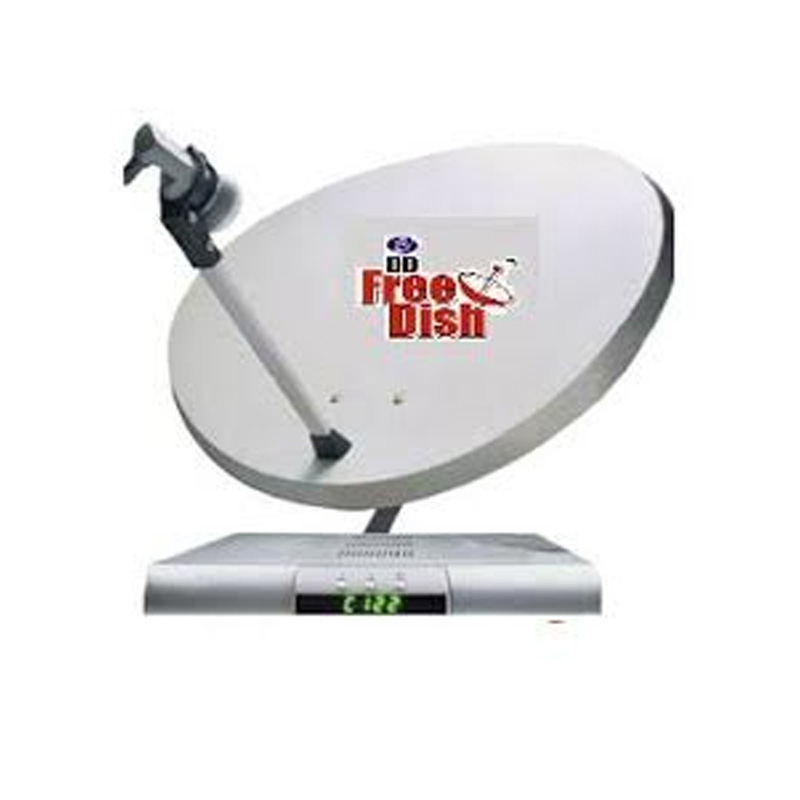
    Meanwhile, PTI reported that the broadcaster was earlier asked by the MIB to review the continuation of FreeDish. It felt that the programme benefited only private channels and brought recurring liability to the government. FreeDish boasts a reach of 22 million subscribers.

    The matter had reached the Telecom Disputes Settlement Appellate Tribunal last year when channels reacted to its decision to suspend auctions after which an interim order allowed channels to continue at a pro rata basis till it decides on a new policy. The halting of auctions was done soon after Smriti Irani took charge as MIB minister. FreeDish was also looking at MPEG4 technology to carry more channels. Currently, it holds 80 channels.

    Also Read:

    DD Free Dish looks at  advertising for monetisation 

    10 FreeDish slots may fall vacant by Oct-end as renewals hang fire

  • DTH’s year of consolidation

    DTH’s year of consolidation

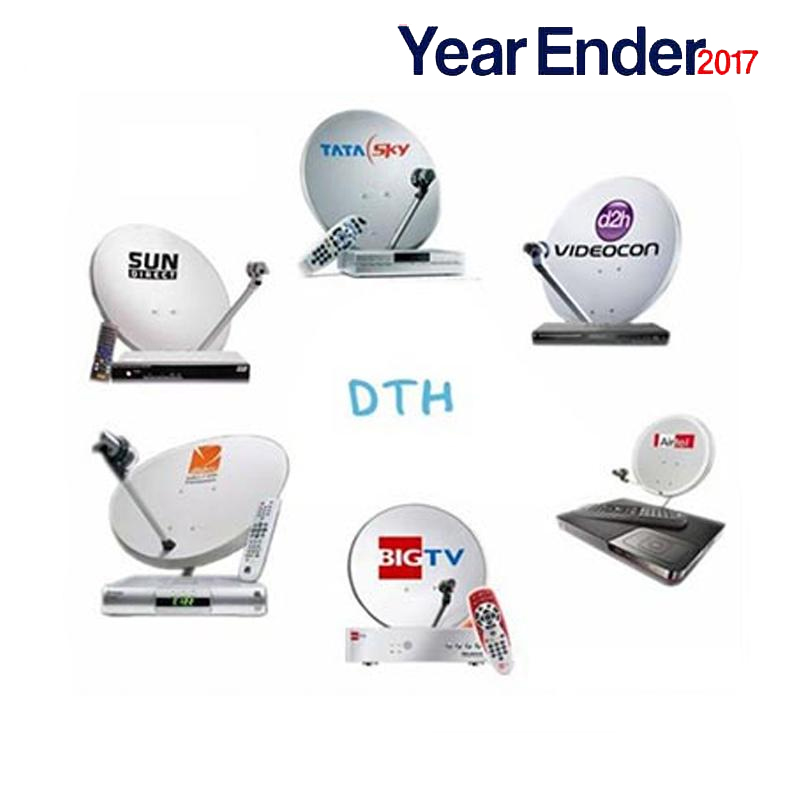
    MUMBAI: It would be safe to say that this was the year of the big DTH challenge. India’s cable TV multi system operators (MSOs) could not go into many phase IV areas and DTH stepped in wherever analogue broadcast signals were switched off following the crossing of the digital addressable system (DAS) deadline. Whether it was Tata Sky, FreeDish, Videocon d2h, Airtel Digital TV, Sun Direct or Dish TV, they all played a part.

    The going, however, was not as smooth as it could have been. High capex and opex and low ARPUs continued to dog the video distribution vertical making it an extremely low or no-margin business. While in the early days customer acquisition was the driver for most distribution platform operators, currently their eye has been on cost-efficiencies. This was evident from the ongoing overtures three of the players were making to others. Dish TV and Videocon d2h were already going through the throes of merging, the Anil Ambani-owned Reliance Big DTH was shopping around having conversations with almost every player, and there were talks of Airtel and Tata Sky possibly getting into bed with each other.

    The first nearly came to pass in 2017 with the two companies getting clearances from all quarters—government, courts and company law board—but getting stuck over the year end because of a technical difficulty. Reliance Big TV was sold to an IT and electronics company Veecon that sells security scanners and tablets–the wealth of its promoters is rumoured to be from selling religious lockets. Veecon said it would renew the Big TV licence by giving the requisite bank guarantees and ensure TV continuity for its approximately 1.2 million customers and jobs for nearly 500 people. It also announced that it would take Reliance Big DTH free to air (FTA) and announced a partnership with Sri Adhikari Brothers to launch a clutch of channels that would prove to be drivers of the platform. How Veecon will pay off Big TV’s payments to broadcasters was not clear at the time of writing and will decide whether the platform will ever take off.

    However, its announcement came at a time when the government had shut the door for private broadcasters and DD FreeDish, which had shown gee whiz growth rates, had come up as a powerful DTH player. New Ministry of Information and Broadcasting (MIB) minister Smriti Irani refused to make channel renewals for which several broadcasters took it to the Telecom Disputes Settlement Appellate Tribunal (TDSAT). An interim order gave the channels, whose licence was soon to expire, relief that they could continue by paying similar prices till Prasar Bharat came up with an alternative proposal and a convincing explanation to throw out private TV channels off DD Free Dish. It is expected that Prasar Bharati will formulate its new policy akin to the FM radio auction wherein 50 per cent of revenue is shared, apart from the bid amount, in e-auctions. Talk internally is that none of this would happen and DD Free Dish is most likely going to be used solely to relay government channels.

    Media reports also said sometime in the second half of the year that there could be more synergies between the Tatas and News Corp-promoted Tata Sky and Airtel Digital TV with possible merger talks taking place. That hasn’t happened as of now but the Airtel group did end up buying out certain telecoms asset of the Tatas.

    Also, private equity firm Warburg Pincus announced its decision to own 20 per cent stake in Airtel Digital TV for $350 million, leaving 80 per cent with Airtel’s promoters. That valued the Mittal-owned DTH service at a whopping $1.7 billion, which was mouthwatering news for the DTH pioneers. By September, Airtel claimed ownership to 14 million subscribers with revenue of $550 million.

    The year was significant for the fact that the DTH operators led by Tata Sky and Airtel Digital decided they had to take a tour of the court. The Harit Nagpal-led operator challenged the Telecom Regulatory Authority of India’s (TRAI) order on tariff and the reference interconnect regulations. The order stated that all stakeholders must abide by rates fixed by broadcasters. Joining Tata Sky in court was Airtel.

    Dish TV, the oldest DTH player in the country, appointed Anil Dua as its new CEO even as the company’s integration with Videocon d2h was on the anvil. Dish TV’s CMD Jawahar Goel raised an alarm over Star India’s monopoly in cricket events that, after its acquisition of the rights for the Indian Premier League (IPL), would force DTH players to include Star Sports channels and result in the broadcaster pricing the sports channels exorbitantly. No government reaction was forthcoming on this issue. Dish TV also took Star channel Life Ok to the TDSAT claiming that it could not rebrand itself as an FTA from a pay channel without sufficient intimation. Life Ok is today Star Bharat and a leading channel in BARC viewership ratings, riding on the expanded viewership courtesy Doordarshan’s FTA KU-band platform called DD FreeDish.

    For the quarter ended 31 March 2017, not only did subscriber additions dip drastically, but were also the lowest for a quarter in the financial year 2016-17. Airtel, Dish TV and Videocon saw total addition of just 8.33 per cent to 41.13 million for the concerned financial year. By 30 September 2017, there were just 2.47 million additions to the DTH industry as per TRAI, which was way below the 3.37 million it gained in the same six months in 2016. Moreover, active subscribers added in the July-September quarter were just 0.78 million, half of the figure from the corresponding quarter a year ago. Dish TV, Airtel DTH and Videocon d2h make up 63-65 per cent of the total active subscribers while Tata Sky holds about 21 per cent and Sun Direct 11 per cent. DD Free Dish is estimated to have 22 million subscribers and is expected to touch 40 million in two to three years.

    The second half of the year saw the introduction of the goods and services tax (GST) that gave a breather to those consuming cable and DTH services. Whereas customers once paid anything between 10-30 per cent as entertainment tax as well as a 15 per cent service tax, it was now fixed at 18 per cent. The Punjab government also announced that it would be adding a new entertainment tax to cable and DTH connections with the latter having to bear Rs 5 a month.

    Sun Direct is a major DTH player in the south holding about 40 per cent of the area. It also makes up 97 per cent of its total subscribers. Sun Direct took up an HEVC media solution from Harmonic to increase its HD channel number to 80.

    Profit after tax (PAT) for Videocon stood at Rs 168 million for the quarter ended 30 September 2017, which was just Rs 12 million for the previous quarter and Rs 148 million for the corresponding quarter a year ago. Dish TV, however, was in the red with net loss of Rs 178.7 million for the quarter as against PAT of Rs 689.6 million for the same quarter a year ago. During the quarter ended 30 September 2017, Airtel reported PAT of Rs 12,990 million down from Rs 27,350 million from a year ago.

    Videocon d2h and Airtel showed good average revenue per user (ARPU) numbers in 2017. The former raked in Rs 212 for the quarter ended 30 September 2017 from 13.25 million subscribers (a 0.21 million increase from the previous quarter). The ARPU for the previous quarter was Rs 198 while a year ago quarter was Rs 209. Dish TV’s ARPU for the same quarter was Rs 149, a rupee higher than the trailing quarter. It had a total of 15.1 million subscribers. ARPU for Airtel Digital TV stood at Rs 233 in the respective quarter, up from Rs 228 in the previous quarter and Rs 232 in the year ago quarter. Tata Sky does not release its financial numbers but analysts pinpoint its ARPU to be close to Rs 300.

    Dish TV introduced numerous value-added services (VAS) to encourage more viewers such as the Dance Active and Disney Active series, cardless STBs, 32 educational channels under Swayam Prabha. Early on in the year, it cut the rate of its base pack to Rs 33 a month to counter the free services by DD Free Dish. It even went to the extent of allowing people to curate their own packs by picking individual channels. Dish TV added 23 channels, which included nine HD ones.

    Tata Sky came up with a Make My HD pack for as low as Rs 30 per month and a regional HD Access pack at Rs 50 per month for users subscribed to regional SD channels. The channel targeted the south market with a South special pack at Rs 290. Dish TV campaigned for HD in all homes by removing the access fee on it and advertising a cost as low as Rs 169 per month (excluding taxes). Countering DD Free Dish, the oldest DTH player also introduced an FTA pack with a price translating to Rs 32 a month.

    On the technology front, Airtel’s hybrid STB was officially the first to launch in the market, bringing to consumers the best of both worlds–satellite channels and content available on the internet. The STB also came preloaded with Netflix and YouTube allowing even a regular TV to turn ‘smart’ courtesy an inbuilt wi-fi feature and Google voice search. Dish TV launched its new card-less security feature with Verimatrix as well as an artificial intelligence-enabled chatbot called ADI.

    For the coming year, the industry will likely see the outcome and growth of the first merger between Dish TV and Videocon and the synergies they bring to the industry. FreeDish is expected to be a big player in the remote parts of the country, especially with FTA broadcasters dancing to their tune. DTH operators have to still work hard to increase ARPU and maintain profitability.


  • Reliance Big DTH to take FTA route under new management?

    Reliance Big DTH to take FTA route under new management?

    MUMBAI:  Is another free-to-air (FTA) DTH operator pawing to take off in India? If the statements made by the Pantel Technologies (the company that took over the ailing Reliance Big DTH) management in media releases are to be believed, then the answer is in the affirmative.

    Yesterday, Sri Adhikari Brothers Television Network and Pantel Technologies announced through a release on the Bombay Stock Exchange that the companies had arrived at an understanding to jointly create a bouquet of over 20 FTA channels comprising diverse genres, such as entertainment, kids, infotainment, mythological, and movies.

    The release further stated that “the varied product offering will strengthen the business of Reliance Big TV (RBTV) and will give a leg up to the largest FTA network in India. FTA channels have shown an upsurge with all the leading broadcasters showing a keen interest in the FTA product offering.”

    Pantel Technologies CMD Vijendra Singh was quoted in the release as saying: “Our main aim is to develop the entertainment appetite of the rural market and create an alternative India. With our coalition with Sab Group, we will bring together our technological proficiency and their content expertise thereby enabling us to provide good content for rural India, which is what we are committed to for their upliftment.”

    Pantel had acquired the entire shareholding of RBTV with the business on an “as-is, where-is” basis. The transaction ensured that all 1.2 million customers of Big TV would continue to enjoy uninterrupted services, the company said in a statement. The deal also ensured continuity of employment for about 500 employees of RBTV.

    Attempts to connect with SAB group managing director Markand Adhikari and Singh were not successful.

    However, if Indiantelevision.com’s interpretation of the announcement today is correct, then it should prove encouraging for private broadcasters. The  Prasar Bharti-owned FTA service FreeDish has been an unmitigated success but its future looks in doubt with conflicting reports appearing about whether the powers that be want to continue providing the slots to private players. According to sources in the public sector Prasar Bharti, minister of information and broadcasting Smriti Irani has put a full stop to the e-auction process as the government wants to populate the FreeDish platform with its own channels.

    Also Read:  Veecon Media acquires Reliance Big TV

    Sab Group, Pantel Tech join hands to launch over 20 FTA channels

    Reliance launches JioTV for web

  • TDSAT rejects DD’s interim measure for FreeDish

    TDSAT rejects DD’s interim measure for FreeDish

    NEW DELHI: While giving relief to slot-holders on Doordarshan FreeDish, to ensure their continuity till the government decides its new policy over the next two months, the Telecom Disputes Settlement and Arbitration Tribunal (TDSAT) also rejected the interim formula proposed by Doordarshan in its letter to the main petitioner Cinema 24×7.

    TDSAT chairman justice Shiva Keerti Singh, and members B B Srivastava and A K Bhargava said: “We find no good reason either from the submission or from the order of the respondent (Prasar Bharati) as to why the earlier direction and policy on pro-rata basis is being discontinued, that too when the respondents have claimed that a regular policy to replace the existing policy is likely to come within two months.”

    The tribunal also rejected the submission by Prasar Bharati counsel Rajeev Sharma and additional solicitor general Tushar Mehta that no interim order was required in view of the order of Prasar Bharati of 27 October 2017.

    The tribunal fixed the next date of hearing on 14 December 2017 and said that rejoinder if any by the broadcasters could be filed within two weeksafter the four weeks given to Prasar Bharati to file its reply.

    The full text of the order of the tribunal was:

    “To avoid undue hardship to the petitioners and possible discrimination vis-a-vis those who have been earlier granted continuity on pro-rata basis, we pass the following interim directions:

    (i)  The petitioners or others similarly situated as them, who need continuity because of non-holding of the e-auction and have applied or apply for the same, shall  be allowed continuity on pro-rata basis.

    (ii)  The respondent will be entitled to charge on pro-rata basis either on the basis of the highest bid amount or the reserved price whichever is higher.  We further clarify that the highest bid amount would mean the highest bid in that category in the preceding year.

    (iii) This interim order will not create any right or equity in favour of anyone and the arrangement shall come to end as soon the central government declares its new general policy and take steps to fill up the slots in accordance with such policy.  It is clarified that it will not be open for any petitioner or other operator to claim any right to continue on the basis of such interim arrangement.

    (iv) The benefit of this interim arrangement shall be made available to the willing petitioners and other similarly situated operators at once and in any case within three days of their approaching the concerned respondent with an application.

    All the petitions are admitted.”

    The tribunal also analysed the proposed interim formula proposed by Doordarshan. It said “In the final analysis, the order declares the stand of the respondent with regard to “interim measures” in the following words:

    “Now therefore in view of above, DD can as an interim measure follow a model on the pattern of FM auction policy of the government for two months or till the central government policy is made, whichever is earlier for the channels which are going to be off the air, on completion of their contract period may be offered continuity of operation at the highest bid amount for any of the channels auctioned in the past, together with revenue sharing at the rate of 50 per cent of the gross profit or 4 per cent of the gross revenue or 2.5 per cent of upfront highest bid amount whichever is higher.  This system, as an interim arrangement, should be operated on first come first served basis if the terms and conditions of the short duration extension are acceptable to the existing contract holder.

    The interim arrangement / measure is irrespective of and notwithstanding the contents of the proceedings pending before the hon’ble tribunal and / or any other proceedings, if any, this interim measure will not create any right or equity in favour of anyone and shall come to end automatically upon the central government declaring its policy or after two months whichever is earlier and it will not be open for any operator to claim any right to continue or any other right based upon such an interim measure.”

    Sharma and Mehta had made it clear during arguments that this formula was akin to the formula applied in the FM Radio auctions.

    Apart from Cinema 24×7 which runs WoW Cinema and News Nation Network Pvt Ltd who had filed the case,  four other petitioners joined the case yesterday with fresh petitions: Enterr 10 TV Pvt Ltd, B4U Broadband India Pvt Ltd,  Independent News Service Pvt Ltd, and ABP News Network Pvt Ltd.

    These broadcasters filed either because of their channels having either gone off the air or the likelihood that they will go off air very soon due to efflux of time leading to expiry of the annual agreement and a decision by the respondent not to hold the 37th e-Auction till further orders. The letter to Cinema 24×7 itself noted that some channels are going off air this month and some in February next year.

    The tribunal was informed in September by Prasar Bharati that the e-Auction was put on hold because a new policy was under contemplation and the pubcaster wanted to take steps for filling the slots falling vacant in terms of the new policy.

    The tribunal noted that: “The petitioners have no quarrel with the stand and they are not opposed to the respondent taking steps for filling up the slots on regular basis as per their new policy as and when it is formulated and implemented. Their grievance is that such producers who have been enjoying slots on the basis of their offer in the auction should not be thrown out of their vocation and the public should not be deprived of their channel because of there being no policy in the interregnum.  They are against such state of vacuum”.

  • TDSAT interim order ensures continuity for private channels on FreeDish

    TDSAT interim order ensures continuity for private channels on FreeDish

    NEW DELHI: Private TV channels on Doordarshan’s FreeDish with expired licences have been informed by the Telecom Disputes Settlement and Arbitration Tribunal (TDSAT) that they can continue airing until further orders. This applies to even those whose licences are soon to expire.

    Channels can continue on a pro rata basis taking the bid with which they had won the slots or the reserve price, whichever is higher, as benchmark. This can continue till the government formulates a new policy within two months.

    TDSAT chairman justice Shiva Keerti Singh, and members B B Srivasatava and A K Bhargava gave three days to any other channels similarly affected to take advantage of this interim order by informing the tribunal.

    While admitting all the petitions before it, the tribunal asked the government to file its reply within four weeks.

    Earlier in the morning, the government through counsel Rajeev Sharma presented a letter sent to Cinema 24×7 which laid down a new formula aiming at bringing the pricing at par with the system followed for FM channel auctions which also provides for revenue sharing.

    Sharma said that Prasar Bharati was in the process of reorienting its content to live up to its credo of public service broadcasting and had therefore sought a time of two months. However, channels whose licences will expire this month or in February next year can continue by paying the highest bid amount and by sharing its revenue with the pubcaster. However, counsel for the private channels rejected this as discriminatory.

    Counsel Aman Lekhi who represented Cinema 24×7 said the government could not bring an interim policy which was not relatable to something that law recognises. He said this would also amount to creating two classes of TV channels: those who were on a pro rata basis and those who were being forced to pay an amount that was higher than the amount for which they had successful bid for the channels. There was no guarantee that the government will not revert to the existing prices after the two-month exercise was over.

    He added that the ad hoc exercise was even unnecessary since the government is in contemplation. Such a measure doesn’t give certainty or continuity and alterations have to be by ‘sound consideration’. In fact, he stated that even Prasar Bharati was unaware why the auction was called off by the Minister of Information and Broadcasting Smriti Irani.

    Senior advocate Ramji Srinivasan added that it was clear that DD was eager to continue with the auctions but the ministry had arbitrarily stopped them. He also said that ‘continuity’ implied continuing with the existing policy and not imposing something completely new.

    He said equating general entertainment channels with news channels was sheer arbitrariness. This may result in closing the channels and shutting doors to people.

    Assistant solicitor general Tushar Mehta added that the aim of the government had been to balance equations on both sides. He said that in the FM auctions, the channels shared revenue of fifty per cent apart from the bid amount in the e-auctions and so the same policy was sought to be extended to the TV channels on FreeDish.

    Apart from Cinema 24×7 which runs Wow Cinema and News Nation, others who joined the fray today included Enterr 10 TV Pvt Ltd., B4U Broadband India Pvt Ltd, and Independent News Service Pvt Ltd.

    The letter sent by a senior executive of Doordarshan said that Doordarshan “can as an interim measure follow a model on the pattern of FM auction policy of the government for two months or till the centralgovernment policy is made, whichever is earlier for the channels which are going to be off the air on completion of their contract period” and they may “be offered continuity of operation at the highest bid amount for any of the channels auctioned in the past, together with revenue sharing at the rate of 50 per cent of the gross profit or 4 per cent of the gross revenue  or  2.5 per cent of upfront highest bid amount whichever is higher. This system, as an interim arrangement should be operated on first come first served basis if the terms and conditions of the short duration extension are acceptable to the existing  contract holder.”

    The letter noted that FreeDish has witnessed a significant growth spurt in free to air (FTA) channels in  2015-2016 and the popular FTA channels spanning general entertainment, movies and music have targeted core TV audiences and according to estimates reported in the media to have earned Rs 5 to 7 billion. Keeping so many vacant slots will not only affect revenue from one of Doordarshan’s largest sources but will also force people to shift to other expensive options.

    Soon after Smriti Irani became the Minister of Information and Broadcasting (MIB) few months back, the decision of halting the bids for FreeDish slot was announced. This came at a time when FreeDish was testing its MPEG4 technology in an attempt to encrypt the platform and also expand the number of TV channels that could be carried. At present 80 channels are carried on the FTA DTH platform. 

    Also Read:

    WOW Cinema petitions TDSAT on delayed auctions for DD FreeDish slots

    10 FreeDish slots may fall vacant by Oct-end as renewals hang fire

    TDSAT gives Prasar Bharati 2 days to respond to FreeDish auction suspension

    Dish TV moves TDSAT against Star Life OK name change & turning FTA

  • TDSAT gives Prasar Bharati 2 days to respond to FreeDish auction suspension

    TDSAT gives Prasar Bharati 2 days to respond to FreeDish auction suspension

    NEW DELHI: Prasar Bharati has two days more to come out with the real reason for suspending the auctions on its DTH service FreeDish in August this year. From 27 October 2017 the telecoms and broadcast disputes tribunal TDSAT will hear two petitions challenging the decision of public broadcaster.

    In the last hearing, the tribunal had told petitioners Cinema 24×7, (distributors of WOW Cinema),  News Nation Network and others to file applications with Prasar Bharati. It had said it would hear the matter if not resolved by the pubcaster.

    When the matter came up yesterday, only Cinema 24×7 (WOW Cinema) was represented by its counsels. Prasar Bharati, represented by Assistant Solicitor General Tushar Mehta, sought two more days to finalise the government and Prasar Bharati’s stand on the issue.

    Soon after Smriti Irani became the Minister of Information and Broadcasting (MIB) few months back, the decision of halting the bids for FreeDish slot was announced. This came at a time when FreeDish was testing its MPEG4 technology in an attempt to encrypt the platform and also expand the number of TV channels that could be carried. At present 80 channels are carried on the FTA DTH platform.  

    ALSO READ:

    WOW Cinema petitions TDSAT on delayed auctions for DD FreeDish slots

    10 FreeDish slots may fall vacant by Oct-end as renewals hang fire

  • 10 FreeDish slots may fall vacant by Oct-end as renewals hang fire

    10 FreeDish slots may fall vacant by Oct-end as renewals hang fire

    MUMBAI: The ministry of information and broadcasting has reportedly asked Doordarshan to suspend until further notice e-auctioning of slots, which were picked up by private broadcasters on its free-to-air direct-to-home (DTH) platform FreeDish.

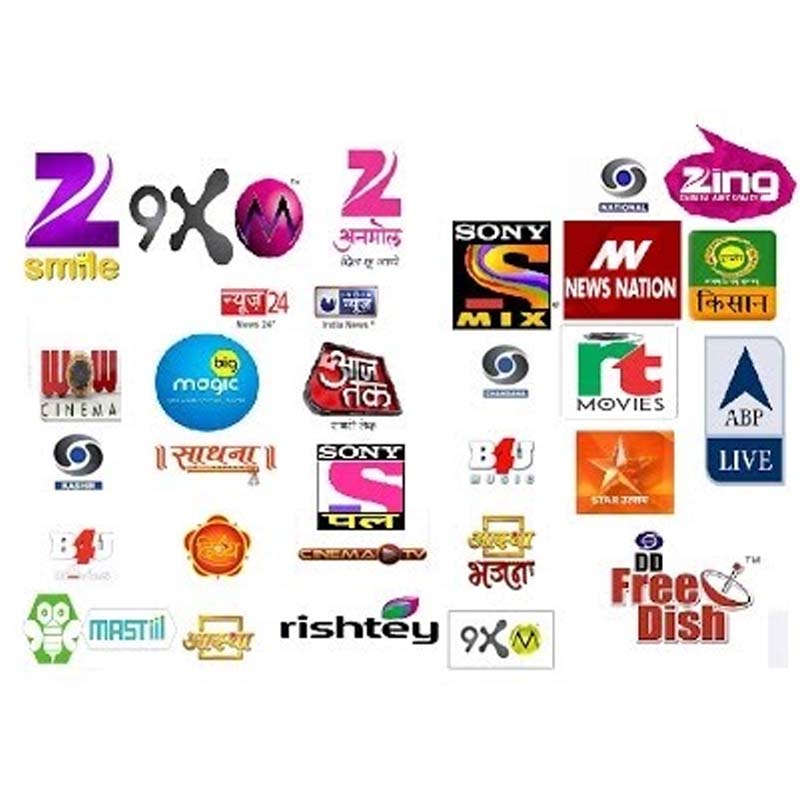
    FreeDish, at present, carries 80 TV channels, including Sony Pal, Star Utsav, Zee Anmol, Rishtey and news channels like AajTak, Zee News, ABP News, News 24 etc. FreeDish has two vacant slots but the number could go up to 10 by October-end if no decision is taken by MIB, the Tribune reported.

    The slots are getting vacant and private broadcasters have been unable to renew those. Prasar Bharati has reportedly been refusing renewal since August.

    The e-auction had taken place in July, in which FreeDish had earned Rs 851 million as 11 private broadcasters bagged. Another auction planned for August was cancelled by the broadcaster, citing “administrative reasons” as per the notice dated 18 August, 2017. Doordarshan, for the year 2016-17, earned more than 30 per cent of its revenue from FreeDish at Rs 2641 million — its highest-ever, Mint reported.

    Private broadcasters, reports said, paying an average of around Rs 60-80 million per annum to FreeDish were getting advertising revenue in the range of Rs 5–7 billion per channel owing to the high reach obtained via DD-Direct while Doordarshan was losing millions.

    FreeDish, it is estimated, increased its reach to around 25 million households which is faster than the average growth of the DTH industry in the last few years.

    The top rated 15 channels on FreeDish had ratings which ranged from 50-80 and almost all of them were private TV channels. DD channels got ratings of zero to three, meaning those were going unwatched.

    ALSO READ :

    Prasar launches music auditions online application, FreeDish slot auction suspended

    Prasar Bharati CEO Shashi Shekhar Vempati on SC verdict, pushing DD Sports and DTT

    FreeDish a key driver in FTA channels’ growth by ’20

    Doordarshan puts off 37th FreeDish auction

  • Prasar launches music auditions online application, FreeDish slot auction suspended

    Prasar launches music auditions online application, FreeDish slot auction suspended

    MUMBAI: Prasar Bharati chairman A Surya Prakash has launched an online application system for music auditions across all genres for the All India Radio (AIR).

    The aspirants who wanted to apply and get themselves graded would now have a better experience in terms of accessibility and availability, the release added. The AIR conducts auditions in different genres of music, including classical, light, folk, tribal and western, and award suitable grades to them.

    Meanwhile, the information and broadcasting ministry has reportedly suspended auction of slots on FreeDish, and would review the channel slot auction process of the air DTH platform. The ministry has asked the pubcaster to suspend e-auctioning of slots on FreeDish until further notice, sources told Mint.

    Doordarshan holds e-auction once in a couple of months to award channel slots on FreeDish to private broadcasters. The platform carries 80 channels, including private channels such as Sony Pal, Star Utsav, Zee Anmol, Rishtey and news channels — ABP News, Aaj Tak, and News 24.

  • Prasar Bharati CEO Shashi Shekhar Vempati on SC verdict, pushing DD Sports and DTT

    Prasar Bharati CEO Shashi Shekhar Vempati on SC verdict, pushing DD Sports and DTT

    Shashi Shekhar Vempati is probably one of the youngest CEOs to occupy the Prasar Bharati hotseat.  Additionally, he is the first private sector executive to have got the job. So, media observers expect a lot from him, especially considering his background in Infosys, one of India’s most respected infotech companies.

    And, it is during his watch last month that the Supreme Court issued a verdict upholding the Delhi High Court order which disallowed the pubcaster from sharing with cable operators through Doordarshan (DD) channels the live feed of cricket matches of which private broadcasters ESPN and Star had the exclusive rights. The bench had said under the provision of the Sports Act, the live feed received by Prasar Bharati from content rights owners was only for the purpose of retransmission of signals on its own terrestrial and direct-to-home (DTH) networks and not to cable operators.

    Many would have considered that a loss. But, not Shashi Shekhar Vempati. Clarity and optimism is something you can credit him with. He terms that loss as an opportunity. Read on to get some Vempati-speak as he talks to indiantelevision.com.

    How do you view the verdict of the Supreme Court preventing you from airing sports feeds to private cable TV operators and DTH operators which you share with private sports rights holders?

    The verdict of the Supreme Court on the sports side on the face of it looked like  a setback. And, if you go by the reactions of the viewers to them it was available by default  on Doordarshan. Several matches are not available now.

    But, in reality it was an opportunity.  Many decisions that we just postponed or did not aggressively move on.  Now, there is a real reason to do that. First is on  DD Sports. All along cricket was on DD National. The only sports channel of DD had no purpose or identity, it was just drifting.

    Now we have a reason to make DD Sports the go-to destination for cricket and other sporting events of national importance because of the manner in which the verdict forces us to operate. It creates an avenue  to make DD Sports the place for cricket.

    You cannot air cricket because of the verdict right?

    We will air it. The way the verdict on the act will be operationalised is: the signal sharing for games of national importance is meant for DD’s FreeDish and DD terrestrial. So, we will carry future matches on DD Sports, as a channel available on FreeDish and on terrestrial through DTT.

    Analogue where we have one or two transmitters where we either show DD National or News, there we will ensure that the feed is sports so that one of the transmitters will show the match on analog wherever it is available.

    For the private guys, cable and DTH operators today what are they doing? They are blanking out our screen then they are putting their own commercials, their own promotion. What we are saying is — we will have a separate feed in the future so that they don’t blank out DD National.

    It is atrocious that you can blank out a must-carry channel and put in a commercial message saying “go buy my sports pack.” That we will straightaway address.

    Now because cricket is available on DD Sports, the channel gets a facelift.  Its branding improves – brand recognition goes up. People will have a reason to periodically  tune into DD Sports. So that just takes that channel up. We have enough content on DD National.


    Which of the matches will you show?

    Well, the act,…the government has to notify what are the games of national importance.  And a that list is periodically reviewed. As of now it is all home games of India for one day and T20, then the big tournaments like the World Cup, the challenger and ICC trophy and so on.  Then certain tennis matches, certain soccer matches.

    The big thing is the FIFA under-17. The entire 52  or 56 matches we will show. The  government sees it as a big way of promoting soccer.  For the first time they are holding an international event. And if you look at the generation that we want to attract – which is what I have been talking about. Today, there is no mindshare for Doordarshan in the youth as this generation did not grow up with it. They have no memories of Doordarshan, they don’t relate to it.

    Now with FIFA Under-17 being available this soccer crazy young crowd (chuckling) have an avenue to go and see soccer on FreeDish and DD Terrestrial. DD Sports gets a facelift and it gets a mindshare in this demographic  that we have always wanted to attract and bond with.

    Second thing that I get out of this whole thing is that for all those people who think today I cannot watch those matches on DD on either my private cable or DTH…now I have an avenue to go and promote FreeDish and my digital terrestrial which is just languishing in 19 cities which are the main population centres of India.

    Now I am going to tell them you don’t have to buy that Rs 60 or Rs 120 package. Forget about all that, many of your TVs have an inbuilt digital tuner. There are certain models of Sony, LG and Samsung which have them.

    We will educate people that if you have one of these models, you already have a digital terrestrial tuner, all you need to do is turn it on.  And if you don’t have it, here is an app which you can download. And if your mobile is one of these models, using this app and the DVB-T2 dongle, which is available on Flipkart and other ecommerce platforms you can watch the matches.

    Then, there are certain makes of mobile phones where there is an inbuilt DVB chip available in the marketplace.

    The fourth innovation and I have seen certain products, there are some startups working on it: you need to plug in this hotspot, into the wall, it will get the DVB signal, it will create the wifi – and on all your devices at home you can watch it as a TV channel. We will say these products can support your app.

    How will you monetise the DTT signal?

    When we do the rights sharing under the act , the rights holder and DD both bid on who gets to market the inventory. The highest bidder then gets the rights to sell the entire FCT for the matches on DD DTT and DTH. But the sharing is 75:25.

    Now DTT becomes a new viewership base. So, for the advertisers it is a new way of connecting to the consumers. To me it is new medium to be clipped to the viewership and it’s something where we have a traditional strength because nobody else has terrestrial. We will see how that goes.

    How do you see FreeDish progressing?

    The biggest challenge with FreeDish was that STBs were not  addressable and the signals were not encrypted.  Now for a long time we have had this project to move to MPEG4…the infrastructure is in place, but it required a new STB. That spec was tendered out, iCAS was brought in. Now those boxes are getting ready and soon they will be rolling out. The biggest challenge was what was the motivation for a customer who has an MPEG 2 FreeDish STB to switch to MPEG 4. Now there is a reason, because we can go to the audience and tell them that if you want to watch cricket or any of the sports which you don’t want to pay for your Tata Sky or Dish TV or Videocon or whatever, here is a new iCAS box, it gives you all of these features. That’s another promotional avenue for me. So I am getting two promotional avenues and I am getting to rebrand and relaunch my DD Sports. So in a sense what was a setback in one aspect has opened up opportunity for me.

    One interesting thing that the TRAI is now pushing is the open STB standard with a return path. I think the return path is going to be interesting. It is going to be important for several reasons: for audience measurement, and we would all want interactivity.  Through the regulator’s efforts, and maybe a common standard – and if everyone supports that, it can bring now the price point.

    DD Kids is something which was to be launched?

    There are several ideas. And we will look at each one of them in time.

    What other steps are you taking?

    We have taken some measures following the board meeting recently. It was a long pending board meeting. A lot of decisions were taken. One of the decisions was analog.  We will start sunsetting analog. And that frees up resources. Frees up manpower. Frees up certain operating funds. Those can be put to use in areas where we definitely need a lot of things to be done.

    Information technology being a long pending area where we have not invested. Digital is another area. Then there is the sheer creativity in programming which has come down. The quality of in-house programming has come down drastically. So that requires us to invest in the right talent so we can bring it back in-house.

    DD is the largest network, it has 30,000 people and above… but it has the largest network. We have challenges that nobody else has.

    I chanced upon this report. There was a committee set up in early 2000, late nineties, led by Mr Narayana Murthy which looked at Prasar Bharati (one of the many reports). And, very interestingly, they had a chapter on engineering: they looked at the number of engineers to transmitter ratio, they said this is the highest in any country. That means there is very little automation.

    So, clearly there is a lot of opportunity to get this great talent out and put them to problems which require real attention – be it IT, be it digital, be it reskilling them and repurposing our workforce.

  • Prasar CEO reiterates implementation of SC verdict on DD’s shared sports feed retransmission

    Prasar CEO reiterates implementation of SC verdict on DD’s shared sports feed retransmission

    NEW DELHI: Prasar Bharati CEO Shashi Shekhar Vempati has directed all private direct-to-home and cable operators not to telecast the sporting events’ live feed from Doordarshan that have originally been shared by rights-holding private broadcasters.

    This was conveyed through a tweet by Vempati. Interestingly, some tweets in response vowed to switch over from private DTH to FreeDish.

    This follows orders of the Supreme Court on 22 August 2017 which stated that shared feed of sporting events can only be carried on the terrestrial network of Doordarshan or DD FreeDish, and not retransmitted.

    In the judgment, a division bench headed by Justice Ranjan Gogoi had said though the Sports Broadcasting Signals (Mandatory Sharing with Prasar Bharati) Act 2007 allows the feed of a sporting event of national importance to be shared mandatorily with Prasar Bharati, the public broadcaster cannot utilise it on a notified channel which has to be compulsorily carried by private distribution platforms.

    While the judgment enables Prasar Bharati to expropriate the feed, the private sports channels will not be competing against Prasar Bharati on a commercial basis for the same content.

    The judgment came on an appeal by the pubcaster against an order obtained by Star India Pvt. Ltd. from a two-judge bench of the Delhi High Court comprising Justice B D Ahmed and Vibhu Bakhru.

    The judgment would help private broadcasters like Star India from possible losses in subscription and advertising revenues due to sharing of signals with Prasar Bharati which were eventually carried by private DTH and cable operators.

    ALSO READ :

    Star India wins: SC disallows Prasar from retransmitting shared sports feed live