Tag: Freecharge

  • Eros Now partners Paytm, Mobikwik & Freecharge

    Eros Now partners Paytm, Mobikwik & Freecharge

    MUMBAI: Eros International pls, a leading global company in the Indian film entertainment industry, announced that Eros Now, its cutting-edge digital over-the-top (OTT) platform, has entered into multiple significant partnerships in India with three major electronic payment platforms — Paytm, Mobikwik and Snapdeal-owned Freecharge — who are the forerunners in the online payment industry in India.

    Eros Now, with 55 million registered users worldwide, is Eros International plc’s leading on-demand Bollywood entertainment network, on most Internet-connected screen including mobile, web, and TV.

    Paytm, one of India’s largest electronic payment platform, has seen over five-fold rise in active users post demonetization at over 150 million users. Mobikwik, the Gurgaon-based company, has recorded a user base of 40 million with a growth of 40% in their daily app downloads and Freecharge, a Bangalore-based company, has been witnessing a steady growth of 15% in their monthly transactions with over 50 million users. Eros Now has tied up with these leading online payment platforms for easier and effortless transactions for its users.

    Commenting on the associations, Eros Digital Rishika CEO Rishika Lulla Singh said, “With the recent demonetization move in India, the online payment industry has seen a surge and we see that as beneficial for our world class OTT platform Eros Now as more of our users now can use any of the leading Indian e-wallet service providers such Paytm, MobiKwik or Freecharge to subscribe to Eros Now’s massive library of premium content and other unique features. I am excited about our exponential growth and confident we will continue to establish leadership position with first mover advantage.”

    Eros Now offers the widest library of films, music, premium television and regional content for packages of Rs 49.00 and Rs 99.00 per month in India.

    Eros International pls is a leading global company in the Indian film entertainment industry that acquires, co-produces and distributes Indian films across all available formats such as cinema, television and digital new media.

    Also Read:

    http://www.indiantelevision.com/iworld/over-the-top-services/global-ott-may-expand-at-145-per-cent-cagr-170117

    http://www.indiantelevision.com/iworld/over-the-top-services/ott/vod-disrupted-traditional-appointment-viewing-in-india-spuuls-subin-subaiah-170116

    http://www.indiantelevision.com/iworld/video-on-demand/netflix-facilitates-downloads-on-android-memory-cards-170127

    http://www.indiantelevision.com/iworld/over-the-top-services/indian-digital-industry-to-be-worth-rs-20k-cr-by-20-ey-report-170114


  • Poker Sports League to excite Indian minds in 2017

    Poker Sports League to excite Indian minds in 2017

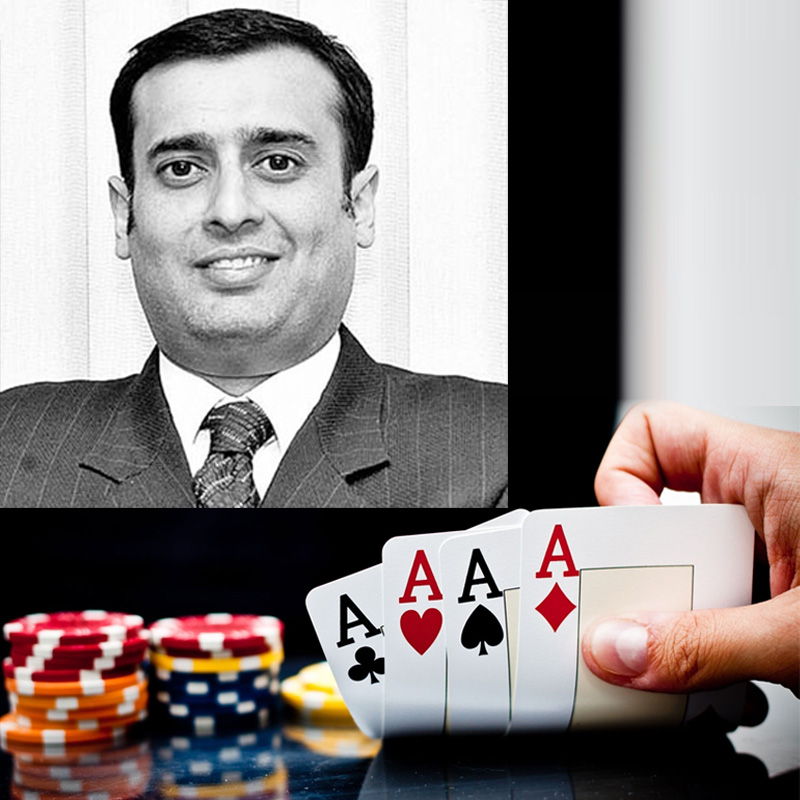
    MUMBAI: Creating a unique platform for skilled ‘mind sports’, Amit Burman has announced the launch of an exciting new league – Poker Sports League. The Poker Sports League forays into the space of intellectual and mind challenges and aims to popularize mind skill games. This game changing league will offer a never before experience to poker players with varying degree of expertise but a passion for the game, to unite and celebrate their love for the game as well as hone their poker skills under the guidance of well-established professional poker players.

    In its first season, the Poker Sports League will consist of 12 teams, seven of which have already been sold and the remaining five shall be made available for sale shortly. These teams are associated with some of the well-known names from corporate India such as Kunal Shah (Co-Founder, FreeCharge), Mehul Shah (Original Promoter, Anchor Electrical), Rishi Kajaria (Joint MD, Kajaria Ceramics), Karan Bhagat (Co-Founder, IIFL Wealth), Purrshottam Bhaggeria (Joint MD, Filatex Group), Ankkit Bahadur (Co-Owner, Playboy North India) and Gaurav Mohan (Founder, Eventwala) who strongly believe in the potential of the game and its ability to harness the latent talent from across the nation.

    The 12 teams will consist of a total of 108 players who will play for the prize money of INR 3.36 crore. These teams will be selected through 70+ qualifying rounds held across various cities for a period of nearly 3 months, as well as through online tournaments that will begin early in 2017. The players who qualify to the 12 teams will then compete to play at the Mega Finals, where the best and the finest of India’s poker talent will be invited to a display of skill and entertainment.

    The league would include four amateur players, who would be selected through nationwide qualifiers which will be held both online and offline. Two wild cards players would make-up the team to nine players. The qualifiers would begin early 2017 and the finals are scheduled to take place in mid-2017.

    PSL founder Amit Burman said, “Poker is a popular mind sport across the globe and has gained tremendous traction within India, amongst individuals looking to challenge their mind, grit and decision making abilities. Although the game is played with cards and there is an element of luck – the vast majority of the game depends on pure skill, mathematics, probability and decision making strategy. With no entry fee and sizeable prize money to aim for, the Poker Sports League is a unique opportunity for players of the game to hone their skills as well as popularise the game that is set to be recognized by the International Mind Sports association along with Chess, Bridge and Draughts”.

    True to its vision of harnessing talent across India, the Poker Sports League will offer players an opportunity to play and learn from some of the best players in India. Every team will also have a professional poker player as a mentor and captain to develop team strategy and help young players sharpen their skills during the play.

    At the helm of the Poker Sports League will be a core team that includes some of the well known names associated with poker in India, and known for their expertise, knowledge and passion for the game. The team includes India’s largest poker portal Adda52.com founder Anuj Gupta, who is also a co-founder of Poker Sports League.

    The team is further strengthened by India Poker founder Pranav Bagai. Besides, being the co-founder of the league, Pranav has also been appointed as the CEO of PSL, and Nikita Luther, who is India’s top female Poker professional, will take charge as COO for the league.

  • Poker Sports League to excite Indian minds in 2017

    Poker Sports League to excite Indian minds in 2017

    MUMBAI: Creating a unique platform for skilled ‘mind sports’, Amit Burman has announced the launch of an exciting new league – Poker Sports League. The Poker Sports League forays into the space of intellectual and mind challenges and aims to popularize mind skill games. This game changing league will offer a never before experience to poker players with varying degree of expertise but a passion for the game, to unite and celebrate their love for the game as well as hone their poker skills under the guidance of well-established professional poker players.

    In its first season, the Poker Sports League will consist of 12 teams, seven of which have already been sold and the remaining five shall be made available for sale shortly. These teams are associated with some of the well-known names from corporate India such as Kunal Shah (Co-Founder, FreeCharge), Mehul Shah (Original Promoter, Anchor Electrical), Rishi Kajaria (Joint MD, Kajaria Ceramics), Karan Bhagat (Co-Founder, IIFL Wealth), Purrshottam Bhaggeria (Joint MD, Filatex Group), Ankkit Bahadur (Co-Owner, Playboy North India) and Gaurav Mohan (Founder, Eventwala) who strongly believe in the potential of the game and its ability to harness the latent talent from across the nation.

    The 12 teams will consist of a total of 108 players who will play for the prize money of INR 3.36 crore. These teams will be selected through 70+ qualifying rounds held across various cities for a period of nearly 3 months, as well as through online tournaments that will begin early in 2017. The players who qualify to the 12 teams will then compete to play at the Mega Finals, where the best and the finest of India’s poker talent will be invited to a display of skill and entertainment.

    The league would include four amateur players, who would be selected through nationwide qualifiers which will be held both online and offline. Two wild cards players would make-up the team to nine players. The qualifiers would begin early 2017 and the finals are scheduled to take place in mid-2017.

    PSL founder Amit Burman said, “Poker is a popular mind sport across the globe and has gained tremendous traction within India, amongst individuals looking to challenge their mind, grit and decision making abilities. Although the game is played with cards and there is an element of luck – the vast majority of the game depends on pure skill, mathematics, probability and decision making strategy. With no entry fee and sizeable prize money to aim for, the Poker Sports League is a unique opportunity for players of the game to hone their skills as well as popularise the game that is set to be recognized by the International Mind Sports association along with Chess, Bridge and Draughts”.

    True to its vision of harnessing talent across India, the Poker Sports League will offer players an opportunity to play and learn from some of the best players in India. Every team will also have a professional poker player as a mentor and captain to develop team strategy and help young players sharpen their skills during the play.

    At the helm of the Poker Sports League will be a core team that includes some of the well known names associated with poker in India, and known for their expertise, knowledge and passion for the game. The team includes India’s largest poker portal Adda52.com founder Anuj Gupta, who is also a co-founder of Poker Sports League.

    The team is further strengthened by India Poker founder Pranav Bagai. Besides, being the co-founder of the league, Pranav has also been appointed as the CEO of PSL, and Nikita Luther, who is India’s top female Poker professional, will take charge as COO for the league.

  • Day-long cash queues activate Jugnoo digital & MobiKwik transfers

    Day-long cash queues activate Jugnoo digital & MobiKwik transfers

    MUMBAI: Yours digitally — seems to be the new salutation. Owing to demonetisation, queues outside banks and ATM centres only seem to get longer. With people trying to exchange their old currency, the use of debit and credit cards has suddenly come into prominence.

    Keeping the demand in mind, MobiKwik has announced that it is prepared to serve over 300 million users with secure, seamless payments. The company already has over 35 million users and is witnessing over 40 per cent more app downloads on a daily basis. It hopes to have over 10 million users on its platform within the next 30 days alone.

    “We have scaled up our infrastructure within the last few days and are prepared to manage over 300 million users and over 100 million daily transactions,” said MobiKwik co-founder Upasana Taku. The company has launched a user support number that is operational 24×7. Users can call to download MobiKwik app and start sending or receiving money for free. It has registered 18 x growths in transactions since the announcement of demonetization.

    Users can load money using their credit/debit cards or netbanking. They can also convert their Payback points, earned from ICICI bank debit/credit cards, Big Bazaar, Central, HP Petrol Pumps, MakeMyTrip, eBay, BookMyShow and American Express; and reward points earned from SBI, Bank of India, Punjab National Bank, Central Bank, Canara Bank, Union Bank & Bank of Baroda to MobiKwik cash.

    MobiKwik money can be transferred to any mobile number or bank account instantly. Whereas, Jugnoo has witnessed an unprecedented growth in transactions executed using digital wallets. The leading auto-rickshaw aggregator, which is currently operational in over 40 Indian cities, has registered an increase of up to 80 percent cashless transactions across all locations via its platform.

    The top five cities where Jugnoo has registered the highest number of cashless payments post the demonetization announcement are: Gurgaon, Mysore, Chandigarh, Noida, and Pune. These cities have recorded 100 to 150 per cent spike in digital transactions.

    “We welcome the government’s move to demonetize high denomination currency in an effort to curb the entry of black money in India, and by extension, encourage the masses to go digital. At Jugnoo, We have always advocated safe & secure cashless transactions as it provides convenience and eliminates the cash handling process. We are educating our customers to use digital payment wallets as much as possible instead of cards or cash, and are encouraging them to use such options on a permanent basis,” said Jugnoo co-founder and chief technology officer Chinmay Agarwal.

    Apart from digital wallets, Jugnoo also recently announced that it would be introducing UPI (Unified Payment Interface) as an initiative to uphold the cashless economy of country. Earlier this year, the company took another step in this direction via a very innovative move of empowering auto-rickshaw drivers to recharge the customers’ Paytm wallet to address the issue of returning change after completing the ride. Further supporting the cause, Jugnoo is also planning to tie-up with Payment banks, a new model of banks conceptualized by the RBI (Reserve Bank of India) last year that enable transfer of money through a mobile phone.

    “We have tried to go cashless since the outset as it provides convenience to both customers and us. Coincidentally we were celebrating the month as NoChangeNovember to educate the customers towards the cause. However, we did have the COD (Cash on Delivery) option due to the nature of our business and the Indian customer’s preference for cash payment. Following the recent development in demonetized bank notes, we have informed all our drivers to stop accepting cash till further notice, and are also educating our customers to use digital wallets as much as possible instead of plastic cards or cash,” he added further.

    The most common digital wallets that are being presently used by Jugnoo users to make payments are – Paytm, Mobikwik, and Freecharge.

  • Day-long cash queues activate Jugnoo digital & MobiKwik transfers

    Day-long cash queues activate Jugnoo digital & MobiKwik transfers

    MUMBAI: Yours digitally — seems to be the new salutation. Owing to demonetisation, queues outside banks and ATM centres only seem to get longer. With people trying to exchange their old currency, the use of debit and credit cards has suddenly come into prominence.

    Keeping the demand in mind, MobiKwik has announced that it is prepared to serve over 300 million users with secure, seamless payments. The company already has over 35 million users and is witnessing over 40 per cent more app downloads on a daily basis. It hopes to have over 10 million users on its platform within the next 30 days alone.

    “We have scaled up our infrastructure within the last few days and are prepared to manage over 300 million users and over 100 million daily transactions,” said MobiKwik co-founder Upasana Taku. The company has launched a user support number that is operational 24×7. Users can call to download MobiKwik app and start sending or receiving money for free. It has registered 18 x growths in transactions since the announcement of demonetization.

    Users can load money using their credit/debit cards or netbanking. They can also convert their Payback points, earned from ICICI bank debit/credit cards, Big Bazaar, Central, HP Petrol Pumps, MakeMyTrip, eBay, BookMyShow and American Express; and reward points earned from SBI, Bank of India, Punjab National Bank, Central Bank, Canara Bank, Union Bank & Bank of Baroda to MobiKwik cash.

    MobiKwik money can be transferred to any mobile number or bank account instantly. Whereas, Jugnoo has witnessed an unprecedented growth in transactions executed using digital wallets. The leading auto-rickshaw aggregator, which is currently operational in over 40 Indian cities, has registered an increase of up to 80 percent cashless transactions across all locations via its platform.

    The top five cities where Jugnoo has registered the highest number of cashless payments post the demonetization announcement are: Gurgaon, Mysore, Chandigarh, Noida, and Pune. These cities have recorded 100 to 150 per cent spike in digital transactions.

    “We welcome the government’s move to demonetize high denomination currency in an effort to curb the entry of black money in India, and by extension, encourage the masses to go digital. At Jugnoo, We have always advocated safe & secure cashless transactions as it provides convenience and eliminates the cash handling process. We are educating our customers to use digital payment wallets as much as possible instead of cards or cash, and are encouraging them to use such options on a permanent basis,” said Jugnoo co-founder and chief technology officer Chinmay Agarwal.

    Apart from digital wallets, Jugnoo also recently announced that it would be introducing UPI (Unified Payment Interface) as an initiative to uphold the cashless economy of country. Earlier this year, the company took another step in this direction via a very innovative move of empowering auto-rickshaw drivers to recharge the customers’ Paytm wallet to address the issue of returning change after completing the ride. Further supporting the cause, Jugnoo is also planning to tie-up with Payment banks, a new model of banks conceptualized by the RBI (Reserve Bank of India) last year that enable transfer of money through a mobile phone.

    “We have tried to go cashless since the outset as it provides convenience to both customers and us. Coincidentally we were celebrating the month as NoChangeNovember to educate the customers towards the cause. However, we did have the COD (Cash on Delivery) option due to the nature of our business and the Indian customer’s preference for cash payment. Following the recent development in demonetized bank notes, we have informed all our drivers to stop accepting cash till further notice, and are also educating our customers to use digital wallets as much as possible instead of plastic cards or cash,” he added further.

    The most common digital wallets that are being presently used by Jugnoo users to make payments are – Paytm, Mobikwik, and Freecharge.

  • Fareed Jawad is VP and principal product architect at Freecharge

    Fareed Jawad is VP and principal product architect at Freecharge

    New Delhi: Fareed Jawad has been appointed the principal product architect and vice president (VP) payments at digital payments platform Freecharge. In his new role, Fareed’s mandate will be to build payments technologies at Freecharge. Additionally, he will lead the efforts on building technologies for solving the unique payments problems in India.

    Freecharge is on a mission to build the world-class payments ecosystem for merchants and customers. The company seeks to work collaboratively with various innovators and emerging FinTech players to implement the most reliable and frictionless payment method and Fareed will be instrumental in driving this with the senior leadership team at Freecharge.

    Prior to his appointment at Freecharge, Fareed most recently served as principal product architect at Amazon India, where he was responsible for building the core payment processing infrastructure for the organization. Before joining Amazon, Fareed was with Flipkart as director for Product Management and was part of the core team that launched PayZippy.

    “Fareed’s appointment reaffirms Freecharge’s commitment to hiring the industry’s best talent. We are on a cusp of a revolution to accelerate the FinTech capabilities in India.  We look forward to Fareed’s contribution in strengthening our technical expertise and payments capabilities with his in-depth understanding of payments sector. Fareed will be responsible for developing products for customers and merchants both online and offline, in line with our vision to be the digital OS for the payments business in India.” said Freecharge COO Govind Rajan.

    Fareed has been in the payments industry right from the earliest payment gateways with VeriFone in the US. He has also been part of large payment processors like Moneris Solutions in Canada and eFunds/FIS where he helped enhance the acceptance and issuance platforms for Chip Card processing.

    Jawad said “Freecharge is one of the most exciting brands in the digital payments sector today and I am happy to be part of this growth journey. I look forward to creating core payment assets that will help our customers experience a frictionless payments ecosystem in the country and establish FreeCharge as the leader in the Payments space.”

    Fareed has a bachelors degree in Computer Science Engineering from Dayananda Sagar College of Engineering, Bengaluru.

  • Fareed Jawad is VP and principal product architect at Freecharge

    Fareed Jawad is VP and principal product architect at Freecharge

    New Delhi: Fareed Jawad has been appointed the principal product architect and vice president (VP) payments at digital payments platform Freecharge. In his new role, Fareed’s mandate will be to build payments technologies at Freecharge. Additionally, he will lead the efforts on building technologies for solving the unique payments problems in India.

    Freecharge is on a mission to build the world-class payments ecosystem for merchants and customers. The company seeks to work collaboratively with various innovators and emerging FinTech players to implement the most reliable and frictionless payment method and Fareed will be instrumental in driving this with the senior leadership team at Freecharge.

    Prior to his appointment at Freecharge, Fareed most recently served as principal product architect at Amazon India, where he was responsible for building the core payment processing infrastructure for the organization. Before joining Amazon, Fareed was with Flipkart as director for Product Management and was part of the core team that launched PayZippy.

    “Fareed’s appointment reaffirms Freecharge’s commitment to hiring the industry’s best talent. We are on a cusp of a revolution to accelerate the FinTech capabilities in India.  We look forward to Fareed’s contribution in strengthening our technical expertise and payments capabilities with his in-depth understanding of payments sector. Fareed will be responsible for developing products for customers and merchants both online and offline, in line with our vision to be the digital OS for the payments business in India.” said Freecharge COO Govind Rajan.

    Fareed has been in the payments industry right from the earliest payment gateways with VeriFone in the US. He has also been part of large payment processors like Moneris Solutions in Canada and eFunds/FIS where he helped enhance the acceptance and issuance platforms for Chip Card processing.

    Jawad said “Freecharge is one of the most exciting brands in the digital payments sector today and I am happy to be part of this growth journey. I look forward to creating core payment assets that will help our customers experience a frictionless payments ecosystem in the country and establish FreeCharge as the leader in the Payments space.”

    Fareed has a bachelors degree in Computer Science Engineering from Dayananda Sagar College of Engineering, Bengaluru.

  • IPL season 9 remains sponsor heavy despite earlier setbacks:  Onspon.com study

    IPL season 9 remains sponsor heavy despite earlier setbacks: Onspon.com study

    Mumbai: IPL season nine has been the subject of many headlines – good and bad. The betting scandal leading to two popular teams  — Chennai Super Kings and Rajasthan Royals —   being banned; and its title sponsor Pepsi’s exit from the league didn’t help the tournaments reputation either.  Questions that rose on the tournaments fate and the sponsorship dilemma were soon answered when Chinese smart phone brand Vivo bagged the title sponsorship right for the next two seasons. Vivo plans to spend an additional Rs 200 crore on strengthening the brand association with IPL.

    Now, owing to India’s performance at the T20 World Cup, sentiments around IPL Season 9 are on the positive side. A week prior to the IPL season, sponsors such as FreeCharge  and Maruti Suzuki had confirmed their associations with the league. These central level sponsorships are each estimated around Rs 10 Crore and above as per a study conducted by Onspon.com.

    At a team level too, the teams are seeing an increased interest from brands, where team sponsorships are getting closed faster, whereas last year half the slots were available until about two to three days prior to the IPL. While commercials for team level sponsorship rights were expected to take a dip due to the betting fiasco surrounding IPL, teams have been in a position to bag sponsors at commercials similar to those of last years, the study revealed.

    These team level sponsorship rights range from Rs 1 crore to Rs 20 crores – dependent on the logo spot on the jersey and other rights such as player imagery, merchandise options etc. A number of sponsors have in-fact also continued their association with their respective teams.

    Coming to the two new IPL teams, Pune Super Giants and Gujarat Lions have also been successful in clinching lucrative sponsorship deals with each of these teams managing to rope in about 10 sponsors each. With the Pune franchise boasting of a star studded line-up, including the likes of M.S Dhoni, Faf du Plessis, Ajinkya Rahane, Kevin Pietersen etc – the Pune franchise has emerged as a strong IPL title contender and has managed to bag sponsor’s within the Rs 2 Crore to Rs 16 crore range.

    The Gujarat franchise, owned by smartphone manufacturer Intex has also bagged a number of high value sponsorships ranging from Rs 1.5 Crore to Rs 15 crores.

    As per Onspon.com  the reason for the increased sponsorship interests from brands in this season’s IPL can be attributed to the pre-event cricket warm-up from the multiple cricket series leading to IPL – making the brand continuity easier and effective.

    Faraaz Peerbhai who leads brand partnerships at Onspon.com said, “Additionally, the low event density in the non-sport space – with few high voltage movie releases or any other major music events, making sponsorship routing to IPL more effective. The advent of early summers have also lead to buoyancy in consumption categories such as FMCG, Air-conditioners – thereby leading to pre-allocation of marketing budgets, especially for categories such as drinks, consumer durables etc,” Peerbhai added.

    If one were to look into brand categpries in IPL, a number of FMCG brands such as Haldiram’s, Britannia, Mother Dairy – Deodorant brands such as Sparkle, Kama Sutra have partnered with various IPL teams. Air-conditioner brands such as Daikin, Lloyd and Sansui have also partnered with teams such as Delhi, Bangalore and Kolkata respectively.

    The smartphone category as-well has taken to IPL Season 9 in a huge way – Three big smartphone manufactures entering (or re-structuring their entry) in India (Oppo, Vivo and LeEco) have allocated a significant budget to cricket and in particular IPL. They are seeking to leverage IPL to create awareness about their brand and reach out to the young audiences.

    Overall, after the pre-IPL ambiguity, IPL Season 9 is seeing a massive positive upswing from sponsors and audience alike.

  • IPL season 9 remains sponsor heavy despite earlier setbacks:  Onspon.com study

    IPL season 9 remains sponsor heavy despite earlier setbacks: Onspon.com study

    Mumbai: IPL season nine has been the subject of many headlines – good and bad. The betting scandal leading to two popular teams  — Chennai Super Kings and Rajasthan Royals —   being banned; and its title sponsor Pepsi’s exit from the league didn’t help the tournaments reputation either.  Questions that rose on the tournaments fate and the sponsorship dilemma were soon answered when Chinese smart phone brand Vivo bagged the title sponsorship right for the next two seasons. Vivo plans to spend an additional Rs 200 crore on strengthening the brand association with IPL.

    Now, owing to India’s performance at the T20 World Cup, sentiments around IPL Season 9 are on the positive side. A week prior to the IPL season, sponsors such as FreeCharge  and Maruti Suzuki had confirmed their associations with the league. These central level sponsorships are each estimated around Rs 10 Crore and above as per a study conducted by Onspon.com.

    At a team level too, the teams are seeing an increased interest from brands, where team sponsorships are getting closed faster, whereas last year half the slots were available until about two to three days prior to the IPL. While commercials for team level sponsorship rights were expected to take a dip due to the betting fiasco surrounding IPL, teams have been in a position to bag sponsors at commercials similar to those of last years, the study revealed.

    These team level sponsorship rights range from Rs 1 crore to Rs 20 crores – dependent on the logo spot on the jersey and other rights such as player imagery, merchandise options etc. A number of sponsors have in-fact also continued their association with their respective teams.

    Coming to the two new IPL teams, Pune Super Giants and Gujarat Lions have also been successful in clinching lucrative sponsorship deals with each of these teams managing to rope in about 10 sponsors each. With the Pune franchise boasting of a star studded line-up, including the likes of M.S Dhoni, Faf du Plessis, Ajinkya Rahane, Kevin Pietersen etc – the Pune franchise has emerged as a strong IPL title contender and has managed to bag sponsor’s within the Rs 2 Crore to Rs 16 crore range.

    The Gujarat franchise, owned by smartphone manufacturer Intex has also bagged a number of high value sponsorships ranging from Rs 1.5 Crore to Rs 15 crores.

    As per Onspon.com  the reason for the increased sponsorship interests from brands in this season’s IPL can be attributed to the pre-event cricket warm-up from the multiple cricket series leading to IPL – making the brand continuity easier and effective.

    Faraaz Peerbhai who leads brand partnerships at Onspon.com said, “Additionally, the low event density in the non-sport space – with few high voltage movie releases or any other major music events, making sponsorship routing to IPL more effective. The advent of early summers have also lead to buoyancy in consumption categories such as FMCG, Air-conditioners – thereby leading to pre-allocation of marketing budgets, especially for categories such as drinks, consumer durables etc,” Peerbhai added.

    If one were to look into brand categpries in IPL, a number of FMCG brands such as Haldiram’s, Britannia, Mother Dairy – Deodorant brands such as Sparkle, Kama Sutra have partnered with various IPL teams. Air-conditioner brands such as Daikin, Lloyd and Sansui have also partnered with teams such as Delhi, Bangalore and Kolkata respectively.

    The smartphone category as-well has taken to IPL Season 9 in a huge way – Three big smartphone manufactures entering (or re-structuring their entry) in India (Oppo, Vivo and LeEco) have allocated a significant budget to cricket and in particular IPL. They are seeking to leverage IPL to create awareness about their brand and reach out to the young audiences.

    Overall, after the pre-IPL ambiguity, IPL Season 9 is seeing a massive positive upswing from sponsors and audience alike.

  • Smartphone becomes popular payment wallet in India: Nielsen

    Smartphone becomes popular payment wallet in India: Nielsen

    MUMBAI There is no denying the fact that the smartphone has become an incredibly powerful tool of information, content and entertainment. And now it is rapidly growing to become a wallet, especially in India, with Paytm having the highest penetration as of December 2015 as per a Nielsen report.

    According to data from Nielsen Informate Mobile Insights, the most popular mobile payment apps in terms of time spent, are those that provide services over and above pure payment like mobile recharging, ability to book movie tickets, shopping and so on. This ability to multitask creates a ‘sticky’ factor with users.

    For most marketers, mobile payments have largely been considered a product for developed markets, but based on current trends in India they hold just as much appeal in developing markets. With over 6 billion mobile users, and with 4G entering the market, internet proliferation is expected to reach an all-time high in 2016. Putting the same in perspective with the findings of UK based Juniper Research, the adoption of mobile payment is projected to be strong.

    More than one in three mobile wallets and over 50 per cent in developed markets, will feature contactless payment by 2018, says the research. The popularity of such apps has risen from over one-in-five active users last year to over one in every two users this year. 

    An analysis of real time metered smartphone usage data with Nielsen Informate Mobile Insights reveals how Indian consumers are using mobile payment apps. Overall time spent on mobile payment apps has increased by nearly 1.5x, with users spending an hour and a half on mobile payment apps every month.

    The study has also observed certain trends that have emerged in the Indian market:

    Males drive the mobile payment category on smartphones

    Mobile wallets have made transactions effortless, and more men seem to have embraced this concept than women. Mobile payment apps are 1.2 times more popular among men than women, and men are twice more engaged with these apps than women.

    Small Town Buzz

    Nielsen’s findings indicate that even though the penetration of mobile payment apps among users is similar across towns of all sizes (60 per cent of those in large towns and 58 per cent in small town use them), usage is higher among tier I and tier II users, with these consumers spending 109 minutes a month on these apps.

    Less Is More

    As per experts, the key to accelerate mobile payment app adoption is to make the payment process simple for the consumer. The less information the consumer has to manually enter, the better the adoption rate is. The other key factors that limit consumers’ willingness to use mobile payments include trust, convenience and unstable data connectivity.