Tag: free TV

  • Jagjit Singh Kohli returns with connected TV app Free TV

    Jagjit Singh Kohli returns with connected TV app Free TV

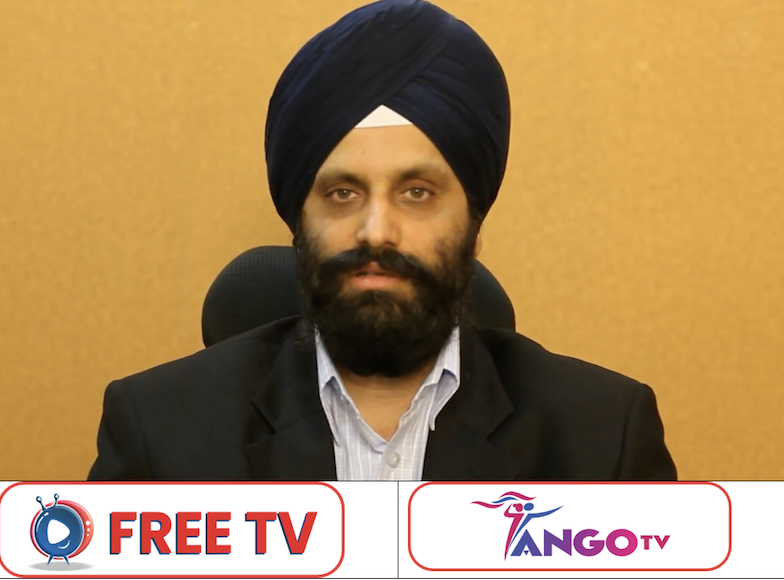
    MUMBAI: Indian  cable TV pioneer Jagjit Singh Kohli is back. This time he is doing the tango with the world of streaming and connected TV apps. The entrepreneur has used the celebration of Guru Nanak’s birthday on 15 November  to announce the launch of Tango Plus Services and its  “transformative Free TV app for the connected TV universe.” 

    The new app, currently available through select ISP partners, will be made available on Google Play Store, Apple App Store, Samsung Tizen, and LG Web OS within the next few weeks.

    The free TV app is set to revolutionise the way consumers access and interact with television content, offering a seamless, subscription-free, and diverse entertainment experience for millions globally, says a release from the company. The app will be made available on mobile app stores by end November.

    Tango TV’s Free TV, the press release states, has a thousand plus free-to-air live channels, replicating the traditional cable/DTH interface but with added convenience and flexibility. From news to sports, lifestyle to infotainment, users can access a wide array of live TV content with an intuitive channel guide and easy navigation. It offers 20,000 plus free movies in multiple languages, Free TV, says it will cater to every movie buffs’ taste. 

    Users can pause, rewind, or fast-forward content, ensuring they enjoy the best in entertainment at their own pace. All movies will be made available in 4K resolution, offering a cinematic experience without the premium cost. It will offer a global range of specially curated series and music, offering diverse genres and stories from international creators. To top that, Tango TV has integrated educational resources that are both fun and informative. Students from nursery to Class XII can access study materials, learning videos, tutorials, and more—bridging the gap between entertainment and education.

    Says Tango TV managing director JS Kohli: “We are incredibly excited to introduce Tango TV to the global market. Our mission has always been to deliver innovative, accessible, and high-quality digital solutions, and with the launch of Tango TV, we are setting a new benchmark in the entertainment industry. This app is a game-changer, offering consumers a free, seamless, and enriching viewing experience that aligns perfectly with today’s digital-first lifestyle. We believe Tango TV will not only revolutionise how users access content, but also create new opportunities for businesses to engage with their audiences in meaningful ways. As we continue to innovate and expand, we look forward to shaping the future of entertainment alongside our partners and users.”

    Kohli adds that for businesses  and partners, Free TV offers built in free access to premium entertainment which can be seamlessly integrated  and delivered to customers at no extra cost. A  unique revenue-sharing model has been built in to the service. 

    “By offering premium content or exclusive features, businesses can tap into new income streams without sacrificing the core value of free entertainment. The revenue-sharing model is designed to benefit partners, giving them the opportunity to monetise Tango TV’s access to a vast content library while keeping the service free for users. This opens up opportunities for brands, telecom providers, smart TV manufacturers, ISPs, cable operators, and other stakeholders to tap into a new, scalable revenue source,” he reveals. 

    He is also quite gung-ho about the premium Tango TV Plus app which he says will offer exclusive ad-free content in terms of TV shows, movies and series, not accessible on the free version, along with additional features such as personalised recommendations, cloud storage, and more.

  • TV segment grows by five per cent to reach Rs 720 billion in 2021: Report

    TV segment grows by five per cent to reach Rs 720 billion in 2021: Report

    Mumbai: The television segment grew by five per cent in 2021 to reach Rs 720 billion, according to FICCI-EY media and entertainment report 2022 unveiled at the Dubai Expo on Monday. TV advertising revenues stood at Rs 313 billion and distribution revenues at Rs 407 billion at the end of 2021, the report further stated.

    According to the report, television advertising grew by 25 per cent in 2021 after recovering from a 21.5 per cent drop in 2020, and two per cent short of 2019 levels. The recovery was mainly volume-driven, though certain pockets like regional entertainment, news and sports did witness rate growth towards the end of 2021.

    Hindi language pay TV viewership declined resulting into increased cost-per-rating-point (CPRPs) for advertisers while CPRPs for regional channels remained constant in 2021. Due to this, many advertisers increased their share of spends on regional TV products and regional channels received 26 per cent more ad volumes than national channels in 2021.

    TV subscription revenue continued to decline for the second year in a row showing degrowth of 6.2 per cent. This was mainly driven by the reduction in six million pay TV homes and a fall in consumer end average revenue per user (ARPUs). The connected TV base in India increased to 10 million sets. The time spent on TV fell by eight per cent from 2020 levels and was slightly lower than 2019 levels for Hindi speaking markets (HSM).

    The number of pay channels increased by 21 whereas the number of free-to-air channels decreased by 26 in September 2021, which “reflects a move by broadcasters to build stronger subscription revenue products through bouquets,” according to the report. The total number of TV channels declined marginally to 906 from 911.

    “While television households will continue to grow at one per cent till 2025, we expect growth to be driven by connected TVs which could cross 40 million by 2025 and free television which could cross 50 million, thereby stressing the core pay television market,” said the report.

    E&Y estimates television revenues to grow to Rs 826 billion by 2024. The estimates are subject to the implementation of ad caps and regulatory restrictions on pricing, it noted. Going forward, E&Y predicts that local cable operators (LCO) would operate a hybrid business model i.e., provide a linear TV wire plus a broadband connection to offer efficient content services, broadband connectivity, smart home services, and locality/community services.

    “India has always been a different kind of media and entertainment market. High on volume and low on ARPU, yet up top with the rest on technology and ahead of the pack when it comes to digital adoption,” commented E&Y media and entertainment sector leader Ashish Pherwani. “We love quantity and bundles; but we pay for value. We are amongst the top smartphone markets; and have a large feature phone base. We subscribe to global OTT platforms; yet binge on Youtube and watch free satellite TV. And we are thirsting for curated knowledge and escapism while creating millions of pieces of content each day ourselves.”

  • WWE and ProSiebenSat.1 Announce Multi-Platform Partnership

    WWE and ProSiebenSat.1 Announce Multi-Platform Partnership

    MUNICH–(BUSINESS WIRE)– WWE and ProSiebenSat.1 today announced an expansive multi-year rights deal to deliver WWE’s unique, family-friendly content to the German and Austrian markets through Free TV, Pay TV and SVOD. The partnership includes:


    • WWE pay-per-view events on Germany’s largest online video store, www.maxdome.de, including WrestleMania 30 which will be available live to all fans for the first time on Monday, April 7 at 1:00 am and on demand.
    • Monday Night Raw, the longest-running weekly episodic program in U.S. primetime TV history, on ProSieben FUN pay TV.
    • SmackDown on ProSieben MAXX free TV every Saturday at 11:00 pm beginning April 5.
    • NXT on ProSieben FUN pay TV.

    WWE combines compelling storylines with an exciting mix of in-ring action, featuring WWE Superstars John Cena, Randy Orton, Alberto Del Rio, Daniel Bryan and many more.This year, WrestleMania 30 takes place on Sunday, April 6 at the Mercedes-Benz Superdome in New Orleans, LA and will be televised in more than 100 countries.


    “This cooperation with WWE creates tremendous added value for our viewers and customers. WWE is well recognized in Germany and has a loyal and growing fan base,” said COO of ProSiebenSat.1 Digital. “We will be showcasing some of the very best programming WWE has to offer across our various platforms including SmackDown on ProSieben Maxx and the huge event WrestleMania 30 which will be available live as a pay-per-view for the first time on www.maxdome.de.”


    “This new deal with ProSiebenSat.1 provides WWE fans with a great choice of platforms with massive reach to follow the storyline of WWE’s flagship programming,” said Stefan Kastenmueller, General Manager of WWE Germany. “Coupled with the increased activities from our team to bring the very best of all of our lines of business to the German market including Live Events, PPV, Consumer Products and Digital Services, we are set to solidify WWE’s footprint in Germany”


  • Sports super show kicks-off in Germany

    Sports super show kicks-off in Germany

    MUMBAI: The biggest global sporting event on the planet kicked off in Germany with the hosts playing Costa Rica. Around 1.5 billion viewers around the globe are expected to tune in to the opening fixture of the World Cup alone.

    A record number of deals: What is helping television viewership in this regard is the sheer number of deals that have been done by football’s governing body Fifa’s marketing agency Infront. Besides getting deals which will ensure the event gets viewed in over 200 countries, InFront has also signed deals with more than one broadcaster in key territories like Germany.

    The World Cup is projected to get a cumulative viewing global audience of 32.5 billion. This marks a 10 per cent increase compared to 2002. For 2006, there will be more than 500 broadcast partners including 240 television licensees, a record number of 220 radio stations and more than 50 New Media Licensees (Mobile Telephony and Internet). By comparison, the 2002 event was transmitted by 300 broadcast partners.

    Distribution has been handled on an open-market basis. This offers viewers variety and choice in how they watch the event and an exciting array of production advances to add to their enjoyment. Infront achieved these record results through ‘layering’ different television offerings for the various markets worldwide. The event will be shared between a broad range of distribution platforms, offering viewers a variety of options. Infront has contracted with two or more broadcasters in 120 territories.

    Strong deals in the key markets: In the top television markets Infront’s marketing strategy has led to impressive results. For instance in host country Germany Infront signed deals with three Free-TV stations – ARD, ZDF, RTL. It also signed a pay TV deal with Premiere. Another important market is France. There it has signed two Free-TV (TF1, M6) and two Pay-TV (Canal+, Eurosport France) agreements.

    In soccer mad Brazil, it has signed four Pay-TV
    (Bandsports, DirecTV, ESPN do Brazil, Globosat) deals and one free TV (TV Globo) agreement. 77 per cent of Brazilians are eagerly counting down the hours to kick off, a figure exceeded only by the 79 per cent recorded in Mexico and Japan.

    Radio coverage of the event is also becoming increasingly important as a category of the overall broadcast. The 2002 World Cup was the first time that radio rights were offered independently and separately from television. The 2006 event continues with this expansion, further acknowledging the growth in radio and its importance as a communication medium.

    Around 80 regional and local radio stations will ensure record radio coverage in Germany. In France five stations have done deals while in Brazil the number is 24.

    Fifa taps into new media: New media coverage of the event is set to reach new standards. In 2002, new media coverage of the event was limited to the official Fifa website and trial transmissions to mobile phones in Japan. This year fans will be able to receive near-live coverage of the most dramatic and decisive moments of all the 64 matches on their mobile telephony devices or their home computer. More than 100 territories are covered by a New Media license.

    Technological inovations: The event will showcase HD technology. Following 2002, this is the second World Cup host broadcast in private hands – a break from the past when this function was handled by the world’s television unions. Infront’s wholly-owned subsidiary, Host Broadcast Services (HBS), is charged with the task of delivery.

    2006 will be the first Fifa World Cup produced exclusively in the high definition (HD) 16/9 widescreen format and will be the first major international sport event to commit fully to the format of the future and to showcase it on a significant scale.

    All 64 matches will be produced in HDTV and made available in both high and standard definition (SD). While the majority of broadcasters will still broadcast in SD 4/3 the demand for widescreen format and HDTV gains momentum.

    Several broadcast partners will pick up the state-of-the-art HD feed produced by HBS and HDTV will be featured in more than 70 territories worldwide, including host country Germany (Premiere), France (TF1, M6), United Kingdom (BBC, ITV), Italy (RAI, Sky Italia), USA (ABC, ESPN), Canada (Rogers Sportsnet), Brazil (TV Globo, Bandsports), Mexico (Televisa, TV Azteca), Japan (Japan Consortium, Sky Perfect), South Korea (KBS, MBC, SBS), and China (CCTV).

    HBS produces 2,200 hours of host broadcast coverage, as opposed to 1,200 hours for Korea / Japan 2002, filmed by a total of 170 cameras. Super feeds will include specific team and player coverage to help broadcasters tailor their offering to a national audience at home. 25 HD cameras will capture every moment and nuance of every match.

    A serious money spinner: All the marketing and promotional activity is expected to pay off big time. A report from Sportcal.com indicates that the event is on course for profits of €1.1 billion. The estimated €1billion cost of staging the event is far outweighed by revenues from the sale of media rights, sponsorship, merchandise and tickets.

    Fifa’s anticipated media rights revenues of €1.2 billion for the 2006 World Cup represent a 34-per-cent increase on the media rights revenues it realised at the 2002 World Cup, held in Japan and South Korea, a less favourable time zone than Germany’s for most of soccer’s top television markets.

    The UK’s BBC and ITV are among the largest contributors to overall 2006 World Cup revenues, jointly paying £105 million for the rights for the event. The largest single contribution to 2006 World Cup revenues is coming from ARD and ZDF, the German public-service broadcasters, which jointly agreed to pay €170 million for the television rights to screen the event.

    All not hunky dory: There has been criticism in some corners over the aggressiveness of Fifa in terms of merchandising and also regarding ticket sales. A report in Deutsche Wells indicates that this is the first World Cup where Fifa got aggressively into the business side of things. Cracks are said to be forming in its relationship with the German Organising Committee as Fifa allegedly pockets millions from the sales of tickets at the expense of fans.

    Fifa has also been strict in the use of branded phrases. Such is the power of Fifa that Hamburg’s AOL Arena has had to remove its name for the duration of the World Cup, since it is not an official partner, as has Munich’s Allianz Arena. The logo on sportswear giant Nike’s headquarters in Frankfurt has also been covered after Fifa took objections to it. German businesses and politicians are furious over Fifa imposed zones around stadiums where only official sponsors can advertise. For example, milk cannot be used on match days in the Coca Cola area.

    A recent survey by SID sports news agency showed that a third of Germans are annoyed at the level of commercialisation that Fifa is doing around the World Cup. To offer an example Budweiser is the sponsor of the event and Germans are upset that at the stadium popular German brands will not be allowed. The head of Fifa Sepp Blatter has had to defend the organisation from accusations over the past few weeks that big business concerns are spoiling the spirit of football.

    Fifa, not surprisingly, justifies its aggressiveness as each partner pays a lot of money to be associated with it. On an average each partner has forked out around $ 60 million for the 2006 WC. However the fact that there are as many as 15 partners means that there is the danger of clutter. That in fact is a major reason why Phillips had earlier chosen not to renew its deal with Fifa.

    ‘Sport selling its soul to big business’: That Fifa’s aggressive marketing tactics have not gone down well in some quarters can be gauged from what former German football great Franz Beckenbauer, who is the head of the World Cup organizing committee, had to say. He recently expressed concern that the sport is selling its soul to big business. Therefore he feels that there is need for discussion on the limits of money-making. Blatter countered that by talking about the importance of a mutually beneficial partnerships between Fifa, television and the global economy.

    A small but significant example of economic benefit can be seen in England’s pubs. The Independent did an investigation on the phenomenon of the rise in the number of people looking for jobs in pubs up and down the UK. In terms of atmosphere Britain’s pubs are considered to be even better than watching the game live according a job applicant.

    On the ground level a report in VOA News indicates that the German government has spent around $7.7 trillion on improving stadiums and transportation infrastructure. The country expects a 1.6 percent increase in its gross domestic product this year, with analysts saying a half per cent of that will be because of the World Cup. Germany is expected to get around four million visitors on account of the event. Each visitor is expected to spend around $400 a day. The World Cup is expected to have generated 60,000 jobs in Germany alone. 20,000 are expected to remain once the event concludes.

    A report in The BBC says that “A Time to Make Friends” has been the slogan in Germany and over the past two years the country has striven to spread its message far and wide. Other official messages have included “We Want to Roll out the Red Carpet For You” – the tag for the 6 billion euros invested from both public and private funds in stadiums, hotels, roads and train stations.

    It is a chance to portray Germany as a dynamic place to visit or do business

    However, there are mixed feelings in Germany about what the economic outcome will be. Germany is looking to show itself as not just a place that is passionate about soccer but also a country that is an excellent tourist destination.

    A study, from Postbank claims the additional sales of TV sets, beer, soft drinks, VIP hospitality, sports goods and other WM-themed products will come to between two and three billion euros.

    However another report from Germany’s influential DIW economic research institute seeks to puncture this growing optimism, forecasting that the World Cup will not significantly aid the country’s economic situation.

    The World Cup, it says, will have a negligible impact on the domestic economy, which for years has been beset by weak demand at home.