Tag: free basics

  • FB targets next billion Indians with local content and Express Wifi

    FB targets next billion Indians with local content and Express Wifi

    MUMBAI: Like Google, Facebook understands that in order to increase their market share of the digital ad pie, it is crucial to target the next billion users. And hence a strong strategy is needed for its India operations. The next billion users on the platform are what will drive its business, both in terms of scale of operation and revenues.

    Facebook is committed to this endeavour, says its south Asia and India managing director Umang Bedi and has taken major steps to keep the platform right, real and relevant for its Indian users.

    India has one of the highest percentages of people accessing Facebook via their mobile phones. Out of the 85 million active monthly users who access the platform from India, 81 million do it through their mobile devices. Nearly 95 per cent of the traffic Facebook gets from India is mobile. Needless to say, Fb has given special care to enhancing user experience in India on Facebook by making the platform functional even under slow internet.

    “For us that is a welcome news. The wider the reach of internet, and mobile, the better we can connect businesses to their right audience,” shared Bedi.

    The company’s flagship project, and perhaps most controversial in the local market, Free Basics, was designed to address the issue of internet penetration in rural India , but failed to move opinion in its favour resulting in its ban by the Telecom Regulatory Authority of India (TRAI) earlier this year due to its conflict with principles of net neutrality in the market.

    “Since the government’s mandate, Facebook has ceased all operations of Free Basics and concentrated on other sectors instead,” Bedi gave a short response when quizzed about Free Basics in a recent interview.

    To push forth FB’s internet.org initiative in India, the social media giant has instead launched what it calls ‘Express Wi-Fi’, which too promises to help connect rural India digitally.

    “We have recently piloted Express WiFI that works with telecom operators, internet service providers, and local entrepreneurs to help expand connectivity to underserved locations around the world. We’re currently live in India, and are expanding to other regions soon,” Bedi shared.

    While Bedi doesn’t clarify whether Express WiFi would also follow Free Basic’s principle of zero charges on data, its page on internet.org defines it as “ fast, affordable and reliable internet” hinting that the service will cost users some money, in-line with the TRAI directives.

    Bedi shares that the biggest challenge Facebook faces in penetrating the further into the market is its relevance in India through local content. “Even the international mobile operators association GSMA recognises the single biggest issue of mobile and internet penetration in India is producing relevant local content for the right device in the right format,” shared Bedi. Making the platform available in 12 Indian languages is another step forward in the direction along with promoting content partnerships with several regional players.

  • FB targets next billion Indians with local content and Express Wifi

    FB targets next billion Indians with local content and Express Wifi

    MUMBAI: Like Google, Facebook understands that in order to increase their market share of the digital ad pie, it is crucial to target the next billion users. And hence a strong strategy is needed for its India operations. The next billion users on the platform are what will drive its business, both in terms of scale of operation and revenues.

    Facebook is committed to this endeavour, says its south Asia and India managing director Umang Bedi and has taken major steps to keep the platform right, real and relevant for its Indian users.

    India has one of the highest percentages of people accessing Facebook via their mobile phones. Out of the 85 million active monthly users who access the platform from India, 81 million do it through their mobile devices. Nearly 95 per cent of the traffic Facebook gets from India is mobile. Needless to say, Fb has given special care to enhancing user experience in India on Facebook by making the platform functional even under slow internet.

    “For us that is a welcome news. The wider the reach of internet, and mobile, the better we can connect businesses to their right audience,” shared Bedi.

    The company’s flagship project, and perhaps most controversial in the local market, Free Basics, was designed to address the issue of internet penetration in rural India , but failed to move opinion in its favour resulting in its ban by the Telecom Regulatory Authority of India (TRAI) earlier this year due to its conflict with principles of net neutrality in the market.

    “Since the government’s mandate, Facebook has ceased all operations of Free Basics and concentrated on other sectors instead,” Bedi gave a short response when quizzed about Free Basics in a recent interview.

    To push forth FB’s internet.org initiative in India, the social media giant has instead launched what it calls ‘Express Wi-Fi’, which too promises to help connect rural India digitally.

    “We have recently piloted Express WiFI that works with telecom operators, internet service providers, and local entrepreneurs to help expand connectivity to underserved locations around the world. We’re currently live in India, and are expanding to other regions soon,” Bedi shared.

    While Bedi doesn’t clarify whether Express WiFi would also follow Free Basic’s principle of zero charges on data, its page on internet.org defines it as “ fast, affordable and reliable internet” hinting that the service will cost users some money, in-line with the TRAI directives.

    Bedi shares that the biggest challenge Facebook faces in penetrating the further into the market is its relevance in India through local content. “Even the international mobile operators association GSMA recognises the single biggest issue of mobile and internet penetration in India is producing relevant local content for the right device in the right format,” shared Bedi. Making the platform available in 12 Indian languages is another step forward in the direction along with promoting content partnerships with several regional players.

  • India lags in fixed broadband, but ahead in mobile: ESCAP

    India lags in fixed broadband, but ahead in mobile: ESCAP

    NEW DELHI: India had just over 100 million fixed broadband subscriptions in 2015 as compared to Iran and Japan which had more than 250 million.

    There were only 1.3 fixed broadband subscribers per 100 inhabitants in the country as against South Korea which had 40.2 per 100 inhabitants and China and Hong Kong which had 31.9. India stood at the 40th place, even below its immediate neighbours Bangladesh and Sri Lanka.

    However, a map of fixed broadband subscriptions per 100 inhabitants in Asia and the Pacific in 2015 shows India as the most developed country in this regard.

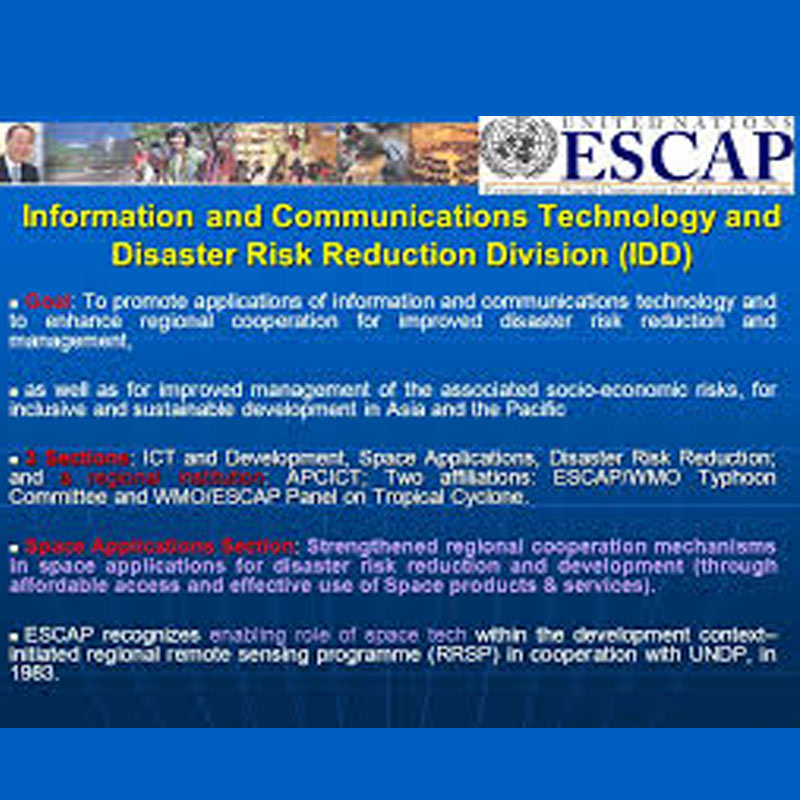
    These facts were revealed by the State of ICT in Asia and The Pacific 2016 Report by the Information and Communications Technology and Disaster Risk Reduction Division of the United Nations Economic and Social Commission for Asia and the Pacific (ESCAP).

    South and South-West Asia, Sri Lanka, Turkey, India and the Islamic Republic of Iran progressed well in both online services and telecommunications infrastructure development between 2008 and 2014. Other countries such as Bangladesh and Maldives performed well predominantly in the development of the telecommunications infrastructure.

    India has risen from just under 4 to around 5.5 out of seven in online services index among South Asian countries between 2008 and 2014.

    India was also among the top active mobile broadband subscriptions per 100 inhabitants in the Asia-Pacific region in 2015 with 120 million subscribers in 2015, the study showed.
    Disaster Risk Reduction Division.

    In 2015, China announced the One Belt One Road (OBOR) initiative, based on six economic corridors corresponding to the Silk Road. These economic corridors (China-Mongolia-Russia Corridor; New Eurasia Land Bridge; China-Central Asia-West Asia; China-Pakistan; Bangladesh-China-India-Myanmar; and China-Indochina Economic Corridor) aim to promote connectivity of these economies with China through infrastructure, trade and investment based on the original Silk Road’s pathway.

    The Global NGO Online Technology Report found that there are diverse regional differences in how NGOs worldwide utilize online technology. Within Asia Pacific, the report notes that the NGOs’ use of online technology varies greatly from subregion to subregion. For instance, India has hundreds of thousands of NGOs likely to come online in the next five years, while internet access throughout South-East Asia is growing as smartphone sales soar across the country. In Australia and Oceania, Europe and North America, NGOs’ use of web and e-mail communications, online fundraising tools, and social media is high, but NGOs in Asia, Africa and Latin America lag behind.

    Lack of a robust internet infrastructure is suggested to be a potential cause for this NGO divide. The report remarks that social, economic and political factors have either hastened or hindered the development of the infrastructure, and thereby also the uptake by the NGO sector.

    In a discussion on net neutrality, the paper says “Free Basics, formerly known as Internet.org, has sparked discussions in India and is one such case of net neutrality. This initiative pursues telecom companies in emerging markets, such as India — the world’s second largest market — to provide their customers free access to Facebook and entailing websites willing to play by its rule.”

    TechCrunch notes that these Facebook rules make it difficult to build competing social network or messaging applications. In February 2016, the Telecom Regulatory Authority of India (Trai) announced the prohibition of internet services such as Free Basics, claiming that they offer discriminatory tariffs for data services on the basis of content. While this may be a victory for neutrality supporters, others might be disappointed with the outcome as the goal of the Facebook initiative is to connect people who may otherwise not have internet access. The ruling will be in place for two years but may be open for review — it is still an open question whether the project will succeed in the long term.”

    The competition for spectrum has significant impact on the cost and affordability associated with broadband networks and access. As observed in the cases of the recent fourth generation (4G) spectrum auctions in India and Thailand, the quests for bandwidth and frequency would intensify along with the demand for mobile access and services, and subsequent need for more extensive broadband infrastructure.

    The report says Asia-Pacific countries are expanding their investments in the ICT infrastructure. For instance, in July 2015, the Chinese State Council announced the plan to develop underground telecommunication networks connecting 10 cities, which will be funded by the USD 160 billion bond programme designed for infrastructure projects.

    A mobile operator in India announced its plan to invest USD 9 billion for their mobile broadband network expansion in the next three years.

    Maldives will soon have USD 25 million nationwide fibre optic submarine networks of 1,200 kilometres to provide high-bandwidth services throughout the island nation. A mobile operator in Brunei announced plan for a nationwide Wi-Fi network rollout through more than 60 hotspots.

    The report found that connectivity still constrains not only ICT development but also various socioeconomic development opportunities. For instance, an UNCTAD report found that despite the unparalleled promise of the digital economy, the main barrier to B2C transactions in Asia and the Pacific appear to be the low internet penetration, the relatively poor postal reliability, and the low number of secure servers, which are essential for online shopping sites.

    China has demonstrated an exponential increase in fixed and mobile broadband, while slowest growths have been detected among LDCs, LLDCs and SIDs. The persistent challenge is that one-third of ESCAP member-countries have made only negligible progress over the last 15 years. In these countries, broadband access is still largely unavailable and unaffordable, while the gap as compared to the fast-growing economies is widening. Some sub-regions, such as Central Asia, seem to have made more holistic progress. The report also conducted descriptive statistical analysis using standard deviation on fixed broadband subscriptions per 100 inhabitants so as to statistically understand the digital divide.

    The results showed that Europe is the only region that has demonstrated a reduction in the broadband digital divide, while in Asia and the Pacific, it
    is in fact widening.

    Despite the increasing spotlight on newer technologies such as the IoT that aims to connect millions of devices and machines worldwide, the region still suffers from the lack of ICT connectivity, and mobile devices are mainly used for communication and entertainment.

    The report found that some countries have focused on broadband access expansion over online content and service development, but, in the long run, both infrastructure and content should be developed in tandem. The telecommunications investment seems to co-relate with fixed broadband subscriptions more strongly than with mobile broadband, indicating the investment-intensive nature of the fixed broadband infrastructure, which is a prerequisite for e-commerce.

    The report also found that weak regulatory framework might be associated with slow broadband growth.

    Regional broadband initiatives, such as the Asia-Pacific Information Superhighway, have become an essential and strategic development intervention that will shape the future of the region, the report concludes.

  • India lags in fixed broadband, but ahead in mobile: ESCAP

    India lags in fixed broadband, but ahead in mobile: ESCAP

    NEW DELHI: India had just over 100 million fixed broadband subscriptions in 2015 as compared to Iran and Japan which had more than 250 million.

    There were only 1.3 fixed broadband subscribers per 100 inhabitants in the country as against South Korea which had 40.2 per 100 inhabitants and China and Hong Kong which had 31.9. India stood at the 40th place, even below its immediate neighbours Bangladesh and Sri Lanka.

    However, a map of fixed broadband subscriptions per 100 inhabitants in Asia and the Pacific in 2015 shows India as the most developed country in this regard.

    These facts were revealed by the State of ICT in Asia and The Pacific 2016 Report by the Information and Communications Technology and Disaster Risk Reduction Division of the United Nations Economic and Social Commission for Asia and the Pacific (ESCAP).

    South and South-West Asia, Sri Lanka, Turkey, India and the Islamic Republic of Iran progressed well in both online services and telecommunications infrastructure development between 2008 and 2014. Other countries such as Bangladesh and Maldives performed well predominantly in the development of the telecommunications infrastructure.

    India has risen from just under 4 to around 5.5 out of seven in online services index among South Asian countries between 2008 and 2014.

    India was also among the top active mobile broadband subscriptions per 100 inhabitants in the Asia-Pacific region in 2015 with 120 million subscribers in 2015, the study showed.
    Disaster Risk Reduction Division.

    In 2015, China announced the One Belt One Road (OBOR) initiative, based on six economic corridors corresponding to the Silk Road. These economic corridors (China-Mongolia-Russia Corridor; New Eurasia Land Bridge; China-Central Asia-West Asia; China-Pakistan; Bangladesh-China-India-Myanmar; and China-Indochina Economic Corridor) aim to promote connectivity of these economies with China through infrastructure, trade and investment based on the original Silk Road’s pathway.

    The Global NGO Online Technology Report found that there are diverse regional differences in how NGOs worldwide utilize online technology. Within Asia Pacific, the report notes that the NGOs’ use of online technology varies greatly from subregion to subregion. For instance, India has hundreds of thousands of NGOs likely to come online in the next five years, while internet access throughout South-East Asia is growing as smartphone sales soar across the country. In Australia and Oceania, Europe and North America, NGOs’ use of web and e-mail communications, online fundraising tools, and social media is high, but NGOs in Asia, Africa and Latin America lag behind.

    Lack of a robust internet infrastructure is suggested to be a potential cause for this NGO divide. The report remarks that social, economic and political factors have either hastened or hindered the development of the infrastructure, and thereby also the uptake by the NGO sector.

    In a discussion on net neutrality, the paper says “Free Basics, formerly known as Internet.org, has sparked discussions in India and is one such case of net neutrality. This initiative pursues telecom companies in emerging markets, such as India — the world’s second largest market — to provide their customers free access to Facebook and entailing websites willing to play by its rule.”

    TechCrunch notes that these Facebook rules make it difficult to build competing social network or messaging applications. In February 2016, the Telecom Regulatory Authority of India (Trai) announced the prohibition of internet services such as Free Basics, claiming that they offer discriminatory tariffs for data services on the basis of content. While this may be a victory for neutrality supporters, others might be disappointed with the outcome as the goal of the Facebook initiative is to connect people who may otherwise not have internet access. The ruling will be in place for two years but may be open for review — it is still an open question whether the project will succeed in the long term.”

    The competition for spectrum has significant impact on the cost and affordability associated with broadband networks and access. As observed in the cases of the recent fourth generation (4G) spectrum auctions in India and Thailand, the quests for bandwidth and frequency would intensify along with the demand for mobile access and services, and subsequent need for more extensive broadband infrastructure.

    The report says Asia-Pacific countries are expanding their investments in the ICT infrastructure. For instance, in July 2015, the Chinese State Council announced the plan to develop underground telecommunication networks connecting 10 cities, which will be funded by the USD 160 billion bond programme designed for infrastructure projects.

    A mobile operator in India announced its plan to invest USD 9 billion for their mobile broadband network expansion in the next three years.

    Maldives will soon have USD 25 million nationwide fibre optic submarine networks of 1,200 kilometres to provide high-bandwidth services throughout the island nation. A mobile operator in Brunei announced plan for a nationwide Wi-Fi network rollout through more than 60 hotspots.

    The report found that connectivity still constrains not only ICT development but also various socioeconomic development opportunities. For instance, an UNCTAD report found that despite the unparalleled promise of the digital economy, the main barrier to B2C transactions in Asia and the Pacific appear to be the low internet penetration, the relatively poor postal reliability, and the low number of secure servers, which are essential for online shopping sites.

    China has demonstrated an exponential increase in fixed and mobile broadband, while slowest growths have been detected among LDCs, LLDCs and SIDs. The persistent challenge is that one-third of ESCAP member-countries have made only negligible progress over the last 15 years. In these countries, broadband access is still largely unavailable and unaffordable, while the gap as compared to the fast-growing economies is widening. Some sub-regions, such as Central Asia, seem to have made more holistic progress. The report also conducted descriptive statistical analysis using standard deviation on fixed broadband subscriptions per 100 inhabitants so as to statistically understand the digital divide.

    The results showed that Europe is the only region that has demonstrated a reduction in the broadband digital divide, while in Asia and the Pacific, it
    is in fact widening.

    Despite the increasing spotlight on newer technologies such as the IoT that aims to connect millions of devices and machines worldwide, the region still suffers from the lack of ICT connectivity, and mobile devices are mainly used for communication and entertainment.

    The report found that some countries have focused on broadband access expansion over online content and service development, but, in the long run, both infrastructure and content should be developed in tandem. The telecommunications investment seems to co-relate with fixed broadband subscriptions more strongly than with mobile broadband, indicating the investment-intensive nature of the fixed broadband infrastructure, which is a prerequisite for e-commerce.

    The report also found that weak regulatory framework might be associated with slow broadband growth.

    Regional broadband initiatives, such as the Asia-Pacific Information Superhighway, have become an essential and strategic development intervention that will shape the future of the region, the report concludes.

  • Facebook pulls plug on Free Basics post TRAI’s decision on differential pricing

    Facebook pulls plug on Free Basics post TRAI’s decision on differential pricing

    NEW DELHI: Even as Facebook founder and CEO Mark Zuckerberg voiced his disappointment on the ruling by the Telecom Regulatory Authority of India (TRAI) against differential pricing and in favour of net neutrality, the social media giant has pulled the plug on its Free Basics offering in India.

    Meanwhile, a recent tweet by Silicon Valley investor and a member of the Facebook Board Marc Andreessen, which was later deleted, had created controversy as he criticised India’s opposition to Free Basics.

    Indian users of the net protested against the tweet comparing the opposition to Free Basics in India to anti-colonialism, which did not go well with them.

    Later Zuckerberg had attempted to do some damage control when he put a post on his Facebook page disassociating from Andreessen’s views. He said the comment was “deeply upsetting and doesn’t represent the way Facebook or I think.”

    Facebook has clearly been hit by the decision as it is a popular social media site in the country and was hoping to increase its presence by offering free access to services to the joining user.

    In its ruling on differential pricing for data services, TRAI had said that it would impose a fine of Rs 50,000 per day for anyone violating the same with immediate effect.

  • Facebook pulls plug on Free Basics post TRAI’s decision on differential pricing

    Facebook pulls plug on Free Basics post TRAI’s decision on differential pricing

    NEW DELHI: Even as Facebook founder and CEO Mark Zuckerberg voiced his disappointment on the ruling by the Telecom Regulatory Authority of India (TRAI) against differential pricing and in favour of net neutrality, the social media giant has pulled the plug on its Free Basics offering in India.

    Meanwhile, a recent tweet by Silicon Valley investor and a member of the Facebook Board Marc Andreessen, which was later deleted, had created controversy as he criticised India’s opposition to Free Basics.

    Indian users of the net protested against the tweet comparing the opposition to Free Basics in India to anti-colonialism, which did not go well with them.

    Later Zuckerberg had attempted to do some damage control when he put a post on his Facebook page disassociating from Andreessen’s views. He said the comment was “deeply upsetting and doesn’t represent the way Facebook or I think.”

    Facebook has clearly been hit by the decision as it is a popular social media site in the country and was hoping to increase its presence by offering free access to services to the joining user.

    In its ruling on differential pricing for data services, TRAI had said that it would impose a fine of Rs 50,000 per day for anyone violating the same with immediate effect.

  • Govt respects free discourse & social media via internet: Ravi Shankar Prasad

    Govt respects free discourse & social media via internet: Ravi Shankar Prasad

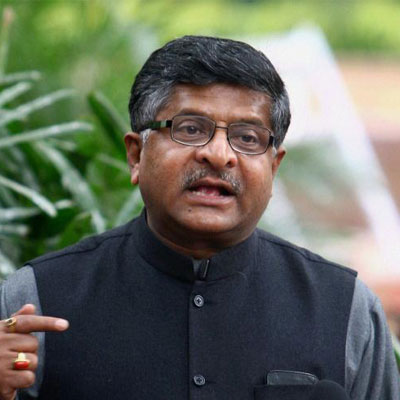
    NEW DELHI: Communications and Information Technology Minister Ravi Shankar Prasad has said the government fully respects the freedom of expression and discourse on social media and interned adding that “Our government is committed towards digital inclusion.”

    Welcoming the Telecom Regulatory Authority of India’s (TRAI) decision on discriminatory pricing, he said, “We very much appreciate this decision of TRAI whereby differential tariff in case of data services has been rejected. The view of our government from the beginning has been very clear, which I have also articulated in the Parliament, that is, internet is one of the finest creations of human mind and it should not become the monopoly of few.”

    “Differential pricing on data, whether it is Free Basics or any other mode, is plainly not acceptable,” the minister said, adding that the internet “must be available without discrimination.”

    Prasad said that the government was expanding Digital India into every “nook and corner of the country, and taking extraordinary steps to empower the people through technology, to create a knowledge economy, the very concept,” in order to bring about digital inclusion.

  • Govt respects free discourse & social media via internet: Ravi Shankar Prasad

    Govt respects free discourse & social media via internet: Ravi Shankar Prasad

    NEW DELHI: Communications and Information Technology Minister Ravi Shankar Prasad has said the government fully respects the freedom of expression and discourse on social media and interned adding that “Our government is committed towards digital inclusion.”

    Welcoming the Telecom Regulatory Authority of India’s (TRAI) decision on discriminatory pricing, he said, “We very much appreciate this decision of TRAI whereby differential tariff in case of data services has been rejected. The view of our government from the beginning has been very clear, which I have also articulated in the Parliament, that is, internet is one of the finest creations of human mind and it should not become the monopoly of few.”

    “Differential pricing on data, whether it is Free Basics or any other mode, is plainly not acceptable,” the minister said, adding that the internet “must be available without discrimination.”

    Prasad said that the government was expanding Digital India into every “nook and corner of the country, and taking extraordinary steps to empower the people through technology, to create a knowledge economy, the very concept,” in order to bring about digital inclusion.

  • Facebook’s Mark Zuckerberg disappointed with TRAI’s decision favouring net neutrality

    Facebook’s Mark Zuckerberg disappointed with TRAI’s decision favouring net neutrality

    MUMBAI: Everyone in the world should have access to the Internet says Facebook founder Mark Zuckerberg.

    Voicing his disappointment over Indian regulator – the Telecom Regulatory Authority of India’s (TRAI) decision, which upheld net neutrality and ruled against differential pricing of data services, Zuckerberg took to his social networking website and said, “Today India’s telecom regulator decided to restrict programs that provide free access to data. This restricts one of Internet.org’s initiatives, Free Basics, as well as programs by other organizations that provide free access to data.”

    With an aim to provide basic internet services to all, Zuckerberg launched Internet.org with many different initiatives — including extending networks through solar-powered planes, satellites and lasers, providing free data access through Free Basics, reducing data use through apps, and empowering local entrepreneurs through Express Wi-Fi.

    “While we’re disappointed with today’s decision, I want to personally communicate that we are committed to keep working to break down barriers to connectivity in India and around the world. Internet.org has many initiatives, and we will keep working until everyone has access to the internet,” he added.

    He added that with Internet.org, more than 19 million people in 38 countries have been connected through its different programs.

    “Connecting India is an important goal we won’t give up on, because more than a billion people in India don’t have access to the internet. We know that connecting them can help lift people out of poverty, create millions of jobs and spread education opportunities. We care about these people, and that’s why we’re so committed to connecting them,” he voiced.

    Zuckerberg said that Facebook’s mission was to make the world more open and connected. “That mission continues, and so does our commitment to India,” he said.

    It may be recalled that Facebook faced a lot of flak recently when it asked its users to support Free Basics via a poll. Free Basics has been criticised over grounds that it curbed people’s freedom to access the internet of their choice.

  • Facebook’s Mark Zuckerberg disappointed with TRAI’s decision favouring net neutrality

    Facebook’s Mark Zuckerberg disappointed with TRAI’s decision favouring net neutrality

    MUMBAI: Everyone in the world should have access to the Internet says Facebook founder Mark Zuckerberg.

    Voicing his disappointment over Indian regulator – the Telecom Regulatory Authority of India’s (TRAI) decision, which upheld net neutrality and ruled against differential pricing of data services, Zuckerberg took to his social networking website and said, “Today India’s telecom regulator decided to restrict programs that provide free access to data. This restricts one of Internet.org’s initiatives, Free Basics, as well as programs by other organizations that provide free access to data.”

    With an aim to provide basic internet services to all, Zuckerberg launched Internet.org with many different initiatives — including extending networks through solar-powered planes, satellites and lasers, providing free data access through Free Basics, reducing data use through apps, and empowering local entrepreneurs through Express Wi-Fi.

    “While we’re disappointed with today’s decision, I want to personally communicate that we are committed to keep working to break down barriers to connectivity in India and around the world. Internet.org has many initiatives, and we will keep working until everyone has access to the internet,” he added.

    He added that with Internet.org, more than 19 million people in 38 countries have been connected through its different programs.

    “Connecting India is an important goal we won’t give up on, because more than a billion people in India don’t have access to the internet. We know that connecting them can help lift people out of poverty, create millions of jobs and spread education opportunities. We care about these people, and that’s why we’re so committed to connecting them,” he voiced.

    Zuckerberg said that Facebook’s mission was to make the world more open and connected. “That mission continues, and so does our commitment to India,” he said.

    It may be recalled that Facebook faced a lot of flak recently when it asked its users to support Free Basics via a poll. Free Basics has been criticised over grounds that it curbed people’s freedom to access the internet of their choice.