Tag: free ad supported TV

  • FAST rides the Indian wave: Free TV grows up as subscription fatigue hits prime time

    FAST rides the Indian wave: Free TV grows up as subscription fatigue hits prime time

    MUMBAI: There was a time when the battle for India’s living rooms was fought with a set-top box and a remote. Today, a new wave is washing ashore — lean, free, and impossibly fast.

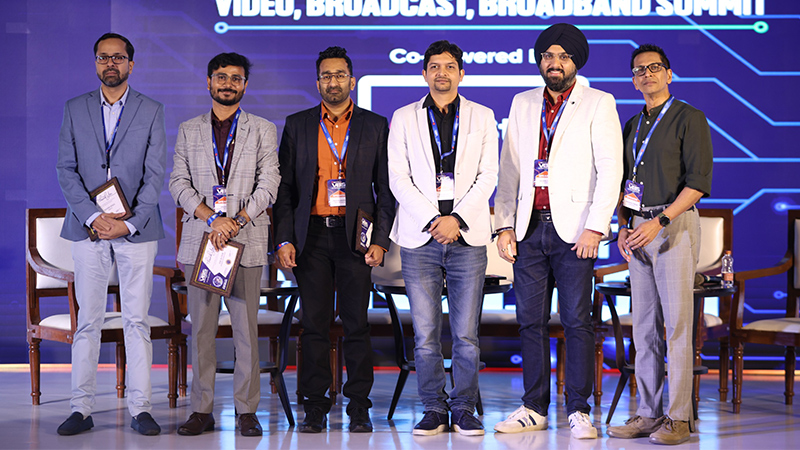
    At the IndianTelevision.com’s 21 Video and Broadband Summit 2025, the panel “FAST Services and the Subscriber: The Way Forward” unpacked how free ad-supported television (FAST) could become the next disruptor in India’s media landscape, pushing past subscription fatigue with a wink and a free pass.

    Samsung Electronics director of product services Vivek Mishra chaired a lively session featuring Planetcast COO – digital Venugopal Iyengar, Shemaroo DVP – India digital and international syndication Inderpal Singh, GroupM Nexus head (advanced TV and media solutions) Rajiv Rajagopal, Runn TV founder & CEO Manish Sinha, and Skandha Technologies director growth and business development Anil Kumar. Their consensus was clear: FAST isn’t just a buzzword — it is a full-blown revolution.

    Iyengar set the tone, noting that FAST addresses three critical consumer demands: accessibility, affordability, and simplicity. “It reduces cognitive overload. No 1,000 posters. Just click, watch, relax,” he quipped. FAST’s secret sauce? A curated, lean-back experience without subscription paywalls.

    Rajagopal put the numbers on the table, “FAST channels in India have exploded from 30–40 in 2021 to over 250 now, and are expected to top 1,000 within three years.” Connected TV ownership is also rising fast — from under 5 per cent before 2020 to 15 per cent today — and expected to surpass 35 per cent by 2030.

    Singh pointed out that India’s unique media clutter makes FAST even more necessary. “It’s not just quality platforms. It’s video, social, everything. FAST helps users escape decision fatigue,” he said. With 100 million TV-dark households still untapped, Singh predicted FAST would thrive alongside pay-TV and OTT services rather than replace them.

    Sinha brought it back to the user, “Most users don’t even know they’re watching FAST. They see content; they’re happy”. Sinha explained that audiences are appreciating the “click-and-consume” ease of FAST, where content discovery is baked into the platform rather than leaving users to search.

    Meanwhile, Kumar noted that the FAST ecosystem still rides largely on repurposed content. “It’s early days — we’re curating special-interest content, but still repurposing more than creating”, he said. Channels focused on genres like short films, poetry, and stand-up comedy are slowly emerging, tailored for highly targeted audiences.

    The panel didn’t shy away from the elephant in the room: monetisation. FAST’s ad revenues in India are still modest compared to western benchmarks. Iyengar noted that CPMs in India hover around $3 compared to $12–18 in the west. However, technology enablers like Planetcast are optimising delivery costs by over 50 per cent, making the FAST model increasingly viable.

    Caution remains, especially among traditional broadcasters. “Nobody’s making original content exclusively for FAST yet”, Iyengar admitted. “The push factor isn’t as strong here. Subscription TV still costs Rs 250, not Rs 8,000 like in the US.” But with 45 million connected TVs already lighting up Indian homes — and set to touch 60 million by year-end — momentum is building.

    FAST may be free to watch, but make no mistake — in India’s great TV revolution, it is playing for keeps.
  • The Q India launches its third channel ‘The Q Kahaniyan’

    The Q India launches its third channel ‘The Q Kahaniyan’

    Mumbai: Qyou Media has announced that it is launching a new animation channel called The Q Kahaniyan. The channel will initially be launched on smart TV and mobile app-based platforms including Samsung TV Plus, Xiaomi Mi TV, Jio TV and Jio TV Plus and TCL’s iFFalcon.

    The 24/7 channel is targeting 15 to 35-year-old young Indians and offers a new kind of alternative animated content that is suited for an older audience. The company’s Hindi GEC channel The Q India has seen a significant amount of popularity from its alternative animated series such as “Daravni Kahaniya,” “Dilchasp Kahaniya” and “Anokhi Kahaniya.”

    Smart TV shipments in India have increased by 65 per cent year-on-year for the quarter ending in June 2021 and this pace of growth is expected to continue as more e-commerce and app-based channels become part of the smart TV ecosystem. The global growth of smart TV’s is expected to be from 20 per cent to 30 per cent in the next five years with India as one of the fastest growing markets. In addition, the introduction of most smart TV content platforms to the mobile handsets of manufacturers who deliver both types of hardware (i.e., Samsung, Xiaomi, LG, etc) provides a strong entry point for a large audience of additional mobile based viewers.

    “We have experienced tremendous success with our unique alternative animation content both on broadcast and digital platforms,” said Qyou Media co-founder and CEO Curt Marvis. “We have expressed our commitment to be a leader in India in the smart TV and emerging content business now known as FAST (free ad supported TV). With the addition of ‘The Q Kahaniyan’ as a one of a kind third channel, we can now begin to form a block of Q channels across smart TV’s with the goal of adding more in the future. We foresee the smart TV and FAST channel ecosystem becoming a leading distribution vehicle in India with an impact that is equal or is even greater than what is occurring in North America. Our position in the market is now stronger than ever with the addition of The Q Kahaniyan.”

  • After edtech & fintech, now is time for media-tech: Anuj Gandhi at VBS 2022

    After edtech & fintech, now is time for media-tech: Anuj Gandhi at VBS 2022

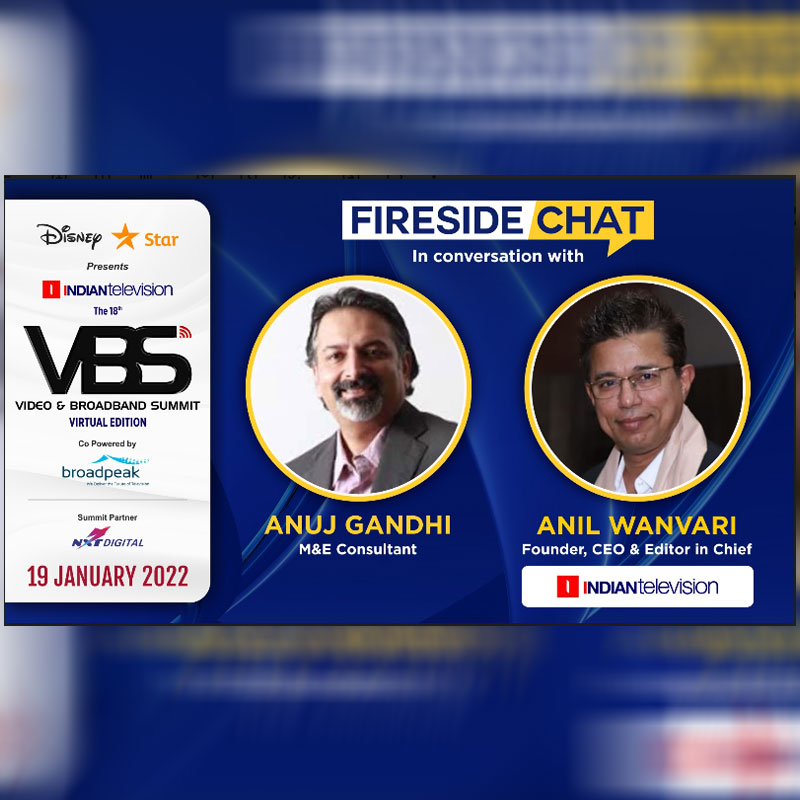
    Mumbai: After the edtech and fintech, it’s time for India to now witness the rise of media-tech, said M&E consultant and industry veteran Anuj Gandhi while decoding the post-pandemic future of the industry at the 18th edition of the Video & Broadband Summit 2022 (VBS) organised by Indiantelevision.com on Wednesday.

    The day-long virtual summit was co-powered by broadpeak, with Disney Star as the presenting partner, and NxtDigital as the summit partner.

    In a fireside chat with Indiantelevision.com founder CEO and editor-in-chief Anil Wanvari, the media distribution veteran discussed the six major trends which, according to him, will determine the course of the media and entertainment industry over the next couple of years.

    Video Trends: Unlike the days of DD and bundled offerings, the modern consumer wants more freedom to choose. With the burgeoning delivery platforms, it’s no longer that case where everyone has to be on PayTV. Moreover, in the present scenario where people are spending hours on social media, even Instagram Reels are ‘content’. Clearly, going forward, the definition of video, as well as trends in the space, will depend on the demand-supply equation. The rise of Free Dish and OTTs during the pandemic is a classic example, and even as their growth accelerates, PayTV will also continue to exist in some form or the other.

    Broadband Growth: Broadband has evolved into becoming a utility today; it is no longer limited to video. Considering the amount of consumption that’s happening over work-from-home, education, and other services, video is just a small fraction of it. The Trai’s figure for wired broadband that was stagnant at around 10-12 mn for many years, suddenly shot up to 25 mn, and this does not even include the huge undeclared market run by cable companies. The hybrid ecosystem fostered by the pandemic will continue to push this number further in the coming days.

    The fate of linear TV: It is a cause for worry and excitement at the same time. Both in India and globally there’s no denying the trend of people consuming less pay/linear TV as a result of the availability of alternatives as well as the failure of linear TV to innovate in terms of content. The Free Dish market has largely been insulated so far, but it will also experience disruption in the near future as broadband penetration in the hinterland grows.

    B2C focus and consolidation: The changes that were effected and necessitated by the growth in digital, especially in the last decade or so, have shifted the focus of the entire M&E industry from B2B to B2C. As the ecosystem opens up more and more to consumers directly, the need for consolidation will also increase, whether it is to meet the entertainment demands of viewers or to simplify content discovery for them.

    Rise of FAST: The popularity of Free Ad-Supported TV (FAST) services in the US and Europe, clearly shows that the west is moving towards AVOD. In the case of Asian markets including India, even though SVOD is picking up, the growth of Free Dish, YouTube, and OTT players like MX, is a strong indication of the potential for FAST.

    Crumbling walls: Changes in windowing norms that existed thus far will have a far-reaching impact on pricing, quality, and consumption of content as well as the actual segmentation of consumers in a multi-screen environment.

    The former group CEO of IndiaCast Media Distribution, who was also instrumental in setting up IndiaCast in March 2012 said he is hopeful about a future where all forms of video delivery – Free Dish, PayTV, VOD -will coexist. However, considering the current regulatory environment, competition, and the pace at which viewers are evolving, he recommended that the industry players must adopt an approach that gives more freedom and power to consumers rather than trying to resist the inevitable change in order to survive in the long run.