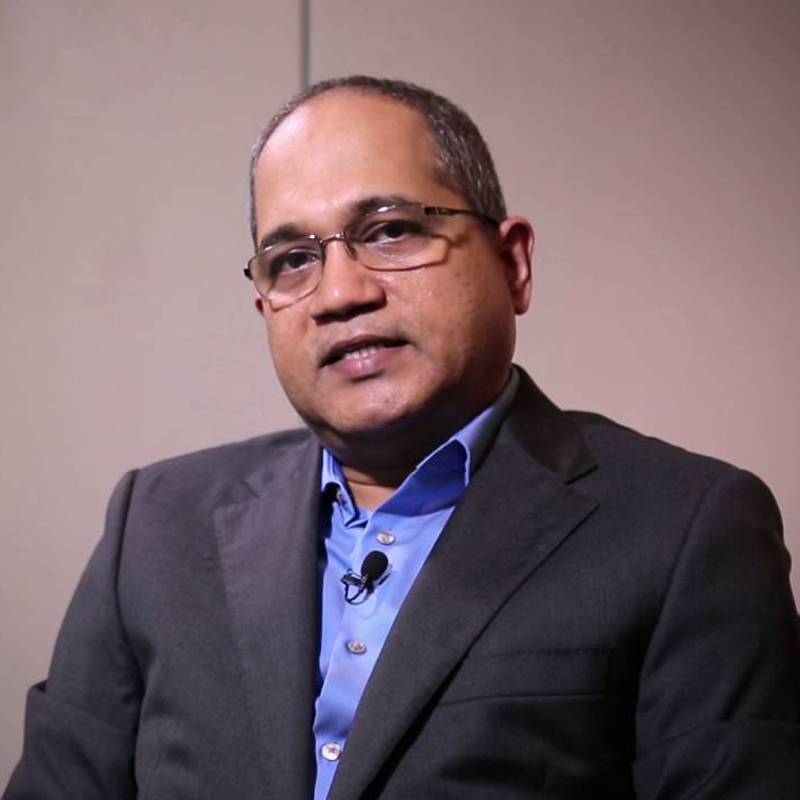
Tag: Frank D’souza

  • India to enter top 10 OTT video markets in 2022: PwC

    India to enter top 10 OTT video markets in 2022: PwC

    MUMBAI: With a steadily increasing demand for online video consumption, India is set to occupy a spot in the top ten (over-the-top) video markets in the world in four years, reported the Times of India quoting a study from global accounting firm PricewaterhouseCoopers (PwC).

    The report titled Global Entertainment & Media Outlook 2018-2022 (Outlook) adds that the OTT video market in India is growing at a compound annual growth rate (CAGR) of around 23 per cent.

    According to the report, OTT video revenue in India reached Rs 2,019 crore in 2017 and is likely to hit Rs 5,595 crore by 2022.

    The report also notes that Indian entertainment and media industry is likely to reach Rs3.5 trillion (Rs353,609 crore) by 2022.

    ” India is expected to post an impressive growth in the entertainment and media Sector at a CAGR of around 11 percent, over the next five years. This is not only on the back of traditional media, such as TV subscription and advertising, cinema and advertising, expected to post robust growth, but also non-linear media such as OTT, gaming and  Internet advertising expected to  significantly high growth rates,” PwC India, partner & leader — entertainment & media, Frank D’Souza told Indiantelevision.com

    The findings of the PwC study do not come as a surprise given the flurry of activity in the Indian OTT space in the last two years. Global giants Netflix and Amazon Prime Video, local brands like ALTBalaji, and those owned by broadcasters like Star India’s Hotstar, Sony Entertainment Television’s SonyLIV and Zee Entertainment Enterprises Limited’s ZEE5 are all locked in a fierce battle for India’s OTT pie.

    Viu India country head Vishal Maheshwari said, “This report shines a great light on the OTT market. Original content will play a major role in the growth of the SVOD segment which projected to reach 81.6% of the total in 2022. If OTT players in India produce high quality content, consumers will likely end up with a handful of different subscriptions. Also, with one of the largest populations of millennials who are looking for quality and relatable alternative entertainment avenues, we believe India will surpass other nations to become the largest contributor to the growth of digital entertainment.”

    This intense competition among the Video on Demand(SVoD) platforms was the primary reason behind subscription services generating over 70 per cent of the revenue in 2017. This trend, according to the report, is bound to grow further with SvoD contributing to 79.4% of the total market revenue by 2022.

    India, however, did not find place in the top 10 global SVOD countries by revenue last year. However, for countries with the highest SVOD CAGR in 2017, India was on the number three spot after Indonesia and Philippines.

    Also Read :

    Star India mulls adding VR to PKL 6

    Star unveils Re.Imagine Awards for IPL ad campaigns

  • Star India mulls adding VR to PKL 6

    Star India mulls adding VR to PKL 6

    MUMBAI: Star India is taking the Indian Premier League (IPL) experience to other sports. After a  phenomenal reception for using virtual reality (VR) in IPL 2018, it is diversifying into Pro Kabaddi League (PKL) season six.

    Along with VR, wearable technology is another main attraction for PKL. As the next step, wearable devices, artificial intelligence and smart analytics are needed for seamlessly integrating technology with application to guide the next stage of evolution and to ensure higher relevance to human society.

    Star India spokesperson said, “We may experiment with wearable technology like catapult devices which helps to measure heart rate, distance run, force extracted. We are actually deploying technology at the back end. We have some bit of artificial intelligence which is powering our analytics on cricket and we may use the same thing on kabaddi as well.”   

    Hotstar was viewed by 5.5 million viewers in VR in week six of IPL 2018, out of which 30-35 per cent of the viewers watched it live and remaining watched it in highlights. According to the spokesperson, the viewers almost watched 100,000 hours of VR content. For the IPL, it made Hotstar compatible with VR devices giving people the option of 360-degree rotation to get a view of the entire ground. People can even pick the language and camera of their choice for viewing.

    PwC India partner and leader, entertainment and media Frank Dsouza said, “VR does provide an enhanced experience which is immersive technology but the thing that people are grappling with is sports a community experience or not. Therefore, in a VR situation, it can be consumed singularly. The question remains, at what scale you are going to implement it.”

    With 4K adoption in India being marginal, last mile access is limited. “You need to have the infrastructure and the programming to be able to view on 4K. As we have moved from SD to HD, we can now shift to 4K because the experience has been better in HD. Then the question arrives of pricing,” said the spokesperson.

    US’ Fox Sports will be streaming live 4K video from the US Open using 5G wireless technology, with the help of Fox Innovation Lab, Ericsson, Intel, and AT&T.

    A pair of Fox cameras will transmit 4K HDR video to a nearby production truck, and then 5G, which provides multi-gigabit speeds with low latency, will be used to get that footage out to viewers. In the future, Fox could use this setup to stream live virtual reality from the US Open.

  • Localised content the way forward for Netflix in India

    Localised content the way forward for Netflix in India

    MUMBAI: Global to local seems to be the key strategy of Netflix to spread its wings in India. ‘Netflix and Chill’ is the popular term across the OTT ecosystem but the number of Indian consumers chilling with Netflix’s high-quality content dwarfs in comparison to users in other markets. However, it is adapting to Indian tastes and modifying its pure international content line-up. Will this shift drive the growth for Netflix?

    Netflix launched in India in January 2016 and has since created a niche for itself for high-quality TV series and Hollywood movie content for the English-speaking audience in the country but it is far behind other OTT players in terms of subscribers. Currently, it is the fifth largest player in India, behind players such as Hotstar, Voot and Amazon, according to the Counterpoint Technology Market Research report.

    With the rollout of 4G internet services by the top telecom providers, especially Reliance Jio, streaming in India has taken a giant leap forward. In the year 2017, Netflix acquired more subscribers than local cable connections in the US (according to data from Statista and Leichtman Research Group). However, even after spending two years in India, things aren’t quite as rosy for the company as in the US. On average, the Indian consumer would spend around $32 dollar (close to Rs 2200) per year on entertainment, whereas in the US, people spend around $2260 (close to Rs 1.5 lakh) annually, according to global entertainment and media outlook 2017-2021 report by PWC.

    How does Netflix aim to take over the minds of India when cable connections give you 100-150 channels at just Rs 1100-200? Netflix subscriptions can vary from Rs 500-800 a month. An annual plan can range from Rs 6000-9600.

    Netflix CEO Reed Hastings believes that the amount that an Indian consumer pays for cable services, on a global level, is very low, which keeps the industry smaller than it should be. Speaking at an event, he had said that Netflix’s strategy is to build up local and global content. Though he admitted that Netflix’s rates were higher than cable TV, they were significantly lower than movie tickets and other entertainment experiences. Hastings is aligning the OTT player as competition to the bigger entertainment options and not the idiot box.

    So far, Netflix has focussed on pushing its global content such as House of Cards, Orange is the New Black, Master of None, Stranger Things, Narcos and Daredevil to Indian subscribers. While it has made significant progress in adding regional content, it still has a lot of ground to make up.

    Now, Netflix sees a potential of adding a massive 100 million Indian customers. According to Hastings, Netflix has around 120 million subscribers in over 190 countries who consume over 140 million hours of TV shows and movies per day, and about 60 million are from the US. However, in the price sensitive market of India, Netflix banks on close to 1.5 million subscribers.

    How does Netflix aim to break the ice? The answer is local content. Hence, instead of price, Hasting suggested that Netflix wants to be sensitive to great local stories and content and be able to invest in them. So, the strategy will be to build up the local content that includes regional stories as well.

    But will producing local content be enough for Netflix to chill in India? Commenting on the same, PwC partner & leader, media & entertainment Frank D’Souza says, “Growing smartphone and internet penetration across the country has created a wide range of opportunities for OTT players. Focus on creating and producing regional content should be of utmost importance considering the fact that India is a multilingual country. A ‘one size fits all’ approach would not work for the country with over 22 official languages.”

    OTT platforms have realised the power that regional content has over the dissected Indian audiences. Amazon Prime was one of the first to take the plunge followed by Zee5, Hotstar, ALTBalaji, Voot, Viu etc.

    Netflix recently announced three Indian original productions Ghoul, Leila and Crocodile apart from four productions already under works which include Sacred Games, Selection Day, Again, and Bard of Blood. On Valentine’s Day, Netflix released its first India original Love Per Square Foot by Ronnie Screwvala.

    Where the platform is likely to get cold feet is in growing in tier II and III cities and the rural audiences. Commenting on the same, D’Souza says, “These are price sensitive segments of the Indian market. Considering the fact that OTT requires one to incur additional costs like that of internet subscription, it is important for players such as Netflix to have value added services or bundled services to penetrate these markets. Tying up with internet service providers and telecom operators in rural markets would give them an early mover advantage.”

    Netflix has one more interesting feature to bet on—sharing the subscription package among people. Many networks limit the number of people who can watch programming at the same time. Netflix allows two to four simultaneous streams per subscription, depending on the plan, and charges more for the higher number of streams. So, the premium plan can be shared among four people or in a family of four.

    By focussing on producing more local content from India, Netflix is betting on product over pricing when it comes to adding the next 100 million users. As a part of its future strategies, it should create movies and TV shows that Indians will be ready to die for while also keeping in mind the various languages.

    Also Read :

    2017: The year OTTs went regional in India

    Regional OTT content more than just catch-up TV    

    Indians among top commute streamers for Netflix

    Amazon strikes the balance between bingeing and episodic with ‘Breathe’

  • Could India be the M&E destination by 2020?

    Could India be the M&E destination by 2020?

    MUMBAI:  It’s a good time to be in India for someone in the media and entertainment industry, be it in print, digital or television, especially for the next five years. As per PwC’s Global Entertainment & Media Outlook 2016-20 report, India will be one of only seven countries to achieve double-digit growth. Could India be a major M&E destination by 2020 because of that?

    The industry is set to surpass USD 40,000 million by 2020 growing at a compounded annual growth rate of 10.3 per cent, whereas the global M and E industry will grow at 4.4 per cent in the next five years, from USD 1.7 trillion in 2015 to USD 2.1 trillion in 2020. Assuming this estimate is correct, Indian media and entertainment industry will contribute almost 2 percent to the global revenues by 2020. A number of international players already have presence in India. The PWC report statistic could entice newer players as well encourage the existing players to take India more seriously with come up with some serious expansion investments.

    “Given India’s overall growth in GDP (Gross Domestic Product) and Per Capita Income (PCI), it is not surprising that India is amongst the top 10 markets for growth in the Sector. Although, in India traditional media like newspaper publishing and cinema, has always shown strong growth, we expect that even in terms of absolute total USD spend, it should get into the top 10 in the early part of the next decade. What would be more interesting, however, is how rapidly India would catch up with global trends, where traditional media is finding it hard to remain relevant, and the digital sector is leading the growth trajectory and consequently bringing in continuous disruptions. That will all depend on how quickly the Indian digital/broadband ecosystem matures, and how the Indian players adapt and drive business models in what would be a rapidly changing environment for consumption of data/content fashioned largely by India’s under 35 population,” shared PwC India Partner & Leader – Entertainment & Media Frank D’Souza.

    With all eyes on India’s smartphone blitzkrieg and internet penetration, recently emerged digital businesses banking on the medium’s growth can expect mobile advertising to grow at a rate of 18.5 per cent CAGR as per the PwC forecast.

    “Paid search Internet advertising revenue will rise to USD 492 million by 2020. Online spend on display ads in India has witnessed strong growth in the historic period and revenue has almost tripled since 2011, reaching USD 200mn in 2015,” the report pointed out.

    Keeping in line with what several industry veterans believe, the digital explosion in the country will only augment the television sector, with digital upgrades focused on the cable and satellite industry.

    “India will be one of only seven countries to achieve double-digit growth over the forecast period at an 11.7% CAGR driven by its television advertising revenues.  This will generate revenue of USD 5.54bn in 2020, compared with USD3.19bn in 2015,” the report read.

    The report also pointed out that with no DTT (Digital Terrestrial Television) launch, TV advertising revenue is driven primarily by the subscription sector. “Multichannel TV advertising revenue reached USD 2.91bn in 2015 and will grow at a 12.1 per cent CAGR to generate revenue of USD 5.13bn in 2020,” report highlighted.

    As far as the publishing industry is concerned, global trends of advertising in the magazine, books and newspaper publishing are at near flat or negative growth trajectory. However, there is still much hope in the industry’s Indian counterpart as Indian publishing remains one of the fastest growing in the world. The growth could be credited to the increasing literacy rates, educational needs, and strong desire to consume news and content in local languages, combined with nascent digital/broadband penetration, that would further fuel the growth and keep it relevant over the 2016-20.  In 2015, the overall publishing revenues were at USD 6133 million, an increase of USD 302 million over 2014 as per the report.

    (Source: Highlights of PwC’s Global Entertainment & Media Outlook 2016-20 released on its website) 

  • Could India be the M&E destination by 2020?

    Could India be the M&E destination by 2020?

    MUMBAI:  It’s a good time to be in India for someone in the media and entertainment industry, be it in print, digital or television, especially for the next five years. As per PwC’s Global Entertainment & Media Outlook 2016-20 report, India will be one of only seven countries to achieve double-digit growth. Could India be a major M&E destination by 2020 because of that?

    The industry is set to surpass USD 40,000 million by 2020 growing at a compounded annual growth rate of 10.3 per cent, whereas the global M and E industry will grow at 4.4 per cent in the next five years, from USD 1.7 trillion in 2015 to USD 2.1 trillion in 2020. Assuming this estimate is correct, Indian media and entertainment industry will contribute almost 2 percent to the global revenues by 2020. A number of international players already have presence in India. The PWC report statistic could entice newer players as well encourage the existing players to take India more seriously with come up with some serious expansion investments.

    “Given India’s overall growth in GDP (Gross Domestic Product) and Per Capita Income (PCI), it is not surprising that India is amongst the top 10 markets for growth in the Sector. Although, in India traditional media like newspaper publishing and cinema, has always shown strong growth, we expect that even in terms of absolute total USD spend, it should get into the top 10 in the early part of the next decade. What would be more interesting, however, is how rapidly India would catch up with global trends, where traditional media is finding it hard to remain relevant, and the digital sector is leading the growth trajectory and consequently bringing in continuous disruptions. That will all depend on how quickly the Indian digital/broadband ecosystem matures, and how the Indian players adapt and drive business models in what would be a rapidly changing environment for consumption of data/content fashioned largely by India’s under 35 population,” shared PwC India Partner & Leader – Entertainment & Media Frank D’Souza.

    With all eyes on India’s smartphone blitzkrieg and internet penetration, recently emerged digital businesses banking on the medium’s growth can expect mobile advertising to grow at a rate of 18.5 per cent CAGR as per the PwC forecast.

    “Paid search Internet advertising revenue will rise to USD 492 million by 2020. Online spend on display ads in India has witnessed strong growth in the historic period and revenue has almost tripled since 2011, reaching USD 200mn in 2015,” the report pointed out.

    Keeping in line with what several industry veterans believe, the digital explosion in the country will only augment the television sector, with digital upgrades focused on the cable and satellite industry.

    “India will be one of only seven countries to achieve double-digit growth over the forecast period at an 11.7% CAGR driven by its television advertising revenues.  This will generate revenue of USD 5.54bn in 2020, compared with USD3.19bn in 2015,” the report read.

    The report also pointed out that with no DTT (Digital Terrestrial Television) launch, TV advertising revenue is driven primarily by the subscription sector. “Multichannel TV advertising revenue reached USD 2.91bn in 2015 and will grow at a 12.1 per cent CAGR to generate revenue of USD 5.13bn in 2020,” report highlighted.

    As far as the publishing industry is concerned, global trends of advertising in the magazine, books and newspaper publishing are at near flat or negative growth trajectory. However, there is still much hope in the industry’s Indian counterpart as Indian publishing remains one of the fastest growing in the world. The growth could be credited to the increasing literacy rates, educational needs, and strong desire to consume news and content in local languages, combined with nascent digital/broadband penetration, that would further fuel the growth and keep it relevant over the 2016-20.  In 2015, the overall publishing revenues were at USD 6133 million, an increase of USD 302 million over 2014 as per the report.

    (Source: Highlights of PwC’s Global Entertainment & Media Outlook 2016-20 released on its website)