Tag: France

  • FX to premiere season 1 of ‘The Missing’

    FX to premiere season 1 of ‘The Missing’

    MUMBAI: FX is all set to premiere Season 1 of the suspense drama anthology series, The Missing. The James Nesbitt and Frances O’Conner starrer will premiere on 30 November 2015 at 10 pm.


    The show is an anthological series chronicling the life of a married couple, Tony Hughes and Emily Hughes, played by James Nesbitt and Frances O’Connor respectively, after they lose their five year old son, Oliver, while vacationing in France. The show is conceptualized around Tony’s exhaustive search which fractures his marriage to Emily and threatens to destroy his life.


    The show is available for Indian viewers and is narrated over two frames simultaneously in two countries, as it explores the emotional cost borne by parents after a child’s abduction.

  • Facebook activates Safety Check option after Paris attack

    Facebook activates Safety Check option after Paris attack

    MUMBAI: The world was struck with horror as Paris bled under the terror attacks that paralysed the city early morning on November 14.


    As news of the multiple attacks in six key places in the city spread through France and the world, family and friends of those present in the city couldn’t help but panic about the wellbeing of their loved ones. The attacks left 127 dead and over 200 injured including 99 that have been critically injured (as per the available statistics at the time of filing of this report)


    The situation further intensified as President Holland declared a state of emergency in France, closing its borders. Like every major disaster, be it natural or manmade, chaos ensued.


    Facebook did its part in abating some of the confusion with its Safety Check option.


    Thousands of users took to the application to send their safety message out to the world by checking ‘Safe Now’ on their profile pages. 


    As per the data Facebook shared with Indiantelevision.com,  4.1 million Facebook users marked themselves safe using the tool, which notified 360 million users of their friends’ safety since the service was activated.


    “We’ve activated Safety Check, so if you’re in Paris you can mark yourself safe or check on your friends and family,” Facebook CEO Mark Zuckerberg later posted on the social media earlier on 14 November, while condemning the act of violence in Paris. 


    According to Facebook spokesperson, 78 million people have had over 183 million Facebook interactions related to the attacks so far.


    Safety Check isn’t a new offering from the tech giant. It was launched in 2011 after the devastating Tsunami had hit Japan and surrounding areas. The option was also widely used after the earthquake in Nepal earlier this year.


    Interestingly this is the first time Facebook has activated the service for anything other than natural disaster.


    Explaining the reasoning behind the move, Zuckerberg wrote on Facebook, “Many people have rightfully asked why we turned on Safety Check for Paris but not for bombings in Beirut and other places. Until yesterday, our policy was only to activate Safety Check for natural disasters. We just changed this and now plan to activate Safety Check for more human disasters going forward as well.”


    Facebook is also allowing users to change their profile pictures in the blue, white and red shades of the French national flag in support of France and the people of Paris.

  • Consumers expect more devices to be connected with netizens as forerunners: Ericsson report

    Consumers expect more devices to be connected with netizens as forerunners: Ericsson report

    MUMBAI: A research conducted by Swedish telecom gear maker Ericsson Consumer Lab named ‘A Networked Life’ stated that consumers expect more devices to be connected as there are endless options for connectivity. It also predicts that more connected devices will ultimately lead to redefined networked lifestyle needs.

    Consumers have only now begun to enter the era of networked lifestyles, and they expect greater mobility and an increasing number of devices to become connected.

    The report states that consumers recognize the benefits of various devices in their life becoming connected; the analysis has been broadly classified in three categories viz. overall, un-recognised and netizens.

    Data for the report has been gathered through 45,290 face-to-face and online interviews with people form the age group of 15-69 years old, representing about 1.2 billion people across 24 countries including Brazil, Canada, China, France, Germany, India, Indonesia, Italy, Japan, Norway, Sweden, the UK and the US.

    Chile with 32 per cent, South Korea with 29 per cent and Brazil with 28 percent have the highest penetration of internet users.

    The forerunners of the networked lifestyle are the netizens who spend more time online on a wider range of services than others. They comprise 17 per cent globally.

    The report says that 65 per cent of netizens participate in a sharing economy, compared to 9 per cent of un-networked. They spend the most amount of time on the internet.

    Also that 98 per cent of netizens own more than one device (smartphone and other devices like a laptop or tablet).

    For instance, research and analysis showed 52 per cent surveyed internet users want their TVs to be connected to the internet. Whereas 24 per cent of consumers also state that they are using services that allow them to use a movie, TV show or video on one device and then resume playing from another device.

    Based on research in 12 countries, it was found that the average number of devices connected to the internet has increased to 4.1 devices in 2015 as compared to 3.1 devices per household in 2014. Because of this, consumers are spending more time online incorporating digital services and devices with everyday activities.

    The report says that video streaming apps have the potential to become main stream on a global scale in the near future; which could potentially have large ripple effects on the entertainment industry.

    In terms of India the report states that the percentage of Netizens in India stood at 48 per cent. And it has one of the highest levels of peer-to-peer sharing at 79 per cent among the local netizen community. A sizeable 56 per cent of people in India feel it is easier to find products and services on the internet than through friends and family.

    Ericsson Consumer Lab Director Vishnu Singh said, “The reason for people’s increasing use of the internet is that their perceived value of it is growing along with the rise in usage. The networked lifestyle is all-inclusive because the benefit for each individual user increases as more people participate in the internet.”

    The report states that Brazil, China and Colombia are the countries to have high numbers of netizens who use the internet less than once a week or not at all.

    Whereas countries like Germany and US with lower proportions of netizens in highly industrialized countries are balanced by a larger distribution of those who use the internet with some regularity.

  • DQE to co-produce ‘The Jungle Book’ season 3 with Ellipsanime

    DQE to co-produce ‘The Jungle Book’ season 3 with Ellipsanime

    MUMBAI: DQ Entertainment (DQE) will be co-producing the the third season of The Jungle Book (52 x 11’) CGI series along with France’s Ellipsanime.


    The third season will be supported and co-produced by ZDFE, Germany; ZDFTV, Germany and PIWI (Canal+), France. 


    The Jungle Book season 3 continues to receive strong support from Telequbec, Canada and other season 2 broadcast partners. The series is expected to be available for broadcast globally by early 2017.


    In the third season, Mowgli and his friends will continue their thrilling and sometimes comedic adventures. Characters like Baloo- the Bear, Bagheera – the Panther and others will team up with Mowgli to keep the dangerous and sly Sher Khan at bay.


    ZDF head of international co-productions and acquisitions for children’s and youth programming Nicole Keeb said, “It was an easy decision to continue with The Jungle Book. The first two seasons are working so well for ZDF and KiKA that we were basically obliged to go on. And we do this with great pleasure!”


    “ZDF Enterprises is proud to be part of the Jungle Book familyTogether with children all over the world we are waiting with enthusiasm for further adventures of our favourite characters,” said ZDF Enterprises vice president ZDFE.Junior Arne Lohmann.


    Canal + (PIWI) Youth Department head of children’s programs and channels Laurence Blaevoet said, “I’m looking forward to work with DQ and Ellipsanime, on the third season of Jungle Book. The two first seasons are already a huge success on Piwi+.”


    Ellipsanime general manager and executive producer  Maia Tubiana added, “We were thrilled when DQE asked us to join in! Ellipsanime and Mediatoon are looking forward to this production journey of fruitful collaboration!


    DQE chairman and CEO Tapaas Chakravarti said, “Jungle Book has done well in most territories across the world and has become one of the favourite shows of kids aged 4-8 years. We are enthused to partner with leading French broadcasters Piwi-Canal + and the recognized French leader in film and TV production, publishing and digital media – Ellipsanime.  ZDF TV and ZDF E continue to support Jungle Book franchise as co-producers for the third season.”

  • Havas acquires CSA and Intervalles agency from Bolloré Group

    Havas acquires CSA and Intervalles agency from Bolloré Group

    MUMBAI: Havas has acquired market research group CSA and the Intervalles agency, both formerly wholly owned subsidiaries of Bolloré Group (owner of a 60 per cent stake in Havas), and together representing total gross margin of €16 million and a total workforce of 160.


    These acquisitions further strengthen Havas’ position in consumer knowledge, research, data and insight and add to its experiential capacity.


    CSA carries out market research designed to anticipate future shifts in society on behalf of key economic sectors (banking and insurance, mass retailing, transport, etc.), and also conducts opinion polls. Synergies with the Group’s French agencies will pave the way for innovation in measuring media effectiveness in France and around the world, helping to boost organic growth for our clients.


    Intervalles, founded in 2001, is an event production agency with an established presence in street marketing and drive-to-store, connecting brands, audiences and products through the experiential campaigns it designs.

  • TV viewers in Europe not averse to short ads if content is free: research

    TV viewers in Europe not averse to short ads if content is free: research

    NEW DELHI: This is something that could bring some cheer to the Indian television news channels fighting to remove any cap on advertising.


    A study by a British research firm in the United Kingdom, France and Germany has shown that over four in ten people say they expect advertising if the content is free.


    Another 12 per cent reported ‘there’s nothing wrong with ads’ and some respondents even said they enjoyed ads.


    Brightcove commissioned Vanson Bourne to interview around 4000 viewers last month on the same. 


    When asked for their opinion on the current state of advertising, 41 per cent of respondents cited advertising as a ‘nuisance’, but many were realistic about the necessity of ads. However, 39 per cent of viewers wanted the ads to be shorter, another 31 per cent wanted to be able to fast-forward through them and one in ten said they should be more targeted.


    Based on this research, to really ensure optimal ad engagement, broadcasters need to be mindful of the type of advertising they are serving to the type of audience who is viewing it, taking extra care to consider the length of the ad in relation to the content itself and the relevancy of that ad to the content being consumed.


    The study also showed that with new types of video services competing for viewers’ time, traditional players must respond to survive, according to Brightcove mobile business marketing director Tracy Williams.


    The study showed that viewers remain markedly loyal to traditional television and rank it very important to their lives; cross-platform services are a near requirement as four in ten viewers watch on multiple screens; online video content is being viewed throughout the day, including in the morning; and viewers are surprisingly realistic about the role of ads, particularly when in exchange for free content.


    Expectations are extremely high and broadcasters serve disparate audiences, grouped in this report into four notable segments. In fact, more than seven in ten (71 per cent) of European viewers surveyed said there is still a lot of room for improvement across content choices.


    More than half (51 per cent) of the viewers said that television is either important or really important to their life and over two-thirds (67 per cent) of respondents described themselves as loyal watchers of television programmes. Around 24 per cent said they are ‘hugely passionate’ about TV.


    Thus, while television is still important for European audiences, technical innovation is altering how they consume broadcast content. Moving from the choice of just a few channels in the 1950s and 60s, through to satellite and later digital TV, viewers can now pick from a huge range of live channels and on-demand content (both linear or online) and watch what they want, where they want and whenever they want.


    About 75 per cent viewers prefer PC or laptops, over a third are now using mobile (33 per cent) and around 34 per cent use tablets to view video content, highlighting the continued need for high-quality cross-platform services.


    Content owners who do not invest in delivering the complete service that viewers expect risk low adoption rates and loyalty to their services. Four in ten (41 per cent) European viewers use more than one screen when watching video content. This consumer behaviour adds both an opportunity and a risk for broadcasters – an opportunity to create interactions across both screens (through social channels, for example), and a risk through added competition for attention from the second screen.


    The study also indicated that online video content is now being consumed round the clock.. On average, the evening period is still peak time with over half (55 per cent) of all viewing taking place then. However, daytime (24 per cent), overnight (15 per cent) and morning (six per cent) viewing are catching up. 

  • BBC Global News rolls out ‘Be Everywhere’ campaign; targets advertisers

    BBC Global News rolls out ‘Be Everywhere’ campaign; targets advertisers

    MUMBAI: The British Broadcasting Corporation (BBC) Global News will take campaign launches to another level when it premieres its new trade campaign ‘Be Everywhere’ during ongoing Cannes Lions’ Lion Innovation to be held on 25 – 26 June.


    Using the latest in virtual reality technology, the channel will launch a dramatic new interactive trade campaign to showcase how it delivers personal, portable and on-demand news for the digital age. The campaign illustrates the innovative digital opportunities available to advertisers in a new and unique way.


    BBC Global News sales and marketing director Chris Davies tells indiantelevision.com, “The key message of the ‘Be Everywhere’ campaign is that we are undertaking a complete transformation of the BBC news experience; putting video and personalisation at the heart of what we deliver. And what better way to highlight our enhanced digital offer to potential and existing clients than to showcase how we use the latest technology. This is a first burst which we can build upon later in the year.”


    “The ‘Be Everywhere’ campaign positions BBC World News and BBC.com/news in a changing media landscape. It looks at the trends that have driven (and will continue to drive) the way people consume content and then provide insights into how BBC is developing its offer for audiences,” he adds.


    India is one of the fastest growing mobile markets in the world and advertisers are focusing on the digital platforms to grab eyeballs. “In India bbc.com remains the #1 international news site reaching 3 million unique users, while clocking 13.7 million page views across desktop and mobile according to the latest Omniture data (April 2015 traffic). And we are among the top general news category websites in India which includes competition from India’s domestic sites. On TV we are available in more than 385 million households, globally. So as you can see this provides many opportunities for advertisers looking for a seamless multiplatform, innovative solution,” informs Davies.


    BBC will be targeting agencies and clients across UK, France, Central and Eastern Europe, UAE, Singapore, India, Hong Kong, USA and Canada, Latin America and Africa with the campaign.


    Emphasising on the target group for the campaign, Davies asserts, “Advertisers and agencies are our major target. We are sending out more 700 (cardboard) VR viewers via direct mail, along with an electronic direct mail to around another 15000 targets sharing the video. We have also developed more than 40 experiential (plastic) VR headsets offering the full immersive experience for use at global events.”


    The ‘Be Everywhere’ campaign was orchestrated by GNL’s trade marketing and proposition teams, with external creative support from gyro London, Inition and Wiseyeti.

  • AIB turns activist; ignites movement on net neutrality

    AIB turns activist; ignites movement on net neutrality

    MUMBAI: Not long ago stand-up comedy group All India Bakchod (AIB) was directly or indirectly labeled as ‘anti-socials’ because of the controversial roast they uploaded on social media platform, which was eventually pulled down. The same group has now made a sincere attempt to explain the complicated concept of “Net Neutrality” to the common man. And their attempt has been successful with the video going viral and how.


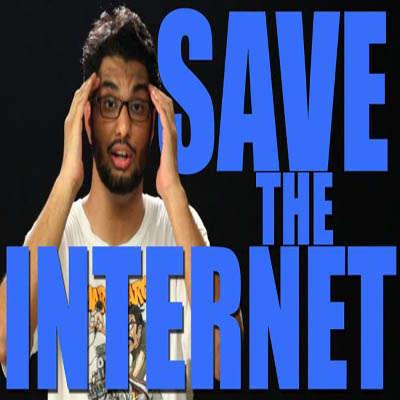
    Net neutrality is something that every taxpayer deserves but no one cares for. It’s often regarded as technical jargon. However, AIB’s “Save The Internet” video has changed the perception and now a lot of people are aware of the impending catastrophe.


    What is Net Neutrality?


    Net Neutrality means every user will have the right to access whichever website she or he wants to. There will be no infringement from anybody and certain websites won’t be given more bandwidth than others. Amazon or The Times Of India, Flipkart or Indiantelevision.com, every website will load at the same speed and that is exactly what Net Neutrality means. And that’s the problem telecom operators have.


    Where it started from:


    Indian telecom operators lobbied to The Telecom Regulatory Authority of India (TRAI) to change certain rules as per their convenience, which would have a direct impact on the consumer’s pocket. TRAI, in response to the telecos on 27 March, released a 118-page long consultation bulletin, which concluded by asking 20 questions. The last date to respond to that bulletin electronically is 24 April, 2015 while all the counter responses can be sent till 8 May, 2015.


    What all can change?


    No, telecom companies are not restricting any particular website so you can be rest assured that another ban is not coming into play. The demand is to access certain genres that users have to pay separately for. The question then arises: What are the users paying the initial fee for?


    The scenario that can emerge from the change is; to access Flipkart, Whatsapp, Facebook or any other established OTT service, one has to separately subscribe for it. The freedom to access any website independently will be infringed upon and the internet, which is probably the only free platform where one can express their opinion, will become a claustrophobic cozy club dominated by big names.


    Who all will face the impact?


    Not only users but the change will also vigorously affect all aspiring entrepreneurs and start-ups. It is easy for established ventures like Flipkart, which is supporting telecom operators, to pay the service providers and ask them to make their app freely available. However, that will leave an impact on the start-ups who don’t have the luxury of cracking a deal with telecom operators. The irony is that when the Prime Minister is delivering speeches in France and Germany about how easy it is to do business in India and sharing aspirations of making the country a global destination for investment, Indian e-commerce startups are on the verge of demolition.


    What did AIB do?


    The stand up comedians came up with a video (Save the Internet) explaining the entire concept of net neutrality. What was lost and diluted in TRAI’s 118 page long complicated bulletin was garnished in AIB’s nine-minute video. The important points were highlighted and the refreshing yet simple explanation that AIB members’ offered in the video added to the appeal and was lapped up by young and old alike. The Net Neutrality jargon thus became a national movement.


    What did AIB’s video do?


    AIB’s video conveys this message – “Internet is not a luxury but a utility.” The video ends with a link, which directs people to the net neutrality home page where all of TRAI’s 20 have been answered in detail. One can simply click to send an email with the pre-written answers or can edit as per their wish. At the time of filing this report, AIB’s video had received 1,132,453 views and more than 100,000 emails had been sent to TRAI through the http://www.netneutrality.in/ website.


    How to join the movement?


    One can be a part of the movement by logging on savetheinternet.in and forwarding the email to the regulatory authority. One can also sign this petition at:https://www.change.org/p/rsprasad-trai-don-t-allow-differential-pricing-… and share it with your friends or write directly to TRAI at advqos@trai.gov.in about their thoughts before 24 April, 2015.


    Conclusion:


    The AIB video witnessed unabated praise across all social media platforms from the common man and celebrities alike. It brought about the necessary awareness in India and made Net Neutrality a national issue. The Internet is a very important part of the civilized world and a major source of information, entertainment and social networking. Net Neutrality is a right of every Internet subscriber and cannot be infringed at any cost. While the issue has managed to become a major talking point, one only hopes that political parties don’t politicize the issue and turn it into vote bank propaganda because Internet without Net Neutrality is like bones without flesh.


  • I want to restore choice and option for consumers, says Netflix’s Ted Sarandos

    I want to restore choice and option for consumers, says Netflix’s Ted Sarandos

    CANNES: For Netflix chief content officer Ted Sarandos this is the golden age of storytelling. Sarandos was giving a keynote on day two of MIPCOM 2014.


    Talking about Netflix and its engagement with the audience, he said, “We have been able to innovate and advance technology that favours the consumer. We have been able to innovate the audience, who are on-demand viewers.”


    Netflix which has 50 million paid subscribers in 40 countries, recently launched in France and Germany. Talking about the viewership pattern Sarandos said, “We have been very encouraged with viewing behaviour in France and unsurprisingly, Orange is the New Black is the most watched show in France and Germany for Netflix, in the first couple of weeks and we are excited about it since the shows have not been previously available in these markets.”


    According to Sarandos, what works for Netflix is the fact that it caters to the desire of people who have heard about shows, but not been able to see it. 


    Netflix offers 70 per cent TV shows and 30 per cent movies, “and that’s the way people watch as well,” he informed.


    On his catalogue being small at the time of launch, he said, “What we launch within a new territory is half of the programming that the territory will have in the next 12 months. And we are literally adding content everyday wherever we launch.”


    For Sarandos, it is each passing day that gives him the idea of the viewing habits of consumers. “So what you see at the launch is what we know pretty much about the market without even being there and then depending on the viewing behavior, we licence content that people want to see.  So it is an intentional move to launch with less content,” he added.


    Netflix also recently launched in Germany and talking about the lessons from the market he said that viewing hours per subscriber was very impressive.


    The platform offers consumers the level of choice that they haven’t seen yet. “So while there are a lot of pre-conceived notions, one needs to have dubbed content while also have subtitled programming.”


    The platform may also have plans for original French production. “We have found large audiences for existing French content around the world already. We have started working with French animation houses for co-productions,” he said while adding that they have already aggregated a lot of audiences around the world for French shows.  

    So is the business profitable overseas? Answered Sarandos, “We are investing continuously in expansion, we want to be a global company. We are at serious investment phase.”


    Sarandos believes that Netflix is a destination for content, for ability to choose and enjoy in one’s own timetable.


    The platform which is now also moving into making movies, but doesn’t get involved in writing the script, aims to be active on distribution. “We pick storytellers and let them tell the stories. We don’t dictate creative storytelling,” he said.


    Netflix doesn’t want to kill windowing, instead wants to restore choice and option. He also touched upon the point of Netflix’s data analytics. “We use the data to help determine the potential size of the show. The ability to invest in the show was because of the data we had. We didn’t use the data to influence the creative of the show,” he clarified. 


    Will Netflix move to sports and news as well? Sarandos quickly said, “It is on-demand that makes Netflix desirable and sports and news are linear events, so we can’t do anything interesting in sports and news right now.”