Tag: Fox

  • “The future depends on how we will balance AI and ML with ethical considerations:” Emmy sound design winner Cory Choy

    “The future depends on how we will balance AI and ML with ethical considerations:” Emmy sound design winner Cory Choy

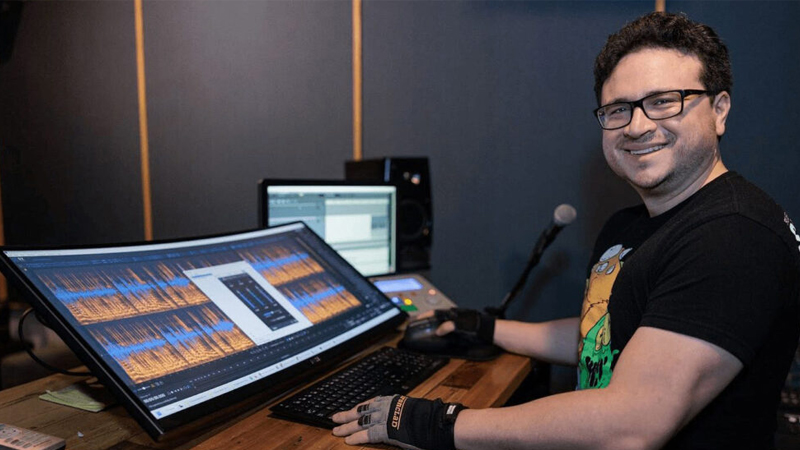
    He is an award-winning sound guy. Sound as in reliable; sound as in to do with audio. Cory Choy and his boutique sound studio Silver Sound Studio, located in the heart of New York City, have made a name for themselves, which is the envy of many others.

    Silver Sound boasts an Emmy award-winning team of on-location sound recordists in New York and Los Angeles. Choy himself picked up the lovely golden lady for his work mixing the sound for a show “Born To Explore.”

    His studio provides recording, design, edit, restoration and mix services and has worked with all sorts of people all over the globe including, but not limited to: ABC, NBC, Vice, Comedy Central, ESPN, Disney, Google, Microsoft, CNN, MTV, FOX, Netflix, Apple, Shudder and Spotify.

    In a wide-ranging interview, the Emmy Award-winning sound artist, engineer and studio owner discusses the evolution of audio technology, creative freedom, and the intersection of art and social responsibility. Here are the key insights from his conversation with Indiantelevision.com group CEO and publisher Mishaal Wanvari.

    On what sparked his interest in sound design.

    It was an inevitability rather than a decision. Both my parents were musicians – my mother wrote plays and operas, while my father combined music with computer programming. One of my earliest memories is watching my mother’s opera being performed at the Kennedy Center. But it was my father who showed me how technology could amplify creativity. He connected a Midi output from the game Monkey Island through a Casio keyboard, making it sound like a full orchestra. He connected a midi through a keyboard with a massive and professional instrument sound bank– which was far superior to the stock soundcard midi instruments. That early demonstration showed me how technology could be used to bring people together… the midi experience taught me that looking for a unique solution and setups can bring great power and creates experiences far beyond what people expect.

    On the evolution of sound editing tech during his career.

    I started at the very end of physical tape editing, where you had to physically cut and splice tape together. There was no undo button – once you made a cut, you had to live with it. The transition to digital audio workstations was revolutionary. Suddenly, all your tape was right in front of you, you could cut anywhere, and if you made a mistake, you could simply undo it.

    The economics were equally transformative. In 2006, a professional Pro Tools system cost around $10,000 – might as well have been a million to me at the time. But then Dell provided affordable, powerful hardware, and I discovered Reaper, which cost just $60. With a $2,500 Dell computer and Reaper, we were competing with studios using much more expensive equipment. Reaper vs. Avid – every single line of code in reaper is very well thought through with a small team, it is very efficient, and the entire program is designed to empower the user not restrict it. There is more freedom and there are more possibilities in Reaper than any other program I have ever used.

    On his Emmy Award win and on his experience thereafter.

    We won it in 2016 for the programme Born to Explore. One of our most impressive achievements was capturing crystal-clear dialogue from a host 200 feet away on a lake, using a highly directional Sanken CS-3E microphone. The water’s surface actually helped carry the sound. What made it special for us was that we won it in a category that is extremely competitive.

    On his Aisha win at the Tribeca film festival.

    It’s a fascinating story that began with an intern application. Fayshyo Aluko, a Nigerian poet with no sound experience, applied for an internship. When I asked why she wanted to work in sound, she simply said she wanted to explore sound design. I gave her a poem I’d written about a Palestinian girl, inspired by my own daughter’s questions about human rights.

    What Fayshyo brought to it was extraordinary – she incorporated traditional Nigerian storytelling techniques, using an oil drum beat as a metaphor for both footsteps and heartbeats. Her first-ever sound design piece won at the Tribeca Festival. It went on to win a Signal Award and an Anthem Award for human rights work.

    On the industry’s relationship with technology.

    The accessibility of technology has been revolutionary. When I started, a gigabyte of storage was massive – Pro Tools required one gigabyte just to install. Compare that to Reaper, which was just two megabytes. The difference? Avid spent their programming efficiency on creating paywalls – $50 here, $100 there, some plugins over $5,000.

    But now, with affordable computers and software, small studios can compete with anyone. Though the challenge isn’t doing the work – it’s finding it. If you’re not in the elite class, convincing someone from that class to work with you is the real challenge.

    On what’s next for sound design and sound mixing.

    We’re at an interesting inflection point with AI and machine learning. The technology is incredibly powerful, but we need to consider the ethical implications. For instance, voice cloning technology could be used for scams or misinformation. The wealth gap in computing power also means some will have access to these tools while others won’t.

    The future of our industry will depend on how we balance these technological capabilities with ethical considerations. It’s not just about what we can do, but what we should do.

    AI is both enabling and potentially corrupting. It’s incredible for tasks like analysing a voice and removing unwanted noise, but it also raises ethical concerns. We can now make someone sound like they’re saying something they never said, with their exact voice. While that’s exciting from a creative standpoint, it’s concerning from an ethical one.

    I have mixed feelings about the cloud-based AI tools emerging in our industry. Tools like Eleven Labs are incredibly powerful, but they raise important questions about access and control. What happens if these services suddenly become restricted based on geography or politics? It’s similar to the wealth gap we’re seeing in computing power – those with access to unlimited energy and graphics cards will have more capabilities than others.

    What’s fascinating is watching how different regions approach these challenges. Chinese engineers, for instance, are often outwitting their American counterparts with fewer resources. It’s not just about having the most powerful tools – it’s about how creatively you use what you have.

    On the way forward for small studios in a competitive market.

    The tools have never been more accessible, but the challenge is standing out in an increasingly crowded space. There are billions of talented people in the world, everyone has something unique to bring to the table, and the competition is fierce while resources are limited.

    However, I believe independent studios have an advantage in being more nimble and able to take creative risks. The key is finding your unique voice and the audience that resonates with it. It won’t be the easiest path, but if you really want to be in this space, you absolutely can make it work.

    And yes, the model has changed completely. At Silver Sound, we’ve evolved from a partnership to a more focused operation. The pandemic really took a chainsaw to the industry in 2020 – many partners and staff left, and we weren’t sure we’d survive. But then I met our current studio manager and latest engineer, both in their 20s, and it gave us new direction.

    Now our mission is to help develop new talent while remaining economically sustainable. We want to create things that make both us and the world better, but in a way that supports everyone financially. It’s about finding that balance between artistic integrity and commercial viability.

    The hardest part isn’t doing the work – it’s finding it. If someone gives me a project and appropriate funding, we can create something extraordinary. The challenge is breaking through that class ceiling where elite-level clients don’t trust smaller studios with significant projects.

    That said, I believe boutique studios have advantages in today’s market. We can be more responsive, take creative risks, and maintain closer relationships with clients. The key is finding clients who value that personal touch and creative freedom over the prestige of a large studio name.

    On his feature film.

    Sound and music are integral to my film Esme, My Love – you really won’t understand the movie without them. We made it for $135,000 total, yet people think we spent £3 million. That was only possible because we had Silver Sound as a home base. It’s now being dubbed into Spanish and Portuguese, with Korean potentially next.

    It’s still an independent gem – not widely known in the United States or globally – but I’m proud that it got distribution. You can find it on Amazon and Tubi. We spent six years working on it, ensuring it didn’t feel like something just slapped together.”

    On his approach keeping in mind the technical versus creative aspects of sound design.

    Technical precision is only a means to an end – creative decision-making is everything. If you don’t have the technical ability to execute your creative vision, then you need to improve technically. The more technical ability you have, the better you understand what’s creatively possible. They feed off each other.

    We offer two modes at Silver Sound: we can either help someone achieve their vision to its highest level possible, or we can work with them to create a vision from scratch. People come to us because they know our technical work is solid, but we provide a creative aspect that many other companies can’t match.

    On how technology vendors have evolved in service.

    I’m particularly grateful to Dell, and this isn’t just corporate speak. In New York City, their ProSupport service has been invaluable. When a computer breaks down in a professional studio, having a skilled repair technician on-site within 24 hours is extraordinary. Finding a reliable repair person independently could take a month.

    However, I’m watching carefully how technology companies position themselves during these challenging times. We need companies that empower creators rather than restrict them. The best technology partners understand they’re enabling creativity, not just selling hardware.

    On what excites him most about the industry’s future.

    The democratisation of technology has opened up incredible possibilities. When I started, the barrier to entry was hundreds of thousands of dollars. Now, with a decent computer and some affordable software, talented creators can produce professional-quality work.

    But what really excites me is seeing how younger generations approach these tools. They’re not bound by traditional workflows or assumptions. They’re combining technologies in ways we never imagined, creating new forms of storytelling. The challenge will be maintaining high creative standards while embracing these new possibilities.

    On advice for aspiring sound designers.

    Do what you love, but understand the economic realities. Unless you join a large company, it’s not an easy path financially. You can live a good life as a sound mixer and designer, but if you’re independent, you need to be a business person as well. If that’s not your strength, find a business partner who can handle that aspect while you focus on the creative work. The competition is fierce and resources are limited, but if you truly want to be in this space, you absolutely can make it work.

    On his belief that media has social responsibility and his willingness to remind it of it.

    Many companies are afraid to take moral stances for fear of alienating potential clients. This year, I’ve made a conscious business decision to openly oppose fascist movements in America. Yes, we might lose some potential clients, but I believe we’ll attract more of the kind of clients we want to work with. You can be moral and ethical, but if you can’t feed your family, it’s no good. However, I don’t want to survive in a way where my soul isn’t surviving.

  • Fox, Disney & Warner Bros Discovery abort Venu Sports

    Fox, Disney & Warner Bros Discovery abort Venu Sports

    MUMBAI: The ambitious Venu Sports streaming service, a joint venture between Disney, Fox, and Warner Bros. Discovery, will not be launching after all.  The only launch  – if you can call it that –  it is having is – out of the window. The decision comes despite earlier indications that the project was moving forward, following the resolution of a lawsuit with Fubo.

    Venu had promised to shake up the sports streaming landscape by combining content from major networks like ESPN, ABC, TNT, and Fox into a single platform for $42.99 per month. However, persistent legal and market pressures ultimately derailed the effort.

    On Thursday, DirecTV and EchoStar signaled the possibility of their own lawsuits against Venu, citing unresolved antitrust concerns that were central to Fubo’s earlier legal challenge. By Friday, Disney, Fox, and Warner Bros. Discovery announced  that they were drawing the curtains on the project in a joint statement:

    “After careful consideration, we have collectively agreed to discontinue the Venu Sports joint venture and not launch the streaming service. In an ever-changing marketplace, we determined that it was best to meet the evolving demands of sports fans by focusing on existing products and distribution channels. We are proud of the work that has been done on Venu to date and grateful to the Venu staff, whom we will support through this transition period.”

    DirecTV, in its own statement, added: “We look forward to working with our programming partners — including Disney, Fox, and Warner Bros. Discovery — to compete on a level playing field to deliver sports fans more choice, control, and value all-in-one experience.”

    Venu was first announced nearly a year ago and was slated to launch last fall. However, a judge halted the rollout after Fubo filed an antitrust lawsuit, claiming the service would unfairly dominate the sports streaming market

    The service aimed to consolidate premium sports content from its parent companies’ linear TV networks, offering fans an all-in-one experience. It had even appointed former Apple executive Pete Distad as CEO to lead the charge. 

    While Venu has been shelved, Disney is still moving ahead with its plans to launch a standalone ESPN streaming service, currently referred to as “ESPN Flagship,” by the end of the summer. Analysts speculate that Fox may eventually license its sports content for inclusion on the new platform.

    This pivot underscores the complexities of navigating legal challenges and evolving consumer expectations in the highly competitive sports streaming market. For now, fans will have to rely on existing platforms to access their favorite sports content.

    (The visual for this story has been generated using Microsoft Designer. No copyright infringement is intended. It is just a depiction of the fate of Venu Sports with the three main partners aborting the venture. And there is no attempt to cause any injury or damage to the reputation of  either Fox, Disney or Warner Bros Discovery or to hurt anyone’s sentiments. In short, there is no malafide intent and no malice is intended either.)

  • TV viewing in the US rises five per cent in November: Nielsen’s The Gauge

    TV viewing in the US rises five per cent in November: Nielsen’s The Gauge

    MUMBAI: It was the month of the election and the results thereafter and then you had some great  sports on air in the month of November 2024. So there’s no prizes for guessing that it was the month that the residents of Uncle Sam stayed glued a lot more to their TV sets to set a few viewing records.

    The results from viewing monitor Nielsen’s The Gauge report bear this out. Time spent watching TV in November reached a nine-month high, according it, as viewing levels increased five per cent compared to October to record the largest monthly viewing total since February.

    TV viewership in the November interval was impacted primarily by sports, the presidential election and live streaming, all of which drove peak shares of TV for viewing categories each in separate weeks this month. Additionally, as this interval ended on November 24, the typical Thanksgiving holiday surge in TV viewing will be included in the December report of The Gauge.
     

    Nielsen's viewership pie

    Broadcast viewing in November was up three per cent and accounted for 23.7 per cent of time spent watching TV. The first week of the interval was the most dominant for the broadcast category as it featured Games 3, 4 and 5 of the MLB World Series on Fox, in addition to the usual slate of NFL and college football games.

    The final three World Series games totaled over 10 billion viewing minutes combined, and the Dodgers’ victory over the Yankees in the Game 5 conclusion drew 18.2 million viewers to make it the sixth most watched broadcast telecast this interval. This more concentrated week of broadcast sporting events lifted the category to a peak share of 24.9 per cent of TV in the first week of the month, and helped increase broadcast sports viewing by 34 per cent over October.

    Coverage of the presidential election drove viewing increases in the second week of the month, most notably for cable. While cable ultimately finished with a 25  per cent share of viewing in November, its share during the week of the election jumped to 26.5 per cent of TV with much of the increase attributable to cable news. Interestingly, cable news viewing was up just one per cent on a monthly basis, but climbed from 36 billion viewing minutes to 48 billion viewing minutes between weeks one and two (+32 per cent) to give it the boost in share.

    Viewership on TV

    Streaming viewership increased 7.6 per cent in the November interval and the category posted a record share of TV with 41.6 per cent  (+1.1 pt.). Some of this increase can be attributed to viewers seeking solace from the atypical, election-fueled news cycle covered by many traditional TV networks, and was also illustrated by the streaming category reaching 42.6 per cent of TV viewing during the third week of the interval.

    Moreover, Netflix also exhibited peak viewership during week three when it hit 8.5 per cent of TV (compared to its overall monthly share of 7.7 per cent). This peak for Netflix coincides with the live-streamed Jake Paul vs. Mike Tyson boxing match, and was also fueled by viewing to its original series The Lincoln Lawyer, which was the most watched streaming program this interval with 3.9 billion viewing minutes.

    There were also three streaming services that notched platform-best shares of TV in November, including The Roku Channel (up 12 per cent to 1.9 per cent of TV), Prime Video (up 10 per cent to 3.7 per cent of TV), and YouTube, which secured a new category record with 10.8 per cent of TV. Peacock, while short of its Olympics-driven platform record, still drew the largest monthly increase among streamers for 1.5 per cent of TV (+0.2 pt.). Peacock’s considerable increase was partially due to Despicable Me 4, which drove 1.5 billion viewing minutes and a 58 per cent increase in kids viewing on the platform.

  • Murdoch loses family trust case in Nevada

    Murdoch loses family trust case in Nevada

    MUMBAI: This is one battle he lost but he says he intends to fight it. 93 year old media baron Rupert Murdoch is one tough guy. Even at his age.

    He wanted to change the family trust, which gave his  four children equal voting rights to his empire, so that control would vest in his eldest son Lachlan’s hands who shared his right wing political beliefs. But he lost the case over the weekend when a Reno-Nevada probate commissioner  ruled against him and said he was acting in bad faith, when he tried to change the terms of the irrevocable trust and leave Lachlan in charge. 

    Murdoch owns 40 per cent of the voting stock in both Fox Corp and News Corp through the trust.  Upon his death James, Elisabeth , Lachlan and Prudence were to share control  of the trust equally. But the old man  wanted to change the terms of the trust  and put Lachlan, the CEO of Fox and chairman of News Corp  fully in charge upon his death. This was something his other children were not inclined to.

    Hence, they took their father to court in Nevada which was a probate court and was not open to the public. Earlier, a probate commissioner had told Murdoch senior that he could change the terms if what he was attempting to do was in good faith and in the best interests of his heirs. Murdoch senior had argued that were his other three children – Prudence, James and Elisabeth – to have voting power, they  would lean towards making his news outlets moderate which would harm their prospects as it would alienate the hard right wingers who supported it. 

    But the trio did not buy into this as they felt they would be left out and took their father and brother to court in Nevada. A case they won, following which they are now saying they would like mend and heal family relationships. 

    However, the family feud does not seem to have ended as the elder Murdoch said he was going to appeal against the probate commissioner’s decision.

  • Merzigo renews digital content monetization agreement with FOX

    Merzigo renews digital content monetization agreement with FOX

    Mumbai: Merzigo which is operating as a cutting-edge technology and monetization company, has extended its partnership agreement with the national television channel FOX in Turkiye, owned by The Walt Disney Company Turkiye.

    The agreement has been renewed for the next three years. According to the agreement, all of FOX’s channel content portfolio will be managed on digital channels, under the responsibility of Merzigo.

    Commenting on the partnership with FOX, Merzigo chairman Yigit Dogan Celik stated, “We have been collaborating with FOX for a considerable time. The extension of our agreement once again demonstrates the productivity and trust that underline this collaboration for both parties.” 

  • Scale is important; has to be focused right: Fox executive chair & CEO Lachlan Murdoch

    Scale is important; has to be focused right: Fox executive chair & CEO Lachlan Murdoch

    Mumbai: Addressing analysts during a conference call to announce the company’s Q1’23 results, Fox executive chair & CEO Lachlan Murdoch spoke about the importance of scale. Fox’s assets include the juggernaut Fox News. Fox posted revenue of $3.19 billion, up 5 per cent a year ago.

    “Look, I think you know the scale; it has to be focused right. Scale is important, and what we’ve seen amongst our media peers over the last few years is that our peers are getting bigger through mergers and acquisitions (M&A), and so I think scale lends flexibility in many ways. So, we continue to grow our business, we continue to look at M&A and be very disciplined in how we look at it, but we also do look at the importance of scale, particularly over the next couple of years when, I think, opportunities in the marketplace will emerge. They have the scale to be flexible, and how we deal with them will be important,” he said.

    In terms of a potential reunion of Fox and News Corporation, Murdoch declined to take questions. “As has been made public, both Fox and News Corporation have formed separate special committees to explore a potential combination following letters received from my father, Rupert Murdoch, and the Murdoch Family Trust. For a combination transaction to proceed, it will need the approval of both special committees and a supportive vote by the majority of the minority non-affiliated shareholders of each company.”

    He added, “The special committee has not made any determination at this time, and there can be no certainty that the company will engage in such a transaction. Given the importance of the work of the special committees, I’m not in a position to take any questions on the proposed transaction at this time.” 

    Murdoch pointed out that the company’s fiscal year is off to a good start. “The September quarter results once again highlight the strength of our leadership brands, and we are just getting started on what promises to be a banner year for Fox. We are encouraged by the operating trends across the portfolio and the early returns on our digital investments. When paired with our strong balance sheet and low leverage, the Fox story remains a differentiated one amongst its media peers. And while we continue to be mindful of how the macroeconomic environment evolves during the months ahead, Fox remains well positioned to navigate and outperform through any potential uncertainty.”

    Talking about the ad scene, he said that the ad growth in the quarter was driven by strong pricing at Fox News and Fox Sports. “Record first quarter political revenues at the local stations, and in a quarter where industry-wide digital advertising revenues appear to have been under pressure, to post standout revenue growth of almost 30 per cent.”

    He added, however, that the company recognises that there is a lot of commentary around advertising headwinds as the macro environment evolves. “Yes, the broader national advertising market is looking more fluid compared to the time of our last earnings call. However, the macro impact is not uniform across our verticals.”

    “We have observed some softness in the linear entertainment scatter marketplace. Remember that Fox does not over-index to network entertainment. So, any impact there is, is nominal to us and has been more than offset by the digital entertainment strength delivered by Tubi,” he went on.

    Murdoch said, “Additionally, despite the economic headwinds, we are seeing continued strength across our linear news and sports portfolios, led by the pharmaceutical, restaurant, and streaming categories. These dynamics underscore a flight to quality, and the importance of our focus on live content, with over two-thirds of our advertising revenue generated by live sports and news.”

    Fox News, he noted, turned in another stellar performance, finishing the fiscal first quarter as the number one channel on cable and the third most viewed network in Weekday Prime in all of television, behind only NBC and CBS.

  • Fox renews season 13 of cooking competition series ‘Masterchef’’

    Fox renews season 13 of cooking competition series ‘Masterchef’’

    Mumbai: US broadcaster Fox has renewed its cooking competition series Masterchef for a 13th season. The judges are chef and executive producer Gordon Ramsay, chef Aarón Sánchez and restaurateur Joe Bastianich.

    According to the broadcaster, the show has 4.7 million multi-platform viewers on average, a +108 percent increase from the same day on Live+. The show, expanding to two hours on 17 August 2022, has led Fox to two consecutive Wednesday night wins among adults 18-49.

    Produced by Endemol Shine North America and One Potato Two Potato, the format of the series was created by Franc Roddam. Ramsay, Elisabeth Murdoch, Danny Schrader, Pat Llewellyn, Ben Adler, Sharon Levy, and DJ Nurre serve as executive producers of Masterchef.

    The show is now casting for talented amateur cooks from all types of backgrounds and with a range of cooking styles. Aspiring chefs can visit www.masterchefcasting.com for eligibility rules and other terms and conditions. People must be 18 years old or older as of 1 January, 2023.

  • Fox’s fiscal revenue up by 8% to $13.97 bn

    Fox’s fiscal revenue up by 8% to $13.97 bn

    Mumbai: Fox reported total full-year revenues of $13.97 billion, an increase of eight per cent from the previous year’s $12.91 billion. Affiliate fee revenues increased by seven per cent, with a 10 per cent increase in the television segment and a five per cent increase in the cable network programming segment. Ad revenues increased nine per cent, primarily due to higher pricing at Fox Sports and Fox News Media, continued growth at Tubi and the return of a full schedule of live events at Fox Sports. These ad gains were partially offset by lower political ad revenues. Other revenues increased by 15 per cent, owing primarily to higher sports sub licensing revenues and Fox Nation subscription revenues in the cable network programming segment, as well as the impact of entertainment production company consolidation in the television segment.

    The company reported a full-year net income of $1.23 billion as compared to the $2.20 billion reported in the prior year. Full-year adjusted Ebitda was $2.96 billion, down from $3.09 billion the previous year, as revenue increases were offset by higher expenses. The increase in expenses primarily reflects increased digital investment at Tubi and Fox News Media, costs associated with the launch of the USFL, and higher programming rights amortisation associated with normalised sports and entertainment schedules that were impacted by Covid-19 in the prior year.

    Fox executive chair and CEO Lachlan Murdoch said, “We completed another successful year at Fox, with fiscal 2022 results demonstrating the strength and durability of our core brands and their ability to deliver consistent audiences across the entirety of Fox. These results validate the strategy we embarked on three years ago – to focus on live news and sports while investing in high-growth digital initiatives to create a platform for ongoing growth. We begin fiscal 2023 with strong momentum, supported by an enviable schedule of live sporting events and the midterm election cycle, and bolstered by a best-in-class balance sheet. These attributes will serve us well in navigating any macroeconomic uncertainty while continuing to create value for our shareholders.”

    The company reported total quarterly revenues of $3.03 billion, a five per cent increase over the $2.89 billion reported in the prior-year quarter. Affiliate fee revenues increased by four per cent, with seven per cent in the television segment and two per cent growth in the cable network programming segment. Ad revenues increased by seven per cent, primarily due to higher pricing and ratings at Fox News Media, higher political advertising revenues at the Fox Television Stations, and continued growth at Tubi. Other revenues increased by four per cent, primarily due to the impact of the consolidation of entertainment production companies and higher Fox Nation subscription revenues, partially offset by the timing of sports sublicensing revenues.

    The company reported a quarterly net income of $308 million as compared to the $272 million reported in the prior year’s quarter. Quarterly adjusted Ebitda increased by seven per cent to $770 million from $717 million in the previous fiscal year, owing primarily to increased contributions from the television segment.

  • Roku unveils Advertising Watermark to protect from ad spoofing

    Roku unveils Advertising Watermark to protect from ad spoofing

    Mumbai: Roku Inc on Thursday announced its Advertising Watermark free technology to help advertisers and publishers validate the authenticity of video ads originating on the Roku platform. Touted as the industry’s first authentication solution built for TV streaming, Roku’s Advertising Watermark gives marketers the confidence that their advertising spend is reaching real Roku users.

    “Today, device spoofing occurs when scammers pretend that a desktop or mobile device is a TV streaming device. Roku’s Advertising Watermark integrates with the Roku operating system to automatically verify publisher ad requests and impressions so that advertisers know they are reaching genuine Roku users,” said the statement. “While ad spoofing in TV streaming remains rare, this technology will help the industry deter bad actors and improve ad effectiveness.”

    Ad technology providers integrating Roku’s Advertising Watermark at launch include Basis Technologies, Google, Human, Innovid, and Magnite. Publishers using Roku’s Advertising Watermark to sell their own ad inventory include Discovery, Fox, and more. Additionally, OneView by Roku will be the first ad buying platform to offer ad inventory automatically validated by Roku’s Advertising Watermark.

    “As America’s top TV streaming platform, we are uniquely positioned to help the industry preempt device spoofing,” said Roku VP of product management Louqman Parampath. “This is powerful and free technology that will help advertisers accelerate their shift to TV streaming with even more confidence.”

    Human co-founder and CEO Tamer Hassan remarked, “Roku is moving the industry forward with a solution that combats spoofing across the ad supply chain before it becomes a major issue. Together in partnership with Roku, we are creating a collectively protected ecosystem that brings even more trust and quality in a world where all TV will be streamed.”

    “Roku’s Advertising Watermark assures our advertiser clients that they are buying genuine Discovery inventory on Roku devices. We’re excited that Roku has brought its data, operating system, and ad technology together to easily prevent ad spoofing,” added Discovery VP – programmatic solutions Bill Murray.

  • Discovery Inc invests in advanced TV ad company OpenAP

    Discovery Inc invests in advanced TV ad company OpenAP

    Mumbai: Discovery Inc has joined FOX, NBCUniversal, and ViacomCBS to buy a minority stake in OpenAP, the advanced advertising company which is working on a goal to “bring simplicity and scale to audience-based campaigns in television. The decision comes as media companies worldwide look for improved ways of audience measurement.

    The joint venture created by several media industry giants, centralises data activation on behalf of premium national TV publishers, bringing efficiency and scale to audience-based campaigns.

    The recent announcement furthers Discovery’s strategy of building a technical framework that enables cross-platform audience-based buying and creating collaborative support for alternative currency standards, it said in a statement. The factual-life entertainment giant will join OpenAP’s board of directors with chief US Advertising sales officer Jon Steinlauf, and executive VP digital ad sales and advanced advertising Jim Keller, both representing the company.

    “Discovery is excited to take an active role shaping the future of advanced audience buying,” said Discovery’s executive VP digital ad sales and advanced advertising Jim Keller. “Given our current momentum, influence, and growth of audience-based sales, we believe Discovery can help further the work OpenAP has been doing to initiate meaningful change in the market.”

    The investment signals an expansion of Discovery’s existing relationship with OpenAP, having integrated with the central TV identity spine, OpenID in April last year, and more recently partnering with OpenAP on the launch of XPm, the publisher-backed cross-platform measurement framework. For OpenAP, it will help further its ability to grow the overall market for audience-based advertising and expand the breadth and scale of its services across cross-platform identity, measurement, and planning.

    “Discovery has long been a pioneer of TV entertainment with its iconic portfolio of content and direct-to-consumer experiences people love. The last two years have demonstrated the force of change that can happen when we take an audience-first approach to reimagining TV advertising for media owners, advertisers, and consumers alike,” said OpenAP CEO David Levy.

    In a joint statement, FOX senior VP, data strategy and sales innovation Dan Callahan, NBCUniversal president, and chief business officer Krishan Bhatia, and ViacomCBS COO – advertising revenue John Halley at ViacomCBS, stated that Discovery’s commitment further validates OpenAP’s mission and builds on the success and scale of our collective organisations work to build a more advanced model for TV advertising that focuses on audiences.  “OpenAP has been a catalyst for bringing programmers and marketers together to change the model, and we’re proud to now have Discovery join us to accelerate these efforts,” they added.