Tag: founder

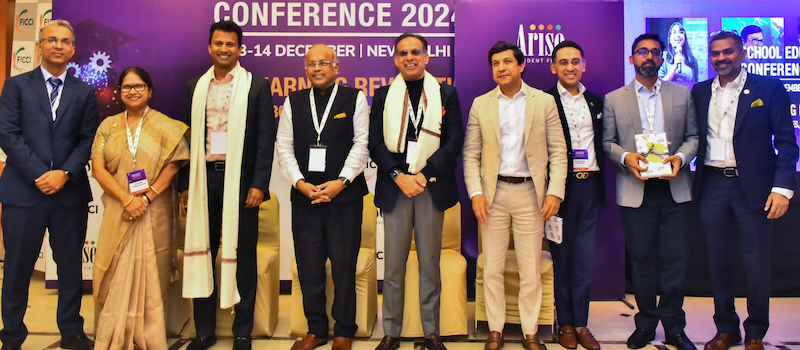
  • Arise  unveils new governing  body for 2025

    Arise unveils new governing body for 2025

    MUMBAI: The Association for Reinventing School Education (Arise) has introduced its governing body for 2025 during its first annual general meeting (AGM) held at Ficci  on 13 December 2024. Attended by members from across the nation, including the Arise board, state chairs, and representatives from Ficci, the meeting focused on the announcement of the new leadership team.

    The newly inducted members of the ARISE Governing Body are:
    –  . Praveen Raju  – Founder of Suchitra Academy and president of Arise
    –  . Arunabh Singh  – Director at Healthy Planet TGA and Nehru World School, senior vice president of Arise
    –  . (Ms.) Silpi Sahoo  – Chairperson of Sai International Education Group, vice president of Arise

    –  . Vardan Kabra  – Co-Founder and Head of School at Fountain Head School, vice president of Arise
    –  . Vedant Khaitan  – Vice Chairperson of Khaitan Welfare Foundation, vice president of Arise

    Additionally,  . Prabhat Jain , Director at Pathways World School, will assume the role of immediate past president for 2025.

    In his farewell speech, outgoing president   Shishir Jaipuria commended   Jain’s leadership, noting his pivotal role in transitioning ARISE into a robust entity with an operational secretariat aimed at enhancing the school education landscape in India.   Jain stated, “Arise  has been at the forefront of significant reforms in the education sector, laying the groundwork for its future as a leading voice for school reforms.”

    Incoming President   Praveen Raju expressed gratitude and a commitment to progress: “I am honored to lead Arise in 2025. Our members are forward-thinking, and with the support of the secretariat, we will work diligently to elevate Arise  to new heights.”

     Raju was welcomed by   Manit Jain, Co-Founder of Heritage Schools and Director at Arise , with coordination by   Vinesh Menon, Director General & CEO of Arise.

    Founded in 2016 and reconstituted as a not-for-profit independent chamber in March 2024, Arise is dedicated to transforming K-12 education in India, providing a platform for collaboration, research, and advocacy for policy reforms to foster holistic student development.

  • Meta lays off 11,000 employees which equals 13% of its workforce

    Meta lays off 11,000 employees which equals 13% of its workforce

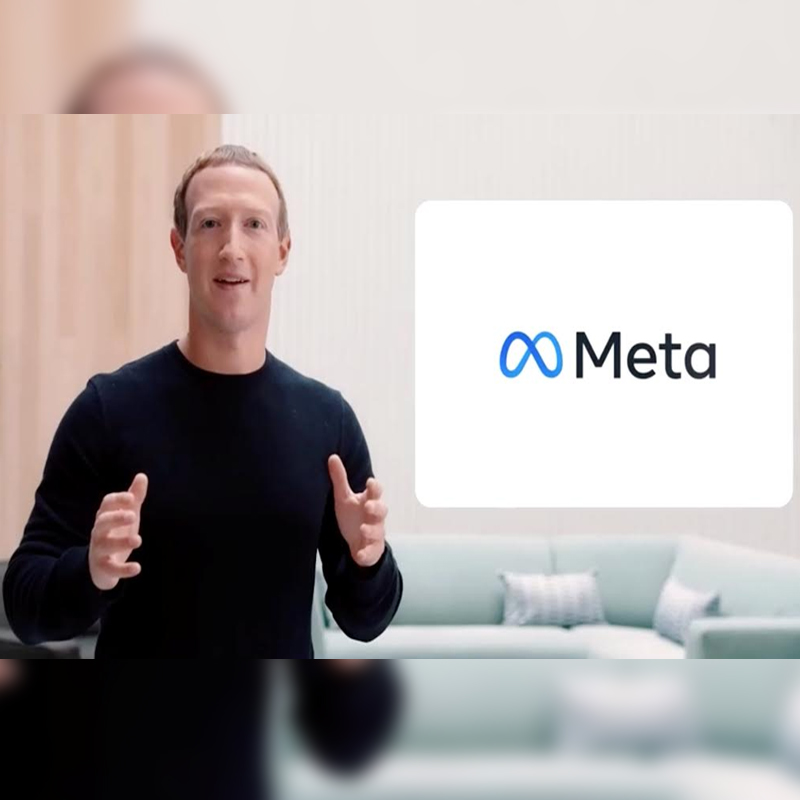
    Mumbai: Meta CEO Mark Zuckerberg has sacked about 11,000 employees, which is about 13 per cent of the company’s workforce.

    As per media reports, in an official statement, Zuckerberg said, “Today I’m sharing some of the most difficult changes we’ve made in Meta’s history. I’ve decided to reduce the size of our team by about 13 per cent and let more than 11,000 of our talented employees go. We are also taking a number of additional steps to become a leaner and more efficient company by cutting discretionary spending and extending our hiring freeze through Q1.”

    This is considered to be one of the largest layoffs in the US this year. As of September, Meta employed over 87,000 people across the globe.

    As stated in media reports, Zuckerberg informed employees on Tuesday about the job cuts. The social media company is looking at slashing costs after its feeble Q3 performance and due to the rise in the overall costs of the firm by a fifth in the previous quarter.

    He added, “I want to take accountability for these decisions and for how we got here. I know this is tough for everyone, and I’m especially sorry to those impacted.”

    This mass firing comes some weeks after one of Meta’s largest shareholders, Altimeter Capital, wrote to Zuckerberg highlighting the need to cut costs at the company.

    In an open letter, Altimeter Capital founder & CEO Brad Gerstner mentioned, “Meta has drifted into the land of excess—too many people, too many ideas, too little urgency. This lack of focus and fitness is obscured when growth is easy, but deadly when growth slows and technology changes.”

    He had suggested that Meta would have to cut jobs and reduce capital expenditure to stay on track. This comes at a time when the social media firm is struggling with the current economic slowdown.

    The social media company, Twitter, under the new reign of Elon Musk, laid off a hefty number of employees across its offices. Biggies like Amazon, Google, and Microsoft have also announced a freeze in hiring.

  • GUEST ARTICLE: How do small businesses get benefited through influencer marketing?

    GUEST ARTICLE: How do small businesses get benefited through influencer marketing?

    Mumbai: Influencer marketing is not always about celebrities endorsing goods and services for big brands. In fact, the new way of marketing in the digital world is accessible to anyone, regardless of the business’ size.

    Marketing and brand promotion are major factors, even for small businesses and start-ups. One of the most effective ways to do promotion on social media is to involve influencers. Some are still sceptical about influencer marketing as they think it’s costly, or they simply don’t know where to start or where to look for the best suitable influencer. The truth is that it’s the other way around: small businesses can actually benefit a lot from influencer marketing.

    How can micro-influencers contribute?

    Micro influencers are content creators with an online community of 10,000 to 100,000 followers. Their follower count might seem inadequate compared to celebrity influencers, but the dedicated social following of micro-influencers has proved to be quite effective, mainly for small businesses. Micro-influencers have a more active and focused audience. Promoting your brand or business with the suitable micro-influencer will provide adequate visibility and help improve business.

    1. Micro-influencers are the right choice for promoting small-scale businesses, as they are more effective than celebrity influencers.

    2. Micro-influencer campaigns are cost effective and easy to start or handle.

    3. They have a strong and focused niche audience, hence, the brand gets relevant social interactions.

    Why should small businesses partner with influencers?

    There are many reasons for start-ups to stake their claim in the creator economy. From increasing profits to accelerating brand awareness, the possibilities are endless.

    Make your brand stand-out and share your story

    It doesn’t matter if you have a lot of competition or lack proper brand awareness, social media influencers can help a lot in introducing your brand or business to the market and explaining the benefits of doing business with you.

    Influencers are excellent storytellers, that’s why people love their content. They can use the same storytelling skills to promote your business in a meaningful manner. People are able to retain more data when they receive it through stories. Influencers are the best option to share your brand story and make you stand-out among your competitors.

    Return on marketing investment

    Spending money on marketing and not acquiring increased sales is a hard time for every marketer and company. Influencer marketing, on the other hand, is a proven and effective strategy to reap the benefits of a return on marketing investment.

    When you are a small business, you lack the budget to try out different marketing strategies. Hence, trying a strategy (influencer marketing) that is already proven gives you a substantial return. It’s a worth trying strategy for small businesses when there is a promised return on marketing investment, or ROI.

    Brand Authenticity

    Brand authenticity is the kind of trust every business desires. For small businesses, it takes time to build trust. The best way to track trust-building is to ensure that your customers see your brand or business as authentic. Choosing any influencer isn’t enough. Partnering with the right influencer who aligns with your business niche will only make the brand authentic.

    People will no longer trust the influencer or brand if the endorsement seems inauthentic. Proper influencer marketing can help build third-party credibility and trust with an audience looking for resources from your market.

    Visible and Cut Through the Noise

    Traditional ads have become annoying for digital natives. That’s the reason most users block ads. Ad blocking makes surfing easier and more comfortable, but it’s not so comfortable for advertisers. Even if a consumer or user is interested in your product, they might never get to see the ad just because their ad blocker kicked it out or they are overloaded with content.

    Influencer marketing comes into play in this scenario. If the user sees an influencer they like promoting your product, they will definitely watch it. Social media is run by the opinions of its network, which includes influencers. So if you choose an influencer who loves your product, their customers will know that the product is worth checking out. When influencers share your brand story, their network of followers will get familiar with your business, and the more their content engages, the greater your customer acquisition.

    Influencer marketing is affordable, effective, and, moreover, worth the investment. You are bound to find impactful brand ambassadors and spokespersons when you start doing purposeful influencer research online.

    The author of this article is My Haul Store founder & CEO Abhishek Vyas.

  • A human appeal + a priced blue tick verification: Elon Musk’s evolving Twitter strategy

    A human appeal + a priced blue tick verification: Elon Musk’s evolving Twitter strategy

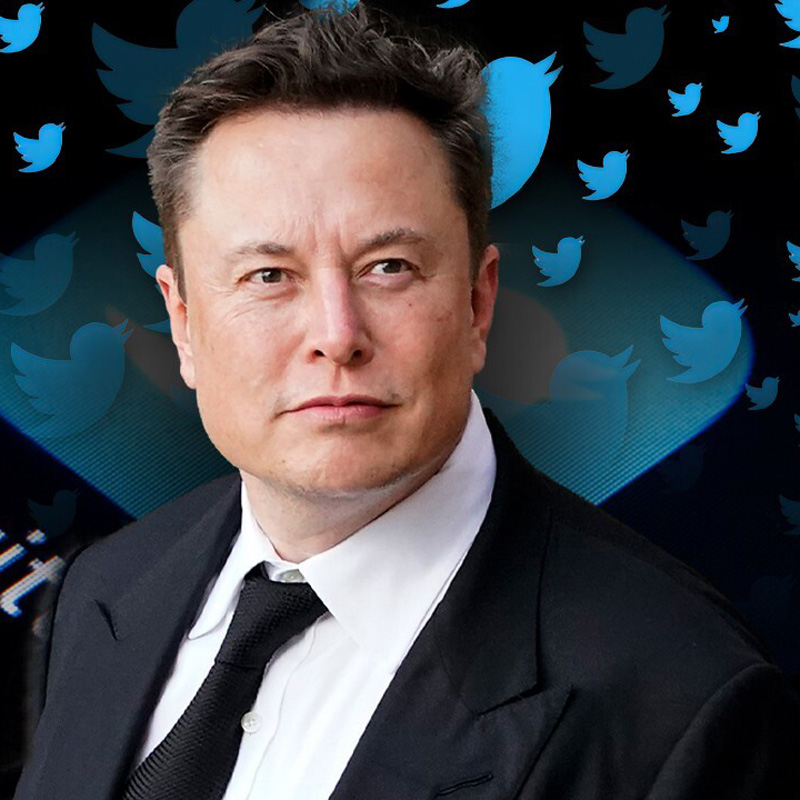
    Mumbai: Business baron Elon Musk has caught the world in a frenzy with the daily evolution of his Twitter strategy.

    From entering the social media company’s headquarters with a sink in his hand, his human appeal to advertisers on Twitter, him firing senior executives from the company since day one of his takeover, forming a content moderation council for Twitter, suggesting to charge a $20 fee for verification to becoming the sole director at Twitter after firing the board of directors and finally proposing a price tag of $8 for a blue tick verification on the social media portal – Musk has changed the face of Twitter drastically within the last week.

    One could only wonder what else the social media company has to go through under Musk’s reign. In a confab with industry veterans, I set out to explore the nitty gritty of Musk’s appeal to advertisers, wherein he claims that he wants to use the social media platform for the betterment of humanity, and also the blue-tick verification priced at eight dollars, which has led to a storm of reviews across the advertising fraternity.

    Discussing the human plea that Musk has made to advertisers, it’s an obvious point to ponder what could be going on in the minds of the several advertisers/brands that take to Twitter for their publicity purposes. Madison World vice president Kosal Malladi understands that Musk is a businessman at the end of the day. “He has said all the right things, but the intention is clear. How will he show better ads unless he collects more data? And collecting more data will mean more control over what people say. And this will mean having the power to veer conversations either towards the right or left basis of your agenda,” he brings out.

    Tonic Worldwide CEO Chetan Asher emphasises, “Advertisers are watching the developments at Twitter with keen interest. But it is too early for them to react to his appeal. His actions in the next few days in making Twitter advertiser-friendly will matter more than any appeal.”

    Thought Blurb Communications founder and chief creative officer Vinod Kunj seconds Asher’s opinion, he thinks that the overall sentiment among advertisers is “wait and watch.” He points out, “Musk’s public statements of purpose and actual actions seem to be surprisingly at odds with each other. The troubles of social media have always been about self-editing or the lack of it, quite unlike professional media. Freedom of speech is all very well as long as it is regulated by a mature journalistic authority. That is flagrantly absent in social media, hence the series of crises attributed to these platforms over the years.”

    Restricted brand opinion/advertising or not?

    Needless to say, the natural question pops up in the mind: Would this human appeal restrict a brand’s opinion or a brand’s advertising in any way?

    Malladi refutes that this could impact a brand’s advertising in any way. “In today’s world, a brand is always very careful about the opinion it puts out. At this stage, human appeal will in no way change the way we advertise. A brand will continue to be careful until such a time where opinions do not have a direct and immediate negative repercussion on its sales,” he clarifies.

    Asher feels otherwise. “While he assured the advertisers in his note that Twitter cannot become a “free-for-all hellscape,” brands will take a cautious approach as it’s not clear what his plans for moderation are. The fact that he has hinted at tweaking the advertising model on the platform also adds to the confusion,” he points out.

    Kunj feels that it puts the onus of caution on the brand. He says, “With one sweeping stroke, advertisers will have lost the ability to control the quality of discourse in the conversation. On one hand, brands actively seek out reviews, opinions, and experiences from customers. Twitter allows us to respond to issues in real-time.”

    “But there have always been issues that Twitter has been able to clamp down on. Fashion brands can face the brunt of sexist comments, and lifestyle brands have come under heated fire from conservative thinking. And then there is always the incipient fear that customers will turn on each other with opinion clashes leading to personal attacks,” he adds.

    Sensible step or not?

    Also, as part of this discussion, is this human appeal a sensible step taken by Musk with the thought of helping advertisers not get off the platform and to avoid any kind of extremist views on it?

    Malladi thinks that the problem Twitter has been facing due to its “lack of control” is that advertisers have started seeing it as a negative platform. Two factors will play an important role in attracting advertisers. One, is the overall “negativity” going down on Twitter? And second, is there enough of your audience on Twitter?

    “Point number one is under Musk’s control. But in the process, he needs to ensure that people do not leave the platform. In fact, he needs to figure out a way to grow the base. If that happens, brands will advertise. Sensible step or not, only time will tell,” he specifies.

    Kunj chooses to give in to cautious optimism. He elucidates, “I don’t imagine this allows advertisers to be more or less free. Advertising communication will always cater to the centre of the mean. It doesn’t help to cater to the fringe. If and when the fringe becomes the norm, things might change.”

    The human appeal – good or not?

    Speaking about whether he is in favour of human appeal or not, Malladi is of the opinion that, as a business, Musk needs to change the narrative of Twitter. So he has taken the logical step. Further, he says, “We can find loopholes in his appeal, see through his appeal, but the intention is clear. And he will need to make a few more such statements and eventually show some real change for brands to start getting really comfortable.”

    Giving a thumbs up to the human plea, Asher is of the view that Musk recognises that advertising is the fuel that is vital for Twitter, and hence the outreach to allay the fears, and was a move in the right direction.

    Kunj explains, “Advertising has always tried to push boundaries. Sometimes we get it right, but not always. The further we stretch the band, the greater the chance for it to snap. It’s like advertising underwear. There is a thin line between flirty-sexy and downright obscene. It’s that notional thin line that we never cross. Musk’s appeal may be to persuade advertisers to go ahead and cross it anyway.”

    Blue tick verification at $8

    The blue tick verification has been priced at eight dollars, and this fee applies only to USA-based Twitter users. Musk stated that the membership fee would vary in different countries according to the respective nations’ purchasing power parity. What does this entail for advertisers/brands, content providers, and obviously the users of Twitter? Malladi fathoms that it makes it much easier for anyone to get a blue-tick verification now. “These users/brands get additional benefits. In a way, blue tick seems to be a subscription model, hence an additional revenue stream for Twitter. Brands will also get even more audience understanding, and hence the ability to target better,” he describes.

    On the contrary, Kunj of Thought Blurb Communications feels that this makes absolutely no sense. This is like a bank charging you for KYC every month. Or the government charging you a monthly fee on your passport to accept that you are a citizen. There is no call for it. “Either I am who I claim to be, or I am not. This doesn’t change by the month. Unless Musk intends to make Twitter subscription a tradeable commodity, which might be a whole different bag of beans,” he suggests.

    Blue tick verification at $8 – yay or nay?

    In the whole scheme of things that is taking place, what could be the advantages and repercussions of pricing the blue-tick verification at eight dollars? Malladi senses that people will get an opportunity to easily flaunt the tick, until the point it no longer has a flaunt value. “Musk said that he wants to break the loads and peasants system where only lords get the blue tick. I am not so sure if that is his real motivation. Audience segmentation will be a real benefit for Twitter,” he cites.

    Asher elaborates, “Blue tick will obviously help in reducing spam on the platform and will also allow advertisers to do qualitative advertising to users who are invested in the platform. Musk has also talked about reducing the number of ads for users and this ties in with advertisers getting the opportunity to target small but qualitative users.”

    Kunj feels the opposite and imagines that a lot of celebrities and personalities will walk off immediately. That makes Twitter a platform for commercial and showbiz personalities only. “I don’t imagine a brilliant thinker, serious journalist, or upcoming artist using this platform as it was originally meant to be. There is no reason for anybody to pay every month for the pleasure of being authenticated,” he says, making his point.

  • lDBF 2022: Content marketing to become an extremely powerful tool for brands in future

    lDBF 2022: Content marketing to become an extremely powerful tool for brands in future

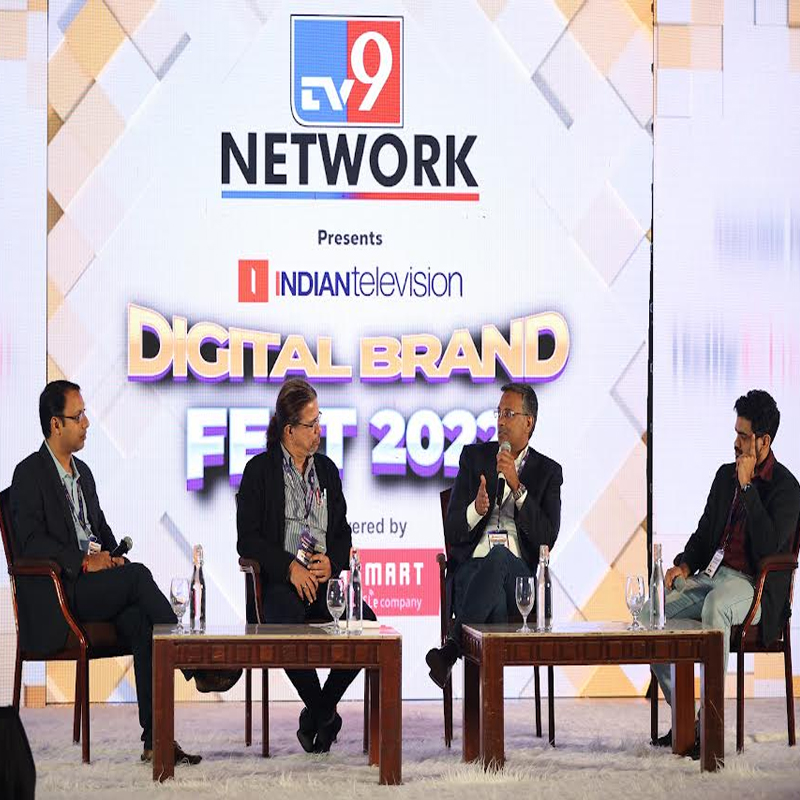
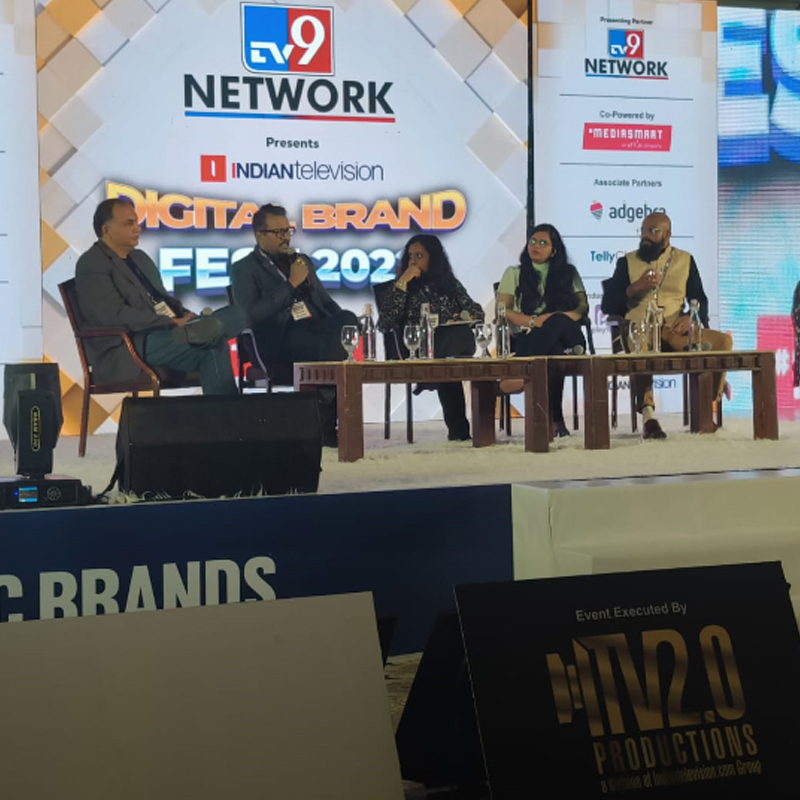
    Mumbai: The second edition of the Indian Digital Brand Fest (IDBF) 2022, which took place on 12 October at ITC Maratha, Mumbai, ran an intriguing panel discussion on the topic “Content Marketing for Web 3.0,” which brought together minds and thoughts on how content marketing is going to be the next big thing and how essential it is going to become to understand the consumer.

    The session was chaired by Indiantelevision.com Group founder, CEO & editor in chief, Anil NM Wanvari.

    Beginning the session and putting things into perspective with the topic of web 2.0, TV9 Network managing editor R Sridharan said, “If you look at the innovation that has happened in web 2.0 is far greater than what we saw much before. Earlier it was static content, then in web 2.0 we saw that it allowed people to interact with content like becoming a publisher on Twitter, Facebook. It became richer in many ways. In that way web 2.0 has done an incredible job in making content an integral part of marketing for every chief marketing officer (CMO).

    “More than advertising, content marketing is important, and for that web 2.0 has done a great job. Web 2.0 has been a great learning experience from a content marketing perspective,” he added.

    However, Madison India vice president Kosal Malladi was of the view, “We have done a job in content marketing, but have we done a good job? I’m not so sure. When content marketing started, we thought that the end consumer wanted to know everything, so initially the content marketing was quite bad. We are getting better; it’s an ongoing learning process.”

    “We got to understand that if there’s too much content and information being bombarded on the consumer, then that’s also a problem,” pointed out HDFC ERGO General Insurance vice president marketing Alok Bhargava.

    Talking about the onset of web 3.0, Sridharan brought out, “No one knows how it’s going to pan out, but some things are very apparent and obvious. Firstly, on the content side, it is going to become far more immersive, and secondly, it’s about privacy. These things are going to change the game, and brands have to understand how to know their customers and how to interact with them.”

    He reiterated, “Content marketing is going to become more important in web 3.0 because, as a brand, I need to build communities and platforms where people will come on their own and share information about themselves.”

    “It is about creating the right content in the first place – if you have created some content which is not engaging the consumer and the consumer is not enthusiastic about it, then you have to have a harder look at what you’ve created. Researching the customer and what would keep them engaged is probably the most important thing,” Sridharan pressed.

    Needless to say, content will become extremely powerful if it is done the right way. He said, “If the customer sees value in interacting with you, he/she will come back to you again and again. You won’t have to persuade them.”

    Bhargava opined, “Content creates a good factor for any brand. If your content is not good, you will have to push it harder to the consumer.”

    According to Malladi, most of the content marketing is paid. Sridharan was quick to add, “When a piece of content is dishonest to the consumer, it’s not going to work. They are able to see through when the brand is not being authentic.”

    Regarding whether digital will overtake TV in outreach, Malladi said, “If you are advertising on digital, it’s not just the reach that happens but your ad is also seen on multiple devices.”

    “Yes, digital will overtake eventually, with connected TV taking over linear TV family viewing habits in India. The content has to be medium-appropriate,” said Bhargava.

  • IDBF 2022: The MarTech stack roadmap for D2C brands

    IDBF 2022: The MarTech stack roadmap for D2C brands

    Mumbai: The first panel discussion for the second edition of the Indian Digital Brand Fest 2022, held on 12 October at ITC Maratha in Mumbai, provided an in-depth look at how D2C brands are utilising the MarTech space to attract and retain customers, assisting in not only the sale of brands but also in experience with regard to pre-purchase and post-purchase, and for several other purposes such as warehousing and operations, and even putting out inventory on the website. It also brought out the role of agencies in helping D2C brands achieve all this.

    The discussion was on the topic of “The MarTech stack roadmap for D2C brands,” and was chaired by Wavemaker India’s head of audience sciences, Ronak Parikh.

    Zouk founder & CEO Disha Singh emphasised that as compared to the earlier days when the brand was dependent heavily on their tier I and metro target audience as they were the only ones who had the opportunity to access the brand online, now the brand also has customers across the tier II and tier III cities who have become comfortable adapting to buying D2C brands online, which has helped scale their business further.

    “Most D2C brands were focused on tier I cities because they had more opportunities to shop online. We used to focus more on tier one and metro cities, but thanks to Jio and the internet boom, tier II and tier II cities are also becoming potential markets, and now the split is equal across. This is about consumers’ lifestyle changes; being online and adopting the lifestyle process; and also being ready to experiment with the new brands. This has fueled the D2C base,” she said.

    Singh also revealed, “What has worked for us is providing the consumer with the right product with the right experience. The era of only providing a good product has gone. The consumer not only expects a good product from you at the right price point, but also to experience it pre-purchase and post-purchase. So be it a D2C brand or any brand which wants to grow in today’s times in India, it needs to provide an overall experience to the consumer which begins from when the consumer gets to know about your brand to when the consumer has bought from you.”

    Talking about the role of various MarTech tools that could be utilised, Havas Media group head of digital services India, Rohan Chincholi, brought out that when it comes to a D2C platform, it’s important to make the navigation and checkout process seamless. Hence, tools definitely play a vital role.

    “When you go to a marketplace, you go there for multiple reasons, but when you come to a D2C brand, you are coming with a very clear purpose. It’s not only about sales, it’s also about providing educational or informative content, making navigation and checkout very seamless. It’s very difficult for D2C brands as they do not cater to large audiences or on a large scale, but the money invested is high,” he pointed out.

    Essence vice president of media activation India, Rahul Marwaha, mentioned clearly that MarTech helps agencies and D2C brands to relook at an audience in a different way.

    Speaking of bringing agencies on board, Candere head of marketing & branding Akshay Matkar said that the agencies are experts on the audience while an in-house team is required as product marketers—both need to work on collaboration as per use cases for optimal results.

    “Our category, the jewellery category, was the last adopter of the digital space. During covid, it was not just the consumer behaviour but also the business behaviour of other brands coming online that led us to expand digitally. Tier I and metros were already there; tier II and tier III also started searching and transacting online, and the penetration is still there. Hence, we and our competitors are expanding and focusing more on tier II and tier III cities,” he added.

  • Titus Upputuru’s short film shines bright at Indian Cine Film Festival 2022

    Titus Upputuru’s short film shines bright at Indian Cine Film Festival 2022

    MUMBAI: “Nip in the bud”, a short film by the media conglomerate, Times Internet, has won big at the Indian Cine Film Festival. Written by famous adman, Titus Upputuru, it has been awarded the Best Screenplay award and the Best Public Service award at the event.

    Titus is the man behind the screenplay and has also directed the film. Elaborating on the win, The Titus Upputuru Company founder and chief creative officer Titus said, “Wow, I am so thrilled! I thank God for these awards and dedicate them to every voice that had the courage to share the abuse that happened at their workplaces. I am also glad that a film like this has been recognized and awarded at so many award shows as I believe that voices like these influence, inspire and contribute towards rooting out this very diabolic, sickening culture from our society.”

    The film opens on a young girl weeping profusely and with a determined look, she knows what she wants to do. The very fact that her business role model, a business tycoon, tried to get awkwardly close to her, breaks her apart. But it obviously doesn’t break her confidence and grit to make sure that the world knows about his misdeeds – she walks into a café and pens a note on social media to share the horrific experience. The film takes a twist when we see the post being read by a woman, realising to her horror that it was the same man who abused her years ago. A photograph on the mantle reveals that the two women were related and happen to be mother and daughter. The film ends with the message ‘If you are delaying, you may be encouraging’.

    For the record, “Nip in the Bud” also won the prestigious DadaSaheb Phalke Award earlier this year.

  • OMTV appoints Sahil Kiran Vaidya as head-business & strategy

    OMTV appoints Sahil Kiran Vaidya as head-business & strategy

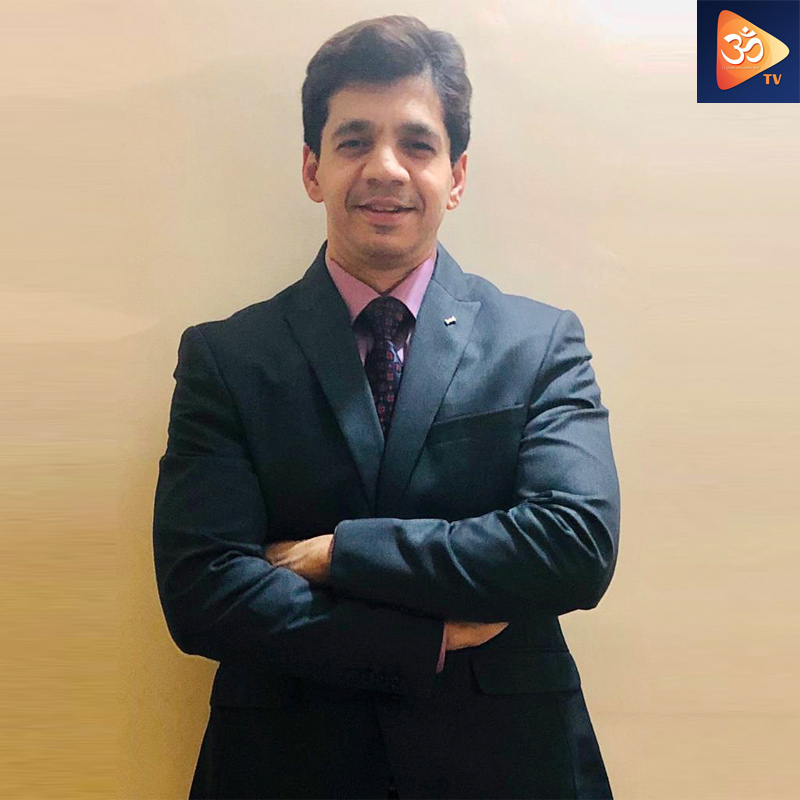
    Mumbai: OMTV, which claims to be India’s first sanatan storytelling platform, has announced the appointment of Sahil Kiran Vaidya as head business & strategy. In this new role, Vaidya will take care of overall growth of the company via various associations and collaborations where increasing the subscription base & reaching out to wider audience via various creative ideas is his core competency. He will look after the distribution of content & revenue generation via syndication.

    Vaidya holds 20 years of experience as a business professional with a demonstrated history of working in the marketing and digital industry. He previously worked with VSERV as DGM Operator Alliances. Sahil is a strong business development professional skilled in business strategy, business operations management, customer lifecycle management, mobile applications, B2B and D2C Account Management. An inspirational leader with a strong track record of business transformation, integration and turn-around, majorly across the telecom, media, BFSI and SME sector. He has delivered fantastic results across geographies, cultures, scales and environments as a business owner. Has had a significant role in onboarding investors, raising capital, and evaluating investment and M&A deals.

    Vaidya said, ”Thrilled, excited to be a significant part of OMTV.  It’s content with knowledge, pride and enlightenment. I have a firm belief that very soon OMTV is going to be competing with the top most OTT platforms in India. It shall soon spread its wide wings across the globe. When Nitin and I discussed this whole proposition for the first time I just remember saying one word on the opportunity “Enormous”. Going forward, there will be challenges but nothing can withstand the strength of OMTV.”

    OMTV  founder & managing director Nitin Jai Shukla commented, “I’m excited to have Sahil as a significant part of OMTV, he will add to the growth of the company with his enormous experience in the media industry. We have ambitious growth plans to expand and monetize the content as we are ready with our first original big ticket show. Right now, we are a free app and soon with OMTV originals and library of our acquired content we will be coming in the market in a big way. Sahil has huge experience in syndicating the content and with his expertise I’m sure OMTV is bound to grow leaps and bounds.”

  • GUEST COLUMN: How brands can leverage metaverse for connecting with consumers

    GUEST COLUMN: How brands can leverage metaverse for connecting with consumers

    MUMBAI : Through the years, what has been constant is how brands evolve with new tools and modes of communication to best connect with their customers and fulfill their wants. In fact, with the steady rise of mobile web and social media back in the 2010s, the way brands engage with consumers has undergone a massive transformation – witnessing brands building a community with their consumers. And the customers, in turn, enjoy these novel ways to connect with their brands.

    However, in 2022, we now stand at the precipice of an exciting new form of communication and experience – the metaverse. And perhaps the biggest challenge is understanding the metaverse and realising one crucial key point – “The Metaverse is Now.”

    Ascent of the Metaverse

    Blurring the lines between physical and digital, the metaverse is fast emerging as a new space for people to shop, be entertained and participate in virtual experiences. With the metaverse giving rise to this new ecosystem of virtual life, a resultant paradigm shift is underway. One is that the metaverse is revolutionising how brands and consumers engage – with both scrambling for tools to best connect in this unprecedented virtual space.

    But why should you become a metaverse brand to connect with its audience?

    The truth is, the metaverse has opened the floodgates to a variety of burgeoning benefits and connection opportunities for brands and consumers alike –

    1) Minimising geographical distance

    From our online presence on platforms like online games (esports), social media and even simple communication on messaging apps, the experiences and connections we value most often take place in a digital world over the physical world. For instance, unlike before, a significant number of people we daily communicate with live outside of a 15 km radius from our home or office.

    However, the metaverse allows you to build meaning around experiences even though people we value spending time with are out of our physical grasp. In fact, it can essentially replicate the real world – goods and experiences from your offline existence can now be imitated for people anywhere in the world. Want to go on a date with the person you just met in Hyderabad while based in Delhi? Want to meet and greet your favourite Bollywood Celebrity when you’re in Lucknow? You can do this and much more in the metaverse. A lot of restaurants too, have stepped into the metaverse so going on dates with a significant other just got easier.

    The barrier of geographical distance is eliminated, and brands can now capture a global consumer base by bringing their products immediately into the home of every person in the world.

    2) Metaverse & its commercial appeal

    The metaverse lets customers try out digital items and see them within a fully 3D world. Several brands are already utilising this capability today. Moreover, blockchain technology, cryptocurrency, and NFTs (building blocks of the Metaverse) are also empowering brands and consumers to interact in ways unlike before.

    For instance, Adidas’ claim to fame as one of the most crucial metaverse brands comes from NFTs (Non-fungible tokens). When people think of an NFT, it’s usually related to online images. However, it’s essential to understand that metaverse models also use digital artwork. As such, metaverse items can also be NFTs. Adidas uses that technique to sell wearables in the physical world and metaverse.

    Adidas Originals created an NFT campaign, “Into the metaverse.” For this, it partnered with three of the most renowned NFT brands – Bored Ape Yacht Club, PUNKS Comic and Gmoney for exclusive wearable digital items that can be used on various blockchain-based gaming platforms. The collaborative project launched in December 2021, when a limited amount of 30,000 NFTs were sold saw the company earn more than $22 million from the sales in a few hours! Buying an NFT gave owners access to special, physical goods, like a hoodie and tracksuit worn by the Bored Ape that Adidas owns and other upcoming digital experiences.

    Some companies benefit by tying their online and offline market together. Other companies can leverage it by creating a whole new type of store. These are digitally exclusive offerings. And all of this can be tied together with digital wallets within the metaverse, making it easy to buy and sell goods. It’s easy to see the metaverse’s commercial appeal.

    On the consumer products front, Coca-Cola launched an NFT collection that fetched $575,000 in an online auction. It relied on the power of its brand to push forward its collection and raise over $500.000 for charity within 72 hours!

    While the metaverse’s full potential reach will definitely increase & at a much faster pace in the near future years, it is clearly on its way to the very fabric binding people across the globe and connecting them. And with this tool at our fingertips, it is absolutely critical for brands to venture into this exciting virtual space that presents disruptive new ways to build deeper and more meaningful relationships with their audience.

    The author is Caleb Franklin CEO and Founder of HeyHey

  • Greg Tomb joins as president of Zoom

    Greg Tomb joins as president of Zoom

    MUMBAI: Zoom Video Communications has announced that Greg Tomb will join the company as president effective from 7 June 2022. Tomb brings more than 20 years of experience and comes to Zoom from Google Cloud, where he was most recently vice president of Sales, Google Workspace, SMB, Data & Analytics, Geo Enterprises, and Security Sales.

    Reporting directly to Zoom’s founder & CEO Eric S. Yuan, Tomb will oversee the company’s go-to-market strategy, revenue efforts, and office of the Global CIO. Tomb will help shape Zoom’s next chapter as the company continues transforming into a multi-product platform that enables communication, hybrid work, and an expanding number of business workflows.

    Yuan said, “I am so excited to welcome Greg to the Zoom team. Greg is a highly-respected technology industry leader and has deep experience in helping to scale companies at critical junctures. His strategic thinking, can-do attitude, and value of care he brings to customers make him the perfect addition to our strong leadership team.”

    Tomb said, “I’m thrilled to join forces with Eric and the Zoom team to help drive growth. I strongly believe that Zoom has an impressive foundation with its multi-product platform, and I look forward to the tremendous opportunities ahead to help businesses around the world address their communications and collaboration needs.”