Tag: Forecast

  • India advertising market to see 15% growth in 2022: Magna advertising forecast

    India advertising market to see 15% growth in 2022: Magna advertising forecast

    New Delhi: Advertising revenues swung back to a healthy growth rate of 14 per cent in 2021, rising from Rs 577 billion to Rs 657 billion. The growth is likely to accelerate further in 2022, with a 15 per cent rise in advertising revenue according to the Magna Global Forecasting Report released on Thursday.

    While the digital ad formats grew by 20 per cent to Rs 214 billion this year, the traditional media rose 12 per cent. Ecommerce, Retail, Durables, Beverages, Pharma, Real estate, Finance, and Education remained the most active categories while automobile, government, personal care, and communication brands continued to hold back their spending.

    TV to grow by 11 per cent to reach Rs 294 billion by 2022 end 

    Despite the Covid-led disruptions, television performed well in 2021 with original programming and Live sports events including the IPL and ICC T20 World Cup which boosted its revenue growth. With IPL media rights coming up in 2022, valuation this time is going to be even higher with the increase in the number of teams and the number of matches. With this factor, coupled with a few critical state elections, TV is expected to maintain momentum and grow by +11 per cent to reach Rs 294 billion by the end of 2022, according to the forecast.

    Video and Social Media to lead Digital ad-spends

    Digital advertising is currently the second-largest segment at 33 per cent market share. As per the forecast, Video and social platforms are likely to gain significant advertising share followed by audio and display. Overall, digital advertising revenues are expected to grow 18.5 per cent next year to top Rs 250 billion, as per the forecast.

    Growth of print to be broad-based

    In 2021, overall print grew +12 per cent from a low base (2020: -40 per cent), despite the slowdown in business. Growth has come from Retail, Durables, Finance, Real Estate, and Government spending. 2022 growth is expected to be broad-based, with most categories increasing spends and elections in a few large states helping to drive an increase of +14 per cent. With all Covid-19 restrictions lifted, the wedding season (which typically begins in October and lasts through March/April) will present another opportunity for print to thrive.

    Radio to witness growth of 21 per cent in 2022. 

    Radio is expected to gain back the transit audience listeners lost during the lockdowns. Growth in both listenership and revenue is expected to come from tier 2 and tier 3 markets. Overall, radio advertising revenues grew +20 per cent in 2021 to reach ₹16 billion, nearly 70 per cent of the pre-Covid market size.  Growth was driven by e-commerce, food, pharma, and retail advertising. Growth of +21 per cent is expected for 2022. 

    OOH growth to accelerate

    OOH traffic numbers are already reaching pre-Covid levels, with passenger footfall in airports and the metro increasing rapidly. OOH, (digital & static, not including cinema) revenues rebounded by +17 per cent in 2021 and an acceleration (+20 per cent) is expected in 2022, with revenues reaching 67 per cent of 2019 pre-Covid market size at the end of the year. Automobile, real estate, OTT and finance are a few categories driving OOH advertising growth.

    Major Sectors

    According to the forecast, travel & hospitality will see a resurgence in 2022, with the relaxation in travel regulations. The automobile and handset sectors that experienced supply-side issues will bounce back, too, along with education, realty, retail, and fashion sectors. Traditionally TV-heavy categories, like FMCG, personal products, and food are expected to increase their share of digital advertising. Advertisers will also pursue every shoppable moment to offer “anywhere commerce” to their consumers. With local players in Reliance and Tata e-commerce platforms gaining more traction, the sector will further increase its share of advertising. 

    IPG Mediabrands India CEO Shashi Sinha said, “Waning fear of the virus, along with the opening of economic and leisure activities, has given a boost to demand and improved business sentiment. The Indian advertising marketplace is experiencing recovery and accelerated adoption of non-conventional methods by all forms of media to engage consumers is helping along the recovery path. Though the second Covid wave in 2021Q2 disrupted the momentum, ad revenue in 2021 will grow at a healthy rate after contracting -22 per cent in 2020

  • Global ad market to top $700 bn in 2022: WARC Data

    Global ad market to top $700 bn in 2022: WARC Data

    New Delhi: Global advertising spend is expected to rise 12.6 per cent during 2021 as a whole to reach $665bn, according to WARC Data’s report tracking global ad-spends. This is a sharp increase from the 6.7 per cent initially forecast, and would result in all of 2020’s losses being recouped, contrary to previous expectations.

    The new report signals renewed optimism in the situation getting better for the overall market as it recovers from the severe impacts of the pandemic. According to WARC Data, a further growth of 8.2 percent is predicted for next year, with the global advertising market to be worth more than $700 billion. While it took six years to move from $500bn to $600bn, it has now taken just four years to reach $700bn. This is in no small part due to rapid investment in online formats, which has doubled in the last five years, it stated.

    India, too, will see strong growth in advertising spend over the next two years, but 2021 investment will not fully recover 2020’s losses, said WARC Data in its latest report, tracking 100 markets worldwide. According to the report, India’s growth is up 16.1 percent to $8.2 billion in 2021.

    Regional advertising investment in the Asia Pacific is forecast to increase by 12.8 percent this year to top $200 billion for the first time. This will be driven by the Chinese ad market, which is expected to grow by 16.3 percent to exceed $100 billion for the first time.

    WARC’s quarterly research also finds that advertising spend in the second quarter rose 23.6 percent to $157.6 billion, marking a new high for a Q2 period and the strongest rise in over a decade. This growth was mainly driven by online formats, which collectively saw spend rise 31.2 per cent versus the previous year. eCommerce was the star performer with growth of 59.5 per cent, though offline media – most notably linear TV saw 11.5 per cent growth – also fared well.

    Linear TV to grow 7.1 per cent in 2021

    For linear TV, spend is projected to grow 7.1 percent to $168.1 billion this year, equal to a quarter (25.3 percent) of the global ad market. Investment is expected to rise by a further 2.7 percent in 2022, though this means just 60 percent of 2020’s losses will be recovered by 2022.

    “The 2020 downturn was felt disproportionately among legacy media owners. While online ad investment rose 9.4 per cent last year, mostly to the benefit of a few pure players, brand spend on legacy media such as print, TV, radio, outdoor and cinema fell by $63bn. Data show that this loss was on a par with the Great Recession,” as per WARC.

    The forecast suggests, legacy media will see two consecutive years of growth in 2021 (8.8 per cent) and 2022 (3.1 per cent) for the first time in a decade, but budgets will continue to move online. More than 60 per cent of spend is expected to be on digital media in 2022, an increase in share from 50 per cent before the pandemic in 2019.

    “New quarterly research, collated from 100 markets worldwide, shows for the first time the true extent of the digital shift in response to the coronavirus outbreak last year. Growth in online adspend has typically tracked some 20 percentage points ahead of offline media, but in the final quarter of 2020, this leaped to a remarkable 41 points—an absolute difference of $41 billion,” WARC Data, managing editor and author of the report, James McDonald.

    “Investment in offline media fell by $63 billion worldwide in 2020, marking the worst year in living memory for the majority of media owners. All media are forecast to record growth this year, with most sustaining this into 2022. Yet, as has been seen before, it is the online platforms that are set to benefit most from the ad market’s recovery.”

    All consumer-facing product sectors are expected to increase advertising spend this year. The travel sector, however, will take more than two years to lift spend back to pre- pandemic levels, it added.

  • Netflix beats earnings forecasts riding on global user additions

    Netflix beats earnings forecasts riding on global user additions

    MUMBAI: Exceeding user addition forecasts, Netflix’s first quarter (Q1) earnings were in line with expectations while revenue bettered estimates.

    Revenue grew by 43 per cent year over year in Q1 due to a 25 per cent increase in average paid streaming memberships and a 14 per cent rise in the average selling price (ASP). Operating margin of 12 per cent rose 232 bps year over year. This was higher than the company’s quarter guidance, due primarily to the timing of content spend.

    Global net user adds totalled a new Q1 record of 7.41 million, up 50 per cent year on year and higher than the forecast of 6.35 million.

    “The variance relative to our guidance was driven by continued strong acquisition trends across the globe which we attribute to the growing breadth of our content and the worldwide adoption of internet entertainment,” Netflix said in its statement.

    In the US, it added 1.96 million memberships (compared with forecast of 1.45 million). Outside of the US, membership grew by 5.46 million (forecast of 4.90 million). Our international segment now accounts for 50 per cent of revenue and 55 per cent of memberships

    Netflix has relied on international growth and heavy investments in original content to drive subscriptions — and Monday’s results provided an update on their effectiveness.

    Netflix’s addition of 7.41 million international subscribers set a new record, marking growth of 50 percent from a year ago.

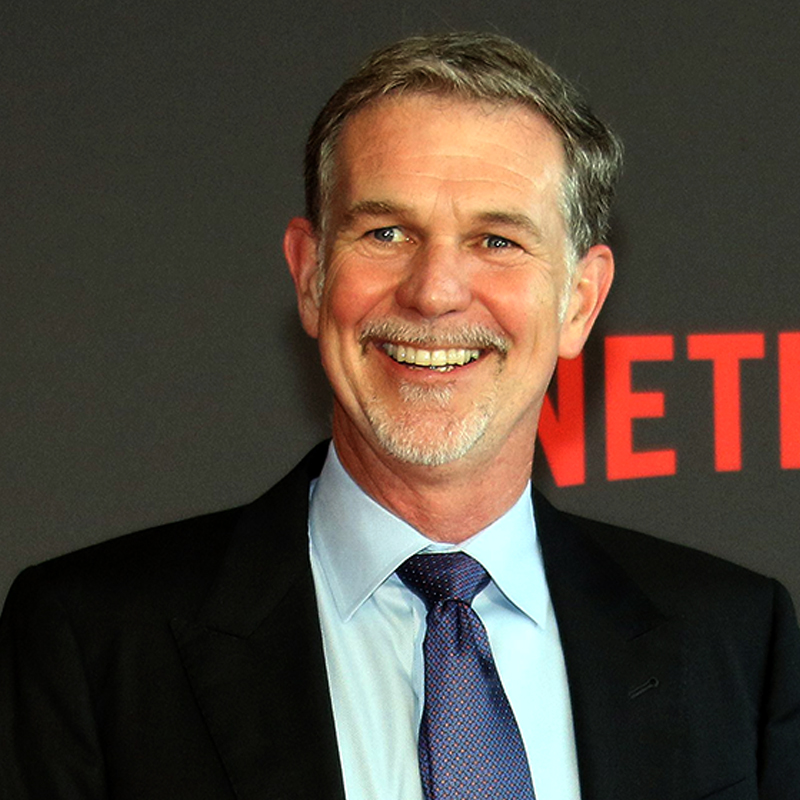
    Chief content officer Ted Sarandos said Netflix has shot original content in 17 countries as it focuses more on local programming, and that many of Netflix’s foreign-language shows would be considered “big hits” on American cable channels, thanks to artful subtitling. CEO Reed Hastings added that Netflix has also seen success on its international mobile app offerings. But Hastings also said that the company hadn’t changed its view on expanding in China, and will continue to license content.

    The company also said it expects to have $7.5 billion to $8 billion of content expenses this year, in line with previous estimates. Netflix had said it expects to grow to 60 million to 90 million members in the U.S. over time and that it would spend $8 billion on content and $2 billion on marketing this year.

    The company highlighted Spanish-language hit La Casa de Papel, unscripted series Queer Eye and franchises such as Marvel’s Jessica Jones, Grace and Frankie, Santa Clarita Diet and A Series of Unfortunate Events. Netflix also credited new talent, such as Shonda Rhimes and Jenji Kohan, for their “proven track record of success” and for allowing Netflix to cut back “reliance on third-party studios.”

    “We’re investing in more marketing of new original titles to create more density of viewing and conversation around each title,” the company said.

    The marketing spending comes after Netflix was barred from competing at the Cannes film festival due to a rule change — a setback the company called unfortunate.

    One thing that’s not on the spending slate, Sarandos said, is news programming.

    “Our move into news has been misreported over and over again. We’re not looking to expand into news beyond the work that we’re doing in long-form and short-form documentary,” Sarandos said. “Topical interview shows, absolutely, but keep in mind, those are entertainment.”

    Netflix faces increasing competition from Amazon and Disney, which have their own offerings, as well as traditional media companies and technology companies such as Apple. Hastings said the company still has a long way to go to compete with the likes of YouTube and noted that Netflix’s ability to raise prices depends on providing more value than competitors.

    At the same time, Netflix is expanding into cable bundles and recently announced a new offering with Comcast, in addition to bundles with Sky, T-Mobile and Altice.

    Netflix said on Monday the bundles allow the company to upsell existing subscribers. Executives said on a conference call that the “new wave” of operator partnerships was a consistent shift across all geographic markets.

    “We remain primarily a direct-to-consumer business, but we see our bundling initiative as an attractive supplemental channel,” the company said.

    public://f_5.jpg

    In February this year, Hastings, at a business summit in India, said that  Netflix saw a potential of adding 100 million customers in India. “It definitely helps to have confidence on the growth of the internet. Even we couldn’t predict the last two years of Indian internet growth,” he had said.

    Also Read :

    Localised content the way forward for Netflix in India

    Netflix announces unscripted series on Mumbai Indians

  • India among top 10 contributors to ad spend growth: Zenith Ad-Ex Forecast

    India among top 10 contributors to ad spend growth: Zenith Ad-Ex Forecast

    MUMBAI: Publicis Media Company Zenith has just released its new Advertising Expenditure Forecasts in which it predicts that global ad expenditure will grow 4.4 per cent in both 2016 and 2017, reaching USD 566 billion by the end of 2017. Zenith predicts that ad expenditure growth for India in 2017 stands at Rs. 54,344 crore (Rs 543.4 billion or USD 8 billion), up by 11.2 per cent over 2016.

    Digital remains one of the fastest growing mediums in India registering a 30 per cent growth rate. Television will register an 11 per cent growth rate in 2017, print (newspapers) will grow at 7.6 per cent and all other media between 7-12 per cent.

    Zenith India group CEO Tanmay Mohanty added, “India remains one of the few bright spot economies in the world. Ad spending in India is on a steady growth curve and likely to stay that way in 2017, buoyed by the State Elections in Uttar Pradesh and Punjab, the upcoming Champions Trophy and continued expansion and growth of regional newspapers and television. In November, the central government introduced reform in the form of Demonetisation which is leading to some contraction in ad spends. We expect the demand for goods and services to pick up and this shortfall to be temporary. Demonetisation is expected to augur well for the economy long-term. In fact, we expect 2017 to see increased ad spending by categories such as Mobile Wallets, Telecom 4G, BFSI, Mobile Handsets, Fast Moving Consumer Goods and Consumer Durables.”

    India is among the top ten contributors to ad spend growth, along with others such as USA, China, Indonesia, UK, Philippines, Japan, Germany.

    However the global figures for 2017 forecast is down by 0.1 percentage point from the forecasts published in September after small downgrades in Asia Pacific, which nevertheless remains one of the fastest growing regions for ad expenditure.

    This is a strong performance, given that the unexpected results of the UK’s referendum on EU membership and the US presidential election have increased political uncertainty and raised the risks of restrictions to international trade. 2017 also faces a tough comparison with the quadrennial year of 2016, when spend was buoyed by the US elections, the Summer Olympics, and the European football championships, as it is every four years.

    After 2017 continued steady growth in global ad spend is expected, of another 4.4% growth in 2018 and 4.1 per cent in 2019. Global ad spend growth has been remarkably stable since 2010, growing at between four and five per cent a year, generally at or below the growth rate of global GDP. Before the financial crisis, advertising would typically exaggerate the wider economy, growing faster in times of expansion and shrinking faster during recessions, with frequent changes in year-on-year growth rates. More recently the global ad market appears to have entered a phase of more stable growth.

    Over all, television remains the dominant advertising medium, attracting 36 per cent of total global spends in 2016. The internet is expected to overtake television to become the largest medium in 2017.

  • India among top 10 contributors to ad spend growth: Zenith Ad-Ex Forecast

    India among top 10 contributors to ad spend growth: Zenith Ad-Ex Forecast

    MUMBAI: Publicis Media Company Zenith has just released its new Advertising Expenditure Forecasts in which it predicts that global ad expenditure will grow 4.4 per cent in both 2016 and 2017, reaching USD 566 billion by the end of 2017. Zenith predicts that ad expenditure growth for India in 2017 stands at Rs. 54,344 crore (Rs 543.4 billion or USD 8 billion), up by 11.2 per cent over 2016.

    Digital remains one of the fastest growing mediums in India registering a 30 per cent growth rate. Television will register an 11 per cent growth rate in 2017, print (newspapers) will grow at 7.6 per cent and all other media between 7-12 per cent.

    Zenith India group CEO Tanmay Mohanty added, “India remains one of the few bright spot economies in the world. Ad spending in India is on a steady growth curve and likely to stay that way in 2017, buoyed by the State Elections in Uttar Pradesh and Punjab, the upcoming Champions Trophy and continued expansion and growth of regional newspapers and television. In November, the central government introduced reform in the form of Demonetisation which is leading to some contraction in ad spends. We expect the demand for goods and services to pick up and this shortfall to be temporary. Demonetisation is expected to augur well for the economy long-term. In fact, we expect 2017 to see increased ad spending by categories such as Mobile Wallets, Telecom 4G, BFSI, Mobile Handsets, Fast Moving Consumer Goods and Consumer Durables.”

    India is among the top ten contributors to ad spend growth, along with others such as USA, China, Indonesia, UK, Philippines, Japan, Germany.

    However the global figures for 2017 forecast is down by 0.1 percentage point from the forecasts published in September after small downgrades in Asia Pacific, which nevertheless remains one of the fastest growing regions for ad expenditure.

    This is a strong performance, given that the unexpected results of the UK’s referendum on EU membership and the US presidential election have increased political uncertainty and raised the risks of restrictions to international trade. 2017 also faces a tough comparison with the quadrennial year of 2016, when spend was buoyed by the US elections, the Summer Olympics, and the European football championships, as it is every four years.

    After 2017 continued steady growth in global ad spend is expected, of another 4.4% growth in 2018 and 4.1 per cent in 2019. Global ad spend growth has been remarkably stable since 2010, growing at between four and five per cent a year, generally at or below the growth rate of global GDP. Before the financial crisis, advertising would typically exaggerate the wider economy, growing faster in times of expansion and shrinking faster during recessions, with frequent changes in year-on-year growth rates. More recently the global ad market appears to have entered a phase of more stable growth.

    Over all, television remains the dominant advertising medium, attracting 36 per cent of total global spends in 2016. The internet is expected to overtake television to become the largest medium in 2017.

  • TV’s 10% growth will add to AdEx growth in 2015 in India, predicts ZenithOptimedia

    TV’s 10% growth will add to AdEx growth in 2015 in India, predicts ZenithOptimedia

    MUMBAI: The year 2014 saw the biggest Lok Sabha elections held in the country with Bharatiya Janta Party winning with a majority giving people a hope of ‘aache din’.

    It has been just over six months of the newly elected government led by Prime Minister Narendra Modi and it seems to have captured the collective consciousness of the country. And as the year comes to an end, ZenithOptimedia’s Advertising Expenditure Forecasts says that falling food prices as well as oil prices have contributed to a reduction in the Consumer Price Inflation to a historic low of 5.52 per cent in October. IMF and World Bank have forecast an identical 6.4 per cent growth in 2015, up from 5.6 per cent in 2014. The stock market index has crossed 28000, up from 20000 in November 2013.

    Hence, we enter 2015 with a strongly positive consumer and business sentiment, albeit recognising that consistent on-ground delivery and reforms will be needed to keep this sentiment up. Hence, cautious optimism, though with way more optimism than same time last year, is still the right expression.

    The agency expects consumption to continue picking up, with passenger car and utility vehicle sales turning positive, credit card spending on the rise, loans for durables growing. From an ad-expenditure point of view, FMCGs will continue their dominance but given the weak monsoons, some categories might stay flat or have slow growth. High growth is expected from telecom, e-commerce, mobile phones, cars and two wheelers, retail, realty and the BFSI sector. 2015 will also be the year of ICC Cricket World Cup, which will also be a trigger to growth in ad expenditure.

    And with the new TV measurement system scheduled to launch in 2015, as is the much-awaited phase III expansion of FM Radio. Regional media, across print, TV and all other media continues to drive growth in media consumption. With internet base increasing to 250 million, smartphone ownership expected to reach 200 million by 2014 end, and the country awaiting the launch of 4G services by telecom operators, online and mobile will continue to see the maximum growth rate. Digital advertising however, has become dearer as the government decided to re-impose service tax.

    Given these factors ZenithOptimedia expects the ad-ex to grow by 12 per cent to Rs 40,307 crore, at an overall level in 2015, as against 10.7 per cent in 2014 (over 2013). This growth will be primarily fuelled by print at 12 per cent, TV at 10 per cent and online and mobile at 25 per cent. Other media are expected to grow between 5 – 10 per cent.


    Global forecast

    The year 2014 continued the trend of seeing the rise of mobile advertising and social media, and the transition to programmatic buying of digital display, will help the global advertising market grow 5-6 per cent a year over the next three years.

    According to ZenithOptimedia, global ad spend will grow 4.9 per cent to reach $545 billion in 2015. The global economy is expected to improve (the IMF predicts 3.8 per cent global GDP growth in 2015, up from 3.3 per cent in 2014), but advertising faces a tough year-on-year comparison after the Winter Olympics, World Cup and US mid-term elections in 2014. Ad spend growth will therefore be slightly below 2014’s 5.1 per cent.

    2016 will be a quadrennial year – with the Summer Olympics, US Presidential elections and the UEFA European Football Championship – and we expect these events to propel ad spend to 5.6 per cent growth that year, before it slips back to 5.2 ad spend in 2017 in their absence.


  • Forecast sees big payoff for Google’s mobile ads

    Forecast sees big payoff for Google’s mobile ads

    MUMBAI: Google will sell more mobile advertising than the rest of its rivals combined for the second straight year, according to a new forecast that highlights the expansion of the internet search leader‘s moneymaking competency from personal computers to smartphones and tablets.

    The report released on Thursday by the research firm eMarketer projects Google Inc will generate nearly $8.9 billion in mobile ad revenue throughout the world in 2013. The figure reflects the projected amount that Google will retain after paying commissions to its ad partners.

    The prediction calls for Google to hold a 56 per cent share of the overall mobile ad market, which is expected to approach $16 billion this year. In 2012, Google accounted for 52 per cent, or $4.6 billion, of the worldwide mobile ad market, according to eMarketer.

    Facebook Inc, the owner of the largest online social network, is expected to rank a distant second in mobile advertising this year with about $2 billion in revenue from phones and tablets, eMarketer predicted. Although still far behind Google, Facebook has been making rapid inroads in the mobile market. Last year, Facebook sold less than $500 million in mobile advertising.

    The report marks the first time that eMarketer has released digital ad numbers spanning the entire globe. The firm‘s previous estimates, which are closely watched in the industry, have been confined to the US ad market.

    eMarketer‘s figures are intriguing because Google doesn‘t disclose how much of its total ad revenue flows from the rapidly growing ad market. Google‘s success in mobile advertising stems from its ability to establish its internet search engine and other services, such as digital maps, Gmail and the Chrome browsers, as frequently used applications on mobile devices.

    The company accomplished that largely by forging a partnership with Apple Inc when that company‘s iPhone came out in 2007. Google then baked its services into Android, a free operating system now running on more than 900 million mobile devices.

    Android‘s success transformed Google into a competitive threat to the iPhone and iPad, prompting Apple to dump some of Google‘s services as built-in programs on those devices. But many iPhone and iPad users are still relying on Google products by installing apps on their Apple devices.

  • Ormax Media introduces forecast model for Hindi GEC launch viewership

    MUMBAIi: Media research and consulting firm Ormax Media has announced the launch of Opening Week Average (OWA), a scientific launch viewership forecasting model for Hindi general entertainment channels (GECs).

    The model forecasts the opening week average viewership of all weekday launches across six Hindi GECs (Star Plus, Zee TV, Colors, Sony, Sab and Life OK) from two weeks before launch up till the week of launch.

    Ormax informs that the OWA model takes into account a series of input parameters. These include inputs from Ormax Media‘s Hindi GEC awareness tracking tool Ormax Showbuzz, which tracks the performance of new Hindi GEC launches for more than four years now. Ormax Showbuzz covers 14 cities across India, with an annual sample size of over 42,000 Hindi GEC viewers. Other OWA model inputs include slot competition, audience profile and channel equity, on which normative data has been built by Ormax Media over the last five years.

    Ormax Media CEO Shailesh Kapoor said, “The forecast will be available up to two weeks before launch, giving the broadcasters enough time to take corrective action in their creative and media strategies. The forecast model has self-learning built into it, guaranteeing progressively better results with time.”

  • Broadband demand drives highest telecom growth since 2000

    Broadband demand drives highest telecom growth since 2000

    MUMBAI: Last year, the US telecom market grew at its fastest rate since 2000, showing that the drive towards convergence continues to stimulate the telecommunications industry, according to TIA’s 2007 Telecommunications Market Review and Forecast.

    Each year, TIA’s Telecommunications Market Review and Forecast analyses the trends affecting the information and communications technology industry. The report includes an overview of the entire industry, as well as detailed sections on the landline, wireless, equipment and international markets.

    TIA’s annual review of the health of the telecom industry shows that the worldwide telecom market grew 11.2 per cent in 2006 to total $3 trillion in revenue, while the US market grew 9.3 per cent to total $923 billion.

    Demand for broadband and high-speed services is fueling this growth, as carriers invest in new fiber, new IP technology and new wireless infrastructure to provide state-of-the-art voice, video and data services.

    Europe has the largest telecom market, measuring at $1 trillion, with the Asia/Pacific third at $715 billion. Overall, the international market grew 12.1 per cent in 2006. Middle East/Africa was the fastest- growing region, expanding at 21.6 per cent. By 2010, the global market is expected to reach $4.3 trillion in revenue.

    TIA president Grant Seiffert says, “Consumers are thirsty for broadband, and this report shows carriers are rushing to meet the demand. Technologies like voice over Internet protocol (VoIP) and broadband video, as well as new mobile data services, are sparking new growth in the telecommunications industry. As a result, carriers are offering more competitive all-in-one bundled packages, and consumers are seeing lower prices and more services.”

    The report forecasts growth for competing new broadband technologies such as fiber, satellite, wireless and broadband over powerline, which combined will account for more than 11 per cent of broadband subscribers in 2010.

  • Online music sales in Europe to help reverse decline in music sales in 2010

    Online music sales in Europe to help reverse decline in music sales in 2010

    MUMBAI: A new report by media researchers Screen Digest, Online Music in Europe: Market Assessment and Forecast predicts that rapidly growing online music sales in Europe will start to halt the decline in overall sales of recorded music, but not until 2010.

    The total European market for online music will have more than doubled from Euro 121 million in 2005 to a forecast Euro 280 million by the end of this year. By 2010 consumer spending on online music in Europe will generate more than Euro 1.1 billion.

    This explosive growth is being driven by rapidly growing broadband penetration and the massive increase in portable music player usage. Over seven per cent of Europeans now use one, up from two per cent in 2004. By the end of 2005 there were 29 million portable music players in Europe and this figure will rise to more than 80 million by 2010.

    However, the big picture is not so rosy for the overall European music market, which has been in decline – losing 22 per cent of its total value since 2001. Screen Digest predicts the market will continue to fall until 2010, at which point online music sales of more than Euro 1 billion a year will begin to offset the decline in physical sales.

    Screen Digest analyst and author of the report Dan Cryan comments, “Online music has been booming. However, online sales alone are not going to be enough to halt the decline in music sales. The music industry needs to make the most of new delivery platforms. We believe with the right strategy – including mobile and online – that the worst might be over by 2010. The industry must adopt a broader approach to selling music, looking beyond the traditional single and album.”

    The report analyses the causes of declining revenues for the music industry and shows that a wider view must be taken to understand and address the change in consumer behavior. It is easy to point the finger at piracy but data from music industry body IFPI suggests that piracy is declining. The number of tracks available on illegal file sharing networks declined from 1.1 billion euros in 2003 to 885 million euros in 2005.

    Instead factors like the gradual erosion of music dedicated shelf space in big retailers, like HMV and Virgin and its replacement with DVDs, books and mobile phones cannot be ignored. Seen in this light the fact that the decline in physical music sales corresponds to the boom in DVD sales begins to look less like a coincidence and more like a cause.