Tag: FoodFood

  • Lifestyle channel FoodFood to go live on DD Free Dish starting 1 April

    Lifestyle channel FoodFood to go live on DD Free Dish starting 1 April

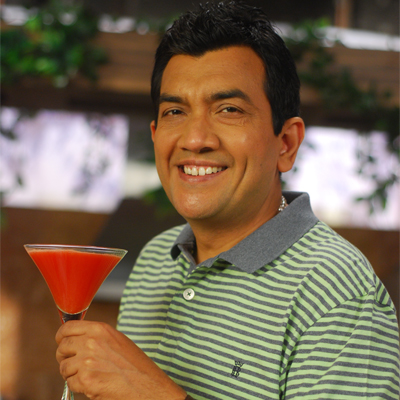
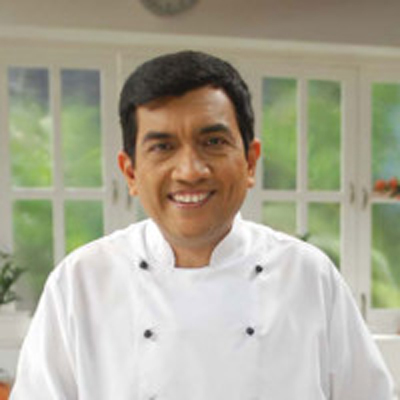
    Mumbai: Celebrity chef Sanjeev Kapoor’s food and lifestyle channel FoodFood is set to go live on Prasar Bharati’s free-to-air DTH service DD Free Dish from 1 April.

    With this development, FoodFood becomes the only speciality channel to be made available on the largest DTH platform of the country reaching over 40 million households, said the statement. After consolidating its position in the primary and focus markets in India, FoodFood has become a popular choice of channel across International destinations and geographies, the statement added.

    “FoodFood has always been at the forefront of breaking barriers in the industry as the first 24×7 food lifestyle programming and now again being the first to reach rural audiences,” stated Sanjeev Kapoor. “I firmly believe that food is a universal language that breaks all barriers of cultures, races, and borders. With FoodFood, I want to reach as many people as possible looking for relevant content on food to make taste buds tantalised and possibly their lives brighter.”

    FoodFood is currently distributed through Tata Play and leading MSO’s across the country.


  • Sanjeev Kapoor on FoodFood’s FTA avatar, DD Free Dish & TRAI tariff order impact

    Sanjeev Kapoor on FoodFood’s FTA avatar, DD Free Dish & TRAI tariff order impact

    MUMBAI: With the new tariff order bringing in a major change to India's television distribution, several broadcasters are adopting alternative ways to stay relevant in the ecosystem. Chef Sanjeev Kapoor-promoted FoodFood channel is among those trying to negate the impact of the new regulatory framework by converting it into a free-to-air channel from its current pay model to maintain its reach. Ahead of its 11 July FTA launch, Kapoor interacted with Indiantelevision.com to outline the reasons behind the decision and offered insights into the category his channels operates in.

    What was the objective behind taking this call?

    When the tariff order was released, we were contemplating how to approach this. We realised that we should keep it the way it was and when the dust settles, we will take the call depending upon which way the viewership is moving. We studied and evaluated what the viewership patterns are, how things are moving, what is happening in the market, what is happening to specialty content, what’s the best way to approach it and we realised that for a single channel without bouquet strength the best way is to approach it differently. When there are bouquets, no matter what the order says that this can not be done, the reality is that bouquets for large players are much simpler and easier. Whether it is through Facebook, Youtube, we see that food content consumption has gone up exponentially on digital whether. The only way to bring it at par with what the consumer needs and demands is to increase the reach and that’s why we took this call.

    What were your key observations from three-four months of tariff order implementation?

    So as we know the overall viewership has dipped, that is because the reach is not there because you aren't there. Then, how does the viewer find you? Whether it is an MSO, DTH, small LCO, how do you get discovered? In a-la-carte, when you try to educate a person, it takes time and effort and when a single channel does not have the power to fight that, then it becomes very difficult. Even in my house it took my personal intervention to get Food Food, so it would be difficult for normal viewers. So to break this resistance, one must go the FTA way. We believe it will be better now because if the pressure of paying the broadcaster is not there, hopefully, it will be better. We evaluated Free Dish as well. It format have any specific advantage for a smaller channel. For devotional channels, there is a lesser fee but for specialty channels like us it is not beneficial.

    Do you see consolidation, mergers or more channels being added in the category you are operating in?

    Difficult to say. Bigger broadcasters with 40-50 channels have their own challenges. Some of them are shutting down, some of them are rationalising. In such a case, consolidation is the most obvious choice but really we have not seen that happen yet because these are early days. For people like us, fortunately, it's not something that bothers us too much because we have over 1200 hours of high quality HD content. We have the ability to syndicate, licence and monetise through multiple ways. So we are not too worried.

    Do you have to spend more on content to attract consumers as the new tariff order puts power in their hands to pick and chose?

    I would say that even if the power is given, if the consumer cannot use it how is it going to help. You can be FTA and still not be present as the must-carry rule is no longer there. How do you ensure that? Though digital has come to the rescue but at whose cost? It’s not at the cost of content creators or at the cost of distributors. There used to be a normal camera now there are more digital cameras. There could be transitions. Three years ago when I visited the US, people were talking about cutting the cords and if that is a global phenomenon that has to come. The power of content will stay. We consider that as content creators we distribute content through different platforms and whenever consumers find it convenient to access our content, they will consume it there.

    How do you plan to monetise your content across digital?

    We already do. We have a fairly large plan on digital. So, our overall community including Food Food is over 20 million that across platforms could be Facebook, Twitter, YouTube etc. We use that community to reach out to core Food lovers. We work very closely with brands. We are launching a series on biryanis. We have Dawat Biryani Rice on board as a large partner for that.

    Do you see your revenue more skewed towards digital in the near future?

    I would guess so.

    Do you tweak your programming in terms of going from pay to FTA?

    Our focus does not change. We want to stay focused on who we are. We don’t want to really change the programming too much.

    Do you see a change in nature of your core viewer given that you are a free platform now?

    It’s difficult to say. We want to stay core to our value and we will see if in each market we have enough consumers. We want to work with all the distributors in creating something unique and special for them. So, we don’t want to change the core product. We want to give a few things which no other TV channel can do.

  • FOODFOOD announces veeba cook off powered by Daawat Basmati Rice and Tata Sampann

    FOODFOOD announces veeba cook off powered by Daawat Basmati Rice and Tata Sampann

    MUMBAI: Cooking doesn’t get tougher than this! FOODFOOD Pro an initiative of FOODFOOD, India’s premier 24×7 Food and Lifestyle channel is proud to announce an intense and exciting eleven – episode series, VEEBA COOK-OFF, a challenge, that is purely ‘By the Professionals and For the Professionals’. This high-octane 30-minute show will be a pure adrenaline rush for cooking enthusiasts.

    The objective is to find the best chefs for India’s hotel and restaurant industry. The contestants will have to beat-off their peers in an extremely tough competition by sheer creativity, skills and a determination that seriously pushes them to their culinary limits. The winner will be selected on the basis of Talent, Technique and Taste.

    What sets apart ‘Veeba Cook-Off’ from regular cooking shows is that there will be a winner in every episode as opposed to a single one every season. Each episode will feature a new set of young and talented to-be-chefs picked, after an intense talent search, from across India’s most prestigious culinary schools and they will be competing with each other.

    The judges are India’s leading authority on food, Padmashri awardee Master Chef Sanjeev Kapoor and popular host of Mummy ka Magic show, Amrita Raichand. Joining Sanjeev and Amrita on different episodes as judges include Perizaad Zorabian, Sharad Kelkar, Kunal Vijaykar, Hariharan, Anurag Katriar (Owner of Degustibus), Renuka Shahane, Rajesh Bharadwaj (owner of Junoon, An 8 time Michelin starred restaurant in New York).

    Speaking about the new series, Sanjeev Kapoor said, “The concept of Veeba Cook Off is the first-ever in India, with a twist to regular cooking competitions. A real cooking show that is ‘Of the chefs, For the chefs’, it has professionally trained Trainee Chefs competing who would be absorbed by the industry soon. The series will test skill, commitment and their ability to cook and innovate the very best food at the highest end of the culinary spectrum in a limited time.” 

    Sanjeev further added, “The twist is secret ingredients, innovative recipes, quick action and a heart filled with desire to beat the challenge. Cooking, for me, is definitely more than a job, it’s a way of life! I love to pass on knowledge to young chefs and what better than to devise a series that gets them to compete, be under scrutiny and learn from India’s best Chefs.”

    Speaking about the association, Veeba, Founder and Managing Director, Viraj Bahl said, “Our strong focus on innovation and our obsession to bring out only the best, led to our partnership with FOODFOOD to present a one-of-its-kind cookery show, Veeba Cook Off. Indian Chefs are becoming a force to reckon with globally and we are hopeful that under Chef Sanjeev Kapoor’s guidance and mentorship, we will be able to discover fresh talent who will go on to become game changers in the food industry.”

    Daawat, CEO, Vivek Chandra said, “With Chef Sanjeev Kapoor as Daawat brand’s ambassador, for almost a decade, Daawat has always been very close to the Food Service fraternity. Young Chefs are the future of our Food Service industry and they should be given enough platforms to succeed. Participation in this show is our commitment towards this endeavour.”

    Tata Chemicals Ltd. stated, Head- Marketing, Consumer Product Business, Mr. Sagar Boke, “Veeba Cook Off is a platform where professional chefs are challenged to test their skill sets. Similarly, at Tata Sampann, we challenge ourselves to provide foods that are nourishing, wholesome and retain their natural goodness & taste. We continuously strive to innovate on the delivery formats, minimise processing & offer wholesome food products.”

  • We are actively looking to work with regional channels – Helios Media MD Divya Radhakrishnan

    We are actively looking to work with regional channels – Helios Media MD Divya Radhakrishnan

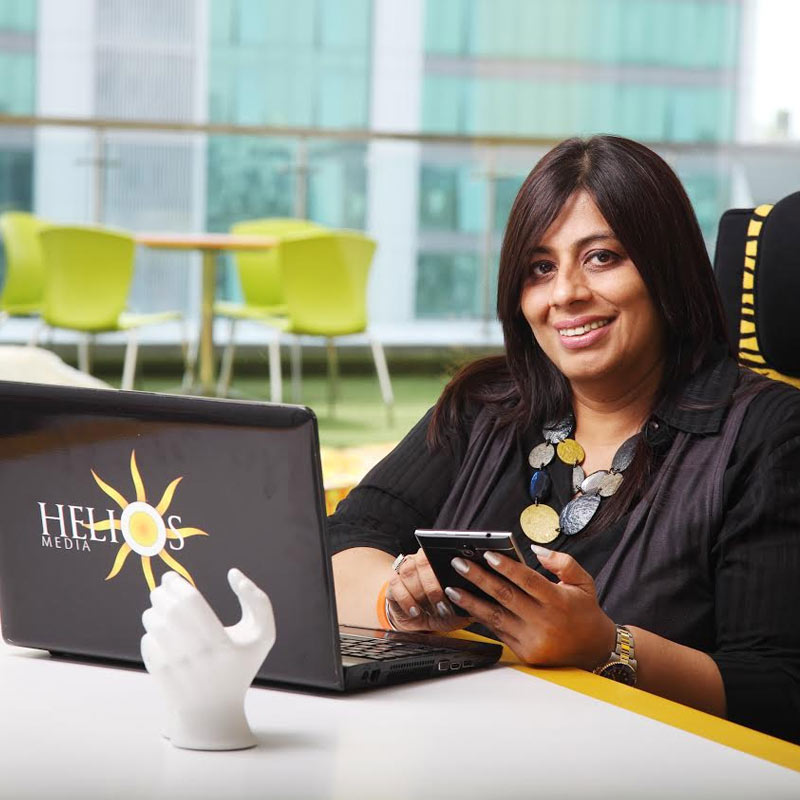
    1 November 2016 was celebrated with much pomp by the folks at Helios Media. Five years of successful operation in a business (which has seen many come and go in shorter periods) was a good enough reason to party till late into the night with clients, media and friends on the terrace of its expansive office in Mumbai’s Andheri East suburb. High Five was the motto for the evening, and everyone was greeted as such.

    Started by media vet Divya Radhakrishnan (on 1/11/11) who was later joined by former Zoom business head Bala Iyengar – who is now a partner in the business, Helios Media today has gained a good reputation for itself as a company that delivers. Over the years, it has helped in the monetization of channels such as MTunesHD, Fashion TV, Epic TV, FoodFood, Living Foodz, FataFati, Green TV, Fakht TV, Spin TV among many other.

    With a staff strength of 55 (most of them involved in ad-sales branded content), Radhakrishnan states that the company has attained a level of stability and is looking at revving up its gross billings to the triple digit crore mark. She has been bringing in professionals and delegating responsibility to the team she leads. “I am basically a gardener,” she says, looking at the terrace lawn that her office looks on to on the top floor of an office complex in the suburb of Andheri east.

    Indiantelevision.com’s Papri Das got into a tete-a-tete with Radhakrishnan to get her insight into what has been achieved so far and where she sees Helios Media going. Excerpts:

    Helios Media is often viewed  as an outsourced ad sales wings for channels. What is the company’s positioning in the market currently?

    Clients initially approached us for the monetizing aspect of our services and were pleasantly surprised by the bouquet of services we offer, which has grown over the years. We are currently not only into pure play ad sales. We have a tendency to typecast things and put things boxes in our country. Therefore, to launch something new that doesn’t fit into the general notions of mainstream, to carving its own niche is a long journey.

    Our aim is to highlight these services and solutions as part of the entire mix, which in turn helps the revenue grow, and is not just considered as an afterthought. Therefore, the thought ‘Beyond Obvious’ came into being, and it has been our brand positioning since the past three years. We didn’t chance upon the concept overnight, we studied cases, researched extensively, interviewed people from the industry, and found the need gaps and oriented a team on this mantra.

    What value addition is there for channels to let Helios Media handle their revenue monetisation? Are you able to fetch them premium rates for their inventories?

    Hypothetically speaking, say I have a channel going at 20 GRP which sells at an effective rate of Rs 1000, now what will I sell a channel with 5 GRP for? Rs 50, if you apply a simple sales principle. But, Helios Media has the confidence to sell it almost close to Rs 1000. We do that with right positioning of the content and brand akin-ness.

    I have often been asked how I can fetch premium rates for clients when we don’t control bulk inventories in the market across different media platforms. Our proposition isn’t to sell inventories in packages, we treat each channel differently, and a different specialist handles its sales. Just because the channels have outsourced their sales, it doesn’t mean that their inventory ‘sort of’ goes to a supermarket shelf.  We target brands based on the brand akin-ness with the channel, and given that we serve niche channels, there is no question of overlapping their sales needs.

    For example, when we launched MTunes, we researched extensively with Ormax to understand what was lacking in the music scene, to hit the sweet spot that brands wanted to target and the channel could offer. It is interesting to know that we managed to get several brands involved at the content level, and explore innovative solutions through deals with the channel, as we worked around the restrictions of the music IPs having separate owners.

    How do you go about selecting the channels to partner with?

    Call us picky but we are very particular about the channels that we choose to sell for. If you look at our client bouquet, each one of them is a specialty channel, which needs to be positioned uniquely in the market, otherwise it won’t sell well. You can’t sell a channel such as BTVi on simply the standard unit of trade, that is, GRP. You have to sell the brand positioning, for which you need to get under the skin of the content. Therefore, a lot on how we choose clients is based on their basic understanding of this, how comfortable they are with acknowledging our inputs and working according to it.

    While it is easier for us to do that for a channel we were involved with from its inception such as MTunes and Living Foodz, we have also brought in clients well into their life cycle – Food Food, Fakht Marathi, etc.

    In the past five years, Helios Media hasn’t aggressively chased new clients and taken time to add a new channel to its portfolio. Is this a conscious decision?

    Ours is a very people heavy business. It has to make logical sense to me to expand my team to add new channels to sell. It doesn’t seem cost-effective or time-efficient for us to add a bouquet of 50 to 60 channels and build an enterprise. Where we see expansion is in the increase in revenue and value of our clients, because it directly links to growth in our own value.

    We have a channel portfolio of eight now. But, there were almost 80-odd broadcasters who approached us as prospective clients, but many a times we decided not to work with them. It is because most of them lacked the depth of understanding of the media concessionaire businesses. From broadcasters going ‘I want to launch a channel one day’ to people with content who hadn’t done up the lining to folks who simply don’t understand the distribution ecosystem: there are examples of such broadcasters galore.

    Helios Media is often compared to media agencies, and its performance judged on new clients and account wins. Do you find that unfair?

    Frankly, it doesn’t bother me how many crore of account I handle as compared to others, as long as I know how my business’ bottom line works.

    Media agencies work on two and half per cent commission basis from the client’s marketing spends whereas we work on revenue-sharing. Therefore, when I say we have done business of X amount of billing, Helios Media’s earning is a substantial part of that net billing we have done for our clients. We are in a different sphere altogether. Their commission is linked to the clients spends, while ours its directly linked to revenue. A brand can cut down on its spends, but our fortune is tied to the client’s fortune. Thus, evaluating Helios Media’s business and performance on number of new accounts or total strength of account is absurd.

    Since the launch of Brand Chef, how has this new vertical been performing for the company?

    We have recently spun a new division called Brand Chef which is about consultancy for food brands. From celebrity chefs, food bloggers, popular digital stars with cooking content, we have a wide range of content solutions for brands that work directly with this division. Clients range from Go Cheese, HUL, Marico, and many more. If I were to give an estimate of how successful this division has been for us, it is almost 50 per cent of our top line revenue. We see immense potential in the food sector. We have plans to launch social media strategy for clients specifically in the food sector.

    What prospects do you see in regional market?

    We are actively looking to work with regional channels. Regional market pricing is always higher from an advertiser’s standpoint, because it has very little spillover. Also, the industry is slowly getting over the myth that Hindi is the national language. You move outside Mumbai and go to Pune, people respond to you in Marathi. Therefore, brands need to stop putting an overemphasis on the so called ‘HSM- or Hindi speaking Market.’

    We are in talks with a regional client who is seeking our help to decide on what format they should launch in GEC, movies or something else? There is another network seeking our consultancy on which language they should go into. So, we are currently doing market prospect planning as well.

  • We are actively looking to work with regional channels – Helios Media MD Divya Radhakrishnan

    We are actively looking to work with regional channels – Helios Media MD Divya Radhakrishnan

    1 November 2016 was celebrated with much pomp by the folks at Helios Media. Five years of successful operation in a business (which has seen many come and go in shorter periods) was a good enough reason to party till late into the night with clients, media and friends on the terrace of its expansive office in Mumbai’s Andheri East suburb. High Five was the motto for the evening, and everyone was greeted as such.

    Started by media vet Divya Radhakrishnan (on 1/11/11) who was later joined by former Zoom business head Bala Iyengar – who is now a partner in the business, Helios Media today has gained a good reputation for itself as a company that delivers. Over the years, it has helped in the monetization of channels such as MTunesHD, Fashion TV, Epic TV, FoodFood, Living Foodz, FataFati, Green TV, Fakht TV, Spin TV among many other.

    With a staff strength of 55 (most of them involved in ad-sales branded content), Radhakrishnan states that the company has attained a level of stability and is looking at revving up its gross billings to the triple digit crore mark. She has been bringing in professionals and delegating responsibility to the team she leads. “I am basically a gardener,” she says, looking at the terrace lawn that her office looks on to on the top floor of an office complex in the suburb of Andheri east.

    Indiantelevision.com’s Papri Das got into a tete-a-tete with Radhakrishnan to get her insight into what has been achieved so far and where she sees Helios Media going. Excerpts:

    Helios Media is often viewed  as an outsourced ad sales wings for channels. What is the company’s positioning in the market currently?

    Clients initially approached us for the monetizing aspect of our services and were pleasantly surprised by the bouquet of services we offer, which has grown over the years. We are currently not only into pure play ad sales. We have a tendency to typecast things and put things boxes in our country. Therefore, to launch something new that doesn’t fit into the general notions of mainstream, to carving its own niche is a long journey.

    Our aim is to highlight these services and solutions as part of the entire mix, which in turn helps the revenue grow, and is not just considered as an afterthought. Therefore, the thought ‘Beyond Obvious’ came into being, and it has been our brand positioning since the past three years. We didn’t chance upon the concept overnight, we studied cases, researched extensively, interviewed people from the industry, and found the need gaps and oriented a team on this mantra.

    What value addition is there for channels to let Helios Media handle their revenue monetisation? Are you able to fetch them premium rates for their inventories?

    Hypothetically speaking, say I have a channel going at 20 GRP which sells at an effective rate of Rs 1000, now what will I sell a channel with 5 GRP for? Rs 50, if you apply a simple sales principle. But, Helios Media has the confidence to sell it almost close to Rs 1000. We do that with right positioning of the content and brand akin-ness.

    I have often been asked how I can fetch premium rates for clients when we don’t control bulk inventories in the market across different media platforms. Our proposition isn’t to sell inventories in packages, we treat each channel differently, and a different specialist handles its sales. Just because the channels have outsourced their sales, it doesn’t mean that their inventory ‘sort of’ goes to a supermarket shelf.  We target brands based on the brand akin-ness with the channel, and given that we serve niche channels, there is no question of overlapping their sales needs.

    For example, when we launched MTunes, we researched extensively with Ormax to understand what was lacking in the music scene, to hit the sweet spot that brands wanted to target and the channel could offer. It is interesting to know that we managed to get several brands involved at the content level, and explore innovative solutions through deals with the channel, as we worked around the restrictions of the music IPs having separate owners.

    How do you go about selecting the channels to partner with?

    Call us picky but we are very particular about the channels that we choose to sell for. If you look at our client bouquet, each one of them is a specialty channel, which needs to be positioned uniquely in the market, otherwise it won’t sell well. You can’t sell a channel such as BTVi on simply the standard unit of trade, that is, GRP. You have to sell the brand positioning, for which you need to get under the skin of the content. Therefore, a lot on how we choose clients is based on their basic understanding of this, how comfortable they are with acknowledging our inputs and working according to it.

    While it is easier for us to do that for a channel we were involved with from its inception such as MTunes and Living Foodz, we have also brought in clients well into their life cycle – Food Food, Fakht Marathi, etc.

    In the past five years, Helios Media hasn’t aggressively chased new clients and taken time to add a new channel to its portfolio. Is this a conscious decision?

    Ours is a very people heavy business. It has to make logical sense to me to expand my team to add new channels to sell. It doesn’t seem cost-effective or time-efficient for us to add a bouquet of 50 to 60 channels and build an enterprise. Where we see expansion is in the increase in revenue and value of our clients, because it directly links to growth in our own value.

    We have a channel portfolio of eight now. But, there were almost 80-odd broadcasters who approached us as prospective clients, but many a times we decided not to work with them. It is because most of them lacked the depth of understanding of the media concessionaire businesses. From broadcasters going ‘I want to launch a channel one day’ to people with content who hadn’t done up the lining to folks who simply don’t understand the distribution ecosystem: there are examples of such broadcasters galore.

    Helios Media is often compared to media agencies, and its performance judged on new clients and account wins. Do you find that unfair?

    Frankly, it doesn’t bother me how many crore of account I handle as compared to others, as long as I know how my business’ bottom line works.

    Media agencies work on two and half per cent commission basis from the client’s marketing spends whereas we work on revenue-sharing. Therefore, when I say we have done business of X amount of billing, Helios Media’s earning is a substantial part of that net billing we have done for our clients. We are in a different sphere altogether. Their commission is linked to the clients spends, while ours its directly linked to revenue. A brand can cut down on its spends, but our fortune is tied to the client’s fortune. Thus, evaluating Helios Media’s business and performance on number of new accounts or total strength of account is absurd.

    Since the launch of Brand Chef, how has this new vertical been performing for the company?

    We have recently spun a new division called Brand Chef which is about consultancy for food brands. From celebrity chefs, food bloggers, popular digital stars with cooking content, we have a wide range of content solutions for brands that work directly with this division. Clients range from Go Cheese, HUL, Marico, and many more. If I were to give an estimate of how successful this division has been for us, it is almost 50 per cent of our top line revenue. We see immense potential in the food sector. We have plans to launch social media strategy for clients specifically in the food sector.

    What prospects do you see in regional market?

    We are actively looking to work with regional channels. Regional market pricing is always higher from an advertiser’s standpoint, because it has very little spillover. Also, the industry is slowly getting over the myth that Hindi is the national language. You move outside Mumbai and go to Pune, people respond to you in Marathi. Therefore, brands need to stop putting an overemphasis on the so called ‘HSM- or Hindi speaking Market.’

    We are in talks with a regional client who is seeking our help to decide on what format they should launch in GEC, movies or something else? There is another network seeking our consultancy on which language they should go into. So, we are currently doing market prospect planning as well.

  • Reliance Industries names Karthik Lakshminarayan as VP of Vibrant Media

    Reliance Industries names Karthik Lakshminarayan as VP of Vibrant Media

    MUMBAI: Reliance Industries’ in-house agency Vibrant Media has appointed Madison Media COO Karthik Lakshminarayan as vice president. 


    According to information available with Indiantelevision.com, Lakshminarayan’s role will encompass developing media strategy for Reliance Jio to begin with.


    He will report to Vibrant Media senior vice president Nikhil Dave and is likely to join the company in November. 


    Currently serving his notice period at Madison, Lakshminarayan joined the agency in November 2011 from FoodFood where he was COO.


    At the time of filing this report, Lakhminarayan was not available for comment.

  • FoodFood channel launched in the US

    FoodFood channel launched in the US

    NEW DELHI: The FoodFood television channel run by master chef Sanjeev Kapoor has been launched in the United States.

     
    The channel launch was hosted at Secaucus in New Jersey by the Varli group in an evening that included cooking demonstrations by Kapoor and Dhandu Ram, chef at Dhoom.

     
    Celebrity chefs, restaurateurs, and Sanjeev Kapoor fans from the tristate area gathered at Dhoom restaurant to celebrate the launch.

     
    The lifestyle channel was launched in India in January 2011, and is a joint venture between Astro All Asia Networks PLC (Astro), a Malaysian cross-media group, and Turmeric Vision (TVPL), the television company owned Kapoor.

     
    In the US, FoodFood is available on Dish channel 713 and DishWorld IPTV. The channel features Indian and global cuisines, fusion innovations and delicacies from across continents. Kapoor and his team will share popular shows like Sanjeev Kapoor’s Kitchen, Turban Tadka, Mummy Ka Magic and Health Mange More.

     
    Among attendees at the launch were Consul General of India in New York Dnyaneshwar Mulay, Fox anchor Kelly Wright and Secaucus Mayor Mike Gonnelli.


  • FoodFood ropes in Ruchir Joshi to head content

    FoodFood ropes in Ruchir Joshi to head content

    MUMBAI: FoodFood, food lifestyle channel, has got on-board a creative media professional Ruchir Joshi to head the content of the channel. Joshi’s role will be to conceptualise and execute the cutting edge content that speaks to a global audience.

    FoodFood CEO SK Barua believes that he comes with a proven track record of leadership and the company is pleased to have a content head with his experience to drive the channel’s growth and profitability. “We are extremely happy to have attracted a talented executive like Ruchir for programming, overlooking on air promotions and supporting new media. We look forward to his success in this new role.”

    Joshi, who comes with a 17 years experience, stated that the opportunity to head the channel content interested him. He feels the key is to discover what food lifestyle means in its cultural context and then be able to make original content that is not a poor ‘me too’ of the west.

     
    Prior to this, Joshi was a co-founder and promoter of ‘Via Earth’ that made TV shows that have aired on broadcasters like BBC, CNN and Discovery. He has also done shows for channels such as Zee Cafe, Star One and Filmy. Having a vast experience of over 17 years, he has led all aspects of programming including acquisition, commissioning, syndication, scheduling and production.