Tag: Food

  • Q3-2016: Adlabs revenue up 8% on 22% footfall growth

    Q3-2016: Adlabs revenue up 8% on 22% footfall growth

    BENGALURU: Adlabs Entertainment Limited (Adlabs) reported a 7.8 per cent YoY growth in Total Income from operations (TIO) in the quarter ended 31 December, 2015 (Q3-2016) at Rs 73.19 crore as compared to Rs 67.92 crore and almost double (up 1.97 times) the Rs 37.21 crore reported for Q2-2016. The company reported a 22.5 per cent YoY growth in footfalls in the current quarter at 4,49,621 footfalls as compared to 3,67,019 footfalls and 81.2 per cent higher QoQ than the 2,48,123 footfalls in the immediate trailing quarter.


    Note:  (1) 100,00,000 = 100 lakh = 10 million = 1 crore

     (2) All numbers in this report are standalone unless stated otherwise


    The company’s EBIDTA in Q3-2016 increased 9.3 per cent YoY in the current quarter at Rs 14.78 crore (20.2 per cent margin) as compared to Rs 13.53 crore (19.9 margin) and a negative EBIDTA of Rs 6.26 crore in the immediate trailing quarter.


    Let us look at the other numbers reported by Adlabs


    Total Expenditure in Q3-2016 increased 9.8 per cent YoY to Rs 82.19 crore (112.3 per cent of TIO) as compared 74.84 crore (110.2 per cent of TIO) and was 26.5 per cent higher QoQ as compared to Rs 64.99 crore (174.7 per cent of TIO).


    A major expense head for Adlabs is Employee Benefits Expense (EBE). EBE in Q3-2016 declined 2.3 per cent YoY to Rs 14.06 crore (19.2 per cent of TIO) from Rs 14.39 crore (21.2 per cent of TIO) in Q3-2015, and declined 5.3 per cent QoQ from Rs 14.85 crore (39.9 per cent of TIO).


    Loss in the current quarter was higher YoY at Rs 25.2 crore as compared to Rs 22.39 crore, but lower QoQ as compared to Rs 34.73 crore in the immediate trailing quarter.


    Segment performance


    Five segments contribute to Adlabs revenue. They are: Tickets; Food and Beverages (F&B); Merchandise; Hotel; and Other Operations.


    The largest segment, Tickets reported a 10.4 per cent YoY decline in revenue in Q3-2016 at Rs 45.78 crore as compared to Rs 51.09 crore, but an 86.2 per cent QoQ increase as compared to Rs 24.58 crore. The segment reported a higher YoY operating loss at Rs 11.47 crore as compared to an operating loss of Rs 9.41 crore but lower QoQ operating loss as compared to Rs 28.17 crore.


    F&B segment reported 35.2 per cent YoY revenue growth at Rs 14.19 crore as compared to Rs 10.50 crore and more than double (2.17 times) QoQ as compared to Rs 6.53 crore. The segment reported a 14.4 per cent YoY growth in operating profit at Rs 4.79 crore as compared to Rs 4.19 crore and was more than triple (3.37 times) QoQ as compared to Rs 1.42 crore.


    Adlabs Merchandise segment reported 15.8 per cent higher revenue in Q3-2016 at Rs 6.23 crore as compared to Rs 5.38 crore in the corresponding year ago quarter and was 73 per cent more than the Rs 3.6 crore in the immediate trailing quarter. The segment reported more than double (2.5 times) YoY growth in operating profit at Rs 1.07 crore as compared to Rs 0.43 crore and 21.9 per cent higher QoQ operating profit as compared to Rs 0.88 crore.


    The Hotel segment is a new segment hence no comparable YoY numbers are available. QoQ, the segment reported over seven times (7.6 times) growth in revenue to Rs 4.73 crore as compared to Rs 0.62 crore. The segment reported a loss of Rs 1.89 crore in Q3-2016 as compared to a loss of Rs 0.61 crore in Q2-2016.


    Other Operations segment reported revenue of Rs 2.26 crore in the current quarter; Rs 0.96 crore in Q3-2015 and Rs 1.88 crore in Q2-2016. The segment reported operating profit of Rs 0.66 crore in Q3-2016, operating loss of Rs 0.45 crore in Q2-2015 and an operating profit of Rs 0.62 crore in Q2-2016.


    Company speak


    Adlabs CEO Kapil Bagla said, “The footfalls to both parks Imagica and Aquamagica put together in this quarter equals 4.49 lakh vs 3.67 lakh, signifying a growth of 23 per cent on YoY basis. We are also happy to share with you that on 27 December, 2015, we entertained the highest single day footfalls of 14,128 in Imagica. We are extremely enthused by the performance of our Hotel Novotel Imagica for Q3 average occupancy of the hotel stood at a healthy 75 per cent with an average room rate (ARR) of Rs 5,800 plus. The hotel has consistently generated excellent customer feedback and reviews. In December we achieved the milestone or entertaining three million guests in our parks in 2.5 years since the launch of Imagica in 2013, probably the fastest and highest ramp-up of any outdoor destination in the country.”


  • Q3-2016: Adlabs revenue up 8% on 22% footfall growth

    Q3-2016: Adlabs revenue up 8% on 22% footfall growth

    BENGALURU: Adlabs Entertainment Limited (Adlabs) reported a 7.8 per cent YoY growth in Total Income from operations (TIO) in the quarter ended 31 December, 2015 (Q3-2016) at Rs 73.19 crore as compared to Rs 67.92 crore and almost double (up 1.97 times) the Rs 37.21 crore reported for Q2-2016. The company reported a 22.5 per cent YoY growth in footfalls in the current quarter at 4,49,621 footfalls as compared to 3,67,019 footfalls and 81.2 per cent higher QoQ than the 2,48,123 footfalls in the immediate trailing quarter.


    Note:  (1) 100,00,000 = 100 lakh = 10 million = 1 crore

     (2) All numbers in this report are standalone unless stated otherwise


    The company’s EBIDTA in Q3-2016 increased 9.3 per cent YoY in the current quarter at Rs 14.78 crore (20.2 per cent margin) as compared to Rs 13.53 crore (19.9 margin) and a negative EBIDTA of Rs 6.26 crore in the immediate trailing quarter.


    Let us look at the other numbers reported by Adlabs


    Total Expenditure in Q3-2016 increased 9.8 per cent YoY to Rs 82.19 crore (112.3 per cent of TIO) as compared 74.84 crore (110.2 per cent of TIO) and was 26.5 per cent higher QoQ as compared to Rs 64.99 crore (174.7 per cent of TIO).


    A major expense head for Adlabs is Employee Benefits Expense (EBE). EBE in Q3-2016 declined 2.3 per cent YoY to Rs 14.06 crore (19.2 per cent of TIO) from Rs 14.39 crore (21.2 per cent of TIO) in Q3-2015, and declined 5.3 per cent QoQ from Rs 14.85 crore (39.9 per cent of TIO).


    Loss in the current quarter was higher YoY at Rs 25.2 crore as compared to Rs 22.39 crore, but lower QoQ as compared to Rs 34.73 crore in the immediate trailing quarter.


    Segment performance


    Five segments contribute to Adlabs revenue. They are: Tickets; Food and Beverages (F&B); Merchandise; Hotel; and Other Operations.


    The largest segment, Tickets reported a 10.4 per cent YoY decline in revenue in Q3-2016 at Rs 45.78 crore as compared to Rs 51.09 crore, but an 86.2 per cent QoQ increase as compared to Rs 24.58 crore. The segment reported a higher YoY operating loss at Rs 11.47 crore as compared to an operating loss of Rs 9.41 crore but lower QoQ operating loss as compared to Rs 28.17 crore.


    F&B segment reported 35.2 per cent YoY revenue growth at Rs 14.19 crore as compared to Rs 10.50 crore and more than double (2.17 times) QoQ as compared to Rs 6.53 crore. The segment reported a 14.4 per cent YoY growth in operating profit at Rs 4.79 crore as compared to Rs 4.19 crore and was more than triple (3.37 times) QoQ as compared to Rs 1.42 crore.


    Adlabs Merchandise segment reported 15.8 per cent higher revenue in Q3-2016 at Rs 6.23 crore as compared to Rs 5.38 crore in the corresponding year ago quarter and was 73 per cent more than the Rs 3.6 crore in the immediate trailing quarter. The segment reported more than double (2.5 times) YoY growth in operating profit at Rs 1.07 crore as compared to Rs 0.43 crore and 21.9 per cent higher QoQ operating profit as compared to Rs 0.88 crore.


    The Hotel segment is a new segment hence no comparable YoY numbers are available. QoQ, the segment reported over seven times (7.6 times) growth in revenue to Rs 4.73 crore as compared to Rs 0.62 crore. The segment reported a loss of Rs 1.89 crore in Q3-2016 as compared to a loss of Rs 0.61 crore in Q2-2016.


    Other Operations segment reported revenue of Rs 2.26 crore in the current quarter; Rs 0.96 crore in Q3-2015 and Rs 1.88 crore in Q2-2016. The segment reported operating profit of Rs 0.66 crore in Q3-2016, operating loss of Rs 0.45 crore in Q2-2015 and an operating profit of Rs 0.62 crore in Q2-2016.


    Company speak


    Adlabs CEO Kapil Bagla said, “The footfalls to both parks Imagica and Aquamagica put together in this quarter equals 4.49 lakh vs 3.67 lakh, signifying a growth of 23 per cent on YoY basis. We are also happy to share with you that on 27 December, 2015, we entertained the highest single day footfalls of 14,128 in Imagica. We are extremely enthused by the performance of our Hotel Novotel Imagica for Q3 average occupancy of the hotel stood at a healthy 75 per cent with an average room rate (ARR) of Rs 5,800 plus. The hotel has consistently generated excellent customer feedback and reviews. In December we achieved the milestone or entertaining three million guests in our parks in 2.5 years since the launch of Imagica in 2013, probably the fastest and highest ramp-up of any outdoor destination in the country.”
  • Q2-2016: Mukta Arts EBIDTA up 32%

    Q2-2016: Mukta Arts EBIDTA up 32%

    BENGALURU: Mukta Arts Limited EBIDTA increased 31.9 per cent YoY in the quarter ended 30 September, 2015 (Q2-2016, current quarter) to Rs 2.16 crore (13.8 per cent margin) as compared to Rs 1.64 crore (6.8 per cent margin), but declined 2.2 per cent QoQ from Rs 2.21 crore (14.5 per cent margin). The company’s net Total Income from Operations (TIO) in the current quarter fell 34.8 per cent YoY to Rs 15.61 crore from Rs 23.95 crore, but increased 2.5 per cent QoQ from Rs 15.23 crore.


    Note: 100,00,000 = 100 lakh = 10 million = 1 crore


    Mukta Arts reported a small Profit after Tax (PAT) for the current quarter at Rs 0.32 crore (2.1 per cent margin) as compared to a loss of Rs 0.03 crore in Q2-2015 and a loss of Rs 1.43 crore in the immediate trailing quarter.


    Segment performance


    Mukta Arts has four segments-Software Division; Equipment Division (including other income); Theatrical Exhibition Division and ‘Others.’


    Software Division reported revenue of just Rs 1.64 crore in Q2-2016 as compared to Rs 13.89 crore in Q2-2015 and Rs 0.03 crore in Q1-2016. The segment reported less than one fourth of operating profit YoY at Rs 0.08 crore as compared to Rs 0.33 crore. This division had reported an operating loss of Rs 1.94 crore for the immediate trailing quarter.


    Equipment Division reported revenue of Rs 0.09 crore in the current quarter as compared to Rs 0.1 crore each in Q2-2015 and Q1-2015. The segment reported operating profit of Rs 0.05 crore in Q2-2016 as compared to a loss of Rs 0.12 crore in Q2-2015 and a loss of Rs 0.04 crore in the immediate trailing quarter.


    Theatrical Exhibition Division reported revenue of Rs 12.02 crore in the current quarter as compared to Rs 0.07 crore in Q2-2015 and Rs 11.14 crore in Q1-2016. The segment reported operating profit of Rs 1.36 crore in Q2-2016; operating profit of Rs 0.07 crore in Q2-2015 and operating profit of Rs 0.49 crore in Q1-2016.


    ‘Others’ segment reported revenue of Rs 1.87 crore in Q2-2016; revenue of Rs 1.96 crore in Q2-2015 and revenue of Rs 1.97 crore in Q1-2016. The segment reported operating profit of Rs 0.53 crore in Q2-2016; operating profit of Rs 1.68 crore in Q2-2015 and operating profit of Rs 1.40 crore in Q1-2016.


    Let us look at the other numbers reported by Mukta Arts


    Mukta Arts’ Total Expenditure in Q2-2016 reduced 37.3 per cent YoY to Rs 14.89 crore (95.4 per cent of TIO) from Rs 23.74 crore (99.1 per cent of TIO), but increased 3.4 per cent QoQ from Rs 14.41 crore (94.6 per cent of TIO).


    Distributors and producers share in the current quarter reduced 31.1 per cent YoY to Rs 3.96 crore (25.3 per cent of TIO) from Rs 5.74 crore (24 per cent of TIO), but increased 11.9 per cent QoQ from Rs 3.53 crore (23.2 per cent of TIO).


    Employee Benefits Expense in Q2-2016 increased 38 per cent YoY to Rs 2.12 crore (13.6 per cent of TIO) from Rs 1.54 crore (6.4 per cent of TIO), but reduced 2.6 per cent QoQ from Rs 2.18 crore (14.3 per cent of TIO).


    Purchase of Food and Beverages cost increased 18.9 per cent YoY to Rs 0.85 crore (5.4 per cent of TIO) from Rs 0.71 crore (3 per cent of TIO) and increased 7.7 per cent QoQ from Rs 0.79 crore (5.2 per cent of TIO).


    Finance costs in Q2-2016 reduced 12.9 per cent YoY to Rs 1.83 crore (11.8 per cent of TIO) from Rs 2.11 crore (8.8 per cent of TIO), but increased 5.4 per cent QoQ from Rs 1.74 crore (11.4 per cent of TIO).

  • FremantleMedia strikes multiple deals for ‘Simply Nigella’

    FremantleMedia strikes multiple deals for ‘Simply Nigella’

    MUMBAI: FremantleMedia International has closed deals for a new cooking show Simply Nigella and Nigella’s Christmas Special. Four major networks consisting of Prime (New Zealand), Foxtel (Australia), TV2 (Norway) and Discovery Networks (Asia-Pacific) have acquired the series, which stars internationally renowned food writer and celebrity chef Nigella Lawson. 


    FMI, EMEA and Asia Pacific, non scripted (UK) director Angela Neillis said, “We’re incredibly excited that Simply Nigella has had this much impact with buyers. The deals reflect the high quality of this feel-good series and Nigella’s enduring ability to resonate with audiences worldwide.”


    Produced by BBC Productions, Simply Nigella will see the cook create a handful of dishes per episode and showcase her talents in the kitchen. Lawson shares the story behind each meal and focuses on specific ingredients revealing what makes them her favourites as well as divulging her culinary tips to ensure cooking is as stress free as possible. She also ventures beyond the kitchen visiting local suppliers and independent food stores to source fresh quality produce to include in her recipes.


    In addition to the acquisition of Simply Nigella and Nigella’s Christmas Special, Discovery Networks Asia-Pacific has also picked up a comprehensive mix of lifestyle and entertainment content including Jamie’s Super Food, which sees the globally renowned chef revolutionise how we think about nutrition, popular series Project Runway S14 (16 x 60), Project Runway All Stars S5 (13 x 60), which sees the best contestants return to compete once again and Project Runway Junior S2 (10 x 60) showcasing America’s most talented young fashion designers aged 14-17 years.

  • Zomato enters US with Urbanspoon acquisition

    Zomato enters US with Urbanspoon acquisition

    MUMBAI: Zomato, the restaurant search app, has acquired US-based food portal Urbanspoon for an undisclosed amount in an all-cash deal. The acquisition marks Zomato’s entry into the United States.

    This also establishes Zomato’s presence in Australia and Canada, while adding to its already dominant position in United Kingdom and New Zealand. After the acquisition, Zomato will be present in 22 countries across the world. Its restaurant coverage will increase from about 300k restaurants to more than 1 million restaurants across the globe. Zomato’s traffic will more than double from about 35 million visits per month to more than 80 million visits per month, probably making it the largest restaurant search company in the world.

    Zomato founder and CEO Deepinder Goyal said, “Our US entry has been on the cards for a while now, and we’re delighted to be doing so by welcoming Urbanspoon into Zomato. They have a strong presence in the US and the UK, and they also dominate restaurant search in Australia and Canada. Urbanspoon has a huge following, and is home to legions of people who are as passionate about food as we are. We will soon be integrating the two products to bring the best of both products to our users in the United States as well as the rest of the world.”

    The teams will be working closely over the coming months to integrate Urbanspoon into Zomato. In due course of time, all Urbanspoon traffic will move to Zomato.com, and all Urbanspoon app users will be able to use the Zomato app. This acquisition also has a lot to offer to restaurant businesses. Zomato’s hyperlocal advertising model, combined with Zomato for business app suite, will allow restaurant businesses to reach out to, connect with, and engage customers like never before.

    “Zomato has experienced phenomenal growth in recent years, and our customer bases complement each other’s perfectly,” said Urbanspoon CEO Keela Robison. “Zomato’s significant investments in people and technology will bring Urbanspoon customers, restaurant owners, and food bloggers a number of new capabilities and features. We’re excited to combine our strengths to accelerate growth.”

    This is Zomato’s sixth acquisition in the past six months, and the biggest one. Zomato has recently acquired local dominant restaurant search players in New Zealand, Poland, Czech Republic, Slovakia and Italy.


  • Unilever calls for businesses to fight against climate change

    Unilever calls for businesses to fight against climate change

    MUMBAI: Keeping true to its commitment of a better tomorrow, Unilever has issued a call for all companies affected by the growing costs of climate change, and in particular the food industry, to step up their commitment to tackling the issue. 


    The risk to the food industry from climate change is severe, with some analysts predicting that the external environmental costs of climate change could exceed the earnings of the entire food industry by 2030 unless an action is taken.  The call coincides with a report released by Oxfam International arguing that the ‘Top 10’ food companies, including Unilever, should be among those leading the charge to address climate change both in their own operations, in their supply chains, and in the wider public policy arena.


     Sustainability strategy and global advocacy vice president Miguel Veiga-Pestana commented, “Unilever has been at the forefront of industry efforts to tackle climate change since the mid 1990s. We were the first to establish the Unilever Sustainable Agriculture Programme to address carbon emissions from agriculture and deforestation, and more recently we were the first to launch a comprehensive plan with time-bound targets reported on annually to drive progress towards sustainable sourcing. The Unilever Sustainable Living Plan, was launched in November 2010. We are currently ahead of our self imposed target on sustainable sourcing and broader CO2 emissions from energy in our operations – down by 32 per cent since 2008.”


     Unilever has also sought to improve its footprint along the full breadth of the value chain, and to play a catalytic role within the industry and the wider private sector.


     For example:


    ·Committing to sourcing 100 per cent of agricultural raw materials sustainably by 2020, including tropical commodities, such as palm, soy and the paper and board used in its packaging.


    · Working with the United Nations Environment Programme and Greenpeace to eliminate highly damaging HFCs from commercial refrigeration


    · Actively contributing to the work of HRH The Prince of Wales’ Corporate Leaders Group on Climate Change, which has made the case for progressive public policy to bring down emissions and accelerate the deployment of renewable energy.


    · Sourcing 100 per cent renewable electricity for sites in Europe and North America


    ·Co-Chairing the Sustainability Committee of the Global Consumer Goods Forum (CGF), an industry group with combined turnover of $3 trillion, with specific programmes now in place on deforestation and refrigeration.


    ·Unilever also led the process which resulted in the creation of the Tropical Forest Alliance (TFA)  a public-private partnership between the 400 companies of the CGF, the governments of the USA, UK, Norway, the Netherlands, Indonesia and Liberia and a large number of international NGOs.  The principal goal of the TFA is to eliminate any trace of deforestation from the supply chains of consumer goods companies.


     None of this could come too soon.  With less than 20 months until world leaders meet in Paris to agree a global climate change agreement, Unilever has also stepped up its advocacy efforts, with Unilever CEO Paul Polman recently addressing the Abu Dhabi Ascent meeting – a preparatory meeting convened by the United Nations Secretary General, Ban Ki-moon, to build momentum towards an ambitious intergovernmental deal.  At the event, Unilever CEO Paul Polman called for joint efforts to scale up action to tackle climate change, urging politicians to lead with “clarity, confidence and courage” in the international climate change negotiations. 


     “If every major company affected by climate change – not only in the food and beverage sector, but other impacted sectors such as tourism, insurance and transport – were to address the issue as one of business survival, and step change their efforts for delivery, we could together make a significant impact. We hope that Oxfam’s report will encourage other businesses to recognise the urgent need to future proof their operations, provide for the long term needs of their consumers, step off the sidelines and move into action.” concludes Miguel Veiga-Pestana.

  • TLC serves ‘The Fabulous Baker Brothers’ beginning 17 February

    TLC serves ‘The Fabulous Baker Brothers’ beginning 17 February

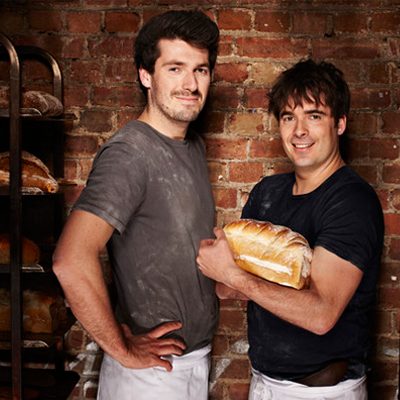
    MUMBAI: The English entertainment channel TLC is all set to serve some mouthwatering delicacies with its new series The Fabulous Baker Brothers starring Tom and Henry Herbert.


    In the new series, ace bakers and journalists Tom and Henry Herbert will demonstrate how easy it is to bake like a professional in your own kitchen by mastering a few simple techniques. The Fabulous Baker Brothers will premiere on 17 February and will air every Monday and Tuesday on TLC at 9:30 pm.


    Discovery Networks Asia-Pacific, Pan-Regional ad sales and south east Asia sr VP and GM – South Asia and head of revenue Rahul Johri said, “TLC is committed to offering its viewers the widest range of culinary programmes in exciting new formats hosted by iconic international personalities. We have pioneered and presented a diaspora of lifestyle trends ranging from cuisine, makeover, and travel. Now we bring baking to Indian audience. The Fabulous Baker Brothers will open the door to a brave new world of wonderful baking and magnificent meaty masterpieces.”


    With five generations of baking tradition behind them, Tom, the master baker and Henry, the popular chef who runs a local butcher’s shop will take you on a gastronomical journey in this new offering from TLC.


    In the new series, viewers will get a chance to see the boys roll up their sleeves and get down to putting together tantalising recipes that satisfy everyone’s taste buds and appetites. From perfect pizzas and simple chapattis to the ultimate burger and the massive pie, every episode centers around a theme and also sees both brothers fight it out in an epic battle known as the Pie War in which as they serve up their pie versions to hungry judges.

  • Life in the digital era: food, shelter, clothing and Internet

    Life in the digital era: food, shelter, clothing and Internet

    MUMBAI: As the lines blur between the real and virtual, many brands are making an effort to create a virtually real world to reach out to the audiences/consumers. Especially, when technology allows them a two-way communication with their target audience unlike before when they were left doing only the talking.


    Not only do consumers respond in real time on the digital platform, it is a faster, more measurable and result-driven medium that helps brands understand their user base, increase revenue and reward loyalty.


    Says Priti Nair of Curry Nation: “A good digital campaign can reach out far and wide as compared to any other medium and that too at a throwaway price. Also, the longevity of a good campaign is far more on the digital platform than any other medium. All these make digital a medium worth checking out.”


    Recently, the agency created a digital campaign for Nirlep – Khaate peete desh ka rakhwala – which revolves round Indians’ love for food, sending out a tongue-in-cheek message that healthy eating is still possible with Nirlep non-stick cookware.


     “The best part about a viral video is it gives you a lot of space to play around. Interesting characters, situations can be explored. Using the slogan of ‘Yes We can’ with food was both, entertaining enough as well as informative,” says Nair about the campaign.


    Says NeoNiche Integrated Solutions MD and CEO Prateek N Kumar: “With digital and technology, the sky’s the limit. If you can dream it, you can build around platforms to really make those elements come to life in real time. A well thought of digital plan also has the capacity of creating WOM and going viral, the ROI is literally exponential compared to traditional media.”


    While digital and social media is constantly evolving and is still uncharted territory for most marketers, the basic principles of communication remain the same: Who are you trying to reach, where are they and what excites them?


    Not so long ago, FoxyMoron launched a digital campaign – No Pimples, No Marks – for Garnier Pure Active. A fun take on popular movies, posters were released titled Rowdy Pimple, The Dirty Pimple, Pimple Tum Kab Jaaogey and I Hate Pimple Storys which conveyed how pimples haven’t spared Bollywood either.


    FoxyMoron co-founder and online strategist Harshil Karia believes one should use a medium which requires you to ‘only’ spend to achieve success. “This is a slightly touchy topic as social media increasingly spawns ideas from scaling organically. For instance, on YouTube, the organic percentage of video views or on Facebook, the organic percentage of fans has considerably reduced. Since both these are dominant mediums, it’s a challenge but try to find holes within the mediums where organic percentages are high and capitalize on them. For example, on Facebook, there was a time when video organic views were extremely high because Facebook was pushing a video agenda. Similarly, as Google pushes a social agenda, its propensity to help brands scale organically will be higher,” he explains.


    The brand must know its audience even better than itself. Otherwise, whatever be the strategy, it will never be seen or heard by the right people who matter.


    Karia gives the example of HUL’s Lifebuoy campaign, ‘Help a child reach 5’, which tells the story of how a father celebrates his son completing five years of age and has a heart-warming and thought-provoking concept at its core. The YouTube video went viral and garnered over 10 million views.


    Digital gurus believe that in the era of smart devices and social handles, the basic necessities of mankind have changed from “Food, Shelter and Clothing” to “Food, Shelter, Clothing and Internet”. With brands latching onto this trend, it will only help them garner user intelligence in real time – something the traditional marketing mix can’t help them achieve.

  • FoodFood appoints SK ‘Raj’ Barua as CEO

    FoodFood appoints SK ‘Raj’ Barua as CEO

    MUMBAI: Food and lifestyle channel FoodFood has appointed former Freemantle Media India managing director SK ‘Raj’ Barua as its CEO.


    Though no formal announcement has been made, an industry source has confirmed the report.


    Barua has more than two decades of experience in the broadcasting business, starting out with Discovery Communications India where he was VP finance from 1995-2007 and then elevated to CFO- Asia Pacific which he served from 2007 to 2009.


    He joined Fremantle Media India in August 2009 where he was part of the start up team, which successfully got it going after a couple of false starts prior to that. It was under his watch that Fremantle Media India got shows like Indian Idol, India’s Got Talent, X Factor, among others off the ground.

  • NDTV launches channels on StarHub TV

    NDTV launches channels on StarHub TV

    MUMBAI: India’s leading News broadcaster entered Singapore on 18 October with two of its premium channels, NDTV 24×7 and NDTV Good Times showcasing on StarHub TV

    NDTV 24×7 is a 24hour English language news and infotainment channel with news from India and around the world now available in over 78 countries. NDTV Good Times, India’s first travel & lifestyle channel, is for global viewers keen to experience and explore the Indian lifestyle. Be it food, travel, wellness, shopping or just plain indulgence, it is India’s everyday lifestyle expert.

    Speaking on the occasion, Rohit Jaiswal, Associate Vice President, Network Distribution and Affiliate Sales, NDTV, said, “We are very pleased to announce the launch of our channels on StarHub TV. Like in other parts of the world, our channels, which are now available in over 78 countries, will aid Indian expatriates and everyone else who has an interest in India keep abreast with a constantly evolving India.”

    “We are pleased that India’s leading broadcaster, New Delhi Television, has chosen StarHub TV as its preferred platform to showcase their premium channels to the Singapore audience. The addition of NDTV 24×7 and NDTV Good Times will strengthen StarHub TV’s Indian content line-up by offering more entertainment choices for our customers. NDTV 24×7 will help our viewers stay informed with round-the-clock news updates from award-winning newscasters, whilst lifestyle-centric channel NDTV Good Times will cater to viewers with a keen interest in Indian fashion, travel, food and wellness”, said Ms Lee Soo Hui, Head of Media Business Unit, StarHub.

    The channels are also available on StarHub TV Anywhere via www.starhubtvanywhere.com. TV Anywhere is StarHub’s multiscreen solution which allows StarHub TV customers to watch their favorite TV channels on their subscription plan using their personal devices.