Tag: Food

  • Throwback Thursday: How Burger King broke the mould with its ‘Mouldy Whopper’ ad

    Throwback Thursday: How Burger King broke the mould with its ‘Mouldy Whopper’ ad

    Mumbai: In this week’s Throwback Thursday segment, we present an ad that isn’t so much of a relic considering it was launched just over a year back. However, the product showcased in the ad – a rotting, aging whopper from Burger King – might qualify as one! It is one of those game-changing ads that make one sit up and rub their eyes in disbelief and ask oneself- Is this for real? But that’s not the only reason this ad features here.

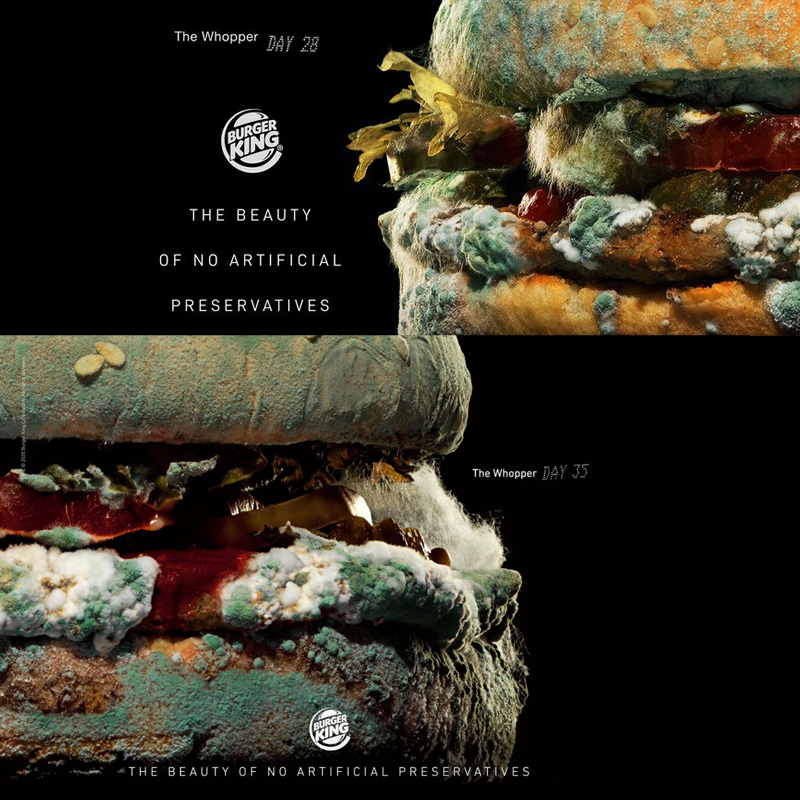
    Burger King unveiled a global ad campaign ‘Mouldy Whopper’ in February 2020, aimed at highlighting its commitment to dropping all artificial preservatives from its food products. The ad features a Whopper- one of the signature burgers from the brand- and proceeds to coat it with, believe it or not, mould- layers of it! To say that the Burger King’s ad was a departure from usual food ads would be a gross (in more ways than one) understatement.

    Instead of showcasing its food with the classic flawless and often unrealistic, picture-perfect finish- which is the standard norm in fast food advertising, they decided to show the honest, albeit gross reality of natural, ‘free-of-artificial-preservative’ food.

    The ad displays a Whopper that looks fresh to start with, and whose components progressively decompose and get engulfed in fungus over a period of time. It depicts this gradual degradation of the burger through a time-lapse video, alongside a date stamp letting you know how long the burger has been exposed to the elements- beginning from day one and concluding at day 34.

    The speeded-up action shows the burger deteriorating before our eyes over the course of 30 seconds with intriguingly high-resolution photography. First, the lettuce wilts, then white, fuzzy fungi ravage the meat patty. The burger bun flattens out as the mould spreads all over, and the viewer finds out that the action took place over 34 days. The tagline flashes across the screen: “The beauty of no artificial preservatives”, as it then hits the viewer why the whopper wilts in a matter of hours, going on to rot, decay, and develop grey-green mould in over a month’s span.

    The campaign was created through a partnership between three agencies: INGO STHLM, Ogilvy-owned David, and Publicis. It was a far cry from typical food advertising, in which the items are carefully crafted to look as appetising as possible. The idea, of course, was to call attention to the company’s shift away from artificial preservatives and towards a healthier product, even if it came with the tag of ‘junk food’.

    The Mouldy Whopper spot accumulated more than 1.7 million YouTube hits within days of its debut. While it left most marketing experts divided, media outlets could not stop breaking the ad down. There were visceral responses on whether the marketing guys at Burger King had lost their minds.

    But luckily for the brand, it worked in a counter-intuitive way. It became a talking point, demanded attention, and the central message was also hammered in— that the Whopper grew mouldy because it had no artificial preservatives. The fast-food industry has a reputation of being too processed and full of additives, and this was a welcome departure.

    Many of the consumers lauded the brand for its bold but honest and realistic portrayal.

    By doing so, the fast-food brand broke all food advertising conventions by marketing its best-selling product in an unappetising, downright disgusting manner. At the same time, such an ad was a huge risk. It could gross loyalists of the brand and turn them off from it.

    The work promotes the brand’s pledge to drop all artificial preservatives, which it has accomplished across much of Europe and 400 locations in the US. Plans to have it removed from Whoppers in all the US locations are next on the cards for the brand.

    The campaign also seemed to take a cheeky dig at its chief rival, despite never mentioning McDonald’s in the campaign. McDonald’s has come under fire several times in the past for how its food doesn’t appear to decompose as one would expect.
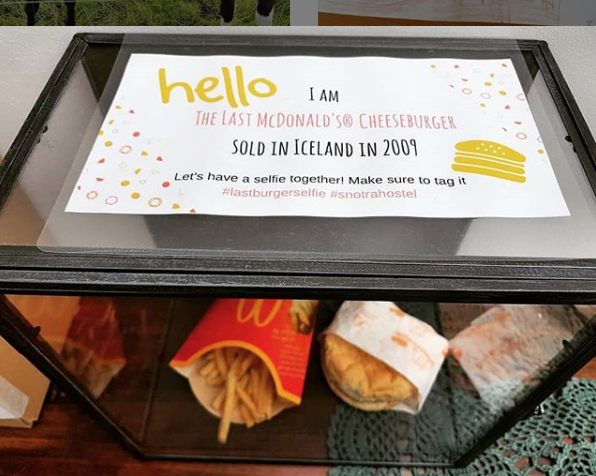
    Whether the ad and the shift away from artificial preservatives will work to accomplish Burger King’s ultimate goal—selling more Whoppers—remains to be seen.

    Burger King’s CMO Fernando Machado has this to say: “No one in our office was expecting consumers to jump in the car and drive desperately to Burger King to buy a Whopper just because we removed artificial preservatives. The main objective of the Mouldy Whopper campaign was not to drive short-term sales.”

    “It is the right thing to do and we don’t see a future where fast food brands will have artificial preservatives. So, by getting there first, we are making our brand future-proof. And, hopefully, in the long run, this will not only help with sales but mostly avoid the brand becoming irrelevant,” he added.

    So, was the chain’s controversial mouldy whopper ad a winner? Well, if this year’s Cannes fest is any indicator then it’s a whopping YES for the whopper. The campaign premiered at the recently concluded Cannes Lions International Festival Of Creativity achieving no less than three Grand Prix in the Outdoor category, Retail subcategory. Three posters of the campaign won Grand Prix each, in addition to their correspondent Golden Lion.

    But, of course, all that would be a moot point if the communication would have been lost to the ones who matter most – the consumers. Yes, one needs to push hard at the boundaries sometimes, even tear it down to be noticed and become relevant. As a wise guy once said, “If no one notices your advertising, everything else is academic”

    CREDITS

    CLIENT: Burger King

    AGENCY: Ingo, David Miami, Publicis

    Executive Creative Director: Björn Ståhl               

    PRODUCTION

    COLONY (Production company)

    Producer: Lena von der urg

    MUSIC: “What A Difference A Day Makes” by Aretha Franklin

  • Honeygate: A sweet tale turns bitter for brands

    Honeygate: A sweet tale turns bitter for brands

    KOLKATA: Honey is one of the most loved home remedies or immunity booster in Indian households. With the onset of Covid2019, the sweet miracle has attracted more Indian consumers, even global buyers. But a plot-twist has changed the narrative, as top brands in the category are allegedly adulterating the product with the addition of sugar syrup.

    An investigation by the Centre for Science and Environment (CSE) has found that leading brands sell honey which doesn’t meet purity standards. Dabur, Patanjali, Apis Himalaya, Baidyanath, Zandu failed to clear the Nuclear Magnetic Resonance Spectroscopy (NMR) test. What’s more concerning is the fact that the business of adulteration has evolved to hoodwink stipulated Indian tests.

    “The honey category stands stirred and shaken. Sugar syrup is sure an adulterant. The next time a consumer reaches out for a jar of honey, there is going to be suspicion around. And rightly so. The brand equity of the category is stirred,” Harish Bijoor Consults Inc. brand guru and founder Harish Bijoor said.

    Will brand reputation and business suffer?

    As the brand reputation of honey is based on health benefits, the controversy is not going to bode well for manufacturers. Brand consultant Shubho Sengupta stated that the category is very close to Indian families, unlike new age brands. Certainly, the consumers will be disappointed, thereby impacting the brand equity. Consumers might look at it as “tampering with Indian tradition,” remarked Sengupta adding that there are many emotions at play. However, it is hard to make out what would be the impact on sales.

    Business strategist Lloyd Mathias echoed the sentiment, and noted that the addition of sugar syrup is damning, because consumers buy honey for its health benefits and some of the prominent brands like Dabur, Jandu, Patanjali being on the list is disheartening.

    “Honey, as an overarching category, promises purity. If that purity comes under question, then it is a huge blow on the brands that are failing the test. Today, a lot of consumers must be thinking about what they are buying. It impacts large brands very badly. Last time when something like this happened, brands like Pepsi, Maggie had a tough time coming back,” pointed out Naresh Gupta, co-founder & chief strategy officer at Bang In The Middle. He added that food is a very high involvement category and consumers will not be quiet if they found anything wrong with what they consume.

    Will this cause a long-term impact?

    However, Alchemist Brand Solutions founder and managing partner Samit Sinha differed slightly. He went on to explain that many of these brands have a wide portfolio and honey is not their flagship product and not even the biggest contributor to their revenues. Moreover, the brands in the rejected list are very large, established, and riding on strong momentum. Hence, they have the ability to ride out the storm.

    Moreover, a lot of developments happen but they are restricted to the intellectual community, and it is not certain if this one will actually reach the target consumer – the middle-class Indian housewives, he noted.

    “Our expectations on substantiating claims and superior products have been historically far-fetched and the attitude on the ground has been more like 'adjust karlenge'.  Also, the impact on the category will be short-term as the consumer mindset is like 'aisa toh sab karte hain' (everyone does this), so it is a possibility that people will get over it,” Sinha added.

    Mathias, too, held the view that while the report may cause a bit of a hub-bub now, public memory is short-lived. But if these brands don’t go and correct themselves, they will continue to lose in terms of consumers’ faith.

    “The only good thing is the brands will hopefully address the issue and will make sure they are not adulterating natural honey,” he said. Sinha’s also optimistic that one good thing that will emerge from the incident is that the brands will no longer sell fabricated products but superior products.

    However, after a huge face loss, the brands have started defending themselves. According to Gupta, these companies cannot debunk the claim just by releasing an ad saying “I am pure,” because the whole report has been covered widely across media. They will have to put their money where their mouth is to win back the consumers’ trust.

    While the experts agree that CSE is a reputed organisation which has carried similar movements in the past, Sengupta mentioned that consumers will, unfortunately, believe the brands’ claims because brands like Dabur will spend huge to kind of own the narrative. Very few consumers will care about an NGO report unless the competitors promote it.

    Will it help the brands that passed the test?

    You can count on one hand the number of brands that passed the quality test, among them being – Marico’s Saffola Honey, Markfed Sohna and Nature's Nectar. These products will jump in to maximise the impact, acknowledged Sengupta. Mathias concurred, adding that it is a positive endorsement for those brands. “Those two-three brands will be preferred hugely and they might come up with campaigns. That will bring a systematic change in the category. It’s a category dominated by heritage players for a very long period but suddenly the category will change,” Gupta commented.

    Saffola lost no time in tooting its horn and advertising the fact that it “has launched the best quality honey in its purest form” in India.

    “Every batch of Saffola Honey is tested using NMR (Nuclear Magnetic Resonance) technology, which is one of the most advanced tests in the world, in the best in class laboratories to ensure that it is 100 per cent pure, free from added sugars and free from any form of adulteration. Saffola Honey is produced at a USFDA registered plant with state-of-the-art technology ensuring robust quality checks and controls. Saffola Honey is also compliant with each of the quality parameters mandated by FSSAI,” a Marico spokesperson said.

    Right now, the biggest brands producing honey are like the magician whose best trick has been suddenly exposed for what it is – a sleight of hand. It will be interesting to see how the magic syrup makes its comeback.

  • ENO continues to drive relevance with food experiments

    ENO continues to drive relevance with food experiments

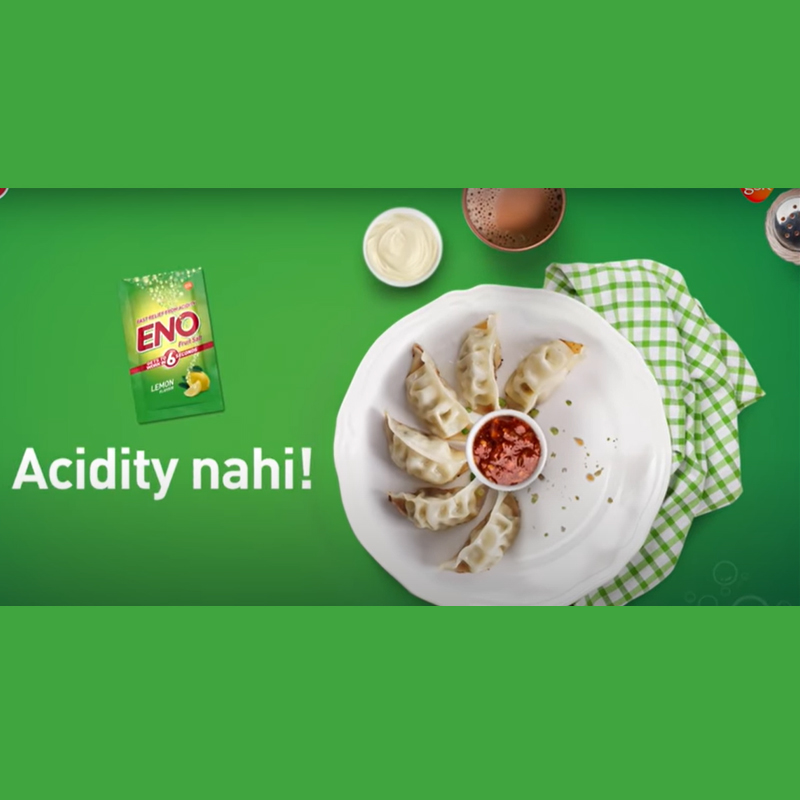
    New Delhi: GSK Consumer Healthcare’s leading antacid brand in India, ENO has launched the third phase of the successful #WhatARelief campaign to drive relevance for the brand. As the country prepares itself for a longer stint of social distancing, the in-home food experiments continue to be a relevant trend, as validated from the recipe search data from YouTube. Riding on this wave, ENO has partnered with Google to create a unique campaign where the communication is customized as per the recipe being searched by the user.

    The brand first picked up the top recipes being searched on YouTube (which had a high correlation with acidity) and then developed customized six-second creatives for each recipe. The ENO advertisement is customised basis the recipe searched and plays before the recipe video commences, making the whole experience a very personalized one for the viewer.

    GSK Consumer Healthcare area marketing lead OTC & expert marketing ISC Vijay Sharma said, “With prolonged confinement at home, food continues to be an expression of relief and people are seeking and trying new recipes that they can themselves make at home. We want people to enjoy their culinary experiments without having to worry about any interruption that may happen on account of acidity, as their trusted ally Eno is always there to take care of it. We had received an overwhelming response to the previous phase of this campaign and that’s why we are extending it – now making it far more personalised with this unique idea.”

    With this campaign, the brand will drive relevance via contextual conversations and present itself as a reliable ally against acidity. The campaign has already garnered a massive reach of over 14 million consumers on YouTube within a week of its launch.

  • Digital arm of LF hits 3.2-million user mark

    Digital arm of LF hits 3.2-million user mark

    MUMBAI: livingfoodz.com, the digital arm of food and lifestyle channel from the Essel Group LF, has hit the 3.2-million user mark in March 2020. The fastest-growing web portal, with over 7.2 million page visits according to Google Analytics, focuses on food, travel, culture and lifestyle. This has placed livingfoodz.com ahead in lifestyle over many legacy players owing to its unique content, its distinctive focus on trends and TV catch up.  

    “LF has always been a torchbearer for original content, its milestone moments like this that reinstate our belief in our direction and drive towards our curated content. It is humbling to have the support of our viewers, week on week. And we hope to continue keeping our viewers engaged and invigorated in the months to come. And would love to hear from them via our social media platforms on the kinds of stories, adventures, experiences and food sojourns they would like to experience,” LF business head Amit Nair said.

    With reputed chefs and hosts and interesting concept-based shows, LF has managed to scale new heights. The channel has adopted offline and online experiences to connect with the people that make us the best in the business.

  • LF Originals launches new show on sustainable fishing

    LF Originals launches new show on sustainable fishing

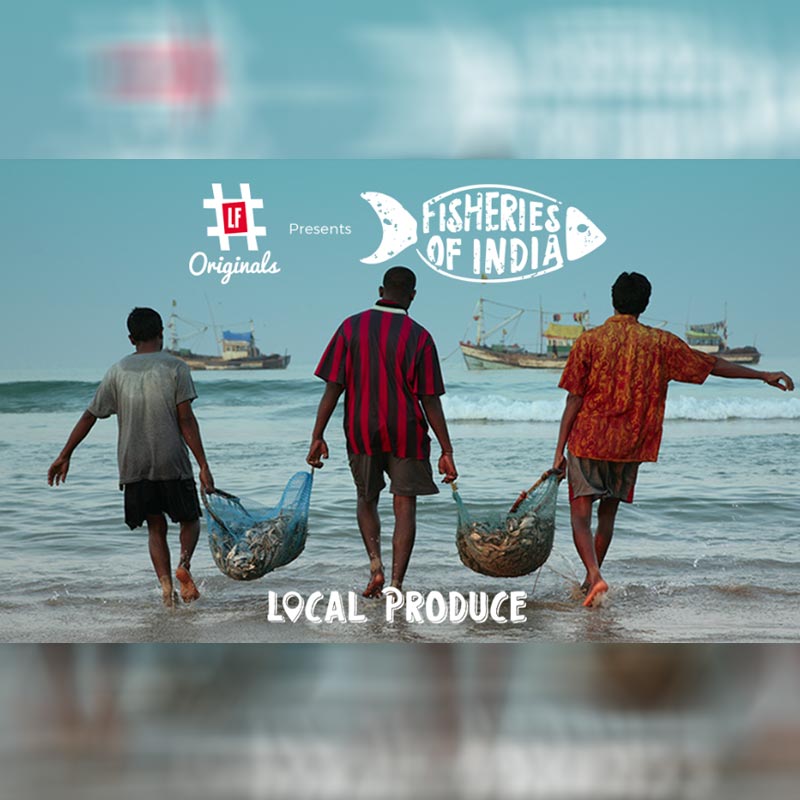
    MUMBAI: The digital extension of Living Foodz that hosts original digital content on Food, Travel & Lifestyle, launches its new show ‘FISHERIES OF INDIA’ under its digital series ‘Local Produce’ on its Facebook page. The show will be speaking on sustainable fishing and how it is the need of the hour.

    With Fisheries of India, LF Originals aims to bring the efforts of Mr.Ganesh Nakhawa to the limelight. A 7th generation fisherman from Karanja in Uran, he is also the Director of Fisheries along that coastal area. Funded by the government, he has been lauded for his unique methods that have helped increase catch and bring back equilibrium in marine ecology.

    Suggestive to the name of the show, this series is all about insights into the fishing culture and the methods that India must adopt to make the practice sustainable and curb aggressive overfishing off India's coasts.

    In every episode of Fisheries of India, LF Originals aims to uncover the various facets of fishing in India. Episode 1 covers the basics – 'What is fishing?' 'What is a continental shelf?' and 'Different methods of fishing'. Episode 2 raises awareness of the orthodox methods and their impact versus the modern methods of fishing and how results are achieved. It also speaks of how India consumes more migratory fish, hence disturbing ecological balance in the oceans. Finally, Episode 3 highlights the evils of plastic pollution in our oceans and the effects it has not only on the daily lives of fisherfolk and the marine ecosystem as a whole.

  • SC stays J&K HC order to not prohibit outside food in theatre

    SC stays J&K HC order to not prohibit outside food in theatre

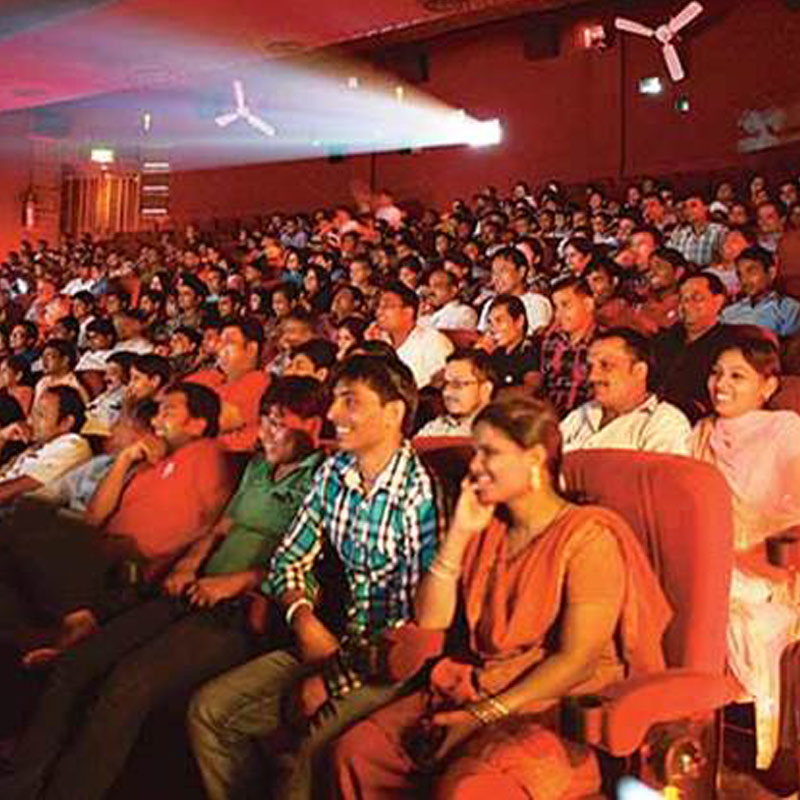
    MUMBAI: The Supreme Court has stayed a direction issued by the Jammu and Kashmir High Court to the multiplexes/cinema hall owners of the state not to prohibit cinema goers/viewers from carrying their own food articles and water inside the theatre, as per a report by the Indian Express.

    The High Court of Jammu and Kashmir passed the order on 18 July 2018 after which the Multiplex Association of India (MAI) filed a special leave petition before the Supreme Court of India against the same.

    The matter was listed for hearing on 10 August 2018, before a bench comprising of justice R F Nariman and justice Indu Malhotra with senior counsel Mukul Rohatgi representing the MAI.

    MAI president Deepak Asher said “We are satisfied by the interim direction of the Supreme Court of India, staying the above order of the High Court of Jammu and Kashmir. We have always maintained that allowing patrons to bring in their own food and beverages inside cinema theatres, besides infringing upon the fundamental rights of multiplex and cinema operators to carry on business, and being violative of the contractual agreement between the patron and the cinema operator, has serious implications for safety and security, as well as health and hygiene. The stay granted by the Supreme Court reinforces the established business practice followed by cinemas across the world and also similar practices followed by other establishments and businesses like amusement parks, entertainment centres, sports stadia, restaurants, hotels, etc.”

    In addition, two other special leave petitions were filed before the Supreme Court of India by G S Malls Private Ltd and KC Theatre against the same order passed by the High Court, which were also heard along with the petition filed on behalf of MAI. Senior counsel Abhishek Singhvi represented G S Malls. A similar order has been passed in these two petitions as well.

  • Photograph food for Chef’s Table

    Photograph food for Chef’s Table

    MUMBAI: Food, glorious food. We love to eat it, we love to watch others cook it, and above all, we love to photograph it. From the director of Jiro Dreams of Sushi (David Gelb) comes Chef’s Table, a Netflix original documentary series, that is returning globally for a second season on Friday, 27 May.

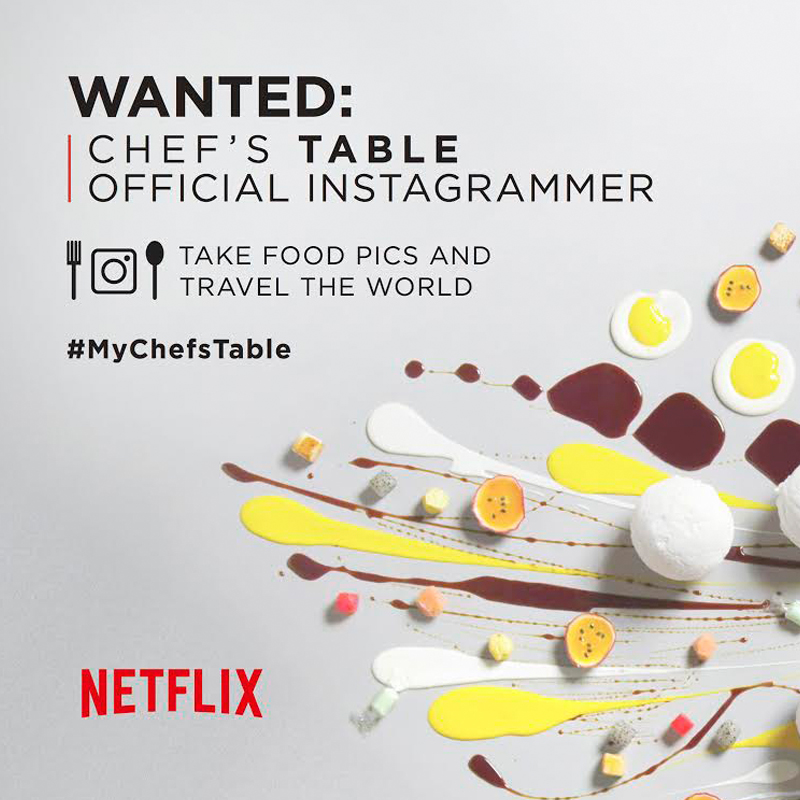
    To celebrate season two, the search is on across Asia for the Chef’s Table official Instagrammer. The chosen Instagrammer will visit the six restaurants featured in season two (Mexico! Slovenia! Chicago! Brazil! San Francisco! Thailand!) and document their sensory experience through beautifully-set, mouth-watering and hunger-inducing Instagram shots.

    Sounds delectable? Join in to:
    1. Follow @Netflix_IN
    2. Post your best original food photo to Instagram
    3. Hashtag #MyChefsTable

    For more information, please head on to mychefstable.netflix.com, or refer to the appended image.

    The renowned chefs featured in season 2 of Chef’s Table include: Alex Atala (Brazil); Ana Ros (Slovenia); Dominique Crenn (United States); Enrique Olvera (Mexico); Gaggan Anand (Thailand); and Grant Achatz (United States). The series provides a rare, inside look at the lives and careers of some of the world’s best chefs today on their quests for sensory perfection.
    Chef’s Table season one is now streaming globally on Netflix.

  • Photograph food for Chef’s Table

    Photograph food for Chef’s Table

    MUMBAI: Food, glorious food. We love to eat it, we love to watch others cook it, and above all, we love to photograph it. From the director of Jiro Dreams of Sushi (David Gelb) comes Chef’s Table, a Netflix original documentary series, that is returning globally for a second season on Friday, 27 May.

    To celebrate season two, the search is on across Asia for the Chef’s Table official Instagrammer. The chosen Instagrammer will visit the six restaurants featured in season two (Mexico! Slovenia! Chicago! Brazil! San Francisco! Thailand!) and document their sensory experience through beautifully-set, mouth-watering and hunger-inducing Instagram shots.

    Sounds delectable? Join in to:
    1. Follow @Netflix_IN
    2. Post your best original food photo to Instagram
    3. Hashtag #MyChefsTable

    For more information, please head on to mychefstable.netflix.com, or refer to the appended image.

    The renowned chefs featured in season 2 of Chef’s Table include: Alex Atala (Brazil); Ana Ros (Slovenia); Dominique Crenn (United States); Enrique Olvera (Mexico); Gaggan Anand (Thailand); and Grant Achatz (United States). The series provides a rare, inside look at the lives and careers of some of the world’s best chefs today on their quests for sensory perfection.
    Chef’s Table season one is now streaming globally on Netflix.

  • Nearbuy associates with KFC to give out discount offers on food

    Nearbuy associates with KFC to give out discount offers on food

    MUMBAI: Nearbuy, an ecommerce venture has partnered with KFC. This strategic association will help customers find the nearest KFC outlet through Neaarbuy’s location based application and consumers can even  avail discounts on KFC’s combos  containing signature items such as Zinger Burger, Hot n Crispy Chicken, Cheese Crunch Burger, Rice Bowlz and more.

    With this new partnership  Nearbuy expects to drive half a million customers over a period of one year to its website; customers who will purchase these vouchers and avail them at the various KFC outlets.  This mutually benefiting partnership will not only offer an opportunity to the local commerce player to tap onto the growing base of young food lovers but also benefit KFC’s overall online market penetration and drive their sales growth.

    KFC India CMO Luis Ruiz Ribot  csaid, “We welcome this partnership with Nearbuy. This is part of our strategy to provide greater accessibility to our Finger Lickin’ good food for our ever-increasing online customer-base.”

    Commenting on the unique partnership, Nearbuy CEO and co-founder Ankur Warikoo said, “We are thrilled to extend our association with the leading QSR brand of India – KFC. Our collaboration is a testimony to the common values we share as a brand, and wish to offer the best to our customers. We are happy to share that 11000 consumers have already grabbed this exciting deal. We hope that this association benefits both players, and we continue to offer exciting benefits to our respective customers.”

  • Nearbuy associates with KFC to give out discount offers on food

    Nearbuy associates with KFC to give out discount offers on food

    MUMBAI: Nearbuy, an ecommerce venture has partnered with KFC. This strategic association will help customers find the nearest KFC outlet through Neaarbuy’s location based application and consumers can even  avail discounts on KFC’s combos  containing signature items such as Zinger Burger, Hot n Crispy Chicken, Cheese Crunch Burger, Rice Bowlz and more.

    With this new partnership  Nearbuy expects to drive half a million customers over a period of one year to its website; customers who will purchase these vouchers and avail them at the various KFC outlets.  This mutually benefiting partnership will not only offer an opportunity to the local commerce player to tap onto the growing base of young food lovers but also benefit KFC’s overall online market penetration and drive their sales growth.

    KFC India CMO Luis Ruiz Ribot  csaid, “We welcome this partnership with Nearbuy. This is part of our strategy to provide greater accessibility to our Finger Lickin’ good food for our ever-increasing online customer-base.”

    Commenting on the unique partnership, Nearbuy CEO and co-founder Ankur Warikoo said, “We are thrilled to extend our association with the leading QSR brand of India – KFC. Our collaboration is a testimony to the common values we share as a brand, and wish to offer the best to our customers. We are happy to share that 11000 consumers have already grabbed this exciting deal. We hope that this association benefits both players, and we continue to offer exciting benefits to our respective customers.”