Tag: food and beverages

  • PepsiCo’s snacks unit reports double-digit Q2 growth in India

    PepsiCo’s snacks unit reports double-digit Q2 growth in India

    New Delhi: Despite the severe impact of the second wave, global food and beverage major PepsiCo has reported double-digit growth in India in the second quarter for March-April-May.

    PepsiCo’s net revenue from the Africa, Middle East, South Asia (AMESA) division under which India falls, was at $1.6 billion in the quarter, up 62.97 per cent as against $0.98 billion in the corresponding period in 2020. Overall, the company’s global net revenue growth was up 20.52 per cent to $19.21 billion.

    In the AMESA division, PepsiCo’s snacks unit volume reported “double-digit growth in India and Pakistan and mid-single-digit growth in the Middle East, partially offset by a high-single-digit decline in South Africa,” said PepsiCo in an earning statement for Q2. “Beverage unit volume grew 38 per cent, primarily reflecting a four percentage-point impact of our Pioneer Foods acquisition and double-digit growth in India.”

    Additionally, the Middle East and Pakistan each experienced double-digit growth and Nigeria experienced mid-single-digit growth, it added. “The recovery from the pandemic contributed to a current-year increase in consumer demand, which had a positive impact on net revenue, unit volume and operating profit performance,” the US based company said, PTI reported.

     “As mobility trends improved, our international beverage business accelerated and delivered 22 per cent organic revenue growth, while our international snack business delivered 11 per cent organic revenue growth,” said PepsiCo.

    Over the outlook, the company is expecting its international markets to perform well despite an uneven recovery across geographies as vaccination efforts and mobility trends vary.

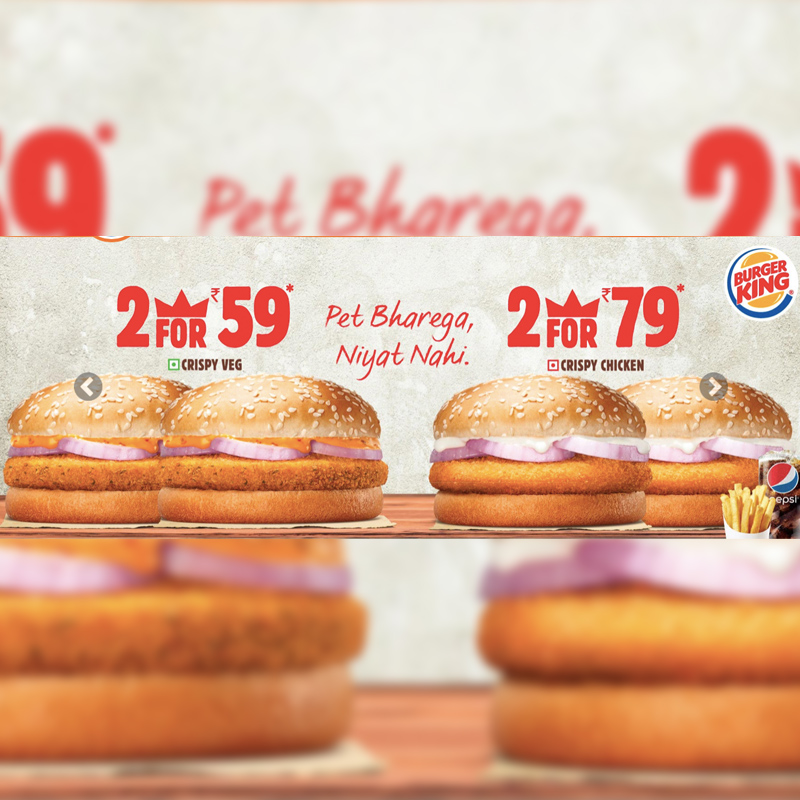
  • Burger Kings’ strategy to hit the sweet spot in India

    Burger Kings’ strategy to hit the sweet spot in India

    MUMBAI: It wasn’t long back that fast food penetration in India was seriously low. It was only metros and mini metros that had access to burgers, pizza and french fries. But with increasing globalisation and digitisation, multinational fast food players have forayed into the remotest areas of India as well.

    According to a report published by Technopak, India’s fast food industry is expected to grow to $4.61 billion by 2020, more than double its value of $2.11 billion in 2014,. As Indians start to spend more, competition is heating up, with foreign chains like Burger King, Wendy’s, Carl’s Jr. and Johnny Rockets setting up shop in the last year.

    American global chain of hamburgers and fast food, Burger King entered India in 2014 and has since rapidly grown its presence and reach in the country. Today, over 15 million customers sink their teeth into the burger chain’s menu everyday. Although Burger King has outlets in over 100 countries across the globe, it has not resorted to duplicating the same menu and strategy for India and rather believes in having a tailor-made menu to fit the Indian market and consumers.

    Although India is predominantly considered a vegetarian market, multinational fast food chains have an interesting mix of veg and non-veg items on the menu for Indians. Interestingly, for Burger King, most of its products sold in India in terms of quantity are veg.

    While United States of America continues to be a primary market for Burger King, the company has a mission to become India’s leading fast food restaurant. For this, Burger King has upped its supply chain, distribution and invests a fair amount on R&D. Burger King global chief marketing officer Fernando Machado says, “We have been growing faster outside US for the last 5-6 years not only due to the number of outlets but because lately we have been paying more attention to advertising and marketing in all the markets.”

    India is an iconic and important market for Burger King due to strong franchise partners here. For the company, it was quite a test to create and curate a menu for the Indian audience. Now that they have achieved it, the company want to concentrate on scaling up operations.

    Machado says that he is happy with the scale of growth in India. However, he is not ready to rest on his laurels just yet. The Indian market is among the most important ones for the company and Machado sees scope for greater growth.

    Where major brands including Dominos, McDonald’s and KFC are aggressively marketing themselves in India, Burger King has always steered away from advertising heavily in India, The reason? The amount of adverting is a function of the size of the account for Burger King. However, as India business scales up, the fast food company will increase its ad spend in the country. “Since we have a master franchise in the west, our marketing budget is a per centre of the sales of the company. It is not like FMCG, where even if you are making loss, you have to advertise.”

    Today, every brand wants to connect with the consumer at as many touch points as possible. They tap the audience on social media, print, outdoor and traditionally. Digital however takes the largest pie as the millennials are constantly attached to their mobile devices. Yet, for Burger King, traditional medium still offers a great ROI (return on investment). The digital promotions are restricted to huge campaigns only. They believe that the primary role of traditional medium is to drive short term sales and traffic, whereas digital is more about connecting with people.

    Additionally, there’s never been a better time for fitness brands with the younger generation becoming more and more health conscious. With almost sedentary lifestyles, people are opting for healthier eating and exercise options to stay fit. Brands are ensuring their communication shows their commitment to health. However, brands that have stuck to high sugar and salt content for decades are now finding it difficult to change that perception.

    This problem can be solved by either promoting the product for its taste and goodness or altering its key ingredient to make it more appealing for the health conscious consumer.

    We have all grown up hearing from our elders how consuming fast food can be really unhealthy due to the high amount of sugar and salt in these products. To address the issue, major F&B (Food and Beverage) brands internationally have decided to cut down on the amount of sugar, salt and saturated fats in their products to improve the image of packaged foods.

    Certain fast food chains like McDonald’s, KFC and Burger King now have a government-enforced ‘calorie cap’ placed on their heads, in an attempt to make their meals healthier.

    F&B majors including Nestle, Mondelez, Jubilant Foods, McDonalds among others are under pressure from a shift in consumer preferences towards healthier food and away from processed products such as instant noodles and frozen pizza. Nestle chief executive Mark Schneider remarked, “The trend towards healthier foods is to be observed worldwide. Combining the convenience of packaged foods with healthy good nutrition, that is where our sweet spot is.”

    At such a time, the challenge for Burger King lies in improving the food quality and taste while cutting down on sugar and salt content. For this, the company has dedicated half its team towards cutting down the sugar and salt in all its products while maintaining the taste. “It’s not about what will be our next sandwich but how can we clean all the ingredients in the existing menu so we don’t use preservatives. That’s not because it is a trend but because it’s the right thing to do”, says Machado.

  • Q3-2015: Inox reports marked jump in F&B, Ad revenue

    Q3-2015: Inox reports marked jump in F&B, Ad revenue

    BENGALURU:  Inox Leisure Limited (Inox) reported 2.21 times PAT in Q3-2015 at Rs 14.30 crores (4.7 per cent of Total Revenues or TR) as compared to the PAT of Rs 6.47 crore (3 per cent of TR) in the corresponding year ago quarter and 2.73 times the Rs 5.23 crore (2 per cent of TR) in Q2-2015, but PAT for 9M-2015 at Rs 24.10 crore (3 per cent of TR) was a steep 31.9 per cent lower than the Rs 35.40 crore (5.2 percent of TR) in 9M-2014.


    Note: (1) 100,00,000 = 100 lakh = 10 million = 1 crore

    (2) Inox acquired Satyam Cineplexes Limited (SCL) with 38 screens as a wholly owned subsidiary on 8 August 2014 and Q2-2015 and Q3-2015 figures in this report include the figures of SCL.


    Revenue streams


    Inox TR in Q3-2015 at Rs 304.85 crore was 41.2 per cent more than the Rs 215.83 crore in Q3-2014 and 14.3 per cent more than the Rs 266.66 crore in Q2-2015. TR for 9M-2015 at Rs 807.42 crore was 18.1 per cent more than the Rs 683.40 crore in 9M-2014.


    Though Food and Beverages (F&B) and advertisement revenues (ad revenue) constitute just around 25 to 30 per cent of Inox TR, these two account heads have shown healthy 45.1 per cent and 98.4 per cent y-o-y  growth respectively in Q3-2015. Both these revenue heads have slowly and steadily started growing their contribution to Inox’s total revenue.


    F&B revenue grew to Rs 55.63 crore (18.2 percent of TR) from Rs 38.34 crore (17.8 percent of TIO) in Q3-2015 and grew 9.6 per cent from Rs 50.77 crore (19 per cent of TR) in the immediate trailing quarter. During 9M-2015, F&B revenue grew 22 per cent to Rs 156.30 crore (19.4 per cent of TR) from Rs 128.13 crore (18.7 percent of TR).


    Ad revenue in Q3-2015 grew to Rs 28.92 crore (9.5 per cent of TR) from Rs 14.58 crore (6.8 per cent of TR) in Q3-2014 and grew 62.4 per cent from Rs 17.81 crore (6.7 per cent of TR). During 9M-2015, ad revenue grew 84.6 per cent to Rs 61.7 crore (7.6 per cent of TR) from Rs 33.42 crore (4.9 per cent of TR) in the corresponding period of the previous year.


    ‘Other’ revenue in Q3-2015 at Rs 18.55 crore (6.1 per cent of TR) was 9.5 per cent lower than the Rs 20.50 crore (9.5 per cent of TR) in Q3-2014 and 2.4 per cent more than the Rs 18.12 crore (6.8 per cent of TR) in Q2-2015. For 9M-2015, ‘Other’ revenue at Rs 51.15 crore (6.3 per cent of TR) was 2.8 per cent more than the Rs 49.78 crore (7.3 per cent of TR) during 9M-2014.


    Average Ticket Pricing


    Inox’s says that its average ticket price (ATP) in Q3-2015 was 175, in Q3-2014 it was Rs 163 and in Q2-2015 it was Rs 162. During 9M-2015, ATP was Rs 166 versus the Rs 157 in 9M-2014. The company claims that its ATP is higher than the exhibition industry’s comparable properties ATP of Rs 171 in Q3-2015, Rs 163 in Q3-2014, Rs 163 in 9M-2015 and Rs 157 in 9M-2014.


    Expenditure


    Inox total expenditure (TE) in Q3-2015 at Rs 254.44 crore (83.5 per cent of TR) was 35.8 per cent more than the Rs 187.36 crore (86.8 per cent of TR) in Q3-2014 and 10.9 per cent more than the Rs 229.35 crore (86 per cent of TR) in Q2-2015. TE during 9M-2015 increased 19.5 per cent to Rs 686.80 crore (85.1 per cent of TR) from Rs 574.86 crore (84.1 per cent of TR) in 9M-2014.


    Entertainment tax paid by the company increased 50.6 per cent to Rs 38.12 crore (12.5 per cent of TR) in Q3-2015 from Rs 25.31 crore (11.7 per cent of TR) in Q3-2014 and was 19.1 per cent more than the Rs 32 crore (12 per cent of TR) in Q2-2015. During 9M-2015, Entertainment Tax paid by the company was 98.69 crores (12.2 per cent of TR), up 17.6 per cent from Rs 83.95 crore (12.3 per cent of TR) in 9M-2014.


    Inox Payroll cost in Q3-2015 at Rs 18.99 crore (6.2 per cent of TR) was 36.6 per cent more than the Rs 13.90 crore (6.4 per cent of TR) and 17.7 per cent more than the Rs 16.14 crore (6.1 per cent of TR) in Q2-2015. 9M-2015 payroll cost at Rs 48.83 crore (6.0 per cent of TR) was 31.1 per cent more than the Rs 37.24 crore (5.4 per cent of TR) in 9M-2014.


    Distributors share in Q3-2015 increased 38.3 per cent to Rs 75.37 crore (24.7 per cent of TR) from Rs 54.48 crore (25.2 per cent of TR) and was 11.1 per cent more than the Rs 67.81 crore (25.4 per cent of TR) in Q2-2015. This expense head during 9M-2015 at Rs 201.58 crore (25 percent of TR) was 13.8 per cent more than the Rs 177.13 crore (25.9 per cent of TR) during 9M-2014.


    F&B cost in Q3-2015 at Rs 13.58 crore (4.5 per cent of TR) was 28 per cent more than the Rs 10.61 crore (4.9 per cent of TR) in Q3-2014 and 1.6 per cent more than the Rs 13.58 crore (5 per cent of TR) in Q2-2015. F&B cost in 9M-2015 at Rs 39.20 crore (4.9 per cent of TR) was 4.8 per cent more than the Rs 37.41 crore (5.5 per cent of TR) in 9M-2014.


    Other expenses in Q3-2015 at Rs 108.39 crore (35.6 per cent of TR) was 30.5 per cent more than the Rs 83.07 crore (38.5 percent of TR) in Q3-2014 and 8.4 percent more than the Rs 100.02 crore (35.6 per cent of TR) in Q2-2015. In 9M-2015, other expense at Rs 298.51 crore (37 per cent of TR) was 24.8 per cent more than the Rs 239.12 crore (35 per cent of TR) in 9M-2014.


    Depreciation in Q3-2015 increased 57.2 per cent to Rs 20.44 crore (6.7 per cent of TR) from Rs 13 crore (6 per cent of TR) in Q3-2014 and increased 6.4 per cent from Rs 19.21 crore (7.2 per cent of TR) in Q2-2015. 9M-2015 depreciation at Rs 5.74 crore (7.2 per cent of TR) was 52.3 per cent more than the Rs 37.92 crore (5.5 per cent of TR) during 9M-2014.


    Inox’s interest cost in Q3-2015 was 88.7 per cent more at Rs 12.49 crore (4.1 per cent of TR) than the Rs 6.62 crore (3.1 per cent of TR) in Q3-2014 and 9.6 per cent more than the Rs 11.40 crore (4.3 per cent of TR) in Q2-2015 Interest cost in 9M-2015 at Rs 30.34 crore (3.8 per cent of TR) was 41.6 per cent more than the Rs 21.43 crore (3.1 per cent of TR) in 9M-2014.


    Occupancy and Footfalls


    Inox says that it currently has 365 screens in 51 cities and 94 locations in India with a seating capacity of 97039 seats. It plans to increase the number of screens by 12 and seats by 2751 in Q4-2015. Post FY-2015, Inox says that it plans to add 169 screens with seating capacity of 36977 to take its overall total to 546 screens and 136766 seats.


    The company says that it has kept pace with the exhibition industry’s comparable properties occupancy rate to 27 per cent in Q3-2014 and 28 per cent in Q3-2015,during 9M-2015, it had the same occupancy rate of 27 per cent as the industry rate of 27 per cent. The company claims a higher footfall of 326 lakhs for 9M-2015 as compared to the industry’s comparable properties footfall of 276 lakh, a figure that has fallen from the 298 lakh footfalls experienced by the industry’s comparable in 9M-2014. Inox claims that the footfalls at its properties was 304 lakh in 9M-2014.

  • ASCI upholds complaints against 79 out of 100 ads in September

    ASCI upholds complaints against 79 out of 100 ads in September

    MUMBAI: In September 2014, Advertising Standards Council of India’s (ASCI) Consumer Complaints Council (CCC) upheld complaints against 79 out of 100 advertisements.


    Out of the 79 advertisements against which complaints were upheld, 49 belonged to personal and healthcare category, followed by the education category with 18 advertisements.


    In the personal and healthcare category, the CCC found the claims in advertisements of 48 advertisers to be either misleading or false or not adequately/scientifically substantiated and hence, violating ASCI’s code. Some of the health care products or services advertisements also contravened provisions of the Drug & Magic Remedies Act and Chapter 1.1 and III.4 of the ASCI code.


    Complaints were upheld against advertisers like Vini Cosmetics’ advertisement of White Tone Face Powder that shows instant fairness of the skin on using the product which is misleading by exaggeration. The advertisement of Perfect Clinic claims to give hope for childless couples, helps to get sex life back and enjoy married life.


    Agro Tech Foods’ advertisement of Sundrop Heart claims that research conducted on consumers proves the product has worked in 100 per cent of the people tested on. The duration of the supers in the advertisement does not stay for 6 seconds and contravened ASCI’s guidelines for supers.


    The advertisement of Richfeel Trichology Centre claims to provide the Best Hair Transplant at Rs 55,000. It further claims to have “Full time Aliesbury Certified Surgeons and staff perform the procedure”.


    In the education category, complaints were upheld against 18 advertisements. For instance, the advertisement claims that RKDF College of Engineering is the best engineering college in Central India. Sri Venkateswara Institute Of Technology claims that it provides guaranteed placement or else refund of fees.


    In the other categories, Hindustan Unilever Ltd advertisement claims that “various powders were tested, and in machines, Surf Excel Matic provided the most effective cleanliness”, qualified with a disclaimer “based on lab test on select fabrics versus ordinary powders” is misleading as the comparison is made versus ordinary powders not meant for machine wash. The subject matter of comparison was not considered as a like to like comparison.


    Star India’s TVC promo of Gumraah season 3 presents criminality and directly or indirectly encourages people – particularly minors- to emulate it or conveys the modus operandi of any crime.


    In the Food & Beverages category, Red Bull India advertisement without justifiable reason shows dangerous practices and manifests a disregard for safety. Similarly, Bacardi India is promoting its liquor product – Bacardi Breezer through the radio advertisement. The advertiser had violated the brand extension advertising code. The radio spot contravened Chapter III.6 (a) (b) of the ASCI Code and the guidelines for brand extension products or services. 


    Click here for full report