Tag: food and beverage

  • We believe in continuously evolving our menu to keep customers excited: Fat Tiger co-founders

    We believe in continuously evolving our menu to keep customers excited: Fat Tiger co-founders

    Mumbai: Amidst the enticing aroma of spices and the hustle of daily life, Sahaj Chopra and Sahil Arya embarked on a flavorful journey that would redefine quick-service dining. Their brainchild, Fat Tiger, born in 2019, stands as a testament to their diverse backgrounds — one steeped in culinary arts, the other in finance and business development.

    Indiantelevision.com caught up with Fat Tiger co-founders & directors Sahaj Chopra and Sahil Arya to gain deeper insights into their genesis, thriving strategy during the pandemic, their upcoming innovations and more…

    Edited Excerpts:

    On the inspiration to venture into the QSR sector and start Fat Tiger, given that both of you come from completely different backgrounds

    The broad customer base and need for quick dining options in the QSR industry make it a promising market. We were motivated to provide excellent dining experiences for people by our passion for food. Entering the QSR industry was partly motivated by shifts in customer behaviour towards quick and easy dining options. One of us had extensive experience in the culinary arts, while the other had a strong background in business and marketing. This combination allowed us to create a brand that not only focuses on delicious and high-quality food but also on effective business strategies and customer engagement.

    On Fat Tiger adapting its strategy to thrive during the pandemic

    To reassure clients and staff, strict hygienic measures, contactless delivery choices, and adherence to health regulations were being put into place. To accommodate clients who remained at home, there was a greater focus on delivery services and maximising the effectiveness of takeaway operations. As well as optimising operational efficiency by modifying store hours and staffing levels in response to changes in local regulations and demand.

    On Fat Tiger differentiating itself from other brands to capture and retain customer loyalty

    This is achieved by having a distinctive menu, excellent customer service, and a great product selection, particularly for momos and boba tea. By fostering assurance and consistently exceeding customer expectations, ensuring all stores guarantee the use of premium ingredients and uniform food preparation. actively seeking out consumer input and applying it to enhance services, menu selections, and general client happiness.

    On maintaining the authenticity of your offerings while also adapting to changing consumer preferences

    We try our best to keep up with changing consumer tastes by following market trends, consumer input, and industry studies. Recognise the driving forces behind alterations in eating habits, dietary preferences, and taste. The cuisine should be gradually updated to reflect current trends without sacrificing authenticity. This could be changing the menu to match current customer interests, offering limited-time promotions, or rotating the menu seasonally.

    On any upcoming projects or innovations we can expect from Fat Tiger

    Yes, we are excited to share that we are working on expanding our menu to include new and innovative offerings. We believe in continuously evolving and enhancing our menu to keep our customers excited and engaged. Additionally, we are exploring ways to integrate more technology into our operations to improve customer convenience and streamline our processes. This might include enhancing our online ordering system, introducing a loyalty program, and exploring new delivery options. Our focus is on providing a delightful and seamless dining experience for our customers, both in-store and through our digital platforms.

    On your plans for scaling Fat Tiger nationally and potentially internationally

    Through examining more into partnership or franchise arrangements in order to enable quick market expansion. Since we are already expanding swiftly and with a similar strategy throughout India, we would like to expand internationally as well, especially since our product offering is well-rounded in terms of flavour and inclusiveness. In order to choose a partner, one must look for suitable franchisees or strategic partners who are able to maintain the brand’s standards and comprehend local markets.

  • ASCI, FSSAI join hands to curb misleading claims in F&B ads

    ASCI, FSSAI join hands to curb misleading claims in F&B ads

    Mumbai: In order to curb the spike in the number of misleading claims made in food and beverage (F&B) ads seen during the COVID-19 pandemic, the Advertising Standards Council of India (ASCI) has signed an agreement with the Food Safety and Standards Authority of India (FSSAI) to safeguard consumers against such advertisements.

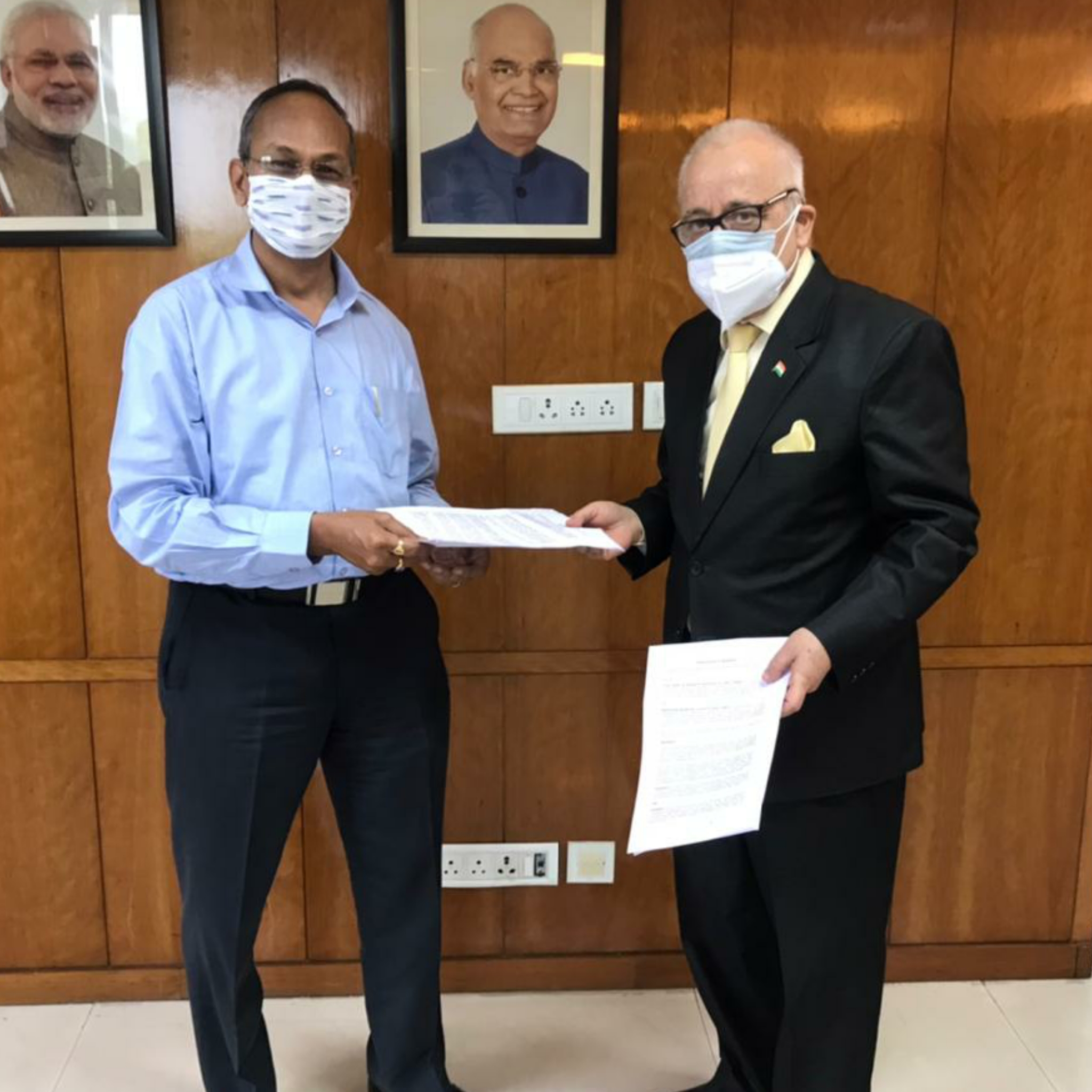
    The agreement was signed in the presence of FSSAI CEO Arun Singhal and ASCI adviser- public affairs professor Bejon Misra on 1 July. As per the agreement, ASCI will identify advertisements that prima facie violate provisions of Food Safety and Standards (advertising and claims) Regulations, 2018, and FSSAI would further investigate these. Under the agreement, ASCI will set up a three-member expert panel to evaluate F&B advertising identified by the ASCI monitoring team.

    In the last financial year (FY) ASCI has processed a total number of 284 complaints compared to 175 in FY 2019-20. So, claims by F&B brands, particularly those related to health and nutrition, are under greater scrutiny. With this association, ASCI further strengthens its 360-degree approach of protecting consumers as well as guiding brands, agencies, and influencers towards greater responsibility. As per a report published by media agency Zenith, India will be the fastest-growing market for FMCG brands’ F&B advertising over the next three years with spending rising 14 per cent a year. This further necessitates the monitoring of F&B advertisements.
    ASCI secretary-general Manisha Kapoor said, “With this agreement, ASCI will intensify its scrutiny of the F&B sector. We will tap our National Advertising Monitoring Service, which monitors over 900 TV channels and publications, and over 3,000 websites. Besides national brands, we will examine regional and local ones. Our experts, with decades of experience in the F&B sector, will shortlist those advertisements that require further scrutiny by FSSAI.”

    ASCI chairman Subhash Kamath said, “This is a significant collaboration. The common goal of consumer protection drives us all to share skills, expertise, and resources in the most effective way to curb the menace of misleading advertising.”

  • ASCI upholds complaints against 100 ads for violating code

    ASCI upholds complaints against 100 ads for violating code

    MUMBAI: In May 2015, The Advertising Standard Council of India’s (ASCI) Consumer Complaints Council (CCC) upheld complaints against 100 out of 141 advertisements in May 2015.


    Out of 100 ads against which complaints were upheld, 46 belonged to the Personal and Healthcare category, followed by 22 in the Education category, 10 in Food and Beverage category, five in Telecom category and 17 from other categories.


    In the Personal and Healthcare segment, the CCC found 46 claims from advertisers for products or services to be either misleading or false or not adequately/scientifically substantiated and hence violating ASCI’s Code. 


    Some of the health care products or services advertisements also contravened provisions of the Drug & Magic Remedies Act and Chapter 1.1 and III.4 of the ASCI Code.


    Complaint against advertisement upheld includes Dabur India, Hindustan Unilever, Celebrate Life Wellness, Modi Naturals, Lotus Safe Sun UV Screen Matte Gel, Omega Hospitals and VLCC Healthcare amongst others. 


    In the Education category, the CCC upheld complaints against 22 advertisers whose claims in ads were not substantiated and, thus, violated ASCI guidelines for Advertising of Educational Institutions. Some of them includes Aptech Limited, Lalani Group, Utkarsh Institute and Podar World School.


    In the Food & Beverages category, the CCC found that claims in ads by 10 advertisers were not substantiated and upheld complaints against Britannia Industries, K.C. Food Products Private Limited, Pepsi Foods P. Ltd and GlaxoSmithKline Consumer Healthcare Ltd amongst others. 


    Click here to read the full report