Tag: FMCG

  • FMCG, e-commerce, telecom & auto to boost Indian AdEx by 15.5% in 2016: GroupM

    FMCG, e-commerce, telecom & auto to boost Indian AdEx by 15.5% in 2016: GroupM

    MUMBAI: India’s advertising investment is predicted to reach an estimated Rs 57,486 crore in 2016, which is a growth of 15.5 per cent for the calendar year 2016 over the corresponding period in 2015, according to GroupM’s bi-annual advertising expenditure futures report This Year Next Year (TYNY).

    The last calendar year closed on a promising note, with the advertising expenditure in India closing at Rs 49,758 crore, growth of over 14.2 per cent over 2014.

    The growth will come from the FMCG sector as it continues to remain the most dominant sector with a 28 per cent share of the AdEx. Despite facing volume pressure, the sector is expected to continue ad investment aided by the softening of commodity prices.

    In 2016, e-commerce ad spends are expected to be high on the back of increasing competition, market expansion and newer players entering the space. Many leading traditional retailers will be expanding their e-commerce presence in 2016 even as consolidation continues in the sector. Another exciting development is the opening up of e-commerce as a platform for advertising, which will see further traction in 2016.

    What’s more, with the advent of 4G services in India, telecom service providers are expected to roll out extensive marketing campaigns across media. This roll out will also see global and domestic handset manufacturers launching new models of 4G/ LTE handsets. Another big contributor to the Indian AdEx this year will be the Auto sector, on the back of multiple launches across both four-wheelers and two-wheelers.

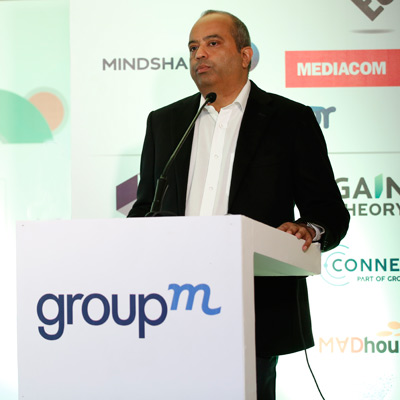
    GroupM South Asia CEO CVL Srinivas said, “India is the fastest growing ad market among all the major markets of the world. 2015 was the best year for ad spend growth we’ve had in the last five years. While global headwinds are building up in the new year, there are a number of positive factors that will help the Indian ad sector grow at higher levels in 2016. The GroupM TYNY report released today highlights these factors. While FMCG, Auto and e-commerce, which have been the top sectors contributing to ad growth in 2015 will continue to invest, Telecom, BFSI and the Government sector will see a ramp up. Events like the T20 World Cup, IPL and many state assembly elections will give a further impetus to ad spends. While digital will remain the fastest growing platform, India is one of the few large markets where all traditional media platforms will show positive growth.”

    GroupM South Asia chief growth officer Lakshmi Narashimhan added, “With significant number of users accessing internet primarily from a mobile device, ad-spend on mobile will become as large as the digital AdEx from two years ago. With digital media achieving audience reach numbers that are next only to television, multi-screen planning is the order of the day. We have seen focused targeting of digital and native advertising with programmatic buying over the last two years, and this momentum will continue in 2016, as automation increases.”

    GroupM estimates the Digital AdEx to grow by 47.5 per cent in 2016 to Rs 7,300 crore from the earlier Rs 4,950 crore. A significant part of this growth is on the back of higher investments in cross-screen campaigns. The digital AdEx is estimated to take a 12.7 per cent share of the total AdEx in 2016. However TV still leads the pack with 47.1 percent contribution to the total AdEx, which is a growth from 46.3 per cent in 2015. On the otherhand print advertising will see a slight decline in AdEx from 32.4 per cent share of the total pie in 2015 to 29.7 percent in 2016.

    2016 will see Video on Demand (VOD) services gaining popularity in India. The Asia Pacific region is expected to overtake Western Europe as the second largest market for VOD services by 2020, fuelled by rapid growth of smart phones in China and India. With the recent Netflix service launch in India, several domestic and international players will actively market their VOD services and acquire customers in the next 12 to 24 months.

    2016 is estimated to be a better year for newspapers than 2015. The increase in ad spends expected from print heavy sectors like Auto, BFSI and the Government sector augurs well for newspapers. Regional advertising of Telco and FMCG brands will benefit language dailies. While print as a medium is facing a lot of pressure from digital there is still headroom for growth in certain pockets and amongst certain audience clusters.

    While Radio is expected to grow at a little over 10 per cent, there is scope for the medium to pick up towards end 2016 when most of the new stations (set up after Phase III licenses, round I were issued) are fully operational. Digital audio platforms are gaining in popularity, opening up a new format for radio.

    There has been an upswing in Cinema Advertising in the last few years, which will continue in 2016 with an estimated 25 per cent growth in ad spends. Recent acquisitions by larger multiplex chains will help create a far richer viewing experience for consumers, giving brands another avenue to capture their target audience. The medium can expect more brands to come on board with longer term deals if they invest in measurement and build more accountability. At present Cinema advertising is less than one per cent of the total ad spend.

  • Gamification, localization and monetisation way forward for #fame

    Gamification, localization and monetisation way forward for #fame

    MUMBAI:  Fame Digital Private Limited (FDPF) is fundamentally focusing on three objectives for its online entertainment app, #fame – gamification, localisation and monetisation.


    When it comes to gamification, #fame talent league (FTL) is the first step in that direction. FTL is a path breaking initiative that will encourage and enable content creators to test their popularity with audiences in real time. FTL will start on December 5, 2015. As may be recalled, #fame launched the country’s live video app in May this year and in a short span of time this has emerged as the largest live video platform. 


    Localisation -#fame is also planning to launch more of regional and local versions on the app to differentiate the sections over the next couple of quarters. The company is also looking at launching south Indian version of the app, as well as planning to launch in Indonesia and Thailand


    Speaking with Indiantelevision.com about the three fundamental plans, #fame CEO Saket Saurabh said, “There are three plans for #fame, one is that we have launched #fame talent league, also over the next couple of quarters we are planning to launch more of a regional and local versions to differentiate the sections of our app. Apart from this, we will be looking for monetisation also. Therefore gamification, localization and monetisation are the core components in building the name of #fame.”


    Commenting monetisation potential of video, Saurabh said, “Within digital, video is the fastest growing section. We believe that access with 4G is coming and the hardware is becoming cheaper; video is becoming the new language of the consumer internet. Revenue will follow consumption. In two years we have brought on board 20 to 25 top brands in India across categories like FMCG, automobile, durables and telecom. We are planning to bring more traction now. In the next six months, we are planning to reach out to 60 to 65 brands. Therefore, we feel that video has tremendous monetisation potential and great monetisation flexibility. Video monetisation is moving beyond pure play inventory.”


    Saurabh added, “We had launched the first live video app in the country in May. We have seen more than 30,000 people going live using our ap. That gave us the confidence that there is clearly an opportunity to discover the digital talent and that is why we started building a tech feature in our app, which in a sense is an innovation, because it has the kind of real time global audience looking at the live app.”


    Since May, #fame has seen 20 lakh downloads, with more than 30,000 performers going live and over 30,000 watch hours of content. 


    Earlier, #fame had launched its first digital singing competition Web Singer with Pritam in November, 2014. “The experience with Web Singer has been great. This is why we call ourselves as #fame, because there is an opportunity for a talent to really emerge and connect directly with the audiences. All our initiatives are designed to allow talent to come forward whether it’s our live video app or the launch of #fame talent league which is on the top of the app,” he added.


    India has 35 crore internet users and in couple of years India will have half of its people using internet and we are already a one of the largest market in the world. 


    India’s inherent advantage is that it is already a mobile ready country.  “There are three fundamental trends that are making it big; one is that hardware access is getting cheaper as you get mobile phones now in Rs 6000-7000 price range, which makes video access easier. Another factor is the Indian population and the demographics which play an important role as we have a whole generation of youngsters who have grown up not with television as their first screen, but with mobile phones. The third factor is that digital will be seen as the support medium by content creators and networks over time. The rise of OTT in couple of years is a great reflection that brands have realized that digital requires original content.  In the next couple of years we will see a tremendous growth in digital medium,” Saurabh predicted.


    #fame is spending about 30 to 40 per cent of its investments in user acquisition and user engagement. Speaking about the competition Saurabh informed, “I think there is space for everybody, in the case of live video, we are the pioneers in India and we are trying to build that category. In digital, there are all kinds of players. We have OTT, content creators, YouTube and Facebook, hence it’s a fairly a vibrant place. Also, live video space and digital space are all in their early stages. I don’t see competition is really an issue right now.  Here we need to have more innovations.”


    4G is creating a lot of buzz in the country. Saurabh said, “I think 4G will take another 6-8 months as it is not in the mainstream in India and is only available in some major cities.  The entry of more players and alliances will make an impact and there will be more, in combination with cheaper hardware manufacture. There will be a lot of cooperative marketing which will help mainstream 4G.”

  • Den Snapdeal TV-Shop’s two new appointments to integrate operational capabilities

    Den Snapdeal TV-Shop’s two new appointments to integrate operational capabilities

    MUMBAIDen Snapdeal TV-Shop (DSTS) has announced two significant appointments in the senior management team – Amarjot Brar as the Chief of Business Operations and Amit Katyal as the Head of Finance.


    DSTS is taking the next big leap towards scaling and reaching more homes through DTH. The two new appointments will enable the company to integrate its operational capabilities across production, distribution, supply chain, sales and customer service. While Brar will be responsible for the operational execution for the company, Katyal will be overseeing the finance operations.


    Brar has experience in different sectors that include telecom, digital media, outsourcing, FMCG and consulting companies, and has worked with Start-ups and steady state operations. Prior to joining DSTS, he has worked with Askme and has set up business excellence, quality and customer management across organisations like IBM, Virgin Mobile and Wipro.  


    “The penetration that TV shopping industry makes it a very developing space to be present in. I am excited to lead the TV-Shop operations for such a challenging & nascent market,” Brar commented on his appointment.


    Katyal, on the other hand, carries prolific knowledge in the finance function with over fifteen years of experience. Prior to joining DSTS, Amit served as head finance at digital media group To The New, India division.


    Katyal said, “I look forward to joining an industry modernising and reshaping at such great speed. I wish to continue to create value for our customers, sellers and investors.”


    DSTS CEO Maneesh Goel asserted, “We welcome both Amarjot and Amit in our team. We are taking the next big leap towards scaling and reaching more homes through DTH. Their invaluable experience in start-ups and ability to function in a fast paced dynamic environment will strengthen our operational capabilities as well as finance functions across production, distribution, supply chain, sales & customer service.”

  • Festive season: TV ad spend estimated to touch Rs 70 billion

    Festive season: TV ad spend estimated to touch Rs 70 billion

    Seasonaliity in ad spends is a phenomenon that most Indian marketers are familiar with. Whether you have the rash of heat countering products which pop up on your TV screens during the summer months. Or whether it is the gaggle of brands that roll out the red carpet and bring out their tooting horns during the festive season of Diwali every year. They conserve their ad rupees for these periods when the consumer is willing to spend but wants to be guided or lured in the right direction through messaging.


    As per indiantelevision.com’s analysis, this festive season (September, October, mid-November) , advertisers are expected to spend close to Rs 70 billion on television commercials alone.


    “Last year, the festive quarter saw television channels garnering nearly 35 to 40 per cent of their annual total ad revenue. One would expect the same from this year, as it is as high as it can get,” says media planning and buying expert Karthik Lakshminarayan.


    KPMG’s entertainment industry report for Ficci in 2015 predicted that television would account for Rs 175 billion in ad spending. Going by that yardstick, then TV advertising during the festive season would touch Rs 7,000 crore this year.


    When it comes he big spenders, FMCG seem to be stealing the show. “FMCG ad spending rules the the roost, and e commerce are the new kids on the block. FMCGs command 50 per cent of the ad spends while E-Commerce offer another 10 per cent,“ says Lakshminarayan. That would mean FMCG spending is likely to scale Rs 3500 crore on television ads.


    Although market analysts admit that E-Commerce players have emerged as big advertisers this season and have raised the bar for the rest of the ad-spenders over all, their contribution to television ad revenue is lesser than last year.


    Even as their total ad spend for this festive season has risen to Rs 2000 crore, only Rs 700 crore of that is going to TVCs on channels.


    Last year, e Commerce players had according to estimates spent close to Rs 1300 crores on television in the festive quarter. This year only 35 per cent of their total festival spends has been allocated to television, as compared to 60 per cent last year, shares a veteran media planner with indiantelevision.com.

    Having said that, the big players in E-Commerce continue to be strong on the top  television properties.

    “If you look at the slots, all the top properties in television are blocked with ecommerce brands. Given the festive season, the ad slots are going at a premium rates and the ecommerce brands are lapping them up at the higher rates,” says Havas Media Group-India and South Asia, CEO, Anita Nayyar, adding that thanks to these brands the ad rates continue to stay up even with the shrinking ad inventory.

    “While the increase in ad spends is mainly due to E-Commerce, the contribution from the other section of the advertisers like automobiles is expected to pick up as well. The revenue from traditional spenders for this season like jewellers and retailers is almost stable,” informs media analyst and IIM Calcutta professor  Chandradeep (CD) Mitra.


    In terms of channel genres, Hindi GECs maintain their lead as advertiser’s favourite with an approximate share of 27.5 per cent of the total spends, with regional channels following.


    An order that is directly proportional to the channels’ viewership ratings. According to the FICCI Industry report 2015, Hindi GECs command over 31 percent of the total viewership pie chart followed by regional channels at 15.9 per cent.


    Amongst the regional channels, Marathi ad slots are the most expensive to buy, says Lakshminarayan. “Maharashtra rates are higher indexed than other regional markets, and their rate of increase is seemingly more than other markets.”


    With the new BARC ratings inclusive of rural data, one can expect an even further increase in their ad spends, market analysts predict.


    The news channels too grabbed eyeballs thanks to the Bihar elections coinciding with the festive week, and therefore have gotten due attention from advertisers as well. “News was there in the limelight due to Bihar, that worked well for the retail advertisers looking to put their name out during the festive season as well,” says Nayyar.

  • DD Sahyadri ups programming ante; aims to push profit margin by 2017

    DD Sahyadri ups programming ante; aims to push profit margin by 2017

    MUMBAI: With an aim to shake up the Marathi general entertainment space and completely overhaul its prime time programming, DD Sahyadri is ready to go out all guns blazing with as many as 10 new show launches in November. Of these, nine programmes are in the fiction space, with one in the non-fiction.


    Facing stiff competition in the Marathi regional space from private channels like Colors Marathi, Star Pravah, Zee Marathi and Saam TV, the public broadcaster has upped its budget for programming and aims to press the accelerator on revenues and push up its profit margin by 2017.


    DD additional director general Mukesh Sharma says, “The first 13 weeks of ratings saw us falling behind the other regional Marathi channels, and it’s high time we up our game and compete with them. They are already way ahead of us when it comes to ratings and viewership, and a revamped prime time slot was the need of the hour if we want to bridge that gap. Since Prasar Bharati has allowed us to spend this much for quality content, we are expecting a lot from the success of these shows.”


    The ten shows include Pashanpati, Maati Kokanchi Naati Janmachi, Vachanbaddha, Sangharsh Milanacha, Bantya Televison, Goshta Umaltya Manachi, Anakalniya, Chitrakathi and Sushilecha Dev in the fiction space and Doosri Bajoo in the non-fiction space.


    Speaking to Indiantelevision.com on what these new launches mean for the Marathi television ecosystem from an advertiser’s perspective, a veteran industry analyst opines, “I hope they get a sizeable chunk of the viewership and shake up the ecosystem, as the Marathi regional television space is in need of just that.”


    “Marathi regional television space being one of the most expensive to buy for advertising, DD Sahyadri’s presence helps to moderate that cost to a decent level. So far BARC data does not count the non-C&S (Cable & Satellite) viewers that DD Sahyadri largely caters to. If they somehow grab eyeballs and grow their C&S viewership base, which in turn helps their ratings, then I see advertisers inclining towards DD Sahyadri,” he shares.


    BARC India’s inclusive ratings with rural data could come as a welcome change for a regional channel such as DD Sahyadri as it splits the viewer base into the metro and hinterland viewer, with the rural one being so far unaccounted for. This poses as an opportunity for the channel to yank its ratings northwards, by grabbing eyeballs with new and revamped content on its prime time band.


    Sharma adds, “I believe that the millions of Marathi viewers always look forward to seeing quality content, engaging stories and connect instantly with the deeply rooted cultural ethos of Maharashtra. This is for the first time that we have launched new shows in this (Satellite 8 t0 10 pm) prime time band and we look forward that all the new shows will not only entertain the audience but as a responsible broadcaster, our programming content must also attempt to create awareness about pertinent social issues.”


    However, the new show launches are not the result of a knee jerk reaction by the channel in response to the BARC India ratings. “We were lacking new solid shows that will retain attention of viewers in the prime time slot, as our stronghold has always been the terrestrial audience. The foundation for introducing new prime time shows was laid about a year ago, which sees its completion today,” Sharma informs.


    Sharma also points out that DD Sahyadri never pitched for advertising revenue for the prime time slot as they are still largely dependent on ad revenues from FMCG sponsors like Unilever, Godrej, etc which are still keen to spend on advertising on the pubcaster’s non-C&S viewership.


    In fact, the  DD network offers a volume incentive scheme for its advertisers that allows any brand which spends over Rs 10 crore to be entitled to a certain percentage of free advertising. Unilever, the network’s biggest sponsor’s with Rs 100 crore advertising spends, enjoy 28 per cent bonus air time, according to industry sources.


    However, Sharma says that the base advertising revenue from its terrestrial platform is now shrinking to three to four per cent of the total. “So this time I thought we should concentrate on satellite programs. That was the reason for going all out and spending on high quality content and launching 10 shows at once,” he informs.


    Speaking of spends, Sharma shares that the cost of production for the new launches is above Rs 2 lakh per episode on an average. “I am not looking for a program that will give me money for a short time. I am looking for something with a long shelf life. Better produced shows also give scope for dubbing them into other regional languages, which will in turn give us more viewership,” he informs.


    When asked about the advertisers’ response to the All India BARC ratings, Sharma says it is too early to comment. “We have our fingers crossed over DD’s jump in BARC ratings in week 41 and 42, because cricket was airing at that time. DD National, being an FTA (free to air) provider of the sports entertainment, naturally got more eyeballs. If DD National continues to retain its position in the next two weeks, we certainly expect a positive reaction from the advertisers,” says Sharma.


    With the pubcaster having a certain threshold on budgets, DD Sahyadri has limited resources to its disposal for marketing and promoting its new launches. Having said that, the channel is taking largely to social media for promotions as well as print media (national and regional). Apart from this, DD Sahyadri plans to put up hoardings and use its own channels to spread the word.

  • Q2-2016: HUL YoY marketing spends up 23.8%

    Q2-2016: HUL YoY marketing spends up 23.8%

    BENGALURU: Indian FMCG giant Hindustan Unilever Limited’s (HUL) Advertisement and Promotions expense (marketing spends, ASP) in Q2-2016 (quarter ended 30 September, 2015, current quarter) was 23.8 per cent more at Rs 1145.04 crore (14.4 per cent of Total Income from operations or TIO, approximately $176.7 million) than the Rs 925.05 crore (12.1 per cent of TIO) in Q2-2015 but was 0.7 per cent lower than the Rs 1153.39 crore (14.2 per cent of TIO) in Q1-2016.

    Note: (1) 100 lakh = 100,00,000 = 1 crore = 10 million.

    (2) All figures in this report are standalone figures filed by the company. The trends are based on the numbers submitted by the company or picked up from the company’s website. For performance of HUL’s various product lines please refer to the attached earnings release for Q1-2016.

    (3) The US dollar figures are approximately based on a conversion rate of 1US$ = Rs 64.79 at a particular time on October 19, 2015.The converted numbers have been rounded off.

    HUL chairman Harish Manwani said, “The business delivered another quarter of profitable volume-led growth. We continue to invest behind our brands and in-market executional capabilities to drive the competitiveness of our portfolio. The deflationary commodity cost environment is likely to continue in the near term and our strategy of delivering consistent and competitive growth with sustainable improvement in operating margin remains unchanged.”

    Advertising and Sales Promotion trends

    HUL’s ASP in Q1-2016 was the highest during a four quarter period starting Q1-2013 until Q2-2016 in terms of absolute rupees. Q2-2016 ASP (current quarter) in terms of percentage of TIO was the highest during the period under consideration. Further, during the period under consideration in this report, ASP in absolute rupee spends shows a marked linear increasing trend, while ASP in percentage of TIO terms shows a slight linear increasing trend. The company’s lowest ASP was in Q2-2013 at Rs 768.98 crore (12.2 per cent of TIO) in absolute rupee spends during the period under consideration, while the lowest in terms of percentage of TIO was in Q4-2014 at 11.8 per cent of TIO (Rs 840.34 crore). Please refer to Fig A above.

    If the company follows the trends of the past three fiscals, at least one or more quarter in FY-2016 will see higher ASP in terms of absolute rupees than Q1-2016.

    HUL Revenue and PAT

    Please refer to Fig B above. HUL reported 4.1 per cent growth in TIO in Q2-2016 at Rs 7955.39 crore as compared to the Rs 7639.33 crore in the corresponding year ago quarter, but was 1.8 per cent lower than the Rs 8105.13 crore in Q1-2016. The company’s TIO shows a linear increasing trend as indicated by the broken blue trend line in Fig B. TIO in Q1-2016 is the highest reported by the company during the 13 quarter period under consideration in this report.

    HUL’s PAT in Q2-2016 was lower by 2.6 per cent at Rs 962.24 crore (12.1 per cent margin) as compared to the Rs 988.1 crore (12.9 per cent margin) in Q2-2015 and was 9.1 per cent lower than the Rs 1059.14 crore (13.1 per cent margin) in Q1-2015. During the period under consideration, HUL’s highest PAT was in Q1-2013 at Rs 1331.19 crore (20.9 per cent of TIO), both in terms of absolute rupees and in percentage of TIO. While PAT in absolute rupees shows a linear increasing trend as indicated by the broken pink trend line in Fig B below, while in terms of percentage of TIO, the linear trend is declining as indicated by the broken yellow line.

    Company Speak

    During the quarter, the Domestic Consumer business grew at five per cent, with seven per cent underlying volume growth. The growth in the quarter continued to be impacted by the phasing out of Excise Duty incentives and price de-growth, as the benefit of lower commodity costs was passed on to consumers.

    Soaps and Detergents: Robust volume growth partially offset by price deflation. Skin Cleansing was driven by double digit volume growth on Dove, Pears, Hamam and Lifebuoy. The liquids portfolio registered another robust quarter.

    In Laundry, growth was led by the premium segment, with Surf maintaining its strong momentum and Rin accelerating post relaunch. Comfort Fabric Conditioner delivered another strong performance on the back of sustained market development. Household Care growth was driven by Vim, with the tubs and liquids portfolio doing well. The segment witnessed further price deflation in the quarter due to soft commodity costs.

    Personal Products: Healthy double digit growth

    Skin Care delivered broad based growth across Fair and Lovely, Pond’s, Lakme and Vaseline. Fair and Lovely continued to do well, while the performance of Pond’s was led by premium skin lightening and Lakme by Perfect Radiance and CC Cream. The facial cleansing portfolio sustained high growth.

    Hair Care maintained its momentum with another strong quarter of volume led double digit growth, as Dove growth accelerated and TRESemmé gained further ground.

    In Oral Care, Close Up registered double digit growth on the back of impactful activation.

    In Colour Cosmetics, Lakme delivered another quarter of innovation led double digit growth across the core, Absolute and 9 to 5 ranges.

    Beverages: Steady performance

    Tea growth was led by Red Label and another quarter of high growth on Lipton Green Tea, driven through impactful market activation. In Coffee, Bru Gold continued to lead category premiumisation and performed well.

    Packaged Foods: Eighth successive quarter of double digit growth

    Packaged Foods saw double digit growth across all key brands, driven by the continued focus on market development. Kissan sustained robust activation led growth across both Ketchups and Jams while Knorr growth was led by the strong performance on Instant Soups. In Ice Creams, Kwality Walls had a good quarter on sharper in-market execution and Magnum continues to perform well and delight its consumers.

    Water: Leadership sustained in a challenging market context In a soft market, Pureit continued to drive the performance of premium devices with a focus on Modern Trade and in-store execution. The business benefited from a strong performance in the e-commerce channel.

    The Board of Directors have declared an interim dividend of Rs 6.5 per equity share of face value Re 1 each, for the year ending 31 March, 2016.

  • nexGTv launches mobile TV entertainment packs in India

    nexGTv launches mobile TV entertainment packs in India

    MUMBAI: nexGTv has launched mobile TV entertainment packs for subscription driven video entertainment platform in the Over-The-Top (OTT) domain for the first time in India.


    It will offer multi-duration packs to expand portfolio, provide consumer choice and boost subscriber retention.


    The packs vary in subscription duration for covering three months, six months, and twelve months are priced Rs 349, Rs 699 and Rs 1199 respectively. The packs, containing download, subscription and activation-related information will enable consumers to start their subscriptions on the mobile platform within minutes.


    Digivive Services director and CEO GD Singh said, “Mobile VAS, especially TV-on-mobile is fast approaching an inflection point with consumers seeking empowerment and the ability to own their buying decision in terms of opting-in for product and service subscriptions. At the same time, convenience remains paramount for every consumer. Our entertainment packs meet both these needs and will help in not only smoothing and extending the customer’s experience and life cycle on nexGTv but also bring-to-life the entire mobile entertainment experience, which until now, was solely driven via telco partnerships.”


    Singh added, “As an OTT industry pioneer and market leader having served more than 20 million customers, we are expected by our customers to keep innovating and stay ahead of the curve. The industry is rapidly transitioning into an FMCG- avatar and our extended duration packs complement this development, as consumers can now not only buy entertainment off the shelf but, can even gift it to one another. With mass 4G around the corner and 3G & smart phones becoming almost default modes of connectivity across key markets, Mobile TV & video entertainment is permeating people’s lives like never before and we are on the cusp of massive growth in this area.”


    nexGTv operates on freemium model and offers multiple options to stay subscribed to its entertainment mix, which includes over 130 plus live TV channels, Hindi films, television shows as well as VOD content. 


    Apart from revitalizing consumer engagement, these newly-launched subscription packs will enable nexGTv to target current and upcoming consumer touch points across both retail and e-tail markets. It will undertake alliance partnerships with leading industry brands and will empower customers, enabling voluntary subscription opt-ins.

  • Institute of Advertising Singapore gives away APPIES 2015 awards

    Institute of Advertising Singapore gives away APPIES 2015 awards

    MUMBAI: APPIES 2015, the two day festival of marketing excellence came to a close on 27 August at the National University of Singapore Society (NUSS) after revealing the winners from over 80 shortlisted campaigns.


    The campaigns ranged across various industry representing six categories — food & beverage, FMCG, consumer durables, business services, consumer services and pro bono/government/cultural. The judging panel comprised top marketers from across the region.


    The chief judge, Lenovo Asia Pacific director of marketing Sridhar Ramaswamy said, “APPIES is all about recognising the best in effectiveness of marketing. This year’s winners demonstrate that great marketing is created as much by agencies as by the brand owners. This collaboration is central to successful campaigns.”


    What makes APPIES unique is that it is the only marketing awards platform in Singapore where presenters (brand marketers or campaign creators) pitch their work in the presence of a live judging panel to convince them of their excellence.


    Speaking on this year’s participants, APPIES 2015 chairman and Parkway Pantai CMO said, “This year’s crop of APPIES winners reflected not only excellence in marketing but were impressive their leverage of leading edge trends in digital, social and content.”


    Commenting on the need to ‘Relearn Everything,’ IAS president as well as R3 Worldwide co-founder and principal Goh Shufen said, “With IAS’ vision to make Singapore the marcoms hub of Asia, APPIES is our key platform to bring the best of Asia’s talent for two days of sparring and relearning, ever so necessary for an ever changing marketing landscape.”


    A new ‘Insights of the Day’ segment, where industry thought leaders gave their insights and observations from the two day event, has also proved a huge success with the audience.

  • JWT appoints Gaurav Lalwani as APAC business director for J&J

    JWT appoints Gaurav Lalwani as APAC business director for J&J

    MUMBAI: J. Walter Thompson has appointed Gaurav Lalwani to the role of Asia Pacific business director on the agency’s Johnson & Johnson portfolio, which includes Listerine and other J&J over-the-counter brands.


    Lalwani’s appointment reflects the agency’s expanded remit on J&J’s Listerine business across the Asia Pacific region.


    Based in Singapore, Lalwani will head up a new team servicing Listerine across APAC, and will also work with J. Walter Thompson’s global Listerine team in New York.


    Lalwani, who has over 15 years of integrated brand experience across FMCG, prestige skin care, automotive, and the financial services sectors, joins J. Walter Thompson from Leo Burnett Singapore, where he was senior regional director for integrated content on the agency’s SK-II and P&G fabric care brands across Asia.


    He was responsible for launching SK-II’s #ChangeDestiny platform across Asia, and led the collaboration with Huffington Post and Fitch to take #ChangeDestiny across digital and in-store platforms. Lalwani also led the creation of the first ever voice-based mobile platform for Tide in India, this drove the brand’s purchase intent, and consumption.


    “Lalwani is joining the agency after a period of significant growth and his appointment is a reflection of our drive to further strengthen the senior team at JWT. I am thrilled he is joining us as brings a proven track record of leading global businesses and his integrated approach will be of great value to his client portfolio,” said J. Walter Thompson Singapore CEO Peter Womersley.


    “JWT Singapore has managed to create perfect balance between hunger and wisdom. I am thrilled to be joining the agency at this exciting time,” added Lalwani.

  • Cinema advertising to grow at 20%: Interactive Television’s Ajay Mehta

    Cinema advertising to grow at 20%: Interactive Television’s Ajay Mehta

    MUMBAI: Movie buffs prefer visiting a cinema for the almost minimal number of advertisements that play during the movie run. Advertisers are still somewhat hesitant of opting for these ads since there is a lack of measurement of these ads. Contrary though according to Group M’s biannual advertising expenditure futures report titled ‘This Year Next Year’ (TYNY) cinema advertising closed 2014 with a 25 per cent increase.

    When asked at what rate he expects cinema advertising to grow for this year, Interactive Television CEO Ajay Mehta says that it will grow at 20 per cent.

    Interactive Television specializes in cinema advertising and releases the CAM report. According to Mehta, for the last two – three years cinema has been the second fastest growing medium after the digital. “While digital is on a different growth trajectory, the basic level of cinema in the country is low,” says Mehta. 

    “Even though we are a cinema savvy country, the total cinema spends is less than one per cent, which is even lower than the global average. When you look at global averages there are countries where cinema is hardly part of the consumer’s habit,” he adds.

    There are a few reasons why the segment is seeing a growth. Firstly it is because of the low base number, which is increasing today. Secondly, over the last two to three years there has been the phenomenon of “multiplexisation” of the industry, which is getting reflected because of a whole round of consolidation that will continue in 2015. “As players like PVR, INOX, Cinepolis and Carnival get bigger and stronger, the whole consolidation will further aid growth.”

    The growth can also be attributed to the digitisation process of single screen theaters wherein films are being delivered directly via satellite to theaters as compared to the costlier traditional prints, which has reduced costs and is creating transparency as practically the entire single screen universe (barring an odd 500) is digitised.

    According to industry estimates, a 60 second ad in a multiplex for one week (which is minimum of 21 shows and can go up to 28)  in the top metros would cost Rs 10,000 to Rs 12,000, while the cost for single screens would between Rs 1,500 to 2,000 for the same period. The cost in areas such as South Mumbai and South Delhi multiplexes is much higher than the average figures for multiplexes.

    As per a report by Interactive Television brands such as Choc On, HDFC Life, Vicco Vajradanti, Engage, Vicco Sugarfree, Woodland, TVS Apache, Vicco Shaving Cream, LIC and Bhima Jewellers have been consistently advertising on cinema. The report takes into account their presence on cinema for the period August 2013 to January 2015. Choc On as a brand is totally built on cinema as majority of their spends are on this medium.

    The selection process of including cinema advertising spends depends on the brand’s target audience and cinema space in their priority markets. While a regional brand could select a single screen cinema, for brands with larger pockets it could be an “and” option wherein both multiplexes and single screens are combined.

    Telecom is one category that has started advertising recently on cinema on both single screens and multiplexes as it seek to penetrate its brand campaign in Tier III and rural markets, like the FMCG category. “In 2014 we saw e-commerce brands like Flipkart and Amazon including specific travel verticals like travel websites increase their spends, which will continue,” opines Mehta.

    2014 also for the first time saw luxury brands taking to multiplexes, especially car brands such as Mercedes, Jaguar and Audi. “In 2015, when the economy promises to be better, there are a lot of launches lined up and auto is going to be one interesting category for multiplexes,” says Mehta.