Tag: FMCG

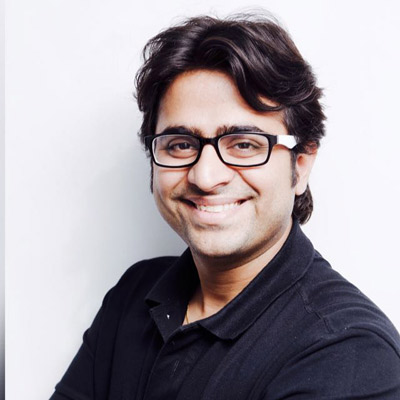
  • Kenstar appoints Milan Wahi as the new COO

    Kenstar appoints Milan Wahi as the new COO

    MUMBAI: Kenstar  has appointed Milan Wahi as its chief operations officer with immediate effect. In his new role, Wahi will be responsible for contributing to Kenstar’s by and large strategy for establishing it as one of the most preferred premium small home appliances brands for consumers in India. For the most part, he will oversee brand building, product development and distribution expansion for Kenstar.

    Speaking on the occasion Wahi stated “I am ecstatic and excited to be a part of the Kenstar family. Kenstar has a great heritage and goodwill across the country and offers consumers’ international quality products. There is a tremendous prospect for augmentation in small home appliances category and our focus would be on driving secondary sales through widening the distribution network and building Kenstar’s brand equity.”

    Wahi has an extensive background with over 24 years of experience in various consumer sectors like FMCG, consumer durables etc. He has contributed his efforts to many topnotch companies and brands in various capacities such as head sales, head trade marketing, worked extensively on brand building, and has in-depth knowledge of FMCG distribution. Previously,  Wahi served as the chief operating officer of J K Dairy and the managing director of Lotte India Corporation. He has also had successful stints at Cavin Kare Pvt. Ltd, VST Industries Ltd, and Whirlpool Of India Ltd to name a few.


  • Kenstar appoints Milan Wahi as the new COO

    Kenstar appoints Milan Wahi as the new COO

    MUMBAI: Kenstar  has appointed Milan Wahi as its chief operations officer with immediate effect. In his new role, Wahi will be responsible for contributing to Kenstar’s by and large strategy for establishing it as one of the most preferred premium small home appliances brands for consumers in India. For the most part, he will oversee brand building, product development and distribution expansion for Kenstar.

    Speaking on the occasion Wahi stated “I am ecstatic and excited to be a part of the Kenstar family. Kenstar has a great heritage and goodwill across the country and offers consumers’ international quality products. There is a tremendous prospect for augmentation in small home appliances category and our focus would be on driving secondary sales through widening the distribution network and building Kenstar’s brand equity.”

    Wahi has an extensive background with over 24 years of experience in various consumer sectors like FMCG, consumer durables etc. He has contributed his efforts to many topnotch companies and brands in various capacities such as head sales, head trade marketing, worked extensively on brand building, and has in-depth knowledge of FMCG distribution. Previously,  Wahi served as the chief operating officer of J K Dairy and the managing director of Lotte India Corporation. He has also had successful stints at Cavin Kare Pvt. Ltd, VST Industries Ltd, and Whirlpool Of India Ltd to name a few.


  • ‘Be a doer not a make believer’: Benny Thomas at Goafest 2016 Day 2

    ‘Be a doer not a make believer’: Benny Thomas at Goafest 2016 Day 2

    MUMBAI: ‘Actions speaks louder than words’ is perhaps a phrase that has been quoted to death and applied to all sorts of scenarios. The phrase is both a boon and a curse to use a famous quote as it makes people expect a lot or it is put in a ‘generic tropes’ box. Therefore when Crispin Porter + Bogusky‘s strategy head Benny Thomas started his speech with the phrase, not many ears perked up  and nor were eyes raised. They did however, when the man played a few AVs of his company’s recent campaigns. Some of these were extremely popular and familiar international campaigns such as the ‘Pizza crust’ campaign the agency did for Dominos that saw their sales soar. Thomas clearly practiced what he preached– ‘Be a doer not a make believer.”

    Addressing the fairly successful new creative agencies that aren’t the Leo Burnetts or O&Ms of the world, Thomas said, “Being a micro network amidst big layers, at some point when the start-up feel wears off and you start seeing a bit of success, it is easy to start wondering where you stand and lose direction. This is where ‘action’ will play a huge role in having to wonder in a world full of biggies on where we stand and not lose direction.”

    Action to Thomas isn’t simply verbifying a message. “A compelling message is actually not that hard to create when you have a powerful copywriter or writer and an amazing man behind the cameras. But that is again a ‘message’ and not action,” Thomas clarified. “It’s the way the brand behaves is what will take the brand forward or make it stand out. Moreover, action also causes or asks for a reaction that can be the fodder for a whole new campaign. Some of the successful campaigns have come from people who could predict the reaction from consumers in advance and prepare ahead.”

    A good example was how CPB advised a well distributed FMCG brand when it approached the agency to put it on the shelf, not announce it. “Put it on the shelf, let’s do a shelf test with millions of packets. We could see that the change didn’t affect the sales at all, and that became our campaign. We had a series of TVCs where we see a guy from the brand revealing what ingredients were changed, and no one could tell the difference!”
    Which also brought Thomas to advise fellow creatives – “Don’t be afraid of the elephant in the room.”

    “We often don’t face the embarrassing truths about brands. Confronting the elephant in the room, or being honest about shortcomings can bring brands way more closer to the people. It’s true for both humans as well as brands.  Coming out honestly can help brands build a stronger relationship with consumers. If you avoid the elephant in the room, you will alienate yourself from the people you are catering to.”

    In his ending note, Thomas emphasised the need for agencies to take brands as partners and not as clients, and that often depends a lot on how the creatives are positioned in the market. “Creatives often criticise and complain about brand managers or business owners not understanding a good creative idea or the concept and opting for something that looks less ‘quirky’ or smart. Agencies need to put themselves in their client’s shoes and that won’t happen unless creatives understand the business, and that won’t come from PPT projects.”

    “Unless you run businesses yourself you can’t understand what challenges your clients have,” Thomas frankly stated. To bring in a perspective he went to share how CPB had built its own business by using their strength in design and creative solutions, such as a bicycle hiring service in the United States or producing and designing a bourbon bottle that they created, branded and then sold.

    One take away from the session that added to the novelties that Goafest is often known to introduce was the phrase, ROC or return on creativity’. The phrase definitely got the auditorium full of budding creatives as well as old players thinking of their own ‘return on creativity.  What do they really take away in the end? Was it clients, pay checks, awards, or more stories to tell?


  • ‘Be a doer not a make believer’: Benny Thomas at Goafest 2016 Day 2

    ‘Be a doer not a make believer’: Benny Thomas at Goafest 2016 Day 2

    MUMBAI: ‘Actions speaks louder than words’ is perhaps a phrase that has been quoted to death and applied to all sorts of scenarios. The phrase is both a boon and a curse to use a famous quote as it makes people expect a lot or it is put in a ‘generic tropes’ box. Therefore when Crispin Porter + Bogusky‘s strategy head Benny Thomas started his speech with the phrase, not many ears perked up  and nor were eyes raised. They did however, when the man played a few AVs of his company’s recent campaigns. Some of these were extremely popular and familiar international campaigns such as the ‘Pizza crust’ campaign the agency did for Dominos that saw their sales soar. Thomas clearly practiced what he preached– ‘Be a doer not a make believer.”

    Addressing the fairly successful new creative agencies that aren’t the Leo Burnetts or O&Ms of the world, Thomas said, “Being a micro network amidst big layers, at some point when the start-up feel wears off and you start seeing a bit of success, it is easy to start wondering where you stand and lose direction. This is where ‘action’ will play a huge role in having to wonder in a world full of biggies on where we stand and not lose direction.”

    Action to Thomas isn’t simply verbifying a message. “A compelling message is actually not that hard to create when you have a powerful copywriter or writer and an amazing man behind the cameras. But that is again a ‘message’ and not action,” Thomas clarified. “It’s the way the brand behaves is what will take the brand forward or make it stand out. Moreover, action also causes or asks for a reaction that can be the fodder for a whole new campaign. Some of the successful campaigns have come from people who could predict the reaction from consumers in advance and prepare ahead.”

    A good example was how CPB advised a well distributed FMCG brand when it approached the agency to put it on the shelf, not announce it. “Put it on the shelf, let’s do a shelf test with millions of packets. We could see that the change didn’t affect the sales at all, and that became our campaign. We had a series of TVCs where we see a guy from the brand revealing what ingredients were changed, and no one could tell the difference!”
    Which also brought Thomas to advise fellow creatives – “Don’t be afraid of the elephant in the room.”

    “We often don’t face the embarrassing truths about brands. Confronting the elephant in the room, or being honest about shortcomings can bring brands way more closer to the people. It’s true for both humans as well as brands.  Coming out honestly can help brands build a stronger relationship with consumers. If you avoid the elephant in the room, you will alienate yourself from the people you are catering to.”

    In his ending note, Thomas emphasised the need for agencies to take brands as partners and not as clients, and that often depends a lot on how the creatives are positioned in the market. “Creatives often criticise and complain about brand managers or business owners not understanding a good creative idea or the concept and opting for something that looks less ‘quirky’ or smart. Agencies need to put themselves in their client’s shoes and that won’t happen unless creatives understand the business, and that won’t come from PPT projects.”

    “Unless you run businesses yourself you can’t understand what challenges your clients have,” Thomas frankly stated. To bring in a perspective he went to share how CPB had built its own business by using their strength in design and creative solutions, such as a bicycle hiring service in the United States or producing and designing a bourbon bottle that they created, branded and then sold.

    One take away from the session that added to the novelties that Goafest is often known to introduce was the phrase, ROC or return on creativity’. The phrase definitely got the auditorium full of budding creatives as well as old players thinking of their own ‘return on creativity.  What do they really take away in the end? Was it clients, pay checks, awards, or more stories to tell?


  • Watconsult expects 20 percent revenue share from eCommencify by 2019

    Watconsult expects 20 percent revenue share from eCommencify by 2019

    MUMBAI: Dentsu Aegis Network’s digital arm, Watconsult is betting big on its newly launched service eCommencify and expects a revenue share of 20 percent from it by 2019. “We hope that by 2017 it would contribute 10 percent of our total revenue and by 2019 it would be 20 percent of our revenue,” said Watconsult CEO Rajiv Dhingra.

    Spurred by the growing eCommerce market and the equally growing demand for brick and mortar businesses to adapt to the digital environment, especially in the goods sector, Dentsu Aegis Network’s digital arm, Watconsult has launched the go to market eCommerce solution eCommencify. The agency already has two clients in the kitty for this new service.

    “eCommencify is a solutions stack by Watconsult that addresses the pain points of brands looking for eCommerce strategy on a medium and long term basis,” Dhingra said.

    The need to expand services to cater to e-commerce businesses came from the industry projection that the market in India would quadruple to $60-70 billion over the next 5 years, driven by faster growth in goods than services.

    “We believe that by 2020 most brands would have an eCommerce exposure, be it an FMCG brand or a chocolates brand or even a cement brand. The challenge is to make that exposure, whether through owned or third party platforms, a successful and fast growing one with robust business results.”

    Explaining how the service works, Dhingra continued, “Watconsult’s solution in eCommencify looks to address this in a holistic way by being partners with brands that are looking to be committed to eCommerce growth over next 2-4 years. eCommencify looks at four verticals of solutions — around technology, digital marketing, UX and analytics. We also provide content cataloguing support from an execution perspective.”

    To make the service holistic, Dhingra and his team had been hiring talent across levels as well as training their current teams to put this solution stack together. It will be available both as a standalone and as a package based on how deals are done with clients.

    When asked what made him sense the need for the service, Dhingra revealed, “There is lack of clarity, confusion and a sense of uncertainty when it comes to eCommerce for brands. Some of them are totally against owned eCommerce strategies, while some feel that third party brands dilute their brand equity. Clearly with so much uncertainty comes an opportunity to invest in the right talent and technology to help our clients manoeuvre this challenging yet fast growing aspect of their business.”

    The beauty of the new service is that it targets non-digital business and makes them inclusive of the eCommerce world. “It’s targeted more at brick and mortar brands that are struggling with their eCommerce strategy and need a long term partner who can think through business and brand strategy in collaboration with the,” concluded Dhingra while adding that apart from this, the agency also had a few more services for their clients in the pipeline.

  • Watconsult expects 20 percent revenue share from eCommencify by 2019

    Watconsult expects 20 percent revenue share from eCommencify by 2019

    MUMBAI: Dentsu Aegis Network’s digital arm, Watconsult is betting big on its newly launched service eCommencify and expects a revenue share of 20 percent from it by 2019. “We hope that by 2017 it would contribute 10 percent of our total revenue and by 2019 it would be 20 percent of our revenue,” said Watconsult CEO Rajiv Dhingra.

    Spurred by the growing eCommerce market and the equally growing demand for brick and mortar businesses to adapt to the digital environment, especially in the goods sector, Dentsu Aegis Network’s digital arm, Watconsult has launched the go to market eCommerce solution eCommencify. The agency already has two clients in the kitty for this new service.

    “eCommencify is a solutions stack by Watconsult that addresses the pain points of brands looking for eCommerce strategy on a medium and long term basis,” Dhingra said.

    The need to expand services to cater to e-commerce businesses came from the industry projection that the market in India would quadruple to $60-70 billion over the next 5 years, driven by faster growth in goods than services.

    “We believe that by 2020 most brands would have an eCommerce exposure, be it an FMCG brand or a chocolates brand or even a cement brand. The challenge is to make that exposure, whether through owned or third party platforms, a successful and fast growing one with robust business results.”

    Explaining how the service works, Dhingra continued, “Watconsult’s solution in eCommencify looks to address this in a holistic way by being partners with brands that are looking to be committed to eCommerce growth over next 2-4 years. eCommencify looks at four verticals of solutions — around technology, digital marketing, UX and analytics. We also provide content cataloguing support from an execution perspective.”

    To make the service holistic, Dhingra and his team had been hiring talent across levels as well as training their current teams to put this solution stack together. It will be available both as a standalone and as a package based on how deals are done with clients.

    When asked what made him sense the need for the service, Dhingra revealed, “There is lack of clarity, confusion and a sense of uncertainty when it comes to eCommerce for brands. Some of them are totally against owned eCommerce strategies, while some feel that third party brands dilute their brand equity. Clearly with so much uncertainty comes an opportunity to invest in the right talent and technology to help our clients manoeuvre this challenging yet fast growing aspect of their business.”

    The beauty of the new service is that it targets non-digital business and makes them inclusive of the eCommerce world. “It’s targeted more at brick and mortar brands that are struggling with their eCommerce strategy and need a long term partner who can think through business and brand strategy in collaboration with the,” concluded Dhingra while adding that apart from this, the agency also had a few more services for their clients in the pipeline.

  • ‘Marketers must not fall prey to the viral trap:’ KS Chakravarthy

    ‘Marketers must not fall prey to the viral trap:’ KS Chakravarthy

    MUMBAI: Speaking at Association for Data Driven Marketing and Advertising (DDMA) India Annual and Awards on Greatness — The New Minimum For Survival, digital marketing and social media agency Liqvd Asia CCO KS Chakravarthy (Chax) points out that accepting the changing role of advertisers and consumers is the bare minimum for the digital world that marketers are operating in today.

    Going back few years, one can see how the internet has changed the way consumers behave. From viewers, they are increasingly looking for outlets to be heard. With social media, advertisers and marketers aren’t the only story tellers; consumers are also partaking in the creative process. In fact, according to Chakravarthy, marketers are no more storytellers, but responders looking out for meaningful conversation touch points in a consumer’s life.

    Citing Google’s concept of micro moments, Chakravarthy highlights how technology enables one to target much sharper. “The entire journey to purchase can be broken down into moments. There is a moment to know, which is when a consumer is seeking information, and it is also the time when you can engage them in conversation and build relationship. And then there are moments to to go when the consumer is actually purchasing… these moments creates avenues for marketers to not just drive sales but to engage consumers,” says Chakravarthy.

    Chakravarthy moves on to expand on the statement with numerous examples of how brands have effectively anticipated and converted consumer engagement with campaigns to brand communications, starting with the Old Spice advertisement in 2010, which the marketers responded to Twitter backlash to generate more conversation about the brand resulting increased sales. While that was accidental, American FMCG brand Honey Maid anticipated negative feedback on their campaign and incorporated that into their follow up campaign.

    Apart from the new take on consumers, the key benchmarks that emerged from the session that digital marketers must take note of are reality of the second screen adoption and the vista of opportunity it poses to the marketers to capitalise upon; social influences or the viral stars of the digital world be it on YouTube, Pinterest or Vine; and the importance of collaboration or branded content, which is being tried but is still at a nascent stage in India compared to other markets.

    Having said that, Chakravathy pointed out why marketers should not fall prey to the viral trap. “It’s sad that in India only 20 per cent of the digital spends goes to video content, while the number is almost 80 per cent in a market like Japan where digital marketing is much more evolved. The issues isn’t just with infrastructure and bandwidth consumption. Whenever we think of digital marketing through videos we think of viral videos. Somehow we all think that we will make a video that will go viral, which is not the case. If one were to analyse YouTube’s data, one can see that most of the videos we know as viral in India are paid for by brands. It’s not organic and hence of no use to marketers,” he said. 

    “Unless a video engages a consumer in something informative, and ensures meaningful consumer engagement, it will not convert to anything even close to sales for a brand,” Chakravarthy asserted.

    When queried as to whether he finds digital marketers lacking confidence in the Indian market, Chakravarthy gives them the benefit of doubt and expresses his primary concerns with the medium in the current landscape. “Apart from a few B2B brands, most brands can’t to without television in India, especially FMCG brands. Moreover even with the buzz around digital marketing, clients haven’t really got what they want from digital practices in India on marketing. Once that happens, this question of confidence won’t come. The fact remains that marketers must engage brands in all touch points of their purchasing journey using digital as a tool. That’s the bare minimum,” Chakravarthy signed off.

  • ‘Marketers must not fall prey to the viral trap:’ KS Chakravarthy

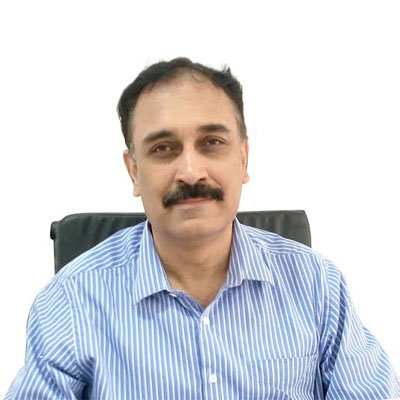
    ‘Marketers must not fall prey to the viral trap:’ KS Chakravarthy

    MUMBAI: Speaking at Association for Data Driven Marketing and Advertising (DDMA) India Annual and Awards on Greatness — The New Minimum For Survival, digital marketing and social media agency Liqvd Asia CCO KS Chakravarthy (Chax) points out that accepting the changing role of advertisers and consumers is the bare minimum for the digital world that marketers are operating in today.

    Going back few years, one can see how the internet has changed the way consumers behave. From viewers, they are increasingly looking for outlets to be heard. With social media, advertisers and marketers aren’t the only story tellers; consumers are also partaking in the creative process. In fact, according to Chakravarthy, marketers are no more storytellers, but responders looking out for meaningful conversation touch points in a consumer’s life.

    Citing Google’s concept of micro moments, Chakravarthy highlights how technology enables one to target much sharper. “The entire journey to purchase can be broken down into moments. There is a moment to know, which is when a consumer is seeking information, and it is also the time when you can engage them in conversation and build relationship. And then there are moments to to go when the consumer is actually purchasing… these moments creates avenues for marketers to not just drive sales but to engage consumers,” says Chakravarthy.

    Chakravarthy moves on to expand on the statement with numerous examples of how brands have effectively anticipated and converted consumer engagement with campaigns to brand communications, starting with the Old Spice advertisement in 2010, which the marketers responded to Twitter backlash to generate more conversation about the brand resulting increased sales. While that was accidental, American FMCG brand Honey Maid anticipated negative feedback on their campaign and incorporated that into their follow up campaign.

    Apart from the new take on consumers, the key benchmarks that emerged from the session that digital marketers must take note of are reality of the second screen adoption and the vista of opportunity it poses to the marketers to capitalise upon; social influences or the viral stars of the digital world be it on YouTube, Pinterest or Vine; and the importance of collaboration or branded content, which is being tried but is still at a nascent stage in India compared to other markets.

    Having said that, Chakravathy pointed out why marketers should not fall prey to the viral trap. “It’s sad that in India only 20 per cent of the digital spends goes to video content, while the number is almost 80 per cent in a market like Japan where digital marketing is much more evolved. The issues isn’t just with infrastructure and bandwidth consumption. Whenever we think of digital marketing through videos we think of viral videos. Somehow we all think that we will make a video that will go viral, which is not the case. If one were to analyse YouTube’s data, one can see that most of the videos we know as viral in India are paid for by brands. It’s not organic and hence of no use to marketers,” he said. 

    “Unless a video engages a consumer in something informative, and ensures meaningful consumer engagement, it will not convert to anything even close to sales for a brand,” Chakravarthy asserted.

    When queried as to whether he finds digital marketers lacking confidence in the Indian market, Chakravarthy gives them the benefit of doubt and expresses his primary concerns with the medium in the current landscape. “Apart from a few B2B brands, most brands can’t to without television in India, especially FMCG brands. Moreover even with the buzz around digital marketing, clients haven’t really got what they want from digital practices in India on marketing. Once that happens, this question of confidence won’t come. The fact remains that marketers must engage brands in all touch points of their purchasing journey using digital as a tool. That’s the bare minimum,” Chakravarthy signed off.