Tag: FMCG

  • Fintech is going to be a major disruptor for rural: Impact’s Sanjay Kaul

    Fintech is going to be a major disruptor for rural: Impact’s Sanjay Kaul

    MUMBAI: It is said that India lives in its villages. With more than 65 per cent of its population residing in rural areas, it would not be a stretch to state that Bharat represents the real India – that is, more than 800 million people. It is little wonder then that ‘Go rural’ is the marketer’s new slogan and companies, both Indian as well as multinational, have their vision firmly set on the rural markets.

    In a free-wheeling conversation with indiantelevision.com’s Anupama Sajeet, Impact Communications founder & CEO Sanjay Kaul, who also serves on the advisory board of Rural Marketing Association of India (RMAI), talked about some of these issues including the challenges, the possible disruptions in the market and the way forward for the industry when it comes to rural India. Kaul has recently stepped down from his position after leading the marketing agency for over two decades.

    Edited excerpts:

    On how rural marketing has shaped up over the last two decades.

    The transformation is tremendous. Rising incomes, the advent of new technology, and the increase in media penetration have fuelled the demands, consumption, and aspirations of rural India. Earlier, the content dissemination was slow because of the low penetration of mobile phone technology. We just had wall paintings or billboards. The reach of newspapers was limited. All this has changed now. The advent of technology, banking, ATMs, government initiatives like Jan Dhan Yojana, have changed the way a rural marketer now approaches these areas.

    On the investments witnessed by the rural market from FMCG and BFSI sectors.

    FMCG is a $1.1 trillion sector in 2020, out of which 30-35 per cent comes from rural areas. Companies like Unilever, Dabur, Colgate – up to 50 percent of their sales come from rural areas. Even Maruti, Hero MotoCorp – more than half their sales happen in rural India. So those who got on to the rural bandwagon early have an advantage. Most of the major FMCG companies see rural as their “next growth” destination.

    The rural FMCG market in India is expected to grow up to $220 billion by 2025. The opening of accounts by the government proved to be a game-changer for the BFSI sector. Next, fintech is going to be a major disruptor in the future for rural. Most of the banks, even traditional ones – whether it's HDFC or SBI – all have tie-ups with fintech companies to enhance their rural reach. Especially in these uncertain times, BFSI has a great future in rural areas with fintech collaboration.

    On consumption trends and the march of e-commerce.

    There is a misconception, that rural areas have not been able to keep up with the urban areas when it comes to e-commerce. In fact, both Amazon and Flipkart have got a majority of their sales coming from tier-2 and tier-3 cities. Consumer aspirations are shaping up and there is a demand for more and more branded products. Since most brands do not have all the range of products available in stores in small cities and towns, a lot of the transactions take place through these e-commerce channels. Experts are pegging rural as the major driver for the next fiscal.

    On the challenges faced by brands trying to expand their rural footprint.

    There are two major issues – trust deficit and logistics. The companies are trying to overcome these hurdles. Amazon has tied up with post offices for logistic support, which helps service certain inaccessible pin codes. The trust barrier still exists when it comes to online shopping. One way out would be to create hub models locally for trust fulfilment, then maybe the deficit factor can be reduced. The logistics challenges can be overcome through micro-distributors who are already supplying to village outlets. They can be used as fulfilment centers, which these big e-tailer companies can leverage. Myntra, Flipkart and Amazon have already tied up with large distributors who serve as their last-mile fulfilment centers.

    On the next big opportunity in rural and the way forward for the industry.

    Earlier, we used to do BTL activations by aggressively reaching out to people. Now, the ‘digital first’ strategy has to be leveraged along with a physical presence. We saw how the local kirana shops took off during the pandemic. There is a lot of investment the companies can do to do to build up these channels and not just be dependent on the wholesale distributors. Technology-enabled solutions will also make a difference. One can scale the communication, marketing operations, distribution in a feasible manner when it's technologically enabled. Today the challenge for brands is not just to make the product available to the rural user. Consumers are spoilt for choice in every brand category. Brands need to remain engaged with the customer constantly.

    On his future plans.

    My new journey would entail a technology-enabled rural market development company. One needs to create a demand for the brand in the rural market areas and then grow the brand with persistence. It will all be technology-based and an aggregate model for all the brands, which will be a first of its kind in rural areas.

  • FMCG major RB rebrands as Reckitt

    FMCG major RB rebrands as Reckitt

    MUMBAI: British multinational consumer goods major Reckitt Benckiser has rebranded as Reckitt, dropping its previous ‘RB’ visual identity. 

    In a statement, Reckitt said the redevelopment of its corporate identity is a key milestone in the organisation’s ongoing journey of transformation towards sustainable growth. The new brand identity and iconography is more recognisable and is built on the company’s purpose — to protect, heal and nurture in the relentless pursuit of a cleaner, healthier world, the Dettol maker added.

    Reckitt SVP corporate affairs & sustainability Miguel Veiga-Pestana said: “The brand is a visible symbol of our corporate purpose and the change that has been taking place across the business on our journey of transformation. The name reflects the existing widespread usage of Reckitt and is clearer, simpler and more memorable, while retaining positive associations with the company’s heritage.”

    From Dettol to Lysol, Nurofen to Durex and Finish to Vanish, Reckitt sells more than 20 million products every day. The new identity will better enable the FMCG giant to communicate its corporate purpose to the world in a way that is powerful, consistent and impactful, added VP internal communications & corporate brand Jo Osborn.

    The comprehensive rebrand, including a new visual identity, was created and overseen by Havas’ branding agency Conran Design Group. Rolling out across all of Reckitt’s touchpoints and platforms – internal and external, physical and digital, it comprises a new name and logo with an evolved colour palette. The company’s previous logo that included “RB" gives way to an “R" inside a coil-like ring, in a highly distinctive and recognisable ‘Energy Pink’ hue which is Reckitt’s primary brand colour. 

    The implementation of the new brand will be delivered over a three-year timeline, using the natural replacement cycles of the business to manage an impactful transition in a cost-effective way.

    http://www.reckitt.com/thisisreckitt

    Conran Design Group CEO Thom Newton said: “Reckitt has a compelling story to tell. The new Reckitt brand both reflects its 200-year history and provides an active expression of its purpose and ambition. The opportunity to work with the company to redevelop and launch the new brand was an opportunity we relished.”

    The present Reckitt Benckiser Group was formed after the merger of Reckitt and Benckiser in 1999. Independently, businesses of the two companies date back to the 1820s—or over 200-years ago.

    The move comes as Reckitt benefitted significantly from the pandemic-its home and personal cleaning brands such as Dettol and Harpic reported strong performance in India, gaining both market share and new household penetration.

  • Ad volumes for Jan-Feb 2021 highest since 2017: BARC India

    Ad volumes for Jan-Feb 2021 highest since 2017: BARC India

    MUMBAI: In a piece of good news for the industry battered by the pandemic, the latest data from television monitoring agency Broadcasting Audience Research Council (BARC) shows the combined TV ad volume for the months of January and February in 2021 was the highest since 2017.

    The advertising sector is on a path to revival and the gains made during the second half of 2020 have seeped into the first two months of 2021. According to the data, the ad volumes have increased by 21 per cent over last year. “Continuing the momentum built in the second half of 2020, TV ad volumes have had the most promising start with January and February ad volume levels of 2021 being the highest ever in five years. A lot of sectors/categories, and key non-FMCG brands, also seem to have increased their presence on TV during this period which augurs well for the medium,” said BARC India client partnership and revenue function head Aaditya Pathak.

    In terms of genres, movies and music + youth registered higher growth than the average growth in the overall ad volumes which was 25 per cent and 24 per cent respectively. This was followed by GEC and news with 21 per cent and 18 per cent growth respectively during Jan-Feb 2021 over the same period in 2020.

    The top ten advertisers drove the ad volumes on TV, contributing 45 per cent to the total share and recorded 35 per cent growth over last year. The next 40 advertisers rode alongside with 25 per cent growth during Jan-Feb this year.

    2020 also witnessed new entrants in TV advertising and the rise of advertisers in the digital segment, especially those from the e-commerce segment. The phenomenon holds true for the current period in consideration as well. E-commerce grew by 21 per cent in Jan-Feb 2021, showing a consistent growth year-on-year in TV advertising. Other categories like retail and building, industry, and land materials also saw an increase in spends this year, compared to 2020.

    Brands including Lizol, Dettol, and Harpic emerged as the most advertised brands during the period. Several non-FMCG Brands also increased their presence on TV during this period.

    With a promising start to the year, the expectations for higher ad spends have definitely gone up for the coming months. The upcoming national and international sports events are also expected to bolster the trend as advertisers continue to keep TV as their preferred choice of platform to reach out to the millions of homes across India.

  • Throwback2020: Not in moolah but digital marketing grew in virtue

    Throwback2020: Not in moolah but digital marketing grew in virtue

    NEW DELHI: It has been quite a few years that the digital marketing industry is enjoying a fabulous run rate in India. It is a no-brainer that growing internet penetration, cheap data rates, and just the sheer availability of digital entertainment and logistical options have contributed to its stellar rise. While the traditional modes of advertising have been struggling to keep the  cash registers ringing, partly because of the continuing dip in the economy and partly due to the Covid2019 lockdown’s impact on businesses across the spectrum, digital marketing enjoyed quite a positive stay in an otherwise positively uncomfortable 2020. 

    The year was a mixed bag of challenges and opportunities for the digital marketing industry, though the latter were overpowering. Despite a slump in growth numbers, the industry seems to be staring at a rather bright future. Tech advancements, positive sentiments within the industry, and the sheer scope of growth ahead makes the ride an interesting prospect for the future too. 

    The spike in digital adoption

    For nearly two-months, starting March, the whole country was forced to stay indoors following strict lockdown rules, courtesy the global viral pandemic Covid2019. It forced people to work online, connect online, shop online, teach online, consult online and do what have you online. This led to a crazy uptake in digital adoption. 

    Logicserve Digital founder & CEO Prasad Shejale said: “The pandemic has definitely caused a huge shift in the industry. While the country’s economy and GDP took a massive hit, the digital industry has been rapidly growing with regards to its consumption, penetration as well as engagement. The global e-commerce sales growth and number of digital adopters accelerated in the initial three months; in the normal course that would have taken three years.”

    According to a Kantar report released in May this year, India’s monthly active internet user base is estimated to reach 639 million by the end of 2020, from the currently estimated 574 million. The country had clocked 734.82 million wired and wireless broadband subscribers up to 31 October 2020 according to Telecom Regulatory Authority of Indian monthly telecom data reports.

    Mobile became the preferred choice of internet consumption and the average time spent on smartphones in a day grew with average usage growing 11 per cent to 5.5 hours in March 2020 (pre-Covid) from about 4.9 hours on average in 2019. This further grew by another 25 per cent to 6.9 hours April onwards (post-COVID), a report by Vivo and CMR highlighted. 

    India also saw the biggest jump in video consumption, of 40 per cent to over 2.9 billion hours during the week starting 22 March as compared to the last week of December 2019, when it was 2.1 billion hours, as stated by an Internet & Mobile Association of India (IAMAI) and Nielsen report. 

    Naturally, this sharp spike in digital consumption had a positive impact on digital marketing and advertising too. 

    Digital marketing growth story 2020

    At the beginning of the year, a DAN report had predicted that the digital advertising industry would grow 27 per cent in 2020. However, that might not turn out to be the case entirely. 

    The sector, much like every other business, took a hit in Q1 FY21, because of the market uncertainties and lockdown. Ad rates went down as much as by 15-20 per cent according to an industry insider. 

    A panel discussing the widening scope of digital marketing with Indiantelevision.com founder, CEO, and editor-in-chief Anil Wanvari in June stressed that the growth digital marketing has clocked in the year will not be immediately visible in the CAGR, but will be a defining factor in how the advertising pies of individual marketers changed. It insisted that after six months of struggle in 2020, the industry will have a very prosperous six years ahead. 

    iProspect India AVP-strategic solutions Nihal Nambiar had said: “Digital, in 2020, will definitely not have a similar CAGR of 27 to 30 per cent as it has been recording for the past few years.” But he mentioned that he is looking forward to some positive quarters ahead in terms of brands moving to digital platforms.

    Shejale pointed out: “Various reports suggest that in spite of the slowing economy, the digital segment has seen a growth of around 20-27 per cent by November 2020. The numbers might vary in different research articles. However, this is the broad range within which the growth is seen, and it’s very promising.” 

    However, GenY Medium co-founder & CEO Yashwant Kumar is more hopeful and is expecting that the industry will grow by 35-40 per cent in 2020-21. 

    He noted: “Digital advertising has gained tremendously during the pandemic and has become the preferred medium with a huge surge in e-commerce across categories together with consumers spending a lot more time with their families at home on their connected TVs and mobiles. Digital has been consistently growing at 27 per cent CAGR over the past few years ahead of television, print and outdoor. We are seeing a significant movement towards digital in Q2 and Q3 this year after a slow Q1. My expectation is that digital advertising will grow by 35 to 40 per cent for the year 2020-21.” 

    While the industry has contrasting views towards the growth numbers, KPMG’s ‘A Year Off Script’ report released in September indicated that online advertising is expected to result in a 12 per cent growth overtaking traditional media like television which will contract by 17 per cent this year. 

    The report added, “At ₹22,300 crore, total digital advertising revenue will beat the ₹21,700 crore revenue of TV over FY21.”  

    Trends that defined the industry in 2020

    The biggest trend that strengthened the roots of the digital marketing industry in 2020 was the sheer influx of rural users in the internet world. As per a report by the Internet and Mobile Association of India (IAMAI) and Nielsen, rural India had 227 million active internet users, 10 per cent more than urban India’s about 205 million, as of November 2019. A Kantar report further suggested that this number will increase to 304 million by 2020. “Local language content and video drive the internet boom in rural India, with a 2.5 times increase in penetration among the population in the last four years,” it added. 

    This, added with digital retailers going deep into the heartland India, led to a great jump in the need for “hyperlocal” content by brands. This kept the digital agencies busy through the year. 

    Additionally, giants like Facebook, Swiggy, and Instagram entering the local market with thier own shopping platforms, growth of edtech companies like WhiteHat Jr, Vedantu, and Instagram releasing a new content section called Reels, were some new found opportunities for the digital industry to explore. 

    Wavemaker India chief client officer and head-west Shekhar Banerjee had mentioned in an earlier conversation with Indiantelevision.com that brands went heavy on performance marketing in 2020. “Apart from the usual search, social, and e-commerce mix, one platform that has become the biggest gainer during the period is the e-groceries section, taking a huge part of the digital pie. Going ahead, hyperlocal platforms, with their changing business models will be more conducive to advertising.”

    Another interesting opportunity for the digital marketing industry came in the form of online events. Almost 95 per cent of the physical events moved to online platforms giving digital agencies great opportunities to work with brands. It included marquee events like IPL, which was hosted without a live audience and saw viewers engaging with it either through TV or digital platforms. 

    OTT platforms also saw a remarkable rise in viewership during 2020. Kumar highlighted, “According to one industry report (Velocity MR Study), Amazon and Netflix saw +60 per cent growth in their subscriber base in the AMJ '20 quarter. Similar numbers have been reported for other platforms like Hotstar, YouTube and others. This massive shift towards the OTT platforms becoming the go to destination for entertainment, sports and news is driven by increased consumption of video content by consumers across all the age groups and demographic segments. Daytime video usage by the working professionals has become the new norm as they have started watching TV or streamed video content during their work breaks or while actively working.” 

    Additionally, what moved the industry significantly was FMCG brands getting more serious about digital platforms. As per industry experts, FMCG brands increased their expenditure on digital platforms to 12 per cent, compared to around 7 per cent in 2019. 

    This also paved the way for a significant hike in influencer marketing activities. 

    Mompresso co-founder & COO Prashant Sinha said, “Digital marketing has seen transitional growth in the year 2020. The majority of advertising and marketing spends by brands this year has been towards digital channels and with no doubt, this will continue to grow further in 2021. We can also expect to see big portions of these budgets to go towards influencer marketing and macro and micro-influencer led campaigns. The overall digital marketing industry has seen a boost this year, where creators, brands, and marketers have learned to work together. Brands have revaluated the metrics and shifted focus to prioritize channels where they receive the most engagement. While video content has dominated the space, more diversification is expected. Live streaming and user-generated content will continue to be popular among influencers and marketers.” 

    The growth in the e-gaming industry resulted in increased ad spends by players and also the development of a whole new media option for the brands. While most of the marketers still sat on the fence about exploiting the medium, it is expected that it will flourish in the coming quarters. 

    The year was a mixed bag of challenges and opportunities for the digital marketing industry, though the latter were overpowering. Despite a slump in growth numbers, the industry seems to be staring at a rather bright future. Tech advancements, positive sentiments within the industry, and the sheer scope of growth ahead makes the ride an interesting prospect for the future too. 

  • TV ad revenues recover by 86% in Q2 : ICRA

    TV ad revenues recover by 86% in Q2 : ICRA

    KOLKATA: After bearing the brunt of the initial shock of the pandemic, TV broadcasters saw a strong sequential recovery of 86 per cent in advertising revenue in Q2. Although it was lower by 20 per cent year-on-year basis, the growth was aided by the lifting of the lockdown, easing of restrictions and resumption of fresh content on general entertainment channels (GECs) with effect from June 2020, according to credit rating agency ICRA Ltd.

    As per the report, GECs regained their popularity and market share that they had lost to news and movies during the quarantine phase. FMCG, ecommerce and consumer durables remained the top contributors in terms of advertisement spends in Q2 FY2021.

    Overall, TV broadcasters in ICRA’s sample set reported a 21 per cent  year-on-year decline in revenues in H1 FY2021. Advertisement revenues witnessed a sharp 40 per cent year-on-year decline in H1 FY2021, though the same was partly offset by the nine per cent year-on-year growth in subscription revenues as subscribers increased their TV viewing during the pandemic.

    In Q1, ICRA’s sample set of TV broadcasters witnessed a 59 per cent year-on-year decline in advertisement revenues, as corporates pulled back their advertisement spends, amid the uncertainty during the then imposed lockdown and the pandemic. Depending on genres, advertisement revenues were impacted by 25-60 per cent (vis-a-vis pre-Covid average monthly revenues) in Q1 FY2021.

    While news and movies genres were on the lower end of the spectrum, with an average decline of 25-30 per cent in advertisement revenues, GECs and sports channels witnessed a sharp 50-60 per cent reduction in advertisement revenues in Q1 FY2021, given the absence of fresh content and deferment of high viewership driving sports events – including the IPL, UEFA 2020, Olympics 2020, among others.

    TV viewing remained high during the first half of the year, which resulted in increase in subscription revenues, up by 12 per cent on a year-on-year basis in Q1 and seven per cent in Q2. Since advertisement revenues account for more than 55 per cent of the total revenues of TV broadcasters, this decline adversely impacted the operating profit margin (OPM) of TV broadcasters, which contracted to 26.6 per cent in H1 (for ICRA’s sample set).

    However, ICRA expects the TV broadcasting industry to witness year-on-year contraction of 15-20 per cent in revenues in FY21. Subscription revenues for TV broadcasters are expected to hold steady in H2 FY21 as consumers are likely to continue their TV viewing amid limited outdoor avenues of entertainment. Overall, subscription revenues are expected to witness mid-single digit revenue growth in FY2021.

    Advertisement revenues witnessed good traction during the festive season and most of the TV broadcasters have witnessed an uptick in ad rates in Q3 FY2021. Industry players expect to reach pre-Covid advertisement revenues in Q3 FY2021. Advertisement revenues will thus witness a strong recovery in H2 FY21, as economic activity and growth improves, though it will be lower by five per cent on a year-on-year basis.

    The OPM in the period was supported by the savings on fresh content creation costs. Given the anticipated year-on-year revenue decline for H2 FY21, ICRA expects the OPM to remain under pressure and overall contract by 400-500 bps in FY21. Profitability pressures have also risen due to the increasing investments in content necessitated by increased competition from digital platforms, ICRA states.

  • Jayant Chauhan joins Mamaearth as chief technology & product officer

    Jayant Chauhan joins Mamaearth as chief technology & product officer

    NEW DELHI: FMCG brand Mamaearth has appointed Jayant Chauhan as chief technology & product officer. In his new capacity, Chauhan will oversee the overall product strategy and engineering and will lead the product development and infrastructure teams.

    Mamaearth has exhibited disruptive growth in the last four years, and to further accelerate the scale-up, they’ve decided to add Jayant to the team who brings with him over 15 years of systems and product development expertise. Most recently, Jayant served as the chief product officer at PolicyBazaar wherein he spearheaded the consumer product and martech groundwork and enabled a more tech-oriented approach.

    With a masters in mathematics and computing, Jayant has played a pivotal role in structuring and strengthening the product and technology verticals of organizations like Samsung, Airtel, Reliance Jio and Zomato. He has been brought into the system to lead the technology vertical and augment the product interface and make it more efficient. 

    Chauhan will be based out of the Gurgaon office. His appointment comes on the heels of other critical and strategic additions to the leadership team of Mamaearth.

    Mamaearth founder and CEO Varun Ghazal said, “It is critical to constantly innovate and keep pace with the technological advancement to make the consumer experience enjoyable and seamless. The brand is at a tipping point wherein it is crucial to build a strong foundation to sustain the disruptive growth the brand envisions, and hence we brought in Jayant. We welcome him to our family and are confident that under his leadership, the technological disruption will continue to grow from strength to strength.”

    Chauhan stated, ‘I am extremely enthused to lead Mamaearth’s vision of creating tech-enabled products, that is set out to redefine the personal care industry. Mamaearth has established itself as an innovator and has assembled a leadership team that is second to none. I hope to sustain this distinction. I look forward with confidence to working with their creativity to realise unique results for the consumers.’

  • Hamdard Laboratories is here with a natural immunity booster

    Hamdard Laboratories is here with a natural immunity booster

    NEW DELHI: Century-old FMCG brand Hamdard Laboratories India is expanding its product portfolio with the launch of Natural Blossom Honey. 

    After observing the rising consciousness in consumers for natural and herbal products, along with witnessing an increasing demand for honey as an essential health supplement, the company introduced this product in the natural and health benefits space. Honey in today’s time is not only a home remedy but is seen as a healthier substitute to processed sugars in the urban as well as rural landscape. Honey as a category has now moved from a niche use to a widely consumed lifestyle product amongst consumers. 

    Hamdard’s Natural Blossom Multifloral Honey promises a range of health benefits from acting as a natural energy booster, enhancing immunity, a natural antioxidant, providing relief in cough, and acting as a probiotic, amongst many others.

    Hamdard Laboratories India (Foods Division) CEO Hamid Ahmed said, “Hamdard Food Division’s vision is to offer the best of natural and healthy food products to consumers in India, and across the globe. The launch of our Honey is another step towards creating consumer delight, through its nutritional benefits and sensorial qualities.” 

    Hamdard’s Natural Blossom Honey is available in three different sizes – 50 gm, 250 gm, and 500 gm PET Bottles at economical prices of Rs 35, Rs110, and Rs199 respectively. The market will soon see various promotions across these SKUs. The product is now present across all major markets in the country. 

  • Same potato, new jacket: Will Lay’s new packaging give it an edge?

    Same potato, new jacket: Will Lay’s new packaging give it an edge?

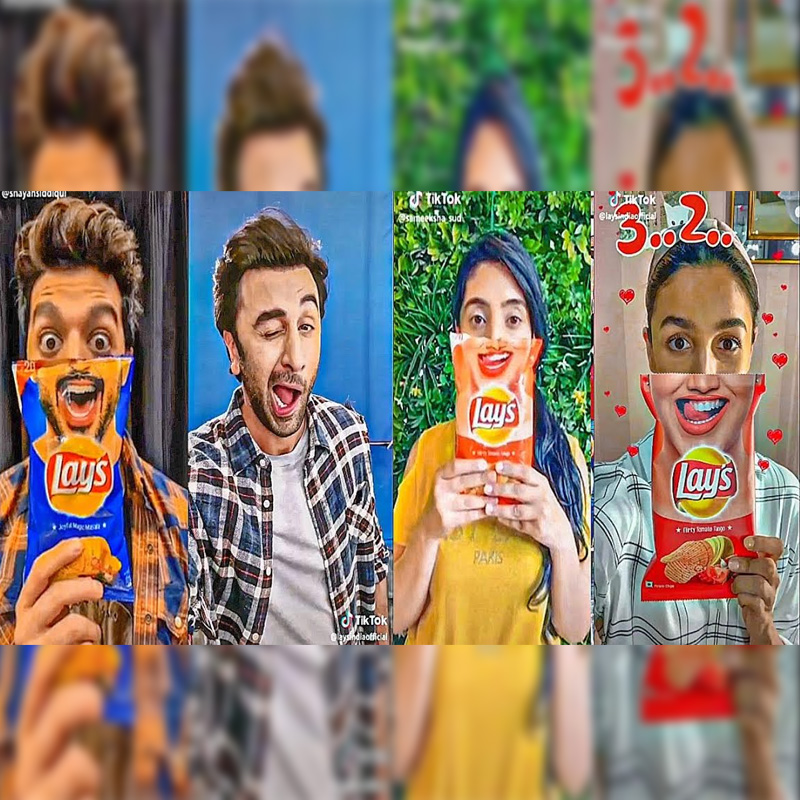
    NEW DELHI: Lay’s, the potato chip brand has been at the helm of influencer marketing through its campaigns for some time now. Last year, it was the Smile Dekho campaign which garnered a massive response and this year, the brand has unveiled #LaysKhol campaign.

    However, a common thread in these marketing strategies is how the company is innovatively leveraging the power of packaging design in its brand communication. PepsiCo’s product customised the Lay’s smile packs #SmileWithLays, where nearly 750 influencers were brought on board to carry the campaign through. The influencers were provided with customised Lay's packs with their own smiles printed on the packaging.

    This was then boosted by a TVC that featured Bollywood stars Ranbir Kapoor and Alia Bhatt. Titled Train Pe Tussle, the ad film showcased brief bickering between the two characters in a train, which is eventually diffused by a smile.

    The first phase of the #LaysKhol campaign featured popular cricketers including Virender Sehwag donning his special Baba Sehwag Avatar, Shikhar Dhawan, Yuzvendra Chahal, Brett Lee, Harbhajan Singh, and Rahul Tewatia. In the four-part video series, cricketers dabbled in some fun and cheeky banter that not only engaged cricket fans but also drove conversations.  

    Now, during the festive season this year, the brand has unveiled 18 limited-edition #LaysKhol packs, each of which poses an intriguing question with a quirky answer given inside the packet. It’s an interesting way to get those extra few seconds of face time with the buyer at the crucial time of purchase decision. These special packs have been shared with celebrities, influencers, and friends of Lay’s.

    The activity has so far received an overwhelming response, garnering significant mileage for the brand with more than 1,600 organic posts and stories leading to over 3.58 million engagement on social media.

    Lay’s decision to capitalise on the same trend back-to-back signifies that newness in packaging leads to good recall and consumers stay with the brand for a little longer. The packaging design reflects the brand identity and brings the brand to life – from the visual appearance and feel of the packaging to its function and sustainability.

    Through the multi-channel campaign, the brand objective is to target brand fans, drive engagement, and deepen regional penetration.

    However, after running many successful campaigns over the years, why is product packaging gaining prominence in Lay’s marketing plan now? And does this whole exercise give Lay’s an edge over its competitors?

    Brand expert N Chandramouli states that the packaged snacks segment has been completely altered due to the lockdown. “Since Lay’s products are largely standard, other than a flavour change once in a while, they have few options to engage the consumer, and one of them is the packaging design or social media campaigns aimed at engaging the youth. India has a wide variety in packaged snacks for consumers, unlike the Western markets, and Lays has been facing tough competition over the years, with the pandemic only beating them further down.”

    Influencer marketing has become a core part in any brand’s strategy, and the lockdown has dialled this up further. Businesses have cut spends on ATL mediums, and more and more, they’re reaching out to the big movers and shakers on social media, which has led to influencers getting a bigger slice of the ad-ex pie. Established brands are slowly moving towards digital campaigns, which are specifically designed keeping the influencer community in mind.

    Agreeing that traditional advertising on TV and print has come down substantially for all brands, and they are moving digital because the spends can be controlled, Chandramouli adds: “In digital campaigns, the best engagement is perhaps with influencers who have an engaged audience and create content specifically to suit their audiences. This makes influencers a very important channel for brands, especially considering the after-effects of Covid2019.”

    As a consumer, one is more likely to pay attention to content that comes from a trusted source. Network Advertising chief strategy officer Sunit Khot is of the view that influencers are usually a sure-fire way for brands to gain traction in digital marketing. They help in getting more interested and engaged audiences. “Having said all that, I personally feel that influencer marketing cannot be the be-all and end-all of digital marketing. It has its virtues but by no means can it replace other marketing activities that work towards building brand affinity and loyalty.”

    Makani Creatives co-founder and MD Sameer Makani believes it is imperative for brands to keep the audience aware and recall at large. “Knowing the fact that we all are under the clout of pandemic and people spend more time digitally, brands have taken social media as a revolutionary tool to promote and connect. Influencer marketing plays a huge role in keeping the audience intact and reaching the masses. In fact, playing with a product package can be a good move only if it resonates well with the audience,” he said.

    Lay’s has always touted itself as a cool, youth-centric brand: a fun, ubiquitous snack that can be consumed at any place, any time. But in a competitive market like India where it faces challenge from the strongholds of namkeen and traditional snacks, Lay’s is repositioning itself through meaningful digital campaigns and revamped packaging that thrust its hip quotient – as something consumers can not only eat, but also enjoy. It will be interesting to see if the brand can keep this momentum going in the long run, or drop it like a hot potato.

  • Dabur India Q2 Results: FMCG revenue surges 19.8%

    Dabur India Q2 Results: FMCG revenue surges 19.8%

    NEW DELHI: FMCG major Dabur India has reported a 19.5 per cent surge in net profit in the second quarter of 2020-21, backed by an increased demand for its ayurvedic healthcare, hygiene and nutrition products, and a new line of products to meet consumer needs in the wake of the Covid2019 pandemic.

    Dabur ended Q2 2020-21 with a 13.7 per cent growth in consolidated revenue at Rs 2,516 crore, up from 2,212 crore a year earlier. This is the highest revenue growth reported by the company in the last couple of years. Consolidated net profit for Q2 rose to Rs 481.7 crore as against Rs 403 crore a year earlier.

    Dabur's India FMCG business led the growth with a 19.8 per cent surge, with an underlying volume growth of 16.8 per cent during the second quarter of 2020-21. Dabur's standalone net profit grew 20.6 per cent to Rs 392.7 crore as against Rs 325.5 crore a year earlier.

    "While COVID-19 continues to impact people around the world, Dabur India Ltd's strategic business transformation exercise to develop and implement aggressive growth strategies in the core business areas and successfully address the emerging challenges helped us deliver a healthy topline growth accompanied by an expansion in Margin. Our domestic healthcare business reported a strong 49 per cent growth, with the recent consumer-relevant innovations contributing to around 5-6 per cent of our revenue. Our international business has also staged a smart recovery and reported a growth of 5.5 per cent despite the key GCC market continuing to face macro-economic headwinds," said Dabur India CEO Mohit Malhotra.

    Malhotra further said that Dabur continued to focus on strengthening its core healthcare portfolio with the introduction of new innovations, coupled with heavy investments behind its power brands and expanding its distribution might. This has enabled the company to grow ahead of categories and gain market share across the portfolio.

    Rural demand grew ahead of urban, the company said, in line with what most large packaged consumer goods companies have reported.

    Favourable monsoon and enhanced stimulus announced by the government as part of its overall thrust on boosting rural economy is expected to further drive rural demand in the coming months.

    Share of e-commerce to overall sales of the company grew to 6 per cent from 2.1 per cent in the previous year.

    "Healthcare, particularly the portfolio of our immunity-boosting products, continues to be the outperformer for Dabur. This is also in line with our strategy of focusing on the consumer health categories. The home and personal care business also reported a recovery, growing by high single digits, while the domestic foods business saw a strong revival with in-home consumption returning to near normal levels. However, this category was impacted by the continued closure of Hotels, Restaurants and Institutional businesses," said Malhotra.

    The health supplements business for Dabur reported a 70.8 per cent growth during Q2 of 2020-21. The ayurvedic OTC range grew by over 56 per cent while the ayurvedic ethicals business ended Q2 with an over 26 per cent growth. While the traditional skin care business continued to face headwinds, the strong demand for the newly launched personal hygiene products range helped the overall category end the quarter with an over 38 per cent growth. Dabur's oral care sales was up over 24 per cent with its flagship Dabur Red Paste reporting strong double-digit growth. The shampoo business, on the back of strong demand for Vatika Shampoo, grew by nearly 18 per cent in Q2.

    The company has declared an interim dividend of 175 per cent for 2020-21. "Continuing with our payout policy, the board has declared an interim dividend of Rs 1.75 per share, aggregating to a total payout of Rs 309.30 crore," Dabur India Ltd chairman Amit Burman said.