Tag: FMCG company

  • P&G India treads the green path, becomes ‘plastic waste neutral’

    P&G India treads the green path, becomes ‘plastic waste neutral’

    Mumbai: Consumer goods major Procter & Gamble (P&G) India said it has become ‘plastic waste neutral’ in the past FY, April 2021–March 2022. The company made this announcement during its ‘It’s Our Home Sustainability Summit’ held here on Thursday. With this, P&G becomes the first few FMCG companies in India to achieve plastic waste neutrality.

    “The company has collected, processed, and recycled over 19,000 MT of post-consumer plastic packaging waste from across the country which is more than the amount of plastic packaging in its products sold in a year,” said the conglomerate in a statement.

    P&G India also announced that it will set up two more in-house solar plants at its manufacturing sites in Goa and Mandideep in India. This is in addition to the existing in-house solar plant that the company set up at its Hyderabad manufacturing site in 2021. P&G will be among the first few FMCG companies in India to have three in-house solar plants across its manufacturing sites, according to the consumer goods major.

    P&G is working with recycling partners across 75 cities in India to collect plastic which is then sent to different recyclers, waste to energy plants, and cement kilns. In addition to recycling, the company has also made a deliberate effort to reduce the packaging material and in the last five years has reduced usage of packaging material by more than 5,000 MT, according to the statement. 

    “We are proud of the significant progress we have made on environmental sustainability, and achieving ‘plastic waste neutrality’ is a key milestone in this journey,” said Procter & Gamble – Indian sub-continent CEO Madhusudan Gopalan. “Plastic waste does not belong in the environment, and we will continue to partner with multiple stakeholders in our efforts to reduce and recycle packaging waste.”

    “We are also taking a deliberate approach to reducing the impact of our operations, and setting up in-house solar plants is a step in this direction. We have made strong progress across our brands, our supply chain, our operations with support from our partners and employees. We are fully committed to making a positive impact in the world and creating a sustainable future for generations to come,” he further said.

    In recent years, the company has made significant progress on environmental sustainability which can be seen across its operations and brands. According to the company, these include:

    ·       All P&G manufacturing sites in India are ‘zero manufacturing waste to landfill’

    ·       Five P&G India sites have already achieved the 2030 P&G global target of 35 per cent water efficiency

    ·       P&G India purchases 100 per cent renewable electricity for all its manufacturing sites in India

    ·       P&G’s fabric care brands in India Ariel and Tide continue to be phosphate-free since 2015, thus helping preserve the quality of water resources

    ·       The liquid detergent bottles of fabric care brand Ariel are recyclable

    ·       Using recycled material in the packaging of its baby care and feminine care products which will reduce the usage of 500 MT of virgin plastic annually

    The conglomerate further said it aims to achieve net-zero greenhouse gas (GHG) emissions across its operations and supply chain, from raw material to retailer by 2040. 

  • We build consumer affinity on the strength of brand offering: Agro Tech Foods’ Asheesh Sharma

    We build consumer affinity on the strength of brand offering: Agro Tech Foods’ Asheesh Sharma

    MUMBAI : Agro Tech Foods Ltd (ATFL), an FMCG player engaged in the manufacture and sale of a wide range of snacks and edible oil products and name behind the household brands like Sundrop Oil and Act II popcorn, recently announced its entry into the chocolate confectionery segment, with the launch of a coconut-centered product under brand name Sundrop Duo.

    The packaged food sector in India has witnessed some significant highs and lows through the pandemic. Despite lockdowns in various parts of the country and the economic impact of the pandemic, the industry showed resilience by bouncing back after an initial slump in 2020. The FMCG industry grew 9.4 per cent in the January-March quarter of 2021, supported by consumption-led growth and value expansion from higher product prices, particularly for staples, according to Nielsen. Significantly, the FMCG market in India is expected to increase at a CAGR of 14.9 per cent to reach $220 billion by 2025,  from $110 billion in 2020.

    Against the backdrop of its growth focus announcement, IndianTelevision.com spoke to Agro Tech Foods vice president marketing Asheesh Sharma in a freewheeling conversation, where he shares how the company engaged with its consumers in the wake of evolving buying behaviour and changing consumer sentiment. Sharma does a deep dive into the journey of its flagship brands Act II popcorn and Sundrop peanut butter, how they fared during the pandemic, and now betting big on the competitive confectionery segment.

    Interestingly, Sharma also reveals the reason why the brand chose not to clamber onto the IPL bandwagon.

    Edited excerpts:

    On the brand’s TG and its current consumer demographic

    For us, our brand’s TG normally does not change with a time period so often. Act II is primarily focused on an age group of 4-14 as its main TG, and then 31-41 for the mothers. For peanut butter, we target TG which’s 15 to 24 because it’s an acquired taste. In the case of popcorn that’s not a problem because it’s a known taste. So the TG hasn’t changed, and our marketing communication has been the same. But we increased our investment behind it to reach more people who were at home. And we think that that’s how the brand Act II will continuously grow even in the years to come.

    Coming to our consumer demographic, we don’t have too much of a presence in rural. We have got growth in all tier 2, tier 3 towns as well as metros. So if we take these one lakh plus towns- that’s where more of our urban market is and that’s where we are focused on. And the phenomenon of people being at their homes was not restricted to these. So our growth came from all of them, partly also driven by the fact that some people had migrated from the metros to their homes in smaller towns with WFH. So there were multiple parameters like e-commerce delivery in smaller towns has improved and so on. So barring a few percentage points here and there we can say our distribution network largely covers the urban area and we mostly grew across the geography that we operate in.

    On investing in the red hot media property that’s IPL

    Cricket and Bollywood are the two religions in India. And we have always chosen Bollywood to go with Act II. Popcorn enhances your film-watching experience, so we just stayed with it. We normally do not participate or advertise in the IPL because we still have a lot to leverage on the films.

    In a similar vein, when it comes to investing in celebrities, principally as a company we don’t believe that we need to have celebrity endorsement or give crutches to the brand. What we do is build on consumer insights, unmet needs, benefit, cost structure, and delivering the brand. We want consumers to come for the benefit that the brand offers, and not do interim jumps of, say, a celeb endorsement.

    We build consumer affinity on the strength of the brand offerings- both in terms of imagery and in terms of product experience in itself. And this is also why our rates of repeat customers and customer retention are very high.

    On the thought behind the business’ foray into the confectionary segment

    A large part of our growth comes from two factors- one is innovation and the other’s the increased spends on advertising. Almost 50 per cent of our growth comes from innovation, and the other 50 comes from the investment, in terms of demand generation in media. It allows us to build products that are differentiated, address an unmet consumer need and is value offerings. Any of our new products have to meet these three criteria.

    So when we decided to foray into this segment our thought was, how do we add nutrition to an indulgent category. That was brief with which we started this work. For if you see, our company’s vision is ‘Nourishing Families, Enriching Lives.’ We always try and build nutrition into it so that the trend towards healthier habits. Thus, our Sundrop Duo confectionery is nearly 30 per cent lower sugar than comparable products of our competitors’ products. Lastly, we made sure that we are competitive with the price, in that we are almost 50 per cent cheaper than the competitor’s products.  

    On the media and marketing strategy for this new segment

    Right now we have not gone digital on our chocolate confectionery. We went on television talking to people about the brand proposition, ‘Taste ka asli fusion.’ We are first doing mass media with it and are building a distribution reflective of the fact that we are going to be doubling our chocolate capacity in Quarter one of FY ’23. And then again doubling it in Q3, so we will be quadrupling our capacity in the next year. Which talks volumes about the response and acceptability of the product. The growth rate and the acceptance have been the biggest driver for me with this product.  

    On how the company’s flagship brands fared during the pandemic

    One very important thing that worked for us was that in the last two years, the amount of time consumers spent in-home was significantly more than what they were spending out of the home. And as a consequence, in-home consumption went up. And that uniquely benefited Act II Popcorn. So for the years of FY ’21 and FY’22, we saw very good growth in our Act II business, primarily led by increased in-home availability of people, and the product was perfectly suited for that. There might have been some peaks and troughs for the reasons of panic buying versus regular buying, but overall the steady-state of consumption was higher.

    The same thing applied to our second category i.e. spreads. This was also the time when people became more concerned about the health benefits. As a consequence, peanut butter which is primarily a healthier alternative to spreads that are available in the market started getting an adaptation. So combined with all these factors, we had a very good run on spreads also.

    Overall, FY ‘21 we grew at almost 35 per cent as compared to our competitors, who were at 16-17 per cent.

    On leveraging the pandemic boom and sustaining it

    A big factor during these two years of FY ’21 and ’22 was that travel was restricted, impacting the businesses of FMCG companies like ours. So what we did very knowingly and selectively was that, whatever savings we got out of this, we deployed them all in demand generation activities of the media. That put us in a very strong base because consumers were coming in, and we kept on advertising. And in this period (FY’21-22) we increased our advertising media by almost 30 per cent versus what we did in FY’18-20. That in my view, was a very significant step because there will be moments and opportunities which come.

    You have to leverage those opportunities to build a steady business going forward. Because the opportunity might disappear but the retained consumer will keep giving you business in the balance years. Hence, even as we see the economy now opening up and people will be less at home than they were earlier during the pandemic, we are very well set to leverage this opportunity even in FY ’23.

    On the media mix adopted by the company

    We still spend 95 to 97 per cent of our ad spend on television, because that is the single biggest mass media reach that we get. For our TG of 15 to 24, this generation, of course, is more digital-oriented. In my view, however, even as the digital adaptation has increased it hasn’t reduced television. We do digital but only as an add-on to TV. So we take Hotstar and we pick these other YouTube channels, and on Instagram the various food handles. But that’s not our mainstay. We do need them and we use it as a medium to just make sure that people are aware of us, and we are present with them as and when they’re receptive.

    One of our philosophies has been ‘talk to the consumer when and where they are more receptive’ and in that, we found that during TV and entertainment which is a leisure time you are more receptive. Versus being on digital when you’re just trying to catch up and to be updated. So we are balancing the two. So it’s 97 per cent on TV and three per cent on digital. Print and radio we don’t do much largely, and might go into decimals. Only if we have a messaging which allows itself to be better communicated on print and as a means of augmenting the communication, we go for it. Otherwise, we are very singularly focused on using television as a medium, as that’s the mainstay for us in terms of mass reach and building a scalable business.

    On the critique that it stands to lose out on its millennial + Gen Z consumer by not leveraging digital enough

    See, the investments are done in proportion to the kind of growth that you need. So normally television for all the single TV households was a family viewing experience. OTT has made it a very personalised viewing. So while we did go on OTT with Hotstar, we did not give away the mainframe of television because we still feel our brand equity is more about family.

    Have the numbers dropped? Maybe there’s a little shift here and there but the people who are watching TV are still sufficient for us to keep growing our businesses. So that was the way we wanted to go and hence, the media choices that we made. In my view, the use of a medium should be determining the quantum of growth and the acceptability of your proposition which happens. And that’s what we do.

    On the FMCG’s road map ahead

    The packaged foods & FMCG sector, both will continue to grow- some years little lesser, some years little more. The interim disruptions that happen, for example, the current Ukraine war may act as barriers here and there. But the bigger picture will be, it is going to keep growing.

    In the ready-to-cook segment at home, we were already anticipating that when the economy opens up, the growth rate may slow down. As of now, we haven’t seen it, but probably when people move out more than they are at home that shift has to happen.

    So we already entered into a newer portion there with the- ‘Ready To Eat Meal Kits.’ These meal kits have already started contributing to the Ready To Eat cook at home. So that has ensured that we continue to grow at our past rate of 15-20 per cent. The categories that we have been historically working with, such as Act II and peanut butter- we have been growing at about 15 or odd per cent.

    And then the newer segments of chocolate confectionery and breakfast cereals would add another 600 to 1000 business points of growth, taking us anywhere between close to 25 per cent growth rate going forward. And half of it probably would come from innovation and a half from the media, that’s the long-term plan.  

    We are a company that relies heavily on innovations to meet unmet consumer needs, have in-house manufacturing to have a very good cost structure, and does moderate media investments. So that there is a sustainable business model for growth forever.

  • Wow Skin Science appoints Harsh Parekh as GM – marketing

    Wow Skin Science appoints Harsh Parekh as GM – marketing

    Mumbai: FMCG personal care brand Wow Skin Science on Monday announced the appointment of Harsh Parekh as general manager – marketing. 

    With his vast repertoire in the field of marketing and advertising for over 14 years, Parekh has developed expertise in various branches– from conceptualising and ideating to executing creative and content marketing solutions for brands across India and in the MENA region. 

    In this leadership role, his KRA has been to develop and execute long-term strategic plans and objectives through the identification of issues and opportunities that could influence business growth and profitability. “He will be responsible for building and defining Wow Skin Science’s social media, content strategy, influencer marketing, along with overlooking celeb endorsements, brand partnerships, and associations,” the brand said in a statement.

    “With consumers riding the 5G wave, access to various marketing campaigns has become easier. Relevance, innovation and technology have become the drivers of marketing and the success rate of a campaign is often judged by how effectively it was marketed holistically,” stated Harsh Parekh. “At Wow Skin Science, I aim to build and amplify the brand and its equity in the market along with executing impactful campaigns.”

    Parekh has played a pivotal role in conceiving and executing numerous marketing and branding campaigns and built IPs for brands across FMCG, beauty, fashion, F&B, hospitality, automobile, education, e-comm, tech, and retail. Few of his IPs/AFPs and digital films have received accolades at prestigious award ceremonies such as – Indian Television Academy Awards, International Content Marketing Summit, Promax Awards. He has conceived and executed buzzworthy campaigns and content marketing solutions for notable brands such as Cultfit, Nykaa, Flipkart, FirstCry, Nexa Showrooms, Honda, TVS, Tresemmé, Lakme, Splash, Max Fashions, Lifebuoy, Knorr, and many more.

    “We are delighted to welcome Harsh to the Wow Skin Science family,” commented Wow Skin Science co-founder Manish Chowdhary. “With his business acumen and ingenuity, we look forward to his expertise and vision that will accentuate the status quo of Wow Skin Science through innovative strategies, various partnerships, collaborations and associations.”

  • Madhusudhan Rao, Deepak Subramanian join HUL management committee

    Madhusudhan Rao, Deepak Subramanian join HUL management committee

    Mumbai: FMCG major Hindustan Unilever Ltd (HUL) on Wednesday announced the appointment of Madhusudhan Rao and Deepak Subramanian to its management committee. While Rao is named as HUL executive director – beauty and wellbeing and personal care, Subramanian is HUL executive director – home care.

    Rao takes over from Priya Nair, who is elevated to global role as HUL chief marketing officer – beauty and wellbeing. Subramanian succeeds Prabha Narasimhan, who has decided to leave the company to pursue an external opportunity, HUL said in a statement.

    “Madhusudhan has a successful track record in a variety of operational and strategic roles. He has brought in a strong performance edge in his teams and has pioneered several innovations that uphold Unilever’s high science and technology credentials,” commented HUL chairman and MD Sanjiv Mehta. “Deepak has championed innovation and sustainable strategies to significantly improve brand equity and deliver growth. He has demonstrated superior business acumen in building new categories, primarily in start-up business verticals. I am certain that they will take the business to the next level of performance.”

    Talking about Nair’s contribution to the business, Mehta said, “She has been an active champion for building future skills and experimentation, and has led several path-breaking marketing initiatives such as the Kan Khajura Tesan. Under her leadership, the business witnessed high growth in key categories driven by consumer-centric innovations and award-winning, purpose-driven communication.”

    “Prabha led home care to deliver a strong performance across South Asia over the last two years. She has contributed immensely towards embedding the Clean Future agenda into the Home Care product development strategy,” he further said about Narasimhan.

    Rao joined HUL in 1991 and he is currently serving as Unilever EVP – home and hygiene. In his 30+ years in the company, he demonstrated a strong performance track record in marketing, customer development and brand development roles across geographies. In his current role, Rao helped shape the home and hygiene category as a successful business with a distinctive high-performance culture, said the statement.

    Currently working as VP – home care, South-East Asia/ANZ (SEAA) and global head – fabric enhancers, Subramanian joined HUL in 1995 as a management trainee. He significantly improved the profitability of the business, whilst strengthening top-line growth. In his global role, Subramanian helped transform the fabric enhancers category by driving innovations and re-positioning the brands to have more social impact, according to the company.

    Recently, the company also announced the separation of the position of chairman of the board and the CEO and managing director. HUL announced the appointment of Nitin Paranjpe, currently chief operating officer of Unilever as non-executive chairman of the company, with effect from 31 March. However, Sanjiv Mehta will continue as HUL chief executive officer and managing director.

    The FMCG giant reported a strong all-around performance for the third quarter. The company’s growth was competitive and profitable. The net profit surged to Rs 2,243 with 17 per cent growth year-on-year, according to the statement.

  • P&G India extends all company benefits to partners of LGBTQ+ employees

    P&G India extends all company benefits to partners of LGBTQ+ employees

    Mumbai: In a bid to foster inclusivity at the workplace, Procter & Gamble (P&G) has now extended all its company offered benefits to partners of LGBTQ+ employees, the company announced on Tuesday. Effective 1 April, the company’s medical and workplace benefits including medical support, emergency financial assistance, flex subsidy allowance, relocation benefits, among others will be extended to partners of LGBTQ+ employees.

    The initiative builds on top of the company’s ‘Share the Care’ inclusive parental leave policy that was launched last year.

    “At P&G, our goal is to create a fully inclusive workplace where our employees feel included and are able to bring their authentic selves to work every day,” said Procter & Gamble Indian sub-continent vice president and head – human resources PM Srinivas. “In line with that, we are proud to shape our company offered comprehensive benefits to a fully inclusive and equality-based program which extends to partners of LGBTQ+ employees. We will also continue to strengthen our awareness and training programs that sensitize our people on LGBTQ+ diversity. We hope that this will enable us to strengthen our company’s culture, inspire change and create a positive societal impact.”

    Through this latest initiative, partners of LGBTQ+ employees will now be covered under the company’s medical plan that provides hospitalisation coverage to employees and their dependents. The employees can also avail emergency financial assistance for their partners. The company provides an additional fixed allowance to its employees to meet their personal and family needs, which can now be availed by LGBTQ+ employees for their partners. The company will also extend financial support and transfer related assistance arising out of a company-initiated relocation to partners of LGBTQ+ employees, said the statement.

    According to the company, P&G took a public stand for inclusion by adding sexual orientation to its non-discrimination policies back in 1992. The company has an internal affinity group, GABLE (Gay, Ally, Bisexual, Lesbian, and Transgender Employees) that is dedicated to fostering an inclusive and supportive network.

    P&G India has also launched ‘Pride Podcasts’ wherein it invites leaders from within P&G globally and external advocates who are sharing their journey, educating, and addressing myths about LGBTQ+. In a first, in 2021 the company organised a virtual pride event titled ‘PrideON’ to educate and celebrate the progress made on LGBTQ+ equality and inclusion in the workplace, according to the company.

  • Wow Skin Science onboards Varman M as GM – media, research & corporate comms

    Wow Skin Science onboards Varman M as GM – media, research & corporate comms

    Mumbai: FMCG personal care brand Wow Skin Science has announced the onboarding of Varman M as general manager – media, research and corporate communications. 

    In this role, Varman will be responsible for defining a media investment plan to drive maximum ROI for Wow Skin Science, Wow Life Science and Body Cupid. “His role will also entail amplifying the corporate communications for all the brands through brand awareness, brand messaging and capitalising on opportunities to elevate the positioning of the brands,” said the company in a statement.

    “We welcome Varman to the Wow family,” said Wow Skin Science co-founder Manish Chowdhary. “With his hands-on experience and knowledge in establishing strategies, I believe his leadership skills will help Wow Skin Science in the path of growth, innovation, creativity and development.” 

    In his career spanning over 13 years, Varman has donned multiple hats from the agency to the advertiser side of the business. His core competencies lie in developing a data-driven media strategy for FMCG, automobile, e-commerce and electronics industries. 

    He has led both offline and digital media to drive integrated media planning and delivered investment strategies for clients like TVS Motor Company, Cadbury, and Flipkart. He also led the media and brand PR for Himalaya Wellness Company prior to joining Wow Skin Science.

    “With the escalation of social media and the exponential rise in content generation across platforms, what sets a brand apart, is the strategic planning, data-driven multimedia approach that ensures a holistic growth, thus driving maximum eyeballs,” said Varman M. “I am looking forward to building Wow Skin Science in a way that helps us elevate our positioning through trends and analytics and of course creativity.”

  • CavinKare forays into QSR segment with launch of Jango’z

    CavinKare forays into QSR segment with launch of Jango’z

    Mumbai: FMCG major CavinKare, as part of its retail expansion plans, has announced its foray into the QSR segment with a new brand – Jango’z. Launching its maiden outlet in Chennai, the company further plans to set up over 100 outlets across strategic locations in India by 2026.

    With the Indian QSR segment expected to reach Rs 827.63 billion by FY 2025, CavinKare is also set to bet big on the slice and bite segment through Jango’z with an aim of generating over 150 crore revenue in the next 5 years, said the company.

    “Our entry into the QSR space comes in line with our refreshed CavinKare 2.0 strategy,” said director – retail Manuranjith Ranganathan, commenting on the occasion. “Retail is one of the important divisions in CavinKare where we have made significant investments and have major diversification plans in the future as well. One of the steps in the direction is this entry with the launch of Jango’z that is set to disrupt the space with CavinKare innovation edge.”

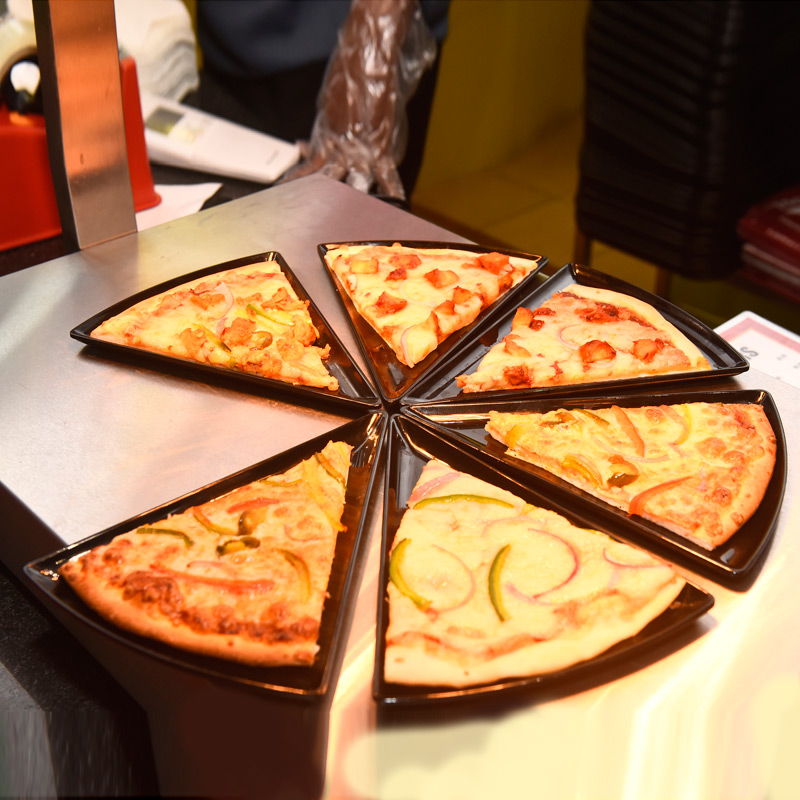
    Jango’z is CavinKare’s first chain QSR brand with its first outlet in Perambur, Chennai. Spread across 1300 sq ft, the outlet serves a slew of delicacies and a lineup of refreshing mocktails. The outlets will also have a notable space where the customers can see their orders being cooked live. This outlet also features specially commissioned wall art, with the mascot from the Jango’z logo being incorporated into a fun comic strip.

    “With the segment poised to grow at a 15.4 per cent CAGR coupled with untapped potential tier 2 and 3 markets, we are confident that Jango’z will become a Rs 150 crore brand by 2026. The slice and bite space in the segment is at a nascent stage but we are positive that this will become the future of the QSR industry and we are happy to be leading the way with it being an important proposition at Jango’z,” Ranganathan further said.

  • Ram Bandhu ropes in Madhuri Dixit to endorse its pickle & papad range

    Ram Bandhu ropes in Madhuri Dixit to endorse its pickle & papad range

    Mumbai: FMCG company Empire Spices and Foods Ltd (ESFL) known for its flagship brand Ram Bandhu, has roped in Bollywood superstar Madhuri Dixit-Nene as brand ambassador to promote its pickle and papad product range across offline and online mediums.

    The latest campaign “Aapka Taste Partner”, conceptualised by Betel Leaf Communications, encapsulates the wide range of pickle & papad variants to win a coveted space in the target consumer’s mind in a very simple and effective manner. The association with the actor comes at a time when the company is on a mission to expand its business and is reaching out to new markets. The company offers a wide range of products used in daily household consumption by the masses like pickles, papads, spices, ketchup, sauces, pastes and chutneys.

    The campaign is supported by a 360-degree approach, leveraging TV, out-of-home, digital and social platforms.

    The partnership is expected to provide a revered face to the brand’s philosophy as the actor personifies the brand’s ethos of quality and innovation which have been the pillars of the brand’s success in the pursuit of culinary ecstasy over the years, the company said in a statement.  

    ESFL, chairman, Hemant Rathi shared, “Our presence is spreading across India and this endorsement will help our brand to connect better with the users in both urban and rural areas. We wanted our brand ambassador for our pickle and papad categories to be someone who represents our target consumer group aptly, and who better than Madhuri Dixit Nene who is a working mother in her personal life and a well-known Bollywood actress who is popular across India, and even across generations, and overseas as well with a robust image just like our brand.” 

    The campaign draws its inspiration from the fact that human beings are inherently social creatures and in general value relationships over other things in life. Hence the importance of one’s life partner in one’s life is substantial followed by the other different types of partners like one’s work partner, room partner, mischief/fun partner, business partner, travel/tripping partner, gossip partner etc. By communicating ‘Ram Bandhu’ as a partner it helps to personify the brand instead of projecting it merely as a beneficial wondrous product.  

    Speaking about the association Bollywood actress Madhuri Dixit-Nene shared, “Everyone has grown up eating pickles or achaar and it has strong memories attached to it, sometimes it’s the love of a grandmother, or warmth of a mothers touch. My association with the campaign “Aapka Taste Partner” reminded me of my childhood days when eating pickles and papads were an experience in itself! I am excited to be a part of a campaign by such a respected and loved brand like Ram Bandhu.”

    ESFL, managing director, Umesh Rathi shared, “There is a huge opportunity of growth in the pickle and papad market in India. Ram Bandhu is one of the leading brands in both the papad and pickle categories across India when it comes to household consumption. We have always been believers of adapting with changing tastes, trends and technology. Our motto is “dil jeeto har grahak ka” and our aim is to be present in every kitchen of India and become an inseparable part of the culinary setup of every household in India”

    “Our aim was not to sell the concept but to make the concept sell the brand,” explained Betel Leaf Communications creative head, Rishi Upadhyay.

    Oberoi IBC managing director and the Clcreative producer of the TVC campaign, Anand Oberoi added, “The ad is witty, looks classy and is well-made, and establishes the point that Ram Bandhu is not just a maker of food products but is personified as an evergreen partner in the target consumer’s life when it comes to matters of taste and good food.”

  • Real Activ Wowed by new design

    MUMBAI: WOW Design, a strategic brand design consultancy, has collaborated with Dabur, renowned FMCG Company, to revamp the brand identity for its range of Real Activ Juices. Dabur intended to revamp its range of Real Activ juices that have no added sugars and vouch for a healthy juice, anytime, anywhere. With a record of successful revamp launches in their kitty, WOW Design was invited to impart a new look for the Real Activ range differentiating it from competition, on the shelf and in the minds of its consumers.

    The brief to , the team at WOW Design was that the packaging and proposition story of the brand had to be needed a makeover such that it becomes a preferred choice to the health conscious consumer who walks an extra mile to enjoy an active life.

    Working towards a new look for Dabur Real Activ Range, WOW Design conducted a detailed research based study.  The key findings of the study were:

    – The visual architecture of the existing Activ range resembles closely to the main range; diluting its differentiation from the sub-ranges.

    – The core proposition of ‘Supporting Fit & Active Lifestyle’ missed precedence due to lack of effective packaging communication.

     Hence, considering that the Activ range has varied offerings, WOW Design aimed to highlight the benefits of each range and establish them separately. For the same, they introduced two levels: Sub-Range – 100%, Fibre+ and Fruit-Veggie & its variants.

    Scrutinizing the target group’s consumption and buying behaviour, helped in drawing useful conclusions. The concept of ‘Purposive Partner in Activ Lifestyle’ emerged from the brand’s core proposition of ‘Supporting Fit & Active Lifestyle’.  This idea augmented a makeover of the visual architecture for differentiation. A key element, the ‘Right Tick’ emerged from as a strong design architecture. 

    Dabur Foods head – marketing Kumar Mayank said, “We at Dabur took WOW Design on board for revamping Real Activ, which is a critical brand in our beverages portfolio. I would have to say that the WOW Design team have a thorough understanding of the consumer pulse and they do their research very well to grasp the market dynamics.”

    WOW Design partner & executive director Deepti Kshirsagar said, When talking to the consumer who are health conscious, we realised most of them are fence sitters and on lookout for products /brands that would propel them to actively pursue their fitness goals.”

    WOW Design partner & executive director Saswata Das adds, “In terms of Dabur’s flagship beverage brand Real’s Brand Architecture, Real Activ stood as an offering for the more health conscious and fitness freak consumer.”

  • Jyothy Labs Q3 ad spend up 25%, promo spends triple; PAT up 63%

    Jyothy Labs Q3 ad spend up 25%, promo spends triple; PAT up 63%

    BENGALURU: FMCG company Jyothy Laboratories Limited (Jyothy Labs) has reported a 63.1 per cent rise in its net profit in the quarter ended 31 December, 2013 to Rs 27.38 crore from Rs 16.79 crore a year ago.


    The company spent Rs.15.04 crore on advertising in the third quarter, up 25.2 per cent from a year ago. Its expenditure on promotions in the third quarter tripled to Rs 12.04 crore from Rs 4 crore a year ago. Jyothy Labs’ combined advertising and promotional expenses in the third quarter rose 71.6 per cent to Rs 27.48 crore from Rs 16.01 crore a year ago.


    Jyothy Labs’ product portfolio includes household brands led by its flagship fabric whitening brand Ujala, Henko, Mr. White, Chek, Exo, Pril, Margo, Fa, Neem and Maxo.


    Jyothy Labs’ net profit in the third quarter was 31.2 per cent more than Rs 20.87 crore a quarter ago. In the nine months ended 31 December, 2013, the company’s net profit more than doubled to Rs 76.95 crore from Rs 32.22 crore a year ago.


    The company’s advertising spend in the third quarter was 24.6 per cent lower than Rs 19.96 crore a quarter ago, while in the first nine months of 2013-14 it rose 49.2 per cent  Rs 64.54 crore from Rs 42.35 crore a year ago.


    The company reported a 27.8 per cent increase in operating revenue to Rs 296.99 crore in the third quarter from Rs 234.21 crore a year ago, but was 3.75 per cent lower than Rs 308.55 crore a quarter ago.


    Total expense during Q3-2014 26.8 per cent up to Rs.270.60 crores from Rs.213.47 crores in Q3-2013, but was down (3.9) per cent from Rs.281.51 crores in the previous quarter. Over the nine month period of the current year, Total expense during the nine month period of this year grew 19.6 per cent to Rs.839.29 crores from Rs.701.91 crores in the corresponding period of the previous year. For FY 2013, Jyothy Labs reported Total expense at Rs.956.64 crores.


    Let us look at Jyothy Labs reported Ad and Promo spends during Q3-2014 as percentages of Operating Income and Total expense:


    Ad spend for Q3-2014 of Rs.15.04 crores mentioned above was 5.06 per cent of Operating Income and 5.56 of Total expense for the period. Rs.12.01 crores for Q3-2013 mentioned above was 5.13 of Operating Income and 5.63 of Total expense for the period.  Q2-2014 ad spend of Rs.19.96 crores was 6.46 per cent of Operating Income and 7.09 per cent of Total expense for the period.


    The company’s YTD AD spend for the current period of Rs.64.54 crores was 6.98 per cent of Operating income and 7.69 per cent of Total sales as compared to the Rs. 43.25 crores (5.80 per cent of Operating Income and 6.16per cent of Total sales for the period) during the corresponding period of last year.


    Jyothy Lab’s Q3-2014 promo spend of Rs.12.44 crores was 4.19 per cent of Operating Income and  4.6 per cent of Total expense. Its Q3-2013 Promo spend of Rs.4 crores was 1.71 per cent of 9Operating Income and 1.87 per cent of Total expense for the period. The company’s Q2-2014 Promo spend of Rs.9.64 crores was 3.12 per cent of Operating Income and 3.42 per cent of Total expense.


    The YTD Promo spend of Rs. 31.22 crores for the current period 3.37 per cent of Operating Income and 3.72 per cent of Total expense for the period as compared to the Rs.18.33 cores (2.46 per cent of Operating Income and 2.61 per cent of Total expense) during the corresponding nine month period of last year.


    Combined Ad & Promo spend for Q3-2014 of Rs.27.48 crores was 9.25 per cent of Operating Income and 10.16 per cent of Total expense. For Q3-2013, the Rs.16.01 crores was 6.84 per cent of Operating Income and 7.5 per cent of Total expense. For Q2-2014, the combined figure at Rs.29.6 crores was 9.59 per cent of Total Income and 10.51 per cent of Total expense. The YTD figure of Rs.95.76 crores was 10.35 per cent of Operating Income for the period ended December 31, 2013 as compared to the Rs.61.58 crores (8.26 per cent of Operating Revenue and 8.77 per cent of Total expense) during the corresponding nine month period of last fiscal.


    Segmental Performance (Q3FY14 v/s Q3FY13) as reported by the company:


    Revenues from soaps and detergent business, which includes brands like Ujala, Henko, Exo, Pril, Margo, Mr. White, stood at Rs. 240.4 crore during the quarter compared to Rs. 187.2 crore in December 31st, 2012; up by 28.4 per cent. Ujala fabric whitener continues to be the market leader with a market share of 72.5 per cent by value claims the company.


    Home Care, which includes mosquito repellant Maxo and Exo scrubber, saw revenues for the quarter ended December 31, 2013 at Rs. 56.4 crore up 25.9 per cent as against Rs. 44.8 crore during the same period last year.


    Others businesses, which include brands like Fa and Neem, saw revenue increase of 78.1 per cent at Rs. 3.9 crore against Rs. 2.2 crore on December 31st, 2013.


    Commenting on the company’s results, Jyothy Labs Chairman and Managing Director  M P Ramachandran said, “We have continued to witness a steady growth in sales in spite of the weak consumer sentiment in the last several quarters. Increase in geographic footprint of our seven power brands has helped us grow at a fast pace. We have strategically concentrated on investing in our brands through advertising campaigns and brand extensions which are paying off well .”


    “Jyothy is also concentrating on increasing its product portfolio. The funds raised via preferential allotment was utilized to repay debt and the balance will further be utilized for organic and inorganic growth of the company. We expect the growth momentum to continue translating to healthy volumes and profitability growth for the financial year ,” he further added.


    Click here for full report